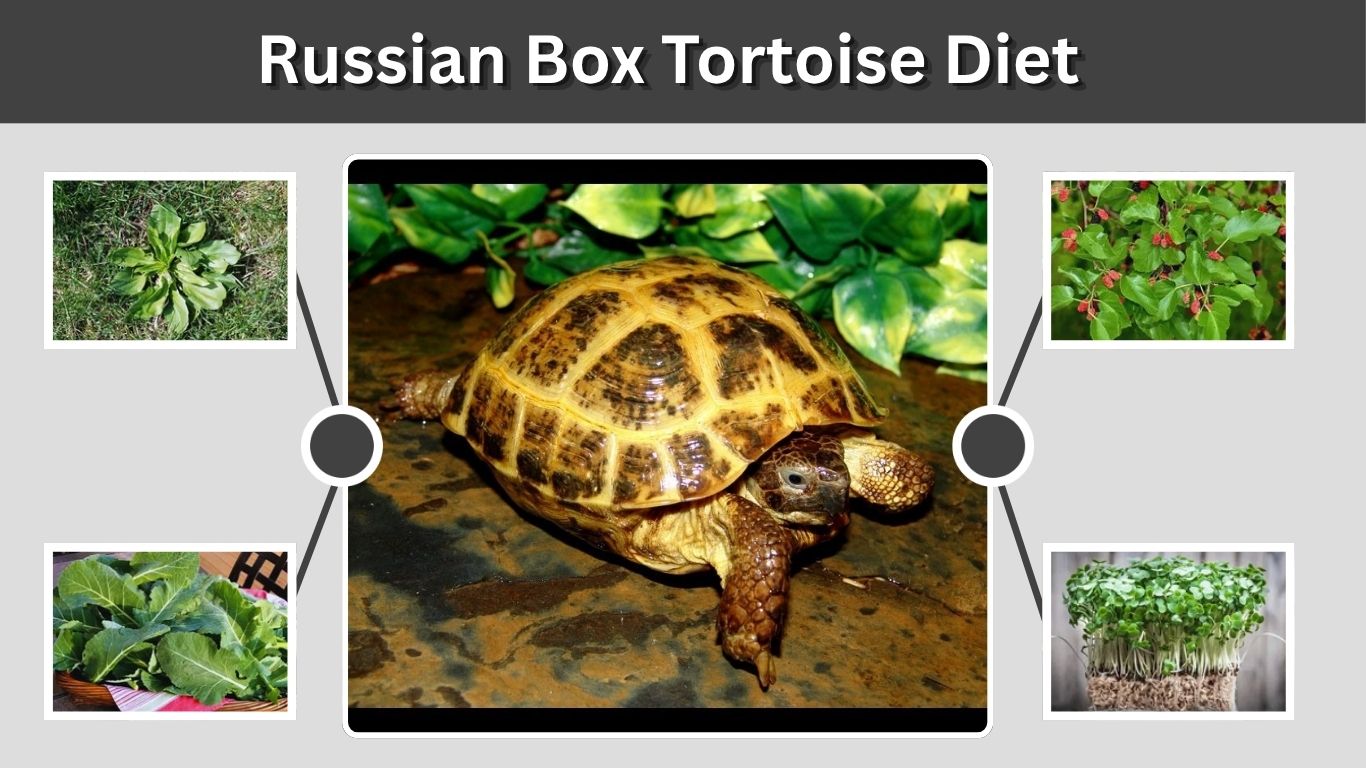
The term “Russian box tortoise” usually refers to the Russian tortoise, also called Horsfield’s tortoise. It is not a true box turtle. Russian tortoises are dry-climate herbivores that need a high-fiber, low-sugar diet. In the wild, they eat tough weeds, grasses, leaves, and seasonal plants. In captivity, the goal is to copy that natural diet as closely as possible.
What Is a Russian Box Tortoise?
A Russian box tortoise is commonly a mistaken name for the Russian tortoise. Some people use “box tortoise” because of its small, round, compact body shape. However, Russian tortoises are land tortoises, not box turtles, and their diet is very different from turtles that eat insects, worms, fruits, or mixed animal foods.
Russian tortoises need mostly leafy weeds, greens, and fibrous plants. They should not eat high-protein foods, dog food, cat food, or fruit-heavy meals.
Russian Tortoise vs Box Turtle Diet
Russian tortoises and box turtles are often confused, but their food needs are not the same. A box turtle may eat insects, worms, fruit, and vegetables. A Russian tortoise should eat a mostly plant-based, dry-climate herbivore diet.
A Russian tortoise diet should include:
- Broadleaf weeds
- Dark leafy greens
- Safe grasses
- Edible flowers
- Cactus pads
- High-fiber plants
- Calcium-rich greens
- Very limited watery vegetables
- No animal protein
- No sugary fruit as a regular food
This difference is very important. Feeding a Russian tortoise like a box turtle can cause digestive problems, fast growth, shell deformity, and poor long-term health.
Natural Wild Russian Tortoise Diet
In the wild, Russian tortoises live in dry grasslands, rocky slopes, desert edges, and scrubland areas. Their food is seasonal and often tough, dry, and fibrous. They do not naturally eat soft supermarket vegetables every day.
Wild Russian tortoises may eat weeds, grasses, leaves, stems, flowers, and other dry vegetation. Food is not always available in large amounts, so their bodies are adapted to a simple, high-fiber diet. Captive tortoises can easily overeat if food is offered in unlimited rich portions.
Why Diet Matters So Much
Diet affects shell growth, digestion, energy, hydration, and bone health. A poor diet can lead to pyramiding, obesity, diarrhea, weak bones, kidney stress, and vitamin imbalance.
A healthy Russian tortoise diet should be low in sugar, low in protein, high in fiber, and rich in calcium. It should also work together with UVB lighting, correct heat, and proper hydration. Food alone cannot keep a tortoise healthy if the enclosure setup is wrong.
Best Foods for a Russian Box Tortoise Diet
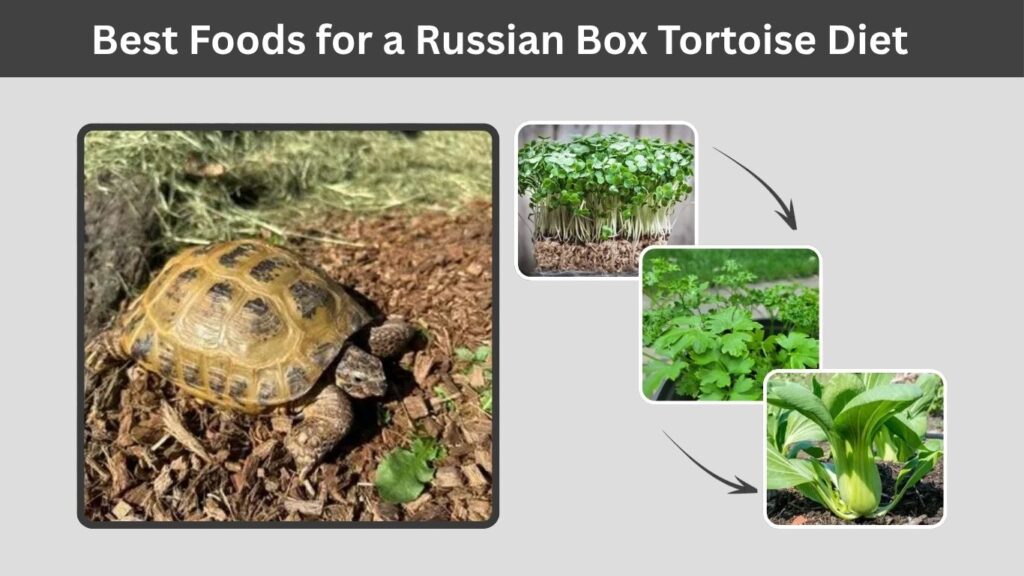
The best diet is simple and natural. Most of the food should come from safe weeds and leafy greens. Variety is important because no single green gives complete nutrition. A mix of weeds, leaves, and flowers is better than feeding the same item every day.
Veterinary and care sources commonly recommend leafy greens and safe weeds as the main diet for Russian tortoises. One updated Russian tortoise care sheet lists dark leafy greens and pesticide-free weeds as the main food group, with foods like dandelion greens, collard greens, mustard greens, turnip greens, plantain, clover, and sow thistle.
Safe Leafy Greens
Leafy greens should form the main part of the diet when wild weeds are not available. Choose firm, nutritious greens instead of watery lettuce-only meals.
Good leafy greens include:
- Dandelion greens
- Collard greens
- Mustard greens
- Turnip greens
- Endive
- Escarole
- Romaine lettuce in small amounts
- Kale in rotation
- Bok choy in rotation
- Parsley in small amounts
- Watercress
- Radicchio
- Chicory leaves
Do not feed only one type of green. A tortoise that eats only romaine lettuce or only kale will not receive a balanced diet. Rotate foods across the week.
Safe Weeds and Garden Plants
Safe weeds are often better than grocery greens because they are closer to the wild diet. However, they must be pesticide-free and correctly identified.
Safe weeds and plants may include:
- Dandelion leaves and flowers
- Plantain weed
- Clover
- Sow thistle
- Mallow
- Chickweed
- Grape leaves
- Mulberry leaves
- Hibiscus leaves
- Hibiscus flowers
- Rose petals
- Nasturtium leaves and flowers
- Prickly pear cactus pads
Never collect plants from roadsides, sprayed lawns, polluted areas, or places treated with herbicides. Wash all plants before feeding.
Food Chart for Russian Tortoises
| Food Type | Examples | How Often |
| Main foods | Dandelion, collards, mustard greens, plantain, clover | Most meals |
| Good rotation foods | Endive, escarole, turnip greens, hibiscus, cactus pad | Several times weekly |
| Occasional foods | Romaine, squash, bell pepper, cucumber | Small amounts only |
| Limit foods | Spinach, chard, kale, parsley | Use lightly in rotation |
| Avoid foods | Fruit, dog food, cat food, bread, meat, beans | Do not feed |
Edible Flowers
Flowers add variety and encourage natural foraging. They should be safe, clean, and chemical-free.
Safe flowers include hibiscus, dandelion flowers, rose petals, nasturtium, pansy, and calendula. Feed flowers as part of a varied meal, not as the only food. Store-bought flowers are often treated with chemicals, so only use flowers grown safely for feeding.
Russian Box Tortoise Foods to Avoid
Russian tortoises are not designed for rich, sugary, or protein-heavy foods. Many common kitchen foods are not safe for them. Even if a tortoise eats something eagerly, that does not mean it is healthy.
Some tortoises will eat almost anything offered. Owners must control the diet because captive tortoises do not always choose wisely.
Fruit and Sugary Foods
Fruit should not be a regular part of a Russian tortoise diet. It contains too much sugar for their digestive system. Too much fruit may disturb gut bacteria and cause loose stool.
Avoid regular feeding of:
- Apple
- Banana
- Grapes
- Melon
- Mango
- Berries
- Peach
- Pear
- Citrus fruits
A tiny piece of fruit is sometimes used by keepers as a rare treat, but it is better to avoid it completely for a strict diet.
High-Protein Foods
Russian tortoises should not eat animal protein. They are herbivores. High-protein foods can stress their kidneys and cause abnormal growth.
Avoid:
- Dog food
- Cat food
- Meat
- Fish
- Eggs
- Insects
- Worms
- Beans
- Lentils
- Peas as a main food
- Tofu
- Dairy products
This is one of the biggest differences between a Russian tortoise and a box turtle. Box turtles may eat animal foods, but Russian tortoises should not.
Unsafe Vegetables and Human Foods
Some vegetables are too watery, too starchy, or poorly balanced for regular feeding. Others may interfere with calcium use when overfed.
Avoid or strongly limit:
- Iceberg lettuce
- Spinach
- Potato
- Tomato
- Onion
- Garlic
- Avocado
- Corn
- Bread
- Rice
- Pasta
- Crackers
- Processed food
- Salty food
- Sugary food
Spinach is not poisonous in tiny amounts, but it contains oxalates that may reduce calcium absorption. It should not be a regular food. One veterinary care sheet also notes that spinach should be limited because oxalates can affect calcium uptake.
How Much and How Often to Feed
Feeding amount depends on age, activity, season, health, and enclosure temperature. A warm, active tortoise may eat more than a cool, inactive one. However, overfeeding is common in captivity, especially when owners offer soft greens all day.
A simple feeding routine helps prevent obesity and fast shell growth.
Daily Feeding Routine
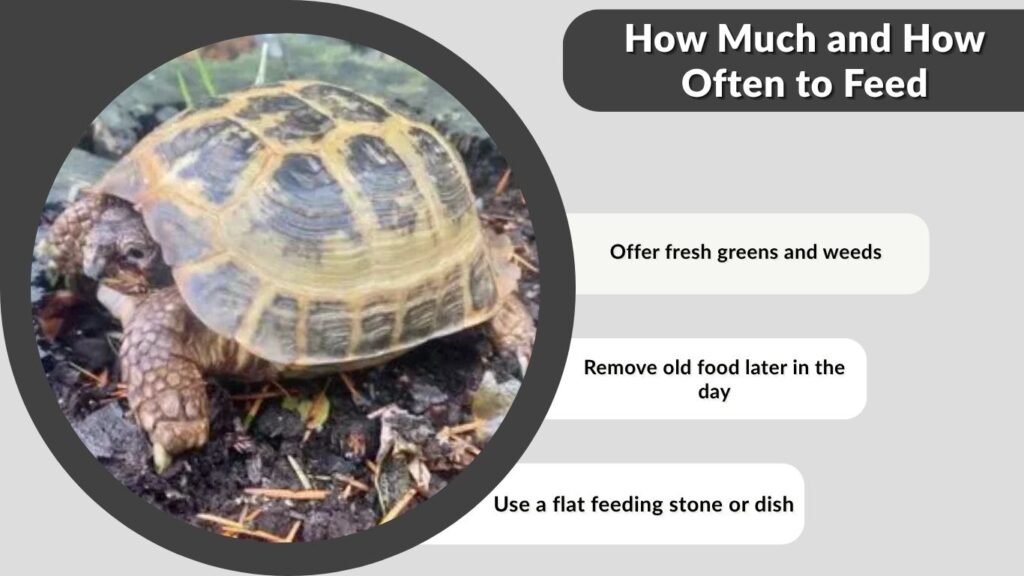
Most Russian tortoises can be fed once daily during the active season. Offer a mixed pile of greens and weeds. The food portion can be about the size of the tortoise’s shell, then adjusted based on body condition and waste.
A good routine:
- Feed in the morning after the tortoise warms up
- Offer fresh greens and weeds
- Remove old food later in the day
- Provide clean water every day
- Use a flat feeding stone or dish
- Rotate food types through the week
Feeding on a flat rock can also help keep the beak naturally worn. Avoid feeding directly on loose substrate because the tortoise may swallow dirt, sand, or bedding.
Baby Russian Tortoise Diet
Baby Russian tortoises need the same basic diet as adults: weeds, leafy greens, flowers, and high-fiber plants. The food should be chopped smaller so they can bite it easily.
Baby tortoises should not be pushed to grow fast. Fast growth can cause shell problems. Give them variety, calcium, hydration, UVB, and proper heat. Do not feed fruit, high-protein food, or soft vegetables as main foods.
Adult Russian Tortoise Diet
Adult Russian tortoises need a steady, high-fiber diet. They may become overweight if they eat rich foods too often or live in a small enclosure. An adult should have a firm shell, strong legs, clear eyes, and steady activity.
For adults, focus on weeds, greens, edible leaves, and flowers. Use watery vegetables only in small amounts. Keep their diet plain, natural, and varied.
Calcium, Supplements, and Hydration
A Russian tortoise diet is not only about leaves. Calcium, UVB, and water are also essential. Without UVB, the tortoise cannot properly use calcium. Without hydration, the digestive system and kidneys may suffer.
Diet, lighting, and hydration must work together.
Calcium for Shell and Bone Health
Calcium supports bones, muscles, and shell growth. A lack of calcium can contribute to weak bones and metabolic bone disease. Too much supplementation can also be harmful, so use it carefully.
Common calcium options include:
- Plain calcium powder without phosphorus
- Cuttlebone left in the enclosure
- Calcium-rich greens
- UVB exposure for vitamin D3 support
Many keepers dust greens lightly with calcium several times per week. A cuttlebone allows the tortoise to nibble when needed. Indoor tortoises especially need strong UVB lighting along with calcium.
Water and Soaking
Russian tortoises come from dry areas, but they still need water. A shallow water dish should be available. The dish must be easy to enter and exit.
Soaking can help with hydration, especially for babies, newly purchased tortoises, or tortoises that do not drink often. Use lukewarm shallow water and supervise the tortoise. Do not use deep water.
Signs of dehydration may include sunken eyes, dry skin, thick urates, low activity, and poor appetite. If these signs appear, review the enclosure and contact a reptile vet.
UVB and Diet Connection
UVB lighting helps tortoises make vitamin D3, which helps the body use calcium. A tortoise eating good greens can still develop bone problems if it has no UVB and no proper basking area.
Indoor Russian tortoises need a quality UVB bulb and a warm basking spot. UVB bulbs also need replacement on schedule because they can stop producing useful UVB even while still giving visible light.
Wild Russian Box Tortoise Diet
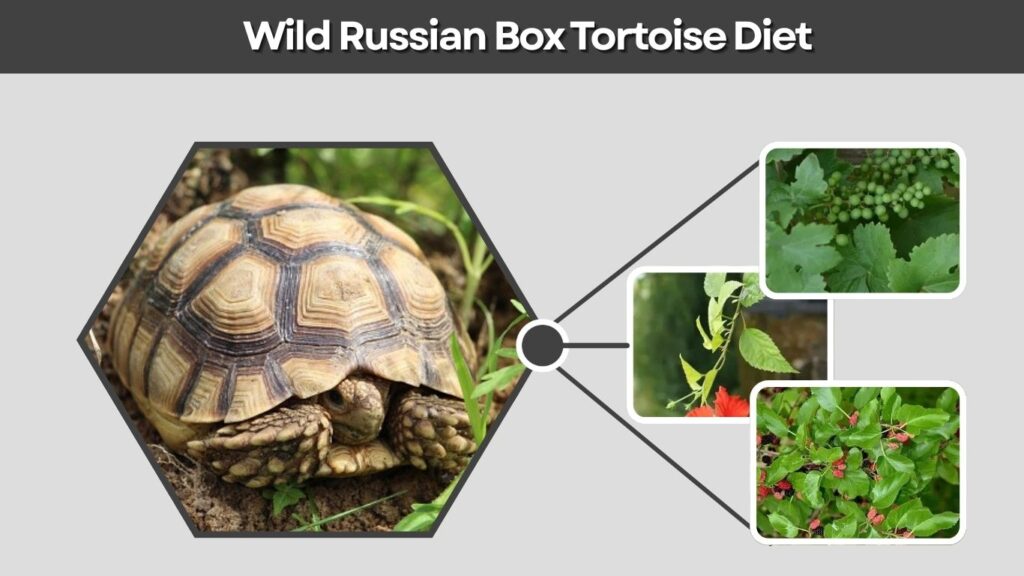
The wild Russian tortoise diet is much rougher than a typical pet diet. Wild tortoises do not eat supermarket vegetables every day. They graze on seasonal plants, dry weeds, grasses, flowers, and leaves.
This wild diet explains why captive tortoises need high fiber and low sugar.
Seasonal Feeding in the Wild
In nature, Russian tortoises may have short active periods when food is available. They eat more during favorable weather and may become less active during extreme heat or cold. Their bodies are adapted to seasonal food cycles.
Captive tortoises live differently. They often have stable heat, daily meals, and constant access to soft greens. This is why owners must avoid overfeeding.
How to Copy the Wild Diet at Home
You can copy the wild diet by offering more weeds and fibrous plants instead of soft vegetables. Let your tortoise graze on safe outdoor plants when weather and housing allow.
To make the diet more natural:
- Grow pesticide-free weeds
- Offer mixed greens, not one food
- Add edible flowers
- Use cactus pad for fiber and moisture
- Avoid fruit
- Avoid animal protein
- Do not overfeed soft vegetables
- Provide outdoor grazing when safe
A natural-style diet keeps the digestive system working properly and supports slow, healthy growth.
Common Feeding Mistakes
Many feeding problems happen because owners treat tortoises like general pets instead of specialized reptiles. Russian tortoises need a strict herbivore diet.
Common mistakes include:
- Feeding fruit too often
- Giving dog or cat food
- Feeding only lettuce
- Using spinach as a staple
- Giving too much cucumber
- Feeding large portions all day
- Skipping calcium
- Skipping UVB lighting
- Not providing clean water
- Collecting unsafe wild plants
Correcting these mistakes early can prevent serious health problems.
Sample Russian Box Tortoise Meal Plan
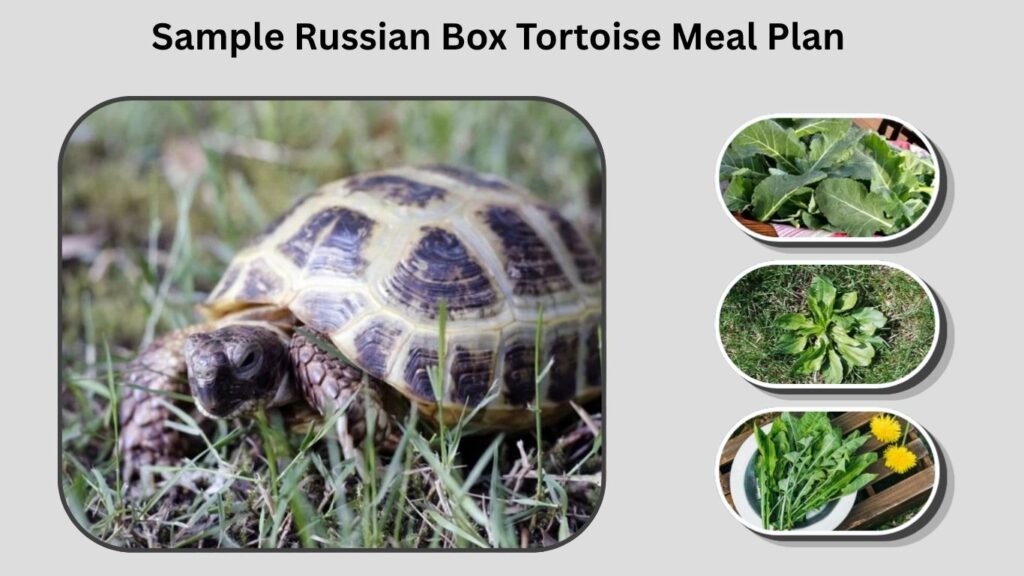
A meal plan helps keep the diet balanced. It does not need to be complicated. The goal is variety, fiber, and safe plants.
Use this plan as a guide and adjust based on local food availability.
7-Day Feeding Plan
Day 1: Dandelion greens, collard greens, and hibiscus leaf
Day 2: Plantain weed, endive, and clover
Day 3: Mustard greens, turnip greens, and cactus pad
Day 4: Escarole, grape leaves, and dandelion flowers
Day 5: Collard greens, sow thistle, and radicchio
Day 6: Chicory, mulberry leaves, and nasturtium flowers
Day 7: Mixed safe weeds with a small amount of romaine
This plan gives variety without using fruit or animal protein. If you cannot find safe weeds, use grocery greens in rotation until you can grow or source better plants.
Grocery Store Food Options
Not everyone has access to safe weeds. Grocery greens can still work if you choose carefully and rotate them.
Good grocery options include collards, mustard greens, turnip greens, endive, escarole, radicchio, watercress, and romaine in small amounts. Avoid making iceberg lettuce the main food because it has poor nutrition.
Wash all grocery greens well. Organic greens are helpful but still need rinsing.
Feeding Tips for Better Health
A healthy diet works best with good habits. Feed on a clean surface, remove old food, and watch your tortoise’s body condition.
Helpful tips:
- Offer variety every week
- Keep meals high in fiber
- Use weeds when possible
- Feed after morning warm-up
- Avoid fruit and animal protein
- Provide calcium and UVB
- Keep water available
- Watch stool and urates
- Weigh your tortoise monthly
- See a reptile vet for appetite loss
If a Russian tortoise refuses food, check temperature first. A tortoise that is too cold may not digest properly or eat normally.
FAQs
Can a Russian box tortoise eat fruit?
A Russian tortoise should not eat fruit as a regular food. Fruit is too sugary for this dry-climate herbivore and may upset gut bacteria. It is better to feed weeds, leafy greens, edible flowers, and cactus pads instead of apples, bananas, grapes, or berries.
What is the best food for a Russian tortoise?
The best foods are pesticide-free weeds and dark leafy greens. Dandelion greens, plantain, clover, collard greens, mustard greens, turnip greens, endive, and escarole are good choices. A varied diet is better than feeding one green every day.
Can Russian tortoises eat lettuce?
Russian tortoises can eat some lettuce, but it should not be the main diet. Romaine is better than iceberg, but weeds and darker greens are healthier. Iceberg lettuce has poor nutrition and too much water, so it should be avoided or used rarely.
Do Russian tortoises need calcium powder?
Many captive Russian tortoises benefit from calcium supplementation, especially indoors. Calcium powder without phosphorus can be lightly dusted on food several times per week. A cuttlebone can also be left in the enclosure. Proper UVB lighting is needed for calcium use.
What do wild Russian tortoises eat?
Wild Russian tortoises eat tough seasonal plants, weeds, grasses, leaves, stems, and flowers. Their natural diet is high in fiber and low in sugar. Captive diets should copy this by using safe weeds, leafy greens, flowers, and fibrous plants instead of fruit or protein foods.