
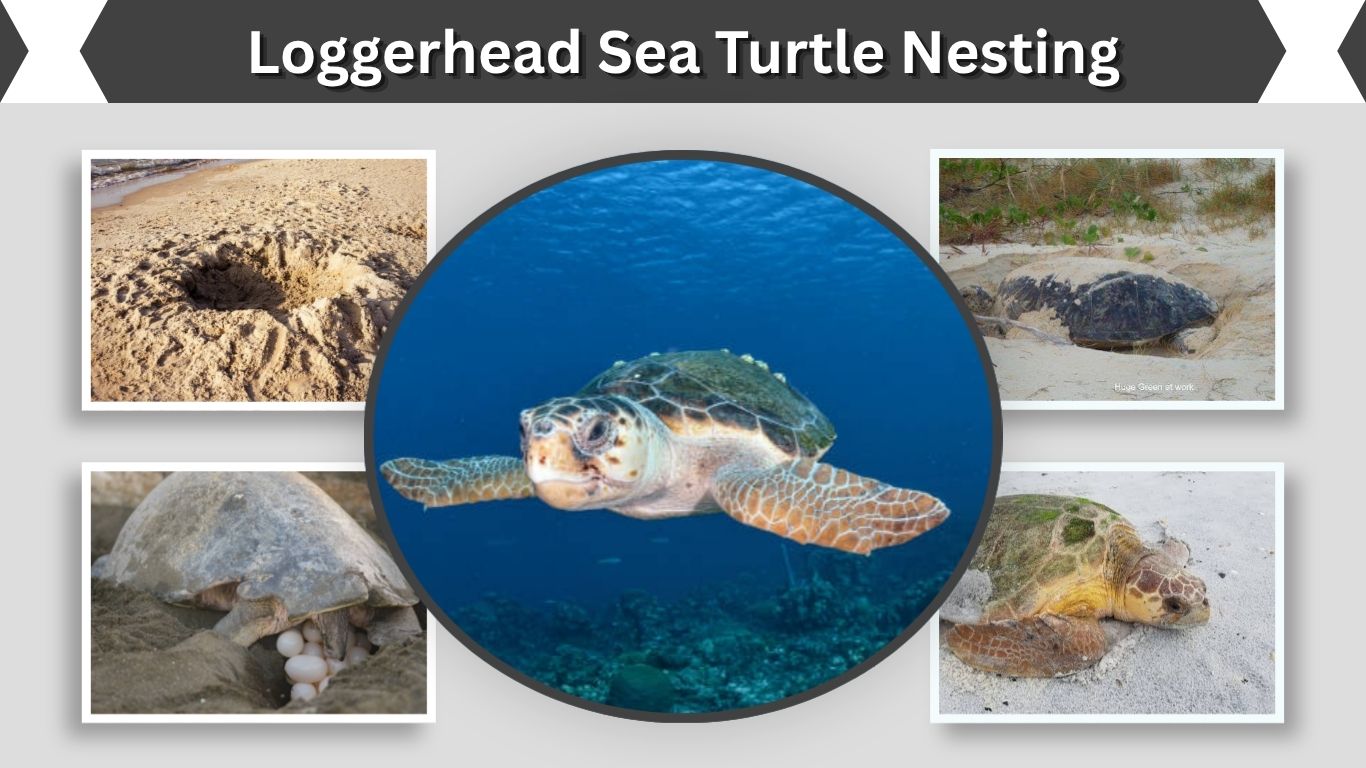
Loggerhead sea turtle nesting is one of the most important events in the life cycle of this threatened marine reptile. Each nesting season, adult females return to sandy beaches to dig nests, lay eggs, cover them carefully, and return to the ocean. Weeks later, tiny hatchlings emerge and crawl toward the sea, beginning a dangerous journey that only a small number will survive.
What Is Loggerhead Sea Turtle Nesting?
Loggerhead sea turtle nesting happens when an adult female loggerhead comes ashore to lay eggs. Loggerheads spend most of their lives in the ocean, but females must return to beaches for reproduction. They usually nest at night, when temperatures are cooler and there is less disturbance from people and predators.
A nesting loggerhead sea turtle slowly crawls above the high-tide line, chooses a suitable spot, digs a body pit, and then uses her rear flippers to create an egg chamber. After laying the eggs, she covers the nest with sand and disguises the area before returning to the water.
This process can take more than an hour. If the turtle is disturbed before laying eggs, she may abandon the attempt and return to the ocean. This is why quiet, dark beaches are so important during nesting season.
Loggerhead Sea Turtle Nesting Season
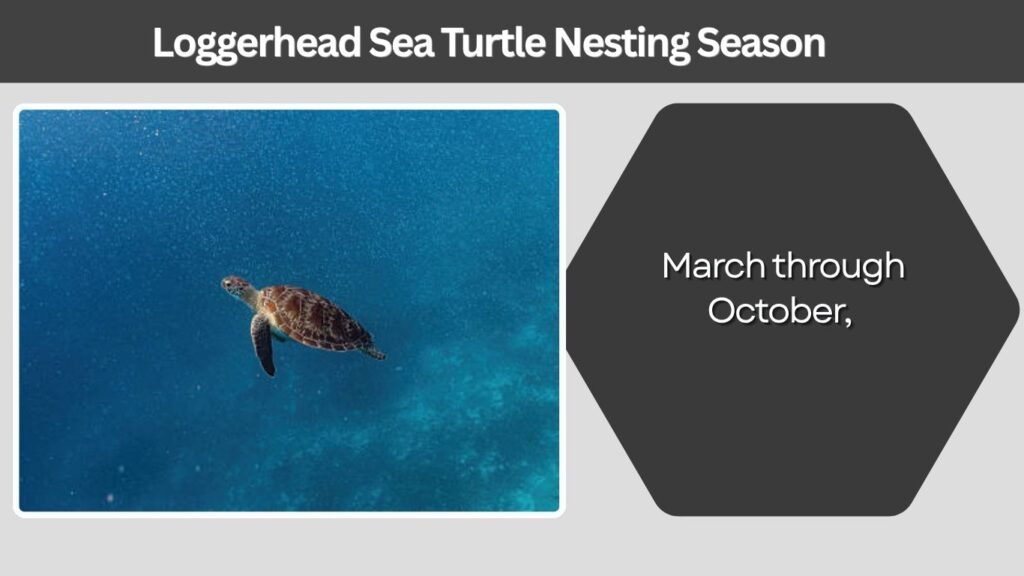
Loggerhead sea turtle nesting season depends on location, climate, and beach conditions. In many parts of the southeastern United States, nesting usually begins in spring and continues through summer. Hatchlings often emerge later in summer and into early fall.
In Florida, sea turtle nesting season is commonly associated with March through October, although local dates can vary by county or beach. Georgia’s loggerhead nesting season usually begins around early May, with daily nest monitoring starting in mid-May. South Carolina and North Carolina also see nesting mainly during the warmer months.
Loggerheads do not usually nest every year. A female may return to her nesting beach every two or more years and lay several clutches in one season. In Florida, females average about 4.1 clutches per nesting season, with around 14 days between nests, and each nest averages about 114 eggs.
Where Do Loggerhead Sea Turtles Nest?
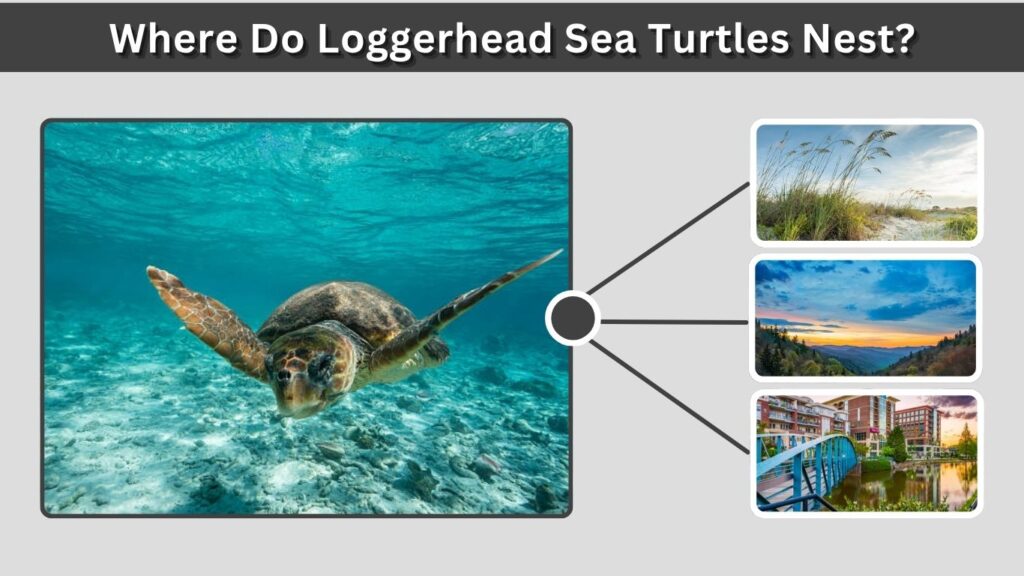
Loggerhead sea turtles nest on sandy beaches in warm and temperate regions. They need beaches where females can crawl above the tide line and dig deep enough for eggs to incubate safely.
Important loggerhead sea turtle nesting areas include:
- Florida
- Georgia
- South Carolina
- North Carolina
- Virginia
- Alabama
- Mississippi
- The Mediterranean
- Oman
- Japan
- Australia
- Other subtropical and temperate coastlines
In the United States, loggerheads are the most abundant sea turtle species that nests on beaches. They are also the most common sea turtle found in U.S. coastal waters.
Loggerhead Sea Turtle Nesting in Florida
Florida is one of the most important loggerhead nesting areas in the world. Many Florida beaches support large numbers of nests each year, especially along the Atlantic coast. The state tracks nesting through long-term surveys and uses beach data to monitor population trends.
Loggerhead sea turtle nesting season in Florida can bring thousands of nests across the state. Beachfront lighting rules, nest marking, and volunteer patrols help protect nesting females and hatchlings.
Loggerhead Sea Turtle Nesting in Georgia
Georgia’s barrier islands provide important nesting habitat for loggerhead sea turtles. Nesting usually begins around early May, and beaches are monitored throughout the season. The Georgia Department of Natural Resources coordinates sea turtle conservation efforts and works with partners to mark, protect, and monitor nests.
Loggerhead Sea Turtle Nesting in South Carolina
South Carolina also has significant loggerhead sea turtle nesting beaches. State conservation teams and volunteers monitor nests, protect eggs, and collect long-term data. Loggerheads nesting in South Carolina are part of a broader recovery effort across the southeastern coast.
What Does a Loggerhead Sea Turtle Nest Look Like?
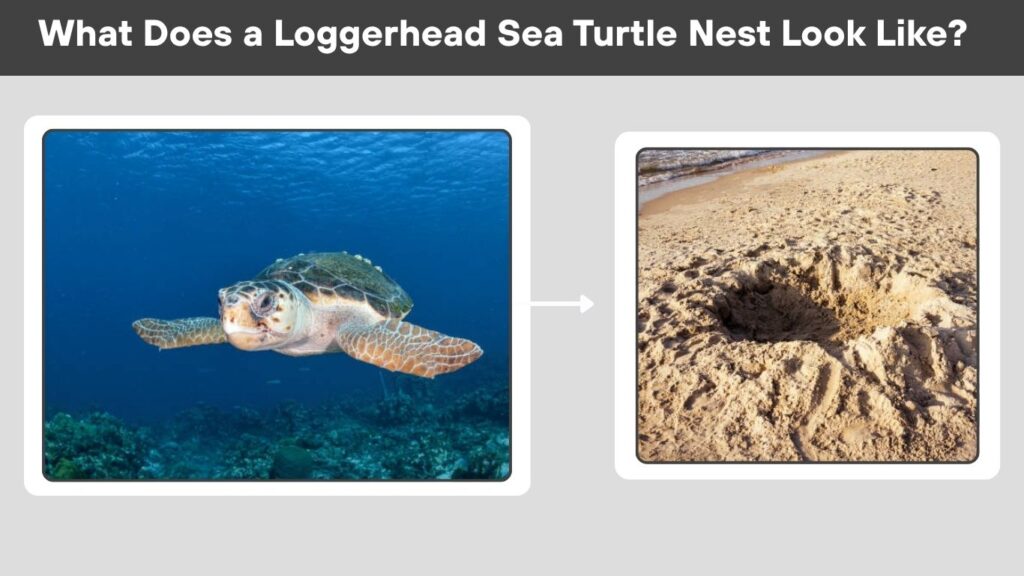
A loggerhead sea turtle nest is usually hidden beneath the sand. From the surface, it may look like a disturbed area of beach with crawl marks, scattered sand, and a covered body pit. After the female finishes nesting, she throws sand around the area to camouflage the nest.
The actual egg chamber is below the surface. It is shaped like a deep flask or cavity, dug with the turtle’s rear flippers. The eggs are round, white, and leathery rather than hard like bird eggs.
Because nests are difficult to identify after they are covered, trained survey teams look for turtle tracks and nesting signs early in the morning. They may mark the area with stakes, tape, or signs to keep people from walking over the nest.
Loggerhead Sea Turtle Nesting Behavior
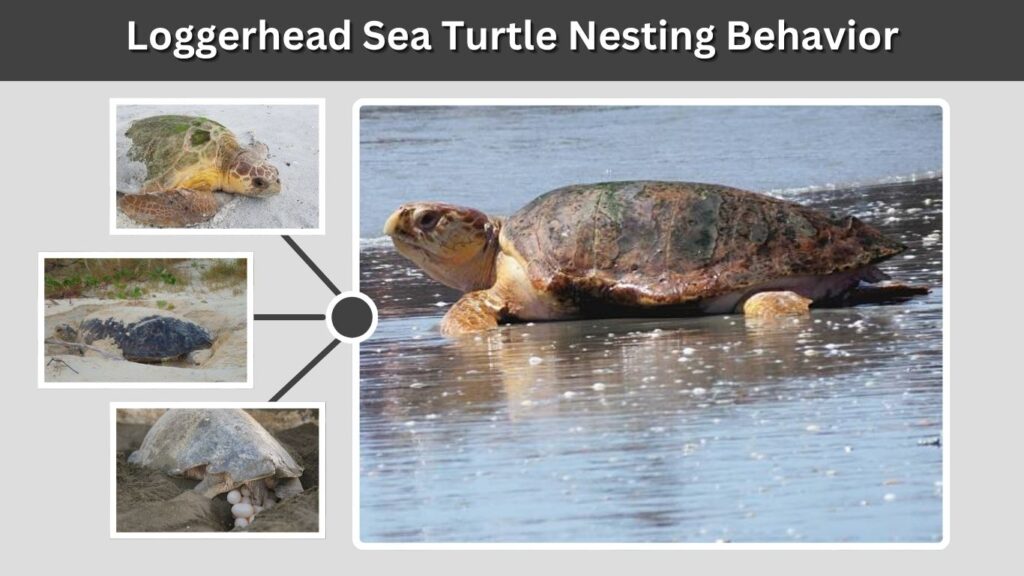
Loggerhead sea turtle nesting behavior follows a careful pattern. The female leaves the ocean, crawls up the beach, selects a site, digs, lays eggs, covers the nest, camouflages the area, and returns to the sea.
The basic nesting process includes:
- Crawling from the surf to dry sand
- Choosing a nesting area above the tide line
- Digging a body pit
- Creating a nest cavity with rear flippers
- Laying a clutch of eggs
- Covering and camouflaging the nest
- Returning to the ocean
Loggerheads may abandon a nesting attempt if they encounter bright lights, noise, people, obstacles, or poor beach conditions. These abandoned attempts are often called false crawls.
Loggerhead Sea Turtle Number of Eggs Per Nest
A loggerhead sea turtle nest often contains around 100 or more eggs. In Florida, the average is about 114 eggs per nest. The exact number can vary depending on the female, her size, age, health, and nesting season conditions.
A single female may lay several nests in one season. This increases the chance that at least some hatchlings will survive, because eggs and hatchlings face many threats.
Even after successful hatching, survival is difficult. Hatchlings must avoid predators, artificial lights, beach obstacles, and ocean hazards.
Loggerhead Sea Turtle Nest Hatching
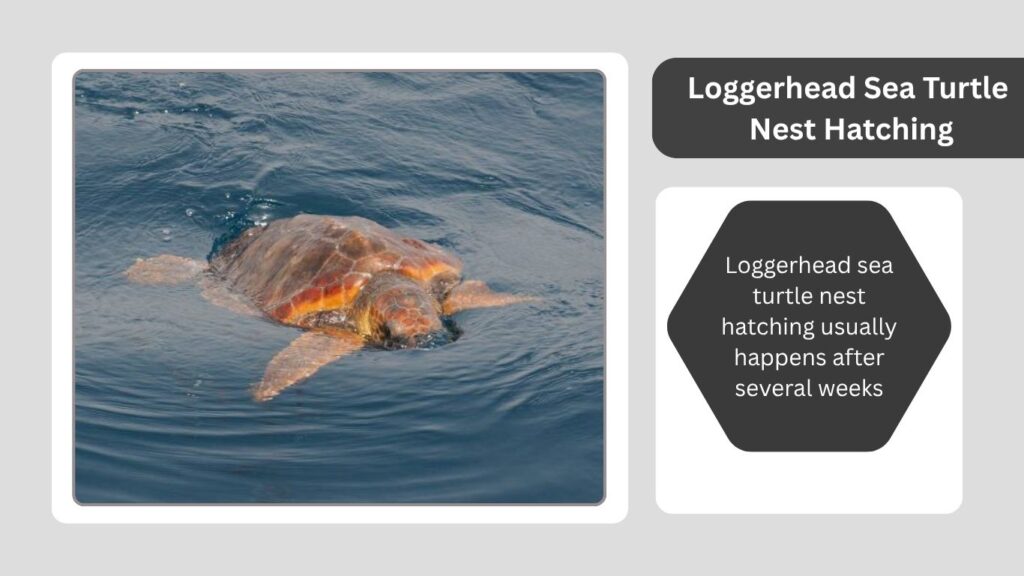
Loggerhead sea turtle nest hatching usually happens after several weeks of incubation. The exact timing depends on sand temperature, moisture, weather, and location. Warmer sand generally speeds development, while cooler sand can slow it.
When hatchlings are ready, they break out of their eggs and move upward through the sand together. They usually emerge at night, when the sand is cooler and predators may be less active.
Once on the surface, hatchlings move toward the brightest natural horizon, which is usually the moonlit ocean. Artificial lights from homes, hotels, streets, or flashlights can confuse them and lead them away from the sea.
Why Loggerhead Sea Turtle Nests Are Camouflaged
After laying eggs, a female loggerhead covers the nest and scatters sand around the area. This camouflage helps hide the nest from predators such as raccoons, foxes, coyotes, birds, crabs, and other animals.
Camouflage can also make the nest harder for people to notice. That is helpful in wild areas but risky on busy beaches. People may accidentally step on nests, place beach chairs over them, dig into them, or drive equipment nearby.
For this reason, conservation teams often mark known loggerhead sea turtle nests after morning surveys.
How To Watch Loggerhead Sea Turtle Nesting Safely
Watching loggerhead sea turtle nesting can be unforgettable, but it must be done responsibly. Sea turtles are protected, and disturbing a nesting female or hatchlings can be harmful and illegal.
The safest way to watch nesting is through an approved guided turtle walk. These programs are usually led by trained naturalists or conservation groups and follow local wildlife rules.
Responsible Viewing Tips
If you are near a nesting beach:
- Keep your distance from nesting turtles.
- Do not touch turtles, eggs, or hatchlings.
- Never use flash photography.
- Turn off beach-facing lights.
- Fill holes and flatten sandcastles before leaving.
- Remove chairs, tents, and trash from the beach.
- Stay behind marked nest areas.
- Follow local beach rules and posted signs.
If you see a nesting turtle, stay quiet and avoid blocking her path to or from the ocean.
Threats to Loggerhead Sea Turtle Nests
Loggerhead sea turtle nests face many natural and human-caused threats. Predators may dig up eggs. Storms and high tides can flood nests. Hot sand can affect hatchling development. Human activity can also damage nests or disorient hatchlings.
Common threats include:
- Artificial lighting
- Beach erosion
- Storm surge and flooding
- Predation by raccoons, foxes, coyotes, birds, and crabs
- Beach furniture and recreational equipment
- Holes dug in the sand
- Vehicle traffic on beaches
- Coastal development
- Plastic pollution
Climate change is also a growing concern because sand temperature affects sea turtle development. Warmer beaches can influence hatchling sex ratios and nesting success.
Why Loggerhead Nesting Beaches Matter
Loggerhead nesting beaches are essential for the survival of the species. Adult turtles may travel long distances through the ocean, but reproduction depends on safe beaches. If nesting habitat is lost or heavily disturbed, future generations are at risk.
Protected nesting areas across Florida, Georgia, South Carolina, North Carolina, and other coastal regions help support loggerhead recovery. In the southeastern United States, designated critical habitat includes many nesting beaches across multiple states.
Long-term monitoring is also important. Nest counts help scientists understand whether populations are increasing, declining, or shifting due to environmental changes.
FAQs
When is loggerhead sea turtle nesting season?
Loggerhead sea turtle nesting season usually occurs during the warmer months. In many parts of the southeastern United States, nesting begins in spring and continues through summer, with hatchlings emerging into late summer or fall. In Florida, nesting season is often associated with March through October.
Where do loggerhead sea turtles nest?
Loggerhead sea turtles nest on sandy beaches in warm and temperate regions. Major nesting areas include Florida, Georgia, South Carolina, North Carolina, parts of the Mediterranean, Oman, Japan, and Australia. In the U.S., Florida is one of the most important loggerhead nesting areas.
How many eggs are in a loggerhead sea turtle nest?
A loggerhead sea turtle nest often contains around 100 or more eggs. In Florida, each loggerhead nest averages about 114 eggs. A female can lay several nests in one season, usually with time between each nesting event.
What does a loggerhead sea turtle nest look like?
A loggerhead sea turtle nest is usually hidden under the sand. On the surface, it may look like disturbed sand with turtle crawl tracks nearby. The egg chamber is below the surface and is dug with the female’s rear flippers.
How can you protect loggerhead sea turtle nests?
You can help by keeping beaches dark, clean, and flat during nesting season. Turn off lights near the beach, remove furniture and trash, fill holes, avoid marked nests, and never touch turtles, eggs, or hatchlings. Use approved guided walks for safe viewing.