
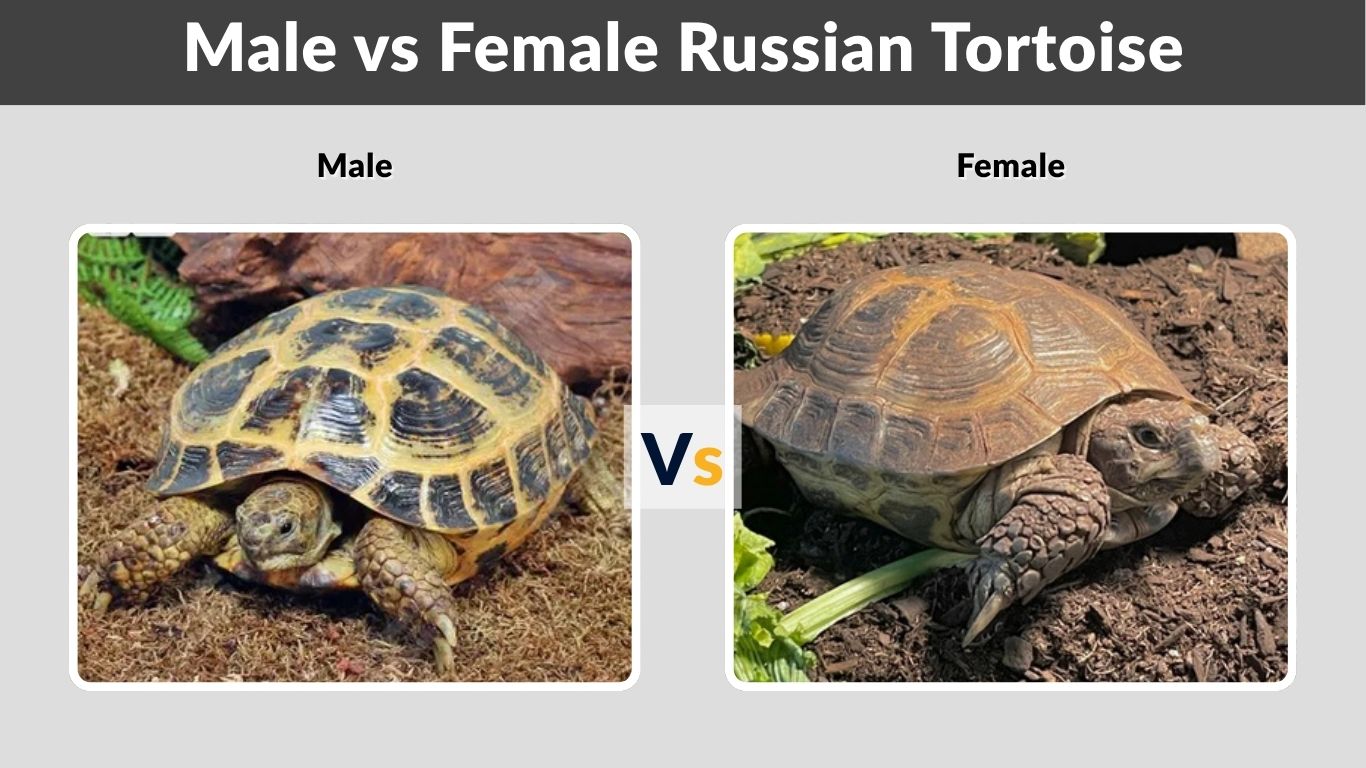
Russian tortoises can look very similar when they are young, but adult males and females have several clear differences. The easiest signs are tail length, cloaca position, body size, and shell shape. Females are usually larger, while males often have longer tails and more active courtship behavior. This guide explains how to tell the difference and what each sex needs in daily care.
Male vs Female Russian Tortoise: Quick Comparison
Russian tortoises are small, hardy tortoises, but sexing them is not always easy at a young age. Most differences become clearer when the tortoise is mature. A single feature can be misleading, so it is best to compare the tail, shell, size, and behavior together.
| Feature | Male Russian Tortoise | Female Russian Tortoise |
| Adult size | Usually smaller | Usually larger |
| Tail | Longer and thicker | Shorter and smaller |
| Cloaca position | Farther from shell base | Closer to shell base |
| Plastron shape | May be slightly concave | Usually flatter |
| Behavior | More likely to chase, mount, or head bob | Often calmer, may dig before laying eggs |
| Egg laying | Cannot lay eggs | Can lay eggs, even without mating |
Main Physical Differences
The most reliable way to compare male and female Russian tortoises is to check the tail and cloaca. Males usually have a longer, thicker tail that they tuck to the side. Females have a shorter tail that stays closer to the body. The cloaca, or vent opening, is farther down the tail in males and closer to the shell in females.
Size is another clue. Adult females are often larger because they need more body space for egg production. Males are usually smaller and may look more compact. However, size alone is not enough because diet, age, health, and care conditions can affect growth.
Why Young Tortoises Are Hard to Sex
Baby and juvenile Russian tortoises are difficult to sex because their bodies have not fully developed. A young male may look like a female until the tail grows longer with maturity. For this reason, sellers may give an estimated sex, but it is not always accurate.
Sexing becomes easier when the tortoise is older and has reached a larger size. If the tortoise is still small, it is better to wait before making a final judgment. Looking too early can lead to mistakes, especially when comparing two juveniles from different growth rates.
How to Tell If a Russian Tortoise Is Male or Female
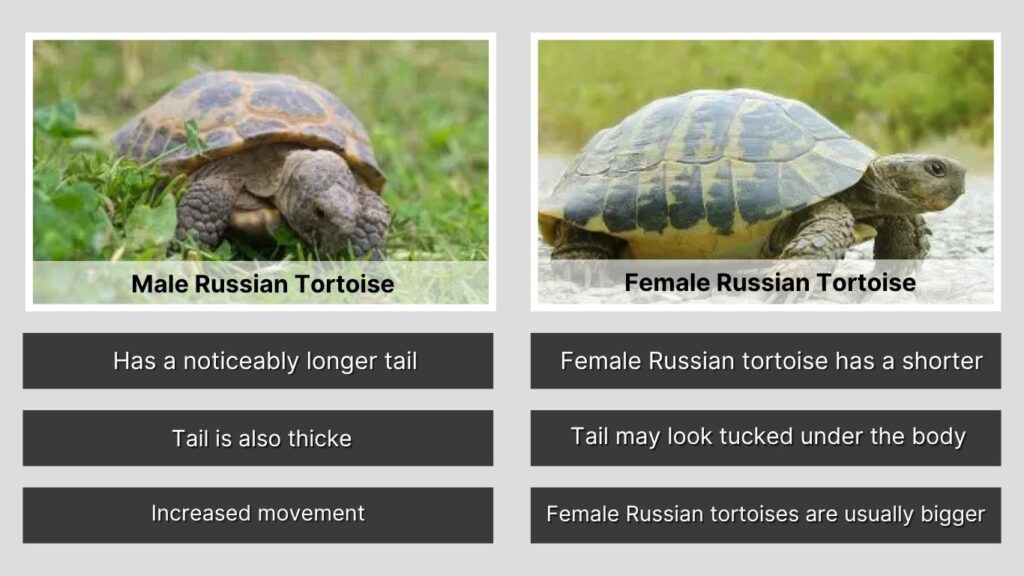
To identify the sex, look at several body features together. Do not rely on one sign only. A Russian tortoise may show one male-like feature and one female-like feature, especially if it is not fully mature. The tail, plastron, cloaca, and size give the best overall answer.
Tail Shape and Cloaca Position
Tail shape is the most useful sexing feature. A male Russian tortoise usually has a noticeably longer tail. The tail is also thicker at the base and often curves to one side. The cloaca is positioned farther from the body, closer to the tip of the tail.
A female Russian tortoise has a shorter, smaller tail. Her cloaca is closer to the base of the tail, near the shell. The tail may look tucked under the body and less obvious from above. If you compare an adult male and adult female side by side, the tail difference is usually easy to see.
Shell and Plastron Differences
The plastron is the bottom shell of the tortoise. In many male tortoises, the plastron may be slightly concave. This shallow curve helps the male balance during mating. Female Russian tortoises usually have a flatter plastron.
However, the plastron difference can be subtle in Russian tortoises. Some males do not show a deep curve, and some females may not look perfectly flat. This is why the plastron should be used as a supporting clue, not the only sign.
The shell shape can also vary by individual. Females may look broader and heavier, while males may look smaller and narrower. But shell shape can be affected by diet, lighting, and enclosure quality.
Size and Weight Differences
Female Russian tortoises are usually bigger than males when fully grown. A mature female often has a larger body, wider shell, and heavier build. Males are commonly smaller, lighter, and more compact.
Still, size is not always a perfect guide. A well-fed male may be larger than a younger female. A poorly raised female may remain small. Growth depends on age, UVB exposure, diet, calcium, hydration, and enclosure temperature. Always use size with other sexing signs.
Male Russian Tortoise Traits
Male Russian tortoises are often chosen by keepers who want a slightly smaller pet. They may need less space than a large female, but they still require a proper enclosure, natural digging area, UVB lighting, and a healthy diet. Their behavior can be more active, especially during breeding season.
Male Russian Tortoise Behavior
Male Russian tortoises may show more courtship behavior than females. This can include chasing, circling, head bobbing, ramming, and mounting. Some males are calm, while others become pushy around other tortoises.
A male may also become territorial. If kept with another tortoise, he may follow, bite, or stress the other animal. This is one reason many keepers house Russian tortoises separately. A male does not need a female to be healthy or happy.
Male Russian Tortoise Size
Adult male Russian tortoises are usually smaller than females. Their smaller size can make them easier to house, but they still need plenty of floor space. These tortoises are active walkers and strong diggers.
A small enclosure can cause stress, pacing, glass surfing, and poor health. Even a male Russian tortoise needs room to graze, hide, bask, cool down, and dig. Outdoor time can be helpful when the weather is safe and the area is secure.
Is a Male Russian Tortoise Better?
A male Russian tortoise can be a good choice for many owners because it usually stays smaller. However, males may show more mating behavior and can be aggressive toward other tortoises. If you plan to keep only one tortoise, a male can work well.
The “better” choice depends on your setup. If you want a single pet and have a good enclosure, either sex can be suitable. If you want to house more than one, males can create more problems because of chasing and mounting.
Female Russian Tortoise Traits
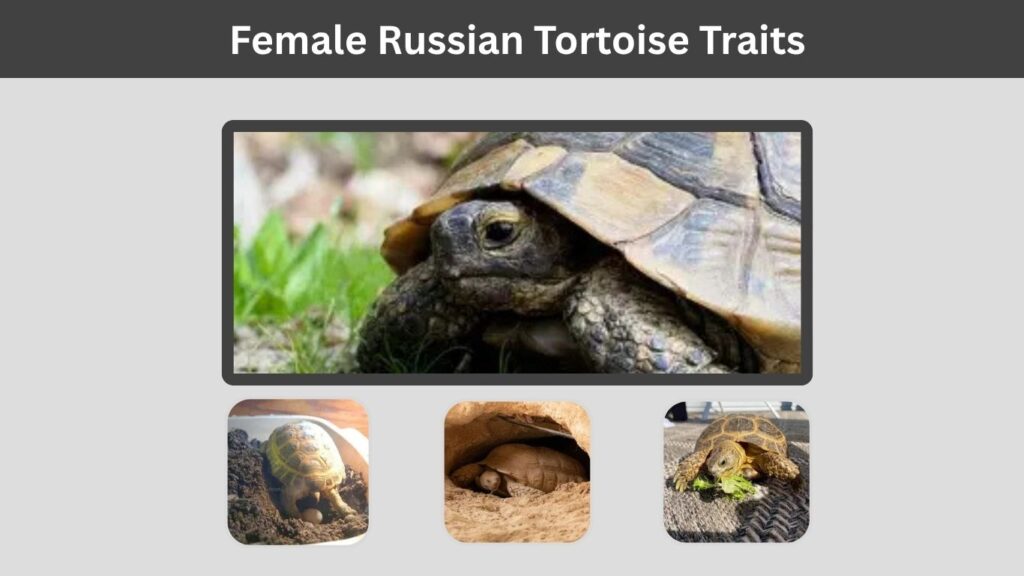
Female Russian tortoises are often larger and may appear calmer than males, but they have their own care needs. The biggest difference is egg laying. A female can lay eggs even if she has never mated. This means she needs proper nutrition, calcium, and a safe nesting area.
Female Russian Tortoise Size
Females are usually larger because their bodies are built to carry eggs. A full-grown female may look wider and heavier than a male. This larger size means she may need more space and deeper substrate.
A female that is too small, weak, or poorly nourished may have egg-laying problems. Proper UVB lighting, calcium, and a varied weed-based diet are important. Good care helps support strong bones, shell health, and normal reproductive function.
Do Female Russian Tortoises Lay Eggs Without Mating?
Yes, female Russian tortoises can lay infertile eggs without mating. These eggs will not hatch, but the process is still natural. Some females never lay eggs, while others may lay them seasonally.
Before laying, a female may become restless, dig more often, walk around the enclosure, or eat less. She needs a suitable nesting area with safe, diggable substrate. If she strains, becomes weak, stops eating for a long time, or cannot pass eggs, a reptile veterinarian should check her.
Female Russian Tortoise Behavior
Female Russian tortoises are often less aggressive than males, but personality varies. Some females are gentle and steady, while others are bold, active, or territorial. A female may dig more when she is preparing to lay eggs.
Behavior alone cannot confirm sex. A female can act dominant, chase another tortoise, or mount in some situations. A male can also be calm. Physical signs are more reliable than personality when identifying sex.
Housing Male and Female Russian Tortoises
Russian tortoises are not social pets in the same way dogs or rabbits are. They do not need a companion. In many cases, keeping them alone is safer and less stressful. Housing males and females together can lead to bullying, stress, injury, or unwanted breeding.
| Housing Pair | Risk Level | Notes |
| One tortoise alone | Lowest | Often best for health and stress control |
| Two females | Medium | May work in large setups, but bullying can still happen |
| One male and one female | High | Male may constantly chase or mount the female |
| Two males | Very high | Fighting and territorial behavior are common |
Can Two Female Russian Tortoises Live Together?
Two females may live together only if the enclosure is very large and both animals are monitored closely. Even females can bully each other. One may block food, take the best basking area, or constantly follow the other.
Signs of stress include hiding all day, not eating, pacing, weight loss, shell biting, or one tortoise always staying away from the other. If these signs appear, separate them. A peaceful-looking pair can still have hidden dominance problems.
Can You Keep a Male and Female Together?
Keeping a male and female Russian tortoise together is usually not recommended. The male may repeatedly chase, bite, ram, or mount the female. This can cause stress, injuries, and poor feeding. The female may also become exhausted from constant attention.
If breeding is not the goal, they should be housed separately. Even with breeding, keepers usually introduce them only for short supervised periods. A female needs space to rest and avoid the male.
Should Russian Tortoises Live Alone?
For most owners, one Russian tortoise per enclosure is the safest choice. A single tortoise can live a healthy life without another tortoise. It still needs enrichment, proper heat, UVB, hides, digging space, and a natural diet.
Living alone prevents many common problems, including bullying, food competition, mating stress, and injuries. This is especially helpful for beginners who may not notice subtle signs of tortoise stress.
Male vs Female Russian Tortoise Care Needs
Male and female Russian tortoises need the same basic care: strong UVB lighting, a warm basking area, cooler zones, dry conditions, safe substrate, and a high-fiber diet. The main care differences are related to space, behavior, and egg laying.
| Care Need | Male | Female |
| Space | Large floor space needed | Large floor space needed, often more for nesting |
| Diet | High-fiber weeds and greens | Same diet, with strong calcium support |
| Behavior watch | Chasing, mounting, territorial behavior | Digging, egg laying, appetite changes |
| Group housing | Often difficult with other tortoises | Possible but still risky |
| Vet concern | Injury from fighting or stress | Egg binding, poor appetite, laying problems |
Diet and Calcium
Both males and females need a high-fiber, low-sugar diet. Good foods include safe weeds, leafy greens, grasses, and edible flowers. Avoid fruit as a regular food because Russian tortoises are not built for sugary diets.
Females need excellent calcium support because egg production uses calcium. A calcium supplement and proper UVB lighting help the body process calcium correctly. Without enough calcium and UVB, females may have weak shells, poor bone health, or reproductive problems.
Enclosure and Substrate
Russian tortoises need more floor space than many new owners expect. They are active and enjoy walking, digging, and exploring. A deep soil-based substrate allows natural burrowing and helps them feel secure.
Females especially need a diggable area in case they need to lay eggs. If the substrate is too shallow or hard, a gravid female may become stressed and hold eggs too long. Males also benefit from digging space because it supports natural behavior.
Health Signs to Watch
Both males and females should have clear eyes, steady weight, strong appetite, smooth breathing, and normal movement. A tortoise that stops eating, becomes weak, wheezes, has swollen eyes, or cannot walk normally needs attention.
For females, watch for repeated digging, restlessness, loss of appetite, or straining. These can be normal before egg laying, but they can also signal trouble if they continue too long. For males, watch for wounds from fighting or repeated stress behavior.
How to Choose Male or Female Russian Tortoise
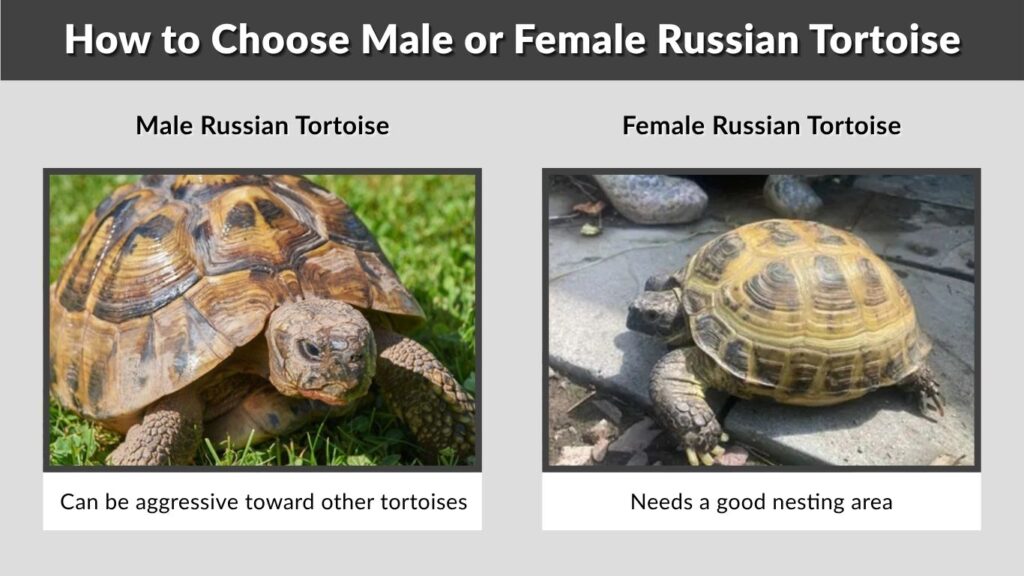
Choosing between a male and female Russian tortoise depends on your space, experience, and care goals. Both can make good pets when kept correctly. The most important factor is not sex, but whether you can provide a safe, spacious, and well-managed enclosure.
Male Russian Tortoise Pros and Cons
- Usually smaller and easier to manage physically
- May need slightly less space than a large female
- Can be active and bold
- May show more mating behavior
- Can be aggressive toward other tortoises
- Not ideal for mixed housing with females
A male can be a good choice for a single-tortoise setup. If you do not plan to keep more than one tortoise, male behavior is usually easier to manage. Problems often begin when another tortoise is added.
Female Russian Tortoise Pros and Cons
- Usually larger and sturdy-looking
- May be calmer than males
- Can lay eggs without mating
- Needs a good nesting area
- May require closer monitoring during egg-laying season
- Can still bully or stress another tortoise
A female can be a good choice for owners who understand egg-laying care. She does not need a male, but she does need proper calcium, UVB, and substrate. A female may also need more space because of her larger body size.
Which One Is More Docile?
There is no guaranteed answer. Some males are friendly and calm. Some females are bold and territorial. Russian tortoise personality depends on the individual, not only sex.
If you want a calmer tortoise, choose a healthy individual that is active, alert, and eating well. Observe its behavior before buying or adopting. Avoid choosing only by sex because care history, health, and temperament matter more.
Common Sexing Mistakes
Many owners misidentify Russian tortoises because they judge too early or use only one feature. A small tortoise may not show mature sex traits yet. A short-tailed young male can later develop a longer tail. A large male may be mistaken for a female because of size alone.
Using Size Only
Size can help, but it cannot confirm sex. A female is usually larger, but a young female may be smaller than an older male. Growth conditions also matter. Poor lighting, weak diet, and illness can slow growth.
Use size as a supporting clue only. Tail length and cloaca position are more reliable once the tortoise is mature.
Judging by Personality Only
Behavior can be confusing. Males often chase and mount, but females can also show dominance. A female may ram another tortoise or act territorial. A calm tortoise is not always female, and an active tortoise is not always male.
Personality is useful for care planning, but not for sexing. Physical features give a better answer.
Sexing Too Young
Juvenile Russian tortoises are the hardest to sex. Their tails, shells, and body proportions are still developing. Even experienced keepers may not be fully certain when the tortoise is small.
If the sex is important, wait until the tortoise matures or ask an experienced reptile veterinarian or tortoise specialist to check. This is especially important before pairing tortoises or planning breeding.
FAQs
How do I tell if my Russian tortoise is male or female?
Check the tail first. Males usually have longer, thicker tails with the cloaca farther from the body. Females usually have shorter tails with the cloaca closer to the shell. Adult females are often larger, while males may have a slightly concave bottom shell.
Are female Russian tortoises bigger than males?
Yes, adult female Russian tortoises are usually bigger and heavier than males. Females need more body space for egg production, so they often look wider and sturdier. However, size alone is not a perfect sexing method because age, diet, and care quality affect growth.
Do female Russian tortoises lay eggs without mating?
Yes, a female Russian tortoise can lay infertile eggs even if she has never been with a male. These eggs will not hatch. A female needs good calcium, UVB lighting, hydration, and a safe digging area. Straining, weakness, or long-term appetite loss needs veterinary care.
Can male and female Russian tortoises live together?
It is usually not a good idea to keep a male and female Russian tortoise together full-time. Males may chase, bite, ram, or mount females repeatedly. This can cause stress and injury. Most pet Russian tortoises do best in separate enclosures.
Is a male or female Russian tortoise better for beginners?
Either sex can work for beginners if the tortoise is healthy and housed alone. Males are usually smaller but may show more mating behavior. Females are often larger and may lay eggs. For most beginners, a single healthy tortoise with proper care is more important than choosing by sex.