
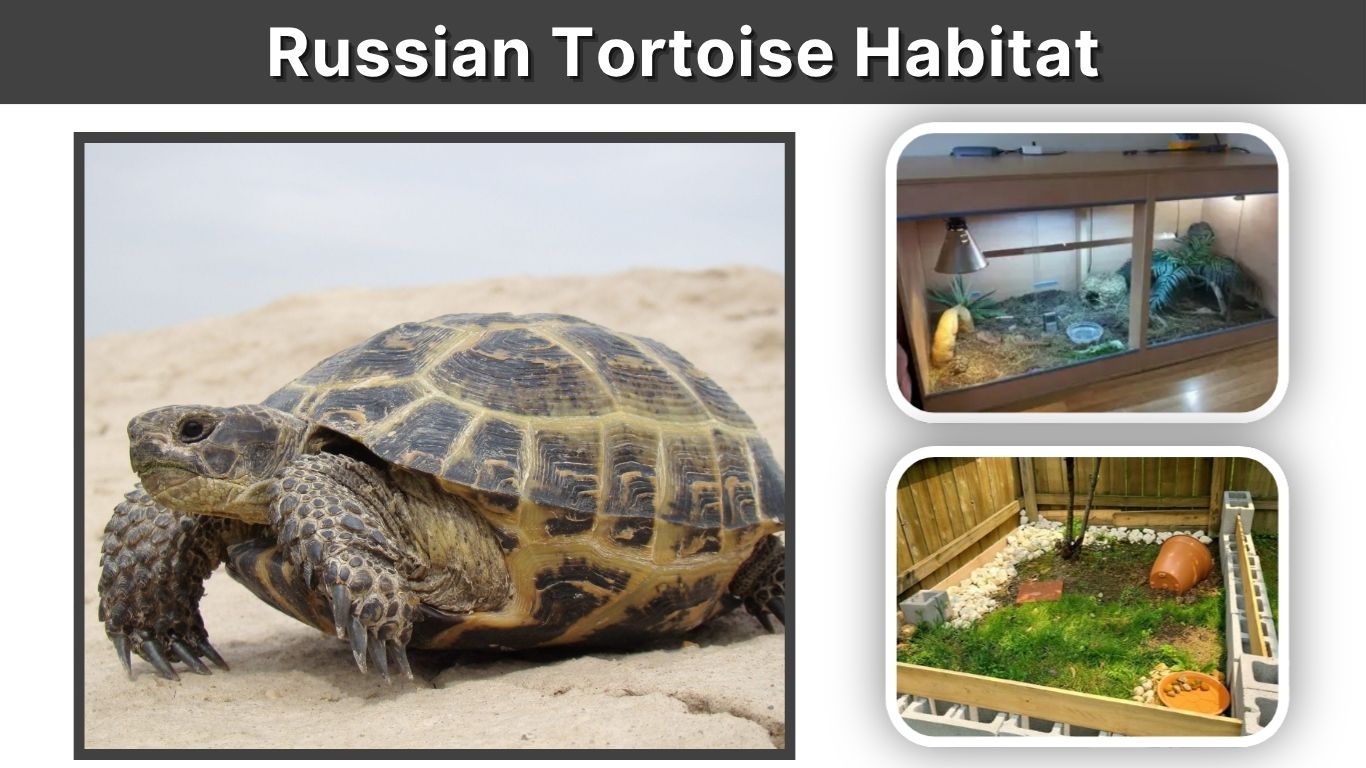
A Russian tortoise habitat should be dry, spacious, warm, and safe, with deep bedding, UVB light, a basking area, hides, and room to dig. In the wild, Russian tortoises live in dry grasslands, scrublands, rocky areas, and semi-desert regions of Central Asia. A good pet habitat should copy those natural conditions as closely as possible.
What Is a Russian Tortoise Habitat?
A Russian tortoise habitat is the full living space where the tortoise eats, walks, basks, digs, hides, and sleeps. It is not just a tank or cage. It should provide heat, light, substrate, shelter, water, safe plants, and enough floor space for natural movement.
Natural Habitat in the Wild
Russian tortoises are native to dry parts of Central Asia. Their natural habitat includes arid steppes, grasslands, scrubland, rocky slopes, and semi-desert areas. These places are often hot and dry in summer but can become cold in winter. This is why Russian tortoises are strong burrowers.
In the wild, they use burrows to escape extreme heat, cold, and predators. A captive habitat should support this natural digging behavior instead of forcing the tortoise to live on flat, shallow bedding.
Basic Habitat Needs
A proper Russian tortoise habitat should include:
- Large floor space
- Deep digging substrate
- Warm basking area
- Cooler resting side
- UVB lighting
- Dry hide
- Shallow water dish
- Safe feeding area
- Climbing-free enclosure walls
- Safe plants or enrichment
Indoor vs Outdoor Habitat
Both indoor and outdoor habitats can work. Indoor habitats are easier to control, while outdoor habitats provide natural sunlight and more space. The best option depends on your climate, space, safety, and daily care routine.
Outdoor housing is excellent in suitable weather, but it must be escape-proof and predator-proof. Indoor housing is safer in cold, wet, or extreme climates.
Russian Tortoise Habitat Size
Russian tortoises are small, but they are active walkers and diggers. They need more space than a small glass tank can provide. A cramped habitat can cause stress, pacing, poor exercise, and weak natural behavior.
Minimum Habitat Size
For one adult Russian tortoise, a 4 ft x 2 ft enclosure is often treated as the minimum, but bigger is better. Many modern keepers prefer a larger indoor habitat, such as 6 ft x 3 ft or more. ReptiFiles recommends much larger floor space than old-style small tanks, especially for long-term care.
Good size options:
- Baby: temporary smaller setup with close monitoring
- Juvenile: at least 3 ft x 2 ft
- Adult minimum: 4 ft x 2 ft
- Better adult setup: 6 ft x 3 ft
- Best long-term habitat: 7 ft x 3.5 ft or larger
- Outdoor pen: as large as safely possible
Why Space Matters
Russian tortoises naturally roam, dig, explore, and search for food. A larger habitat allows a better temperature gradient, meaning one side can stay warm while the other side stays cooler. This helps the tortoise control its body temperature.
More space also reduces boredom and stress. A tortoise that constantly scratches at walls or tries to climb may be telling you the enclosure is too small, too plain, or poorly arranged.
Russian Tortoise Tank Habitat
A glass tank is usually not the best habitat for an adult Russian tortoise. Many tanks are too small, too narrow, and poorly ventilated. Tortoises may also pace against clear glass because they do not understand the barrier.
Better habitat choices include:
- Wooden tortoise table
- Large indoor pen
- PVC reptile enclosure
- Custom-built habitat
- Secure outdoor enclosure
- Large modified stock tank or kiddie pool
Indoor Russian Tortoise Habitat Setup
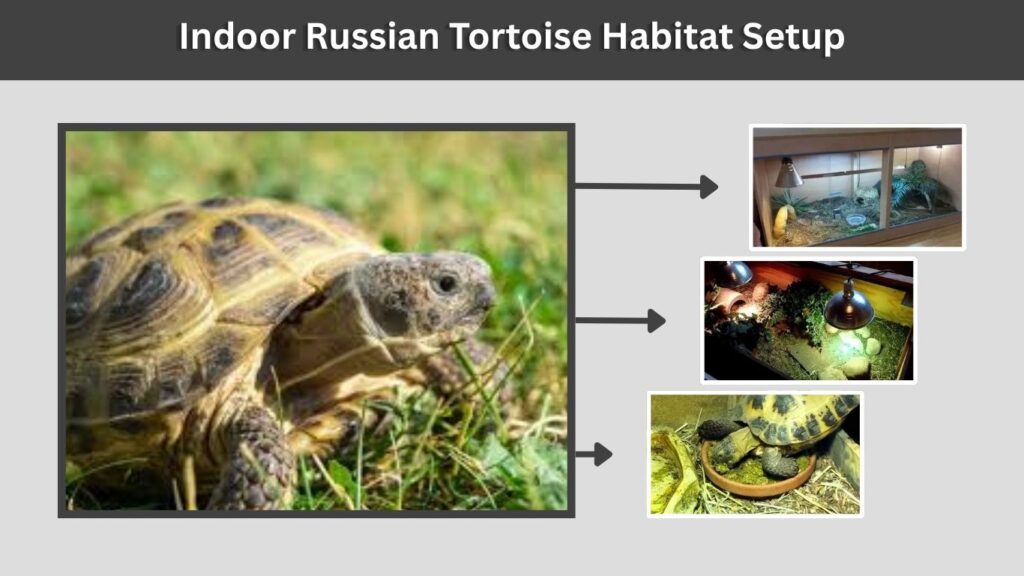
An indoor Russian tortoise habitat must copy the key parts of its natural environment. It should be dry, bright, warm, and large enough for exercise. A simple setup can work well if it includes the right essentials.
Best Indoor Habitat Type
A tortoise table is one of the best indoor habitat styles. It has solid sides, good ventilation, and more floor space than most aquariums. You can build one from wood or buy a large reptile enclosure.
A good indoor habitat should have:
- Solid walls
- Open or ventilated top
- Deep substrate
- Secure corners
- Heat lamp area
- UVB light
- Feeding stone or dish
- Hide box
- Shallow water bowl
Russian Tortoise Habitat Bedding
Bedding, also called substrate, is very important. Russian tortoises love to dig and burrow, so the substrate should be deep enough to support that behavior. It should also stay mostly dry while allowing a little moisture underneath if needed.
Common bedding choices:
- Organic topsoil
- Coconut coir
- Cypress mulch
- Orchid bark
- Topsoil and sand mix
- Soil and coco coir mix
Avoid cedar, pine shavings, dusty bedding, cat litter, corn cob, and slick newspaper as the main surface. These can cause breathing issues, impaction risk, or poor walking support.
Habitat Temperature
Russian tortoises need a warm basking area and a cooler side. This temperature gradient lets them move around and choose the right body temperature. Indoor habitats need reliable heat because room temperature alone is usually not enough.
General temperature guide:
| Habitat Area | Recommended Range |
| Basking spot | 95–100°F |
| Warm side | 80–90°F |
| Cool side | 70–75°F |
| Night temperature | 60–70°F |
| Outdoor safe range | Depends on weather, shade, and shelter |
Use a digital thermometer or temperature gun to check the habitat. Do not guess by touching the surface with your hand.
Lighting and Heating for Russian Tortoise Habitat
Lighting is one of the most important parts of a Russian tortoise habitat. Without proper UVB and heat, a tortoise can develop weak bones, poor appetite, low activity, and shell problems.
UVB Lighting
Indoor Russian tortoises need UVB lighting because they do not get natural sunlight through windows. Glass blocks most useful UVB rays, so a sunny window is not enough. A proper reptile UVB lamp helps the tortoise use calcium and maintain healthy bones.
Use UVB according to the bulb instructions. Replace the bulb on schedule because UVB output weakens over time even when the light still turns on.
Basking Lamp
A basking lamp creates the warm spot your tortoise needs for digestion and activity. Place the lamp over one side of the habitat, not in the middle. This creates a warm side and cool side.
The tortoise should be able to move away from the heat whenever it wants. Overheating can be dangerous, especially in small enclosures.
Day and Night Cycle
Russian tortoises need a regular day and night cycle. Lights should be on during the day and off at night. In most homes, 10–12 hours of daytime lighting works well.
At night, heat may not be needed if the room stays safely above the low temperature range. Avoid colored night bulbs because tortoises benefit from natural darkness.
Outdoor Russian Tortoise Habitat
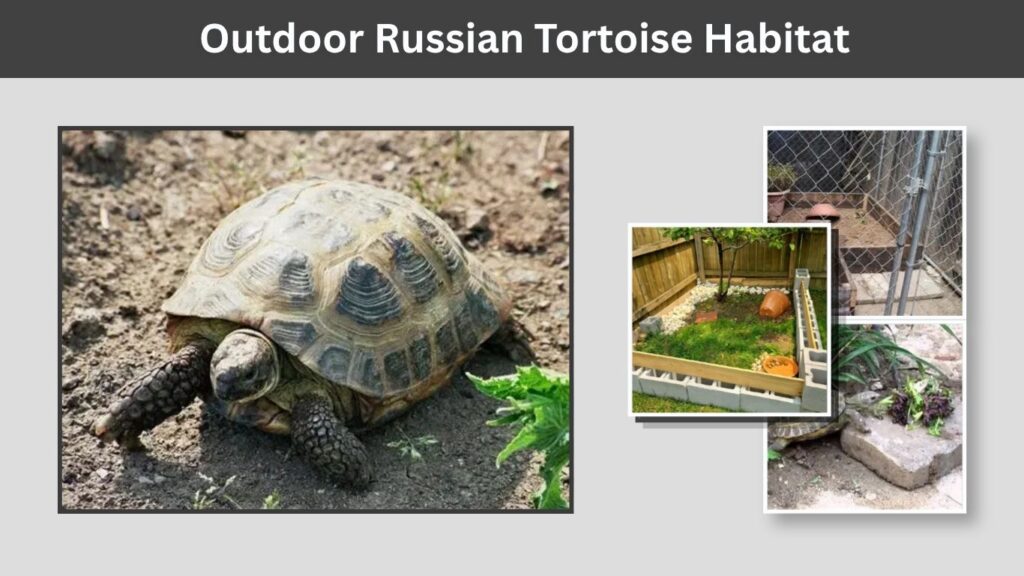
An outdoor Russian tortoise habitat can be excellent when the weather is warm, dry, and safe. Natural sunlight is very beneficial, and outdoor space encourages walking, grazing, and natural behavior.
Outdoor Habitat Benefits
Outdoor habitats offer many advantages that are hard to copy indoors. Natural sunlight provides high-quality UVB, and a larger pen allows the tortoise to behave more naturally.
Benefits include:
- Natural sunlight
- More exercise
- Better grazing
- Natural digging
- Fresh air
- More enrichment
- Seasonal stimulation
- Stronger activity patterns
Outdoor Habitat Safety
Outdoor habitats must be secure. Russian tortoises are strong diggers and surprisingly good climbers. They can escape under fences, climb corners, or squeeze through gaps.
Outdoor safety checklist:
- Solid fencing
- Buried barriers
- Locked or covered top if predators exist
- No toxic plants
- No pesticide use
- Shade available all day
- Dry shelter
- Shallow water dish
- Protection from dogs, raccoons, rats, birds, and cats
Weather Protection
Russian tortoises do not do well in constantly wet or cold conditions. Outdoor habitats should include a dry hide where the tortoise can escape rain, wind, and strong sun.
Bring the tortoise indoors during unsafe weather. Cold rain, flooding, extreme heat, and sudden temperature drops can be dangerous.
Russian Tortoise Habitat Plants
Plants make the habitat more natural and useful. They provide shade, hiding places, grazing, and enrichment. However, only safe, pesticide-free plants should be used.
Safe Plants for Habitat
Good plant choices include edible weeds, grasses, and safe flowers. Always confirm plant safety before adding anything to the enclosure.
Common safe options include:
- Dandelion
- Plantain weed
- Clover
- Hibiscus
- Mulberry leaves
- Grape leaves
- Pansies
- Nasturtium
- Rose petals
- Bermuda grass
- Timothy grass
- Orchard grass
Plants to Avoid
Some plants are toxic or unsafe for tortoises. Avoid adding unknown garden plants, treated nursery plants, or decorative houseplants unless you are completely sure they are safe.
Avoid:
- Oleander
- Foxglove
- Azalea
- Rhododendron
- Daffodil
- Lily of the valley
- Ivy
- Pothos
- Tomato leaves
- Potato leaves
- Plants sprayed with pesticides
Using Plants for Enrichment
Plants can help create a more interesting habitat. Place them around hides, edges, and shaded corners. Let some plants grow in trays so they can be removed and replaced when eaten down.
A planted habitat encourages natural browsing and reduces boredom.
Russian Tortoise Habitat Accessories
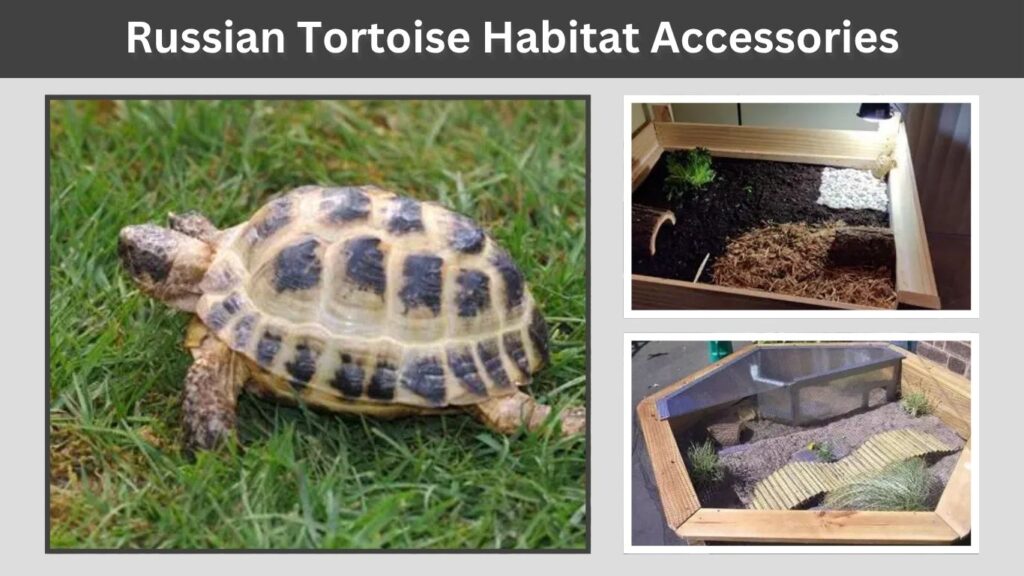
Accessories should support natural behavior, not just decorate the enclosure. The best habitat accessories help with hiding, climbing, digging, feeding, hydration, and safe movement.
Essential Accessories
Every Russian tortoise habitat should include a few important items. These help the tortoise feel secure and stay healthy.
Essential items include:
- Hide box
- Flat feeding stone
- Shallow water dish
- Basking platform
- Thermometer
- Hygrometer
- UVB light
- Heat lamp
- Safe rocks
- Digging area
Hides and Shelter
A Russian tortoise needs at least one hide. Two hides are better: one on the warm side and one on the cool side. Hides help reduce stress and allow the tortoise to rest safely.
Use a hide that is low, stable, and easy to enter. Avoid anything that can tip over or trap the tortoise.
Water Dish
A shallow water dish should always be available. It should be low enough for the tortoise to enter and exit safely. Change the water daily because tortoises may walk through it or soil it.
Do not use a deep bowl. Russian tortoises can drown if they flip or become trapped in deep water.
DIY Russian Tortoise Habitat Ideas
A DIY Russian tortoise habitat can be cheaper and better than many store-bought kits. The main goal is to create a large, safe, dry, well-lit space with strong walls and enough substrate.
Simple Indoor DIY Habitat
A basic indoor DIY habitat can be made from wood, a large bookcase laid flat, or a custom tortoise table. Seal the inside safely if needed and add a liner to protect the floor.
Basic DIY steps:
- Choose a large floor area.
- Build solid walls.
- Add a safe waterproof liner.
- Fill with deep substrate.
- Add UVB and heat lamps.
- Create warm and cool zones.
- Add hides, water, and feeding areas.
- Check temperatures before adding the tortoise.
DIY Outdoor Habitat
A DIY outdoor habitat should be more secure than an indoor one. Outdoor pens must prevent escape and protect from predators. Bury the fence several inches underground because Russian tortoises dig.
Outdoor DIY features:
- Strong wooden or block walls
- Buried barrier
- Predator-proof top if needed
- Dry shelter
- Shade plants
- Sunny basking area
- Safe edible weeds
- Drainage to avoid flooding
Habitat Kit Warning
Many “Russian tortoise habitat kits” sold in stores are too small for long-term care. They may include a small tank, weak lighting, poor substrate, or unsuitable accessories. A custom setup is often healthier and more practical.
Before buying a kit, check the enclosure size, UVB quality, heat source, bedding type, and long-term space.
Common Russian Tortoise Habitat Mistakes
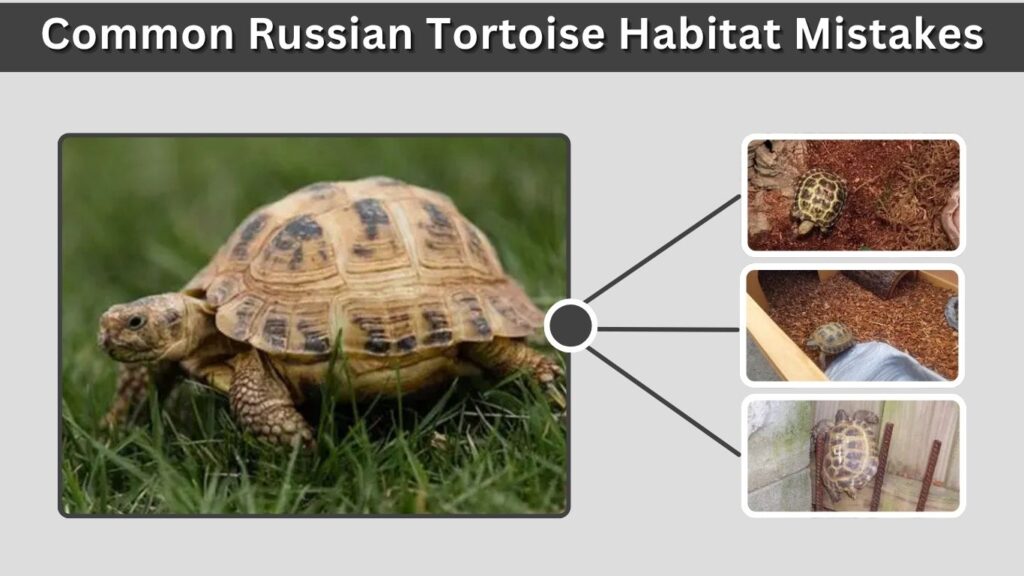
Many habitat problems happen because owners follow old advice or buy small starter kits. Russian tortoises are hardy, but poor housing can still cause stress and illness.
Small Enclosure
A small enclosure is one of the biggest mistakes. Russian tortoises need space to walk, dig, and move between temperature zones. A tiny tank may look clean, but it does not support natural behavior.
Signs the habitat may be too small:
- Constant pacing
- Scratching walls
- Climbing corners
- Low activity
- Poor appetite
- Stress behavior
- Repeated escape attempts
Wrong Substrate
Bad bedding can cause health problems. Dusty substrate can irritate the lungs, while slick surfaces can weaken legs. Very damp bedding can increase shell and respiratory problems.
Choose bedding that allows digging and supports firm walking.
Poor Temperature Control
A habitat that is too cold can reduce appetite and digestion. A habitat that is too hot can cause overheating and dehydration. Always check actual temperatures with tools, not guesses.
A good habitat has both a warm basking zone and a cooler retreat.
FAQs
What kind of habitat does a Russian tortoise need?
A Russian tortoise needs a dry, spacious habitat with deep bedding, UVB light, a basking area, cool side, hide box, shallow water dish, and safe plants or enrichment. The habitat should allow walking, digging, hiding, and natural temperature regulation.
What is the best indoor habitat for a Russian tortoise?
The best indoor habitat is usually a large tortoise table, wooden enclosure, PVC enclosure, or indoor pen. It should have solid walls, good ventilation, deep substrate, UVB lighting, heat, hides, and enough floor space. A small glass tank is not ideal for adults.
Can a Russian tortoise live outside?
Yes, a Russian tortoise can live outside during suitable warm, dry weather if the enclosure is secure. The outdoor habitat must have buried barriers, predator protection, shade, sunlight, a dry shelter, safe plants, and clean water. Bring it indoors during unsafe weather.
What bedding is best for a Russian tortoise habitat?
Good bedding options include organic topsoil, coconut coir, cypress mulch, orchid bark, or safe soil mixes. The substrate should be deep enough for digging and not too dusty or wet. Avoid cedar, pine, cat litter, corn cob, and slippery surfaces.
What should be inside a Russian tortoise habitat?
A Russian tortoise habitat should include deep substrate, a UVB light, basking lamp, hide box, shallow water dish, feeding stone, safe plants, thermometer, and enough space for exercise. It should also have a warm side and cool side so the tortoise can regulate body temperature.