Tortoise owners often ask whether vegetables like broccoli are safe to include in their pet’s diet. While broccoli is not toxic, it comes with certain concerns that make it less ideal than other leafy greens. Tortoises require a carefully balanced diet to support shell health, digestion, and long-term wellbeing. Feeding the wrong foods too often can lead to nutritional imbalances. This guide explains whether tortoises can eat broccoli, which parts are safe, and how it affects different species.
Is Broccoli Safe for Tortoises?
Broccoli is considered safe for tortoises in small amounts, but it is not a recommended staple food. It contains beneficial nutrients like fiber and vitamins, yet also includes compounds that may interfere with proper digestion and nutrient absorption. Feeding broccoli too frequently can lead to mild digestive issues or reduce the effectiveness of calcium intake, which is essential for shell development and overall health.
Key Safety Points
- Non-toxic and safe in moderation
- Contains goitrogens that may affect thyroid function
- Includes oxalates that can limit calcium absorption
- Best offered occasionally, not as a regular food
Nutritional Value of Broccoli for Tortoises
Broccoli provides some useful nutrients, but it does not fully meet the dietary needs of tortoises. While it contains fiber and certain vitamins, the presence of anti-nutritional compounds makes it less beneficial compared to natural leafy greens. Understanding its nutritional profile helps explain why moderation is important.
What Broccoli Contains
- Vitamin C and small amounts of calcium
- Dietary fiber that supports digestion
- Goitrogens that may impact thyroid health
- Oxalates that interfere with calcium use
Can Tortoises Eat Different Parts of Broccoli?
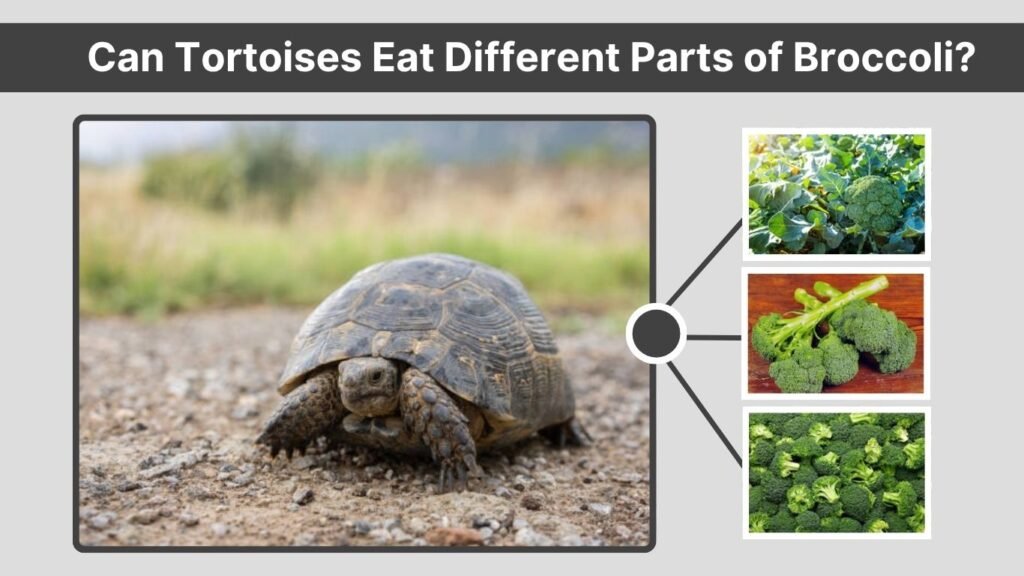
Not all parts of broccoli affect tortoises in the same way. Some parts are easier to digest and slightly more suitable, while others can be tougher or more likely to cause discomfort. Knowing which parts to feed helps reduce potential risks.
Can Tortoises Eat Broccoli Leaves?
Broccoli leaves are one of the better parts to offer. They are softer, easier to chew, and closer to the type of leafy greens tortoises naturally eat. Even so, they should only be included occasionally.
Can Tortoises Eat Broccoli Stalks and Stems?
Stalks and stems are safe but can be quite tough and fibrous. They should always be chopped into small pieces to prevent choking and to make digestion easier for your tortoise.
Can Tortoises Eat Broccoli Florets?
The florets, sometimes called the “bristles,” are edible but should be limited. They can cause gas or mild digestive discomfort if fed too often or in large quantities.
Can Tortoises Eat Raw Broccoli?
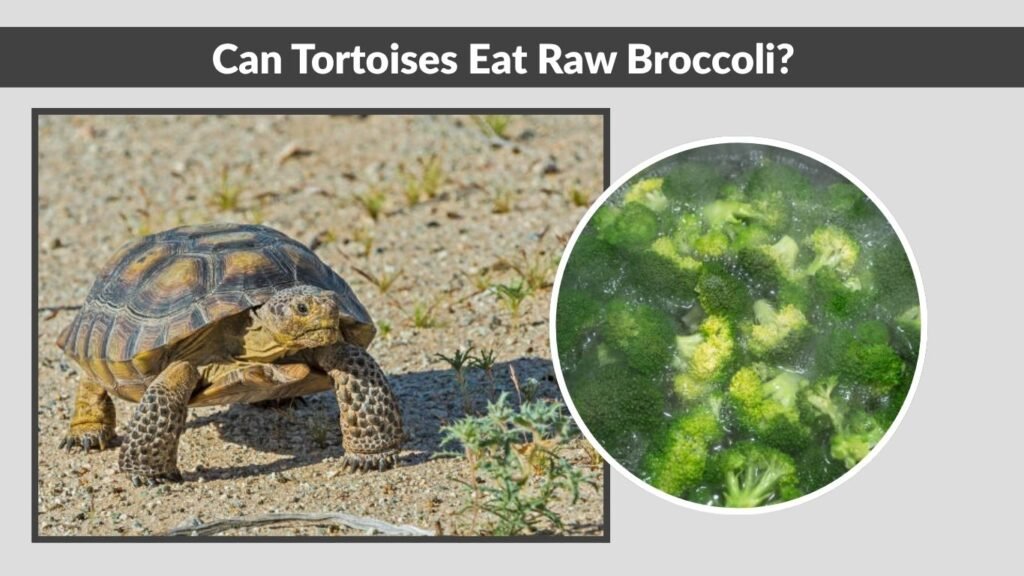
Tortoises can eat raw broccoli, and this is actually the safest way to offer it. Cooking broccoli reduces some nutrients and often involves additives that are not suitable for tortoises. Raw broccoli maintains its natural structure and is easier to include as part of a mixed diet.
However, even when served raw, broccoli should still be given sparingly. It should never replace the core diet of leafy greens, grasses, and weeds that tortoises depend on for proper nutrition. Offering raw broccoli occasionally as part of a varied meal is the best approach to avoid any negative effects.
How Often Can Tortoises Eat Broccoli?
Feeding frequency is one of the most important factors when it comes to broccoli. Even though it is safe, overfeeding can lead to health issues. Tortoises thrive on consistency and nutrient-rich foods, so broccoli should only play a very small role in their diet.
Feeding Guidelines
- Offer broccoli once every 1–2 weeks
- Keep portions small and controlled
- Mix with other leafy greens
- Avoid making it a regular part of meals
Can Different Tortoise Species Eat Broccoli?
Different tortoise species have specific dietary needs based on their natural habitat and digestion. While broccoli is generally safe in small amounts, it is not equally suitable for all species. Some tortoises rely heavily on grasses, while others have more varied diets. The table below gives a clear comparison of how broccoli fits into each species’ feeding routine.
| Tortoise Species | Can They Eat Broccoli? | Feeding Frequency | Notes |
| Russian (Horsefield) | Yes | Rarely | Prefers fibrous weeds and leafy greens |
| Sulcata (African Spurred) | Yes | Very rarely | Needs grass-based, high-fiber diet |
| Desert Tortoise | Yes | Occasionally | Not part of natural wild diet |
| Red-Footed Tortoise | Yes | Occasionally | More flexible diet but still limit |
| Hermann’s Tortoise | Yes | Rarely | Requires calcium-rich greens |
| Greek Tortoise | Yes | Rarely | Avoid too many watery or cruciferous foods |
| Leopard Tortoise | Yes | Very rarely | Primarily grass and fiber-based diet |
Most tortoise species can eat broccoli safely, but only in moderation. Species that depend heavily on grasses, like sulcata and leopard tortoises, should have broccoli far less often than species with more varied diets, such as red-footed tortoises.
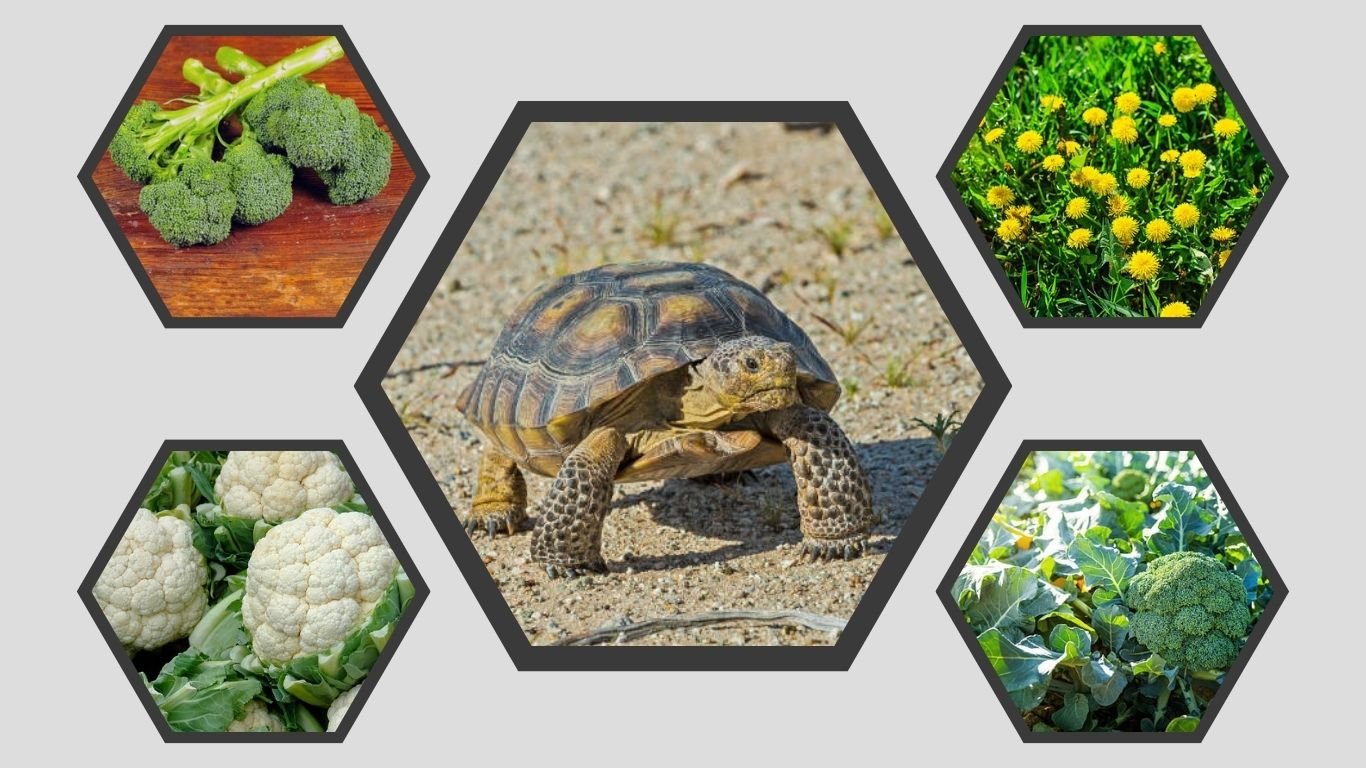
Can Tortoises Eat Broccoli and Cauliflower?
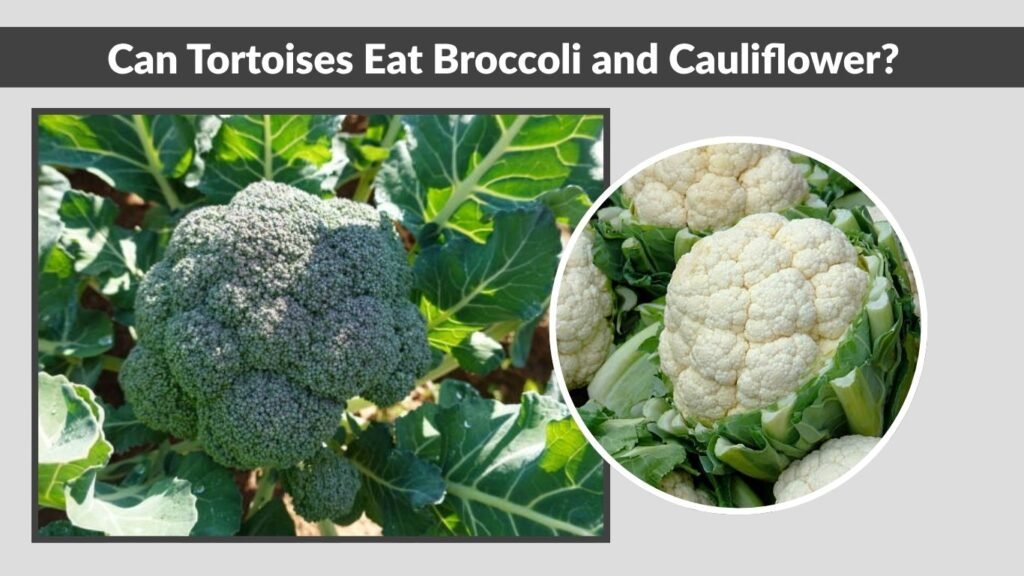
Broccoli and cauliflower both belong to the cruciferous vegetable family, which means they share similar nutritional traits and potential risks. While they are not toxic to tortoises, they contain compounds like goitrogens that may interfere with thyroid function if fed too often. Because of this, neither vegetable should be a regular part of a tortoise’s diet. Offering them occasionally in small amounts is generally safe, but they should never replace more natural, nutrient-rich greens.
Key Comparison Points
- Both contain goitrogens that can affect thyroid health
- Low in calcium compared to ideal tortoise foods
- Can cause gas or digestive discomfort if overfed
- Best used as occasional treats only
Benefits and Risks of Feeding Broccoli
Broccoli has both positive and negative aspects when included in a tortoise’s diet. While it offers some nutrients and variety, its drawbacks are more significant when fed too often. Understanding both sides helps ensure you use it correctly and avoid common feeding mistakes.
Benefits
- Provides fiber that supports digestion
- Contains vitamins that contribute to overall health
- Adds variety to prevent a monotonous diet
Risks
- Goitrogens may interfere with thyroid function
- Oxalates can reduce calcium absorption
- May cause bloating or digestive discomfort
Better Alternatives to Broccoli for Tortoises
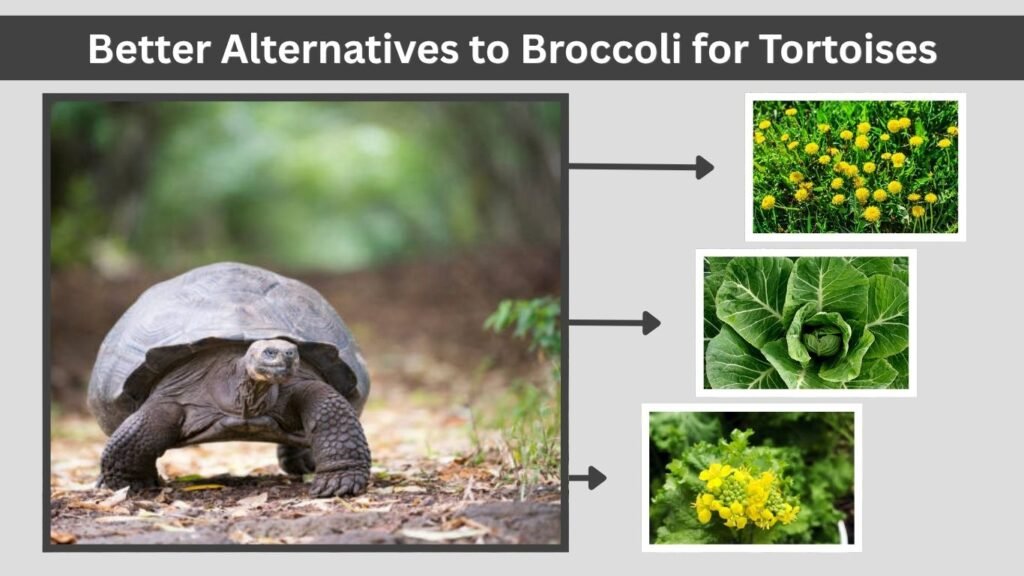
Tortoises thrive on foods that closely match their natural diet. Instead of relying on broccoli, offering more suitable greens will support better health, stronger shells, and improved digestion. Choosing the right alternatives ensures your tortoise gets the nutrients it truly needs.
Recommended Food Options
- Dandelion greens – rich in calcium and highly beneficial
- Collard greens – excellent for shell strength
- Mustard greens – packed with vitamins and fiber
- Turnip greens – strong calcium content
- Grass and hay – essential for grazing species
How to Prepare Broccoli for Your Tortoise
Proper preparation is essential when feeding broccoli to tortoises. Even safe foods can cause issues if not handled correctly. Cleaning and cutting broccoli properly reduces risks such as pesticide exposure, choking, and digestive discomfort.
Before feeding, broccoli should always be washed thoroughly to remove any chemicals or dirt. It should then be chopped into small, manageable pieces so your tortoise can eat it easily. Mixing broccoli with other leafy greens is also recommended, as this encourages a balanced diet and prevents overconsumption of a single food.
Signs You Should Avoid Feeding Broccoli
Overfeeding broccoli can lead to noticeable health issues. Since tortoises rely on a stable and nutrient-rich diet, introducing too much of a less suitable food can quickly cause imbalance. Recognizing early warning signs allows you to adjust their diet before serious problems develop.
Warning Signs
- Gas or bloating after eating
- Loose or watery stool
- Reduced appetite for staple foods
- Sluggish or inactive behavior
- Signs of mild digestive discomfort
FAQs
Can tortoises eat broccoli every day?
No, broccoli should not be fed daily. It contains compounds like goitrogens and oxalates that can interfere with nutrient absorption and thyroid function. Feeding it too often may lead to digestive issues and reduce your tortoise’s intake of healthier foods.
Can baby tortoises eat broccoli?
Baby tortoises can eat very small amounts of broccoli, but it is not recommended regularly. Young tortoises need nutrient-dense foods for growth and shell development, so better options like leafy greens should be prioritized.
Can sulcata tortoises eat broccoli safely?
Yes, sulcata tortoises can eat broccoli occasionally, but it should be rare. Their diet should mainly consist of grasses and high-fiber plants, which are far more important for their digestive system and overall health.
Are broccoli leaves better than florets for tortoises?
Yes, broccoli leaves are generally a better option because they are softer and closer to natural leafy foods. Florets can be harder to digest and may cause gas if fed too frequently.
What happens if a tortoise eats too much broccoli?
If a tortoise eats too much broccoli, it may experience bloating, gas, or diarrhea. Over time, excessive feeding can also interfere with calcium absorption, potentially affecting shell strength and overall health.