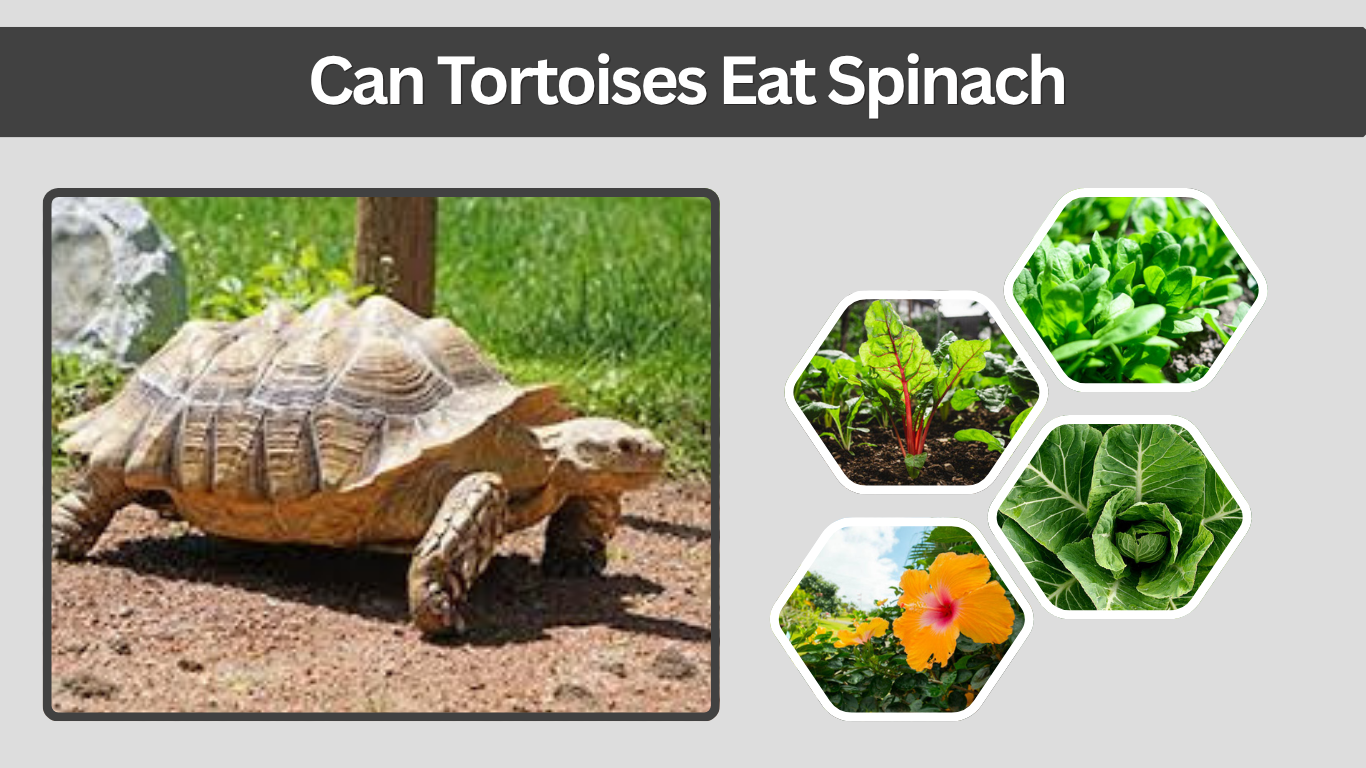
Many tortoise owners wonder whether spinach is a healthy addition to their pet’s diet. While spinach is not toxic and can be eaten, it is far from an ideal food. The key issue lies in its high oxalate content, which can interfere with calcium absorption. This makes spinach something that should only be fed occasionally, not as a regular part of a tortoise’s diet.
Is Spinach Safe for Tortoises?
Spinach is technically safe for tortoises, but that doesn’t mean it’s beneficial when fed often. Unlike poisonous plants, spinach won’t cause immediate harm. However, its nutritional drawbacks make it unsuitable as a staple food.
- It contains oxalic acid, which binds to calcium
- Calcium becomes unavailable for absorption
- Long-term feeding may lead to deficiencies
- Best treated as an occasional addition rather than a main food
Tortoises rely heavily on calcium for shell and bone development, so anything that interferes with that process should be limited.
Why Spinach Can Be Harmful in Large Amounts
The main concern with spinach is its high oxalate level. Oxalates attach to calcium in the digestive system, forming compounds that the body cannot use.
- Reduces effective calcium intake
- Disrupts calcium-to-phosphorus balance
- Increases risk of metabolic bone disease
- May cause digestive discomfort if overfed
Over time, these effects can lead to soft shells, weak bones, and poor overall health. This is especially dangerous for growing tortoises, which require consistent calcium intake.
Can Tortoises Eat Spinach Every Day?
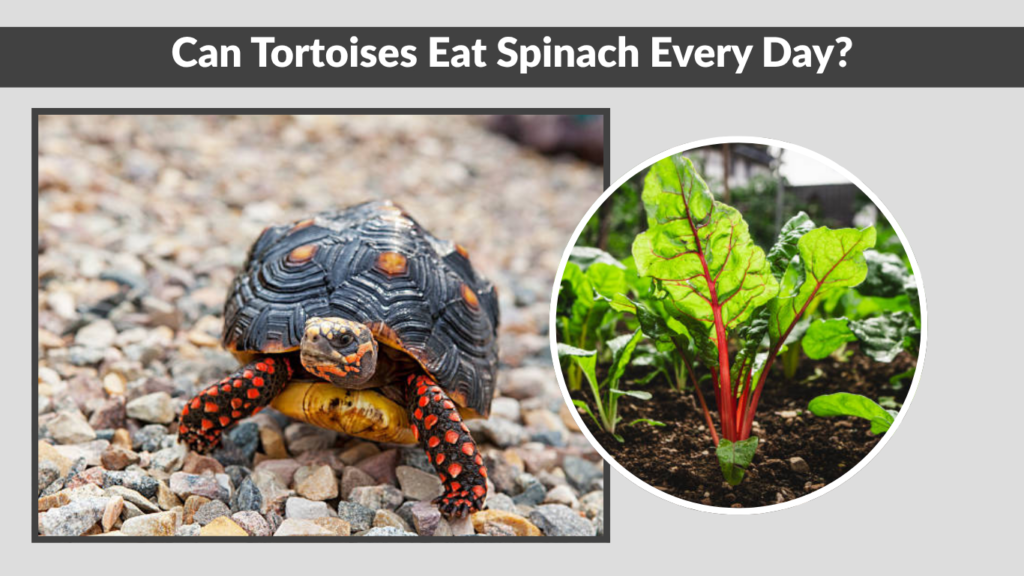
The simple answer is no—tortoises should not eat spinach daily.
Feeding spinach every day can gradually lead to calcium deficiency. Even though it might seem like a healthy leafy green, it does not meet the nutritional needs of tortoises when used regularly.
Instead:
- Offer spinach once every 1–2 weeks at most
- Use it as a small part of a mixed salad
- Avoid feeding it on consecutive days
- Focus daily feeding on safer greens
A varied diet is far more important than relying on a single type of leaf, even if it seems nutritious.
Can Baby Tortoises Eat Spinach?
Baby tortoises are much more sensitive to dietary imbalances than adults. Their bodies are growing rapidly, which makes calcium intake even more critical.
- Spinach should generally be avoided for babies
- High oxalates can interfere with proper shell growth
- Even small imbalances can have long-term effects
- Safer, calcium-rich greens should be prioritized
If spinach is offered at all, it should be extremely rare and in very small quantities. In most cases, it’s better to skip it entirely for young tortoises.
Can Different Tortoise Species Eat Spinach?
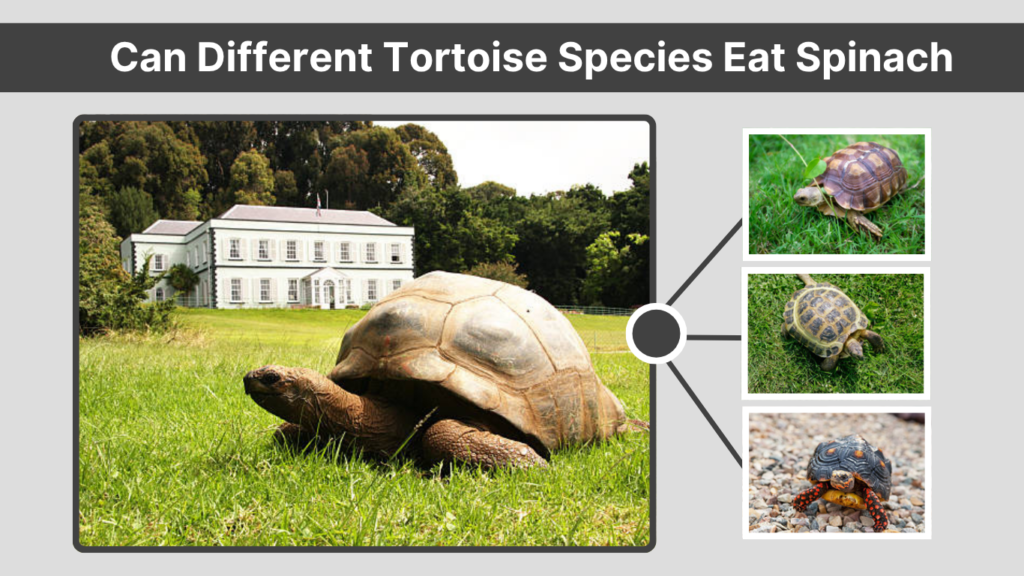
Different tortoise species have slightly different dietary needs, but the rule about spinach remains mostly consistent: moderation is key.
Sulcata Tortoises
Sulcatas are grazing tortoises that thrive on grasses and high-fiber foods. Spinach does not fit naturally into their diet and should only be given occasionally, if at all.
Russian (Horsefield) Tortoises
Russian tortoises eat a wide variety of weeds and leafy greens. While they can tolerate spinach occasionally, it should not replace more suitable plants.
Hermann’s & Greek Tortoises
These Mediterranean species require diets rich in fibrous greens and weeds. Spinach can be offered sparingly but should never be a regular feature.
Leopard & Desert Tortoises
These species depend on high-fiber, low-moisture foods. Spinach is not ideal and should be limited to very rare treats.
Red-Footed Tortoises
Red-footed tortoises have a more varied diet that can include fruits. Even so, spinach should still be limited due to its oxalate content.
Can Tortoises Eat Spinach Leaves, Stems, or in Winter?
Tortoise owners often wonder if certain parts of spinach are safer than others or if seasonal feeding makes a difference.
- Leaves: The leaves are the most commonly fed part and are safe in small amounts
- Stems: Edible but less nutritious and not particularly beneficial
- Winter feeding: Spinach is not more suitable in winter; the same restrictions apply
The season does not change spinach’s nutritional profile. What matters most is moderation and ensuring the overall diet remains balanced.
Can Tortoises Eat Spinach with Other Greens?
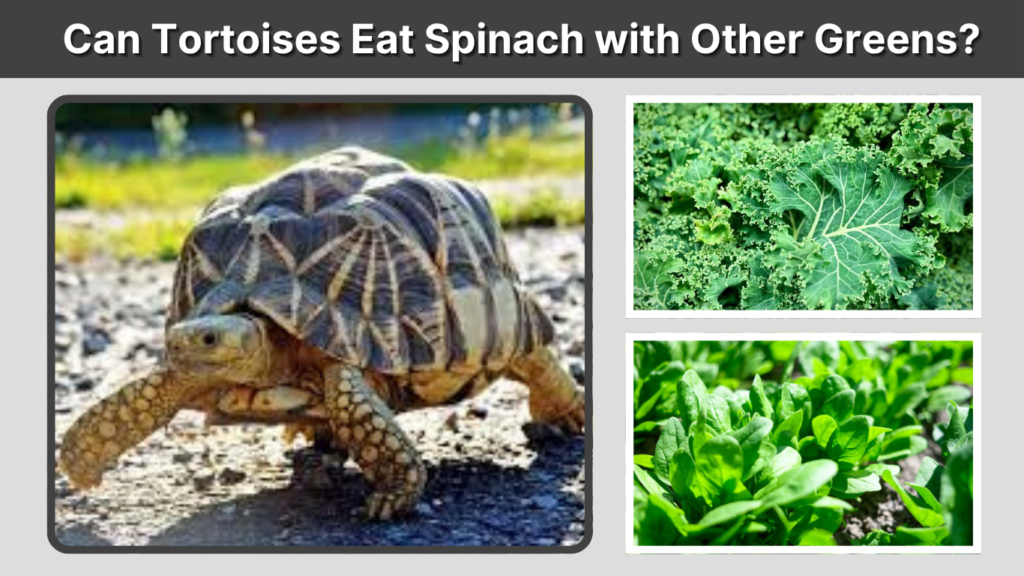
Mixing spinach with other greens is a common practice, but it doesn’t completely eliminate the risks. While combining foods can help dilute oxalate levels, spinach should still remain a very small portion of the overall diet.
Spinach and Kale
Both spinach and kale contain compounds that can interfere with nutrient absorption. Feeding them together regularly is not recommended.
- Spinach is high in oxalates
- Kale contains goitrogens
- Together, they may reduce nutrient efficiency
- Best avoided as a frequent combination
Spinach and Rocket (Arugula)
Rocket is a more suitable green for tortoises and can be part of a healthy diet.
- Rocket is lower in oxalates
- Mixing a small amount of spinach is acceptable
- Ensure spinach is not the main ingredient
- Balance with calcium-rich greens
Spinach, Rocket, and Watercress
This mix can provide variety, but it still requires careful balance.
- Watercress contains useful nutrients
- Strong flavors may reduce acceptance in some tortoises
- Spinach should remain a minor component
- Avoid frequent repetition of this mix
Best Alternatives to Spinach for Tortoises
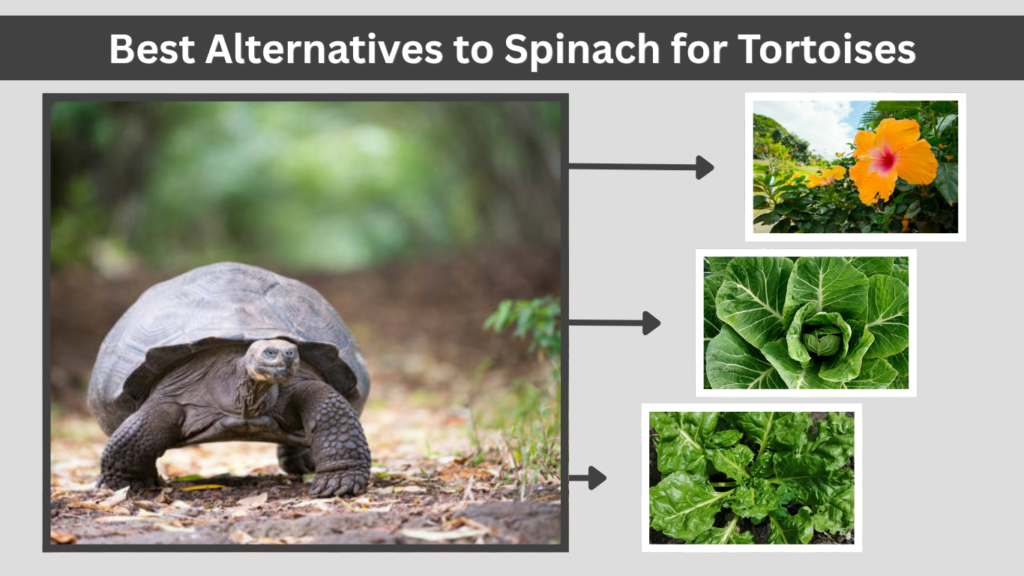
Instead of relying on spinach, it’s better to choose greens that naturally support a tortoise’s health. These options are richer in calcium and lower in oxalates.
- Dandelion greens: Excellent calcium source and widely recommended
- Collard greens: Strong calcium-to-phosphorus ratio
- Mustard greens: Nutritious and suitable for regular feeding
- Turnip greens: High in fiber and beneficial minerals
- Hibiscus leaves: Natural and highly favored by many species
These greens can form the foundation of a healthy, balanced diet and are far safer for regular feeding.
How to Properly Feed Spinach (If You Do)
If you decide to include spinach occasionally, it’s important to prepare and serve it correctly to minimize potential risks.
- Wash thoroughly to remove pesticides or dirt
- Offer only small portions
- Mix with safer, calcium-rich greens
- Avoid feeding on consecutive days
The goal is to treat spinach as a rare addition rather than a dietary staple.
Signs Your Tortoise Is Eating Too Much Spinach
Overfeeding spinach doesn’t usually cause immediate symptoms, but long-term issues can develop. Watching for early warning signs can help prevent serious health problems.
- Soft or poorly developed shell
- Reduced activity or lethargy
- Decreased appetite
- Irregular or loose stool
If any of these signs appear, it’s important to review the diet and shift toward more suitable foods.
FAQs
Can tortoises eat spinach leaves regularly?
No, spinach leaves should only be fed occasionally. Although they are not toxic, their high oxalate content can interfere with calcium absorption. Feeding them regularly may lead to long-term health issues, especially in growing tortoises that need a steady calcium supply.
Is spinach better than kale for tortoises?
Neither spinach nor kale is ideal as a staple food. Spinach contains high oxalates, while kale has compounds that may affect thyroid function if overfed. Between the two, kale is slightly better in moderation, but both should be limited.
Can sulcata tortoises eat spinach safely?
Sulcata tortoises can eat spinach occasionally, but it should not be part of their regular diet. They thrive on grasses and high-fiber plants, so spinach offers little benefit and may disrupt their nutritional balance if overused.
What happens if a tortoise eats too much spinach?
Too much spinach over time can lead to calcium deficiency, shell softening, and metabolic bone disease. While a single feeding won’t cause harm, repeated overfeeding can create serious long-term health issues.
What greens should tortoises eat daily instead?
Tortoises should primarily eat calcium-rich greens such as dandelion, collard greens, mustard greens, and turnip greens. These provide essential nutrients for healthy shell growth and overall well-being without the risks linked to spinach.