
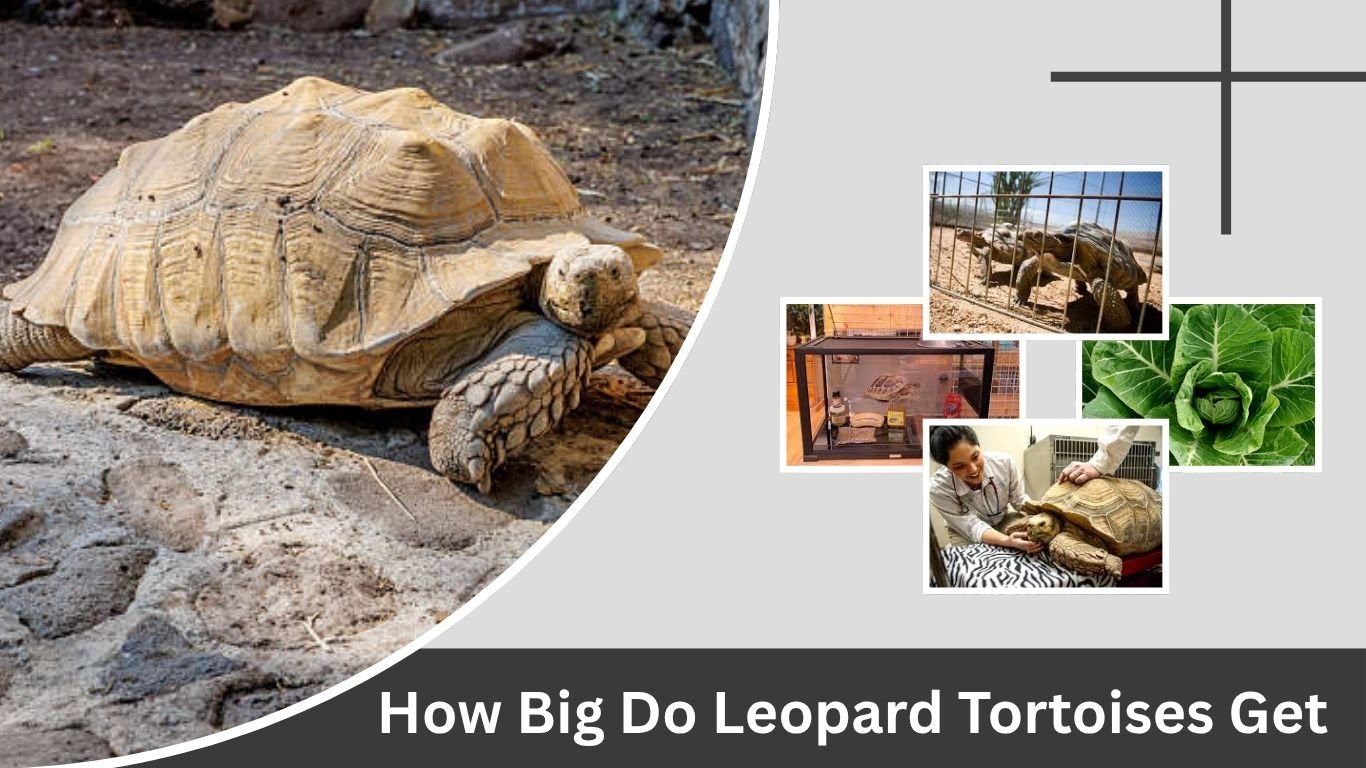
Leopard tortoises are one of the largest tortoise species, known for their impressive size and long lifespan. Understanding how big they grow is essential for proper care, enclosure planning, and long-term commitment. Their size can vary depending on factors like diet, habitat, and overall health. In this guide, we explore the full-grown size of leopard tortoises, how they develop over time, and what influences their growth, helping you set realistic expectations whether you are a pet owner or simply curious about this remarkable reptile.
Leopard Tortoise Full Grown Size
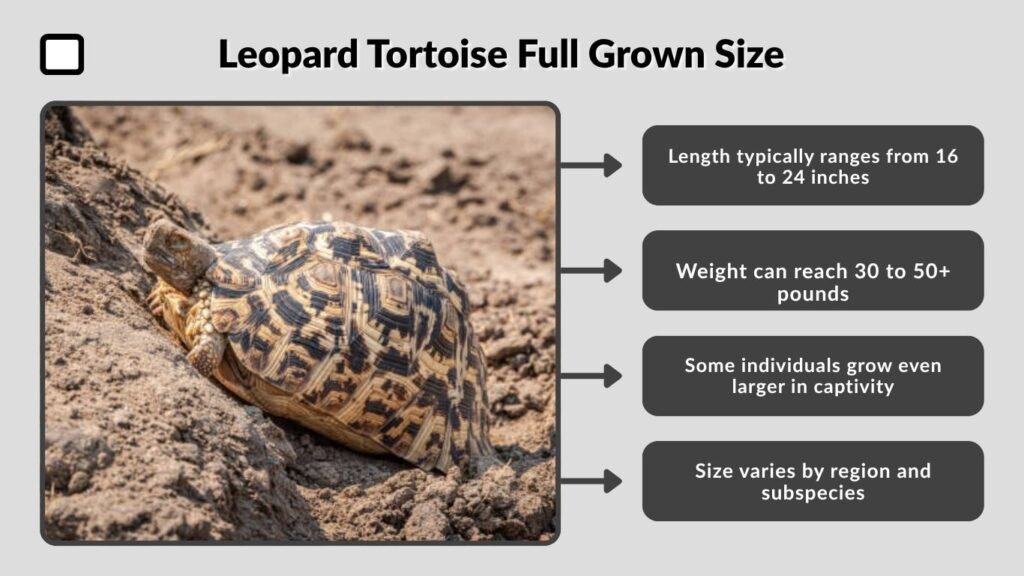
Leopard tortoises can reach a substantial size when fully grown, making them one of the larger land tortoise species. Their final size depends on genetics, diet, and environment. While some remain moderately sized, others grow quite large, especially in ideal captive conditions where food and care are consistent.
Average Adult Size
Leopard tortoises show noticeable variation in size depending on their origin and care.
- Length typically ranges from 16 to 24 inches
- Weight can reach 30 to 50+ pounds
- Some individuals grow even larger in captivity
- Size varies by region and subspecies
Male vs Female Size Differences
Male and female leopard tortoises can differ slightly in size and body structure.
- Females are often broader and heavier
- Males may have longer tails
- Shell shape can vary between sexes
- Differences are usually subtle but noticeable
Leopard Tortoise Size by Age
Leopard tortoises grow slowly over many years, with noticeable changes at each stage of life. From tiny hatchlings to large adults, their growth is gradual and influenced by environmental conditions. Understanding size by age helps track development and ensure proper care at every stage.
Hatchling Size
Newly hatched leopard tortoises are very small but fully formed.
- Usually measure 4 to 6 cm in length
- Lightweight and delicate
- Rapid early growth during first months
- Require careful feeding and protection
Juvenile Growth
The juvenile stage is marked by steady and visible growth.
- Growth becomes more consistent
- Shell patterns become more defined
- Increased appetite supports development
- Size can vary widely depending on care
Adult Development
As leopard tortoises mature, their growth rate begins to slow.
- Reach maturity around 12 to 15 years
- Growth continues slowly throughout life
- Size stabilizes but does not completely stop
- Adult size depends on long-term care
Leopard Tortoise Growth Rate
Leopard tortoises are not fast-growing animals, but their steady development over time leads to impressive adult sizes. Growth rates can differ greatly between individuals depending on diet, habitat, and environmental conditions. A well-fed tortoise in a stable environment will generally grow more consistently than one facing stress or poor nutrition.
Factors That Affect Leopard Tortoise Size
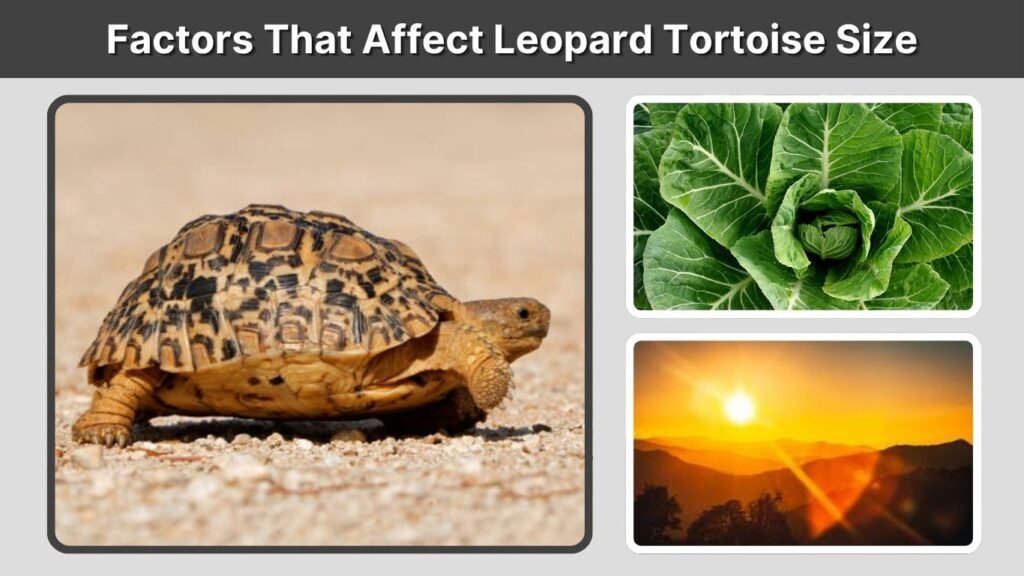
Several important factors influence how large a leopard tortoise will grow. These elements interact over time, shaping both the speed of growth and the final adult size. Understanding these factors helps ensure healthy development and prevents common growth-related issues.
Key Growth Influencers
- Balanced, high-fiber diet
- Proper temperature and humidity
- Access to UVB lighting or sunlight
- Genetics and natural variation
Environmental Impact
- Space for movement and exercise
- Stress levels in the habitat
- Consistent feeding routine
- Clean and safe living conditions
Leopard Tortoise Size in the Wild vs Captivity
The environment plays a major role in determining how large a leopard tortoise becomes. In the wild, growth is often slower due to limited food and environmental challenges. In captivity, controlled conditions can support faster and sometimes larger growth when managed properly.
Size Differences Explained
- Wild tortoises may grow more slowly
- Captive tortoises often reach larger sizes
- Food availability differs significantly
- Environmental stress affects growth
Why Environment Matters
Captive environments allow for controlled feeding, stable temperatures, and protection from predators, all of which contribute to consistent growth. However, improper care in captivity can also lead to health issues that limit size. A balanced environment is key to achieving healthy, natural growth.
Space and Enclosure Needs Based on Size
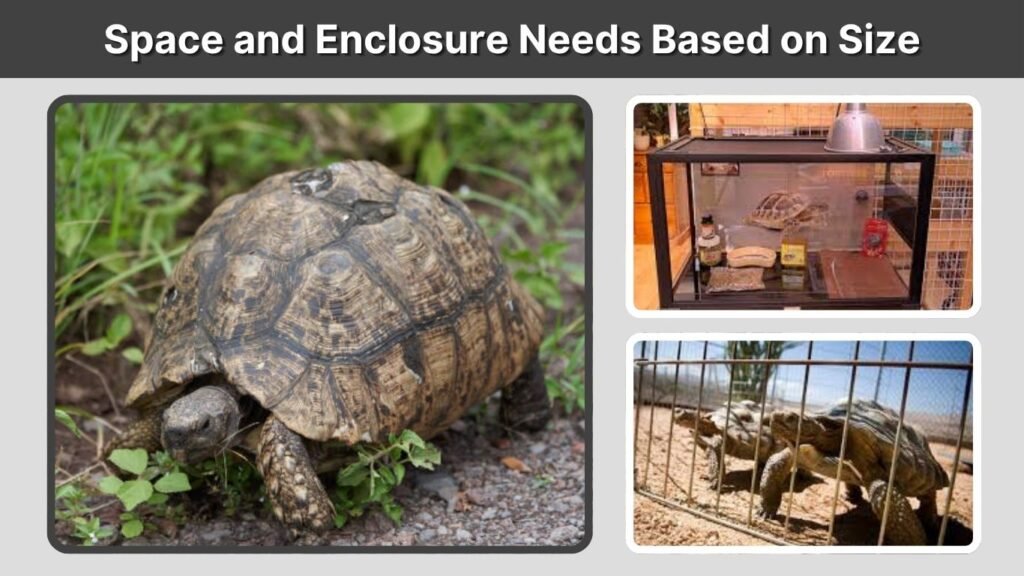
As leopard tortoises grow, their space requirements increase significantly. Providing adequate room is essential for their physical health and natural behavior. A small enclosure may restrict movement, leading to stress and poor development, while a properly sized habitat supports exercise and overall well-being.
Housing Requirements
- Outdoor enclosures are ideal for large adults
- Minimum space should allow free movement
- Secure fencing prevents escape and injury
- Indoor setups need heat and UVB lighting
Why Size Matters for Care
- Larger tortoises need more walking space
- Proper space reduces stress and aggression
- Encourages natural grazing behavior
- Supports healthy muscle and shell growth
How to Support Healthy Growth
Healthy growth in leopard tortoises depends on consistent care and attention to their environment. Proper nutrition, lighting, and hydration all work together to ensure steady development. When these elements are balanced, tortoises grow at a natural rate and reach their full size without complications.
Practical Care Tips
- Provide a high-fiber, grass-based diet
- Ensure access to UVB light or natural sunlight
- Maintain proper temperature and humidity
- Offer clean water for hydration
Importance of Consistency
Maintaining a stable routine is just as important as providing the right resources. Sudden changes in diet, environment, or lighting can disrupt growth and cause stress. Consistency helps tortoises develop steadily and reduces the risk of health issues that could affect their final size.
Common Growth Problems
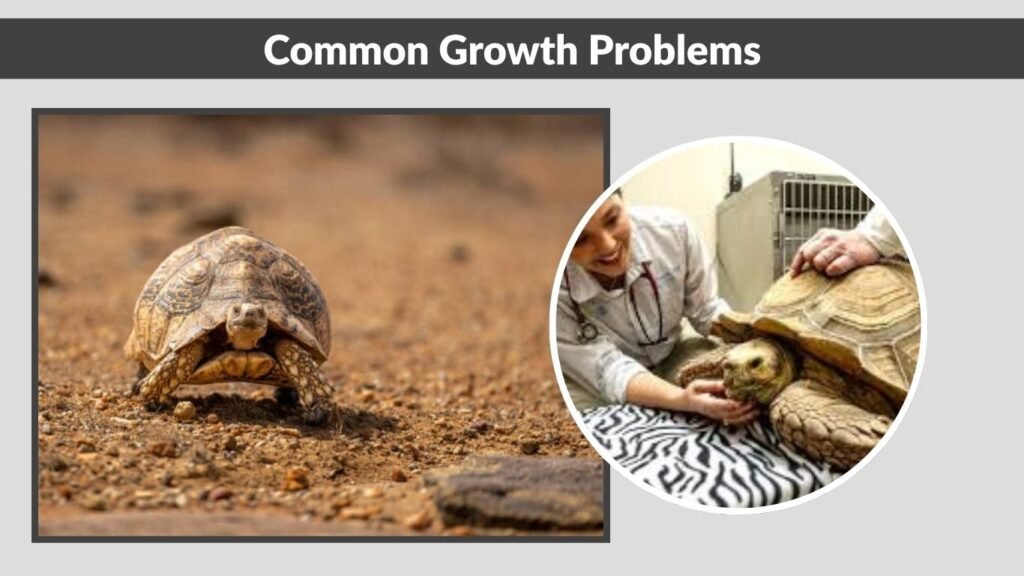
Leopard tortoises can experience growth-related issues if their care is not properly managed. These problems often develop gradually and may not be noticeable at first. Identifying early signs and correcting care practices can prevent long-term damage and ensure healthy development.
Issues That Affect Size
- Stunted growth due to poor nutrition
- Shell deformities from lack of calcium
- Overfeeding leading to unnatural growth
- Illness or parasites affecting development
Prevention Strategies
- Maintain a balanced, fiber-rich diet
- Provide consistent UVB exposure
- Monitor growth regularly
- Seek veterinary care when needed
FAQs
How big does a full grown leopard tortoise get?
A full grown leopard tortoise typically reaches between 16 and 24 inches in length and can weigh 30 to 50 pounds or more. Some individuals may grow larger depending on genetics and care conditions, especially in captivity.
How long does it take for a leopard tortoise to reach full size?
Leopard tortoises usually take around 12 to 15 years to reach full maturity. Their growth is slow and steady, influenced by diet, environment, and overall health throughout their development.
Do leopard tortoises keep growing forever?
Leopard tortoises continue to grow slowly throughout their lives, even after reaching maturity. However, the growth rate becomes very minimal as they age, and their size stabilizes over time.
Are female leopard tortoises bigger than males?
Females are generally broader and heavier than males, especially when fully grown. Males may appear slightly smaller but often have longer tails and different shell shapes.
What affects a leopard tortoise’s size the most?
Diet and environment are the most important factors. A proper high-fiber diet, adequate space, correct temperature, and UVB exposure all play a key role in ensuring healthy growth and maximum size potential.