
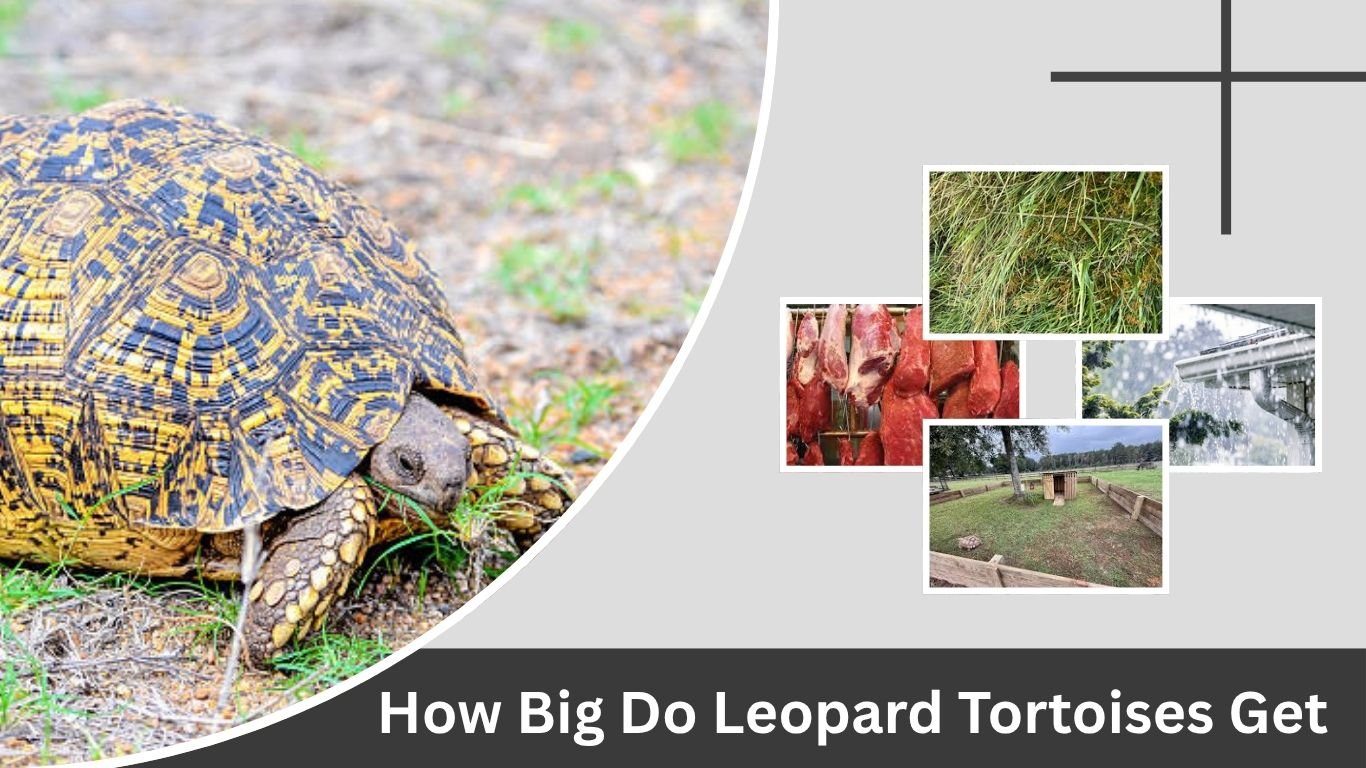
African leopard tortoises are among the most popular large tortoise species, known for their striking shell patterns and long lifespan. Native to various regions of Africa, they thrive in warm climates and require specific care to stay healthy. Understanding their size, diet, and habitat needs is essential for proper ownership. Whether you are considering one as a pet or simply learning about them, this guide covers key aspects of their growth, feeding habits, and living conditions to help you make informed decisions.
African Leopard Tortoise Overview
African leopard tortoises are large, land-dwelling reptiles found across sub-Saharan Africa. They are well adapted to dry, open environments and are known for their calm behavior. Their unique shell markings resemble a leopard’s spots, which gives them their name and makes them visually distinctive.
Species and Types
- South African leopard tortoise
- East African leopard tortoise
- Giant South African variants
Natural Distribution
- Found across sub-Saharan Africa
- Common in grasslands and savannas
- Adapted to warm, semi-arid climates
- Regional differences affect size and growth
African Leopard Tortoise Size and Growth
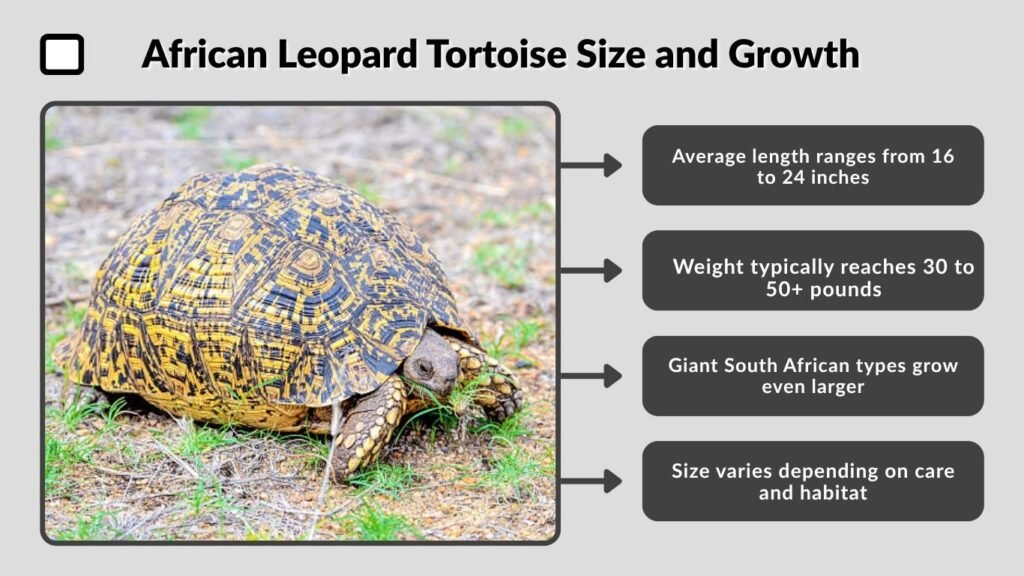
Leopard tortoises grow slowly over many years, eventually reaching an impressive adult size. Their growth depends on environmental conditions, diet, and genetics. While some remain moderate in size, others, especially giant South African types, can become significantly larger under optimal conditions.
How Big Do African Leopard Tortoises Get?
- Average length ranges from 16 to 24 inches
- Weight typically reaches 30 to 50+ pounds
- Giant South African types grow even larger
- Size varies depending on care and habitat
Growth Rate and Development
Leopard tortoises experience steady growth from hatchling to adulthood. They start small but gradually increase in size over time. Growth is faster during early years and slows as they mature, with full size usually reached around 12 to 15 years.
African Leopard Tortoise Habitat
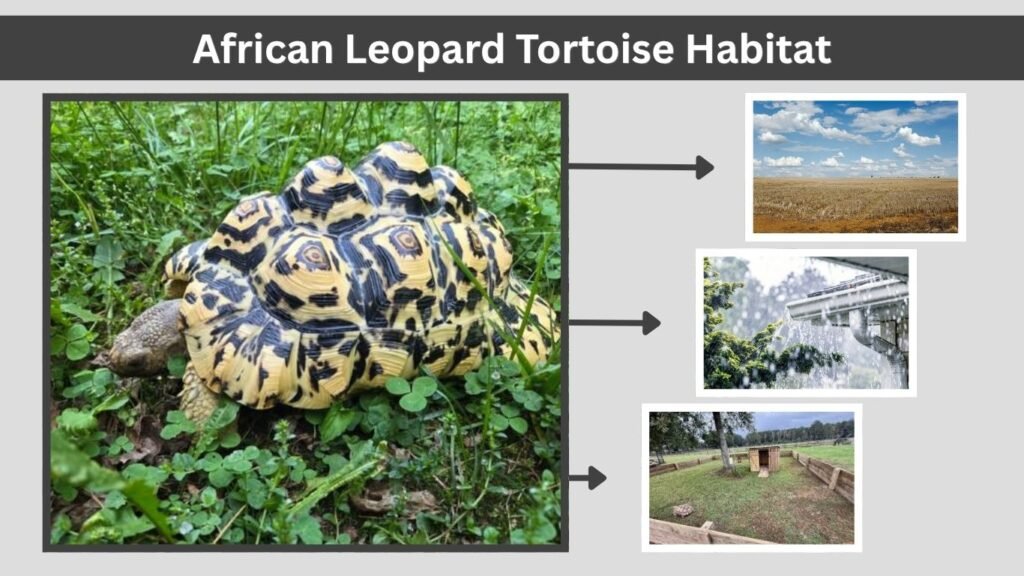
Leopard tortoises require a warm and stable environment that closely resembles their natural habitat. In the wild, they live in dry grasslands and savannas where temperatures remain relatively high. Replicating these conditions in captivity is essential for their health, growth, and overall well-being.
Natural Habitat
- Dry grasslands and open savannas
- Warm temperatures with seasonal rainfall
- Plenty of sunlight exposure
- Natural grazing areas
Captive Habitat Setup
- Outdoor enclosures are ideal for adults
- Indoor setups require heat and UVB lighting
- Substrate should be dry and safe
- Adequate space is essential for movement
African Leopard Tortoise Diet
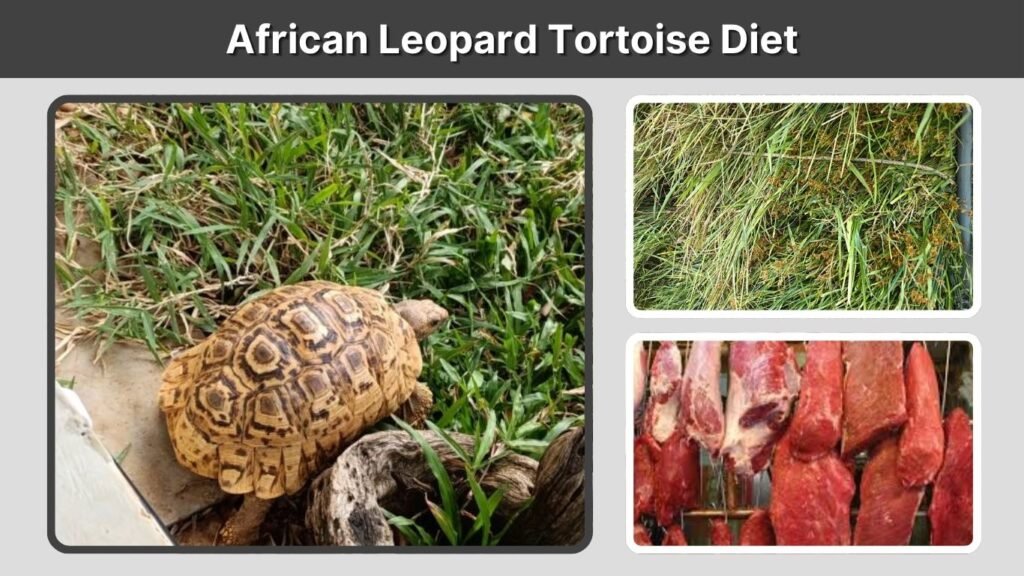
A proper diet is one of the most important aspects of caring for an African leopard tortoise. Their natural feeding behavior is based on grazing high-fiber vegetation. Providing the right balance of foods helps maintain digestive health and supports strong shell development over time.
What Do African Leopard Tortoises Eat?
- Grass and hay as primary food
- Leafy greens like dandelion and collard greens
- Edible weeds and plants
- Occasional vegetables for variety
Foods to Avoid
- High-protein foods such as meat
- Sugary fruits in large amounts
- Processed or human foods
- Toxic plants or chemically treated greens
African Leopard Tortoise Care Guide
Proper care ensures that leopard tortoises remain healthy and reach their full potential in size and lifespan. They require a combination of correct diet, lighting, and habitat conditions. Consistency in care routines is important to prevent stress and health issues over time.
Basic Care Requirements
- Spacious enclosure for movement
- Access to natural sunlight or UVB lighting
- Clean water available at all times
- Safe and stable environment
Feeding and Nutrition Tips
Maintaining a balanced diet is essential for long-term health. High-fiber foods should make up the majority of their meals, while supplements like calcium help support shell strength. Regular feeding routines and variety in diet help prevent nutritional deficiencies and ensure steady growth.
African Leopard Tortoise as a Pet
African leopard tortoises are popular pets due to their calm nature and unique appearance. However, they require long-term commitment and proper care. Their large size and specific environmental needs mean they are best suited for dedicated owners who can provide adequate space, diet, and attention throughout their long lifespan.
Benefits of Keeping One
- Long lifespan with proper care
- Generally calm and non-aggressive
- Visually striking shell patterns
- Interesting natural behaviors
Challenges and Responsibilities
- Requires large enclosure space
- Needs specific temperature and lighting
- Long-term care commitment
- Regular maintenance and feeding
African Leopard Tortoise Common Health Issues
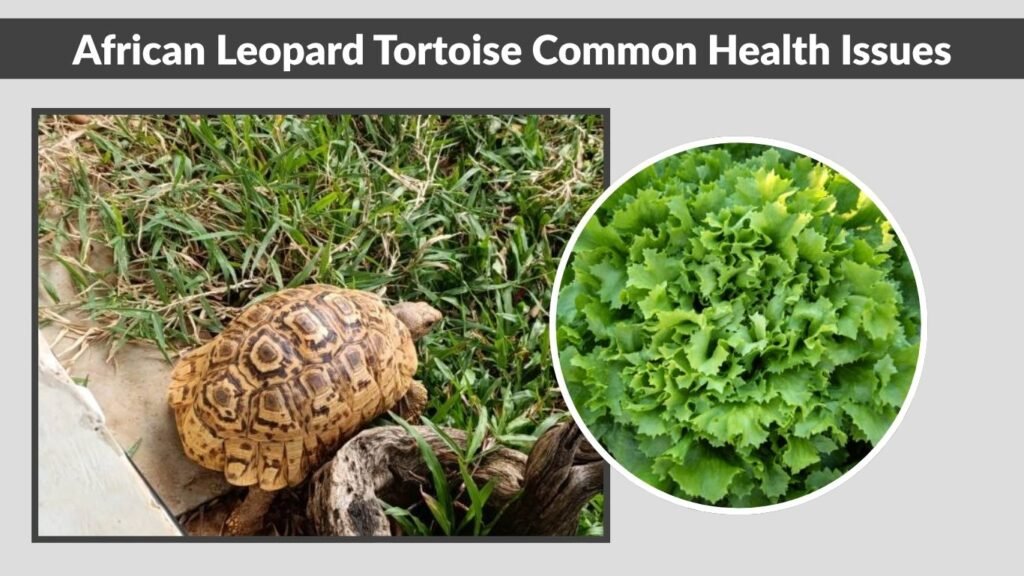
Leopard tortoises can develop health problems if their care is not properly managed. Many of these issues are linked to diet, environment, or hygiene. Early detection and prevention are essential to ensure a long, healthy life and to avoid complications that may affect their growth and overall well-being.
Health Problems
- Pyramiding caused by improper diet or humidity
- Respiratory infections from cold conditions
- Parasites affecting digestion
- Nutritional deficiencies impacting shell health
Prevention Tips
- Maintain a proper high-fiber diet
- Ensure correct temperature and humidity
- Keep enclosure clean and dry
- Monitor behavior for early warning signs
African Leopard Tortoise Buying and Price Guide
Purchasing an African leopard tortoise requires careful consideration to ensure ethical and legal sourcing. Prices can vary depending on location, age, and size. It is important to buy from reputable breeders or licensed sellers to ensure the tortoise is healthy and legally obtained.
Where to Buy
- Licensed reptile breeders
- Reputable pet stores
- Specialized online marketplaces
Price and Legal Considerations
Prices can differ widely based on region and tortoise size. In some areas, permits may be required to own or transport a leopard tortoise. Always check local regulations and avoid illegal wildlife trade to ensure responsible ownership.
African Leopard Tortoise Behavior and Lifestyle
African leopard tortoises are primarily grazing animals with calm and predictable behavior. They spend most of their time eating, resting, and exploring their environment. Their activity levels can vary depending on temperature and seasonal changes, but they do not enter true hibernation like some other tortoise species.
Daily Behavior
- Grazing on available vegetation
- Slow movement and exploration
- Resting during extreme temperatures
Seasonal Behavior
- Reduced activity in cooler conditions
- Increased movement in warm weather
- No true hibernation cycle
FAQs
How big does an African leopard tortoise get?
African leopard tortoises typically grow between 16 and 24 inches in length and can weigh 30 to 50 pounds or more. Some giant South African types may grow even larger depending on care and environmental conditions.
What do African leopard tortoises eat?
They primarily eat grasses, hay, and leafy greens. Their diet should be high in fiber and low in protein. Occasional vegetables can be included, but sugary foods and processed items should be avoided to maintain proper health.
Do African leopard tortoises hibernate?
No, African leopard tortoises do not hibernate. Instead, they may become less active during cooler temperatures but remain awake year-round. Maintaining a warm environment in captivity is important for their health.
Are African leopard tortoises good pets?
They can make good pets for experienced owners who can meet their needs. Their large size, long lifespan, and specific care requirements mean they are best suited for people prepared for a long-term commitment.
How much does an African leopard tortoise cost?
The cost varies depending on size, age, and location. Prices can range from relatively affordable for young tortoises to much higher for larger or rare varieties. Legal requirements and permits may also affect the total cost.