
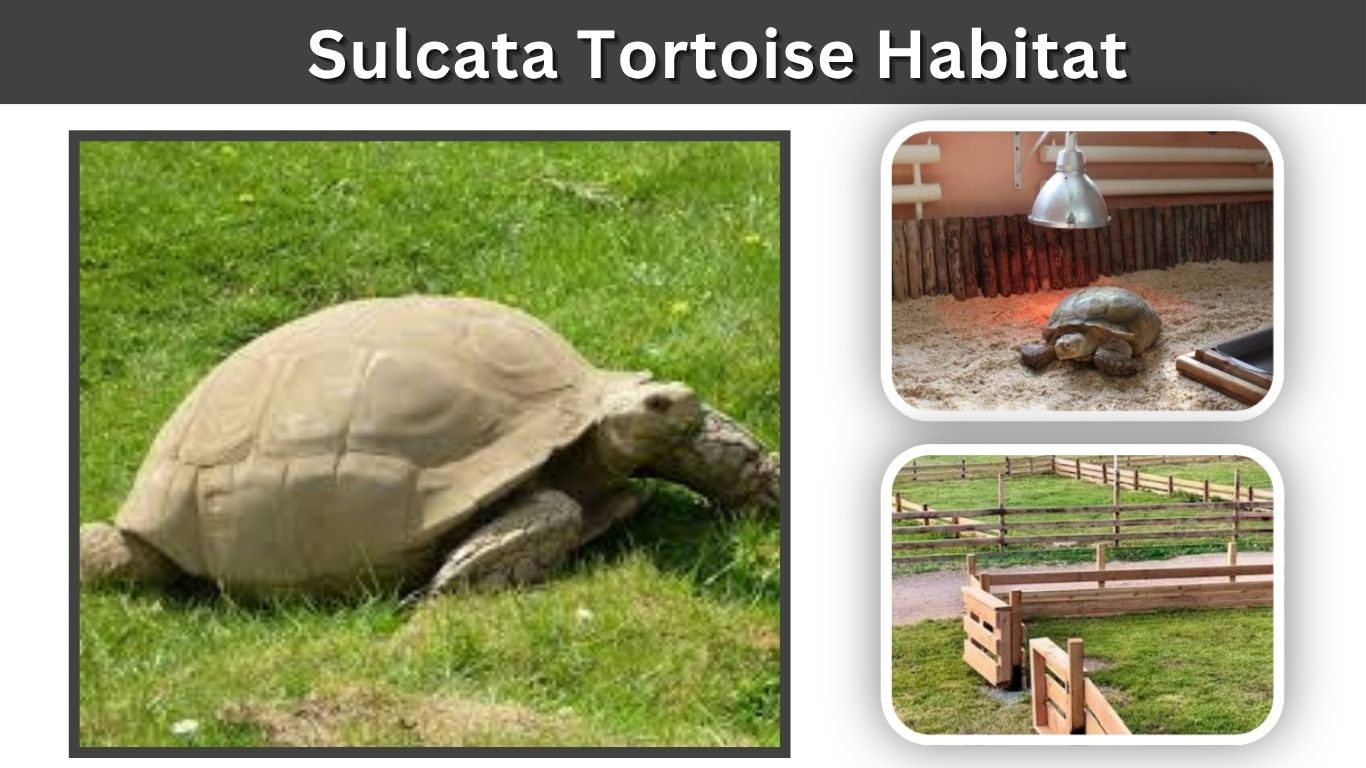
A sulcata tortoise habitat must be warm, spacious, dry, secure, and built for digging. In the wild, sulcatas live in hot, semi-arid parts of Africa, so pet habitats should copy that environment without becoming too cold, damp, cramped, or unsafe. Baby sulcatas can start indoors, but adults usually need a large outdoor habitat with heated shelter, strong fencing, shade, and safe grazing space.
Sulcata Tortoise Natural Habitat
Sulcata tortoises, also called African spurred tortoises, are native to the Sahara Desert region and the Sahel, a semi-arid zone of grassland, scrub, and savanna in northern Africa. The Maryland Zoo describes their home as semi-arid grasslands, scrub, and savannah in northern Africa, while Dublin Zoo places them along the southern edge of the Sahara.
In their natural habitat, sulcatas face intense heat, dry seasons, and limited shade. San Diego Zoo notes that temperatures may reach 120°F, and sulcatas dig deep dens to stay cooler during the hottest parts of the day.
Best Habitat for Sulcata Tortoise
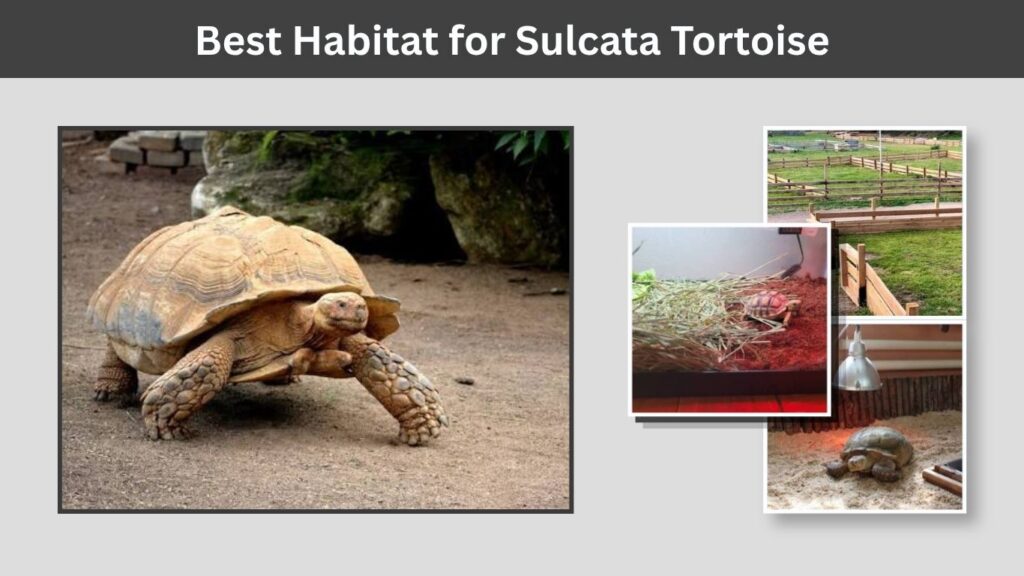
The best habitat depends on the tortoise’s age and your climate. Babies and small juveniles are easier to keep indoors, but adult sulcatas become very large and powerful. Zoo Med notes that adults kept indoors may need at least 80 square feet of space, which shows why outdoor housing is usually better for mature sulcatas.
| Habitat Type | Best For | Main Needs |
| Indoor habitat | Babies and juveniles | Heat, UVB, substrate, humid hide |
| Outdoor habitat | Large juveniles and adults | Fencing, shelter, shade, grazing |
| Winter habitat | Cold climates | Heated room, shed, or tortoise house |
| DIY habitat | Long-term keepers | Strong walls, safe plants, secure design |
A sulcata habitat should always include warmth, light, water, food access, hiding space, and enough room to walk.
Indoor Sulcata Tortoise Habitat
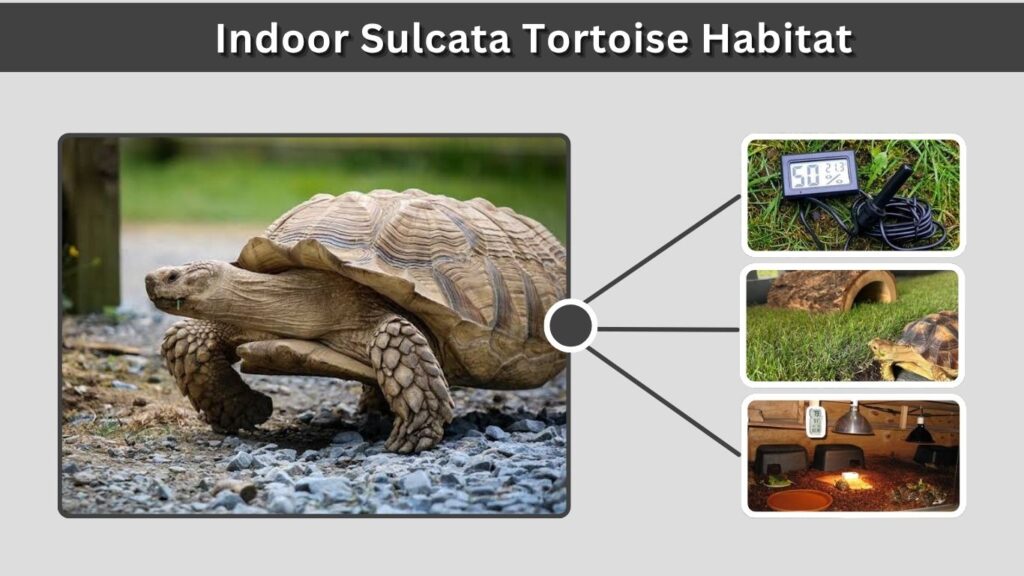
An indoor sulcata tortoise habitat is usually best for hatchlings, babies, and young juveniles. A glass tank may work only for a very small hatchling, but a tortoise table, large plastic tub, indoor pen, or custom enclosure is usually better.
Indoor Habitat Setup
A good indoor setup should include:
- Basking lamp
- UVB light
- Cool side and warm side
- Safe substrate
- Shallow water dish
- Hide box
- Food tile or feeding area
- Thermometer and hygrometer
The Royal Veterinary College says sulcatas need UVB exposure, a basking area of about 35–40°C, a cooler end around 25°C, and nighttime temperatures above 20°C. It also recommends measuring temperatures and using guarded heat sources to prevent burns.
Baby Sulcata Tortoise Habitat
A baby sulcata tortoise habitat should be warm, clean, and slightly more humid than many beginners expect. Hatchlings can dry out quickly, so they need a shallow water dish, regular soaking, and a humid hide. ReptiFiles recommends a humid hideout for sulcatas whether housed indoors or outdoors.
Baby habitats should not be cold, dusty, or dry all the time. A weak baby that sleeps constantly or refuses food may be too cold, dehydrated, or sick.
Outdoor Sulcata Tortoise Habitat
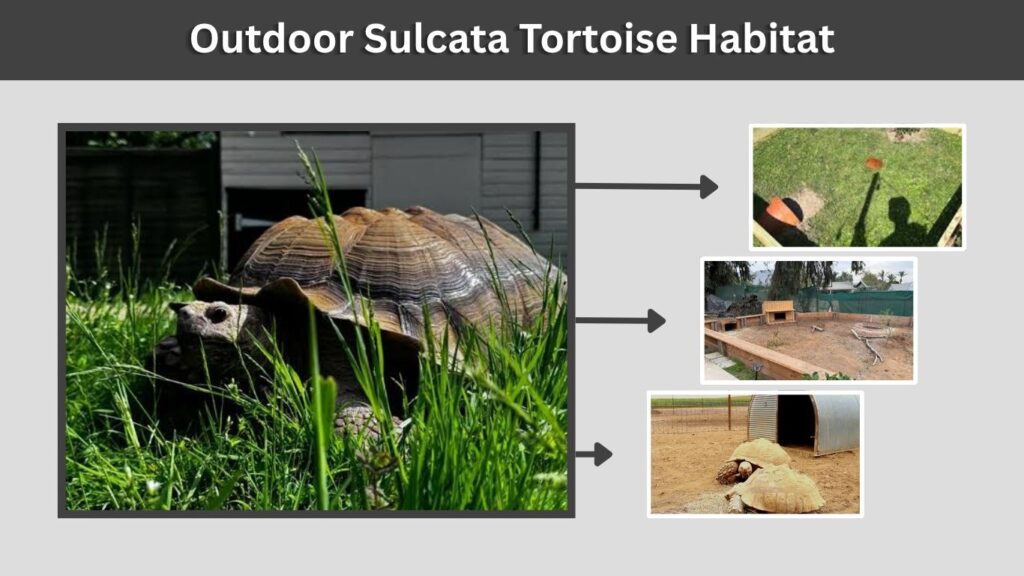
An outdoor sulcata tortoise habitat is usually best for larger sulcatas in warm climates. Adults need space to graze, walk, dig, bask, and retreat into shade. Outdoor housing should be secure because sulcatas are strong diggers and pushers.
A good outdoor habitat includes:
- Strong fencing
- Buried barrier to reduce digging escapes
- Dry shelter
- Heated house for cold nights
- Shade trees or shade cloth
- Safe grasses and weeds
- Fresh water
- No toxic plants
- Protection from dogs and predators
Outdoor habitats should not be only open lawn. Sulcatas need both sun and shade. They also need a dry shelter where they can escape rain, wind, and cold weather.
Sulcata Tortoise Habitat Temperature
Temperature is one of the most important parts of habitat design. Sulcatas need heat to digest food and stay active. Without enough warmth, they may stop eating or develop health problems.
| Area | Recommended Range |
| Basking spot | 35–40°C / 95–104°F |
| Cool side | Around 25°C / 77°F |
| Night minimum | Above 20°C / 68°F |
| Outdoor warm weather | Best with sun, shade, and shelter |
Reptifiles lists similar young sulcata temperatures: basking area 100–105°F, ambient/cool zone 80–90°F, and nighttime 70–75°F.
Sulcata Tortoise Habitat Substrate and Bedding
Sulcata tortoise habitat substrate should allow walking, digging, and moisture balance without being dangerous if swallowed. RVC warns that substrates should either not be eaten or should not cause blockages, and wood-chip based substrates should never be used for that reason.
Good options may include:
- Organic topsoil mix
- Coco coir mix
- Cypress mulch in suitable setups
- Grass hay for some dry feeding areas
- Outdoor soil and grass
Avoid sharp gravel, cedar, pine shavings, walnut shell, dusty bedding, and pure loose sand. A little sand may appear in some soil mixes, but a full sand habitat is not ideal because it can be dusty, drying, and risky if eaten.
Sulcata Tortoise Habitat Plants
Safe plants make a habitat more natural and useful. Sulcatas are grazers, so edible grasses and weeds are better than decorative plants. Use only pesticide-free plants.
Good habitat plants include:
- Bermuda grass
- Orchard grass
- Timothy grass
- Dandelion
- Hibiscus
- Mulberry leaves
- Grape leaves
- Prickly pear cactus pads
Do not use unknown yard plants. Many common garden plants can be toxic, and sulcatas may eat almost anything they can reach.
How to Build a Sulcata Tortoise Habitat
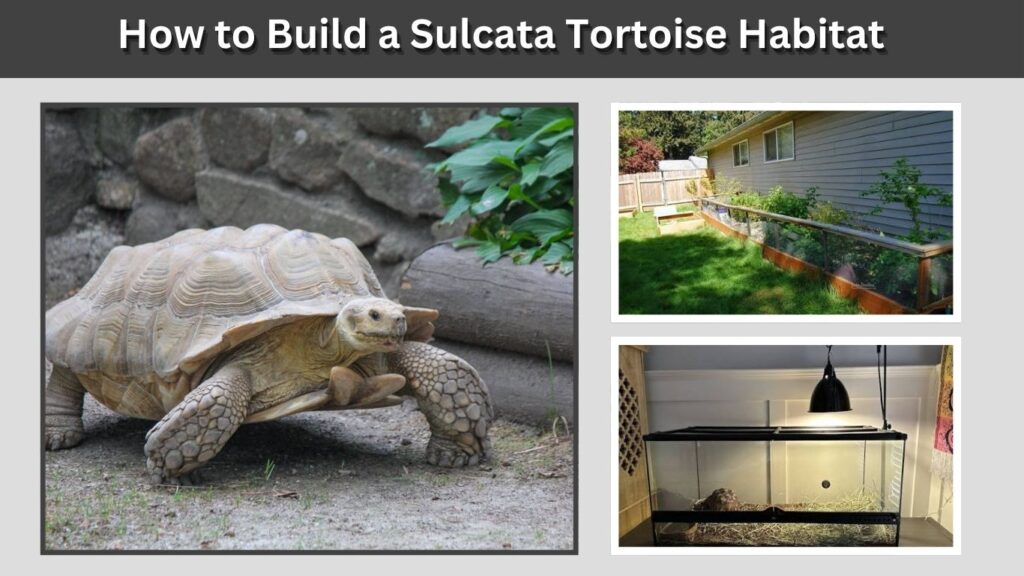
A DIY sulcata tortoise habitat should be built for the tortoise’s adult size, not just its baby size. Many “sulcata tortoise habitat for sale” products are suitable only for hatchlings or short-term indoor use.
DIY Outdoor Habitat Ideas
For outdoor housing, build strong walls, add a buried barrier, and include both sunny and shaded areas. A heated tortoise house is important in places where nights get cold. The habitat should drain well so the tortoise is not sitting in wet mud.
DIY Indoor Habitat Ideas
For indoor housing, use a large tortoise table, livestock tub, or custom pen. Put the basking lamp at one end so the tortoise can move between warm and cooler zones. Add UVB lighting, a hide, water, and safe substrate.
Sulcata Tortoise Winter Habitat
Sulcatas do not hibernate, so winter habitat must stay warm. In cold climates, adults may need a heated shed, greenhouse, garage room, or indoor tortoise room. The shelter should be dry, insulated, and controlled by safe heating equipment.
A winter habitat should include:
- Thermostat-controlled heat
- Dry floor area
- UVB if kept indoors long-term
- No cold drafts
- Safe basking area
- Easy cleaning access
Cold, damp housing can lead to respiratory illness, poor appetite, and weakness.
FAQs
What is the best habitat for a sulcata tortoise?
The best sulcata tortoise habitat is large, warm, secure, and dry, with access to sun, shade, water, shelter, and grazing. Babies can live indoors with heat and UVB, but adults usually need a large outdoor habitat with heated shelter.
Can sulcata tortoises live indoors?
Baby and juvenile sulcata tortoises can live indoors if they have proper heat, UVB light, substrate, humidity, and space. Adults are harder to keep indoors because they become very large and may need a whole room or heated indoor pen.
What temperature should a sulcata tortoise habitat be?
A sulcata habitat should have a warm basking area around 35–40°C, a cooler area around 25°C, and nighttime temperatures above 20°C. Outdoor habitats also need shade so the tortoise can cool down safely during hot weather.
What bedding is best for a sulcata tortoise habitat?
Good bedding can include organic soil mixes, coco coir mixes, suitable mulch, hay areas, or outdoor grass and soil. Avoid cedar, pine, sharp gravel, dusty bedding, wood chips that may cause blockages, and pure sand habitats.
How big should an outdoor sulcata tortoise habitat be?
An outdoor sulcata habitat should be as large as possible because adults are active, heavy, and strong. A small pen is not enough long term. The habitat should include strong fencing, buried barriers, shade, shelter, grazing space, and fresh water.