
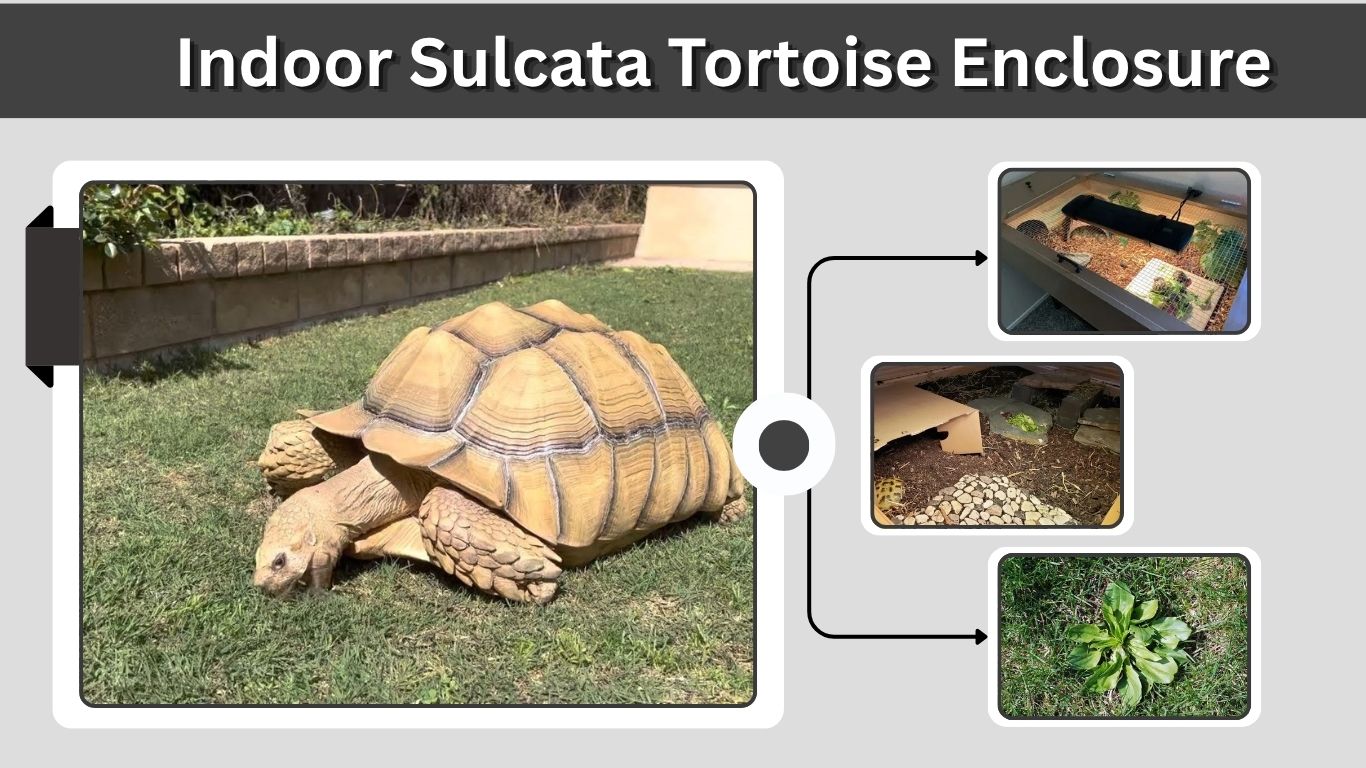
A good indoor sulcata tortoise enclosure must provide space, warmth, UVB light, dry resting areas, safe substrate, and room for natural movement. Baby sulcatas can live indoors for a time, but adults usually need a large outdoor enclosure with heated shelter. Indoor housing works best for hatchlings, juveniles, sick tortoises, or temporary cold-weather care, not as a lifelong setup for a full-grown sulcata.
Can Sulcata Tortoises Live Indoors?
Sulcata tortoises can live indoors when they are young, but indoor care becomes harder as they grow. These tortoises become very large, active, and strong, so a small tank or glass terrarium is not suitable long term.
The Royal Veterinary College notes that sulcata tortoises need serious space and resources, and MedVet advises that indoor housing should usually be temporary during cold or damp weather.
Best Indoor Use Cases
- Baby sulcata tortoise enclosure
- Winter or rainy-season housing
- Quarantine setup for a new tortoise
- Recovery enclosure after illness
- Night shelter connected to an outdoor pen
- Temporary indoor setup during extreme weather
For adults, a “large indoor sulcata tortoise enclosure” may need a whole room, heated shed, garage conversion, or custom tortoise room.
Best Indoor Enclosure Size
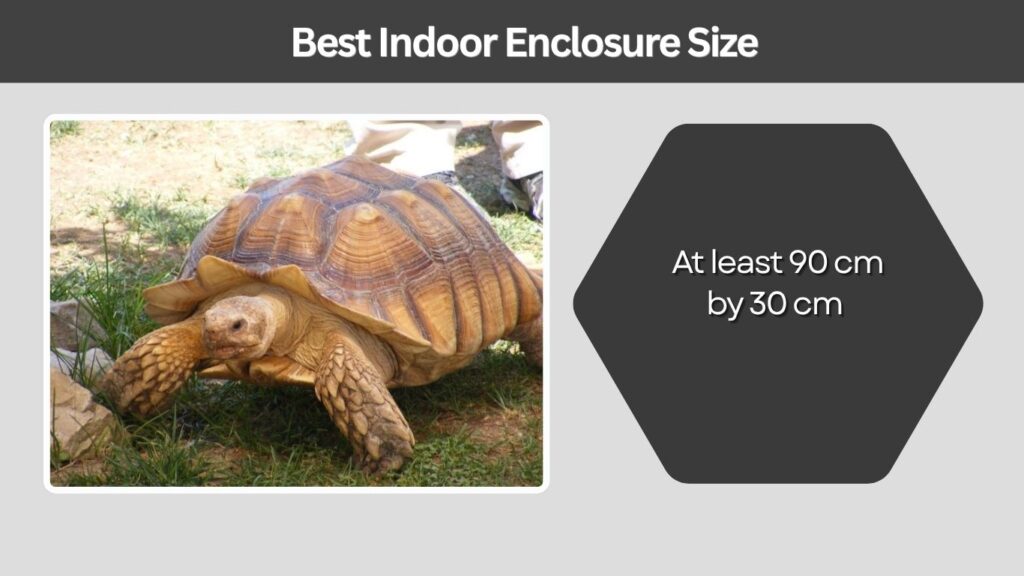
The best indoor enclosure for a baby sulcata tortoise is not a small aquarium. A tortoise table, floor pen, or custom wooden enclosure is usually better because it allows airflow and a proper temperature gradient.
For a small juvenile, the Royal Veterinary College recommends at least 90 cm by 30 cm so the enclosure can have a warm end and a cooler end. However, bigger is always better because sulcatas grow quickly.
| Sulcata Age | Indoor Enclosure Suggestion |
| Hatchling | Large tortoise table or closed-chamber style setup |
| Juvenile | Bigger wooden pen or indoor floor enclosure |
| Subadult | Custom room-sized enclosure |
| Adult | Outdoor enclosure with heated shelter is usually best |
Why Glass Tanks Are Not Ideal
Glass tanks often create poor airflow, stress, and overheating. Tortoises may also keep trying to walk through the clear sides. A solid-sided tortoise table or wooden enclosure is usually safer and more practical.
Indoor Sulcata Tortoise Enclosure Setup
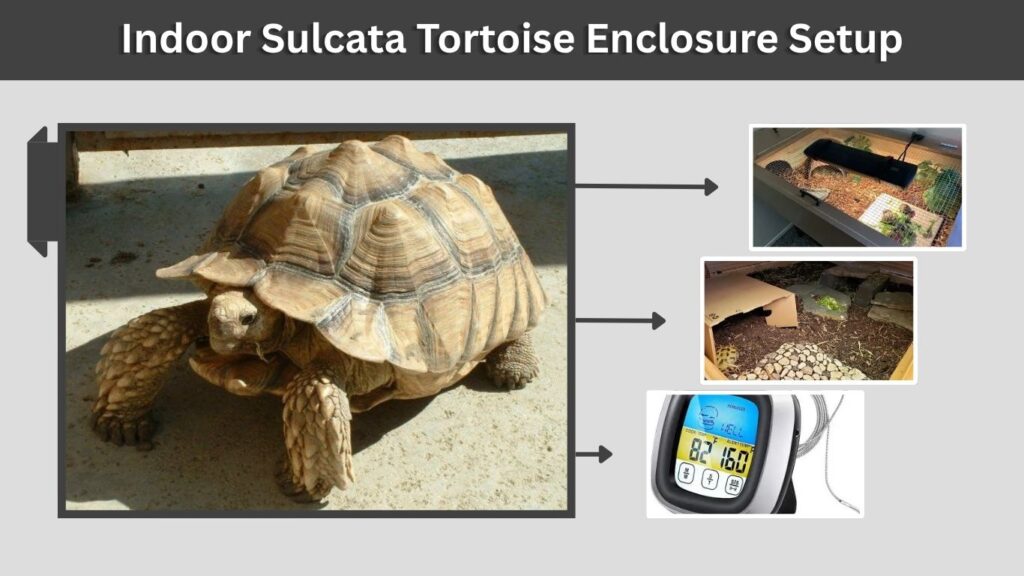
An indoor enclosure should copy the basic needs of an outdoor habitat: heat, light, hiding space, dry areas, water, and safe walking space.
Essential Items
- Strong tortoise table or wooden pen
- Basking lamp
- UVB light
- Digital thermometers
- Hygrometer
- Thermostat for heat sources
- Hide box
- Shallow water dish
- Feeding tile or plate
- Safe substrate
- Calcium supplement
- Outdoor-safe grazing tray or hay area
MedVet recommends that indoor housing include a basking area, cooler retreat area, den box for burrowing, feeding area, shallow water dish, UVB light, and correct temperatures.
Heat and Temperature
Sulcatas need heat to digest food and stay active. The enclosure should have a warm basking area and a cooler side so the tortoise can move between temperatures.
A good target is:
- Basking spot: around 95–100°F
- Daytime warm area: around 80°F
- Night temperature: around 72°F or above
- Cool side: warm but not cold or damp
MedVet recommends daytime indoor temperatures around 80°F, a basking area around 100°F, and nighttime temperatures around 72°F.
UVB Lighting for Indoor Sulcatas
UVB lighting is one of the most important parts of a sulcata tortoise indoor enclosure. Without UVB, a tortoise cannot properly use calcium, which may lead to weak bones, shell problems, and metabolic bone disease.
The Royal Veterinary College says sulcata tortoises must be exposed to UVB light, and UVB bulbs should be changed according to the manufacturer’s instructions.
Place the UVB light over the basking zone, not behind glass or plastic. Glass blocks useful UVB rays, so sunlight through a window is not enough.
Best Substrate for an Indoor Sulcata Enclosure
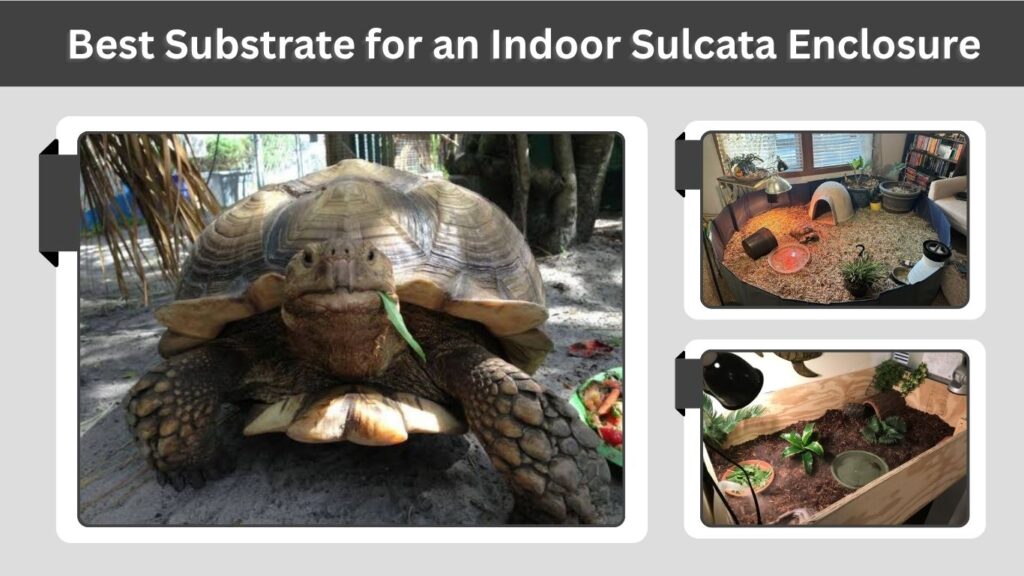
Substrate should be safe, easy to clean, and suitable for digging. Baby sulcatas need a surface that supports walking without causing slipping or impaction.
Good substrate options include:
- Organic topsoil without chemicals
- Coconut coir mixed with soil
- Orchid bark in some setups
- Newspaper or paper towels for quarantine
- Reptile-safe liner for temporary use
- Hay in a dry feeding area
Avoid risky substrates such as:
- Sand as the only substrate
- Cedar or pine shavings
- Wood chips
- Cat litter
- Gravel
- Corn cob bedding
- Moldy hay
- Artificial turf that traps waste
The Royal Veterinary College warns that substrates should not cause blockages if eaten and says wood-chip-based substrates should not be used.
Baby Sulcata Tortoise Indoor Enclosure Ideas
A baby sulcata needs a warm, secure enclosure with easy access to food, water, and hides. The setup should not be too dry, too cold, or too open.
Simple Baby Setup
Use a large tortoise table or custom wooden box with solid sides. Add a basking lamp on one end, UVB lighting, a hide, a shallow water dish, and safe substrate. Keep food on a flat tile to reduce substrate ingestion.
Natural Indoor Setup
A natural setup can include soil-based substrate, flat rocks, grass trays, edible weeds, and safe hides. Make sure all plants are tortoise-safe and pesticide-free.
Winter Indoor Setup
For colder climates, a heated indoor pen or heated shed-style enclosure may be needed. Use thermostats, guarded heat lamps, and digital thermometers to prevent burns or overheating.
Water, Humidity, and Cleaning
Sulcatas come from dry grassland regions, but indoor enclosures should not be bone-dry for young tortoises. They still need drinking water, soaking, and stable humidity.
Provide a shallow water dish that the tortoise can enter and exit safely. Water should be changed daily. The Royal Veterinary College also recommends regular warm-water bathing and says water should always be available.
Spot-clean waste daily and deep-clean the enclosure weekly. Remove wet substrate quickly because cold, damp conditions can cause health problems.
What to Feed in an Indoor Enclosure
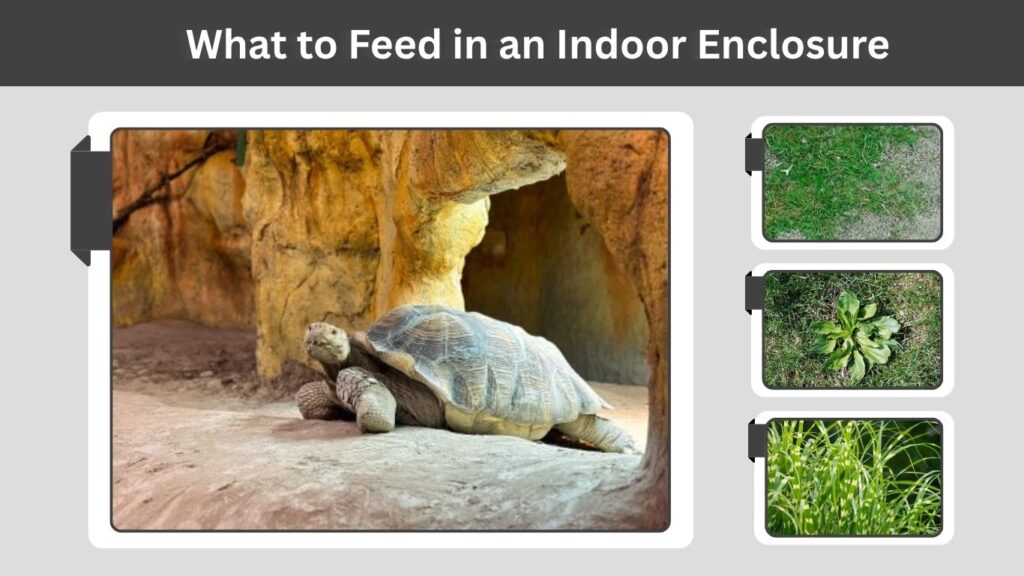
A sulcata tortoise’s indoor diet should still be grass-based. Indoor owners often make the mistake of feeding too many grocery greens and not enough fiber.
Best foods include:
- Timothy hay
- Orchard grass hay
- Bermuda grass
- Dandelion greens
- Plantain weeds
- Hibiscus leaves and flowers
- Cactus pads
- Safe pesticide-free weeds
- Small amounts of leafy greens
Avoid fruit as a regular food, dog food, cat food, meat, bread, pasta, and high-protein foods. MedVet describes sulcatas as grazing animals that need access to pesticide-free grasses and weeds.
Common Indoor Enclosure Mistakes
Many sulcata health problems start with poor enclosure design. A setup may look nice but still fail if it is too small, too cold, or lacks UVB.
Common mistakes include:
- Keeping a sulcata in a small glass tank
- Using no UVB light indoors
- Feeding mostly lettuce
- Keeping the enclosure cold at night
- Using loose sand or wood chips
- Letting the substrate stay wet
- Using unguarded heat lamps
- Not giving a hide
- Forgetting that the tortoise will grow very large
FAQs
What is the best indoor enclosure for a baby sulcata tortoise?
The best indoor enclosure for a baby sulcata tortoise is a large tortoise table, wooden pen, or secure custom enclosure with heat, UVB, safe substrate, a hide, water dish, and space for a warm-to-cool temperature gradient.
Can an adult sulcata tortoise live indoors?
An adult sulcata can live indoors only if you provide a very large custom space, such as a tortoise room or heated shed. Most adult sulcatas do better in a secure outdoor enclosure with a heated shelter.
How warm should an indoor sulcata tortoise enclosure be?
An indoor sulcata enclosure should have a hot basking area around 95–100°F, a warm daytime area around 80°F, and a cooler retreat area. Night temperatures should not become cold, especially for young tortoises.
What substrate is best for a sulcata tortoise indoor enclosure?
Organic topsoil, coconut coir, and safe soil-based mixes can work well. Paper towels or newspaper are useful for quarantine or hatchlings. Avoid wood chips, cat litter, gravel, and loose sand because they may cause health risks if eaten.
Does an indoor sulcata tortoise need UVB light?
Yes, an indoor sulcata tortoise needs UVB light. UVB helps the tortoise use calcium properly and supports healthy shell and bone growth. Sunlight through glass is not enough because glass blocks useful UVB rays.