
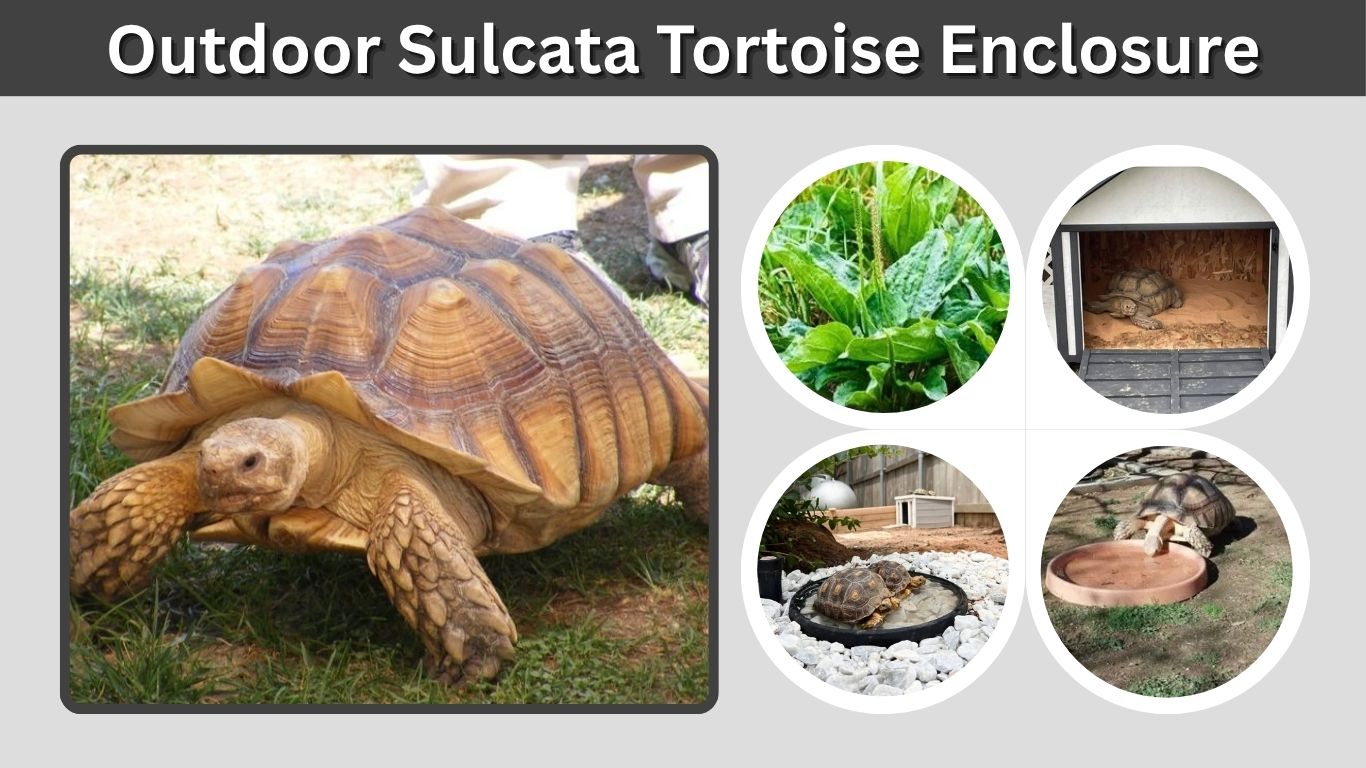
A good outdoor sulcata tortoise enclosure must be large, strong, warm, dry, escape-proof, and safe for grazing. Sulcatas are powerful tortoises that dig, push barriers, eat plants, and need room to roam. Babies may start indoors, but adults usually need outdoor housing with a heated shelter. Before building a sulcata tortoise enclosure outdoor setup, plan for adult size, fencing depth, shade, shelter, drainage, and long-term maintenance.
Why Outdoor Housing Is Best for Sulcatas
Sulcata tortoises come from grassland and semi-arid regions of Africa, so they benefit from natural sunlight, grazing space, and room to move. The Royal Veterinary College notes that sulcatas grow very large and that owners should not underestimate the space and resources needed to keep them properly. It also recommends outdoor housing for long-term health.
Outdoor Housing Benefits
- Gives access to natural sunlight and UVB
- Allows grazing on safe grass and weeds
- Provides more exercise than indoor pens
- Supports natural digging and exploring
- Gives adults enough space to move comfortably
When Outdoor Housing Is Not Safe
Outdoor housing is not safe if the weather is too cold, too wet, or the enclosure has no heated shelter. Sulcata tortoises do not hibernate, so they must be kept warm year-round.
Outdoor Sulcata Tortoise Enclosure Size
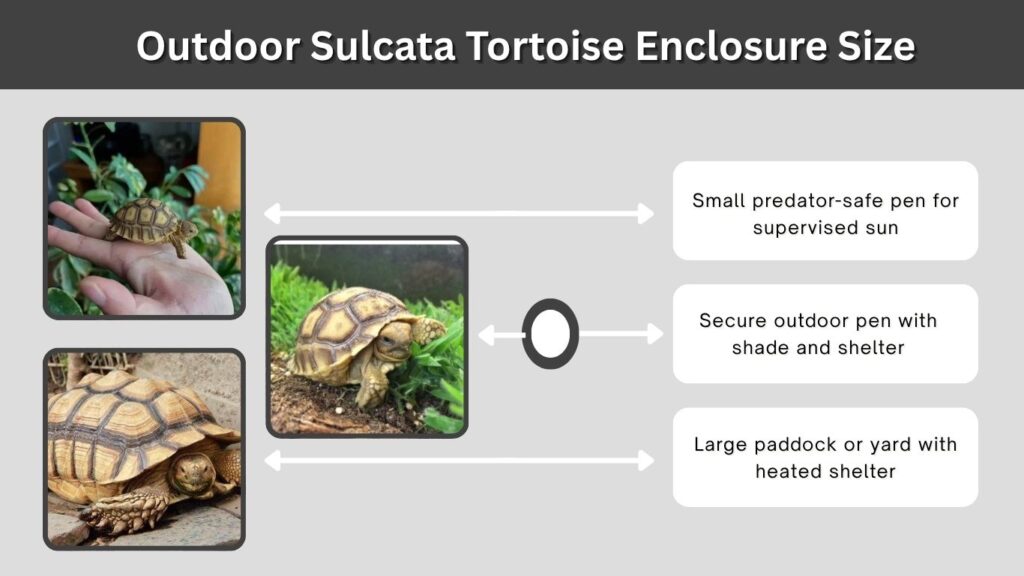
An outdoor enclosure for a sulcata tortoise should be much larger than a typical reptile cage. A hatchling can use a smaller protected pen for supervised outdoor time, but adults need a large fenced yard or paddock.
| Sulcata Stage | Outdoor Enclosure Goal |
| Hatchling | Small predator-safe pen for supervised sun |
| Juvenile | Secure outdoor pen with shade and shelter |
| Subadult | Larger fenced yard section |
| Adult | Large paddock or yard with heated shelter |
Tree of Life Exotic Pet Medical Center describes outdoor housing as required for adult sulcatas and recommends a secure outdoor pen or yard with buried fencing to prevent escape.
Fencing for a Sulcata Tortoise Outdoor Enclosure
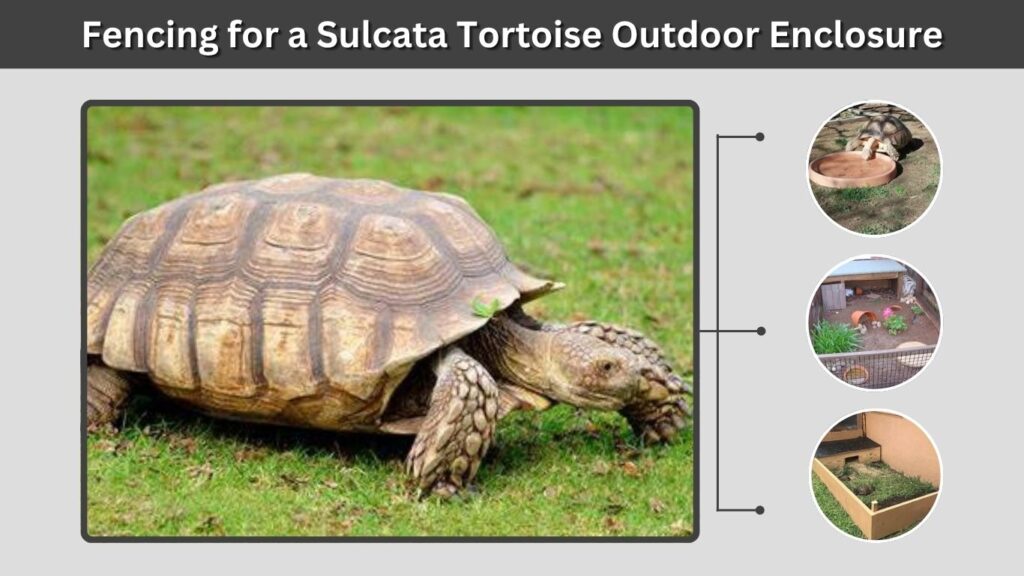
Fencing is one of the most important parts of a large sulcata tortoise outdoor enclosure. Sulcatas are strong, stubborn, and good at digging, so weak fencing can fail quickly.
Best Fence Features
- Solid wood, block, vinyl, or strong livestock-style barrier
- Tall enough that the tortoise cannot climb over
- Buried bottom edge to stop digging out
- No wide gaps where the tortoise can push through
- Gates with secure latches
- Rounded corners or blocked corners to reduce pushing
MedVet recommends fencing that is not see-through because many sulcatas try to push, climb, or charge through barriers when they can see the other side. MedVet also warns that fencing must be deep enough to stop digging escapes.
Shelter, Shade, and Heating
A sulcata tortoise outdoor enclosure needs both sunny areas and shaded retreats. Sunlight is useful, but overheating is dangerous if the tortoise has nowhere to cool down.
Outdoor Shelter Setup
The shelter should be dry, insulated, easy to enter, and large enough for the tortoise to turn around. A doghouse, small shed, or custom tortoise house can work if it is secure and heated when needed.
A good shelter should include:
- Dry floor
- Insulated walls
- Wide entrance
- Safe heat source
- Thermostat
- No exposed wires
- No sharp edges
- Easy cleaning access
MedVet says outdoor sulcatas need a dry heated housing unit for nighttime and bad weather, and Tree of Life also recommends heated shelters for cool nights.
Temperature Needs
Sulcatas need warmth to stay active and digest food. MedVet recommends daytime outdoor temperatures around 85–105°F and nighttime enclosure temperatures in the 70s°F.
| Area | Purpose |
| Sunny basking area | Warmth and natural UVB |
| Shade area | Cooling and stress reduction |
| Heated shelter | Cold-night protection |
| Dry hide | Resting and security |
| Burrow zone | Natural digging behavior |
Ground, Drainage, and Digging Areas
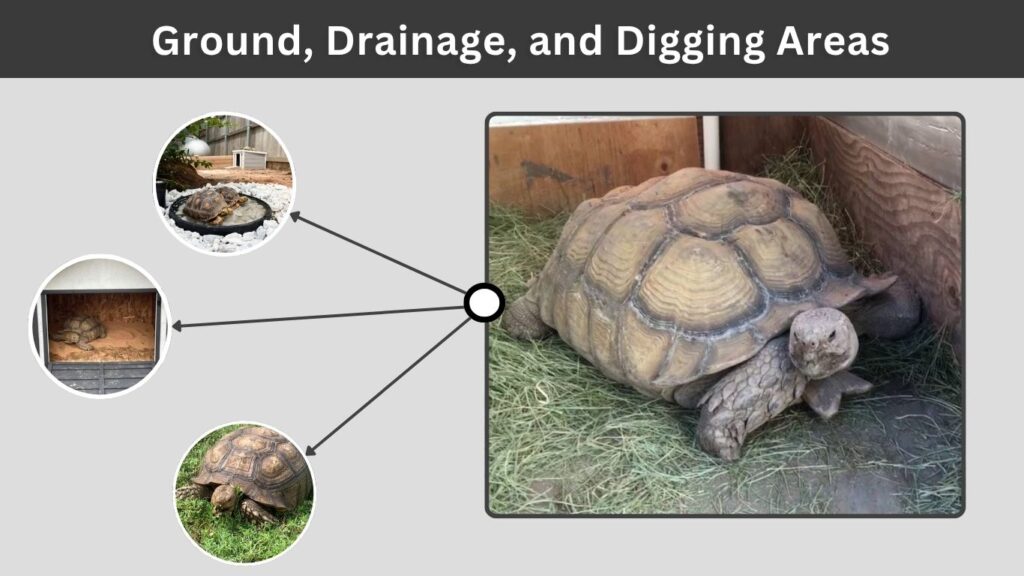
The ground should be safe, dry, and easy for the tortoise to walk on. Grass, soil, and packed earth are better than slick surfaces. Avoid areas that flood after rain because damp conditions can lead to shell and respiratory problems.
Safe Ground Materials
- Natural soil
- Pesticide-free grass
- Bermuda grass
- Dirt mounds
- Flat stones for basking
- Hay or straw in dry shelter areas
Materials to Avoid
- Sharp gravel
- Treated lawn chemicals
- Toxic mulch
- Slippery tile
- Artificial turf that traps waste
- Damp bedding that molds
Sulcatas enjoy burrowing and should have safe digging material, but the fence must stop them from digging out. MedVet suggests materials such as hay, leaves, grasses, or straw for burrowing areas.
Sulcata Tortoise Outdoor Enclosure Ideas
A DIY outdoor sulcata tortoise enclosure can be simple or advanced, but it must always focus on safety first. A beautiful enclosure is not useful if the tortoise can escape, overheat, or eat toxic plants.
1. Fenced Grass Yard
This is one of the best options for adults. Use solid fencing, add a heated shelter, provide shade trees or shade cloth, and make sure all grass is pesticide-free.
2. Tortoise Shed With Attached Run
This setup works well in places with cool nights. The tortoise can sleep in a heated shed and walk outside during warm daylight hours.
3. Desert-Style Enclosure
Use dry soil, flat rocks, edible plants, logs, and shade structures. Keep water available but make sure the enclosure drains well.
4. Grazing Pen for Juveniles
A smaller outdoor pen can give young sulcatas safe sunlight and grazing time. It should protect against dogs, cats, birds, and escape.
Safe Plants and Diet in Outdoor Enclosures
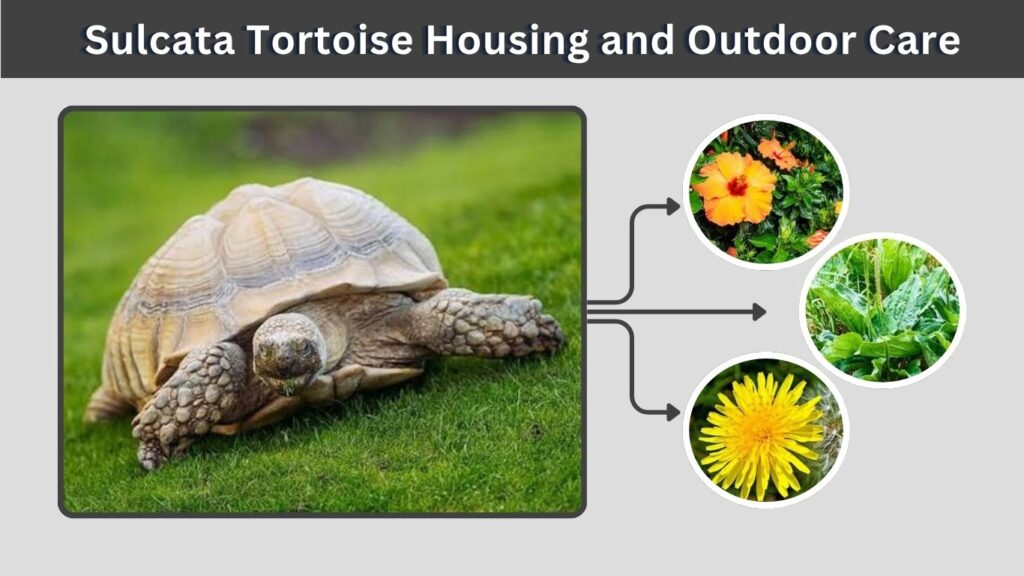
Outdoor enclosures should include safe grazing plants. Sulcatas are herbivores, and their diet should be based mostly on grasses and hay. The Royal Veterinary College recommends grasses and hay as the main diet, with safe weeds such as dandelion, plantain, sow thistle, chickweed, and other pesticide-free plants.
Good plants include:
- Bermuda grass
- Timothy grass
- Orchard grass
- Dandelion
- Plantain weeds
- Hibiscus
- Clover in moderation
- Cactus pads
- Mulberry leaves
- Safe edible weeds
Remove toxic plants before placing a sulcata outdoors. Also avoid lawns treated with herbicides, pesticides, or fertilizers.
Water and Cleaning
A sulcata tortoise outdoor enclosure should always have fresh water. The dish should be shallow enough for safe entry and exit. MedVet warns that tortoises do not swim and can drown, so water should be easy to access but not too deep.
Spot-clean droppings daily, remove old food, scrub water dishes often, and check fencing regularly. The Royal Veterinary College also recommends daily spot cleaning and weekly enclosure cleaning to help prevent disease.
Common Outdoor Enclosure Mistakes
Many outdoor enclosure problems happen because owners build for a baby tortoise, not a full-grown adult.
Common mistakes include:
- Using weak or see-through fencing
- Not burying the fence base
- Leaving toxic plants in the enclosure
- Providing no heated shelter
- Letting the ground stay wet
- Using a water dish that is too deep
- Housing males together
- Forgetting predator protection for young tortoises
- Not checking temperatures inside the shelter
Tree of Life warns that sulcatas can dig, damage landscaping, and should not have males housed together because they may fight and injure each other.
FAQs
How big should an outdoor sulcata tortoise enclosure be?
An outdoor sulcata tortoise enclosure should be as large as possible, especially for adults. A small pen may work for supervised juvenile sun time, but adult sulcatas need a large secure yard or paddock with shelter, shade, and grazing space.
What is the best fence for a sulcata tortoise outdoor enclosure?
The best fence is solid, strong, and partly buried underground. Wood, block, vinyl, or strong livestock-style barriers can work. Avoid see-through fencing because sulcatas may push or climb when they can see the other side.
Does an outdoor sulcata tortoise need a heated shelter?
Yes, a sulcata needs a heated shelter if nights are cool or the weather is cold and damp. Sulcatas do not hibernate, so they must have warm, dry protection during bad weather.
What plants are safe in a sulcata outdoor enclosure?
Safe options include pesticide-free grasses, dandelion, plantain, hibiscus, cactus pads, clover in moderation, and other safe weeds. Always identify plants before allowing grazing because many garden plants can be toxic to tortoises.
Can baby sulcata tortoises live outside?
Baby sulcatas can spend time outside in a secure, warm, predator-safe enclosure, but they usually still need controlled indoor housing. Outdoor time should include shade, water, safe grass, and protection from dogs, cats, birds, and extreme weather.