
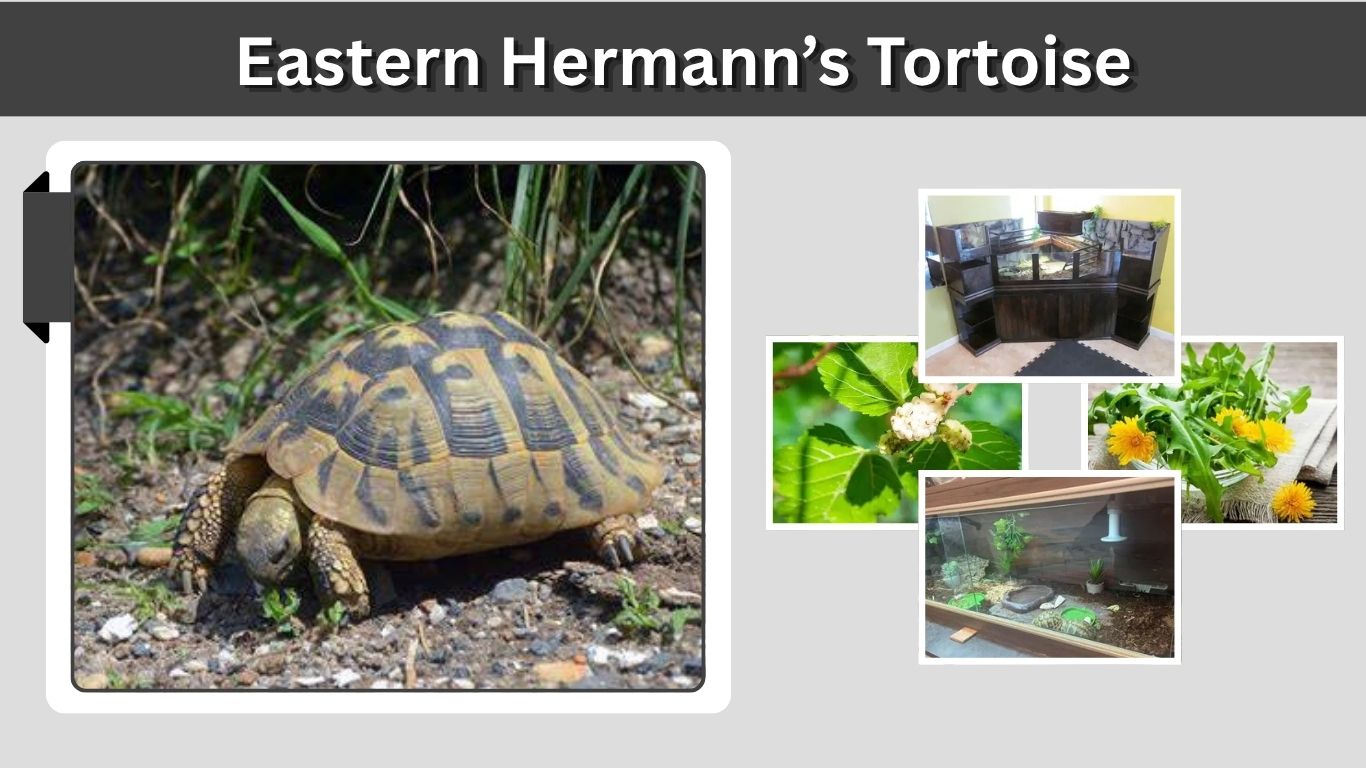
The eastern Hermann’s tortoise is one of the most popular pet tortoises because it stays smaller than many large species, has a beautiful yellow-and-dark shell pattern, and can adapt well to outdoor or indoor care when housed correctly. However, it is still a long-lived reptile that needs proper heat, UVB lighting, safe substrate, a high-fiber diet, and seasonal care. Before buying a baby eastern Hermann’s tortoise, owners should understand its adult size, enclosure needs, and long lifespan.
What Is an Eastern Hermann’s Tortoise?
The eastern Hermann’s tortoise is a Mediterranean tortoise known scientifically as Testudo hermanni boettgeri. It is one of the main Hermann’s tortoise forms kept as pets, along with the western Hermann’s tortoise. Hermann’s tortoises are small to medium tortoises from southern Europe, and the eastern form is usually larger and more variable in color than the western form.
Basic Facts
- Common name: Eastern Hermann’s tortoise
- Scientific name: Testudo hermanni boettgeri
- Adult size: Often about 6–9 inches, though size can vary
- Diet: Herbivorous
- Lifespan: Often 50+ years with proper care
- Care level: Beginner-friendly only for prepared owners
- Best housing: Outdoor pen in suitable weather, indoor setup when needed
Petco lists Hermann’s tortoises as herbivorous reptiles with an average adult size around 6–8 inches and a 50+ year lifespan with proper care.
Eastern Hermann’s Tortoise Size
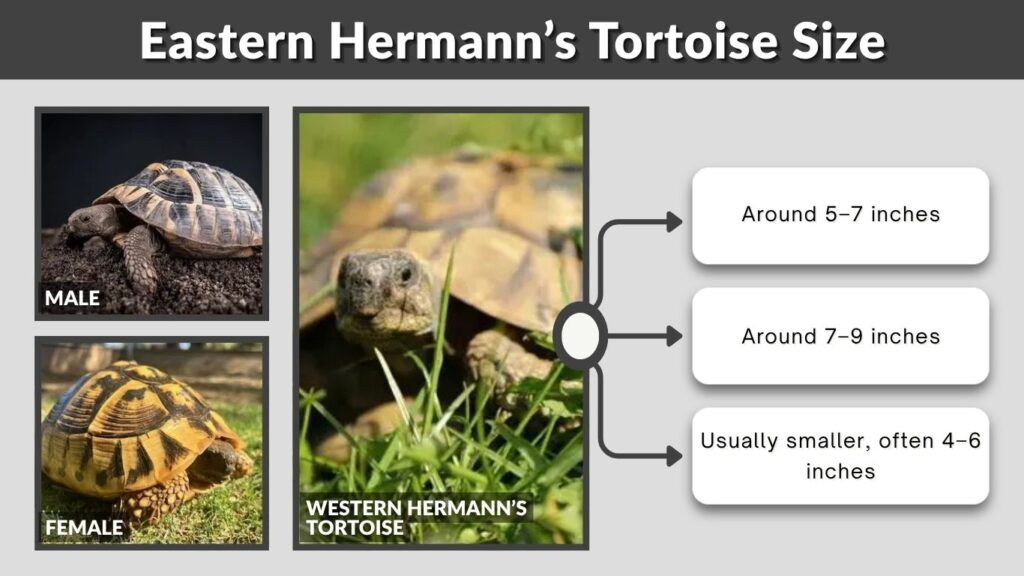
Eastern Hermann’s tortoises are usually larger than western Hermann’s tortoises. Females often grow larger than males, and size may vary depending on bloodline, locality, diet, and care.
| Type | Common Adult Size |
| Male eastern Hermann’s tortoise | Around 5–7 inches |
| Female eastern Hermann’s tortoise | Around 7–9 inches |
| Western Hermann’s tortoise | Usually smaller, often 4–6 inches |
The Links Road Animal Clinic notes that female eastern Hermann’s tortoises commonly reach about 7–9 inches, while males are often around 5–7 inches.
Eastern Hermann’s Tortoise Enclosure
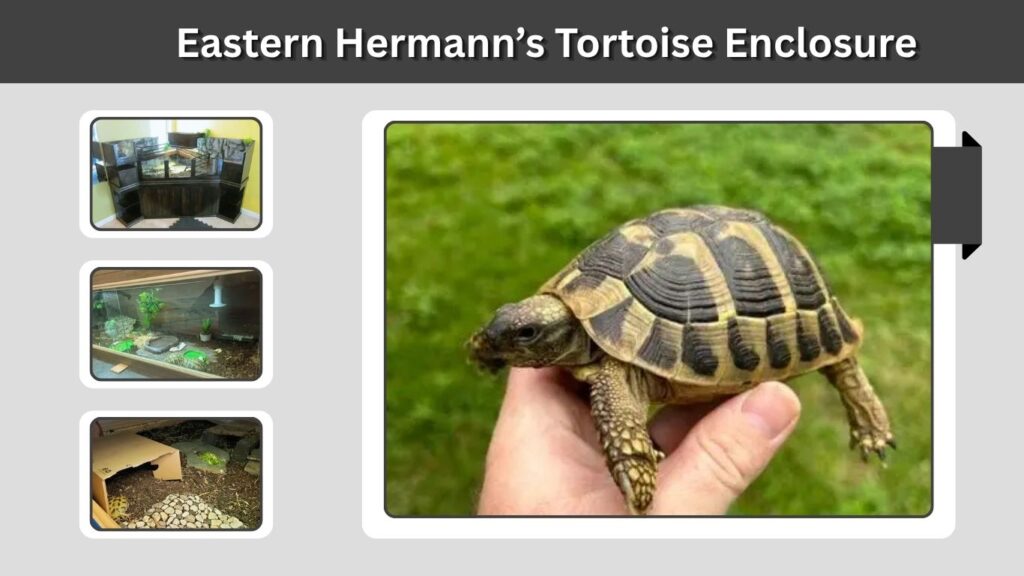
A proper eastern Hermann’s tortoise enclosure should provide space, warmth, UVB, dry areas, hides, and safe digging space. Adults do best with outdoor access in safe weather, while babies and juveniles can be kept indoors with a well-planned setup.
Indoor Enclosure Setup
For indoor care, use a tortoise table or large open-top enclosure rather than a small glass tank. The enclosure should have a warm basking zone, cooler side, UVB light, shallow water dish, hide box, and safe substrate.
Good indoor enclosure items include:
- Large tortoise table
- Basking lamp
- Linear UVB light
- Thermometer and hygrometer
- Hide box
- Shallow water dish
- Soil-based substrate
- Feeding tile
- Calcium supplement
Swiftail Vet recommends daytime temperatures of 75–85°F, a basking area around 90–95°F, and UVB lighting for vitamin D3 synthesis and calcium metabolism.
Outdoor Enclosure Setup
Outdoor housing is excellent when the climate is safe. Use secure fencing, predator protection, shaded areas, sunny basking zones, edible weeds, and a dry shelter. Young tortoises need extra protection from birds, cats, dogs, and rodents.
An outdoor enclosure should include:
- Solid escape-proof fencing
- Buried fence edges
- Sunny basking area
- Shade plants or shade cloth
- Dry hide or shelter
- Safe weeds and grasses
- Shallow water dish
- No pesticides or toxic plants
Heat, UVB, and Lighting
Eastern Hermann’s tortoises need a temperature gradient. This means one side of the enclosure should be warm for basking, while the other side should be cooler so the tortoise can regulate its body temperature.
The Royal Veterinary College recommends a basking area of about 35–40°C for Mediterranean tortoises and states that they must be exposed to UVB light.
UVB is especially important indoors. Sunlight through a window is not enough because glass blocks useful UVB rays. Replace UVB bulbs according to the manufacturer’s schedule because bulbs can still shine while producing less UVB.
Eastern Hermann’s Tortoise Diet
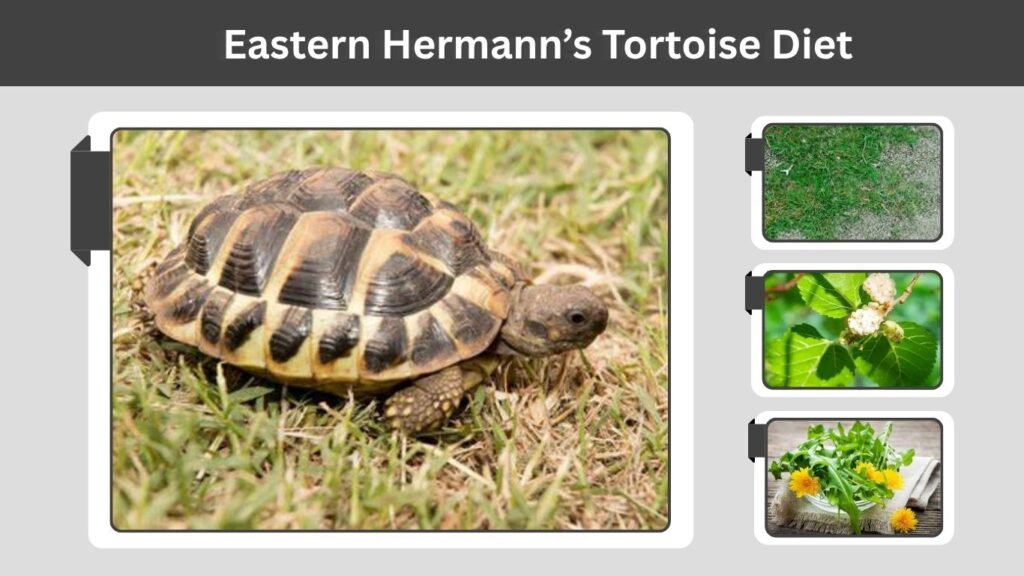
The eastern Hermann’s tortoise diet should be high in fiber, low in protein, and rich in calcium. These tortoises should not be fed like omnivorous turtles. Most of the diet should come from safe weeds, leafy plants, grasses, and flowers.
Good Foods
- Dandelion greens
- Plantain weeds
- Clover in moderation
- Chicory
- Endive
- Escarole
- Hibiscus leaves and flowers
- Mulberry leaves
- Safe grasses
- Cactus pads
- Pesticide-free weeds
Foods to Avoid
Avoid fruit as a regular food, dog food, cat food, meat, insects, bread, pasta, and high-protein pellets. Garden State Tortoise explains that a proper Hermann’s tortoise diet should be low in protein, high in fiber, and rich in calcium.
Eastern vs Western Hermann’s Tortoise
Many buyers compare eastern vs western Hermann’s tortoises before choosing one. Both can make good pets, but they are not exactly the same.
| Feature | Eastern Hermann’s Tortoise | Western Hermann’s Tortoise |
| Size | Usually larger | Usually smaller |
| Color | More variable, sometimes less bright with age | Often brighter yellow/black contrast |
| Availability | More common in the pet trade | Often less common |
| Care needs | Similar basic care | Similar basic care |
| Scientific name | T. h. boettgeri | T. h. hermanni |
Hermanni Haven notes that eastern Hermann’s tortoises often reach larger sizes faster than western Hermann’s tortoises, though some large western forms can be close in size.
Eastern Hermann’s Tortoise Lifespan
An eastern Hermann’s tortoise is a long-term pet. With proper housing, diet, UVB, hydration, and veterinary care, it may live for several decades. Many care sources list Hermann’s tortoises as 50+ year reptiles, so owners should plan for long-term care before buying one.
This long lifespan means the tortoise may need future care planning, especially if the owner moves, becomes unable to keep reptiles, or passes the tortoise to another family member.
Buying an Eastern Hermann’s Tortoise
Searches like “eastern Hermann’s tortoise for sale” are common, but buyers should be careful. Choose a healthy captive-bred tortoise from a responsible breeder, rescue, or reputable reptile source. Avoid sellers who cannot explain the tortoise’s age, origin, diet, and current care.
Before buying, check:
- Clear eyes
- Firm shell
- Active behavior
- No nasal bubbles
- Smooth breathing
- Healthy weight
- Clean enclosure
- Captive-bred paperwork when needed
- Good feeding response
A baby eastern Hermann’s tortoise may look easy to keep, but it still needs correct lighting, diet, temperatures, and humidity from the start.
FAQs
Are eastern Hermann’s tortoises good pets?
Yes, eastern Hermann’s tortoises can be good pets for prepared owners. They stay smaller than many tortoises and are active, hardy, and interesting. However, they still need UVB lighting, correct heat, outdoor access when possible, a safe diet, and decades of care.
How big does an eastern Hermann’s tortoise get?
An eastern Hermann’s tortoise commonly grows around 6–9 inches, with females usually larger than males. Some may stay smaller or grow larger depending on genetics, locality, diet, and care quality.
What does an eastern Hermann’s tortoise eat?
An eastern Hermann’s tortoise should eat mostly weeds, leafy greens, grasses, and flowers. Good foods include dandelion, plantain, hibiscus, chicory, endive, and safe pesticide-free weeds. Avoid regular fruit, animal protein, dog food, and processed human foods.
What is the best enclosure for an eastern Hermann’s tortoise?
The best enclosure is a secure outdoor pen in suitable weather, with sun, shade, shelter, water, and safe grazing plants. Indoors, use a large tortoise table with UVB lighting, a basking lamp, hide box, safe substrate, and a temperature gradient.
What is the difference between eastern and western Hermann’s tortoises?
Eastern Hermann’s tortoises are usually larger and more variable in color, while western Hermann’s tortoises are often smaller with stronger yellow-and-black contrast. Their basic care is similar, but they should not be mixed without proper knowledge.