
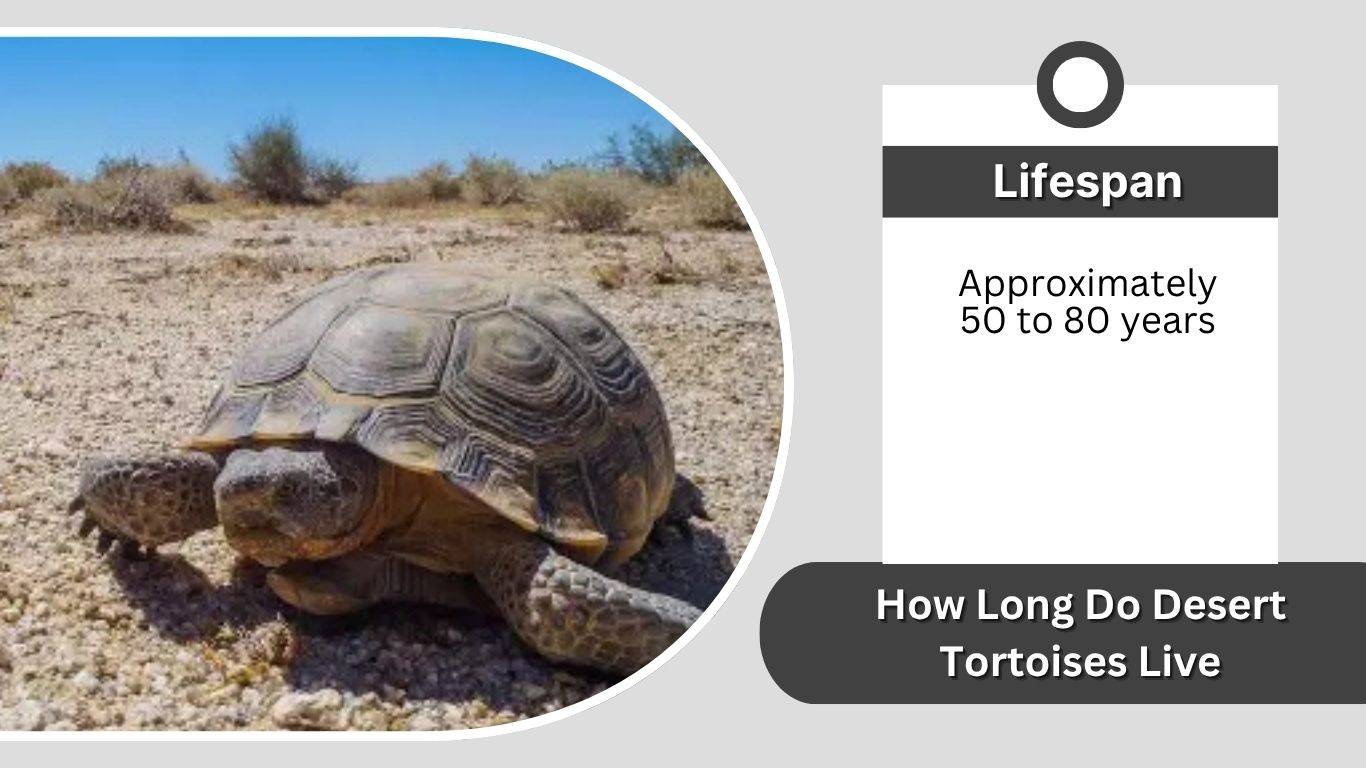
Desert tortoises are among the longest-lived animals of the North American desert. Most live for approximately 50 to 80 years, while some may survive for 100 years or longer under favorable conditions. Their exact lifespan depends on their species, habitat, access to food and water, exposure to predators, and quality of care. Because these tortoises grow slowly and mature late, anyone adopting one should be prepared for a commitment that could last several decades.
Average Desert Tortoise Lifespan
A desert tortoise commonly lives between 50 and 80 years. The U.S. Fish and Wildlife Service gives an estimated lifespan of roughly 50 to 80 years for the Mojave desert tortoise. Some National Park Service sources suggest that exceptionally healthy individuals may reach 100 years.
Lifespan estimates vary because determining the exact age of a wild tortoise is difficult. Researchers can study shell growth, body size, previous records, and population data, but shell rings do not provide a perfectly reliable age count.
| Desert tortoise group | Typical estimated lifespan |
| Mojave desert tortoise | 50–80 years |
| Sonoran desert tortoise | 50 years or more |
| Wild desert tortoise under ideal conditions | Possibly 80–100 years |
| Captive desert tortoise | Commonly 50–80+ years with proper care |
How Long Do Desert Tortoises Live in the Wild?
Wild desert tortoises can live for 50 years or more, and some individuals may survive for 80 to 100 years. However, relatively few hatchlings reach adulthood.
Hatchling survival
Eggs and young tortoises are vulnerable to ravens, coyotes, foxes, snakes, badgers, and other predators. National Park Service information indicates that the overwhelming majority of eggs and hatchlings may die before reaching maturity. Adults have stronger shells and fewer natural predators, which helps explain their long potential lifespan.
Adult survival
Once a desert tortoise reaches adulthood, its chances of long-term survival improve significantly. Its hard shell provides protection, while underground burrows help it avoid excessive heat, freezing temperatures, dehydration, and some predators.
Adult tortoises can still die from:
- Habitat destruction and fragmentation
- Vehicle strikes
- Wildfires
- Prolonged drought
- Disease
- Illegal collection
- Attacks by domestic dogs
- Increased raven predation
Wild tortoises living in protected, undisturbed habitats generally have a better chance of reaching old age.
How Long Do Desert Tortoises Live in Captivity?
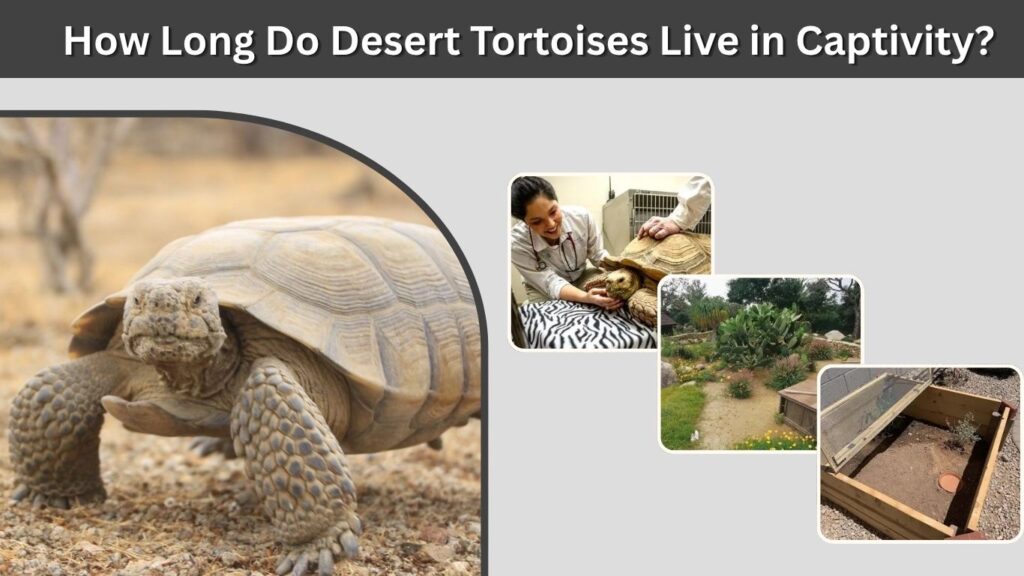
A properly cared-for desert tortoise may live for 50 to 80 years or longer in captivity. Captive tortoises are protected from many predators, vehicle collisions, and some environmental threats. However, captivity does not automatically guarantee a longer life.
Poor housing, an unsuitable diet, dehydration, extreme temperatures, and inadequate veterinary care can considerably shorten a tortoise’s lifespan. Owners must provide conditions that reflect the animal’s natural seasonal cycle.
A captive desert tortoise needs:
- A secure outdoor enclosure
- Sunny and shaded areas
- A dry, insulated shelter or burrow
- Native grasses, weeds, and leafy plants
- Limited high-sugar food
- Fresh water when appropriate
- Protection from dogs and other hazards
- Veterinary attention from a reptile specialist
Because a desert tortoise may outlive its original caretaker, responsible owners should also make a long-term care plan.
How Long Do California Desert Tortoises Live?
The desert tortoises found in southeastern California are primarily Mojave desert tortoises, scientifically known as Gopherus agassizii. They commonly live for approximately 50 to 80 years, although some may approach 100 years.
Their natural range includes southeastern California, southern Nevada, southwestern Utah, and northwestern Arizona, mainly north and west of the Colorado River.
California desert tortoises face numerous threats, including expanding development, roads, habitat degradation, invasive plants, wildfire, disease, and illegal handling. These threats mean that many wild individuals do not reach their maximum biological lifespan.
It is also illegal to remove a wild desert tortoise from its habitat. Anyone who encounters one should observe it from a distance unless it is in immediate danger on a roadway.
How Long Do Mojave Desert Tortoises Live?
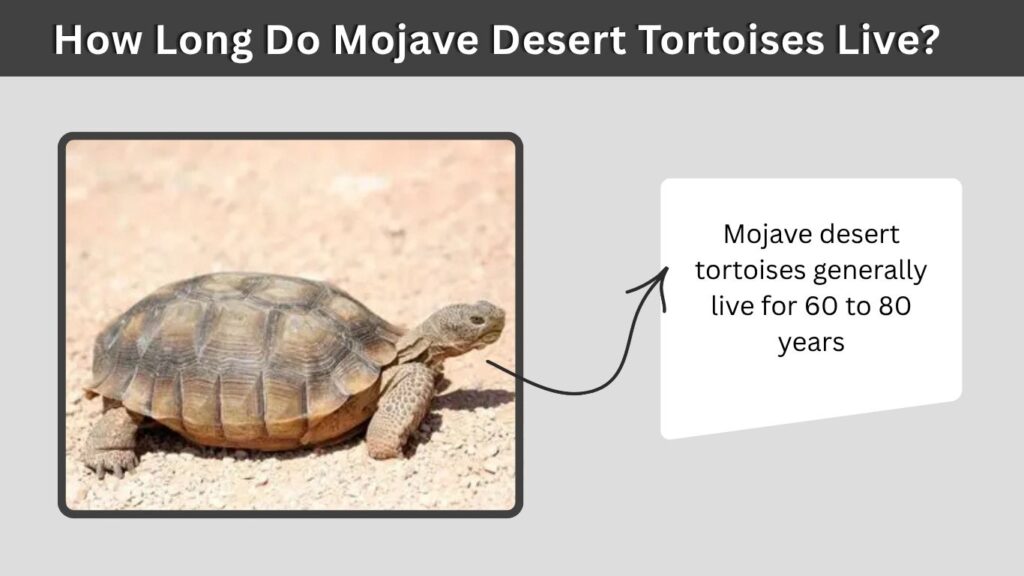
Mojave desert tortoises generally live for 60 to 80 years, although broader estimates often range from 50 to 100 years. The National Park Service states that they reach adulthood at approximately 14 to 20 years old and may live for 60 to 80 years.
Slow growth and late maturity
Mojave desert tortoises grow slowly. They usually do not become reproductively mature until their teenage years, with estimates commonly ranging from about 13 to 20 years.
This slow development makes population recovery difficult. When many adults are lost, younger tortoises cannot quickly replace them.
Adaptations that support longevity
Several adaptations help Mojave desert tortoises survive for decades:
- They spend much of the year inside burrows.
- They lower their activity during drought and extreme temperatures.
- They conserve water efficiently.
- Their shells protect them from many predators.
- They can tolerate long periods with limited food.
- They remember important feeding areas and shelter locations.
A tortoise may spend most of its life within a relatively small home range that contains familiar burrows and seasonal food sources.
Sonoran vs. Mojave Desert Tortoise Lifespan
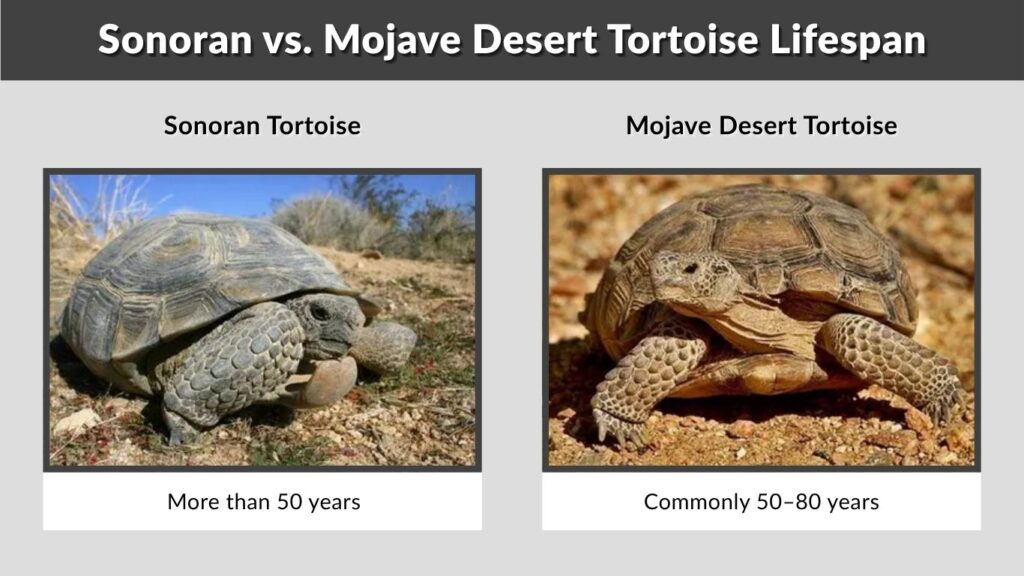
Both species are long-lived, but their habitats and estimated lifespans differ slightly.
| Feature | Mojave desert tortoise | Sonoran desert tortoise |
| Scientific name | Gopherus agassizii | Gopherus morafkai |
| Estimated lifespan | Commonly 50–80 years | More than 50 years |
| Maturity | About 13–20 years | About 18–20 years |
| Main habitat | Mojave Desert | Sonoran Desert |
| Typical shelter | Soil burrows | Rocky shelters and burrows |
The U.S. Fish and Wildlife Service reports that Sonoran desert tortoises can live for more than 50 years in the wild, with many presumed to live longer.
What Affects a Desert Tortoise’s Lifespan?
Desert tortoises are naturally capable of living for decades, but their environment largely determines whether they reach old age.
Habitat quality
Healthy desert habitat supplies native vegetation, safe shelter, nesting locations, and enough space for normal movement. Roads, fences, construction, and urban development can divide this habitat into smaller, less useful areas.
Food and nutrition
Wild desert tortoises mainly eat grasses, wildflowers, leaves, and other fibrous plants. In captivity, feeding too much fruit, protein, or low-fiber produce can contribute to abnormal shell development and health problems.
Water and hydration
Desert tortoises are highly efficient at conserving water, but they still need opportunities to hydrate. They may drink heavily from temporary pools after rainfall and store water in their bladder.
A tortoise should never be handled unnecessarily or frightened into emptying its bladder in the wild. Losing stored water can place it at serious risk during dry conditions.
Temperature and shelter
Burrows provide cooler conditions during summer and protection from winter cold. Captive tortoises without suitable shelter can suffer heat stress, respiratory illness, freezing, or dehydration.
Disease
Upper respiratory tract disease is a significant concern in desert tortoise populations. Symptoms may include nasal discharge, swollen eyelids, labored breathing, lethargy, or appetite loss.
Pet tortoises should not be released into the wild because they could spread disease to native populations.
How Can You Tell the Age of a Desert Tortoise?
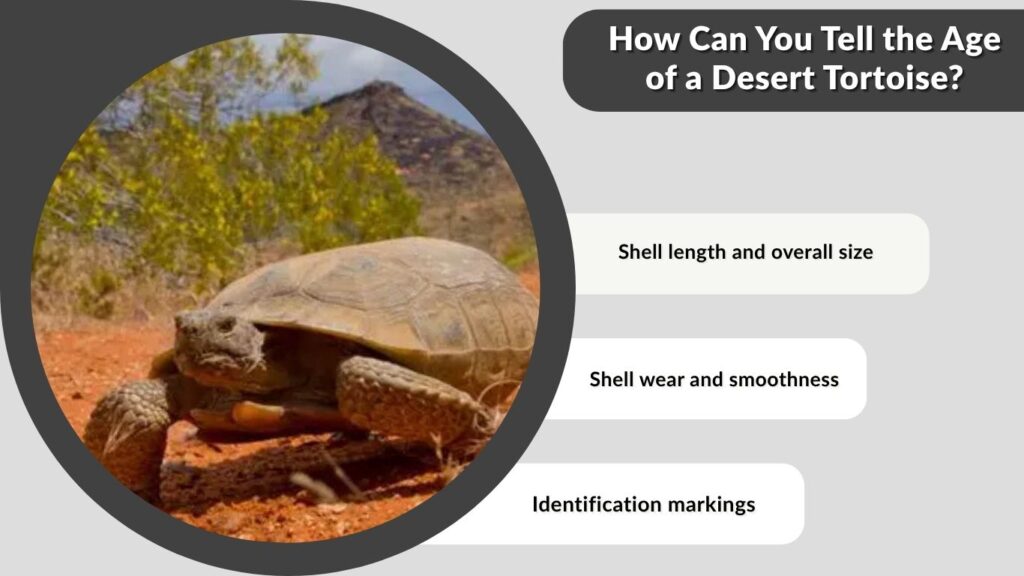
It is difficult to determine a desert tortoise’s exact age without a known hatch date. Young tortoises generally have clearer growth rings on their shell scutes, but these rings become worn and irregular over time.
Weather, nutrition, injury, and growth rate can also affect shell appearance. Counting shell rings may offer a rough estimate for a young tortoise, but it is unreliable for determining the exact age of an older adult.
Researchers may estimate age using:
- Shell length and overall size
- Shell wear and smoothness
- Growth records
- Identification markings
- Long-term monitoring data
- Known history in captivity
A large, smooth-shelled tortoise is likely mature, but physical appearance alone cannot reveal whether it is 40, 60, or 80 years old.
FAQs
Can a desert tortoise live for 100 years?
Yes, some desert tortoises may live for approximately 100 years, although 50 to 80 years is a more commonly reported range. Reaching 100 requires favorable habitat, adequate nutrition, protection from disease, and avoidance of human-related threats.
Do desert tortoises live longer in captivity?
They may live longer in captivity because they face fewer predators and vehicle strikes. However, improper food, housing, temperature control, or hydration can shorten their lives. Excellent care is necessary for a captive tortoise to reach its full lifespan.
At what age is a desert tortoise fully grown?
Desert tortoises grow slowly and generally reach reproductive maturity between approximately 13 and 20 years old. They may continue growing gradually after maturity, and their final size depends on species, sex, diet, habitat, and overall health.
How old is the oldest desert tortoise?
There is no universally confirmed record for the oldest wild desert tortoise because their exact ages are difficult to establish. Some individuals are believed to reach or exceed 100 years, but most authoritative estimates place their normal lifespan between 50 and 80 years.
Can you determine a desert tortoise’s age from its shell?
Shell rings can provide a rough estimate for some young tortoises, but they are not an accurate annual record. Rings can wear away, merge, or form irregularly because of changing food and weather conditions, making exact age determination difficult.