Desert tortoises are slow-moving reptiles with remarkable adaptations for surviving some of North America’s hottest and driest landscapes. They can live for many decades, spend most of their time underground, and survive long periods without drinking directly from a water source. These tortoises are also important members of desert ecosystems. Here are 15 interesting desert tortoise facts covering their habitat, diet, size, babies, shells, hibernation, and conservation.
Desert Tortoise Fact Sheet
The name “desert tortoise” commonly refers to two closely related North American species: the Mojave desert tortoise and the Sonoran desert tortoise.
| Feature | Desert tortoise information |
| Scientific names | Gopherus agassizii and Gopherus morafkai |
| Animal group | Reptile |
| Diet | Herbivore |
| Adult shell length | Commonly about 8–12 inches |
| Lifespan | Approximately 50–80 years, possibly longer |
| Habitat | Desert flats, washes, foothills and rocky slopes |
| Activity | Mostly spring and after seasonal rain |
| Main shelter | Underground burrows or rocky shelters |
| Young | Hatch from eggs |
| Major threats | Habitat loss, roads, disease, drought and predators |
1. There Are Two Main Desert Tortoise Species
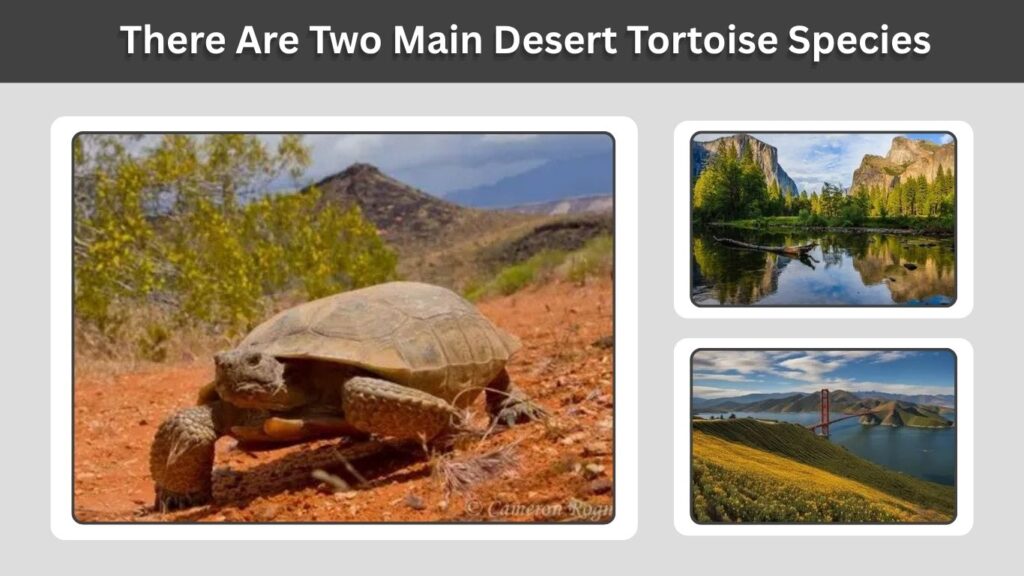
The Mojave desert tortoise, Gopherus agassizii, occurs mainly north and west of the Colorado River. Its range includes portions of California, Nevada, Arizona and Utah.
The Sonoran desert tortoise, Gopherus morafkai, occurs primarily south and east of the Colorado River in Arizona and northwestern Mexico. Arizona is home to both species, although their ranges are largely separated by the river.
2. Desert Tortoises Can Live for Many Decades
Desert tortoises are exceptionally long-lived reptiles. Mojave desert tortoises commonly live for approximately 60 to 80 years, while some desert tortoises may reach 100 years under favorable conditions.
They grow slowly and usually do not reach adulthood until approximately 14 to 20 years of age. Their late maturity makes population recovery difficult when large numbers of adults are lost.
3. They Spend Most of Their Lives Underground
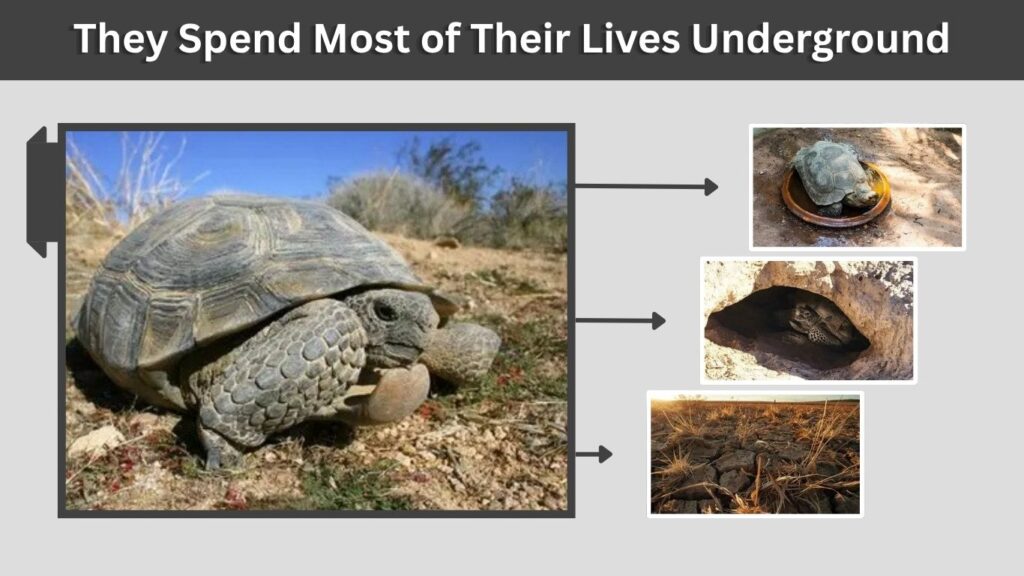
One of the most surprising desert tortoise facts is that these animals may spend as much as 95 percent of their lives inside burrows or other shelters.
Staying underground protects them from:
- Extreme summer heat
- Freezing winter temperatures
- Dehydration
- Predators
- Prolonged drought
A tortoise may emerge during mild spring weather or after seasonal rain, when plants are growing and drinking opportunities are available.
4. Their Burrows Act Like Natural Air-Conditioned Homes
Mojave desert tortoises commonly dig burrows in soil. Some burrows may be only a few feet long, while others can be considerably deeper depending on the location and soil conditions.
The temperature inside a burrow remains more stable than the temperature at the desert surface. This gives the tortoise a safe place to rest during periods when outside conditions would be dangerous.
Sonoran desert tortoises often use rocky shelters on hillsides, although they can also excavate their own burrows.
5. Desert Tortoises Are Excellent at Conserving Water
Desert tortoises are specially adapted to survive with very little water. Their thick skin reduces moisture loss, and their bodies eliminate nitrogen waste as relatively dry uric acid instead of producing large amounts of watery urine.
They can also store water in their bladder for use during dry periods. When rain creates temporary puddles, tortoises may drink heavily and refill their internal water supply.
6. They May Survive a Year Without Drinking
Under certain conditions, a desert tortoise may survive for approximately a year without directly drinking water. It obtains much of its moisture from grasses, wildflowers, cactus pads and other plants.
This does not mean tortoises never need water. Rainfall is extremely important because it provides drinking opportunities and stimulates the growth of the plants they eat.
7. They Are Primarily Herbivores
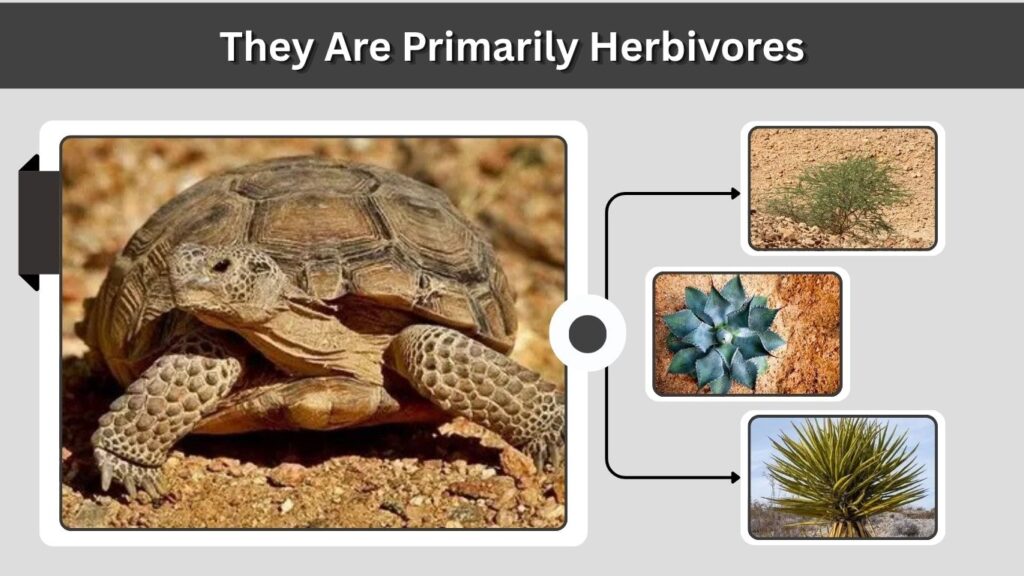
Desert tortoises mostly eat vegetation. Their natural diet may include:
- Native grasses
- Wildflowers
- Leaves
- Cactus pads
- Desert shrubs
- Seasonal fruits
A high-fiber plant diet supports healthy digestion and shell growth. Wild tortoises sometimes consume unusual materials, including mineral-rich soil or small pieces of bone, possibly as sources of calcium and other nutrients.
8. Desert Tortoises Do Not Have Teeth
Instead of teeth, desert tortoises have a hard, beak-like mouth that cuts and tears vegetation. Their large tongues help move food toward the back of the mouth for swallowing.
Although the beak is useful for eating tough plants, a desert tortoise is not designed to chew food in the same way a mammal does.
9. Their Shell Is Part of Their Skeleton
A desert tortoise’s shell is not an empty covering that the animal can leave. It is a living part of its skeleton, connected to the ribs and spine.
The upper portion is called the carapace, while the lower part is the plastron. The high-domed shell protects the tortoise from many predators, and the animal can pull its head and limbs inward when threatened.
Adult shells are usually tan, brown or grayish, helping the tortoise blend into the surrounding soil and rocks.
10. Adult Desert Tortoises Are About 8–12 Inches Long
Most adult Mojave desert tortoises have shells measuring approximately 8 to 12 inches long. They have thick, elephant-like hind legs and strong front limbs equipped for digging.
Males and females can be difficult to distinguish when young. Adult males generally develop longer tails, longer throat projections and a more concave plastron than females.
11. Baby Desert Tortoises Face Many Dangers
Female tortoises lay their eggs in nests dug into the soil. When the babies hatch, their shells are relatively soft and offer less protection than an adult shell.
Young tortoises may be eaten by:
- Ravens
- Coyotes
- Foxes
- Snakes
- Roadrunners
- Badgers
- Other desert predators
Approximately 98 percent of eggs and hatchlings may die before reaching maturity. Once tortoises become adults, their larger, harder shells protect them from most natural predators.
12. They Slow Down During Winter and Summer
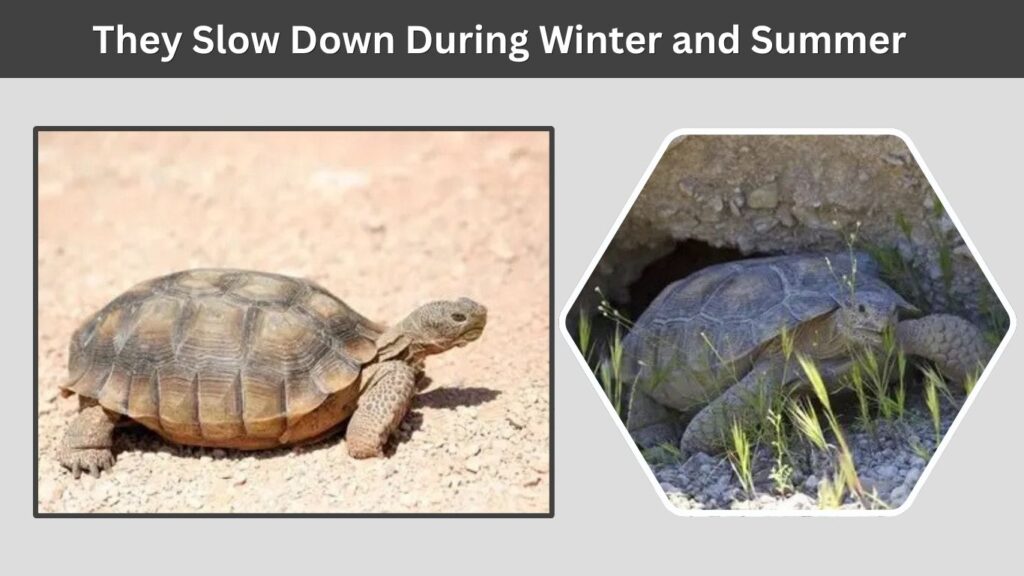
Desert tortoises spend much of the winter in a state of reduced activity known as brumation, the reptile equivalent of hibernation. During this period, their metabolism slows and they remain sheltered underground.
They may also become inactive during the hottest and driest parts of summer. This summer dormancy is sometimes called aestivation. Reducing activity helps them conserve both energy and water.
13. Mojave and Sonoran Tortoises Prefer Different Habitats
Mojave desert tortoises can occupy sandy flats, alluvial fans, desert washes, canyons and rocky foothills. They usually dig burrows in areas where the soil is firm enough to hold its shape but soft enough for excavation.
Sonoran desert tortoises are more strongly associated with steep, rocky slopes, mountain foothills and incised washes. They frequently shelter beneath rock ledges or inside rock-fortified cavities.
| Feature | Mojave desert tortoise | Sonoran desert tortoise |
| Scientific name | Gopherus agassizii | Gopherus morafkai |
| Main range | California, Nevada, Utah and Arizona | Arizona and northwestern Mexico |
| Typical terrain | Flats, washes and foothills | Rocky slopes and mountain foothills |
| Common shelter | Soil burrows | Rock shelters and burrows |
| Federal status | Listed as threatened | Not federally listed |
14. The Mojave Desert Tortoise Is Federally Protected
The Mojave desert tortoise was listed as threatened under the U.S. Endangered Species Act in 1990. Its major threats include habitat destruction and fragmentation, road deaths, disease, drought, wildfire and increased predation.
Wild tortoises should never be collected or taken home. Captive tortoises should also never be released into the wild because they may introduce respiratory disease or disrupt local populations.
15. Desert Tortoises Have Lived on Earth for Millions of Years
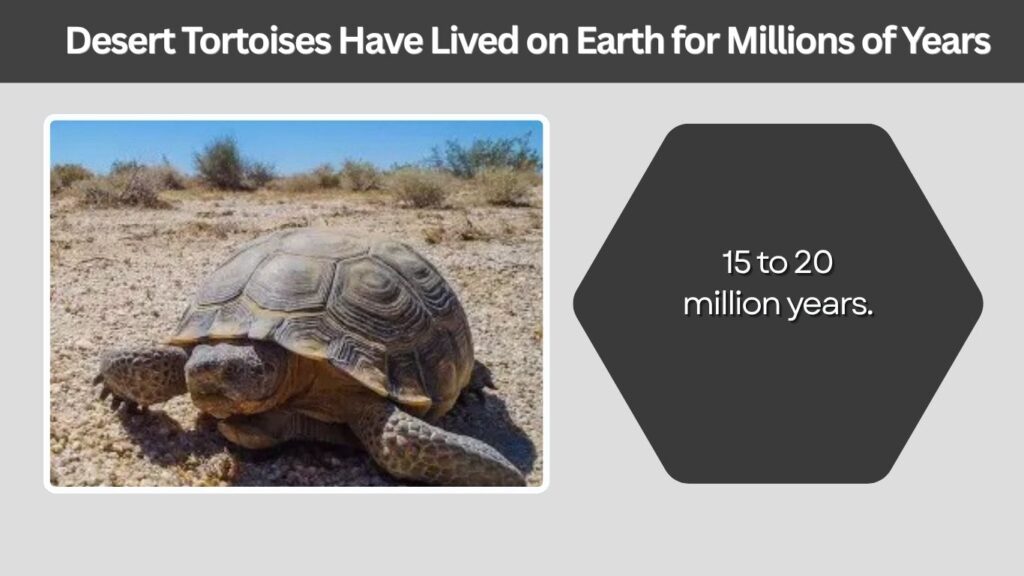
Desert tortoises and their ancestors have inhabited North American landscapes for an estimated 15 to 20 million years. Over that time, they developed highly effective survival strategies, including water storage, seasonal dormancy, burrow use and slow energy consumption.
Their slow lifestyle helps them survive harsh environments, but it also makes them vulnerable to rapid changes caused by roads, urban growth, invasive plants and climate-related drought.
Desert Tortoise Facts for Kids
Here are several quick and easy facts for younger readers:
- A desert tortoise is a reptile, not an amphibian.
- It carries a hard shell that is attached to its skeleton.
- It eats grasses, flowers and cactus pads.
- It spends most of its time underground.
- It may live longer than many humans.
- Baby tortoises hatch from eggs.
- Its strong front legs help it dig burrows.
- It can store water inside its body.
- It does not have teeth.
- Wild desert tortoises should be observed without touching them.
Why Saving Desert Tortoises Is Important
Desert tortoises help shape their environment through feeding, digging and movement. Their burrows may also provide shelter for insects, reptiles and other small desert animals.
Protecting tortoises also preserves large areas of native desert habitat used by many other species. People can help by driving carefully, staying on approved trails, controlling dogs, leaving wild tortoises alone and never releasing captive animals into natural habitat.
FAQs
What are three interesting facts about desert tortoises?
Desert tortoises may spend around 95 percent of their lives in shelters, can live for 50 to 80 years or longer, and are capable of storing water in their bladders. These adaptations help them survive extreme heat and long periods of drought.
What is special about a desert tortoise?
Its body is exceptionally efficient at conserving water. It uses underground shelters to escape temperature extremes, obtains moisture from plants, reduces its metabolism during drought and eliminates waste without losing as much water as many other animals.
Are desert tortoises endangered?
The Mojave desert tortoise is federally listed as threatened rather than endangered. Its populations are affected by habitat loss, roads, disease, drought, wildfire and predation. The Sonoran desert tortoise is not federally listed but receives protection under state wildlife regulations.
How fast can a desert tortoise move?
Desert tortoises normally travel at a slow walking pace and are not built for speed. Their heavy shells and sturdy legs are better suited to steady movement and digging than running. They may move more purposefully when seeking food, shelter or water.
Can you touch a wild desert tortoise?
Wild desert tortoises should generally be left alone and observed from a distance. Handling can frighten them and may cause them to release stored bladder water. Collection is also prohibited in many parts of their range because the animals are legally protected.