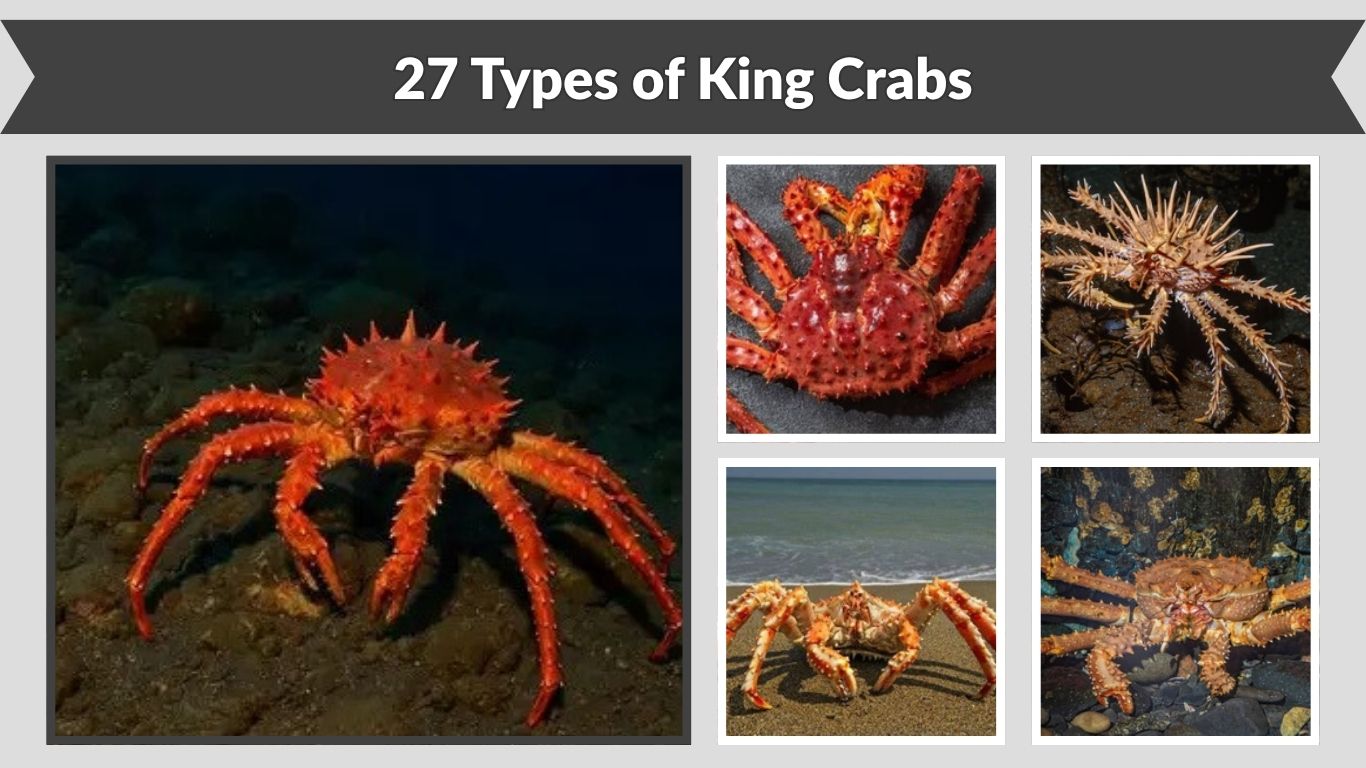
King crabs are remarkable marine crustaceans known for their long legs, armored bodies, powerful claws, and cold-water habitats. Although they resemble true crabs, they belong to the infraorder Anomura and are more closely related to hermit crabs. More than 100 species occur across northern seas, continental slopes, deep ocean floors, and sub-Antarctic waters. Their sizes, colors, spine patterns, habitats, and behaviors vary widely. Some, such as red and blue king crabs, support major fisheries, while others remain rare deep-sea species. This guide explores 27 types of king crabs and their key identifying features, natural ranges, sizes, diets, and unique behaviors.
1. Red King Crab
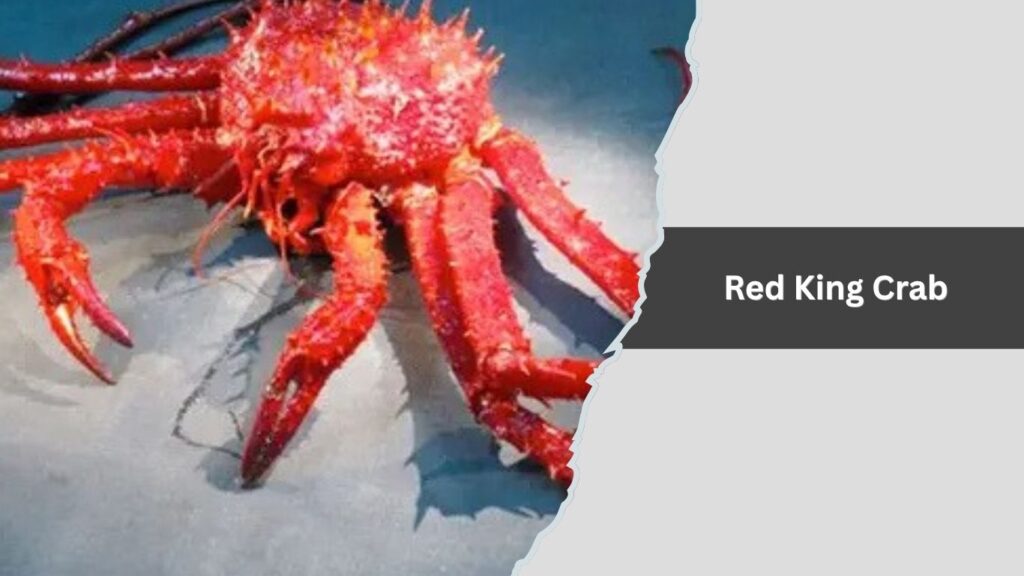
The red king crab (Paralithodes camtschaticus) is one of the largest and most valuable king crab species. Despite its name, its natural shell is usually reddish brown or burgundy rather than bright red. It lives in cold northern waters and is famous for its long legs, powerful claws, and commercially prized meat.
Identification
- Broad, heavily armored body
- Reddish-brown or dark burgundy shell
- Sharp spines covering the shell and legs
- Three pairs of long walking legs
- One large claw and one smaller claw
- Fan-shaped abdomen folded beneath the body
- Five prominent spines along each side of the shell
- Bright red appearance after cooking
Habitat and Distribution
Red king crabs naturally inhabit the cold waters of the North Pacific Ocean. They are commonly found in the Bering Sea, Gulf of Alaska, Sea of Okhotsk, and waters around the Kamchatka Peninsula and Japan.
They live on sandy, muddy, rocky, and gravel-covered seabeds. Juvenile crabs often remain in shallow coastal areas containing rocks and seaweed, while adults usually move into deeper offshore waters. Their preferred depth changes with season, water temperature, reproduction, and food availability.
Size and Color
Adult males are considerably larger than females. Large males may have a leg span approaching 5 feet and weigh more than 20 pounds, although most harvested individuals are smaller.
The natural shell is usually reddish brown, dark red, burgundy, or purplish brown. Cream or pale markings may appear beneath the body and around the leg joints. When cooked, heat changes the shell pigments and produces the familiar bright red color.
Diet and Behavior
Red king crabs are opportunistic bottom feeders. They eat clams, mussels, marine worms, sea stars, sea urchins, barnacles, fish remains, algae, and smaller crustaceans. Young crabs consume smaller organisms and organic material found around rocky shelters.
They often migrate between shallow and deep waters during different seasons. Juveniles may gather closely together for protection, while adults travel across the seafloor in search of food and suitable breeding areas.
2. Blue King Crab
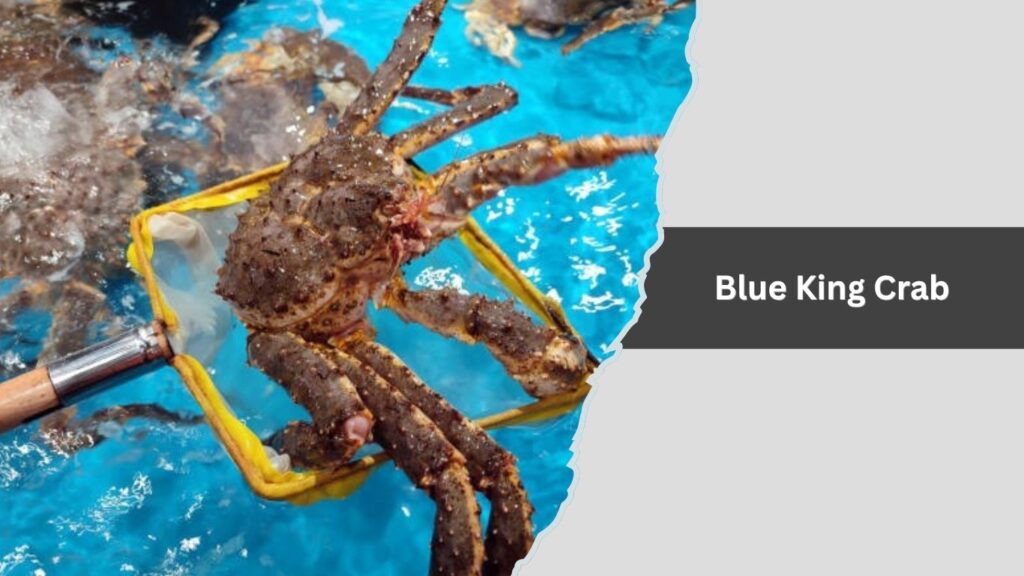
The blue king crab (Paralithodes platypus) is a large cold-water crustacean found in the northern Pacific Ocean. It gets its common name from the bluish or purplish coloring visible on its shell and legs. Although closely related to the red king crab, it generally has a rougher appearance and occupies a more restricted geographic range.
Identification
- Bluish-brown, purple, or dark reddish shell
- Broad body covered with sharp spines
- Long, heavily armored walking legs
- One claw usually larger than the other
- Oval-shaped shell wider than it is long
- Pale blue or cream-colored underside
- Four prominent spines on each side of the shell
- Bright orange-red coloration after cooking
Habitat and Distribution
Blue king crabs inhabit cold waters of the North Pacific and Bering Sea. Important populations occur around the Pribilof Islands, St. Matthew Island, St. Lawrence Island, and several coastal areas of Alaska and eastern Russia.
Juveniles commonly shelter in shallow areas containing rocks, gravel, seaweed, and shell debris. Adults generally move across deeper muddy, sandy, or rocky bottoms. Seasonal migrations may occur as crabs search for food, reproduce, or respond to changing water temperatures.
Size and Color
Large adult males may have leg spans exceeding 4 feet and can weigh more than 15 pounds, although many individuals are considerably smaller. Females have narrower legs, smaller claws, and lighter overall body weights.
The natural shell ranges from bluish brown and dark purple to burgundy or reddish brown. Blue highlights are often visible along the legs, joints, and underside. Cooking turns the shell a much brighter orange-red color.
Diet and Behavior
Blue king crabs feed on clams, mussels, marine worms, brittle stars, barnacles, sea urchins, fish remains, algae, and smaller crustaceans. Their diet changes according to age, habitat, and food availability.
Young crabs frequently gather in groups and hide among rocky structures for protection. Adults travel across the seafloor and may migrate between shallow and deep water during breeding and feeding seasons.
3. Golden King Crab
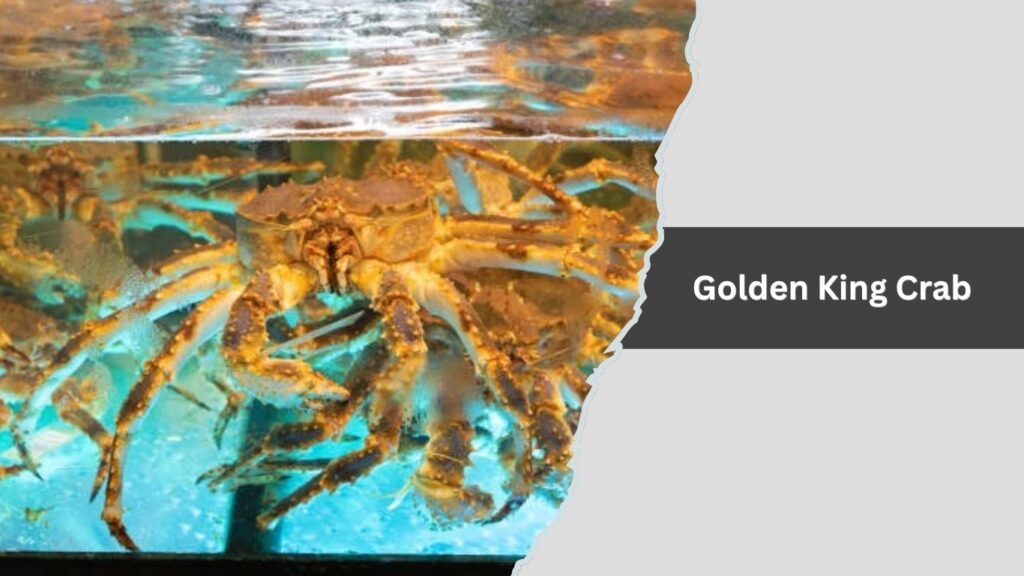
The golden king crab (Lithodes aequispinus), formerly called the brown king crab, is a deep-water species found across the northern Pacific Ocean. It is smaller and more slender than the red king crab but remains commercially valuable. Its golden-brown shell, sharp spines, and long legs help distinguish it from related species.
Identification
- Golden-brown, orange-brown, or tan shell
- Numerous sharp spines covering the body
- Long, narrow walking legs
- Smaller and more compact body than red king crabs
- One claw slightly larger than the other
- Five to nine spines along each shell edge
- Pale cream or yellowish underside
- Rough, heavily armored appearance
Habitat and Distribution
Golden king crabs occur from the Aleutian Islands and Gulf of Alaska to waters near British Columbia, Russia, Japan, and the northern Pacific coast. They are especially common around steep continental slopes, underwater ridges, and island chains.
Unlike red and blue king crabs, golden king crabs usually remain in deep water throughout the year. They inhabit rocky, muddy, gravelly, and coral-covered seafloors, commonly at depths of several hundred to more than 2,000 feet.
Size and Color
Adult males may have leg spans of approximately 3–4 feet and commonly weigh between 5 and 8 pounds. Exceptional individuals can become heavier, while females remain noticeably smaller.
The shell is usually golden brown, tan, orange-brown, or muted reddish brown. Lighter cream or yellow tones may appear around the joints and underside. Its legs are generally thinner and more heavily covered with spines than those of the red king crab.
Diet and Behavior
Golden king crabs are opportunistic bottom feeders that eat worms, clams, snails, brittle stars, sponges, small crustaceans, fish remains, and other organic material. They use their claws to collect food from rocks and deep-sea sediment.
These crabs move slowly across steep and uneven seafloors. Females carry developing eggs beneath their abdomens for an extended period before releasing larvae into the surrounding water.
4. Southern King Crab
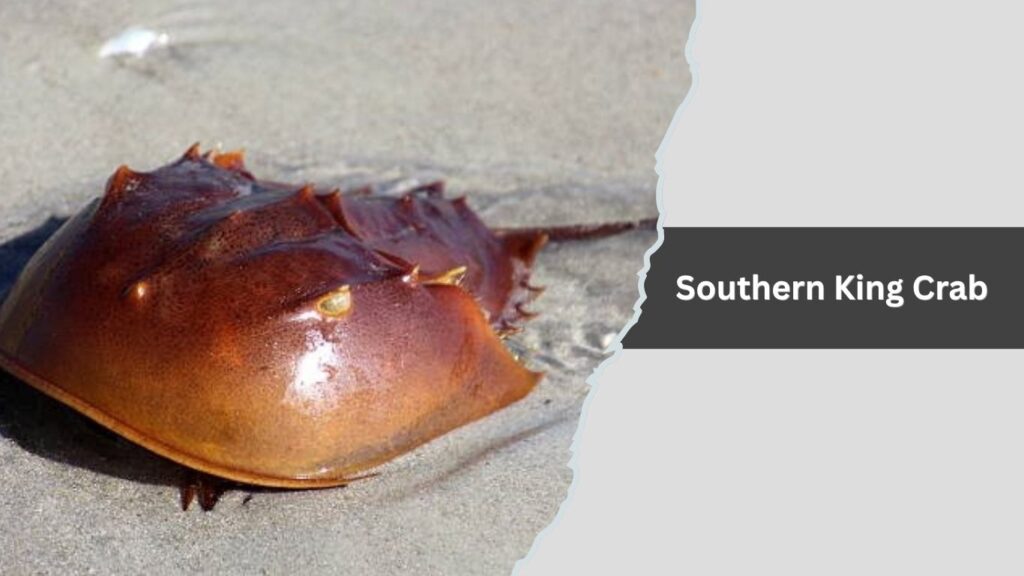
The southern king crab (Lithodes santolla), also called the Patagonian king crab or centolla, is a large, heavily armored species native to the cold waters surrounding southern South America. It supports valuable fisheries in Argentina and Chile and is recognized by its reddish coloration, long legs, and numerous sharp spines.
Identification
- Rounded, heavily armored carapace
- Red, pinkish-red, or orange-brown shell
- Numerous sharp spines covering the body
- Long, sturdy walking legs
- One claw usually larger than the other
- Pale cream or yellowish underside
- Broad abdomen in mature females
- Brighter red coloration after cooking
Habitat and Distribution
Southern king crabs occur around Patagonia, Tierra del Fuego, the Strait of Magellan, the Beagle Channel, and other cold coastal waters of Argentina and Chile. They live on rocky, gravelly, sandy, and muddy seabeds. Juveniles often use kelp forests as protected nursery habitats, while adults may occupy more open bottom areas.
Size and Color
Large males may develop a carapace length exceeding 15 centimeters, with their extended legs making them appear considerably larger. Males generally grow larger and develop heavier claws than females.
The shell varies from pinkish red and orange-red to dark burgundy or brownish red. Newly molted individuals may appear brighter and cleaner, while older shells can become darker and covered with barnacles or other small organisms.
Diet and Behavior
Southern king crabs are predators and scavengers that feed on mollusks, worms, echinoderms, small crustaceans, algae, carrion, and other bottom-dwelling material. Juveniles commonly remain hidden among kelp and rocky structures, while larger crabs forage more widely across the seafloor. Cannibalism has also been documented among juveniles.
5. Hanasaki King Crab
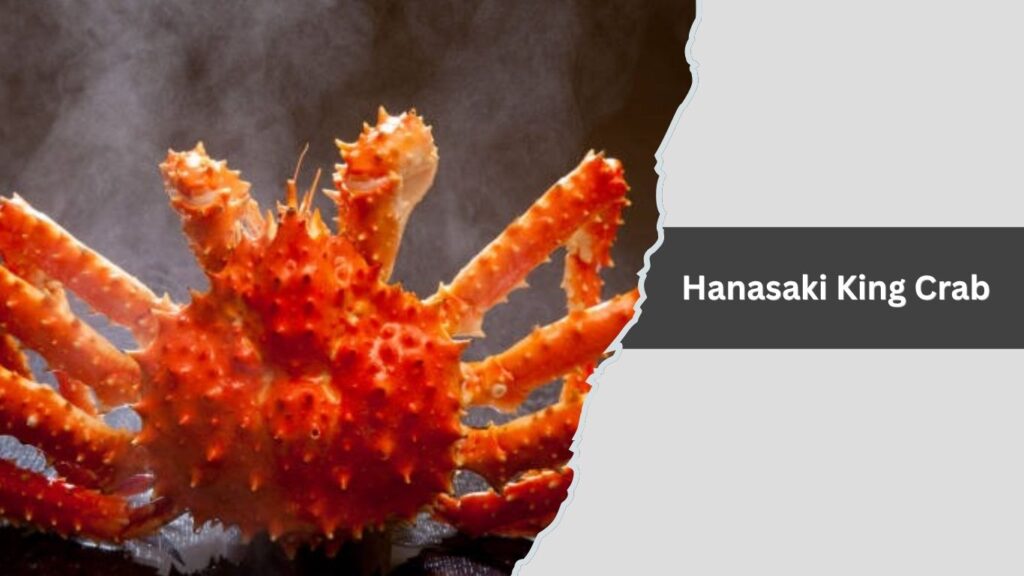
The Hanasaki king crab (Paralithodes brevipes), also called the spiny king crab, is a compact, heavily spined species from the northwestern Pacific. It is particularly associated with eastern Hokkaido, where it is an important regional seafood. Compared with the red king crab, it has shorter, thicker legs and a more rounded appearance.
Identification
- Broad and rounded carapace
- Numerous long, sharp spines
- Short, thick walking legs
- Large, heavily armored claws
- Reddish-brown or orange-brown body
- Pale cream-colored underside
- Dark tips on some leg spines
- Bright red shell after cooking
Habitat and Distribution
Hanasaki king crabs inhabit cold waters around eastern Hokkaido, the Kuril Islands, the Kamchatka Peninsula, and parts of the Sea of Okhotsk. They commonly live in relatively shallow coastal areas with rocky, gravelly, or seaweed-covered bottoms. Important Japanese fishing areas include the Nemuro and Kushiro regions.
Size and Color
The Hanasaki king crab can develop a carapace measuring approximately 15 centimeters across, although many individuals are smaller. Its legs are noticeably shorter and more muscular than those of red or golden king crabs.
The natural body color ranges from mottled brown and dark orange to reddish brown. Cream-colored areas may appear around the joints and underside. Its shell becomes a vivid red-orange when cooked.
Diet and Behavior
Hanasaki king crabs are omnivorous bottom feeders that consume seaweed, mollusks, marine worms, echinoderms, small crustaceans, carrion, and other available organic material. They crawl among rocks and coastal vegetation while searching for food.
Females carry fertilized eggs beneath their folded abdomens until the larvae are ready to hatch. Young crabs often remain in shallow, structurally complex habitats where rocks and seaweed provide protection from predators.
6. California King Crab
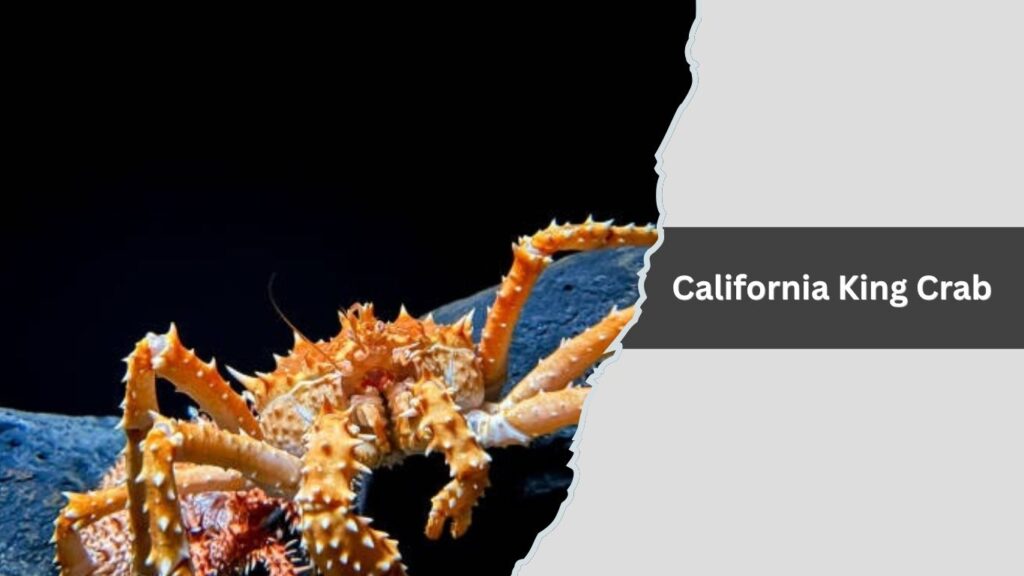
The California king crab (Paralithodes californiensis), sometimes called the California spiny king crab, is a heavily armored species native to the eastern Pacific Ocean. Its orange body, unusually long spines, and slender legs give it a striking appearance. It generally lives on the cold, dim seafloor off California.
Identification
- Orange or orange-yellow body
- Blue-white or cream-colored spines
- Long spines covering the shell and legs
- Carapace slightly longer than it is wide
- Two large spines along each side of the body
- Long, narrow walking legs
- Slender claws covered with spines
- Spines particularly prominent in younger crabs
Habitat and Distribution
California king crabs are primarily found off the California coast, with confirmed records extending from the Pismo Beach area to waters near San Diego. They inhabit muddy, rocky, and other soft-bottom environments.
Most records place them at depths of approximately 145–300 meters, although observations from Cordell Bank include soft-bottom habitats between roughly 3 and 180 meters. Deep-water corals and sponges may provide shelter and feeding areas.
Size and Color
Published descriptions include specimens measuring around 9.5 centimeters in carapace length, although mature individuals can grow considerably broader when the body spines are included. Experimental California fishing permits have used a minimum carapace width of five inches for retained individuals.
The body is usually orange or orange-yellow. Its sharp spines may appear cream, pale blue, or bluish white, creating a strong contrast with the darker shell.
Diet and Behavior
Detailed information about this species’ diet remains limited. Like related king crabs, it is probably an opportunistic bottom feeder that consumes worms, mollusks, echinoderms, small crustaceans, carrion, and other available organic material.
California king crabs move across deep rocky or muddy bottoms using their long legs. Their spiny armor helps discourage predators, while adults grow by periodically molting their exoskeleton. The more delicate new shell requires time to harden after each molt. This feeding description is an inference based on better-studied king crabs.
7. Scarlet King Crab
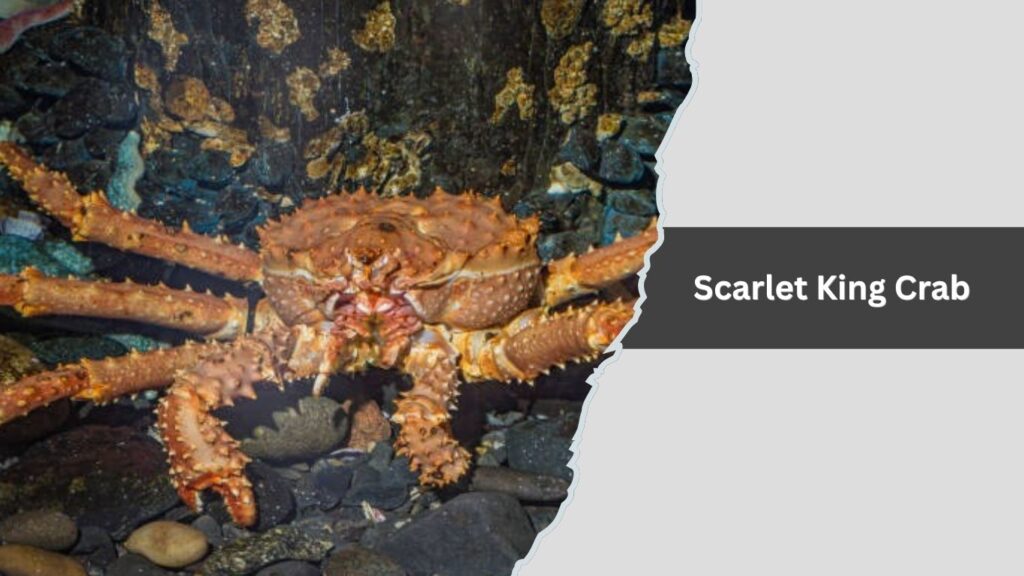
The scarlet king crab (Lithodes couesi) is a brightly colored king crab found along the Pacific coast of North America. It is recognized by its vivid red shell, long slender legs, and heavily spined body. The species is often associated with colder continental-slope and deep-sea habitats.
Identification
- Bright scarlet or deep-red body
- Broad, strongly spined carapace
- Long and relatively slender walking legs
- Sharp spines covering the claws and legs
- One claw generally larger than the other
- Pointed projection at the front of the shell
- Pale red or cream-colored underside
- More elongated legs than many other king crabs
Habitat and Distribution
Scarlet king crabs range from the Bering Sea and Gulf of Alaska southward along the eastern Pacific continental margin to San Diego. They occur on sandy, muddy, rocky, and mixed seabeds.
Records show that the species occupies a broad depth range, though it is strongly associated with colder, deeper water. Some have been observed moving across sandy seafloors in protected national marine sanctuaries.
Size and Color
Scarlet king crabs reportedly weigh between approximately 8 and 20 pounds. Other observations record male carapace lengths of up to about 108 millimeters and female lengths of around 92 millimeters.
Their bright-red or scarlet coloration may help them blend into deep-water environments, where red wavelengths penetrate poorly and red animals can appear dark. The legs are long and narrow compared with those of red and blue king crabs.
Diet and Behavior
Direct dietary information is limited, but scarlet king crabs probably feed opportunistically on mollusks, echinoderms, worms, smaller crustaceans, carrion, and organic matter available on the seabed.
One of their most unusual behaviors is forming large pods containing hundreds or thousands of crabs. These dense piles can rise several feet above the seafloor and may help protect individuals from predators. Females carry their developing eggs beneath the folded abdomen before releasing larvae into the water.
8. Norway King Crab
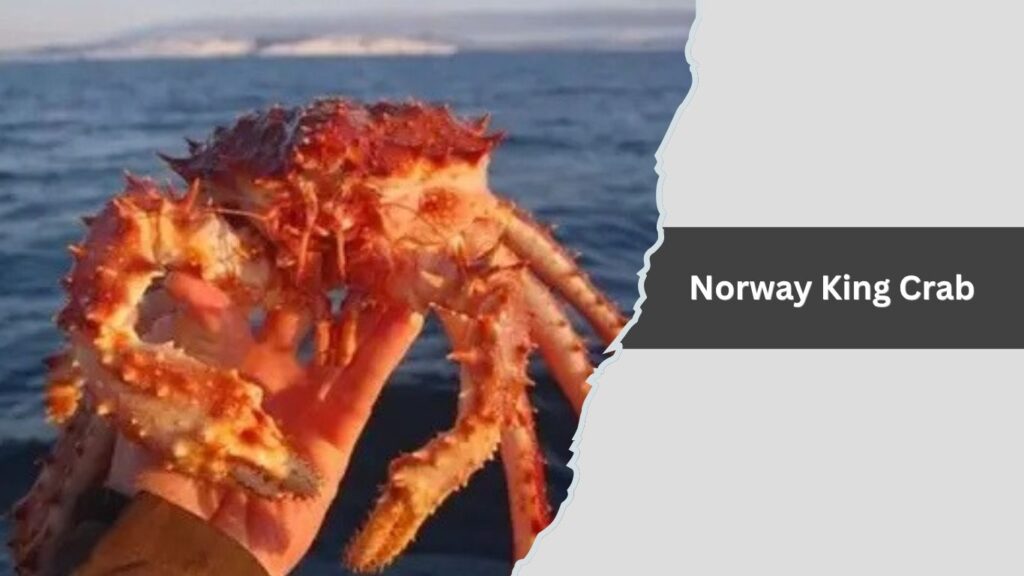
The Norway king crab (Lithodes maja), also called the northern stone crab or Atlantic king crab, is a heavily spined species from the cold North Atlantic. It should not be confused with the red king crab introduced into Norwegian waters. This smaller species has a nearly circular body, slender claws, and prominent spines across its shell and legs.
Identification
- Nearly circular, strongly armored carapace
- Brown, reddish-brown, or orange body
- Large spines covering the shell and legs
- Long, pointed, forked rostrum
- Right claw noticeably larger than the left
- Three pairs of long, slender walking legs
- Small fifth pair of legs hidden beneath the body
- Strongly asymmetrical abdomen in mature females
Habitat and Distribution
Norway king crabs occur on both sides of the North Atlantic. Their range includes Norway, the North Sea, the British Isles, Iceland, Greenland, Davis Strait, eastern Canada, and parts of the northeastern United States.
They inhabit cold offshore waters at depths ranging from approximately 10 to 1,000 metres. Individuals may crawl across rocky, sandy, muddy, or mixed seabeds, allowing the species to occupy several different bottom environments.
Size and Color
The carapace can grow approximately 12–14 centimetres wide. Including its walking legs, the crab may appear much larger, although it remains considerably smaller than commercially harvested red king crabs.
Its shell is commonly brown, reddish brown, rusty orange, or orange-red. The prominent spines may have slightly paler tips, while the underside is generally lighter than the upper body.
Diet and Behavior
Norway king crabs are bottom-dwelling scavengers and predators. Their powerful right claw has blunt crushing surfaces suited to breaking heavily armored prey. They likely consume mollusks, echinoderms, worms, crustaceans, carrion, and other available animal material.
They move slowly across the seabed and rely on their thick shell and long spines for protection. Females carry relatively small numbers of large eggs beneath their asymmetrical abdomens.
9. Puget Sound King Crab
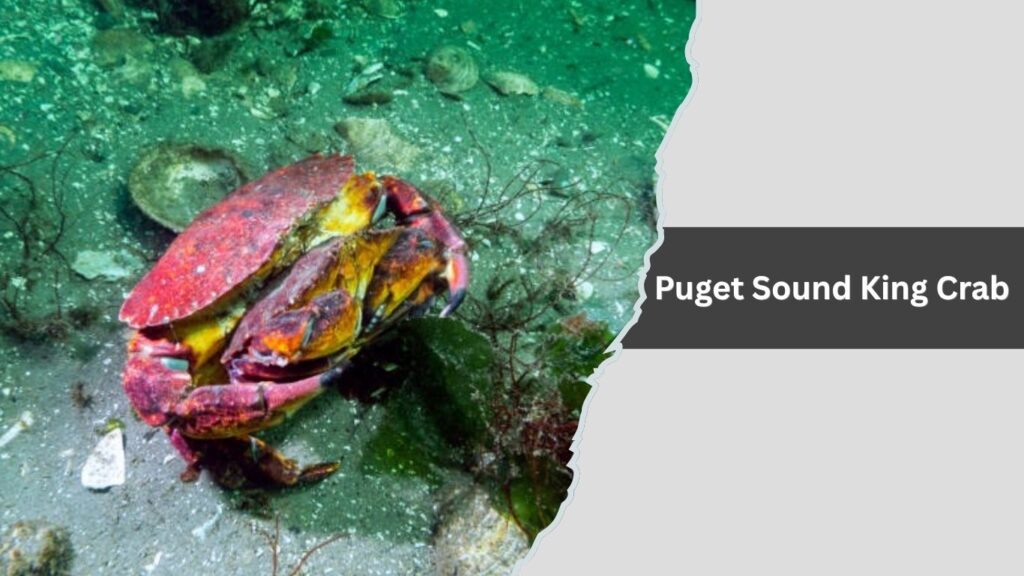
The Puget Sound king crab (Lopholithodes mandtii) is a massive, colorful king crab found along the Pacific coast of North America. Its heavily textured shell, short powerful legs, and mixture of orange, red, blue, purple, and brown markings give it an unmistakable appearance. It is unrelated to commercially harvested Alaskan king crab species.
Identification
- Broad, rounded, heavily built carapace
- Numerous blunt bumps covering the body
- Orange, red, brown, blue, and purple markings
- Short, thick walking legs
- Legs approximately as long as the shell is wide
- One claw adapted for crushing food
- Other claw narrower and more spoon-shaped
- Bright orange coloration in young crabs
Habitat and Distribution
Puget Sound king crabs range from southeastern Alaska through British Columbia and Washington to central California. They occupy cold Pacific waters from shallow subtidal zones to depths of approximately 137 metres.
Adults are commonly associated with rocky areas, ledges, steep walls, and places experiencing strong currents. They may also occur on muddy seabeds. Juveniles sometimes shelter beneath rocks in extremely low intertidal areas.
Size and Color
This is one of the largest crab species along the Pacific coast of the contiguous United States. Its carapace can reach approximately 30 centimetres, or 12 inches, across. Its heavy legs and claws make the entire animal appear considerably wider.
Juveniles are usually brilliant orange. Adults develop complex combinations of orange, red, brown, cream, blue, and purple. Barnacles and other organisms may eventually cover parts of older shells.
Diet and Behavior
Puget Sound king crabs feed on sea urchins, sea anemones, other echinoderms, algae, detritus, and small invertebrates. Their differently shaped claws allow them to crush hard prey and handle smaller food particles.
Adults may move into shallower water during late winter and spring to reproduce. When threatened, the crab folds its legs and claws tightly against its body, creating a compact, box-like defensive shape.
10. Brown Box Crab
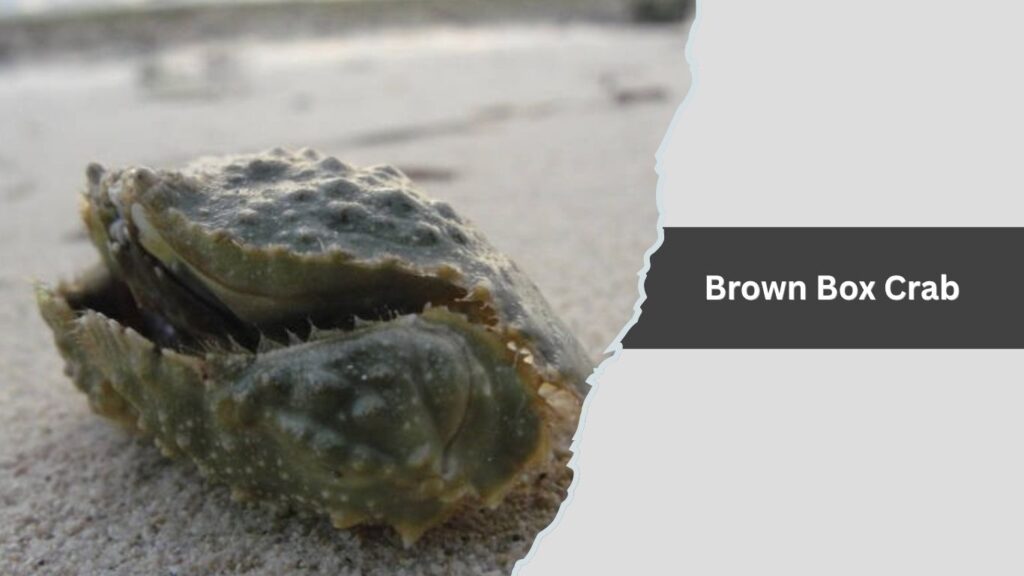
The brown box crab (Echidnocerus foraminatus), formerly classified as Lopholithodes foraminatus, is a heavily armored king crab native to the northeastern Pacific Ocean. Its broad body, rough shell, and folding limbs create a compact, box-like defensive shape.
Identification
- Broad, roughly triangular carapace
- Mottled brown or reddish-brown coloration
- Spiny and hairy shell surface
- Large, rounded claws
- Orange coloration on parts of the claws
- Banded walking legs with dark tips
- Short, heavily armored limbs
- Circular openings formed when the limbs fold
Habitat and Distribution
Brown box crabs occur from Prince William Sound in Alaska southward to San Diego, California. They inhabit intertidal and shallow subtidal environments, including rocky areas, sandy or muddy bottoms, shell-covered seabeds, and coastal waters reaching approximately 250 feet deep.
Size and Color
The brown box crab can develop a carapace measuring approximately 15 centimeters long. Its compact body and thick claws make it appear especially heavy and strongly built.
The shell is generally brown, reddish brown, or orange brown with darker speckles and pale patches. Its legs may display noticeable bands, while the tips can be dark brown or black.
Diet and Behavior
Brown box crabs eat bivalves, detritus, carrion, and other organic material found on the seabed. Their strong claws help them handle hard-shelled prey and tear apart food.
When resting or threatened, the crab folds its legs and claws tightly against its body. Matching notches between the claws and nearby legs form two circular passages that allow water to reach the gills while the crab is partly buried in sediment.
11. Rhinoceros King Crab
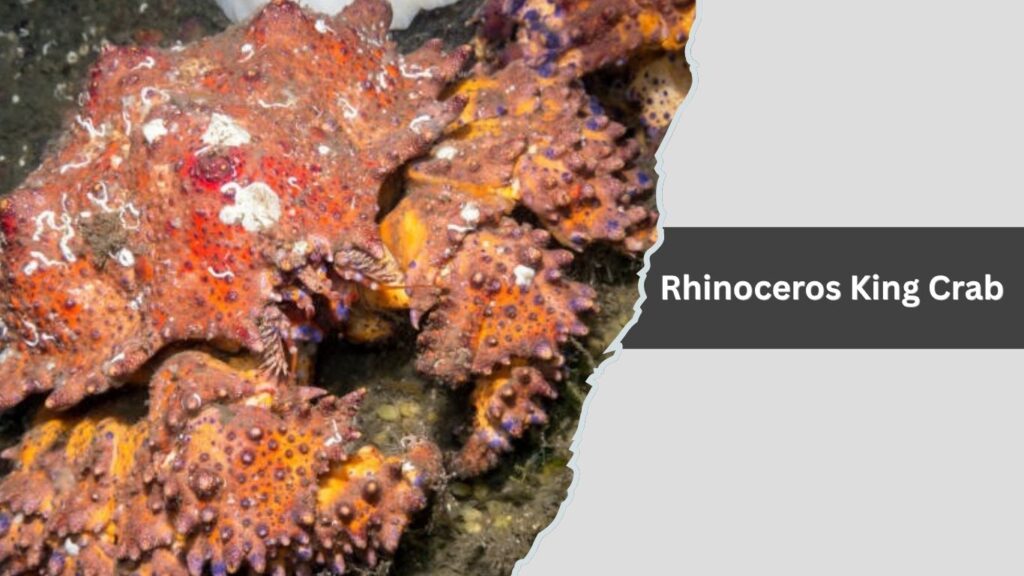
The rhinoceros king crab (Rhinolithodes wosnessenskii), commonly called the rhinoceros crab, is a small and unusual member of the king crab family. It is the only species within the genus Rhinolithodes and is named for the horn-like point extending from the front of its shell.
Identification
- Triangular carapace
- Small horn-like point on the front
- Deep semicircular depression on the shell
- Yellowish-brown body
- Bright orange and white markings
- Spines covering the claws and legs
- Long, dense hair-like bristles
- Rough body that collects attached organisms
Habitat and Distribution
Rhinoceros king crabs inhabit the northeastern Pacific Ocean from Kodiak Island, Alaska, southward to Crescent City, California. They are generally found at depths of about 6–73 meters.
The species prefers rocky or gravel-covered bottoms and often hides inside crevices. Its small size and heavily camouflaged body make it difficult to notice in its natural habitat.
Size and Color
The carapace may reach approximately 7 centimeters across, making this species much smaller than commercially harvested red, blue, and golden king crabs.
Its body is usually yellowish brown, tan, or dark brown with striking orange and white areas. Sponges, algae, bryozoans, and other organisms may grow among the long hairs covering its legs, strengthening its camouflage.
Diet and Behavior
Rhinoceros king crabs move slowly across rocky and gravelly seabeds. They remain hidden in crevices or blend into surfaces covered by marine growth rather than relying on speed to escape danger.
Their complete diet is not well documented, but they feed on small bottom-dwelling organisms and have been observed eating bryozoans. Their claws help collect food from rocks, crevices, and attached marine colonies.
12. Many-Spined King Crab
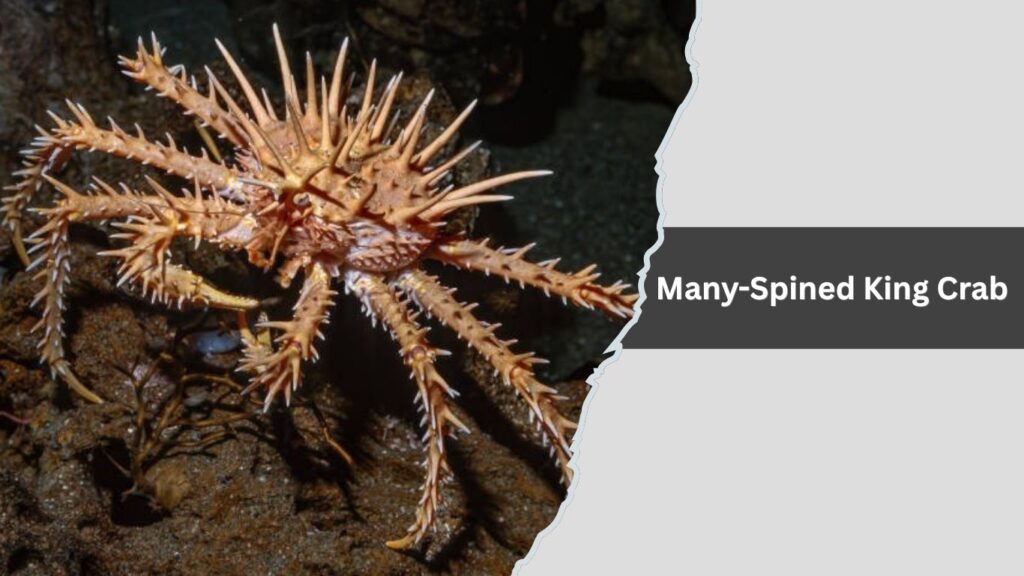
The many-spined king crab (Paralomis multispina), also called the Oregon spiny king crab or Oregon hair crab, is a deep-water species from the North Pacific. Its body is protected by numerous thick spines that give it a heavily armored appearance and help discourage potential predators.
Identification
- Rounded carapace nearly as wide as it is long
- Scarlet-red or pale-pink body
- Numerous thick spines across the shell
- Spiny, elongated walking legs
- Slender front claws
- One central spine on the rostrum
- Two smaller spines at the rostrum’s base
- Short hairs surrounding many of the spines
Habitat and Distribution
Many-spined king crabs occur across the North Pacific, including waters near British Columbia, the Bering Sea, Russia, Japan, California, and parts of Mexico. They are deep-sea animals found on muddy continental slopes, seamounts, and other benthic environments.
They commonly live between approximately 600 and 1,665 meters deep, although observations have been recorded at greater depths in some locations.
Size and Color
The carapace can reach approximately 8 centimeters in length and width. Its long legs make the complete animal appear considerably larger than the central body.
The shell ranges from scarlet red to pale pink, while the numerous spines are often darker red. Juveniles have shorter, blunt bumps that develop into stronger conical spines as they mature.
Diet and Behavior
Many-spined king crabs feed primarily on deep-sea clams, including vesicomyid and mytilid bivalves. They slowly roam muddy seafloors and use their claws to locate, grasp, and break apart prey.
Their thick shell and dense spines provide important protection in exposed deep-sea habitats. Small marine organisms may also live among the crab’s spines or around its mouthparts.
13. False King Crab
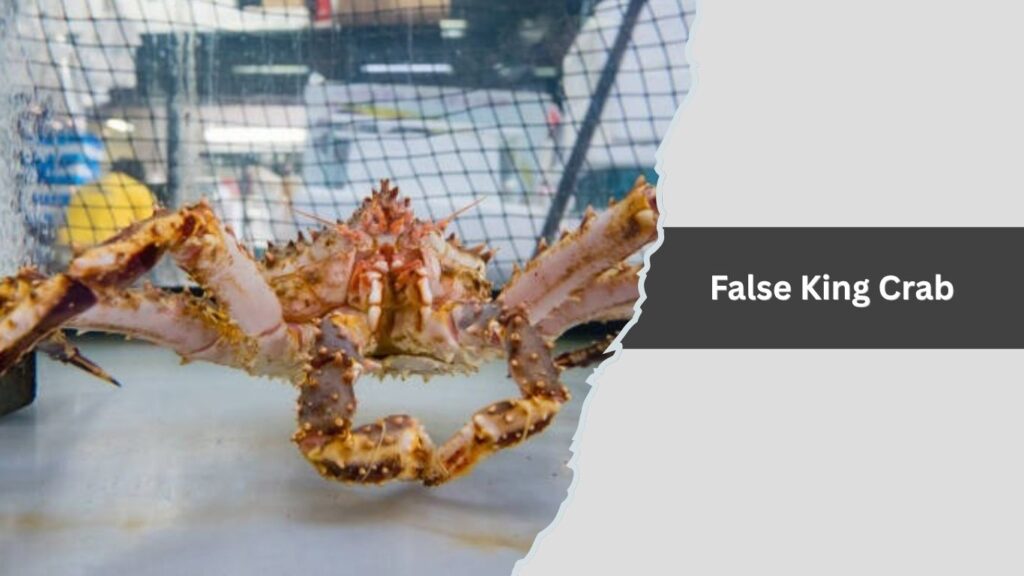
The false king crab (Paralomis granulosa), also called the false southern king crab, Chilean snow crab, or centollón, is a cold-water species native to southern South America. It resembles the larger southern king crab but has a more rounded, granular body covered with numerous small bumps.
Identification
- Rounded or slightly triangular carapace
- Reddish, orange-red, or pink body
- Numerous pale bumps covering the shell
- Short, sturdy walking legs
- Rough, granular body texture
- Thick claws covered with small projections
- Cream or whitish spots across the body
- Smaller build than the southern king crab
Habitat and Distribution
False king crabs occur around southern Chile, Argentina, Tierra del Fuego, the Falkland Islands, and the Strait of Magellan. They inhabit cold coastal and offshore waters, usually on rocky seabeds and around kelp forests.
Young crabs often shelter among kelp holdfasts, where the dense vegetation provides food and protection. Populations also occur at depths of approximately 100–150 meters between the Falkland Islands and the Strait of Magellan.
Size and Color
The false king crab may develop a carapace approximately 11.5–12 centimeters long and weigh up to about 1.5 kilograms. It is noticeably smaller than the southern king crab.
Its base color is usually red, orange-red, or pinkish red. The shell and limbs are densely covered with white or cream-colored bumps, producing a speckled and rough appearance.
Diet and Behavior
False king crabs have a varied diet that includes algae, mollusks, crustaceans, bryozoans, hydrozoans, echinoderms, and tiny foraminiferans. Their food choices can change with age, sex, habitat, and season.
Juveniles may gather in dense groups within kelp forests. This podding behavior probably reduces the risk of predation while the young crabs are still relatively small and vulnerable.
14. Prickly King Crab
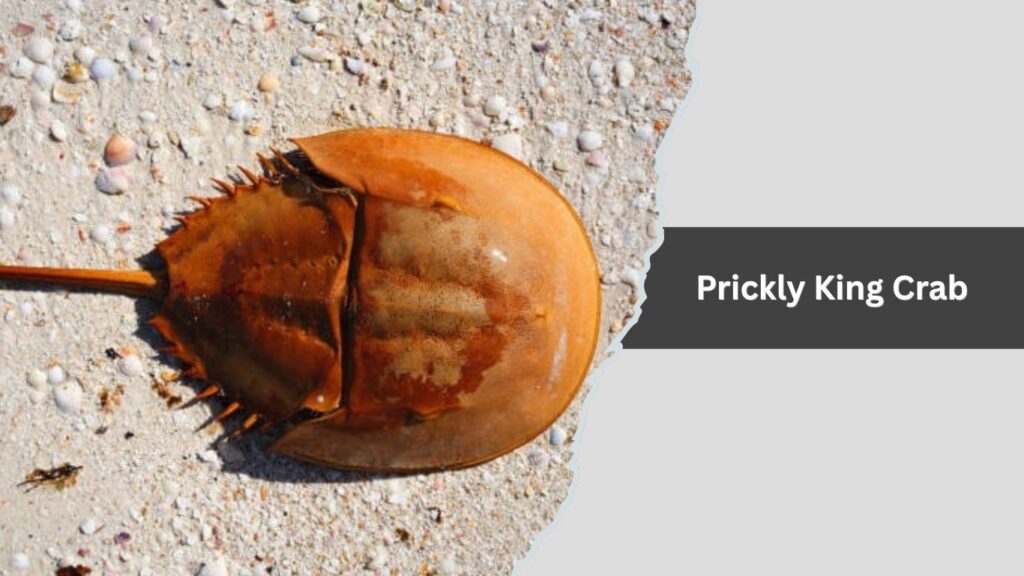
The prickly king crab (Paralomis zealandica) is a deep-water king crab found only around New Zealand. Its body, claws, legs, and abdomen are protected by dense, upright spines. This heavily armored appearance helps distinguish it from other king crabs living in New Zealand waters.
Identification
- Pear-shaped, heavily armored carapace
- Dense spines covering the body and legs
- Three short, sharp spines on the rostrum
- Ivory-white or pale body coloration
- Red-orange spines and leg markings
- Long, strongly built walking legs
- One claw generally larger than the other
- Longer, more curved spines on juveniles
Habitat and Distribution
Prickly king crabs are endemic to New Zealand waters. They inhabit deep areas around the Chatham Rise, Bounty Plateau, seamounts, and continental slopes. Records place them at depths of approximately 254–1,212 metres, where they move across cold, dark seabeds containing mud, rock, gravel, and deep-sea invertebrate communities.
Size and Color
The carapace can grow to approximately 13 centimetres wide, while the legs make the complete animal appear considerably larger. Adults generally have shorter, stronger upright spines, whereas juveniles possess longer and more curved spines.
The body is mainly ivory-white or pale cream. Red-orange coloration appears across the spines and in irregular patches along the legs, giving the crab a striking appearance.
Diet and Behavior
Detailed feeding studies are limited, but prickly king crabs are believed to be opportunistic bottom feeders. They likely consume mollusks, worms, echinoderms, smaller crustaceans, carrion, and other edible material found on the deep seafloor.
They move slowly across the seabed and depend mainly on their thick armor and sharp spines for protection. Females carry developing eggs beneath their folded abdomens before releasing larvae into the water.
15. Globose King Crab
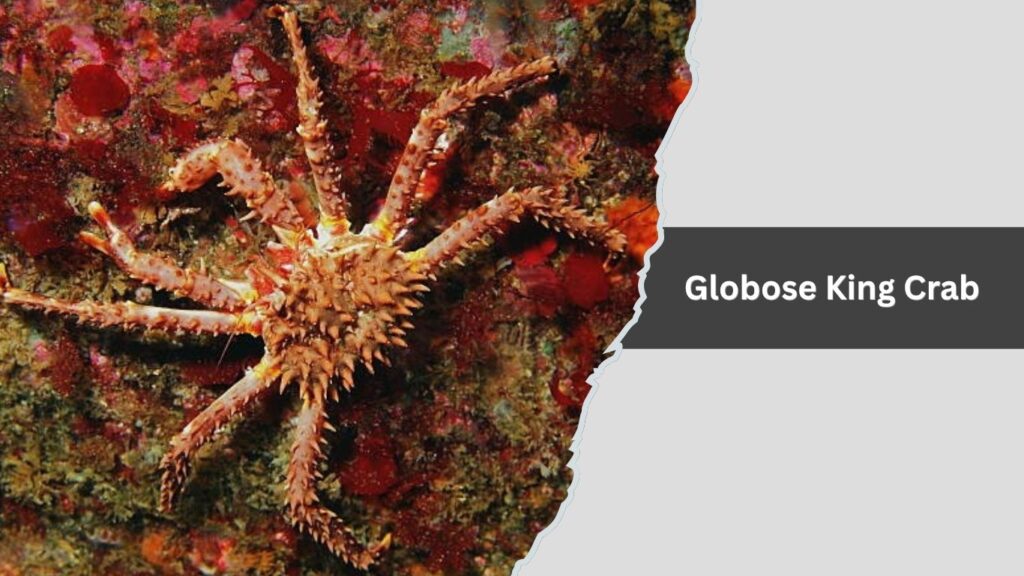
The globose king crab (Paralomis formosa) is a rounded deep-sea king crab found in the southwestern Atlantic and Southern Ocean. It is particularly associated with waters around South Georgia and Shag Rocks. Its compact body is covered with small granules rather than the large, sharp spines found on many other king crabs.
Identification
- Rounded or pear-shaped carapace
- Bright red to reddish-orange body
- Numerous small granules covering the shell
- Long, moderately spiny walking legs
- Strongly pigmented eyes
- Right crushing claw larger than the left
- Clearly defined projection above the eyes
- Small fifth pair of legs hidden beneath the body
Habitat and Distribution
Globose king crabs live around South Georgia, Shag Rocks, the Scotia Sea, and parts of the southwestern Atlantic. They usually occur deeper than 300 metres, with their greatest abundance recorded between approximately 800 and 1,400 metres.
They are more abundant on muddy seabeds containing small stones than on hard rock or sand. Their distribution is often concentrated near continental slopes and shelf breaks.
Size and Color
The globose king crab can reach a carapace length of approximately 10.3 centimetres and a weight of around 700 grams. Males generally grow larger than females, while the long legs greatly increase the animal’s total width.
Living individuals are usually bright red, scarlet, or reddish orange. The shell may have slightly darker granules, pale joints, and a lighter underside.
Diet and Behavior
Globose king crabs are broad-feeding omnivores and scavengers. They are attracted to animal remains and probably consume mollusks, marine worms, echinoderms, small crustaceans, detritus, and carrion encountered on the seabed.
They can gather rapidly around available food, and baited-camera studies have recorded high numbers approaching bait in deep water. Females carry their eggs beneath the abdomen, and reproduction may occur throughout the year in the relatively stable deep-sea environment.
16. Birstein’s King Crab
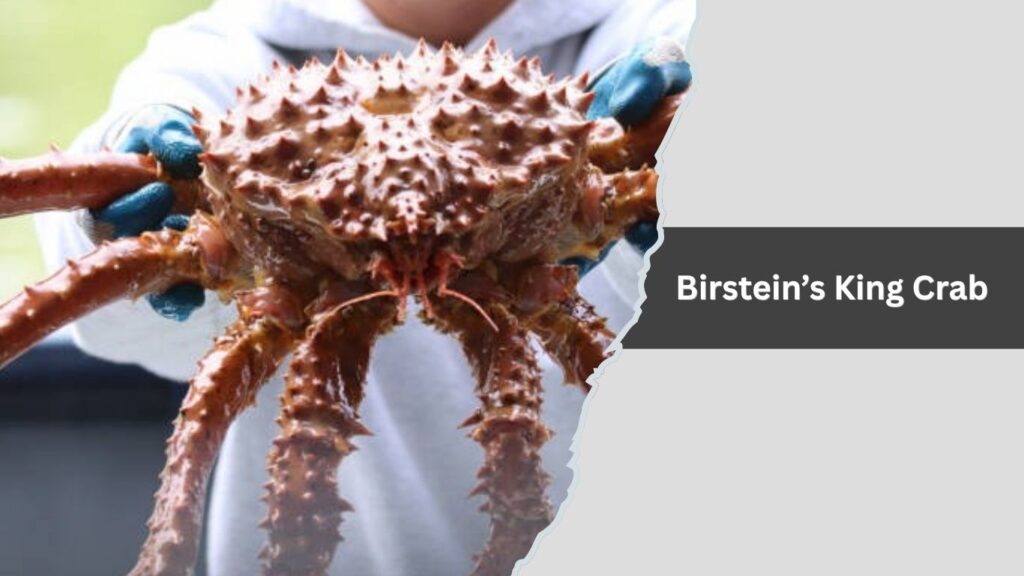
Birstein’s king crab (Paralomis birsteini), also called the Antarctic king crab, is a deep-sea species inhabiting the cold Southern Ocean. It has a compact, spiny body and long walking legs adapted for moving across the Antarctic continental slope. Scientists have recorded dense populations in deep waters west of the Antarctic Peninsula.
Identification
- Broad, nearly pentagonal carapace
- Granules and short spines covering the shell
- Long, slender walking legs
- Spiny claws and leg joints
- One claw larger than the other
- Short, three-pointed rostrum
- Reddish-orange or pale-pink coloration
- Small fifth pair of legs hidden beneath the shell
These characteristics distinguish it from the more heavily spined Antarctic stone crab.
Habitat and Distribution
Birstein’s king crab lives in the Southern Ocean, particularly around the Bellingshausen Sea, Ross Sea and the continental slope west of the Antarctic Peninsula. Records place it at depths of approximately 500–1,876 metres, although some observations have occurred even deeper.
It commonly inhabits cold seabeds containing mud, pebbles, gravel and glacial dropstones. These hard materials provide shelter and surfaces around which smaller bottom-dwelling animals gather.
Size and Color
Examined specimens have commonly measured approximately 6–8 centimetres across the carapace. The original specimens used to describe the species had carapace lengths of about 5.5–7.8 centimetres. Its long legs make the complete crab appear considerably larger than its central body.
The shell is generally pale orange, reddish orange, pink or light brown. The legs and claws may be darker red, while the underside is usually paler.
Diet and Behavior
Detailed dietary information remains limited. Based on its powerful claws and the feeding habits of related deep-sea king crabs, it probably consumes mollusks, worms, echinoderms, smaller crustaceans and carrion. This feeding description is partly an inference from its anatomy and related species.
Birstein’s king crabs move slowly across the deep seabed and may form dense populations. Females carry developing eggs beneath their folded abdomens until the larvae are ready to hatch.
17. Rathbun’s Spiny King Crab
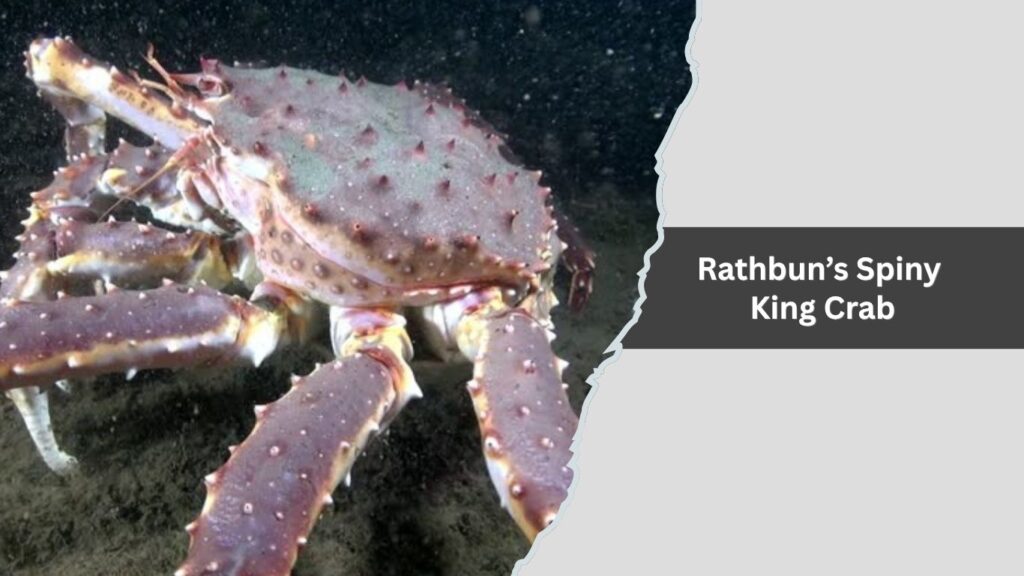
Rathbun’s spiny king crab (Paralithodes rathbuni) is a heavily armored deep-water species found along the Pacific coast of North America. It is also known as the spiny king crab or porcupine crab because unusually long, pointed spines cover its shell, claws and walking legs.
Identification
- Orange, tan or yellowish-brown shell
- Extremely long and sharp body spines
- Deeply forked rostrum
- Long, slender walking legs
- Spines covering the claws and leg joints
- One claw generally larger than the other
- Pale or white spine tips
- Compact central body
The dense covering of prominent spines is its most recognizable feature and provides protection against deep-water predators.
Habitat and Distribution
Rathbun’s spiny king crab occurs from central California southward to Baja California, Mexico. It inhabits sandy, muddy and rocky seafloors, generally at depths of approximately 100–600 metres.
Individuals may shelter around boulders, rocky ledges, deep-sea corals and other structures that provide feeding opportunities and protection.
Size and Color
The carapace can reach approximately 6 inches, or 15 centimetres, across. Its long legs and projecting spines greatly increase the crab’s total apparent width.
The shell is commonly orange, golden brown, tan or reddish brown. Younger or recently molted crabs may appear brighter, while older individuals can develop darker areas or marine growth on their armor.
Diet and Behavior
Rathbun’s spiny king crab prowls the deep seafloor in search of live prey and edible remains. It feeds on other crabs, sea stars and various bottom-dwelling invertebrates. Its strong claws help it grasp prey and tear food apart.
The crab moves carefully because its exceptionally long spines can make navigation through narrow rocky spaces difficult. When threatened, it relies primarily on its formidable armor rather than speed.
18. Verrill’s King Crab
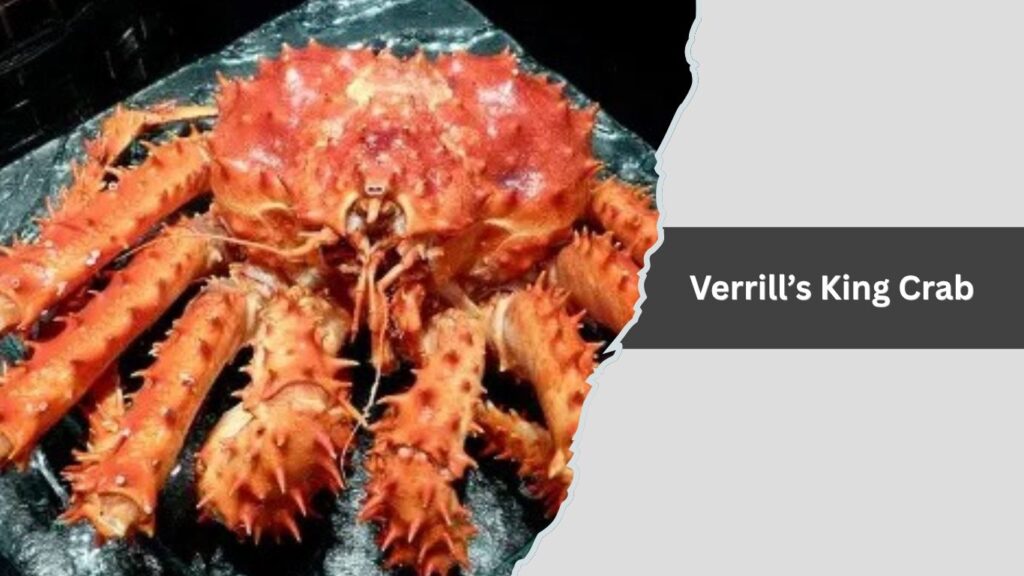
Verrill’s king crab (Paralomis verrilli) is a deep-water species found across the northern Pacific Ocean. It has a broad, armored body covered with flattened bumps and strong spines. Unlike the extremely spiny king crabs, its central shell appears comparatively rounded and textured, while its legs and claws carry more noticeable projections.
Identification
- Pentagonal carapace slightly wider than long
- Pale reddish-brown central shell
- Deep-red walking legs and claws
- Flattened bumps covering the carapace
- Five noticeable spines on the gastric region
- Four spines on the cardiac region
- Approximately 20 marginal spines on each side
- Right claw generally larger and heavier
- Dark-brown or black cutting edges on the claws
Habitat and Distribution
Verrill’s king crab inhabits cold, deep waters of the North Pacific. Records extend from the Sea of Okhotsk and waters around Hokkaido to the Pribilof Islands, Washington, British Columbia, and southern California. It has been collected from muddy, sandy, and mixed seabeds.
Most records place the species between approximately 450 and 1,770 metres deep. A juvenile found southwest of Barkley Sound, British Columbia, was collected at a depth of 951 metres on a bottom composed of mud and sand.
Size and Color
Verrill’s king crab is a moderately large species, although it does not normally reach the enormous dimensions of red king crabs. One documented adult male had a carapace length of 99.3 millimetres, while an egg-carrying female measured 74.8 millimetres.
Fresh specimens have a pale reddish-brown carapace and deep-red legs. The underside is usually lighter, while the cutting surfaces of the claws may appear dark brown or nearly black. Its color may become duller after preservation or remain darker in older individuals.
Diet and Behavior
The natural diet of Verrill’s king crab has not been studied extensively. Its heavy claws and deep-sea lifestyle suggest that it is an opportunistic predator and scavenger. It probably consumes mollusks, worms, echinoderms, small crustaceans, carrion, and other organic material encountered on the seabed.
The larger right claw is suited to crushing firm food, while the smaller claw can cut and manipulate softer material. Females carry relatively large eggs beneath the abdomen until development is complete. This feeding description is partly inferred from its anatomy and the behavior of related king crabs.
19. Spiny Paralomis King Crab
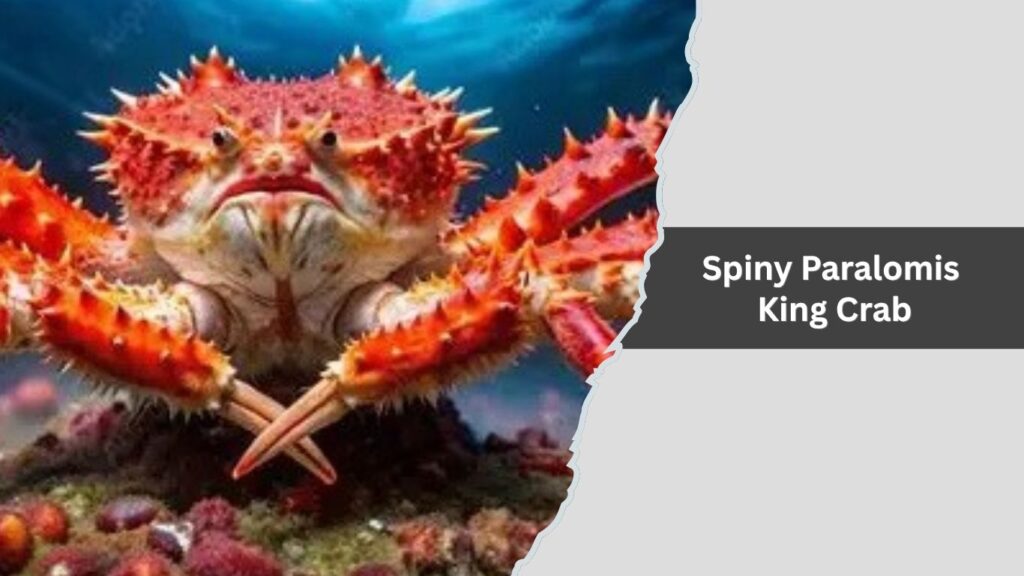
The spiny Paralomis king crab (Paralomis spinosissima), more commonly called the Antarctic stone crab, is a heavily armored species from cold southwestern Atlantic and sub-Antarctic waters. Its scientific name means “very spiny,” accurately describing the long, sharp projections covering its shell, legs, and claws.
Identification
- Pear-shaped or nearly pentagonal carapace
- Long conical spines covering the shell
- Densely spined walking legs and claws
- Three-pointed rostrum extending beyond the eyes
- Central rostral spine pointing forward
- Two upper rostral spines pointing outward
- Right crushing claw larger than the left
- Strongly armored abdomen
- Reddish, orange-brown, or pale-pink body
Habitat and Distribution
Spiny Paralomis king crabs are strongly associated with South Georgia, the Scotia Sea, the Drake Passage, and other sub-Antarctic parts of the southwestern Atlantic. A juvenile collected near Mar del Plata, Argentina, extended the known distribution more than 1,300 kilometres northward.
Around South Georgia, the species generally occurs at depths below 800 metres and is most abundant at less than 400 metres. It inhabits deeper shelf areas, continental slopes, gullies, and seabeds containing mud, sand, stones, or rocky material.
Size and Color
The spiny Paralomis king crab is among the larger members of its genus. Recorded specimens have exceeded 107 millimetres in carapace length and reached weights of about 1.18 kilograms. Larger adults have been reported with carapaces approximately 126 millimetres long and 132 millimetres wide.
Its body may appear pale orange, reddish brown, pinkish red, or muted scarlet. The spine tips can be slightly lighter than the central shell. Juveniles have shorter or differently shaped projections that become longer and more strongly developed as the crab matures.
Diet and Behavior
Spiny Paralomis king crabs are scavengers attracted to fish, squid, and other animal remains. Their complete natural diet remains poorly documented, but they probably also consume mollusks, marine worms, echinoderms, and smaller crustaceans found along the seafloor.
Females carry developing eggs for approximately 14–18 months. Hatching can continue over several months, and the larvae rely largely on stored yolk rather than actively feeding during their earliest stages. Adults move slowly across deep seabeds and depend on their dense spines for protection.
20. Investigator King Crab
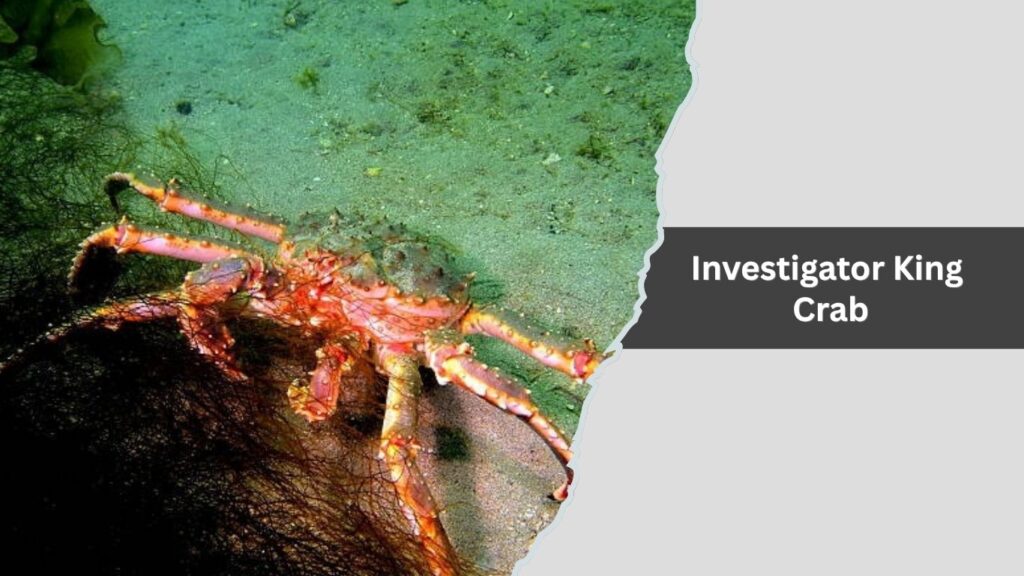
The investigator king crab (Paralomis investigatoris) is a rare deep-water king crab from the northern Indian Ocean. It was scientifically described from specimens collected by the Indian Marine Survey ship Investigator, which inspired its name. Its rounded, tubercle-covered body and red coloration create a distinctive armored appearance.
Identification
- Rounded or slightly pentagonal carapace
- Numerous small, uniformly sized tubercles
- Tubercles covering both the shell and abdomen
- Orange-red or deep-red body
- Long, moderately spiny walking legs
- Unequal front claws
- Short rostrum at the front of the shell
- Small fifth pair of legs hidden beneath the body
The uniform tubercles covering both the carapace and abdomen are particularly useful for separating this species from the related Paralomis indica, which lacks abdominal tubercles.
Habitat and Distribution
Investigator king crabs inhabit deep sections of the northern Indian Ocean. The original specimens were collected off Thiruvananthapuram on India’s southwestern coast at a depth of approximately 790 metres.
A later specimen was landed at Chennai and represented the first known record from the Bay of Bengal, extending the species’ recorded distribution beyond its original Arabian Sea locality. It lives on deep marine seabeds where sunlight is absent and water temperatures remain relatively low.
Size and Color
A documented male collected near Chennai measured approximately 86 millimetres across the carapace and 65 millimetres in carapace length. It weighed about 45 grams, making it considerably smaller than commercially harvested red and blue king crabs.
Photographed specimens appear orange-red, scarlet, or deep reddish orange. The underside and joints may be slightly paler, although living coloration remains poorly documented because the species is rarely encountered.
Diet and Behavior
The natural diet and daily behavior of the investigator king crab have not been studied in detail. As a deep-sea king crab, it probably walks slowly across the bottom while searching for mollusks, worms, small crustaceans, echinoderms, carrion, and other available organic material.
This dietary description is an inference based on related members of the genus Paralomis. Its tuberculated shell provides protection, while its claws allow it to collect and tear food found on deep sandy, muddy, or rocky seabeds.
21. Haig’s King Crab
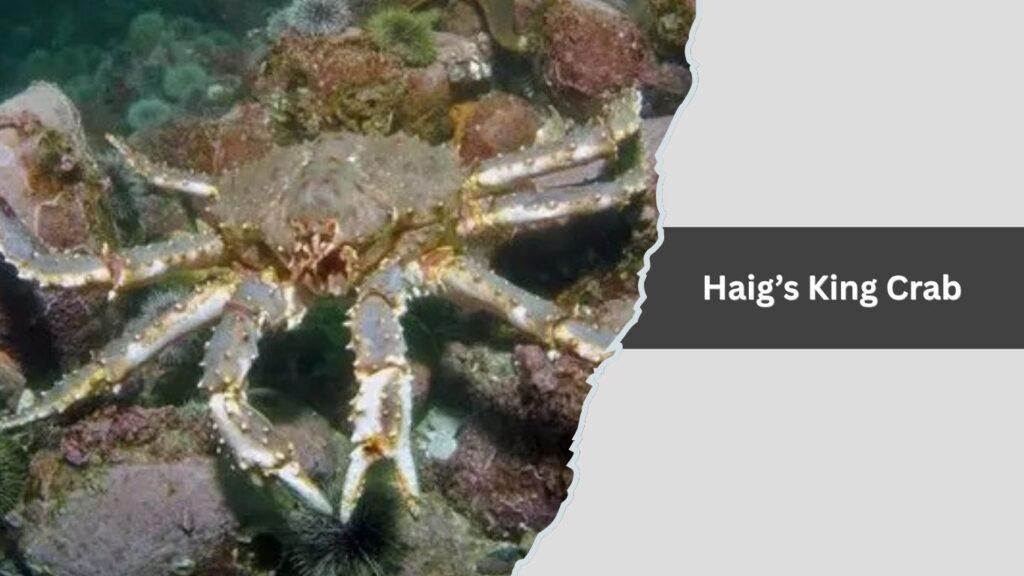
Haig’s king crab (Paralomis haigae) is a deep-water western Pacific species named in honor of crustacean specialist Janet Haig. It has a heavily textured shell covered with rounded tubercles and short hairs. The species was first described from Guam and has since been recorded around other Pacific islands.
Identification
- Broad, pentagonal carapace
- Large and small rounded shell tubercles
- Short setae surrounding individual tubercles
- No prominent central gastric spine
- Short and heavily built rostrum
- Right claw larger than the left
- Short eye stalks with nearby spines
- Pinkish-orange body with pale-yellow hairs
Its tuberculated surface, lack of anterolateral shell spines, and absence of a prominent gastric spine help distinguish it from several other deep-water king crabs.
Habitat and Distribution
Haig’s king crab was originally collected off Guam at depths between approximately 400 and 730 metres. Later records expanded its known range to New Caledonia, Samoa, and the Solomon Islands.
A male collected near the Solomon Islands was found between 453 and 542 metres deep. These records show that the species inhabits continental and island slopes across tropical western and central Pacific waters.
Size and Color
The original Guam specimens had carapace widths ranging from approximately 56 to 95 millimetres and carapace lengths of about 59.5 to 97 millimetres. A later female from Samoa measured 43.8 millimetres in carapace length.
Living specimens were described as evenly light pinkish orange across the upper shell. The short hairs or setae surrounding the tubercles were light yellow, while preserved individuals became light pinkish tan.
Diet and Behavior
Little is known about the feeding behavior of Haig’s king crab. It is probably an opportunistic deep-sea predator and scavenger that consumes mollusks, worms, echinoderms, smaller crustaceans, carrion, and organic debris.
The crab likely moves slowly across deep island slopes while using its larger right claw to crush or hold food. Its thick shell and numerous rounded tubercles provide protection in habitats where hiding places may be limited. This feeding description is inferred from related king crab species.
22. Agassiz’s King Crab
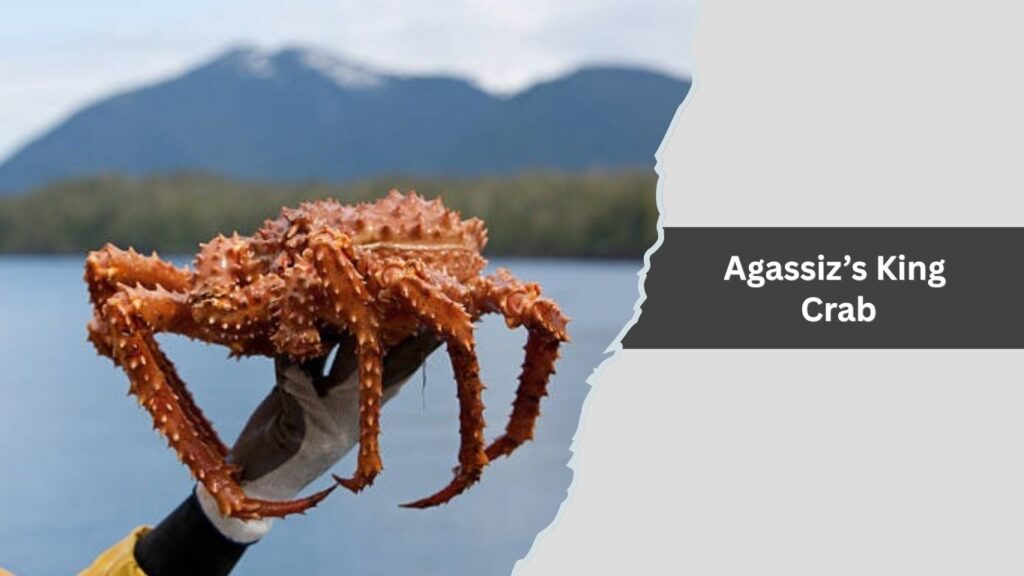
Agassiz’s king crab (Neolithodes agassizii) is a large, long-legged deep-sea king crab native to the western Atlantic Ocean. It has a pear-shaped body protected by sharp spines and is commonly associated with cold, dark continental-slope habitats. The species has also been observed feeding around deep-sea cold seeps.
Identification
- Pear-shaped carapace
- Pink, reddish pink, or deep-red body
- Sharp spines around the shell margins
- Smaller spines and bumps across the upper shell
- Very short rostrum between the eyes
- Long and slender walking legs
- Rear walking legs are the longest
- Right claw thicker than the left
- Slightly curved leg tips with small spines
Habitat and Distribution
Agassiz’s king crab occurs in the western Atlantic, including the Gulf of Mexico, southwestern Caribbean, equatorial waters, and coastal areas extending south to Brazil. It inhabits the continental slope at depths of approximately 200–1,900 metres.
The crab usually lives on muddy, rocky, or mixed deep-sea bottoms. It may also gather around cold seeps where mussels, worms, and other specialized animals provide feeding opportunities.
Size and Color
A large adult female recorded during the original description had a carapace measuring about 12.3 centimetres long and 11.7 centimetres wide. Its exceptionally long walking legs make the complete animal appear several times wider than its central body.
Living individuals commonly appear pink, reddish pink, scarlet, or deep red. The spine tips and leg joints may be paler, while juveniles can display proportionally longer and more noticeable spines.
Diet and Behavior
Agassiz’s king crabs are deep-sea predators and scavengers. They have been directly observed eating cold-seep mussels and probably consume marine worms, mollusks, echinoderms, smaller crustaceans, carrion, and other animal material.
They walk slowly across the seabed using their long legs. Their dense spines provide protection, while their claws allow them to grasp prey and tear apart food.
23. Brodie’s King Crab
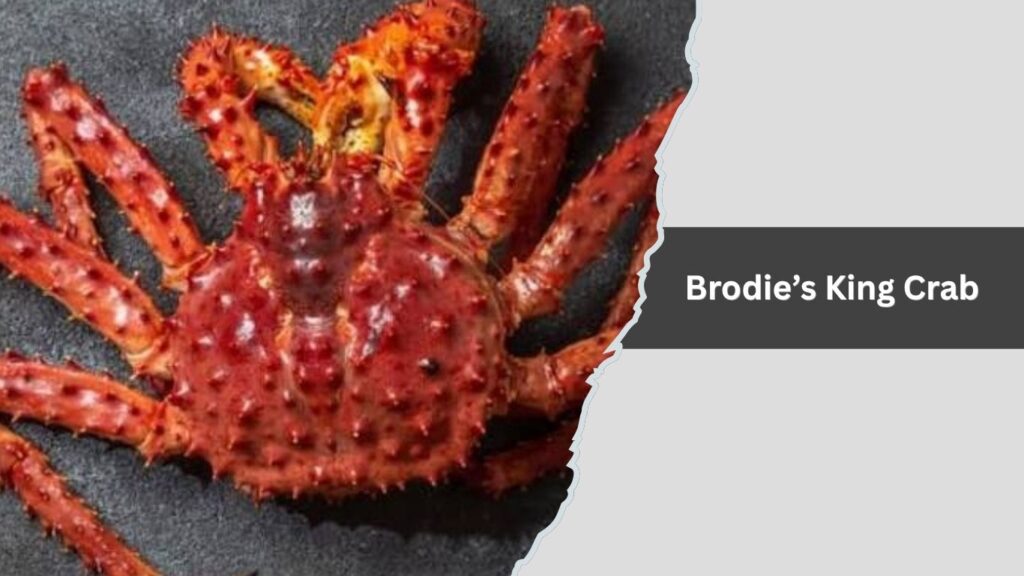
Brodie’s king crab (Neolithodes brodiei) is a large, bright-red deep-sea species native to New Zealand and nearby waters. It is one of the most widespread king crabs in the region and is recognized by its long legs, pear-shaped body, and combination of small spinules and larger defensive spines.
Identification
- Pear-shaped carapace
- Uniform bright-red or deep-red coloration
- Numerous small granules and spinules
- Longer major spines scattered across the shell
- Three-pointed rostrum
- Long, slender walking legs
- Third pair of walking legs is the longest
- Unequal claws of similar overall length
- Spines extending across the legs and claws
Habitat and Distribution
Brodie’s king crab occurs throughout the New Zealand region, from the southern Norfolk Ridge to the Campbell Plateau and southern Louisville Ridge. It lives at depths of approximately 500–1,240 metres but is most commonly recorded between 950 and 1,150 metres.
It inhabits cold continental-slope environments with muddy, rocky, gravelly, or mixed seafloors. It is regarded as one of the most common and widely distributed king crabs in New Zealand’s deep waters.
Size and Color
This is the second-largest king crab known from New Zealand. Its carapace can reach approximately 16.6 centimetres long and 16.2 centimetres wide. Its longest walking legs may measure nearly three times the length of the carapace.
The body, claws, walking legs, and spines are usually uniformly bright red or deep red. Smaller granules cover much of the shell, while larger spines create a heavily armored appearance.
Diet and Behavior
The natural diet of Brodie’s king crab has not been studied in detail. Based on its claws and the feeding habits of related deep-sea king crabs, it probably consumes mollusks, worms, echinoderms, small crustaceans, carrion, and organic material found along the seafloor.
It moves slowly across the deep seabed and relies on its spiny armor for protection. Females carry developing eggs beneath their folded abdomens until the larvae are ready to hatch.
24. Flinders King Crab
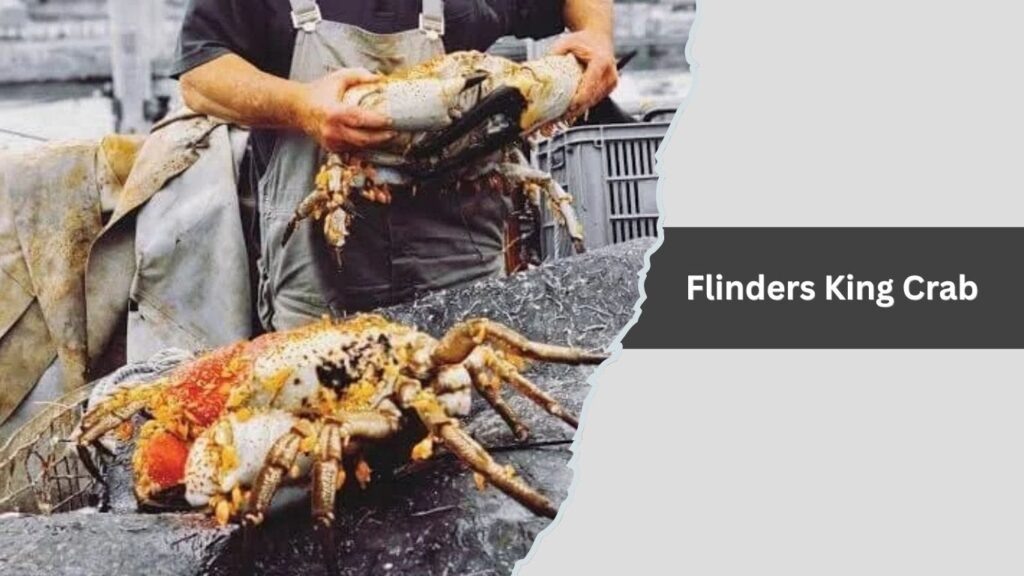
The Flinders king crab (Neolithodes flindersi) is a large deep-sea species known from southeastern Australia. Described scientifically in 2010, it was the first new Neolithodes species described from Australia and is considered the largest known Australian member of the king crab family.
Identification
- Pear-shaped carapace
- Deep-red body and walking legs
- Long, slender walking legs
- Major spines scattered across the shell
- Numerous smaller spinules between the major spines
- Third pair of walking legs is the longest
- Walking-leg spines arranged in longitudinal rows
- Short, cone-shaped spines beneath the leg bases
- One claw generally larger than the other
Its relatively short secondary leg spines, sparsely spinulated antennae, and evenly sized major spines on the walking legs help distinguish it from closely related species.
Habitat and Distribution
Flinders king crabs are known mainly from deep waters off southeastern Australia, including areas near Tasmania. Specimens have been collected at depths of approximately 887–1,333 metres, although most records fall between about 950 and 1,050 metres.
Some individuals have been collected directly from gorgonian coral colonies. These observations represented the first documented association between gorgonian corals and a lithodid king crab, suggesting that deep-sea corals may provide shelter, feeding opportunities, or elevated resting areas.
Size and Color
The Flinders king crab is a large species with a carapace that may exceed 20 centimetres in length. Its unusually long walking legs make the complete animal appear considerably larger than its central body.
Living individuals are deep red, with the upper surfaces generally appearing more vivid than the underside. The carapace, claws, and legs carry both large defensive spines and a dense covering of much smaller spinules.
Diet and Behavior
The natural diet of the Flinders king crab has not been studied thoroughly. Based on the feeding habits of related deep-sea king crabs, it probably consumes mollusks, worms, echinoderms, smaller crustaceans, carrion, and organic material encountered on the seabed. This dietary description is an inference rather than a confirmed species-specific feeding record.
Flinders king crabs move across deep continental-slope habitats using their long legs. Some individuals have also carried snailfish eggs inside their gill chambers, showing that deep-sea fish may use these crabs as protected sites for developing eggs.
25. Grimaldi’s King Crab
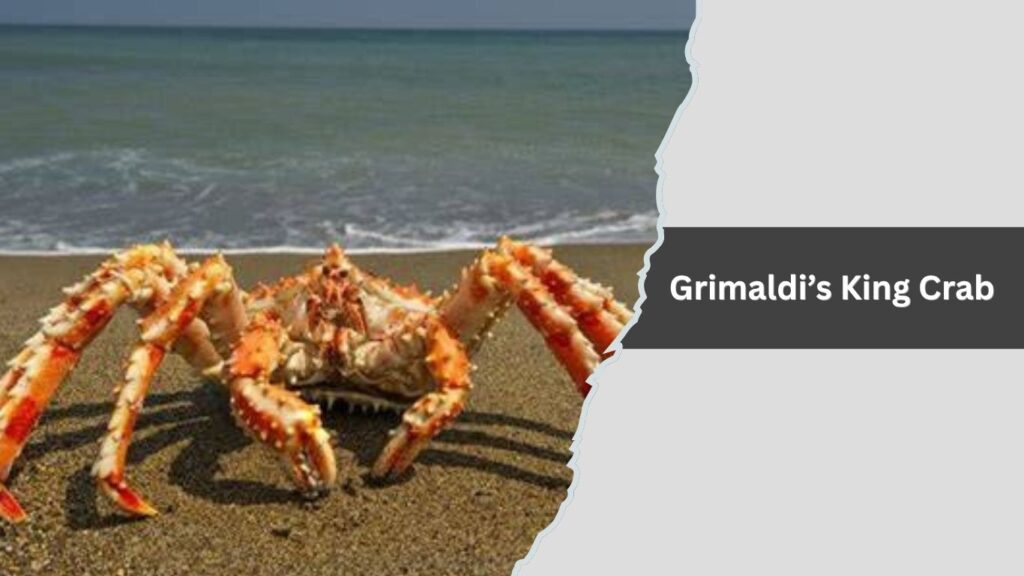
Grimaldi’s king crab (Neolithodes grimaldii) is more commonly known as the porcupine crab. It is a large, heavily spined king crab found in cold, deep areas of the North Atlantic Ocean. Its extremely long defensive spines are especially prominent in juveniles and medium-sized individuals.
Identification
- Pear-shaped or roughly pentagonal carapace
- Dark-red body
- Long, powerful walking legs
- Numerous prominent spines across the shell
- Extremely long, slender spines in younger crabs
- Shorter and thicker spines in large adults
- Long central rostral spine
- Two well-developed upper rostral spines
- Second pair of walking legs slightly longer than the others
The shell surface between the major spines is mostly smooth, although a few small granules and scattered spinules may be present. Some juvenile spines can grow nearly as long as the width of the carapace.
Habitat and Distribution
Grimaldi’s king crabs inhabit muddy continental-slope bottoms across the North Atlantic. Their range includes eastern Canada, the eastern United States, Greenland, Iceland, western Ireland, the Bay of Biscay, the Canary Islands, and Cape Verde.
The specimens examined in a major Atlantic king crab revision were collected at depths between approximately 1,267 and 3,000 metres. Other records indicate that the species can occur even deeper, making it one of the most deep-living members of the family.
Size and Color
Examined males ranged from 7 to 152 millimetres in carapace length, while females ranged from 12 to 153 millimetres. The long walking legs and projecting spines make mature individuals appear much larger than their carapace measurements suggest.
Living Grimaldi’s king crabs are generally dark red or scarlet. The spine tips and underside may appear slightly paler. Younger specimens have proportionally longer, thinner spines, while adults develop shorter, thicker, and more robust defensive projections.
Diet and Behavior
Detailed feeding information remains limited. Grimaldi’s king crabs are probably opportunistic predators and scavengers that consume mollusks, marine worms, echinoderms, crustaceans, carrion, and other animal material available on the deep seabed. This is an inference based on related king crab species.
Some individuals remain within the same general area for months, while others travel considerable distances along the continental slope. Their slow movement is balanced by formidable armor, with dense spines helping deter predators in open deep-sea habitats.
26. Indian Deep-Water King Crab
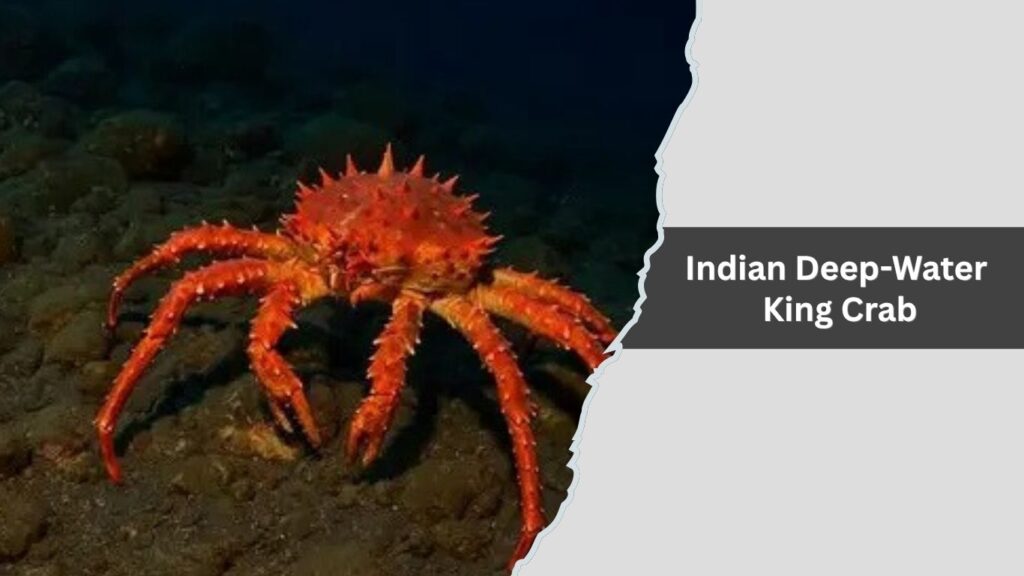
The Indian deep-water king crab (Neolithodes indicus) is a rare, heavily armored species discovered in the southeastern Arabian Sea. It was formally described in 2020 from specimens collected off Kerala, India. Its pear-shaped body, long legs, reddish-brown shell, and mixture of large spines and tiny spinules give it a formidable appearance.
Identification
- Pear-shaped carapace
- Clay-red or reddish-brown central shell
- Numerous small spinules covering the body
- Larger conical spines scattered across the carapace
- Short rostrum between the eyes
- Long and relatively slender walking legs
- Rear pair of walking legs is the longest
- Claws and legs lighter than the central shell
- Golden hairs arranged along parts of the claws
Its relatively short rostrum and less densely spinulose shell help separate it from closely related king crabs such as Brodie’s and Flinders king crabs.
Habitat and Distribution
The Indian deep-water king crab is currently known from the southeastern Arabian Sea off Thiruvananthapuram, Kerala. The specimens used to describe the species were collected from the Terrace of Trivandrum, a prominent feature on India’s mid-continental slope.
They were found at depths of approximately 1,064–1,338 metres. This environment is permanently dark, cold, and exposed to high pressure. The species probably moves across deep muddy, rocky, or mixed seabeds while searching for food.
Size and Color
This is a relatively large deep-sea king crab. The largest female specimen examined during its original description had a carapace measuring approximately 188.3 millimetres long and 169.7 millimetres wide. Its extended walking legs make the complete animal appear considerably larger.
The carapace is described as clay-like reddish brown. The walking legs and claws are lighter, with pale tan, cream, or pinkish tones. Small golden hairs are visible along the gripping surfaces of the claws.
Diet and Behavior
The natural diet and behavior of the Indian deep-water king crab have not yet been directly studied. It is probably an opportunistic predator and scavenger, feeding on mollusks, marine worms, echinoderms, smaller crustaceans, carrion, and other organic material available on the deep seafloor.
This feeding description is an inference based on the anatomy and known habits of related deep-water king crabs. Its claws can collect and tear food, while its dense covering of spines likely helps discourage predators.
27. Peruvian Centolla King Crab
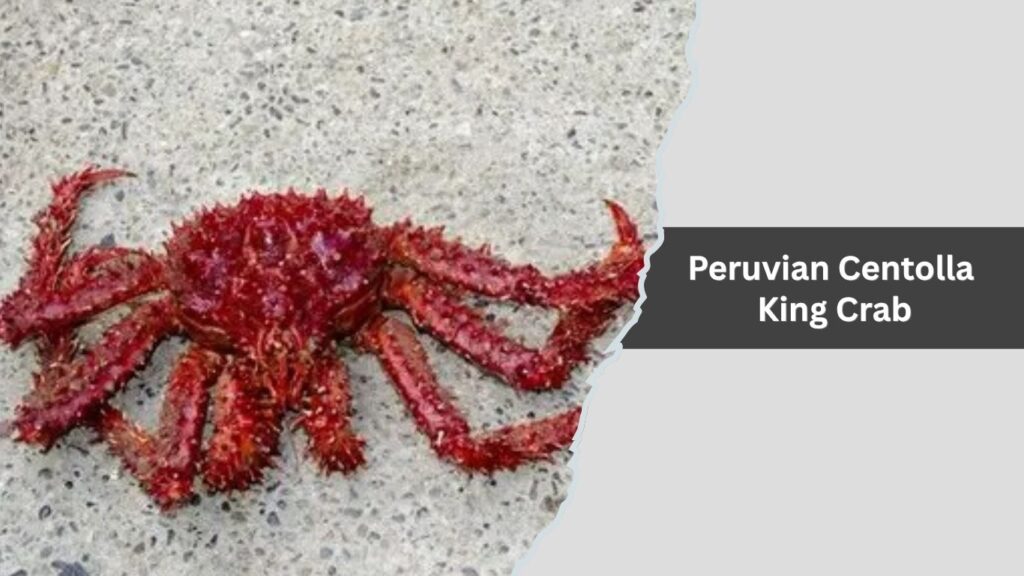
The Peruvian centolla king crab (Glyptolithodes cristatipes) is an unusual deep-water species from the eastern Pacific Ocean. It is the only recognized species in the genus Glyptolithodes. Unlike many king crabs covered with sharp spines, it has a broad, highly sculptured shell and flattened legs with raised, toothed edges.
Identification
- Carapace broader than it is long
- Numerous small granules covering the shell
- Large conical elevation on the gastric region
- Crescent-shaped ridges on the branchial regions
- Deep depression in the central cardiac region
- Short, cone-shaped rostrum
- Flattened walking legs
- Lobed or toothed leg margins
- Right claw larger in adult males
- Orange-red or reddish body coloration
The shell’s deep central depression and prominent curved ridges create a distinctive sculptured appearance not commonly seen among other king crabs.
Habitat and Distribution
Peruvian centolla king crabs occur along the eastern Pacific coast, with records from Mexico, Peru, and Chile. They are particularly associated with the continental slope off Peru, where specimens have been collected south of Banco de Máncora and near Puerto Chicama.
Documented habitats include muddy bottoms, hard sand, rocky seabeds, and mixed deep-water environments. Recorded depths range from approximately 245 to 800 metres, although the species may occupy a broader range where cold deep water occurs.
Size and Color
One documented adult male had a carapace measuring approximately 79.5 millimetres long, excluding the rostrum, and 98 millimetres wide. A recorded female measured 89.5 millimetres long when the rostrum was included. Adults have proportionally longer walking legs than juveniles.
Living individuals can appear bright orange, orange-red, or deep reddish brown. The raised ridges and granules may be lighter or darker than the remaining shell, emphasizing its heavily sculptured appearance.
Diet and Behavior
Little species-specific feeding information is available for the Peruvian centolla. It is probably an opportunistic bottom feeder that consumes mollusks, worms, echinoderms, small crustaceans, carrion, and organic material encountered across the seafloor.
Its larger right claw can crush or hold firm food, while the smaller claw manipulates softer particles. The flattened legs may help it move across mud, hard sand, and rocky surfaces. These feeding and behavioral details are partly inferred from its anatomy and related king crab species.
FAQs
How Many Species of King Crabs Are There?
There are more than 100 recognized king crab species within the family Lithodidae. They occur in cold coastal waters, deep continental slopes, and sub-Antarctic environments. The group includes familiar commercial species as well as many rare deep-sea crabs known from only a few collected specimens.
Are King Crabs True Crabs?
King crabs are not considered true crabs. They belong to the infraorder Anomura and are more closely related to hermit crabs. Their crab-like appearance developed through a process called carcinization, in which an animal gradually evolves a compact body resembling that of a true crab.
Where Do King Crabs Live?
King crabs live in oceans around the world, especially in cold and deep waters. They inhabit rocky, muddy, sandy, gravelly, and coral-covered seabeds. Some species occupy shallow northern seas, while others live thousands of feet below the surface along continental slopes and seamounts.
What Do King Crabs Eat?
Most king crabs are opportunistic predators and scavengers. They eat clams, snails, worms, sea stars, sea urchins, smaller crustaceans, fish remains, algae, and carrion. Their diet varies according to species, age, habitat, water depth, and the availability of food on the seafloor.
Which King Crab Is the Largest?
The red king crab is generally regarded as the largest commercially important king crab. Large males may have leg spans approaching five feet and can weigh more than 20 pounds. Other species can also become large, including the blue king crab, Puget Sound king crab, and Flinders king crab.