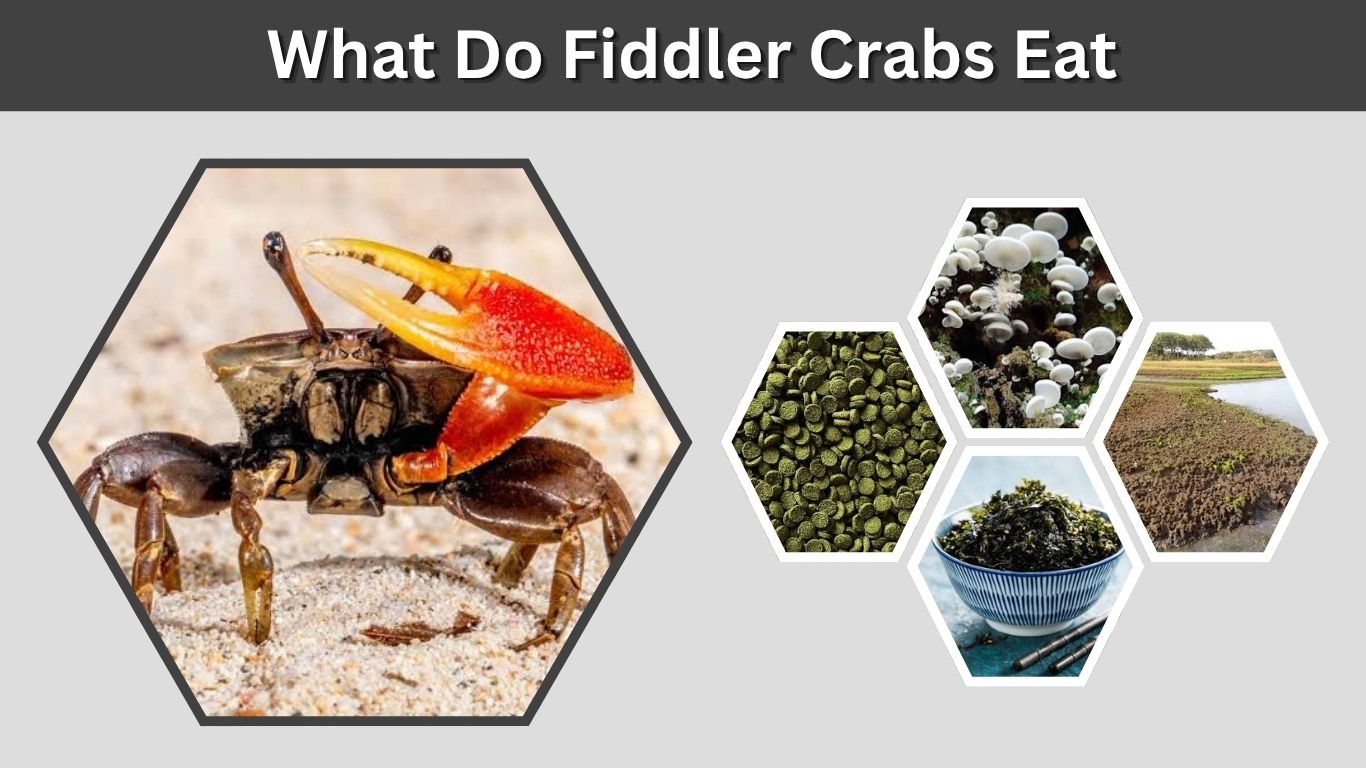
Fiddler crabs mainly eat microorganisms and decomposing organic material collected from wet sand or mud. Rather than hunting large prey, they scoop sediment into their mouths and use specialized mouthparts to separate edible particles from mineral grains. Algae, bacteria, fungi, decaying plants, and microscopic animals provide most of their nutrition. Pet fiddler crabs can also eat prepared crab pellets and small portions of suitable supplemental foods.
What Do Fiddler Crabs Eat in the Wild?
Fiddler crabs are commonly described as deposit feeders and detritivores. They forage across exposed mudflats, mangrove edges, beaches, and salt marshes during low tide. Their exact diet varies according to species, sediment type, season, and the organic material available in their habitat.
| Food | Where It Is Found |
| Algae | Sediment, rocks, and shallow water |
| Diatoms | Surface of wet sand and mud |
| Bacteria | Attached to sediment particles |
| Fungi | Decomposing plant material |
| Marsh grass detritus | Salt-marsh sediment |
| Mangrove leaf litter | Mangrove mudflats |
| Animal detritus | Decaying organic material |
| Ciliates | Waterlogged sediment |
| Meiofauna | Spaces between sand and mud particles |
| Prepared crab food | Captive habitats |
10 Foods Fiddler Crabs Eat
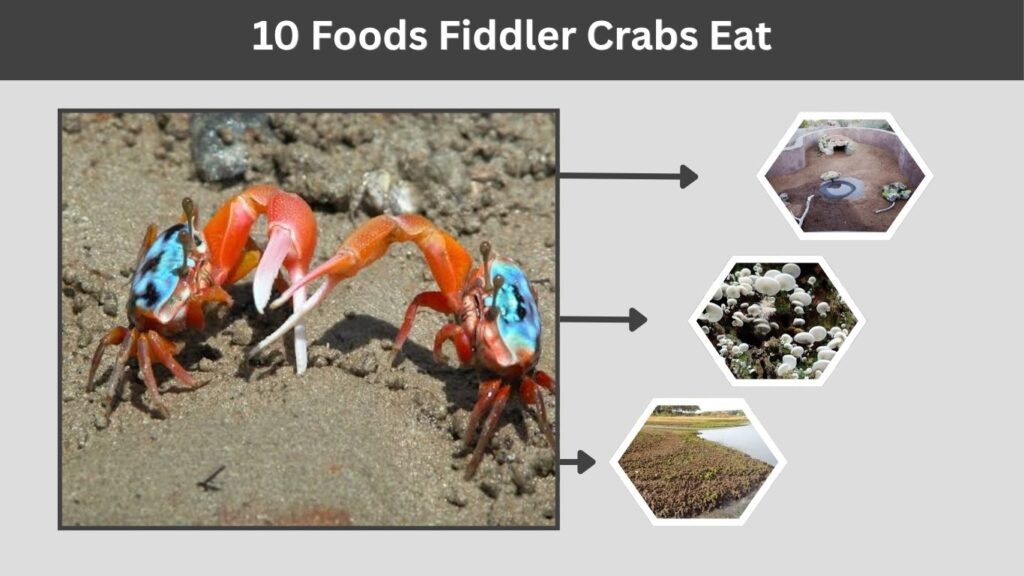
Most natural foods eaten by fiddler crabs are too small to see individually. The crab collects them while processing mouthfuls of sediment.
1. Algae
Algae are a major part of the fiddler crab diet. Microscopic algae grow on wet sediment, rocks, plant material, and other surfaces within the intertidal zone.
As the crab processes sand or mud, it removes algae and swallows them while discarding most of the mineral material. Texas Parks and Wildlife identifies algae as one of the principal foods consumed by fiddler crabs.
2. Diatoms
Diatoms are microscopic algae with hard silica-based coverings. They form nutrient-rich layers on the surface of mudflats and sandflats.
Laboratory studies have examined fiddler crabs feeding on patches of diatoms, confirming that these microorganisms can be an important component of sediment-based feeding. Some species are more efficient than others at extracting small particles from different types of sediment.
3. Bacteria
Large numbers of bacteria live on wet sand grains and decomposing organic material. Fiddler crabs can separate and ingest both free bacteria and bacteria attached to sediment particles.
Studies have found that some species extract bacteria efficiently and may assimilate bacterial food more effectively than microalgae. Feeding by fiddler crabs can therefore influence bacterial communities within mangrove and marsh sediment.
4. Fungi
Fungi help break down dead leaves, marsh grass, wood, and other organic material. Fiddler crabs consume fungal material while processing decomposing plant matter and sediment.
They do not normally search for large mushrooms. Instead, they ingest microscopic fungi and fungal growth attached to food particles. Fungi, bacteria, algae, and detritus collectively form the bulk of the diet of species such as the mudflat fiddler crab.
5. Decaying Marsh Grass
Fiddler crabs living in salt marshes consume particles from decomposing cordgrass and other marsh plants. Dead plant material is gradually softened and processed by microorganisms before becoming part of the sediment.
Virginia Institute of Marine Science describes fiddler crabs as important consumers and processors of marsh-derived organic production. Their feeding and burrowing help move nutrients through the marsh ecosystem.
6. Mangrove Leaves and Leaf Litter
In mangrove habitats, fallen leaves break down into smaller organic particles. Fiddler crabs collect this decomposing material from the muddy surface.
They generally do not eat large, fresh leaves in the same way as a leaf-eating animal. Instead, they consume softened fragments and the algae, bacteria, and fungi growing on them. Mangrove mudflats provide abundant leaf litter and detritus for deposit-feeding crabs.
7. Animal Detritus
Detritus includes dead and decaying material from both plants and animals. Tiny animal-derived particles may become mixed into the sediment and consumed during normal feeding.
Fiddler crabs are not powerful predators, but they can take advantage of edible protein already present in the mud. Their diet is determined more by the organic content of the sediment than by an ability to capture large animals.
8. Ciliates and Other Protozoans
Ciliates are microscopic single-celled organisms that live in wet sediment and shallow water. Experimental work with sand fiddler crabs found that ciliates were ingested efficiently along with bacteria and other small particles.
These organisms provide nutrients as the crab sorts edible material from sand. They are swallowed incidentally as part of the sediment’s living microbial community rather than hunted individually.
9. Meiofauna
Meiofauna are extremely small animals that live between particles of sand and mud. The group can include tiny worms, larval animals, and microscopic crustaceans.
Mud fiddler crabs are often considered detritivores that also feed on meiofauna living in marsh sediment. Fiddler-crab feeding can substantially reduce the density of these tiny organisms on an actively grazed sandflat.
10. Commercial Crab Pellets
Pet fiddler crabs can eat commercial pellets formulated for crabs or other aquatic invertebrates. Pellets are convenient because they provide a more balanced mixture of nutrients than relying on one homemade food.
Suitable supplemental foods may include algae-based foods, seaweed, small amounts of fruit or vegetables, and other foods recommended in the animal’s care instructions. Remove leftovers before they decay and pollute the enclosure.
How Do Fiddler Crabs Eat?
Fiddler crabs use their small claws to collect wet sediment and place it near their mouths. Specialized mouthparts then brush and sort the material, retaining edible organic particles while rejecting much of the sand or mud.
The processed sediment is deposited as small round pellets. Large numbers of these pellets around a burrow are evidence that a fiddler crab has recently been feeding.
Does the Large Claw Help With Feeding?
A male’s oversized claw is mainly used for communication, courtship, territorial displays, and competition. It is not the crab’s primary feeding tool.
Male fiddler crabs feed with their one small claw, while females can use both of their small claws. This means females can often collect sediment more efficiently than males.
What Should You Feed a Pet Fiddler Crab?
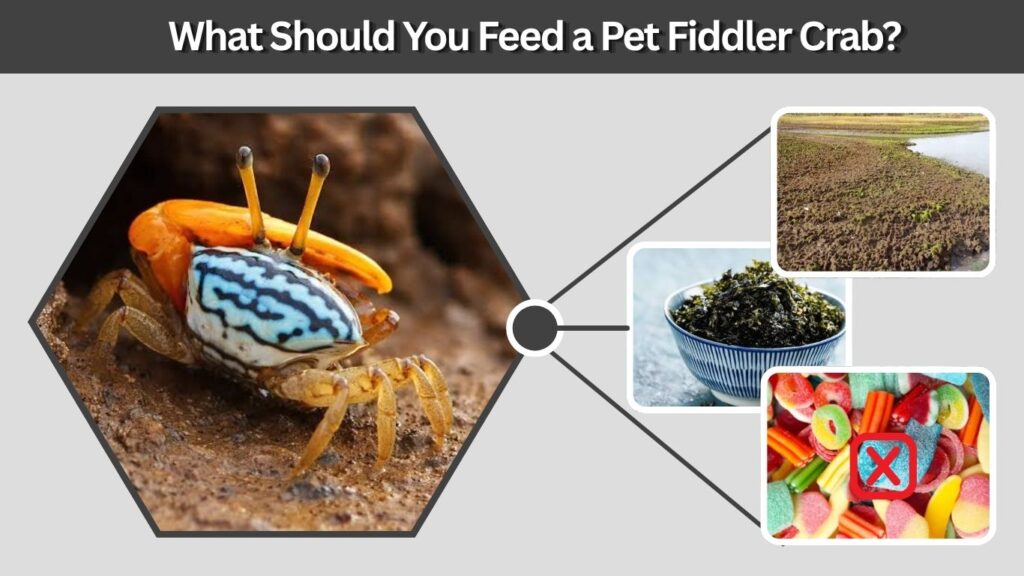
A prepared crab pellet can serve as the primary captive food. It may be supplemented with algae wafers, dried seaweed, or small portions of appropriate foods recommended for the species.
Offer only a small amount at a time and remove uneaten food before it spoils. Feeding excessive protein or allowing scraps to decay can reduce water and substrate quality. The enclosure should also provide a moist, naturalistic substrate where the crab can perform its normal sifting behavior.
Foods to Avoid
Do not regularly feed fiddler crabs salty processed meat, seasoned human food, candy, dairy products, or oily leftovers. Avoid collecting mud or plants from polluted shorelines because they may contain pesticides, heavy metals, or other contaminants.
A varied diet is preferable to relying entirely on lettuce, fruit, or one type of dried food.
FAQs
Do fiddler crabs eat algae?
Yes. Microscopic algae and diatoms growing on wet sediment form an important part of their natural diet. Fiddler crabs filter these foods from sand and mud rather than grazing only on large pieces of visible seaweed.
Do fiddler crabs eat fish?
Fiddler crabs are primarily deposit feeders rather than active fish hunters. They may consume tiny animal particles or scavenge accessible remains, but healthy fish are not a normal major part of their wild diet.
Do fiddler crabs eat plants?
They consume decomposing marsh grass, mangrove leaf litter, algae, and other plant-derived material. Dead vegetation is usually eaten after it has softened and become colonized by nutritious bacteria and fungi.
How often should pet fiddler crabs be fed?
Small portions can generally be offered regularly according to the instructions for the chosen commercial food. The correct amount depends on the number and size of the crabs. Remove uneaten food promptly to prevent spoilage.
Can fiddler crabs eat fruit and vegetables?
Pet fiddler crabs may accept small pieces of suitable fruits and vegetables, but these should be occasional supplements rather than their only food. Commercial crab food, algae-based material, and a varied diet provide more dependable nutrition.