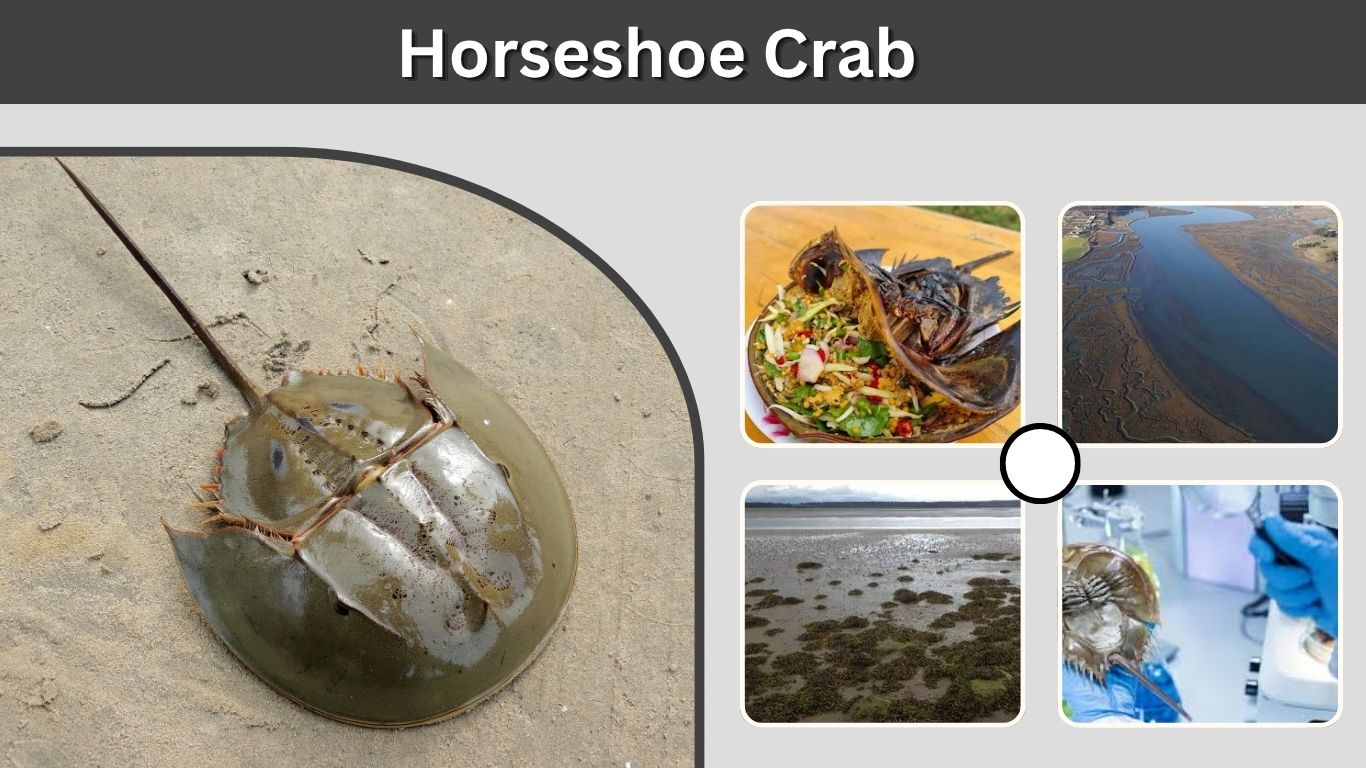
The horseshoe crab is an ancient marine animal recognized by its rounded, helmet-like shell and long pointed tail. Despite its name and crab-like appearance, it is not a true crab. Horseshoe crabs are arthropods more closely related to spiders, scorpions, and ticks than to crustaceans. They are important to coastal food webs, scientific research, and modern medicine. Their unusual blue blood, numerous light-sensitive organs, and evolutionary history make them some of the most fascinating animals living along shallow coastlines.
Horseshoe Crab Quick Facts
| Feature | Information |
| Animal type | Marine arthropod |
| Scientific name of Atlantic species | Limulus polyphemus |
| Living species | Four |
| Closest relatives | Spiders, scorpions, and other chelicerates |
| Habitat | Shallow coastal waters, bays, estuaries, and beaches |
| Diet | Worms, mollusks, crustaceans, algae, and organic matter |
| Blood color | Blue |
| Lifespan | More than 20 years |
| Maximum length | Around 2 feet, including the tail |
| Main threats | Harvesting, habitat loss, shoreline development, and fishing mortality |
What Is a Horseshoe Crab?
A horseshoe crab is a marine chelicerate rather than a true crab. True crabs belong to the crustacean group, while horseshoe crabs share a closer evolutionary relationship with arachnids. Their bodies are covered by a hard exoskeleton that protects their internal organs from predators and physical damage.
Four horseshoe crab species survive today. The Atlantic horseshoe crab, Limulus polyphemus, occurs along the Atlantic and Gulf coasts of North America and around the Yucatán Peninsula. The other three species live in coastal areas of Asia.
How Old Are Horseshoe Crabs?
Horseshoe crab ancestors appeared approximately 445 million years ago, more than 200 million years before the first dinosaurs. Their basic body design has remained recognizable for hundreds of millions of years, which is why they are frequently called “living fossils.”
However, calling them living fossils does not mean they have stopped evolving. Modern horseshoe crabs differ from their earliest ancestors, but their overall armored shape has remained remarkably successful through several major extinction events.
What Does a Horseshoe Crab Look Like?
A horseshoe crab has a broad, curved body with a hard brown, olive, or grayish shell. Its body consists of three major sections: the prosoma at the front, the opisthosoma in the middle, and the telson extending from the rear.
Main Anatomy
- Prosoma: The large horseshoe-shaped front shell containing the brain, heart, mouth, and major muscles
- Opisthosoma: The smaller rear section containing movable spines and book gills
- Telson: The long, pointed tail used for steering and turning the body upright
- Legs: Six pairs of appendages used for walking, handling food, and reproduction
- Book gills: Layered respiratory organs that absorb oxygen from water
Large adults may reach approximately 2 feet in total length when the telson is included. Females are generally larger than males.
How Many Eyes Do Horseshoe Crabs Have?
Horseshoe crabs possess multiple eyes and light-sensitive structures. The Atlantic species has a pair of large compound eyes on the upper shell, several smaller eyes near the front, and photoreceptors around other parts of its body. Different sources count these structures in slightly different ways, but the animal is commonly described as having ten eyes.
Their visual system can detect movement, light intensity, ultraviolet light, and changes between daylight and darkness. These abilities help adults navigate and coordinate spawning activities along coastal beaches.
Why Is Horseshoe Crab Blood Blue?
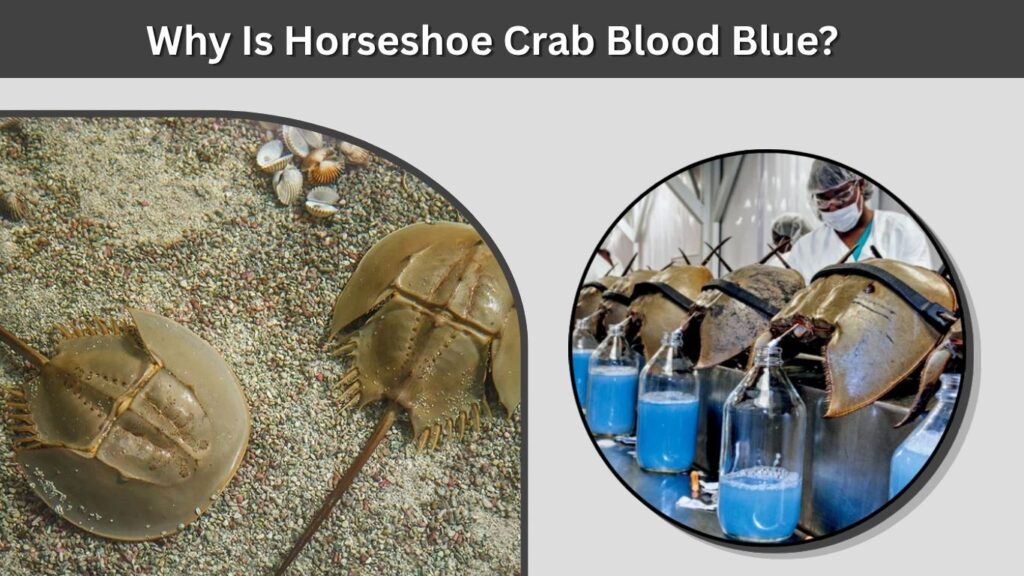
Horseshoe crab blood is blue because it uses hemocyanin to carry oxygen. Hemocyanin contains copper, while the hemoglobin in human blood contains iron. Oxygen binding to the copper-containing protein produces the distinctive blue color.
Their blood also contains specialized cells called amebocytes. These cells rapidly clot when they encounter endotoxins produced by certain bacteria. This powerful immune response protects the animal by trapping potentially dangerous contaminants.
What Is Horseshoe Crab Blood Used For?
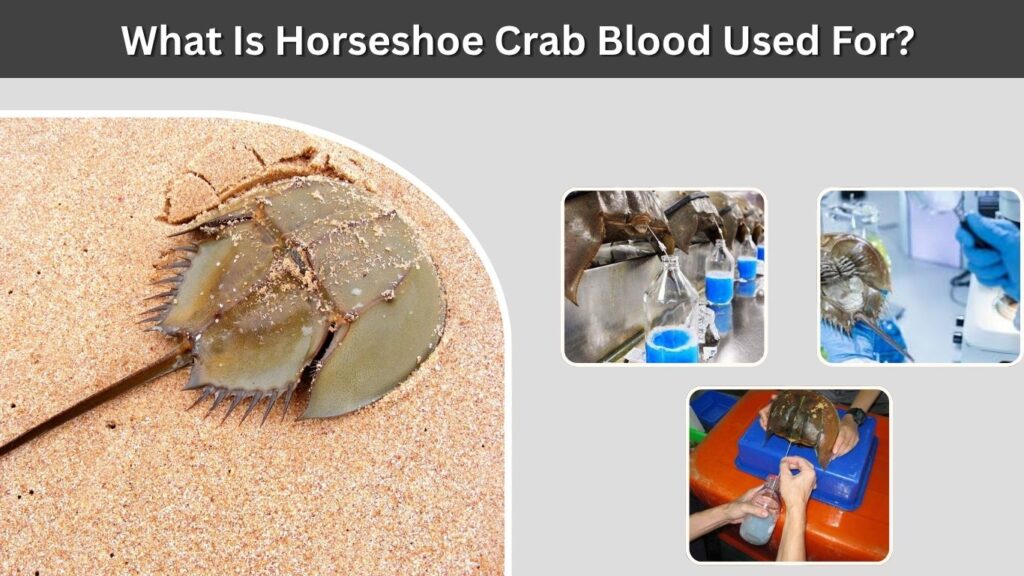
Scientists use horseshoe crab blood to produce Limulus Amebocyte Lysate, commonly called LAL. The LAL test detects bacterial endotoxins in vaccines, injectable medicines, biological products, prosthetics, and medical devices. Even a very small amount of contamination can trigger a measurable reaction.
Horseshoe crabs are collected, transported to biomedical facilities, and bled before most are released. However, some animals die following capture, handling, bleeding, or release. Recombinant Factor C tests are being developed and used as animal-free alternatives for certain endotoxin-testing applications.
Where Do Horseshoe Crabs Live?
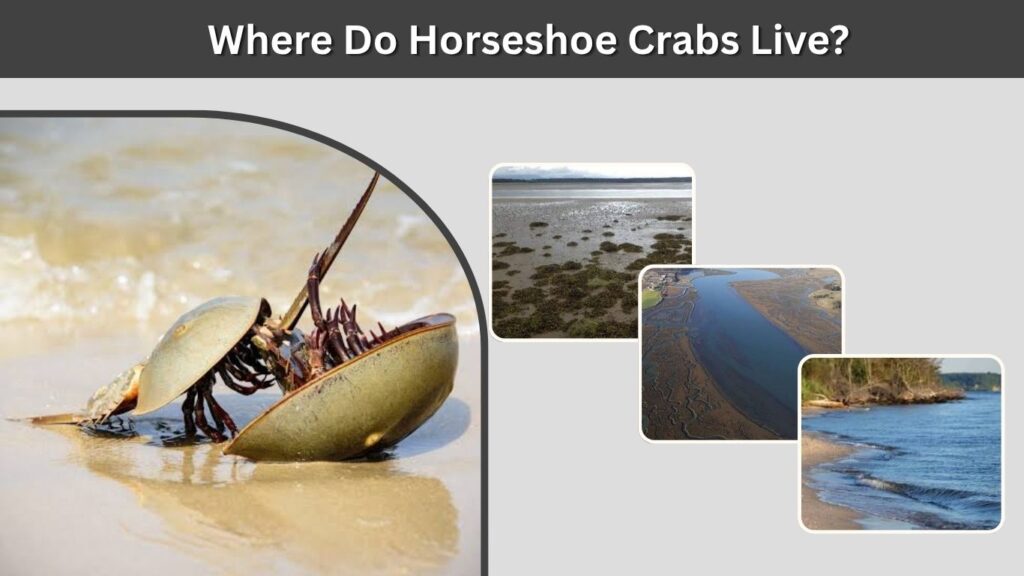
Horseshoe crabs usually inhabit shallow coastal waters with sandy or muddy bottoms. Adults may live in bays, estuaries, lagoons, and areas farther offshore. They move toward sandy beaches during spawning periods, while young crabs spend their early years in protected nearshore habitats.
The Atlantic horseshoe crab ranges from the Gulf of Maine southward through Florida, parts of the Gulf Coast, and the Yucatán Peninsula. Delaware Bay supports one of the world’s largest and best-known spawning populations.
What Do Horseshoe Crabs Eat?
Horseshoe crabs are bottom-feeding omnivores. Their diet includes:
- Marine worms
- Small clams and other mollusks
- Small crustaceans
- Algae
- Decaying organic material
They do not have jaws. Instead, they collect food with appendages near the mouth and grind it between specialized structures at the bases of their legs. Larger individuals can crush harder mollusks, while young crabs generally consume softer prey.
Horseshoe Crab Mating and Eggs
Atlantic horseshoe crabs commonly move onto sandy beaches during high tides in spring and early summer. Males attach themselves to females as the females dig shallow nests and deposit clusters of eggs beneath the sand.
A female may place approximately 4,000 eggs in one cluster and produce several clusters over multiple spawning nights. Large females may lay 100,000 or more eggs during a season. The eggs commonly hatch within two to four weeks, depending on temperature and environmental conditions.
Many eggs are uncovered by waves or digging crabs. These exposed eggs provide an important seasonal food source for migrating shorebirds, fish, turtles, and other coastal animals. More than 20 migratory bird species may consume horseshoe crab eggs.
How Long Do Horseshoe Crabs Live?
Horseshoe crabs can live for more than 20 years in the wild. They grow slowly and may not reach sexual maturity until they are around 10 years old. Young crabs molt frequently, but the intervals between molts become longer as they grow.
A baby horseshoe crab resembles a tiny adult but initially lacks the long, fully developed telson. Juveniles remain in shallow nursery areas before gradually moving into deeper water as they mature.
Are Horseshoe Crabs Dangerous?
Horseshoe crabs are not aggressive, venomous, or capable of stinging. Their pointed telson may look dangerous, but it is primarily used as a rudder and as leverage when the animal needs to turn itself upright.
Never lift a horseshoe crab by its tail because doing so can damage the joint connecting it to the body. A stranded crab should be carefully held along the sides of its shell and placed upright facing the water.
Can You Eat Horseshoe Crabs?
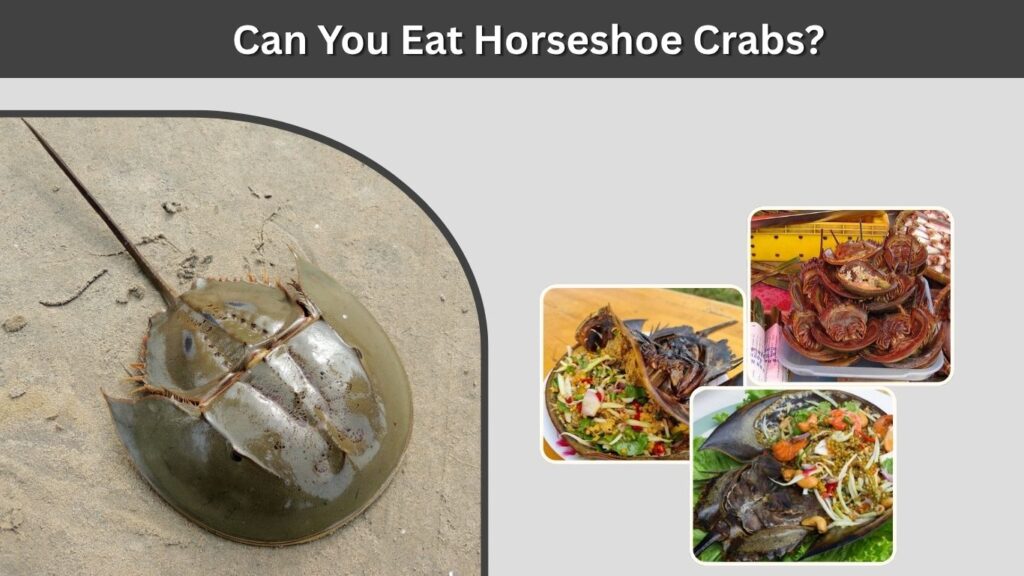
Horseshoe crab eggs and other tissues are eaten in some parts of Asia. However, consuming them can be dangerous because certain species may contain tetrodotoxin, a powerful neurotoxin. Poisoning cases have been reported after people consumed horseshoe crab eggs in Thailand and Malaysia.
The mangrove horseshoe crab, Carcinoscorpius rotundicauda, has been associated with tetrodotoxin poisoning, including specimens studied in Bangladesh. Therefore, people should not collect or eat wild horseshoe crabs without reliable species identification and local food-safety guidance.
Are Horseshoe Crabs Endangered?
Horseshoe crab conservation status varies by species and region. The 2024 Atlantic coast assessment described the coastwide Atlantic horseshoe crab population as being in good condition, but regional differences remained. Delaware Bay and the Southeast were rated good, the Northeast was stable or neutral, and the New York region remained poor.
Threats include harvesting for fishing bait, biomedical collection, accidental capture, beach development, shoreline hardening, pollution, and loss of spawning habitat. Protecting horseshoe crabs also benefits shorebirds and other animals that depend on their eggs.
FAQs
Do horseshoe crabs sting with their tails?
No. A horseshoe crab’s tail does not contain venom and cannot sting like a stingray. The animal uses it for steering and turning itself upright. People should never pick up a horseshoe crab by the tail because the joint can be injured.
Are horseshoe crabs actually arachnids?
Horseshoe crabs are not arachnids, but both belong to the broader chelicerate group. This makes horseshoe crabs more closely related to spiders, scorpions, mites, and ticks than to true crabs, lobsters, or shrimp.
Why is horseshoe crab blood valuable?
Its blood contains amebocytes that clot when exposed to bacterial endotoxins. Laboratories use this reaction to test medicines and medical equipment for contamination. Its medical usefulness and limited natural supply have made the blood economically valuable.
Can a horseshoe crab survive outside water?
A horseshoe crab can survive outside water temporarily when its book gills remain moist. However, prolonged exposure to heat, dryness, or direct sunlight can be fatal. Stranded animals should be gently returned to the water without being lifted by their tails.
Can horseshoe crabs be kept as pets?
Keeping one is difficult because it needs a large, mature marine aquarium with deep sand, strong filtration, stable salinity, and plenty of bottom space. Horseshoe crabs grow large and may disturb rocks or aquarium decorations, making them unsuitable for most home tanks.