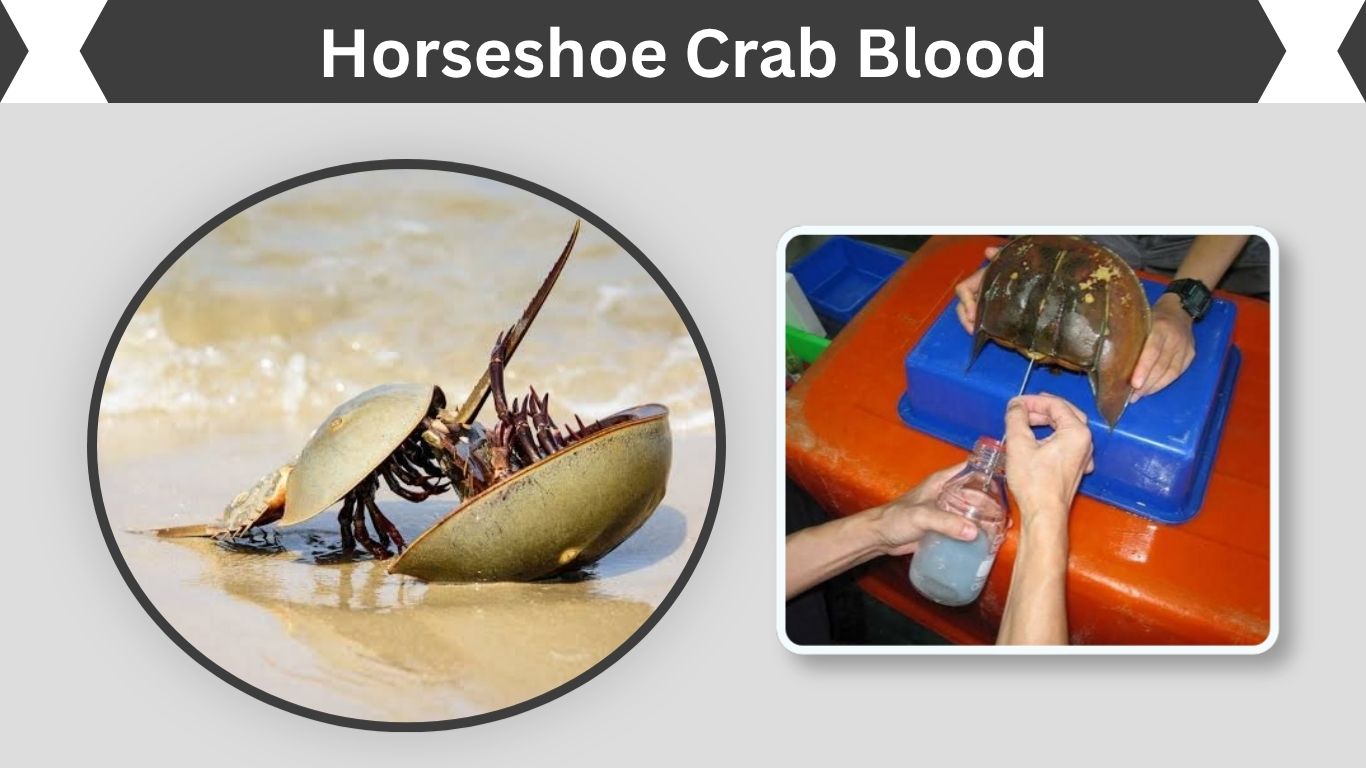
Horseshoe crab blood is one of the most unusual and medically valuable substances found in nature. Its vivid blue color comes from a copper-based oxygen-carrying protein, but its real importance lies in its ability to react quickly to bacterial endotoxins. For decades, pharmaceutical and medical-device manufacturers have used material derived from this blood to help protect patients from contaminated products. Questions about its uses, harvesting, cost, medical role, and synthetic alternatives have also raised growing scientific and conservation interest.
Horseshoe Crab Blood Quick Facts
| Feature | Information |
| Proper biological term | Hemolymph |
| Blood color | Bright blue when oxygenated |
| Oxygen-carrying protein | Hemocyanin |
| Important blood cells | Amebocytes |
| Main medical product | Limulus amebocyte lysate |
| Common abbreviation | LAL |
| Primary purpose | Detecting bacterial endotoxins |
| Source species | Mainly the Atlantic horseshoe crab |
| Animal-free alternatives | Recombinant Factor C and recombinant cascade reagents |
Why Is Horseshoe Crab Blood Blue?
Horseshoe crab blood is blue because it uses hemocyanin to transport oxygen. Hemocyanin contains copper. When its copper binds with oxygen, the blood takes on a bright blue appearance.
Human blood uses iron-containing hemoglobin, which becomes red when carrying oxygen. The color difference therefore comes from the metal and protein used to move oxygen through the body. Technically, horseshoe crabs have hemolymph rather than blood because their circulatory fluid directly surrounds many internal tissues.
The blue color itself is not what makes the hemolymph medically useful. Its value comes mainly from specialized immune cells known as amebocytes.
What Is Horseshoe Crab Blood Used For?
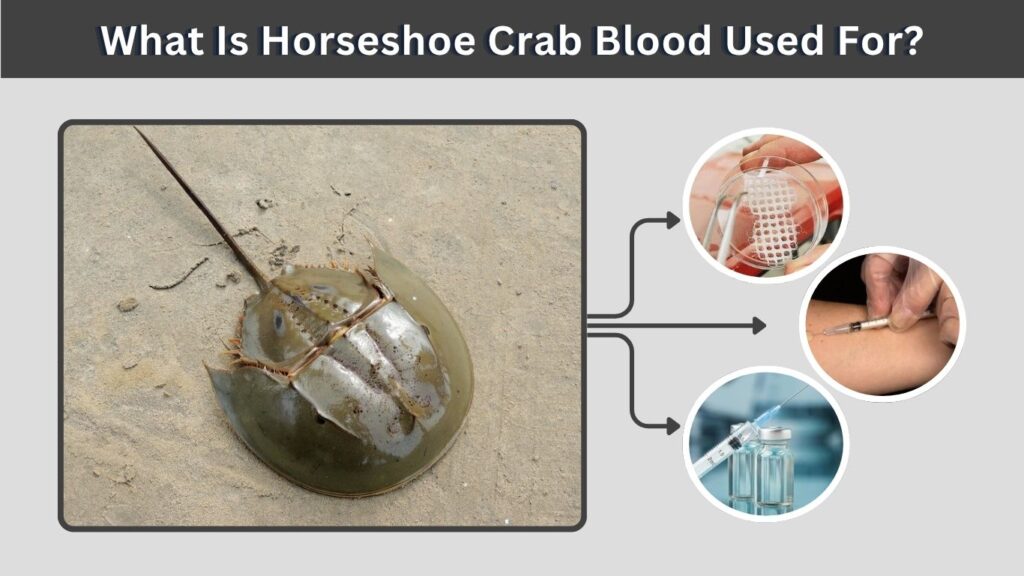
Horseshoe crab blood is used to produce Limulus amebocyte lysate, or LAL. Laboratories use LAL to detect endotoxins produced by Gram-negative bacteria.
Endotoxins can cause fever, inflammation, shock, or other serious reactions when they contaminate products introduced into the human body. LAL testing is therefore used during the production and quality control of:
- Injectable medicines
- Vaccines
- Intravenous solutions
- Biological products
- Surgical implants
- Needles and medical equipment
- Certain medical devices
The LAL test is extremely sensitive and can detect very small quantities of endotoxin. Depending on the test format, exposure to endotoxin may cause the reagent to form a gel, become cloudy, or produce a measurable color change.
How Does Horseshoe Crab Blood Detect Endotoxins?
Horseshoe crabs live in coastal environments filled with microorganisms. Their immune system must respond quickly when bacteria enter through an injury.
Amebocytes in their hemolymph contain proteins that initiate a clotting cascade when exposed to bacterial endotoxin. The resulting clot surrounds the contaminating material and helps prevent it from spreading through the animal’s body.
Scientists adapted this natural defense mechanism into the LAL test. When a medical sample is mixed with LAL, a reaction indicates that endotoxin may be present. Manufacturers must validate the method carefully because acidity, alkalinity, viscosity, chemicals, and other product characteristics can interfere with test performance.
Is Horseshoe Crab Blood Used in Vaccines?
Horseshoe crab blood is not normally an ingredient in vaccines. Instead, LAL derived from the blood is used as a testing reagent during vaccine development and manufacturing.
A sample of the product may be tested for bacterial endotoxins before the vaccine is released. The purpose is to confirm that the vaccine meets applicable safety and quality requirements. Similar testing may be performed on injectable drugs, production materials, water, containers, and manufacturing equipment.
How Is Horseshoe Crab Blood Harvested?
Atlantic horseshoe crabs are collected from coastal waters and transported to biomedical facilities. A needle is generally inserted into an area near the animal’s heart, allowing some of its hemolymph to drain into a sterile container.
The collected blood is processed to isolate the amebocyte material used in LAL production. Most crabs collected solely for biomedical use are returned to the waters from which they were taken. NOAA describes the process as removing about one-third of an animal’s blood, although the actual amount can depend on its size and the facility’s practices.
Does Harvesting Horseshoe Crab Blood Kill Them?
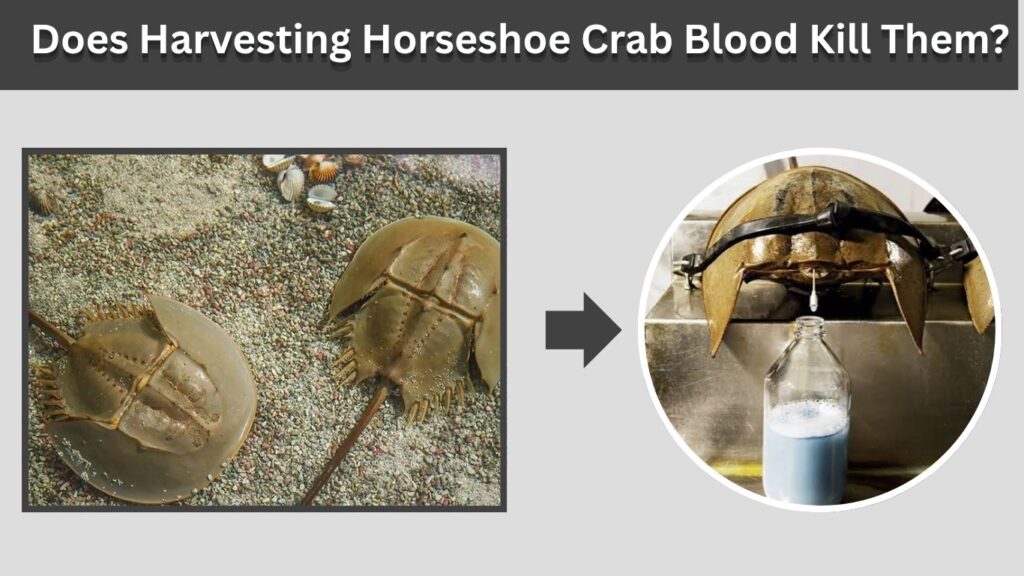
Biomedical bleeding is not intended to kill horseshoe crabs, but not every animal survives collection, transportation, bleeding, and release. Researchers have also documented temporary behavioral and physiological effects among some surviving animals.
One controlled study reported an 18% mortality rate and found reduced movement and hemocyanin levels after bleeding. Another field study found that recently bled crabs—especially females—were less likely to approach spawning beaches during the first week after release. Outcomes can vary with handling, environmental conditions, holding time, blood loss, and recovery practices.
In 2024, approximately 1.07 million Atlantic horseshoe crabs were collected coastwide solely for biomedical purposes. Estimated biomedical mortality was 184,693 animals, according to the Atlantic States Marine Fisheries Commission.
Why Is Horseshoe Crab Blood So Valuable?
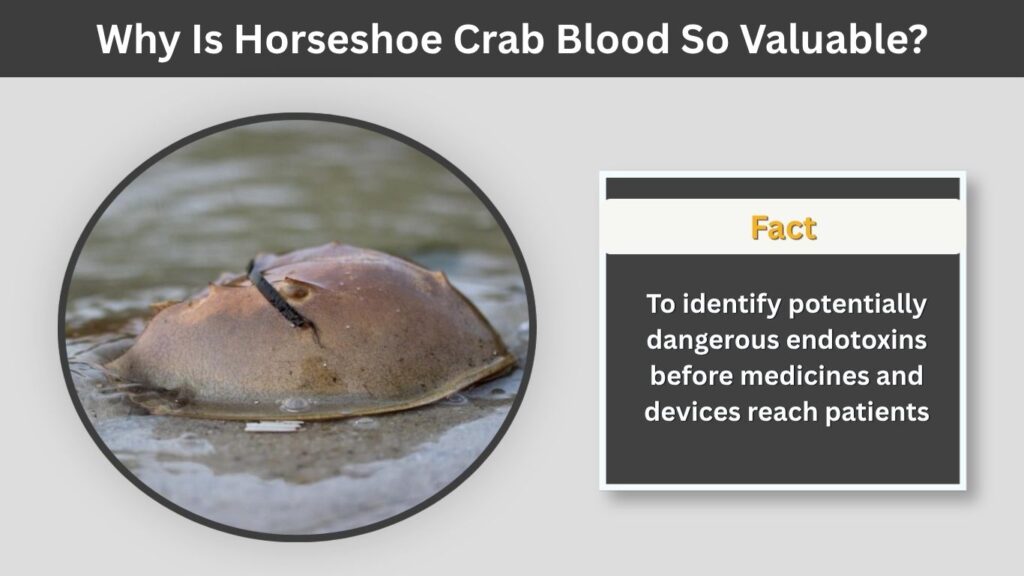
Horseshoe crab blood is valuable because LAL provides a sensitive way to identify potentially dangerous endotoxins before medicines and devices reach patients. Producing the reagent involves collecting live animals, processing their amebocytes under controlled conditions, maintaining quality standards, and manufacturing specialized testing kits.
Claims that horseshoe crab blood has one fixed price per ounce, quart, or kilogram can be misleading. Raw hemolymph is not traded like an ordinary retail commodity. The commercial value commonly discussed online may represent processed LAL reagent, laboratory testing products, or estimates of the wider industry rather than the price paid for untreated blood.
Therefore, there is no single reliable retail figure that accurately answers how much every ounce or kilogram is worth. The price depends on processing, purity, sensitivity, formulation, manufacturer, and the type of testing kit.
Are There Synthetic Alternatives?
Recombinant Factor C, commonly shortened to rFC, is a nonanimal-derived alternative. It reproduces Factor C, the component of the horseshoe crab clotting pathway that responds to bacterial endotoxin. Recombinant cascade reagent, or rCR, recreates several components of the natural cascade.
USP General Chapter <86> describes bacterial endotoxin testing with recombinant reagents. FDA has also revised its guidance to give manufacturers greater flexibility to use validated recombinant methods. However, manufacturers remain responsible for confirming that a selected assay performs properly with their specific product.
These alternatives may reduce dependence on wild horseshoe crabs while providing more standardized production. They do not automatically replace LAL in every application; suitability and regulatory requirements must be evaluated for each use.
Why Horseshoe Crab Conservation Matters
Horseshoe crabs have ecological importance beyond biomedical testing. Their eggs provide food for migrating shorebirds, fish, turtles, and other coastal animals. Population management must therefore balance biomedical collection, fishing bait demand, spawning success, and the needs of wildlife that depend on the crabs.
For 2026 and 2027, managers maintained a zero-female bait harvest for Delaware Bay-origin horseshoe crabs while permitting a limited male harvest. Biomedical collection is managed separately, but its mortality is incorporated into population assessments.
FAQs
What color is horseshoe crab blood?
Oxygenated horseshoe crab blood is bright blue. The color comes from hemocyanin, a copper-containing protein that carries oxygen. Human blood appears red because it relies on iron-containing hemoglobin instead.
Is horseshoe crab blood medicine?
The blood itself is not generally administered as medicine. Material extracted from it is processed into LAL, a laboratory reagent used to test medicines, vaccines, and medical devices for bacterial endotoxins.
How much blood is taken from a horseshoe crab?
The quantity varies according to the crab’s size and collection practices. NOAA states that approximately one-third of an animal’s blood may be removed before it is released. Excessive blood loss and stressful handling can affect survival and recovery.
Do ordinary crabs have blue blood?
Many crustaceans use copper-containing hemocyanin and may have bluish hemolymph when it is oxygenated. However, horseshoe crabs are not true crabs; they are chelicerate arthropods more closely related to spiders and scorpions.
Can synthetic tests completely replace horseshoe crab blood?
Recombinant tests can replace animal-derived LAL in certain validated applications. Current standards recognize rFC and rCR methods, but laboratories must verify that the selected test is suitable for the particular drug, material, or medical device being examined.