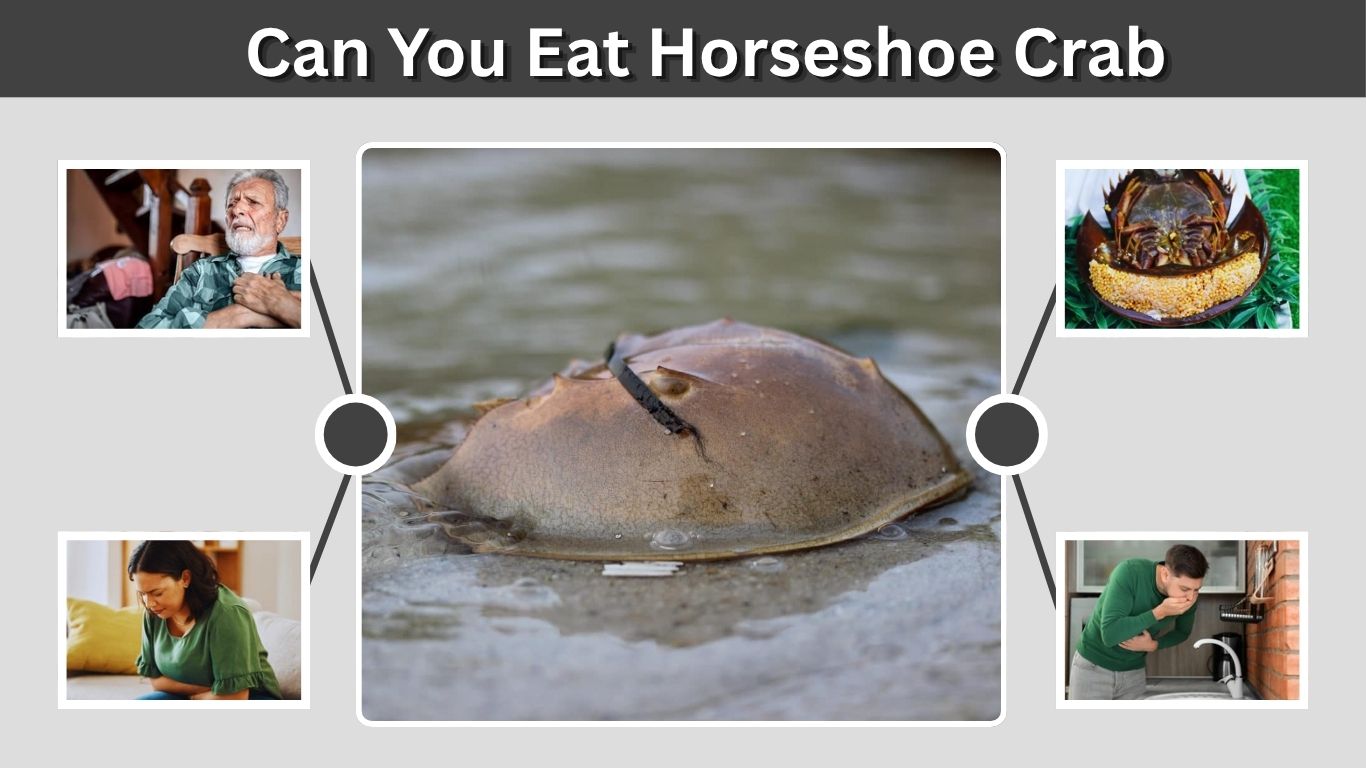
Horseshoe crabs are eaten in parts of Asia, particularly for their eggs, but that does not mean every species is safe to consume. Some horseshoe crabs may contain tetrodotoxin, a powerful neurotoxin capable of causing paralysis, respiratory failure, and death. Cooking does not reliably destroy this toxin. Because species identification is difficult and harvesting may be restricted, eating a wild or self-caught horseshoe crab is not recommended. These ancient marine animals are generally more valuable alive, supporting coastal food webs and biomedical research.
Can You Eat Horseshoe Crabs?
Technically, certain horseshoe crabs and their eggs are consumed as seafood in parts of Southeast Asia. However, the practical safety answer is no—you should not eat a horseshoe crab unless it comes from a regulated food source and has been identified and prepared by qualified local professionals.
Horseshoe crab poisoning has occurred after people ate eggs contaminated with tetrodotoxin. The CDC lists horseshoe crabs among marine animals capable of carrying this toxin and reports poisoning associated with horseshoe crab eggs in Thailand and Malaysia.
What Part of a Horseshoe Crab Is Eaten?
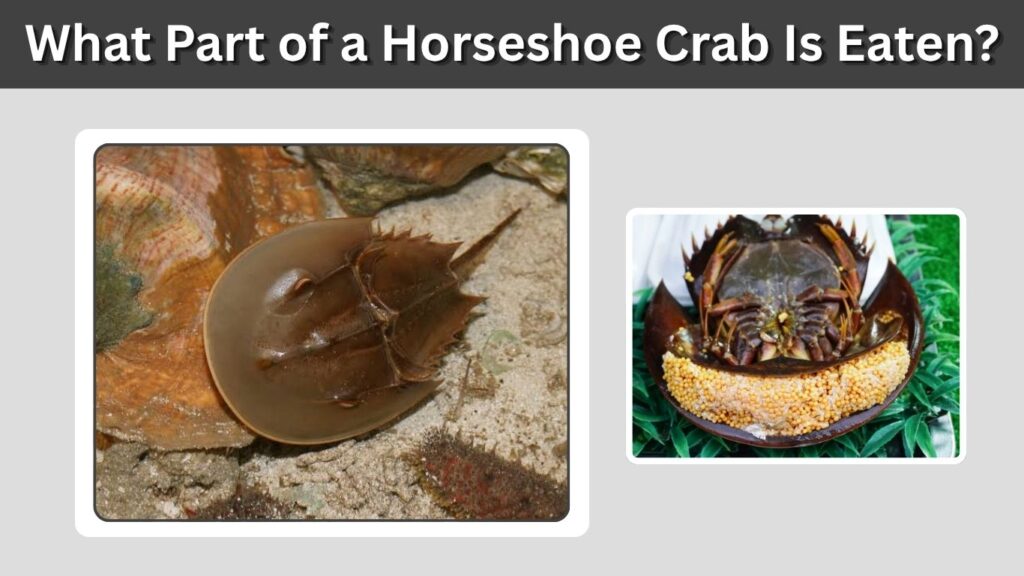
Where horseshoe crabs are traditionally consumed, people generally seek the eggs rather than the animal’s body meat. The eggs may be grilled, mixed into salads, or prepared with regional sauces.
However, eggs are also among the tissues in which dangerous toxins may occur. Studies involving the mangrove horseshoe crab, Carcinoscorpius rotundicauda, have detected tetrodotoxin in its eggs, internal organs, and reproductive tissues. An outbreak in Thailand affected more than 100 people after they consumed toxic horseshoe crab eggs.
Why Can Horseshoe Crabs Be Poisonous?
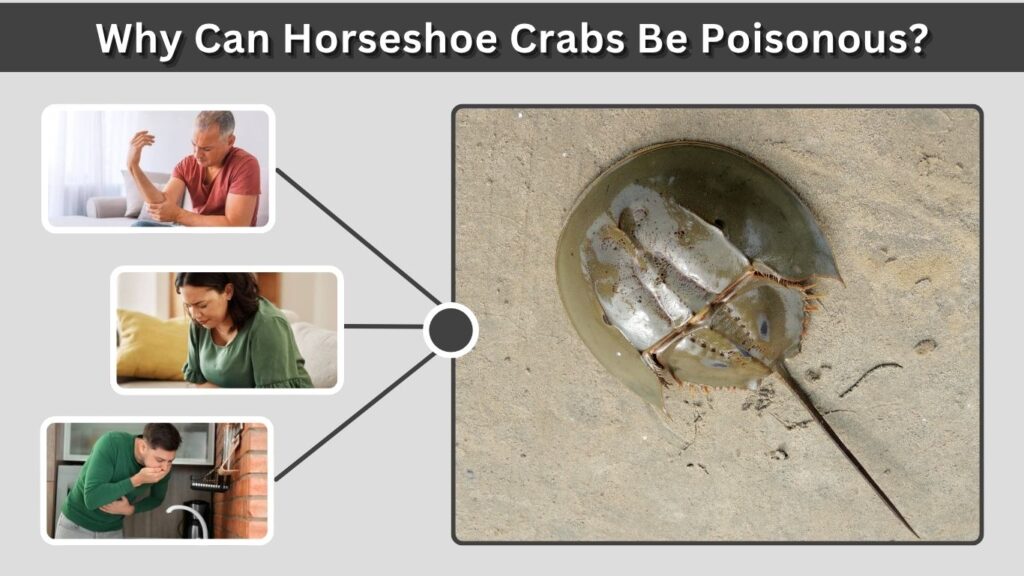
Some Asian horseshoe crabs can accumulate tetrodotoxin, commonly abbreviated as TTX. It is the same type of neurotoxin associated with certain pufferfish poisonings.
Tetrodotoxin blocks nerve signals. Symptoms can begin within minutes or several hours after eating contaminated food and may include:
- Numbness around the lips and mouth
- Tingling or loss of sensation
- Nausea and vomiting
- Dizziness and weakness
- Difficulty walking or speaking
- Muscle paralysis
- Breathing failure
- Circulatory collapse
There is no specific antidote. Severe poisoning requires urgent hospital treatment and respiratory support.
Does Cooking Make Horseshoe Crab Safe?
No. Normal cooking cannot be trusted to make a toxic horseshoe crab safe.
Tetrodotoxin is not reliably destroyed by cooking, freezing, canning, pickling, salting, or smoking. Removing a particular organ also cannot guarantee safety because toxin levels may vary among individuals, tissues, species, locations, and seasons.
Never attempt to identify an edible horseshoe crab using only its color, shell shape, tail, or information from social media. Misidentification can have fatal consequences.
Can You Eat Atlantic Horseshoe Crabs?
The Atlantic horseshoe crab, Limulus polyphemus, is not commonly regarded as human food in the United States. It is primarily valued for its ecological importance, use as regulated fishing bait, and contribution to biomedical endotoxin testing.
Harvest rules differ among states. NOAA notes that New Jersey and South Carolina prohibit horseshoe crab harvesting, while Delaware limits harvesting to males. Delaware Bay management has also established a zero-female bait harvest and a limited male harvest for 2026 and 2027. Collecting one for food, bait, sale, or a home aquarium may therefore be illegal or require authorization.
Can Horseshoe Crabs Hurt You?
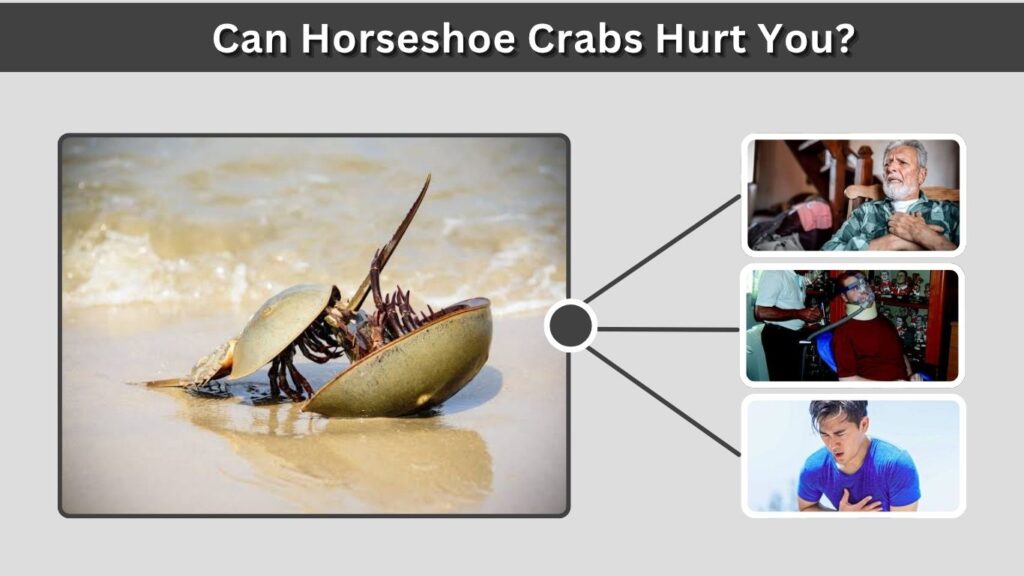
A living horseshoe crab is generally harmless. It is not aggressive, does not have venom and cannot sting with its tail. The pointed tail, known as the telson, helps the animal steer and turn itself upright after waves flip it over.
Its legs have small claws, but they are not designed to deliver a dangerous pinch. Careless handling could still cause a minor scratch, so the animal should be handled gently.
Eating a toxin-contaminated horseshoe crab is much more dangerous than touching one.
Can You Pick Up a Horseshoe Crab?
You may gently help a stranded horseshoe crab where local rules permit handling. Hold it securely along both sides of its shell and place it upright near the water.
Never lift a horseshoe crab by its tail. The connection between the telson and the body is sensitive and may be injured by the animal’s weight.
An empty shell may be a shed exoskeleton rather than a dead animal. Rules concerning the collection of shells and dead animals vary, so check with the relevant wildlife authority before taking anything from a beach.
How Long Can Horseshoe Crabs Live?
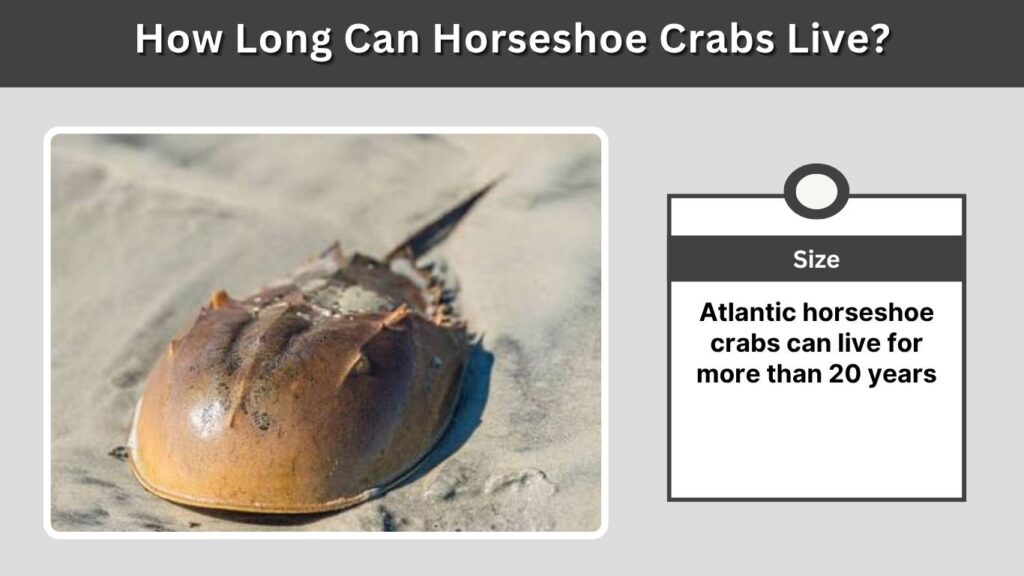
Atlantic horseshoe crabs can live for more than 20 years. They grow by shedding their exoskeletons and take several years to reach maturity. Their long lifespan means removing mature adults can affect breeding populations for many future seasons.
How Long Can They Live Out of Water?
Horseshoe crabs breathe through book gills. They can remain outside the water for extended periods when these gills stay moist, which allows adults to move onto beaches during spawning. However, they are marine animals and cannot live permanently on land. Heat, direct sunlight, dehydration, and damaged gills can eventually kill them.
How Big Can Horseshoe Crabs Get?
Large female Atlantic horseshoe crabs can reach about 24 inches from the front of the shell to the tip of the tail and weigh approximately 10–11 pounds. Males are generally 25–30% smaller than females. Size varies with sex, age, species, and geographic location.
Where Can You Find Horseshoe Crabs?
Atlantic horseshoe crabs occur from the Gulf of Maine to Florida, through parts of the Gulf Coast and around the Yucatán Peninsula. They inhabit estuaries, tidal flats, shallow coastal waters, sandy bottoms, and muddy areas.
Adults commonly approach sandy beaches during spring and early summer to spawn. Delaware Bay supports the world’s largest known spawning population of Atlantic horseshoe crabs.
Can You Keep a Horseshoe Crab as a Pet?
Horseshoe crabs may occasionally appear in the aquarium trade, but they are unsuitable for most home aquariums. A large adult may reach two feet long and requires a spacious marine tank with stable salinity, strong filtration, open bottom space, and deep sand in which it can dig.
They may overturn decorations while searching for worms, mollusks, and other bottom-dwelling food. Their size, long lifespan, specialized habitat, and possible collection restrictions make them challenging pets.
FAQs
Can horseshoe crabs kill humans?
A living horseshoe crab cannot normally kill a person by biting, pinching, or stinging. However, eating a horseshoe crab contaminated with tetrodotoxin can cause fatal poisoning through paralysis and respiratory failure.
Can horseshoe crabs bite or sting?
No. Horseshoe crabs have no venomous stinger and do not bite people in the usual sense. Their pointed tail is used for steering and righting the body, not for attacking predators or humans.
Can horseshoe crabs breathe air?
They do not breathe with lungs. Their book gills absorb oxygen and can continue working outside water while they remain moist. This allows temporary survival on a beach, but horseshoe crabs cannot live permanently on land.
Can horseshoe crabs live in freshwater?
No. Horseshoe crabs are marine and estuarine animals. Although some may tolerate changes in salinity, a permanent freshwater tank does not provide suitable conditions for their long-term health.
What should you do after eating a horseshoe crab?
Seek emergency medical attention immediately if numbness, tingling, dizziness, weakness, vomiting, difficulty speaking, or breathing problems occur. Do not wait for symptoms to become severe because tetrodotoxin poisoning can progress rapidly.