
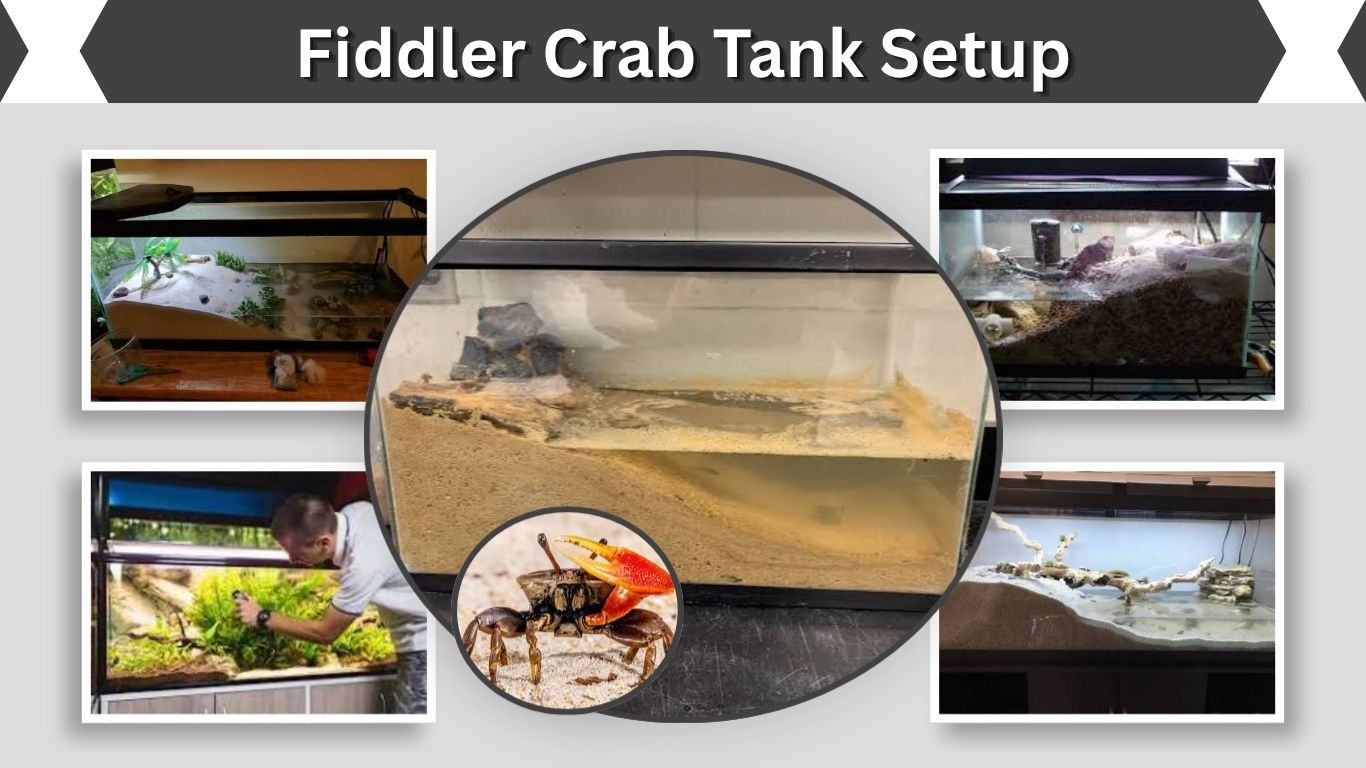
A fiddler crab tank should resemble a tidal shoreline rather than a traditional fish aquarium. These semi-terrestrial crabs require damp sand for walking and burrowing, plus shallow brackish water where they can fully submerge and climb out easily. A secure lid, stable temperature, clean water, and plenty of land space are essential. Keeping a fiddler crab permanently underwater or in ordinary freshwater can lead to stress, weakness, and early death.
Fiddler Crab Tank Requirements
Fiddler crabs naturally inhabit salt marshes, estuaries, and intertidal mud or sand flats. They retreat into burrows for shelter and emerge onto exposed sediment to feed at low tide. Their captive habitat should therefore provide both terrestrial and aquatic areas.
| Tank feature | Recommended setup |
| Tank type | Paludarium with land and water |
| Practical starting size | 10 gallons for a small group |
| Water type | Dechlorinated brackish water |
| Specific gravity | Approximately 1.005–1.010 |
| Temperature | About 75–85°F |
| Substrate | Deep, damp sand |
| Water depth | Deep enough to submerge, easy to exit |
| Lid | Secure and ventilated |
| Filter | Small internal or sponge filter |
| Tank mates | Species-only setup is safest |
What Size Tank Do Fiddler Crabs Need?
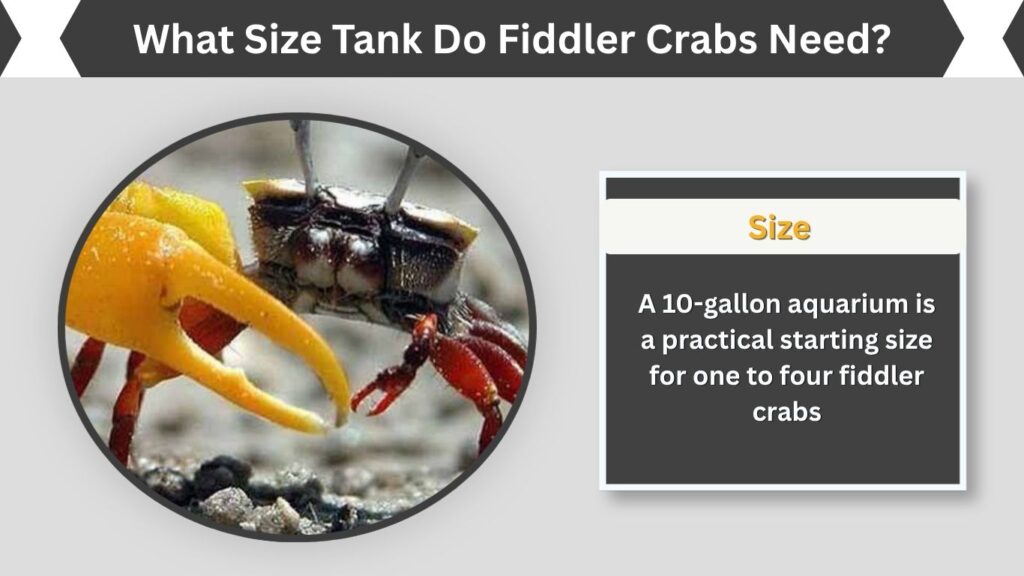
A 10-gallon aquarium is a practical starting size for one to four fiddler crabs. A wider or longer tank is generally more useful than a tall aquarium because it provides additional floor space for land, water, and individual territories. Add more space when keeping additional crabs.
Can Fiddler Crabs Live in a 5-Gallon Tank?
A five-gallon tank may be used temporarily or for a carefully managed educational display, but it provides limited room for deep substrate, a water pool, shelters, and separate territories. Carolina Biological’s classroom guide describes small terrariums for short-term educational care, but a larger home enclosure offers more stable conditions and easier maintenance.
A 2.5-gallon or one-gallon tank is too restrictive for a suitable long-term paludarium. Small tanks also experience faster changes in temperature, salinity, and water quality.
How Many Fiddler Crabs Can Live Together?
Fiddler crabs can be maintained in small groups when they have enough space. Male crabs may wave, push, and wrestle over burrows or access to females. These encounters are not always injurious, but crowding increases stress and competition.
Provide several hiding places and more usable land than the minimum when keeping multiple males.
How to Set Up a Fiddler Crab Tank
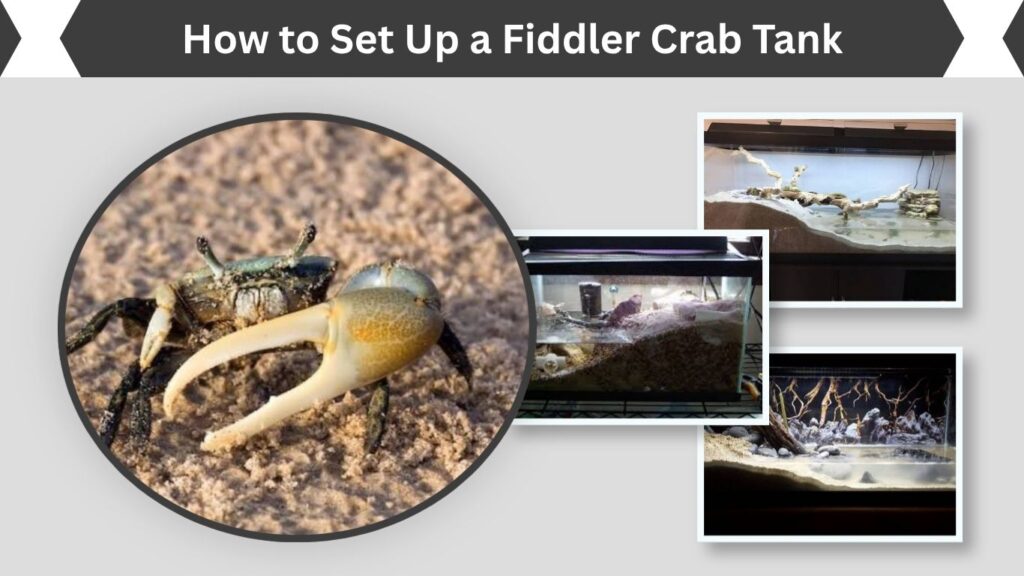
A sloping shoreline design is one of the easiest arrangements. Build a raised sandy land area at one end and allow the substrate to slope into a shallow water section at the other.
1. Add a Deep Sand Substrate
Use aquarium-safe sand that holds its shape when damp. Create a layer deep enough for digging, especially in the land section.
Burrowing is a natural behavior used for shelter, temperature control, resting, and territorial activity. Wild fiddler-crab burrows can be surprisingly deep, although a home aquarium cannot reproduce their full natural depth.
Avoid sharp gravel as the main substrate. It does not allow normal sifting and burrowing and may make walking difficult.
2. Create Land and Water Areas
Slope the sand so that a substantial portion remains above the waterline. The crab should be able to walk from the water onto land without climbing a steep or slippery wall.
The water area only needs to be deep enough for the crab to submerge completely. Rocks, driftwood, or a sandy ramp can provide safe entrances and exits. Fiddler crabs must not be forced to remain continuously underwater.
3. Prepare Brackish Water
Most fiddler crabs sold for aquariums are coastal species rather than true freshwater crabs. Prepare brackish water with dechlorinated tap water and a marine aquarium salt mix.
A specific gravity of approximately 1.005–1.010 is commonly recommended for captive fiddler crabs. Measure it with a hydrometer or refractometer instead of estimating the amount of salt.
Do not use ordinary table salt. It lacks the mineral balance of marine salt and may contain additives.
4. Install a Small Filter
A sponge filter or protected internal filter can provide gentle circulation and help control waste. Strong currents are unnecessary because fiddler crabs naturally occupy shallow shoreline environments.
Protect the intake so a crab cannot become trapped. Position cords and equipment so the animals cannot use them as escape routes.
5. Maintain the Temperature
A temperature of approximately 75–85°F is often recommended for pet fiddler crabs, although the appropriate range may vary by species. Carolina Biological recommends 68–77°F for its classroom-kept Atlantic sand fiddlers, illustrating why identifying the species is useful.
Use an aquarium thermometer and avoid rapid temperature changes. Place the tank away from direct sunlight, heaters, air conditioners, and cold drafts.
6. Add Hides and Climbing Surfaces
Use aquarium-safe rocks, driftwood, artificial plants, and small shelters to create visual barriers. Each crab should have somewhere to retreat, especially during molting.
Arrange heavy decorations securely so they cannot collapse when a crab digs beneath them.
7. Use a Secure Lid
Fiddler crabs are capable climbers and may escape through small openings around filters, air tubing, and cables. Use a close-fitting, ventilated lid and inspect every gap.
An escaped crab can quickly become dehydrated and may hide beneath furniture or appliances.
Can Fiddler Crabs Live in a Freshwater Fish Tank?
Fiddler crabs may survive in freshwater temporarily, which is why some stores incorrectly market them as freshwater aquarium animals. However, common pet-trade species generally need brackish conditions for long-term health. One red-jointed species may survive freshwater for only a limited period, while other fiddlers naturally occupy strongly brackish or salty habitats.
They should not be added directly to a betta, angelfish, cichlid, or typical freshwater community aquarium.
Fiddler Crab Tank Mates
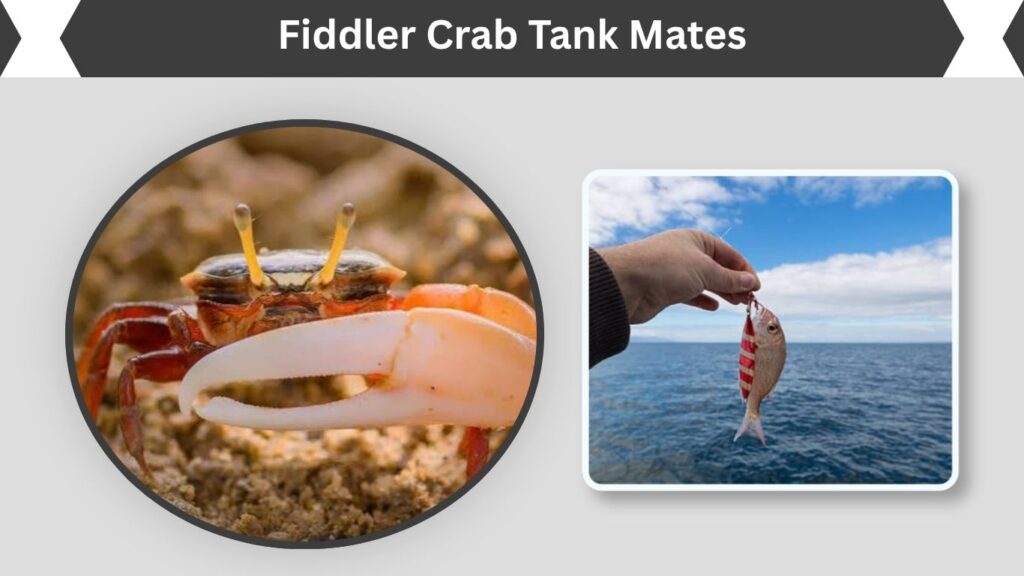
A species-only paludarium is the safest arrangement. Fish usually require more open water than a proper fiddler-crab tank provides, while the crab needs land that fish cannot use.
Small fish may be grabbed, and larger or aggressive fish may injure a molting crab. Other crab species can also compete for food, shelters, and territory. Keeping several compatible fiddler crabs together is usually more practical than creating a mixed community.
What Do Fiddler Crabs Eat in a Tank?
Fiddler crabs sift natural sediment for algae, bacteria, fungi, tiny animals, and decaying organic material. In captivity, they can eat commercial crab pellets, algae wafers, dried plankton, brine-shrimp foods, seaweed, and small vegetable portions.
Offer small amounts and remove leftovers before they decay. Food trapped in shallow water or damp sand can quickly create unpleasant odors and poor water quality.
How to Clean a Fiddler Crab Tank
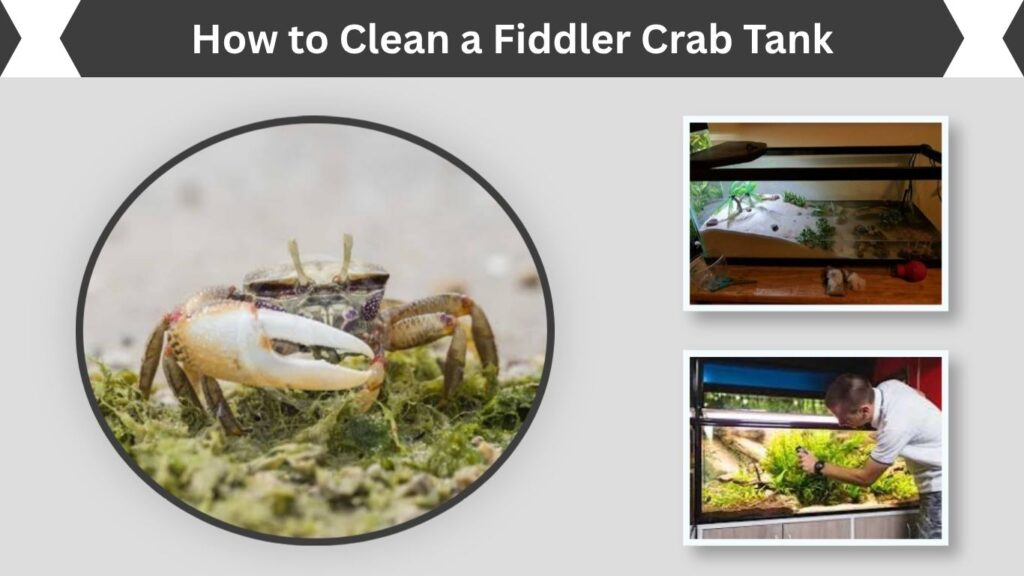
Remove uneaten food and obvious waste regularly. Perform partial water changes using newly prepared water with the same temperature and salinity as the tank.
Do not replace all the substrate during every cleaning. Instead, remove dirty patches while preserving enough suitable sand for burrowing. Clean filter media in removed tank water rather than untreated tap water when maintaining a biologically cycled aquatic section.
A bad smell commonly indicates decaying food, accumulated waste, stagnant water, or poorly maintained substrate.
Fiddler Crab Molting in the Tank
A crab may hide, stop eating, or appear inactive before and during a molt. Do not pull it from its shelter or handle it while its new shell is soft.
Leave the shed exoskeleton in the enclosure temporarily because the crab may eat it and recover minerals. Separate aggressive tank mates if they repeatedly disturb the newly molted crab.
FAQs
Can fiddler crabs live fully underwater?
No. Fiddler crabs are semi-terrestrial and require easy access to land. A completely aquatic aquarium prevents normal burrowing and shoreline behavior and may eventually cause the crab to drown or weaken.
Is a 10-gallon tank suitable for fiddler crabs?
Yes. A 10-gallon tank is a practical starting size for a small group when it contains adequate land, shallow brackish water, hiding places, and a secure lid. Larger tanks provide more stable water conditions and territory.
Do fiddler crabs need a filter?
A filter is strongly helpful but may not be essential in a very small water pool that is changed frequently. A gentle sponge or internal filter reduces waste buildup and makes water quality easier to maintain.
Can fiddler crabs live with betta fish?
They are poor tank mates. Bettas require a primarily freshwater aquatic aquarium, whereas fiddler crabs need brackish water and substantial land. The animals may also injure or stress each other.
Why did my fiddler crab disappear?
The crab may be hiding beneath sand or decorations to molt. It may also have climbed out through an opening. Check the enclosure carefully without digging up a molting crab, then inspect nearby dark spaces if escape is possible.