
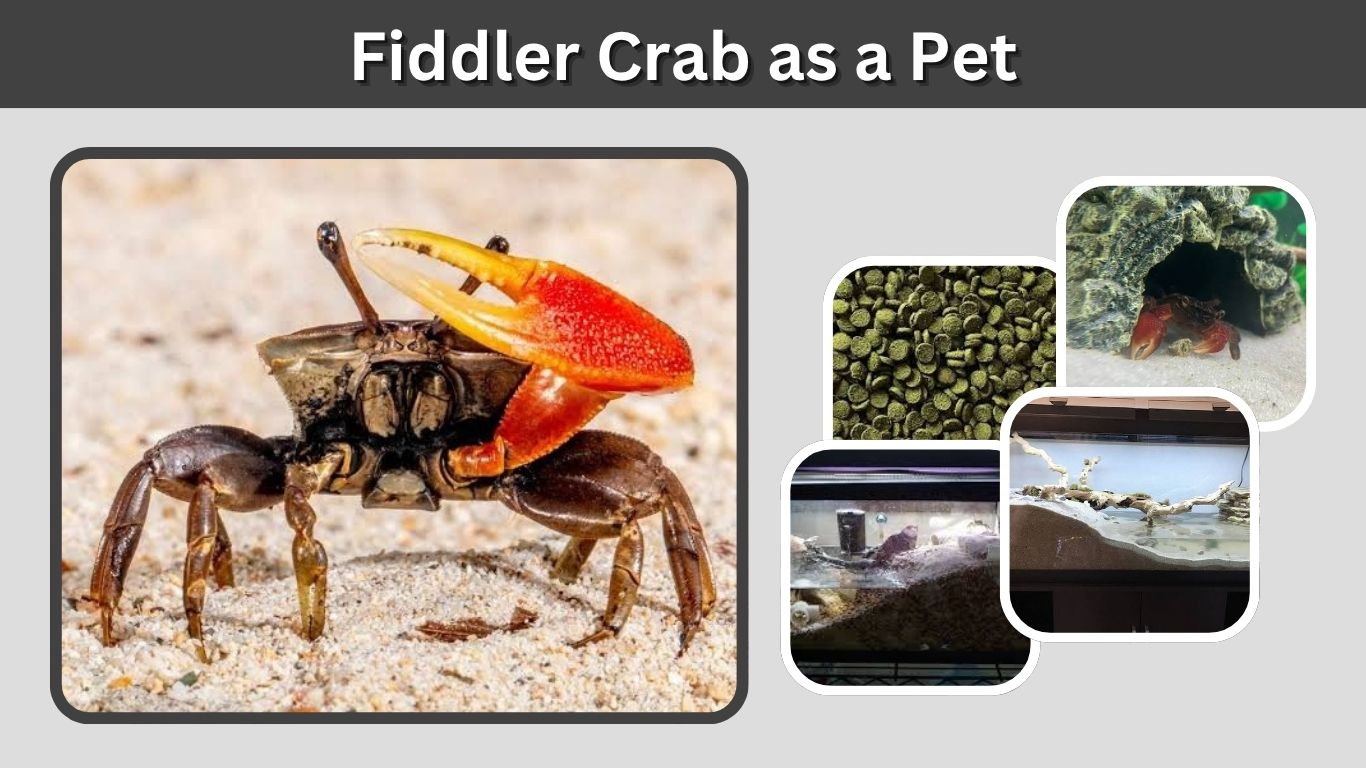
Fiddler crabs can make fascinating pets for people who enjoy observing natural behavior rather than handling their animals. They dig burrows, sift food from sand, communicate through claw movements, and interact with other crabs. However, they are not ordinary freshwater aquarium animals. Most pet fiddler crabs need a semi-terrestrial enclosure containing damp sand, accessible brackish water, hiding places, and a secure lid.
Are Fiddler Crabs Good Pets?
Fiddler crabs can be good pets for beginners who are prepared to build the correct habitat. They require less direct attention than many vertebrate pets, but maintaining appropriate water, temperature, food, and substrate still takes regular work.
They are best suited to owners who want:
- An active display animal
- A small coastal-style paludarium
- Limited handling
- Interesting feeding and burrowing behavior
- A pet that can live in a small social group
They are not suitable for someone seeking a pet that enjoys being held. Handling can stress the crab, cause falls, or damage its legs and claws.
Pet Fiddler Crab Quick Care Guide
| Requirement | Recommended care |
| Enclosure | Semi-terrestrial paludarium |
| Practical tank size | At least 10 gallons for a small group |
| Water | Dechlorinated brackish water for most species |
| Land area | Damp sand with room for burrowing |
| Temperature | Approximately 68–77°F or species-appropriate warmth |
| Diet | Crab pellets, algae foods, plankton and small supplements |
| Social needs | Can live in groups with enough territory |
| Handling | Keep to a minimum |
| Captive lifespan | Up to approximately three years |
| Tank lid | Secure and ventilated |
Specific requirements vary among species. Fiddler crabs naturally occupy coastal marshes, muddy beaches, sandflats and intertidal habitats where they can move between exposed land and water.
Setting Up a Pet Fiddler Crab Habitat
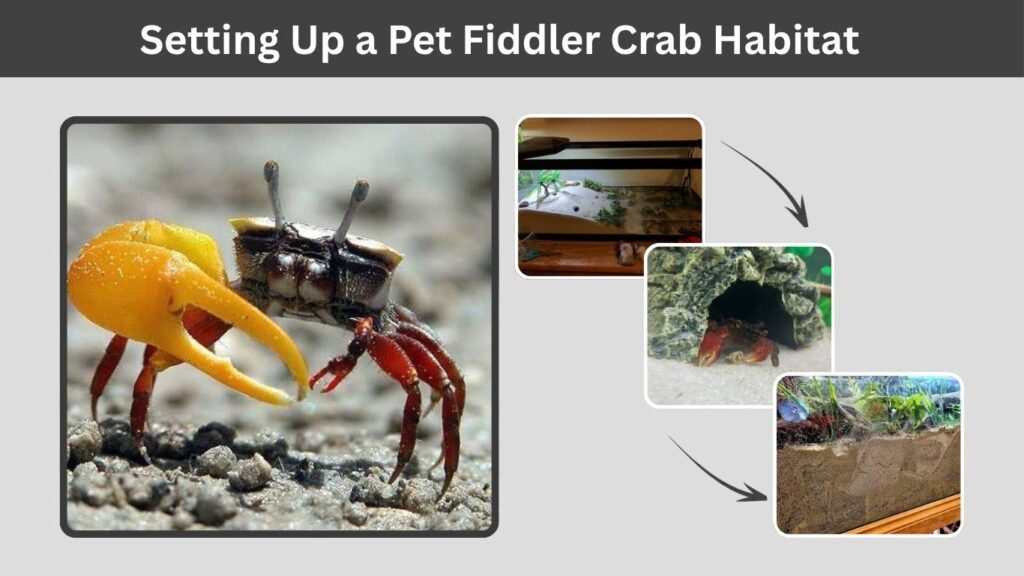
A proper fiddler crab habitat should resemble a tidal shoreline. A completely aquatic fish tank does not provide enough dry or damp land for normal behavior.
Tank Size
A 10-gallon tank is a practical starting point for a small group because it provides space for land, water, burrows and separate territories. Smaller classroom enclosures can hold fiddler crabs temporarily, but a larger tank provides more stable conditions and reduces crowding.
Choose a tank with more horizontal floor space rather than excessive height. Fiddler crabs spend most of their time walking, digging and feeding across the substrate.
Land and Sand
Create a sloping shoreline with aquarium-safe sand. Keep much of the sand above the waterline while allowing the lower section to remain moist.
The substrate should be deep enough for digging because burrows provide shelter, protection and mating sites in nature. Fiddler crabs are active burrowers whose digging also aerates and rearranges marsh sediment.
Avoid using only gravel. Coarse stones prevent natural sediment-sifting behavior and make burrowing difficult.
Brackish Water
Most fiddler crabs sold as pets are coastal species that naturally experience brackish or marine-influenced water. For example, Atlantic sand fiddlers inhabit strongly brackish to saltwater environments, while Gulf marsh fiddlers tolerate a broad range of salinity.
Prepare water using:
- Dechlorinated tap water
- Marine aquarium salt
- A hydrometer or refractometer
- A shallow pool with an easy exit
Do not use ordinary iodized table salt as the main salt source. Identify the species whenever possible because the correct salinity can differ.
Temperature and Lighting
Carolina Biological recommends keeping its Atlantic sand fiddlers at approximately 68–77°F. Other tropical species may require warmer conditions, so species identification remains important. Keep the enclosure away from direct sunlight because a glass tank can overheat rapidly.
Normal room lighting or a low-heat aquarium light is usually sufficient. Maintain a predictable day-and-night cycle.
Secure Lid
Fiddler crabs can climb decorations, filter cords, tubing and textured aquarium walls. Cover the tank with a secure, ventilated lid and close openings around equipment.
An escaped crab may quickly become dehydrated and can disappear beneath furniture or appliances.
What Do Pet Fiddler Crabs Eat?
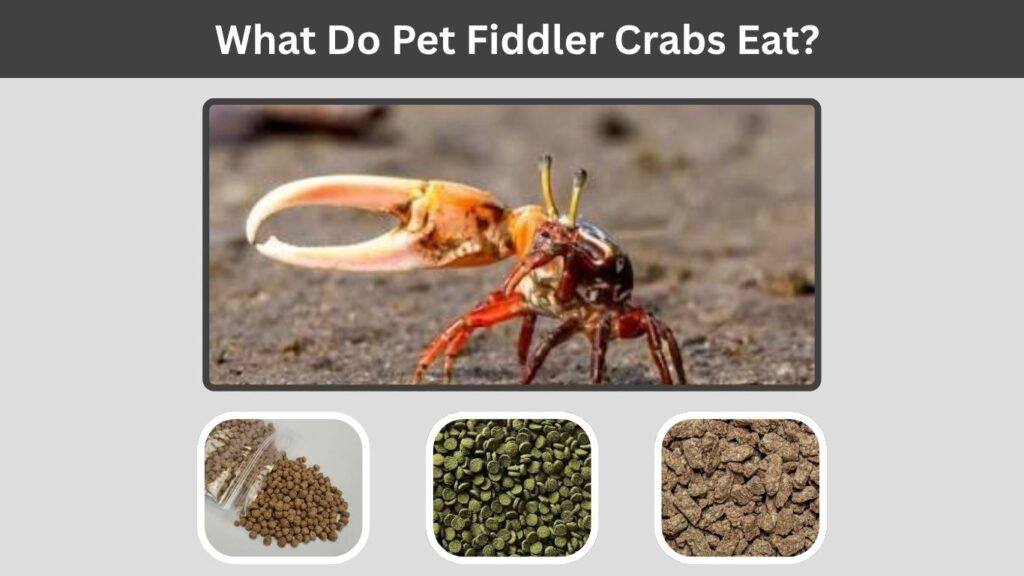
Wild fiddler crabs are deposit feeders. They scoop sand or mud into their mouths and separate algae, microorganisms and decaying organic material from the sediment. They then discard the cleaned sediment as small round pellets.
A captive diet may include:
- Commercial fiddler crab pellets
- Algae wafers
- Dried plankton
- Brine shrimp flakes
- Dried seaweed
- Small vegetable pieces
- Occasional small protein foods
Carolina Biological recommends foods such as dried plankton, brine shrimp flakes, crab pellets and small pieces of fruits or vegetables.
Offer small portions and remove leftovers before they spoil. Overfeeding can cause unpleasant odors, mold and poor water quality.
How Often Should You Feed Them?
Offer a modest amount once daily or according to the directions on the commercial food. The crabs should finish most of it without leaving large quantities scattered around the enclosure.
Place food on damp sand or in a shallow dish where it remains easy to locate and remove.
Can Fiddler Crabs Live Together?
Fiddler crabs naturally occur in colonies and can live in groups when their enclosure provides enough room. Males may wrestle, push or wave their enlarged claws at one another, especially when competing for burrows or females. These encounters do not always cause injury, but crowding can increase stress.
Provide:
- Multiple hiding places
- Deep substrate
- Several possible burrow locations
- Visual barriers
- More space when keeping multiple males
Watch for persistent chasing, missing limbs, food blocking or one crab remaining hidden continuously.
Can Fiddler Crabs Live With Fish?
A species-only fiddler crab tank is usually safest. Most aquarium fish need deeper, fully aquatic environments, while fiddler crabs need significant land and shallow accessible water.
Freshwater fish such as bettas, angelfish and most community species are especially unsuitable because their water requirements differ. A crab may also grab small or resting fish, while larger fish can injure a soft, recently molted crab.
Pet Fiddler Crab Molting
Fiddler crabs must shed their hard exoskeleton to grow. Before molting, a crab may stop eating, hide underground or become unusually inactive.
Do not dig it out or handle it. A freshly molted crab is soft and vulnerable for several days. Leave the discarded shell in the enclosure because the crab may eat it to recover calcium and other minerals. Separate aggressive tank mates when they repeatedly disturb a molting crab.
A buried crab is not necessarily dead or missing. It may simply be resting or molting.
How Long Do Pet Fiddler Crabs Live?
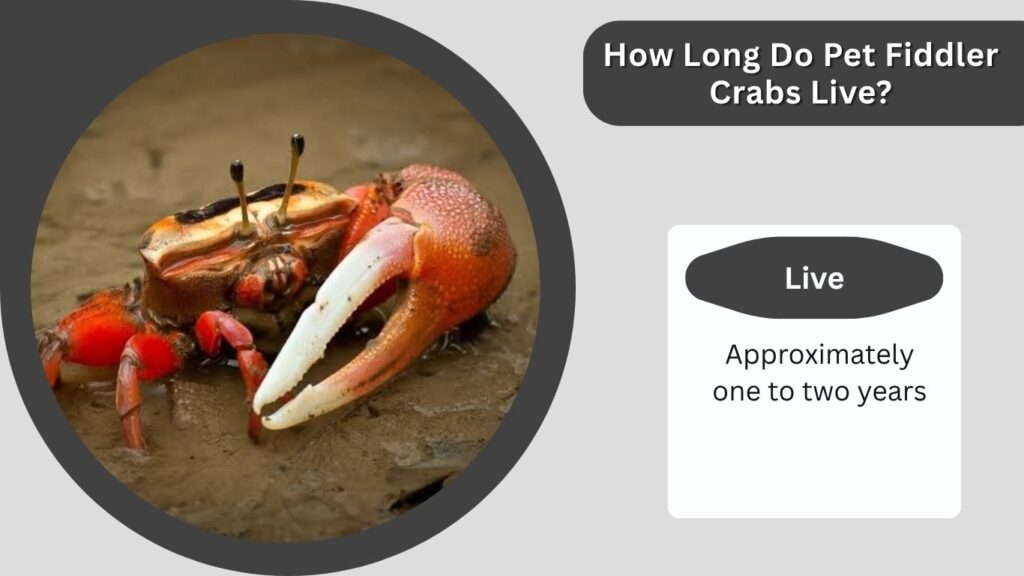
Fiddler-crab lifespan varies among species and environments. Some wild species are estimated to live approximately one to two years, while properly maintained captive fiddler crabs may survive for up to three years.
Poor housing often shortens their lives. Common problems include permanent freshwater conditions, no land area, unstable temperatures, dirty water and escape.
Are Pet Fiddler Crabs High Maintenance?
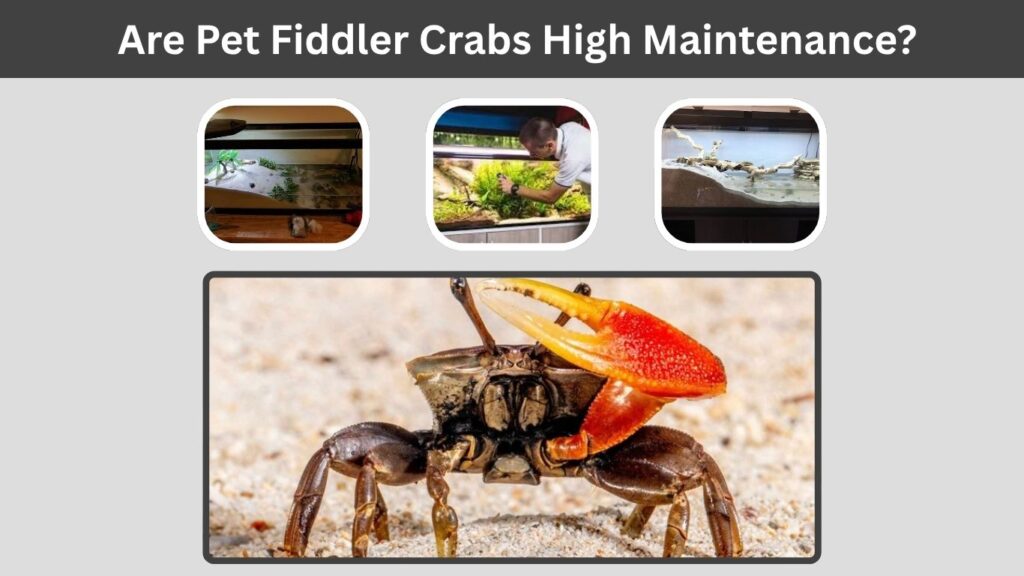
They are moderately low-maintenance after the enclosure is established correctly. Their daily needs are limited, but owners must regularly monitor the habitat.
Regular Maintenance
Remove leftover food and visible waste frequently. Replace dirty water with conditioned water of matching salinity and temperature. Carolina Biological recommends changing a small water container weekly or whenever it becomes dirty.
Also check:
- Water salinity
- Temperature
- Dampness of the sand
- Mold or spoiled food
- Filter operation
- Gaps in the lid
- Signs of fighting or injury
Avoid replacing all the substrate at once unless contamination makes it necessary.
Buying a Fiddler Crab as a Pet
Choose an active crab with intact walking legs, raised eyestalks and normal movement. Avoid individuals that smell unpleasant, remain upside down or show extensive shell damage.
Ask the seller for the scientific name and whether the crab came from a freshwater, brackish or marine environment. “Freshwater fiddler crab” is often a misleading store label, so prepare the correct enclosure before bringing the animal home.
Never release an unwanted pet fiddler crab outdoors. Releasing captive animals may spread disease, introduce a nonnative species or violate local regulations.
FAQs
Can you keep a fiddler crab as a pet?
Yes. Fiddler crabs can be maintained successfully when provided with damp land, burrowing substrate, accessible water, suitable salinity, warmth and a secure lid. They are primarily observation pets and should not be handled frequently.
Do fiddler crabs need brackish water?
Most commonly sold fiddler crabs come from coastal or estuarine habitats and benefit from brackish water. Requirements vary by species, making accurate identification important. They should not automatically be treated as ordinary freshwater crabs.
Do pet fiddler crabs pinch?
Both sexes can pinch, although males possess one much larger claw. They normally use their claws for feeding, displays and defense rather than attacking people. Gentle handling should still be avoided.
Do fiddler crabs need land?
Yes. Fiddler crabs are semi-terrestrial and spend substantial time outside the water. Their enclosure must include damp sand, an easy transition between land and water and enough substrate for digging.
Are fiddler crabs easy pets for beginners?
They can be beginner-friendly once the habitat is correctly established. The most common mistakes are keeping them completely underwater, using only freshwater, providing insufficient land and leaving openings through which they can escape.