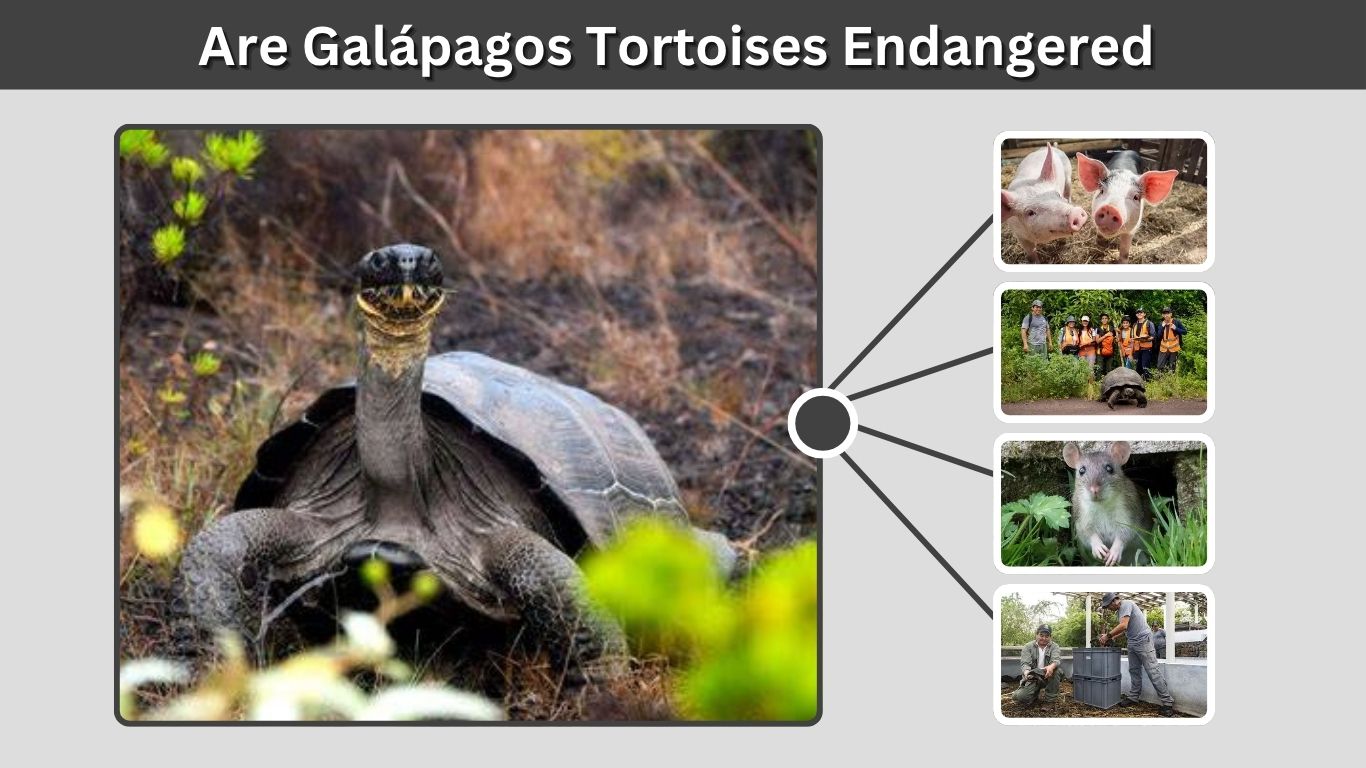
Yes, many Galápagos tortoises are endangered. However, “Galápagos tortoise” does not describe a single population with one conservation status. The islands contain several distinct giant tortoise species, and their conditions range from vulnerable to endangered and critically endangered. Some historical species have already disappeared.
Although protection and breeding programs have helped several populations recover, invasive animals, habitat loss, climate change, disease, and conflicts with humans continue to threaten their survival.
Are Galápagos Tortoises Endangered Today?
Most surviving Galápagos giant tortoise species remain threatened with extinction. According to Galápagos conservation organizations, the majority are classified as either Endangered or Critically Endangered on the IUCN Red List.
Their exact conservation status varies by island and species. Some populations have increased significantly because of captive breeding, habitat restoration, and invasive-species removal. Others remain extremely small and require intensive protection.
Therefore, the most accurate answer is:
Yes, Galápagos tortoises are endangered overall, but the level of risk differs among individual species and island populations.
The Galápagos giant tortoise group has experienced enormous historical losses. Several island populations became extinct after humans arrived, while surviving populations were reduced to dangerously low numbers.
Why Are Galápagos Tortoises Endangered?
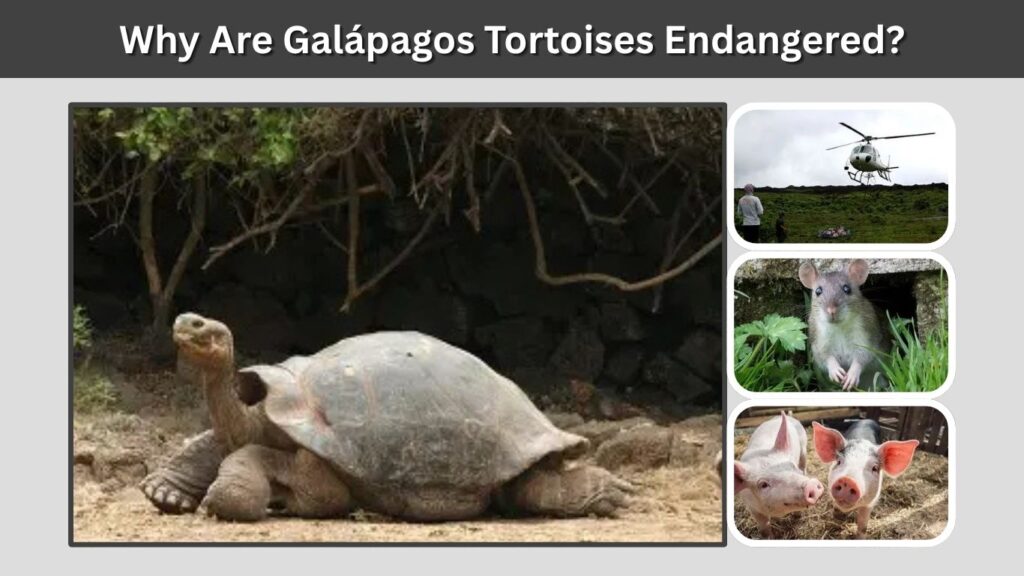
Galápagos tortoises did not become endangered because of one single event. Their decline resulted from centuries of exploitation followed by continuing environmental pressures.
Hunting by Sailors and Settlers
Beginning several centuries ago, sailors, pirates, whalers, and settlers collected giant tortoises for food. Tortoises could survive for long periods without food or water, so ships carried them alive as a source of fresh meat.
Thousands of animals were removed from the islands. Because giant tortoises reproduce slowly and take many years to mature, their populations could not quickly replace these losses.
Overhunting caused some species to disappear completely and reduced others to only a few surviving individuals. UNESCO reports that human hunting drove several historical Galápagos tortoise species to extinction.
Introduced Animals
Invasive species remain one of the greatest threats to Galápagos wildlife. Humans introduced goats, pigs, rats, cats, dogs, cattle, and other non-native animals to the islands.
These animals harm tortoises in different ways:
- Rats and pigs eat tortoise eggs and hatchlings.
- Feral cats may attack young tortoises.
- Goats and cattle consume vegetation needed by tortoises.
- Introduced animals damage nesting areas.
- Invasive plants can replace native food sources.
Goats have been especially destructive because large herds can strip an island of vegetation and compete directly with tortoises for food. Invasive species continue to be considered a major threat to the Galápagos ecosystem.
Habitat Loss and Fragmentation
Farms, roads, towns, fences, and other developments have changed parts of the tortoises’ natural habitat. These changes are particularly important on inhabited islands.
Some tortoises migrate seasonally between dry lowlands and cooler, wetter highlands. Roads, agricultural land, and fences can block these traditional migration routes.
Habitat fragmentation may prevent tortoises from reaching food, water, nesting grounds, or suitable seasonal environments. Road collisions and conflicts with farmers can also kill or injure animals.
Climate Change
Climate change may alter rainfall, temperatures, food availability, and nesting conditions throughout the Galápagos Islands.
Long droughts can reduce plants and freshwater sources. Intense rainfall may flood nests or change vegetation patterns. Warmer soil temperatures can also affect egg development and the sex ratio of hatchlings.
The Charles Darwin Foundation identifies climate change, invasive species, habitat fragmentation, and newly introduced diseases as continuing threats to giant tortoises.
Slow Reproduction
Giant tortoises can live for more than a century, but they reproduce slowly. Females lay relatively small groups of eggs, and the young remain vulnerable for many years.
Tortoises also take a long time to reach reproductive maturity. This means a population may require decades to recover after adults, eggs, or hatchlings are lost.
Their long lifespan helps adult survival, but their slow reproductive rate makes them especially vulnerable to sudden population declines.
Which Galápagos Tortoises Are Extinct?
Several historical giant tortoise populations have disappeared from the Galápagos Islands.
The best-known example is the Pinta Island tortoise. Its final confirmed purebred individual, Lonesome George, died in 2012. Goats introduced to Pinta severely damaged the island’s vegetation, although hunting had already reduced the tortoise population.
The original Floreana giant tortoise population also disappeared from the wild during the 1800s. However, researchers discovered tortoises with Floreana ancestry living elsewhere in the archipelago. Breeding and restoration programs are now using their descendants to help return tortoises to Floreana.
In February 2026, conservationists announced the return of giant tortoises to Floreana after approximately 180 years, representing an important ecosystem-restoration milestone.
How Many Galápagos Tortoise Species Are Left?
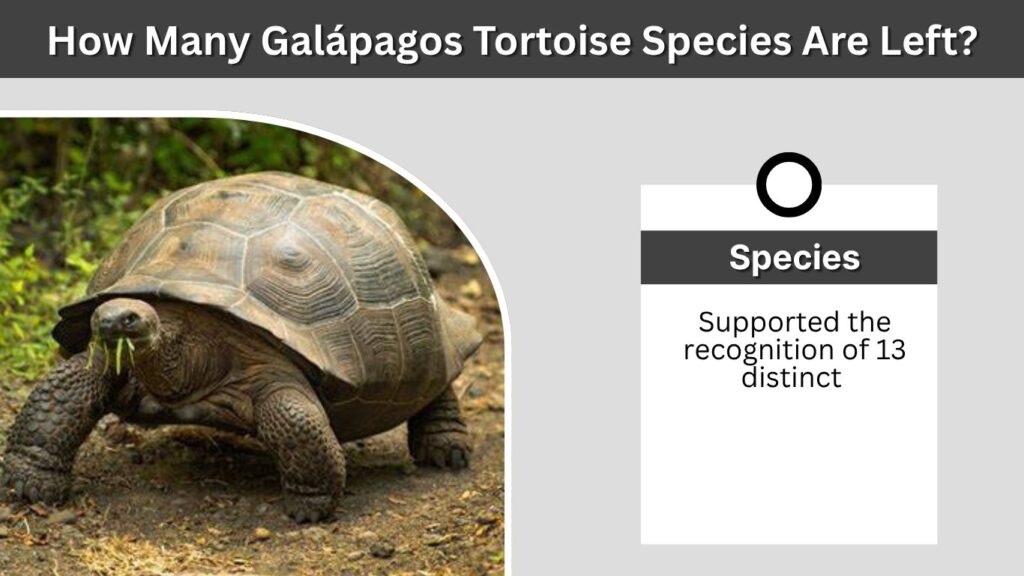
The exact number can vary depending on the scientific classification being used. Tortoise taxonomy has changed as researchers have studied genetics and relationships between island populations.
A major genetic study reported in 2025 supported the recognition of 13 distinct Galápagos giant tortoise species. Other conservation resources may present different totals because they include extinct species or use an older classification system.
What remains clear is that separate islands—and even separate volcanoes on Isabela Island—developed genetically and physically distinct tortoise populations.
This distinction matters because each species must be assessed and protected individually. A strong population on one island does not eliminate the extinction risk faced by a rare population elsewhere.
How Are Galápagos Tortoises Being Protected?
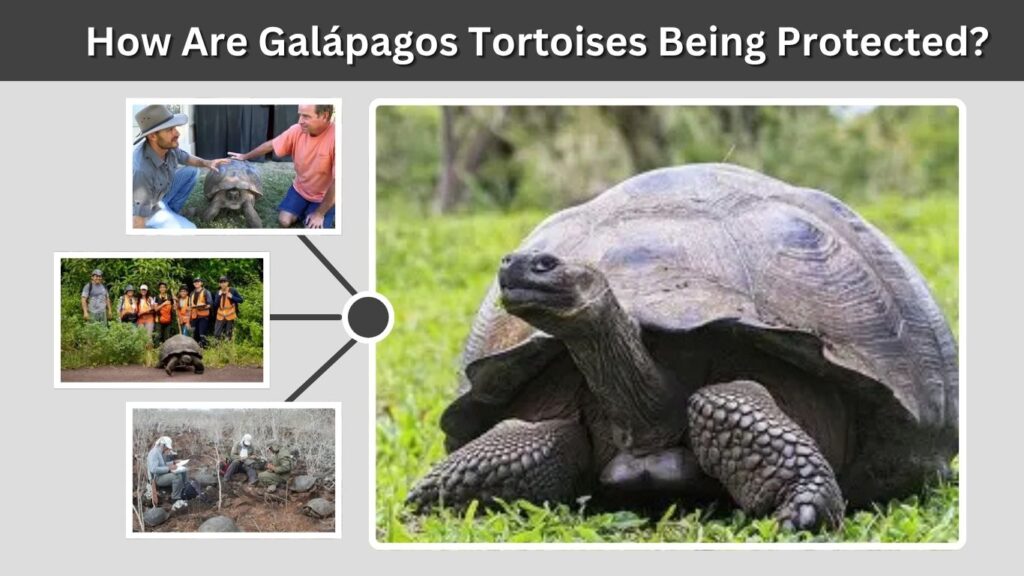
Conservationists have worked for decades to rebuild giant tortoise populations and restore their habitats.
Captive Breeding and Head-Starting
Eggs and vulnerable hatchlings are sometimes brought to protected breeding centers. Young tortoises are raised until their shells are large and hard enough to resist many introduced predators.
They are then released onto their native islands.
Captive rearing has been used in Galápagos since 1965 and has supported the recovery of nine of the eleven surviving species recognized by that conservation program.
Reintroduction Programs
More than 9,000 captive-reared giant tortoises have been released into the wild during approximately six decades of conservation work.
One famous success occurred on Española Island. Its population had fallen to only a handful of breeding adults. A carefully managed breeding program produced thousands of offspring, many of which were eventually returned to the island.
Removal of Invasive Species
Conservation teams have removed goats and other introduced animals from several islands. Once these animals disappear, native vegetation can recover and tortoises regain access to food and nesting habitat.
Biosecurity inspections also help prevent new plants, animals, insects, and diseases from reaching the islands.
Habitat and Migration Protection
Scientists use tracking devices to study tortoise movements, nesting locations, feeding areas, and seasonal migration routes. This information helps authorities decide where fences, road crossings, protected corridors, and habitat-restoration projects are needed.
Why Are Galápagos Tortoises Important?
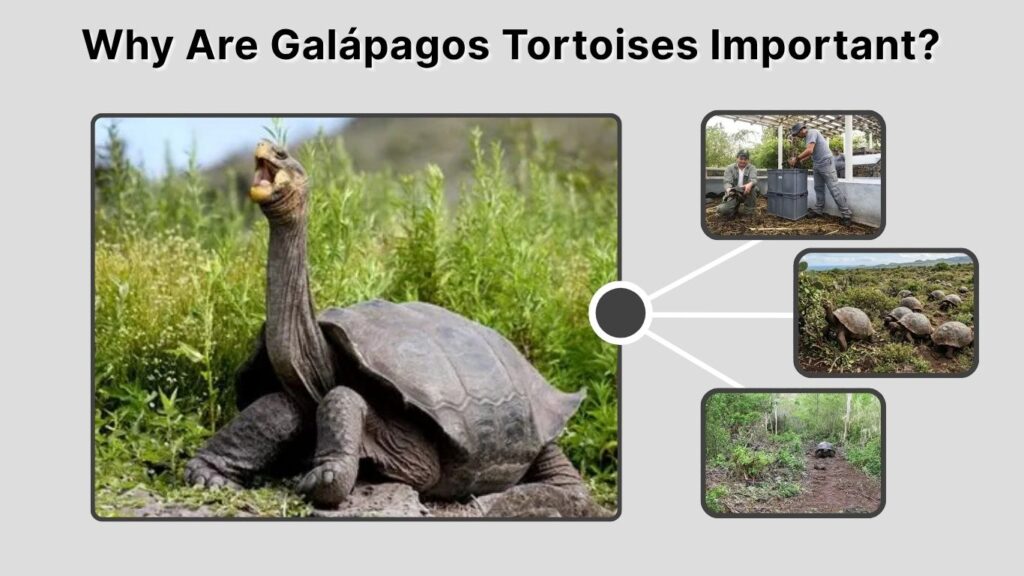
Galápagos tortoises are more than famous tourist attractions. They are ecosystem engineers that shape the landscapes around them.
As tortoises move and feed, they:
- Disperse seeds through their droppings.
- Create pathways through dense vegetation.
- Control the growth of certain plants.
- Move nutrients across the landscape.
- Create open areas used by other animals.
Their grazing and long-distance seed dispersal influence plant communities and support wider island biodiversity.
Protecting tortoises therefore helps conserve entire Galápagos ecosystems.
Are Galápagos Tortoise Populations Recovering?
Some populations are recovering, but the overall conservation situation remains serious.
Breeding programs, invasive-animal removal, habitat restoration, and stronger legal protection have produced major successes. Thousands of tortoises now live in places where their numbers were once extremely low.
Nevertheless, recovery is not the same as complete safety. Giant tortoises reproduce slowly, and some populations remain small. Climate change, invasive species, development, traffic, disease, and habitat fragmentation may reverse progress if conservation efforts stop.
Continued monitoring and long-term habitat protection are essential.
FAQs
Are all Galápagos tortoises critically endangered?
No. Conservation status differs among species and island populations. Some are considered Critically Endangered, while others are classified as Endangered or Vulnerable. The entire group should not be assigned one status because every population has a different size, distribution, and level of threat.
Why did people hunt Galápagos tortoises?
Sailors hunted them mainly for food. Giant tortoises could remain alive aboard ships for long periods without regular food or water. This made them a convenient source of fresh meat during lengthy voyages, leading to the removal of thousands of animals from the islands.
What animals eat Galápagos tortoise eggs?
Introduced rats and pigs are among the main predators of tortoise eggs and hatchlings. Feral cats may also kill young tortoises. Healthy adult Galápagos tortoises have few natural predators because of their enormous size and strong protective shells.
How are baby Galápagos tortoises protected?
Conservation centers collect or incubate eggs and raise hatchlings in protected environments. The young tortoises remain there until they become large enough to survive many predators. They are then released into suitable restored habitats on their islands of origin.
Can Galápagos tortoises be saved from extinction?
Yes, several populations have already shown remarkable recovery. Captive breeding, reintroduction, invasive-species control, habitat restoration, and strict protection have saved some species from immediate extinction. However, these programs must continue because many tortoise populations remain threatened and recover very slowly.