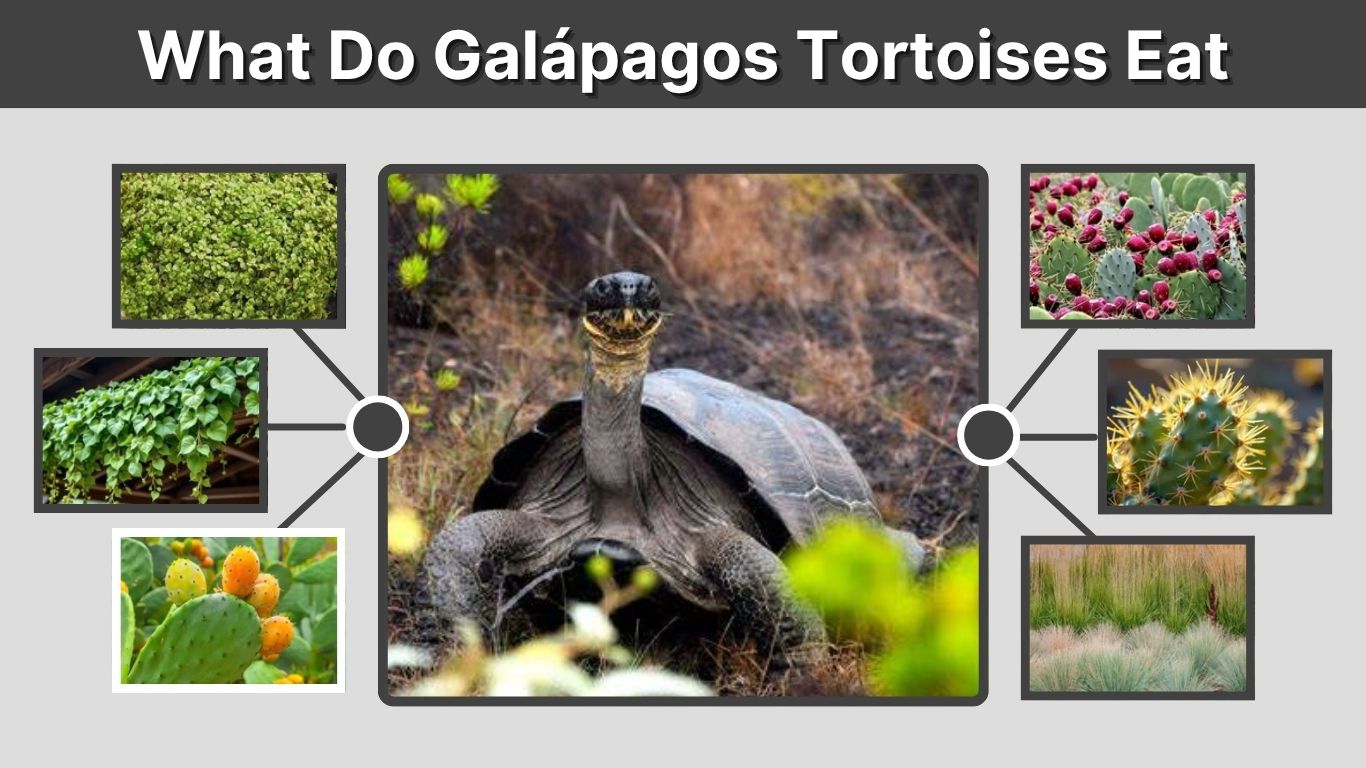
Galápagos tortoises are herbivores that mainly eat grasses, leaves, flowers, fruits, and cactus pads. Their exact diet depends on the island, season, rainfall, and available vegetation. These giant reptiles can survive in dry environments because they obtain much of their water from plants and can go long periods without drinking. Their feeding habits also help shape the Galápagos ecosystem by spreading seeds, creating pathways, and controlling plant growth.
What Do Galápagos Tortoises Eat in the Wild?
Galápagos tortoises eat a wide variety of plant material. Their food choices change depending on where they live and what is available during different seasons.
Their natural diet commonly includes:
- Grasses
- Leaves
- Cactus pads
- Cactus fruits
- Flowers
- Berries and other fruits
- Vines
- Shrubs
- Ferns
- Mosses and lichens
Although they may occasionally consume unusual items, Galápagos tortoises are primarily plant eaters. Their digestive systems are adapted to process fibrous vegetation that many other animals would find difficult to digest.
10 Foods Galápagos Tortoises Eat
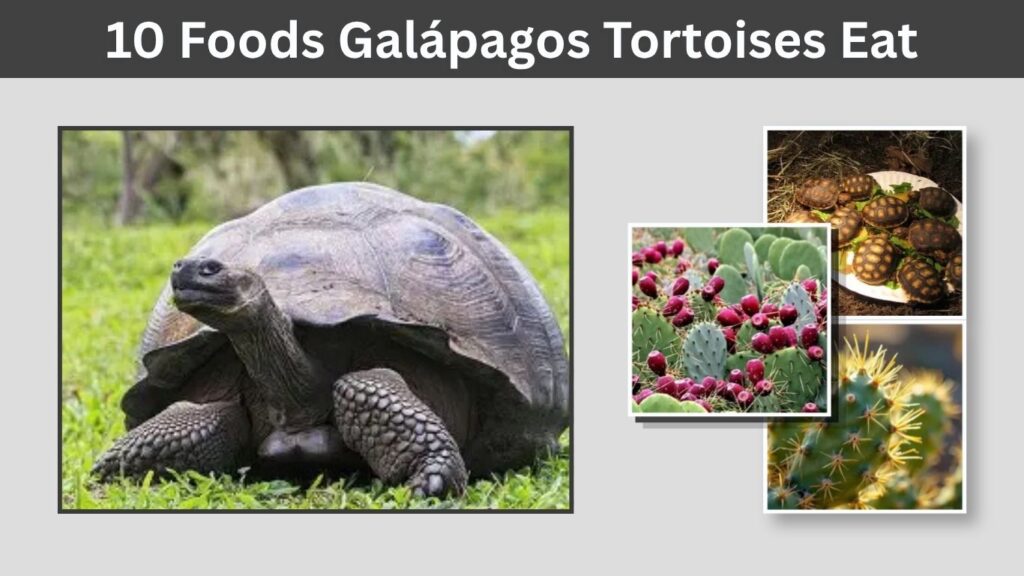
Galápagos tortoises are opportunistic feeders. They browse on whichever nutritious plants are available within their habitat.
1. Grasses
Grass is one of the most important foods for Galápagos tortoises, particularly those living in humid highland regions. They slowly graze across open areas, cutting grass with their sharp, beak-like mouths.
Grass provides fiber, minerals, and moisture. During the rainy season, fresh grass becomes more abundant and may make up a large part of their daily diet.
2. Prickly Pear Cactus Pads
Prickly pear cactus is especially important for tortoises living in dry, lowland habitats. They eat the thick green pads, which contain both nutrients and water.
Some Galápagos tortoise populations have long necks and raised shells that allow them to reach cactus pads growing higher above the ground. This body shape is known as a saddleback shell.
3. Cactus Fruit
Galápagos tortoises also eat the fruit produced by prickly pear cacti. The fruit is moist, energy-rich, and filled with seeds.
After eating it, tortoises may carry the seeds considerable distances before passing them in their droppings. This makes the tortoises important seed dispersers within the island ecosystem.
4. Leaves
Leaves from native shrubs, small trees, and low-growing plants form another major part of the tortoise diet. Galápagos tortoises use their strong mouths to pull leaves from branches.
Long-necked tortoises can stretch upward to reach plants that are unavailable to shorter animals. They may also push through thick vegetation while searching for fresh foliage.
5. Flowers
Flowers provide moisture and nutrients, especially during periods when plants are blooming. Tortoises may eat flowers growing close to the ground or pull them from low branches.
The availability of flowers often depends on rainfall. After wet weather, flowering plants may become temporarily abundant in otherwise dry areas.
6. Fruits and Berries
Wild Galápagos tortoises eat fallen fruits and berries when they find them. These foods provide natural sugars, moisture, vitamins, and seeds.
Fruit is generally a seasonal food rather than the main part of their diet. Tortoises may travel along familiar routes to reach areas where fruiting plants grow.
7. Vines
Soft vines and climbing plants are eaten when they grow within reach. Tortoises may pull vines downward using their mouths and body weight.
Vines can be particularly useful during the rainy season, when plant growth becomes lush and fresh. However, their availability differs greatly among the islands.
8. Shrubs
Galápagos tortoises browse on the tender branches and leaves of native shrubs. Larger tortoises can push into dense bushes and break small branches while feeding.
Their browsing activity helps shape vegetation. By trimming shrubs and opening pathways, they create habitats that may also benefit smaller animals.
9. Ferns
Tortoises living in moist highland areas may eat ferns. These regions receive more rainfall and support thicker, greener vegetation than the dry coastal lowlands.
Ferns provide additional fiber and moisture. However, they are more important to tortoises living near humid forests than those inhabiting arid islands.
10. Mosses and Lichens
Mosses and lichens may be eaten when other foods are limited. They grow on rocks, tree bark, and damp ground, particularly in cool highland environments.
These foods are unlikely to be a tortoise’s first choice, but they can supplement its diet during periods when grasses, fruits, or fresh leaves are less abundant.
How Do Galápagos Tortoise Diets Differ by Habitat?
The Galápagos Islands contain both dry lowlands and humid highlands. Tortoises have developed different feeding strategies to survive in these environments.
Tortoises in Dry Lowlands
Tortoises living in arid areas rely heavily on drought-resistant plants. Their diet may contain:
- Cactus pads and fruits
- Dry grasses
- Shrubs
- Fallen leaves
- Seasonal flowers
Food and water may be scarce for long periods. These tortoises are often better adapted to reaching taller vegetation.
Tortoises in Humid Highlands
Highland tortoises have access to greener and more abundant vegetation. They commonly eat:
- Fresh grasses
- Leaves
- Ferns
- Vines
- Berries
- Moist low-growing plants
Domed-shell tortoises are often associated with areas where food grows near the ground. Their shorter necks are well suited to grazing.
How Much Do Galápagos Tortoises Eat?
The exact amount depends on the tortoise’s size, age, activity level, season, and food quality. Large adults may spend several hours grazing and browsing each day.
Galápagos tortoises have slow metabolisms. They do not need to eat continuously and can survive periods of limited food. When vegetation is plentiful, they may consume more food and store energy for future dry conditions.
Their slow digestion helps them extract nutrients from tough, fibrous plants.
Do Galápagos Tortoises Drink Water?
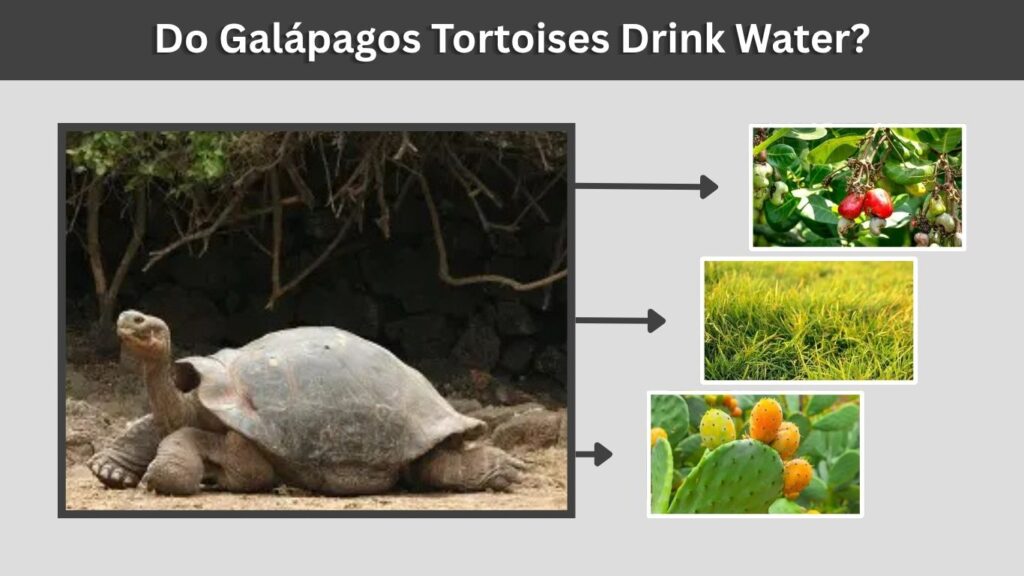
Yes, Galápagos tortoises drink water when it is available. However, they can survive for long periods without visiting a water source.
They obtain much of their moisture from:
- Cactus pads
- Fresh grass
- Fruits
- Leaves
- Dew-covered vegetation
After heavy rain, tortoises may drink from temporary pools or muddy depressions. They can consume a substantial amount of water at one time and store moisture in their bodies.
Their ability to tolerate dry conditions was one reason sailors historically kept them alive aboard ships for long voyages.
How Do Galápagos Tortoises Find Food?
Galápagos tortoises use their strong sense of smell and familiarity with the landscape to locate food. They often follow established paths between feeding, resting, nesting, and watering areas.
Some populations migrate seasonally. They may move into highlands during dry periods to find greener plants and return to lower elevations when rainfall produces fresh vegetation.
Despite moving slowly, they can travel considerable distances over time.
How Do Galápagos Tortoises Eat?
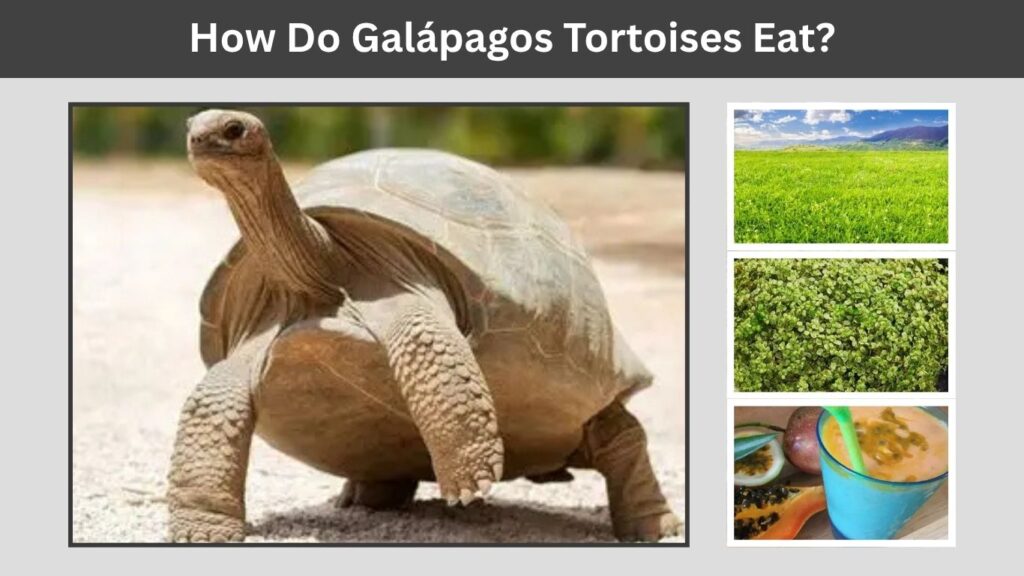
Galápagos tortoises do not have teeth. Instead, they have hard, sharp-edged mouths similar to beaks.
They use their mouths to:
- Cut grasses
- Tear leaves
- Pull down vines
- Bite through cactus pads
- Crush soft fruits
They usually swallow small pieces of vegetation without extensive chewing. Food is then broken down slowly inside their digestive system.
What Do Baby Galápagos Tortoises Eat?
Young Galápagos tortoises eat many of the same foods as adults, but they select softer and easier-to-bite plant material.
Their diet may include:
- Tender grass shoots
- Soft leaves
- Flowers
- Small fruits
- Young cactus growth
- Low-growing plants
Baby tortoises are more vulnerable to predators and environmental conditions. They often feed while remaining close to protective vegetation.
In conservation centers, young tortoises receive carefully controlled diets to support healthy shell and bone development.
What Do Galápagos Tortoises Eat in Captivity?
Tortoises living in conservation centers, wildlife facilities, and accredited zoos are fed diets designed to resemble their natural food.
A captive diet may include:
- Grasses and hay
- Leafy greens
- Cactus pads
- Native or cultivated browse
- Vegetables
- Small amounts of fruit
- Nutritional supplements when necessary
High-fiber foods are particularly important. Too much fruit or high-calorie food can cause excessive weight gain and nutritional imbalances.
Diet plans should be supervised by reptile veterinarians and experienced animal-care professionals.
Foods Galápagos Tortoises Should Not Eat
Wild tortoises should never be fed by tourists or local visitors. Human food can harm their health and change their natural behavior.
Unsuitable foods include:
- Bread
- Candy
- Chips
- Meat
- Dairy products
- Processed foods
- Salty snacks
- Sugary desserts
- Foods treated with pesticides
Feeding wild tortoises may encourage them to approach roads, towns, or people, increasing their risk of injury.
Why Is Their Diet Important to the Ecosystem?
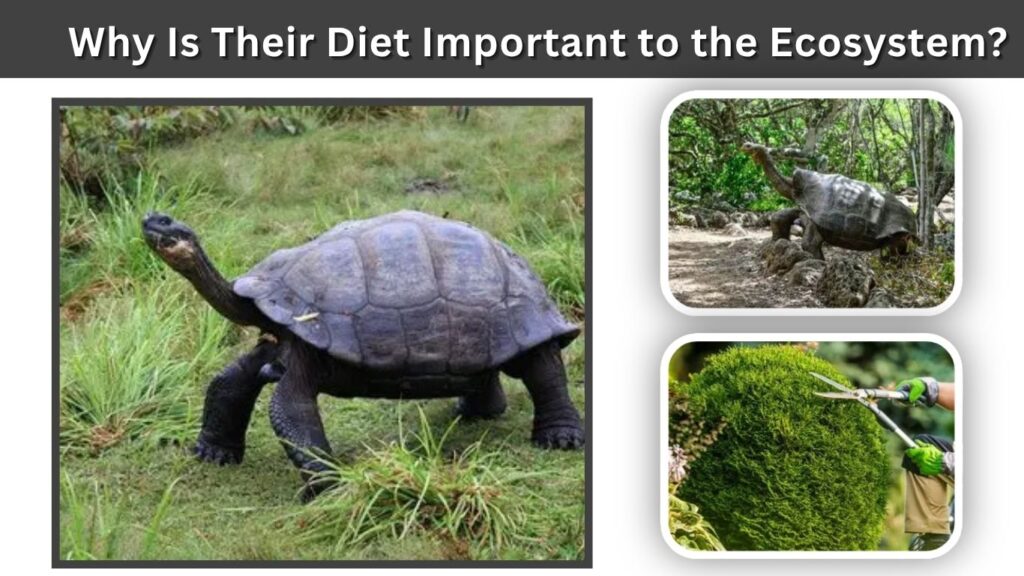
Galápagos tortoises are often called ecosystem engineers because their feeding behavior changes the landscape.
As they eat and travel, they:
- Spread seeds in their droppings
- Create pathways through vegetation
- Trim grasses and shrubs
- Move nutrients between habitats
- Help some native plants reproduce
- Create open spaces for smaller animals
Seeds that pass through a tortoise’s digestive system may be deposited far from the parent plant. Their droppings also provide natural fertilizer.
Protecting tortoises therefore helps maintain the health and diversity of the entire Galápagos ecosystem.
FAQs
What is a Galápagos tortoise’s favorite food?
Galápagos tortoises appear to prefer fresh grasses, leafy plants, cactus pads, and seasonal fruits. However, their choices depend on habitat and availability. Tortoises living in dry areas rely more heavily on cacti, while highland populations have easier access to grasses, ferns, and leaves.
Do Galápagos tortoises eat meat?
Galápagos tortoises are primarily herbivores and receive almost all their nutrition from plants. They are not active hunters. Rare reports of tortoises consuming animal material do not make meat a normal or necessary part of their natural diet.
Do Galápagos tortoises eat cactus?
Yes. Prickly pear cactus pads and fruits are essential foods for many tortoises living in dry parts of the Galápagos. Cacti provide nutrition and valuable moisture when rainfall and freshwater are limited.
How long can Galápagos tortoises go without food?
Galápagos tortoises can survive for months under extreme conditions because they have slow metabolisms and can store energy and water. However, going without food for long periods is stressful and should never be intentionally tested in captive tortoises.
Can people feed wild Galápagos tortoises?
No. Visitors should not feed or touch wild tortoises. Human food may cause illness, disturb natural feeding behavior, and encourage tortoises to approach dangerous areas. Visitors should follow park regulations and observe the animals from the required distance.