
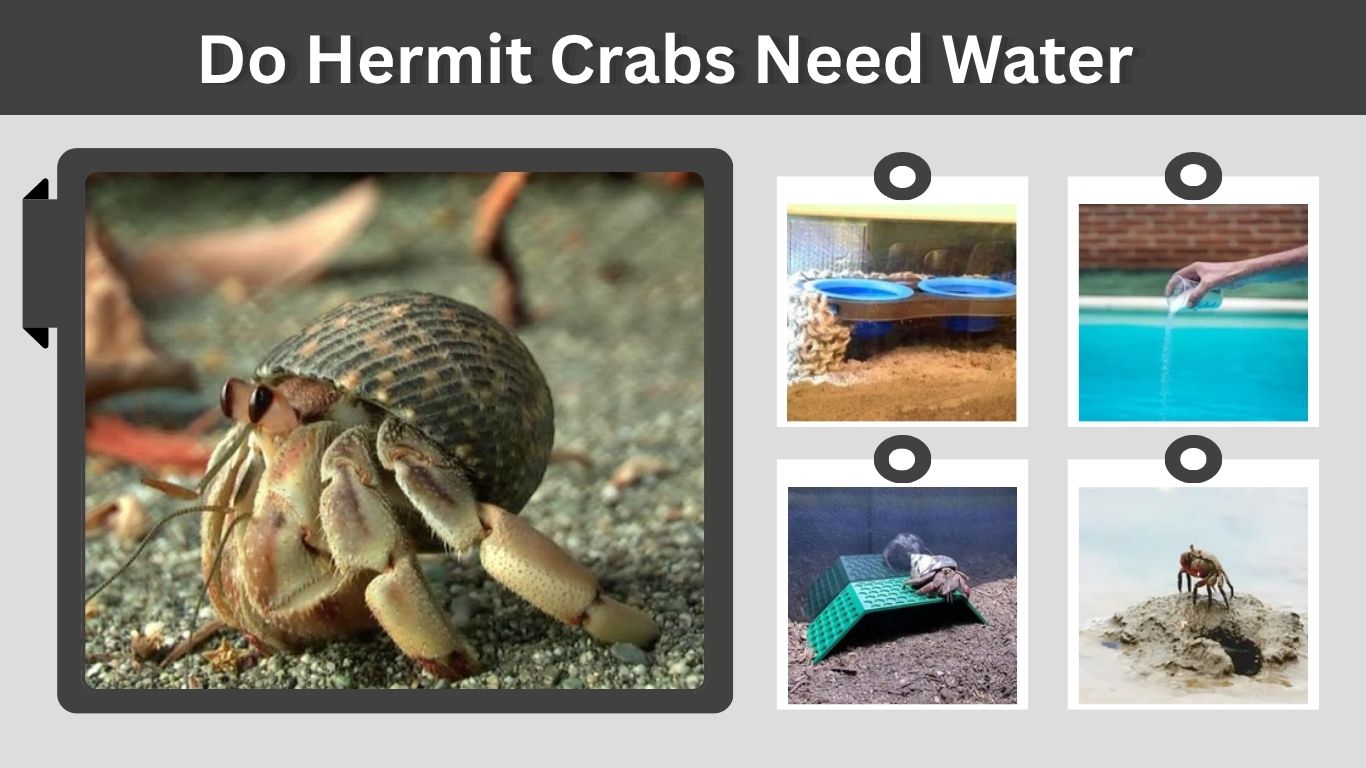
Hermit crabs need reliable access to water for drinking, bathing, maintaining moisture inside their shells, and regulating the balance of salt and water in their bodies. However, their exact needs depend on whether they are land hermit crabs or fully aquatic marine species. Pet land hermit crabs should receive two separate pools: one containing safe freshwater and another containing properly prepared marine saltwater. Simply placing a small sponge or shallow drinking cap inside the enclosure is not enough. Both pools must be correctly prepared, regularly cleaned, and designed so every crab can enter and leave safely.
Do Hermit Crabs Need Water?
Yes, hermit crabs need water every day. Land hermit crabs do not spend their entire lives underwater, but water remains essential to their survival. They use it to drink, bathe, refill the water stored inside their shells, and support normal body functions.
Pet land hermit crabs should always have access to two separate water sources:
- Fresh dechlorinated water
- Properly mixed marine saltwater
These water sources should be continuously available rather than offered only occasionally. Freshwater and marine saltwater serve different purposes, so one cannot completely replace the other. Land Hermit Crab Owners Society care standards recommend both water types, with pools deep enough for complete submersion and safe routes for entering and leaving.
Do Hermit Crabs Live in Water?
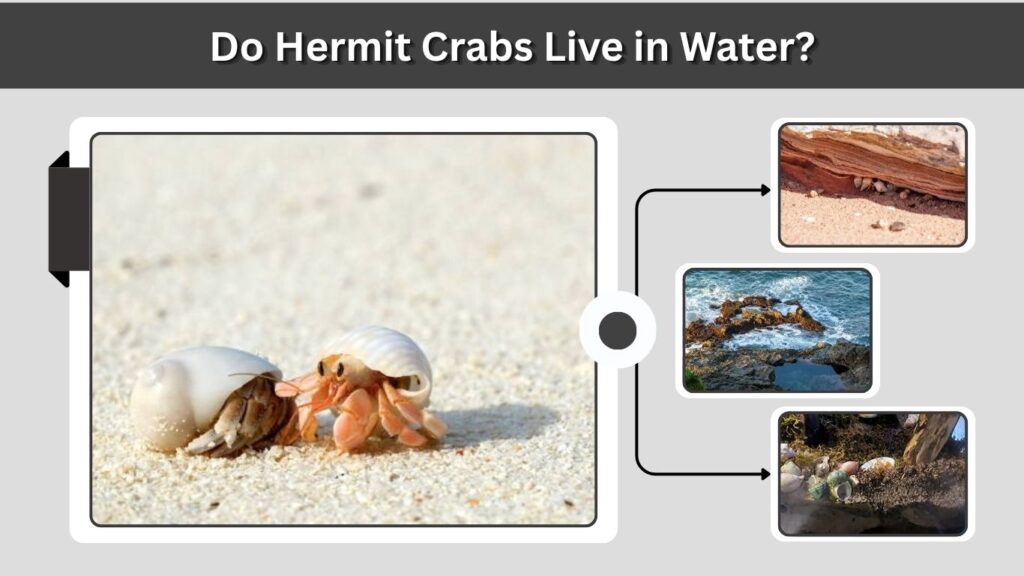
Some hermit crabs live in water, while others live mainly on land. Understanding the difference is essential because placing the wrong type of crab in the wrong environment can be dangerous.
Land Hermit Crabs
Common pet hermit crabs in the genus Coenobita are land-dwelling animals. They spend most of their adult lives on land and breathe through modified gills that must remain moist.
Although they need pools for drinking and submerging, land hermit crabs should not be kept permanently underwater. They require a warm, humid enclosure with deep substrate, hiding areas, climbing objects, food, shells, and separate freshwater and saltwater pools.
Marine Hermit Crabs
Marine hermit crabs live underwater in oceans, reefs, tide pools, and saltwater aquariums. They breathe underwater using gills and cannot be maintained in a standard land-hermit-crab enclosure.
Marine species need a fully established saltwater aquarium with appropriate salinity, temperature, filtration, oxygen, and water quality. Removing a marine hermit crab from water for an extended period can cause respiratory distress.
Are There Freshwater Hermit Crabs?
Hermit crabs sold for aquariums are usually marine or sometimes brackish-water species. Truly freshwater hermit crabs are uncommon in the pet trade. A marine hermit crab should never be transferred into untreated freshwater because the sudden change in salinity can severely stress or kill it.
Always identify the species before deciding whether it needs a terrestrial enclosure, a marine aquarium, or a specialized brackish setup.
Why Do Land Hermit Crabs Need Freshwater?
Freshwater helps land hermit crabs drink, hydrate, and adjust the moisture and salinity stored inside their shells. They may enter the freshwater pool, collect water with their claws, or transfer droplets toward their mouths.
Freshwater also contributes to the humid conditions they need for breathing. However, the water pool alone will not maintain safe humidity throughout the enclosure. The habitat must be properly enclosed and monitored with an accurate hygrometer.
The freshwater pool should contain conditioned tap water or another safe mineral-containing water source. Untreated municipal tap water may contain chlorine or chloramine, which can irritate or damage the crab’s sensitive respiratory structures.
Why Do Hermit Crabs Need Saltwater?
Land hermit crabs need marine saltwater because their bodies are adapted to coastal environments. Saltwater supports shell-water regulation, mineral intake, molting behavior, and osmoregulation—the process of controlling the balance between water and dissolved salts in the body.
Hermit crabs may visit the saltwater pool before or after molting, during shell changes, and at other times depending on their individual needs. They should be allowed to choose when and how long they use each pool.
Giving only freshwater does not provide complete care. Similarly, giving only saltwater can prevent the crab from controlling its internal water balance properly. Both choices should remain available at all times.
How to Make Saltwater for Hermit Crabs
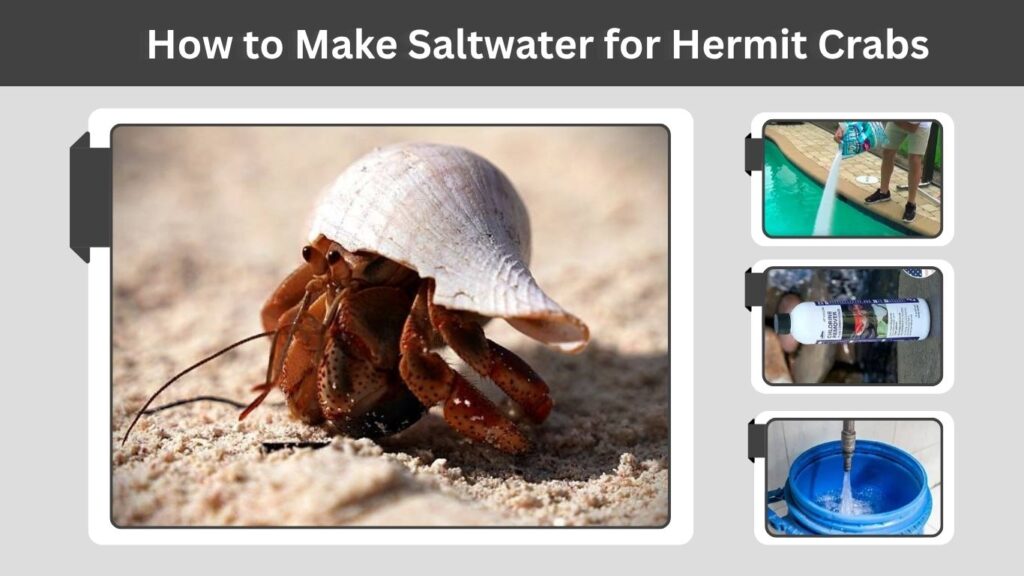
Hermit crab saltwater must be prepared with a marine aquarium salt mix. Table salt, cooking sea salt, Epsom salt, Himalayan salt, and freshwater aquarium salt do not reproduce the mineral composition of ocean water.
Saltwater Preparation Steps
- Fill a clean container with tap water.
- Add a conditioner that removes chlorine and chloramine.
- Measure the marine salt mix according to its package directions.
- Stir until the salt is completely dissolved.
- Allow the mixture to settle and reach the enclosure’s temperature.
- Pour it into the designated saltwater pool.
- Store extra prepared water in a clean, food-safe container.
Always follow the manufacturer’s ratio instead of estimating the amount. Different marine salt brands may use different measurements. Mixing too little creates weak saltwater, while using too much may create an unnecessarily concentrated solution.
Treat the tap water before adding the marine salt. Marine salt does not remove chlorine or chloramine from untreated water.
Can Hermit Crabs Drink Tap Water?
Hermit crabs should not receive untreated tap water. Many public water supplies contain chlorine, chloramine, or other treatment chemicals. Water that is safe for people to drink is not automatically safe for animals with delicate gills.
Use an aquarium-safe water conditioner that specifically neutralizes both chlorine and chloramine. Allowing tap water to sit uncovered may help chlorine escape, but chloramine does not disappear as easily. Therefore, leaving water out overnight is not a dependable treatment method.
All tap water used around the crabs should be conditioned, including:
- Freshwater pool water
- Water used to prepare saltwater
- Misting water
- Water used to rinse habitat items
- Water added to food or substrate
Untreated tap water may harm the moist respiratory tissues land hermit crabs use to breathe.
Can Hermit Crabs Drink Bottled or Distilled Water?
Some bottled water may be suitable, but the label should be checked carefully. Spring water can contain useful minerals, although its composition varies by brand and source. Bottled drinking water may also be treated with processes that remove or add minerals.
Distilled water is not usually recommended as the main long-term freshwater source because it contains almost no dissolved minerals. It may be used in specific situations, but conditioned tap water or safe spring water is generally a more practical regular option. LHCOS-linked care guidance advises against routine reliance on distilled water because of its extremely low mineral content.
Water sold as “purified” may have been processed by reverse osmosis or distillation. It is not necessarily harmful for occasional use, but owners should understand how it was produced rather than assuming every bottled product is identical.
How Do Hermit Crabs Drink Water?
Hermit crabs may drink in several ways. They can dip their claws into water and bring droplets toward their mouthparts. They may also enter a pool and collect water while partially or fully submerged.
A land hermit crab carries a small reserve of water inside its shell. This shell water helps keep its abdomen and modified gills moist. The crab may adjust the water by visiting both freshwater and saltwater pools.
Owners may not frequently see their crabs drinking because hermit crabs are often active at night. They also consume small amounts, making normal drinking behavior easy to miss.
Choosing Hermit Crab Water Bowls
Water dishes should be stable, nonporous, easy to clean, and safe for the crabs to enter. Food-storage containers, small aquarium-safe tubs, and sturdy plastic pools are often more practical than tiny decorative bowls.
Water Bowl Requirements
- One bowl for freshwater
- One bowl for marine saltwater
- Enough depth for the largest crab to submerge
- A textured ramp or climbing surface
- Stable sides that will not collapse
- No sharp edges
- Enough space for safe movement
- Clear labels to prevent mixing the water types
Current LHCOS care standards favor pools deep enough for full-body submersion, provided that smaller crabs have secure exit routes.
Plastic mesh, aquarium plants, textured stones, or craft canvas can be used to create ramps. Test each structure to ensure it will not shift when the crab climbs on it.
Can Hermit Crabs Drown?
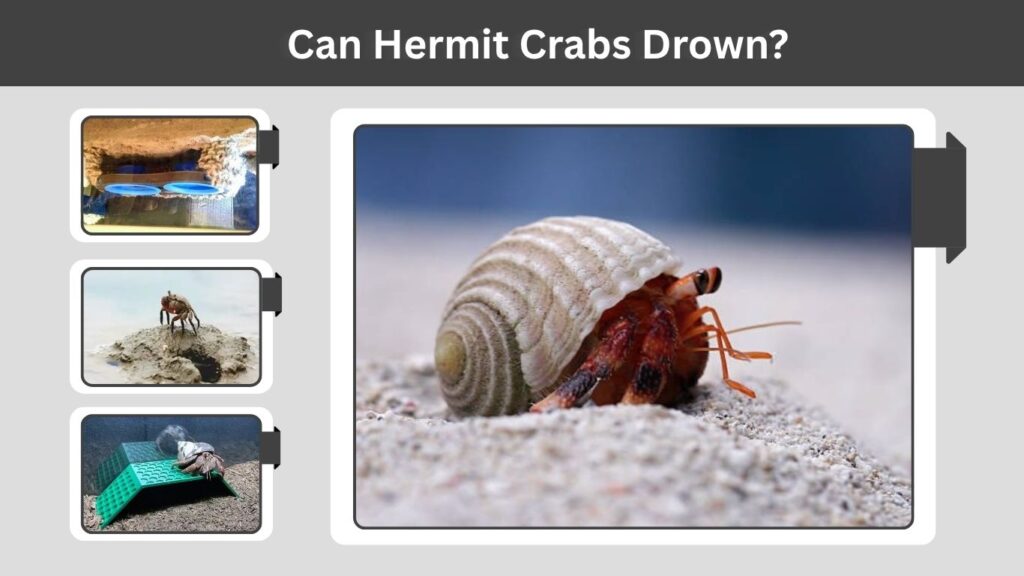
Land hermit crabs can drown if they become trapped underwater and cannot reach the surface. However, this does not mean their pools must be extremely shallow. A properly constructed deep pool allows normal submersion while providing several reliable exit points.
The greatest risks include:
- Smooth bowl walls
- Missing ramps
- Unstable climbing objects
- Overcrowded pools
- Crabs becoming trapped beneath decorations
- Small crabs being unable to reach the exit
Do not force a land hermit crab underwater. Let it enter and leave the water voluntarily. Healthy crabs usually manage their own bathing behavior when the pool is safely designed.
How Long Can Hermit Crabs Go Without Water?
There is no single safe number of hours or days that applies to every hermit crab. Survival depends on species, humidity, temperature, shell-water reserves, health, and access to moist food. A crab might remain alive temporarily without a bowl, but dehydration and respiratory stress can begin before obvious symptoms appear.
Land hermit crabs need their modified gills to remain moist. Dry conditions can interfere with breathing, molting, activity, and overall health. Owners should never intentionally test how long a crab can survive without water.
Warning signs may include unusual inactivity, weakness, remaining deeply withdrawn inside the shell, loss of coordination, or prolonged exposure outside the shell. These signs can have several causes and should be treated seriously.
Cleaning Hermit Crab Water Pools
Unfiltered pools should be checked every day for food, waste, substrate, or mold. Replace the water whenever it becomes dirty, develops an odor, or contains debris.
The ideal cleaning schedule depends on:
- Pool size
- Number of crabs
- Whether filtration is used
- Amount of substrate carried into the water
- Enclosure temperature
- Presence of food particles
Small unfiltered bowls may require frequent replacement. Larger filtered pools can remain stable longer but still require monitoring and maintenance. Crab Street Journal notes that some setups may be changed every three to five days, although actual needs depend on the conditions in each habitat.
Wash bowls with hot water and a crab-safe cleaning method. Avoid leaving soap, fragrance, disinfectant, or chemical residue on anything returned to the enclosure.
Common Hermit Crab Water Mistakes
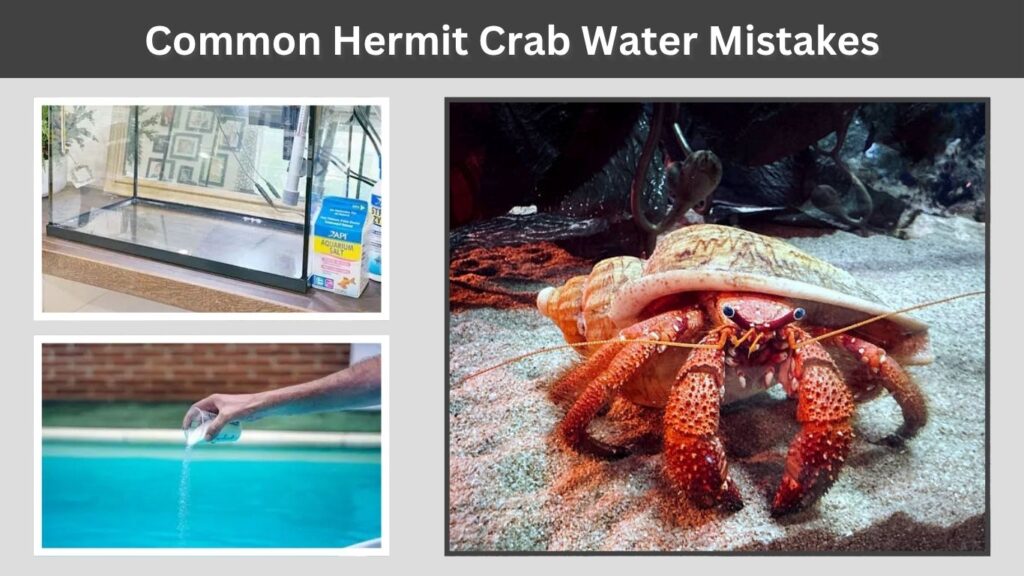
Several water-related errors can place pet hermit crabs at risk:
- Providing only one type of water
- Using untreated tap water
- Mixing saltwater with table salt
- Using freshwater aquarium salt
- Guessing the salt-to-water ratio
- Providing dishes too small for submersion
- Failing to add safe exit ramps
- Depending on a wet sponge as the main water source
- Allowing food or waste to decay in the pools
- Keeping land hermit crabs permanently underwater
- Placing marine hermit crabs in freshwater
Natural sponges are not a replacement for proper pools and can collect bacteria or mold when poorly maintained. Hermit crabs should have direct access to clean water rather than depending on moisture held inside a sponge.
FAQs
Do hermit crabs need both freshwater and saltwater?
Yes. Pet land hermit crabs should have continuous access to separate pools of dechlorinated freshwater and properly prepared marine saltwater. The two water types help them manage hydration, shell water, mineral intake, and internal salt balance.
Can land hermit crabs live underwater?
No. Adult land hermit crabs need humid air and should not be permanently submerged. They can voluntarily enter deep pools, but they must have secure ramps that allow them to return to land whenever they choose.
Can I use regular salt for hermit crabs?
No. Use a marine aquarium salt mix intended to recreate seawater. Table salt, cooking sea salt, Epsom salt, and freshwater aquarium salt do not provide the correct combination of marine minerals.
How much water should a hermit crab have?
Each pool should contain enough water for the largest crab to submerge fully. The exact depth depends on the crab’s size, but every pool must include stable, textured exits that smaller crabs can use easily.
Do hermit crabs swim?
Most land hermit crabs move or walk through water rather than swimming skillfully. Marine hermit crabs live underwater but generally crawl across rocks, sand, or the aquarium floor. Water behavior varies by species, so correct identification is important.