
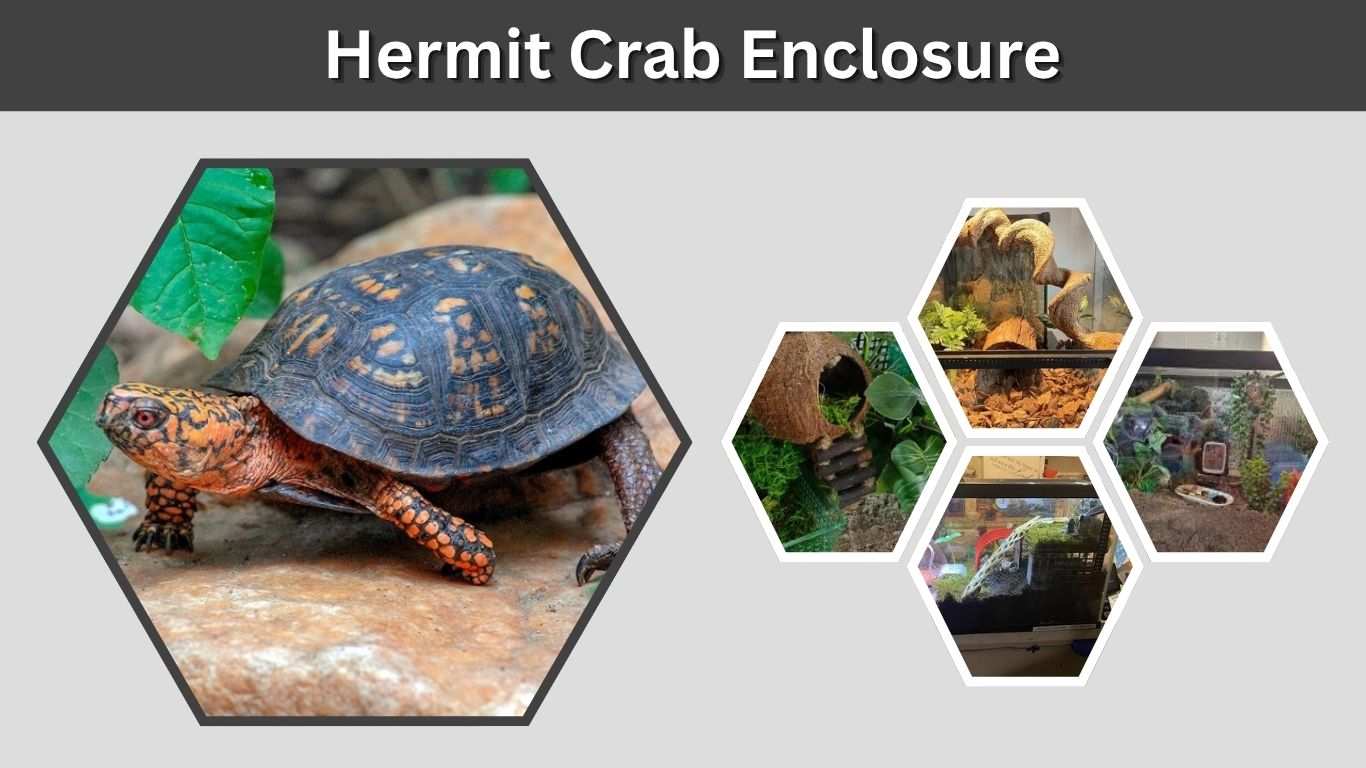
A proper hermit crab enclosure must provide warmth, humidity, deep substrate, climbing space and access to both fresh and saltwater. Although hermit crabs are often displayed in small plastic cages, these containers rarely provide enough room or retain sufficient humidity. A secure glass tank is usually the best choice for creating a stable tropical environment. With the correct equipment and arrangement, the enclosure will support natural behaviors such as burrowing, molting, climbing, foraging and changing shells.
What Is the Best Enclosure for Hermit Crabs?
The best enclosure for land hermit crabs is generally a glass aquarium or terrarium with a secure, mostly covered lid. Glass holds heat and moisture more effectively than wire cages, while a lid reduces humidity loss and prevents escapes.
Land hermit crabs breathe through modified gills that must remain moist. Consequently, high humidity is essential rather than optional. The Smithsonian National Zoo uses an insulated enclosure top to retain moisture in its land hermit crab habitat.
Recommended Enclosure Features
A good hermit crab enclosure should include:
- A glass or durable plastic tank
- A secure, humidity-retaining lid
- Deep, moisture-holding substrate
- Freshwater and marine saltwater pools
- A thermometer and digital hygrometer
- Safe climbing branches and hiding areas
- Several natural, unpainted spare shells
- Food dishes and a calcium source
Open-top containers and wire cages are unsuitable for permanent housing because they lose humidity quickly. A temporary plastic container can be used during tank maintenance, but it should not replace a properly controlled habitat.
Hermit Crab Enclosure Size
Hermit crabs need floor space for walking, digging and accessing resources. They also need vertical room for deep substrate and climbing structures. A tank that looks large before adding substrate may become cramped after the water pools and accessories are installed.
Is a 10-Gallon Tank Large Enough?
A 10-gallon tank can serve as a starting enclosure for one or two very small land hermit crabs. However, it offers limited room for deep substrate, large water pools and enrichment.
A 20-gallon-long aquarium is usually a more practical beginner setup. Its wider floor area makes it easier to create feeding, climbing and shell-selection zones without overcrowding the crabs.
Large Hermit Crab Enclosures
Larger crabs and groups require considerably more space. An exotic-animal veterinary source recommends approximately 38 liters, or about 10 gallons, of enclosure capacity per Australian land hermit crab. Exact requirements vary with species, body size and interior arrangement.
| Number and size of crabs | Suggested starting enclosure |
| One or two very small crabs | 10 gallons |
| Two to three small or medium crabs | 20 gallons or larger |
| Several medium crabs | 30–40 gallons or larger |
| Large crabs or a growing colony | 40 gallons or more |
These are starting guidelines, not maximum sizes. A larger enclosure is generally beneficial when its temperature and humidity can be maintained consistently.
How to Set Up a Hermit Crab Enclosure
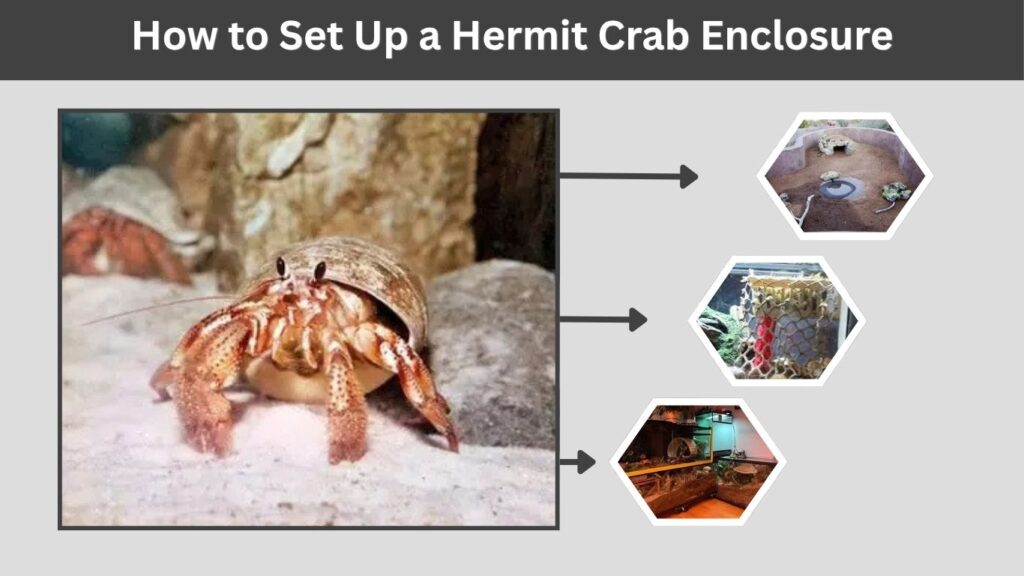
Set up and test the habitat before introducing the crabs. Check the temperature and humidity for at least a full day so that problems can be corrected without exposing the animals to unstable conditions.
1. Add Deep Substrate
Hermit crabs bury themselves to molt, hide and regulate moisture. The substrate should be at least six inches deep or approximately three times the height of the largest crab, whichever is deeper.
A mixture of play sand and coconut fiber is commonly used. Moisten it with treated water until it can hold the shape of a tunnel without releasing water when squeezed. The Smithsonian provides its hermit crabs with approximately six inches of substrate for burrowing and molting.
Avoid calcium sand, gravel, wood shavings and very dry sand. These materials may not hold stable molting tunnels and can create health or safety problems.
2. Control Temperature
Most commonly kept tropical land hermit crabs need a warm enclosure. A general target is approximately 75–85°F, or 24–29°C, although species-specific needs may vary.
Place a thermostatically controlled heat mat on the outside back wall of the tank, above the substrate line. Heating the air is preferable to heating the bottom because an under-tank heater can overheat crabs buried in the substrate.
Use a digital thermometer near the center of the enclosure. Do not place the tank in direct sunlight because glass tanks can overheat rapidly.
3. Maintain Proper Humidity
Maintain approximately 70–90% humidity and monitor it daily with a reliable digital hygrometer.
Humidity can be supported by:
- Using a fitted glass or acrylic lid
- Keeping the substrate appropriately moist
- Adding moss in a raised moss pit
- Installing bubblers in the water pools
- Placing the heat source correctly
Constant heavy misting is not the best solution. It can saturate the substrate, cause flooding and encourage mold. Adjust the lid, heating and water features to create stable humidity instead.
4. Provide Freshwater and Saltwater Pools
A proper land hermit crab enclosure needs two separate pools. One should contain dechlorinated freshwater, while the other should contain saltwater prepared with a marine aquarium salt mix.
The pools should be deep enough for the crabs to submerge but must include secure ramps, mesh or textured stones for easy exit. The Smithsonian provides both fresh and saltwater pools so its land hermit crabs can choose where to wade.
Food-safe plastic containers, including suitable reusable storage containers, may be used as pools. Ensure that they have no sharp edges and remain stable when crabs climb on them.
Do not create a half-water, half-sand aquarium for a terrestrial hermit crab. It needs mostly land with two accessible water pools—not a deep aquatic section occupying half the tank.
Hermit Crab Enclosure Ideas and Decorations
A natural-looking setup can be attractive while encouraging exercise and exploration. Decorations must be stable, washable and free from toxic coatings.
Climbing and Hiding Areas
Hermit crabs are capable climbers. Add cork bark, cholla wood, mangrove roots, untreated branches, coconut hides or sturdy artificial vines.
Secure tall objects carefully so they cannot collapse onto a buried crab. Avoid resin decorations with small holes where claws or legs could become trapped.
Provide several shaded hiding places, but leave open areas where the crabs can walk and forage. Rearranging a few lightweight items occasionally can provide enrichment without disturbing the deep substrate.
Shell Shop
Create a designated shell area containing several natural, unpainted shells. Offer different sizes and opening shapes because individual crabs have different preferences.
Clean shells in dechlorinated water before adding them. Never pull a crab from its shell or force it into another one.
Safe Enclosure Plants
Artificial aquarium plants can provide cover and climbing opportunities. Choose sturdy products without sharp wires or easily detached pieces.
Live plants are more challenging because hermit crabs may climb, eat or uproot them. Pesticide-free spider plants, pothos and bromeliads are sometimes used, but their pots and soil must not introduce fertilizers, pesticides or pests. Research each plant carefully before placing it in the tank.
Can You Make a DIY Hermit Crab Enclosure?
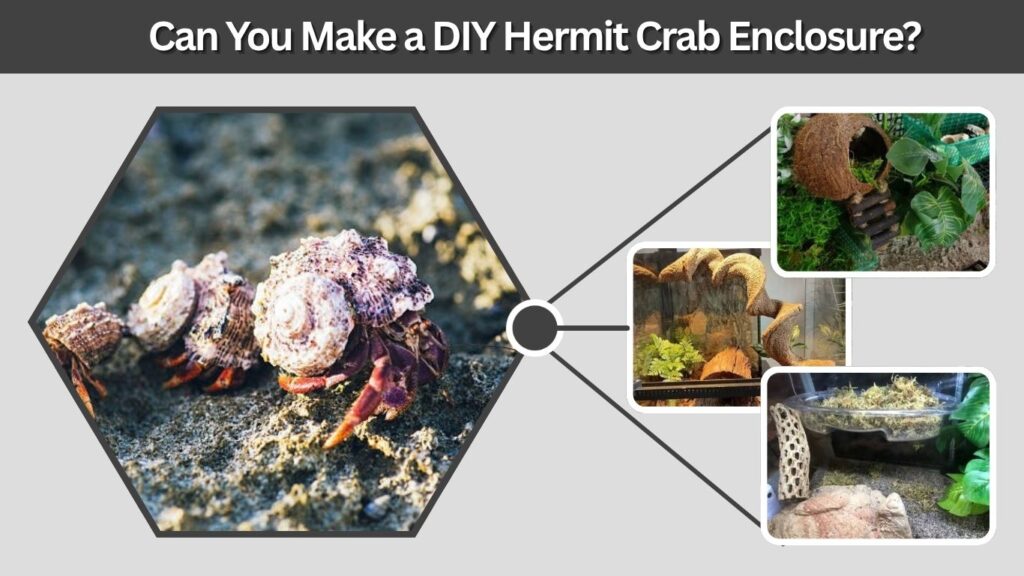
A DIY enclosure can work when it safely maintains the required environmental conditions. Large glass aquariums are often easier to modify than commercial “hermit crab kits,” many of which are too small.
Useful DIY projects include:
- An acrylic or polycarbonate tank lid
- Plastic-container water pools with mesh ramps
- A coconut-shell hiding place
- Natural wood climbing structures
- A raised moss basket
- A divided shell-selection tray
- A second aquarium connected as a climbing topper
Only use aquarium-safe silicone when attaching permanent structures. Allow it to cure completely according to the manufacturer’s instructions before introducing the crabs.
Outdoor enclosures are generally unsuitable because temperature, predators, insects, pesticides and humidity cannot be controlled reliably.
Cleaning and Preventing Mold
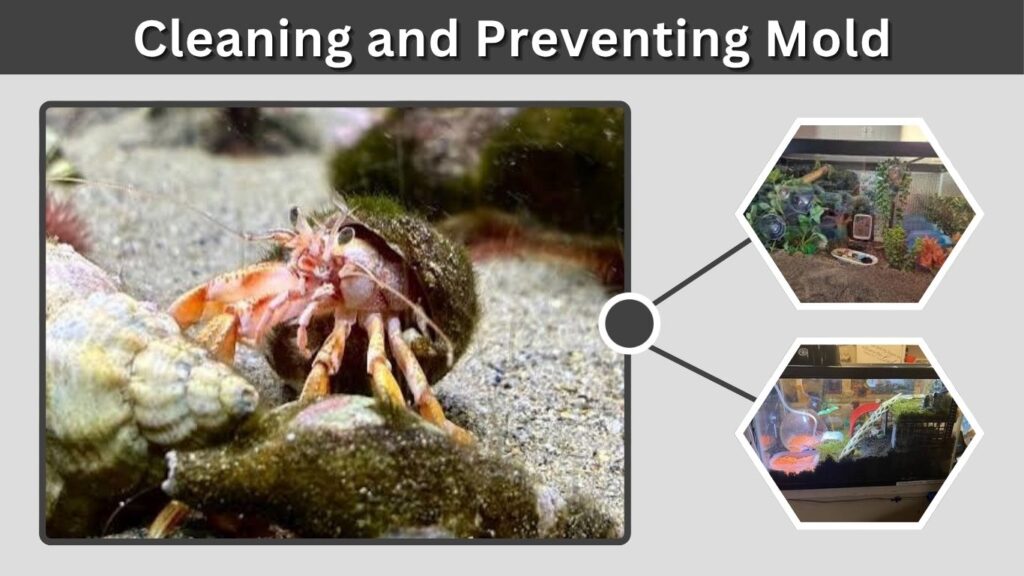
A healthy tank should smell earthy, not sour or rotten. Small amounts of harmless fungal growth may occasionally appear in a warm, humid enclosure, but recurring mold usually indicates excess food, poor airflow or saturated surfaces.
Daily and Weekly Maintenance
Remove uneaten fresh food, visible waste and spoiled organic material each day. Wash food and water dishes regularly with hot water and rinse them thoroughly.
Inspect climbing wood, moss and decorations weekly. Remove and clean anything developing substantial mold. Avoid routine replacement of all substrate because a crab may be molting underground.
Why Does the Sand Turn Black?
Dark patches can develop from water spills, decomposing food, waste or bacterial growth. Remove contaminated material when it is limited to the surface.
A rotten odor, standing water or widespread black substrate may indicate flooding or severe contamination. Before performing major maintenance, confirm that no crab is buried and molting. Disturbing a molting crab can be fatal.
Mistakes to Avoid
Never house land hermit crabs with crayfish, fish or other aquatic animals. They have different habitat needs, and crayfish may attack or injure a hermit crab.
Other common mistakes include using a lidless enclosure, keeping the substrate too shallow, using untreated tap water, placing a heater beneath the tank, offering only one water dish and using painted shells.
FAQs
How big should a hermit crab enclosure be?
A 20-gallon-long aquarium is a useful starting size for two or three small hermit crabs. Larger crabs and groups need more space. The enclosure must accommodate deep substrate, two water pools, spare shells, feeding areas and climbing structures without becoming crowded.
Can a hermit crab enclosure be left without a top?
A permanent enclosure should not be left open. An uncovered tank loses humidity and allows climbing crabs to escape. Use a fitted glass, acrylic or polycarbonate lid while maintaining enough controlled ventilation to prevent excessive condensation and stagnant conditions.
Why does a hermit crab enclosure need saltwater?
Land hermit crabs regulate moisture and salinity by using both fresh and saltwater. Provide a separate pool of dechlorinated freshwater and another made with marine aquarium salt. Do not use table salt because it does not contain the same mineral composition.
Can I use plastic containers inside the enclosure?
Food-safe plastic containers can be used for water pools, food dishes or shell storage. Choose sturdy containers without sharp edges. Water pools must include textured ramps so crabs of every size can enter and exit safely.
Is a bioactive hermit crab enclosure suitable for beginners?
A bioactive enclosure can contain plants and small cleanup organisms, but it is more difficult to manage than a conventional setup. Beginners should first learn to control heat, humidity, substrate moisture and sanitation. A bioactive system does not eliminate the need for daily observation and cleaning.