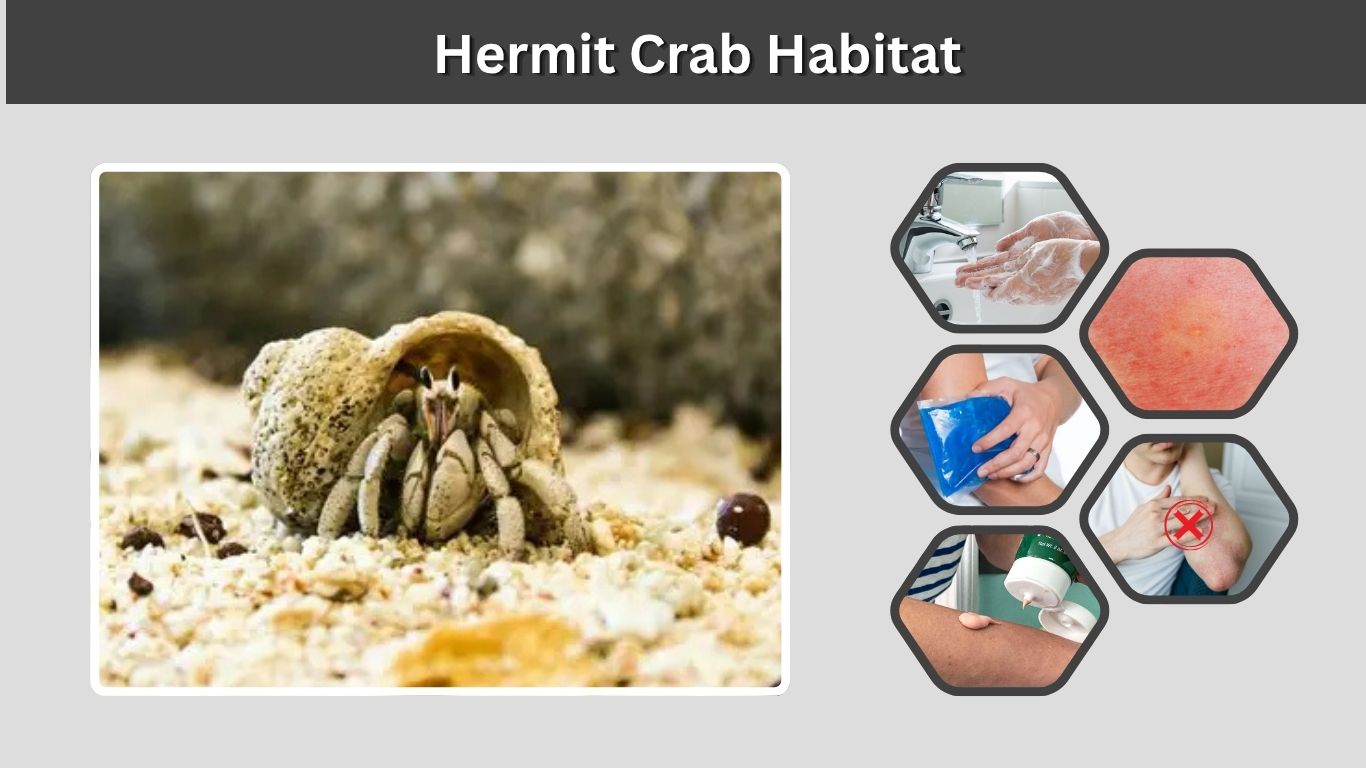
A proper hermit crab habitat must provide warmth, humidity, deep substrate, safe water, hiding places, climbing structures, and enough room for natural behavior. Although pet stores often display hermit crabs in small plastic containers, these temporary enclosures cannot meet their long-term needs. Land hermit crabs require a secure glass tank that recreates a warm coastal environment, while marine hermit crabs need a fully cycled saltwater aquarium. This guide explains natural habitats, tank setup, supplies, cleaning, and common mistakes.
What Is a Hermit Crab’s Natural Habitat?
Hermit crabs live in many coastal environments, but their exact habitat depends on whether they are terrestrial or marine. Both types protect their soft abdomens by occupying empty snail shells.
Land Hermit Crab Habitat
Land hermit crabs commonly live around tropical and subtropical coastlines. They spend most of their adult lives on land but remain dependent on moisture and access to water.
Natural habitats include:
- Sandy beaches
- Coastal forests
- Mangrove edges
- Rocky shorelines
- Dunes and coastal scrub
- Areas beneath logs and leaf litter
- Burrows in moist soil or sand
During the day, they often hide under vegetation, driftwood, rocks, or other sheltered objects. They become more active at night when temperatures are cooler and humidity is higher.
Marine Hermit Crab Habitat
Marine hermit crabs live underwater in oceans and saltwater coastal habitats. Depending on the species, they may inhabit coral reefs, rocky bottoms, seagrass beds, tide pools, or sandy seafloors.
They cannot be kept in a land hermit crab enclosure. Marine species require a properly established saltwater aquarium with suitable salinity, filtration, oxygenation, and temperature.
Best Hermit Crab Habitat for Pets
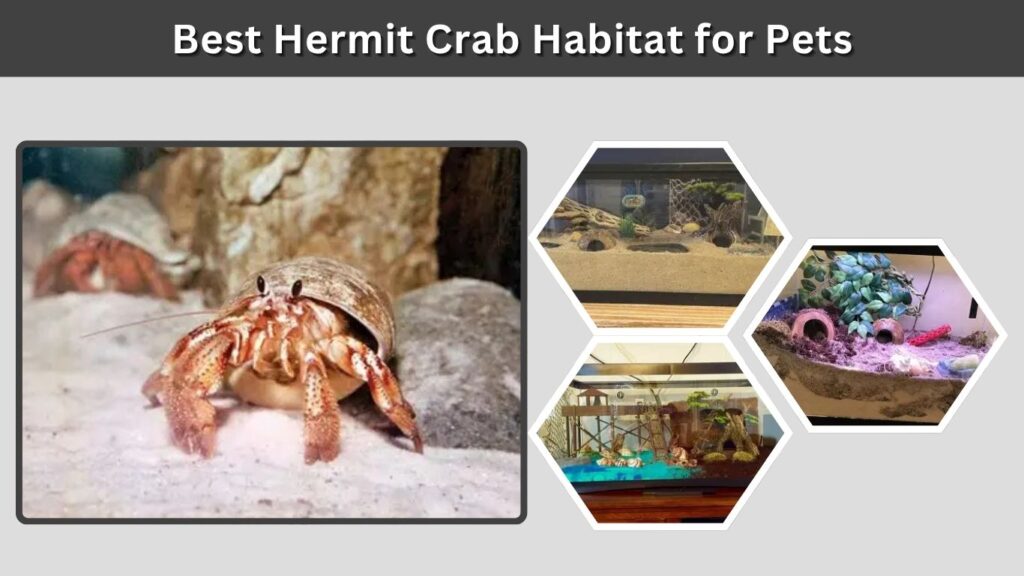
The best habitat for land hermit crabs is a glass aquarium with a secure lid. The enclosed design helps retain heat and humidity while preventing escapes.
Small plastic carriers and wire cages lose moisture too quickly. They may work briefly during transportation but should not serve as permanent homes.
Recommended Tank Size
A 20-gallon long aquarium is a practical starting point for a small group of land hermit crabs. Larger species or larger groups need considerably more room.
| Number and size of crabs | Suggested enclosure |
| Two or three small crabs | About 20 gallons |
| Several medium crabs | 29–40 gallons or larger |
| Large or mixed-size group | 40 gallons or larger |
| Temporary quarantine | Separate smaller tank |
A 10-gallon hermit crab habitat is often marketed as a starter setup, but it provides limited floor space and makes it difficult to add deep substrate, two water pools, shells, hides, food dishes, and climbing areas. A larger enclosure is more stable and easier to furnish correctly.
What Do Hermit Crabs Need in Their Habitat?
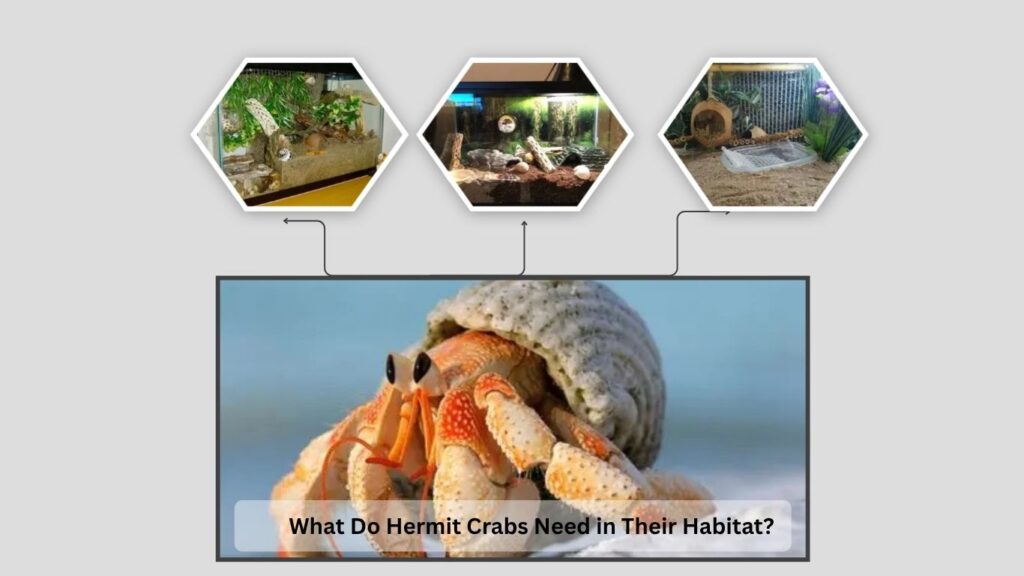
A successful habitat should support digging, climbing, hiding, eating, drinking, bathing, shell changing, and molting.
Essential supplies include:
- Glass aquarium
- Secure glass or plastic lid
- Deep, moisture-retaining substrate
- Thermometer and hygrometer
- Safe heating source
- Freshwater pool
- Saltwater pool
- Food dish
- Hiding places
- Climbing decorations
- Extra natural shells
- Leaf litter and safe enrichment
Hermit crabs are social animals and generally should not be kept alone. A suitable group needs enough space and resources to reduce competition.
Hermit Crab Substrate
Substrate is one of the most important parts of a land hermit crab habitat. Hermit crabs bury themselves to molt, regulate moisture, escape light, and feel secure.
Best Substrate Mixture
A commonly used mixture combines play sand with coconut fiber. The sand provides structure, while the coconut fiber helps retain moisture.
The substrate should hold the shape of a tunnel when squeezed but should not be dripping wet. A dry mixture can collapse around a molting crab, while waterlogged substrate may become stagnant.
How Deep Should It Be?
Provide at least six inches of substrate for small and medium crabs. A useful rule is to make it at least three times deeper than the height of the largest crab.
Large land hermit crabs may require eight to twelve inches or more. Never dig up a buried crab unless there is a true emergency. Molting can take weeks or months, and disturbance can be fatal.
Temperature and Humidity
Land hermit crabs breathe through modified gills. These gills must remain moist, making humidity essential for survival.
Ideal Temperature
Most commonly kept tropical land hermit crabs do well at approximately 75–85°F, or 24–29°C. The enclosure should have a gentle temperature gradient rather than one uniformly hot area.
An under-tank heater is usually best placed on the outside wall of the tank above the substrate line. Placing it beneath deep substrate may overheat buried crabs.
Ideal Humidity
Maintain relative humidity at approximately 70–80%, adjusting slightly for the species being kept. Humidity that remains too low can dry the gills and cause breathing difficulties.
A solid lid, deep moist substrate, and properly sized water pools usually maintain humidity more safely than constant spraying. Excessive misting may flood the substrate and encourage mold.
Use digital thermometers and hygrometers rather than guessing from how the tank feels.
Freshwater and Saltwater Pools
Land hermit crabs need access to both freshwater and marine-style saltwater. These pools help them drink, bathe, and regulate the water stored inside their shells.
Freshwater Pool
Use tap water treated with a conditioner that removes chlorine and chloramine. Untreated tap water can harm hermit crabs.
The pool should be deep enough for the largest crab to submerge fully. Add stones, plastic mesh, or another textured ramp so every crab can climb out easily.
Saltwater Pool
Prepare saltwater with a marine aquarium salt mix. Do not use ordinary table salt because it does not contain the correct mineral balance and may include harmful additives.
The saltwater pool should also allow full submersion and provide a safe exit. Replace dirty water regularly, or use small filters when the pools are large enough.
Hides, Climbing Areas and Habitat Décor
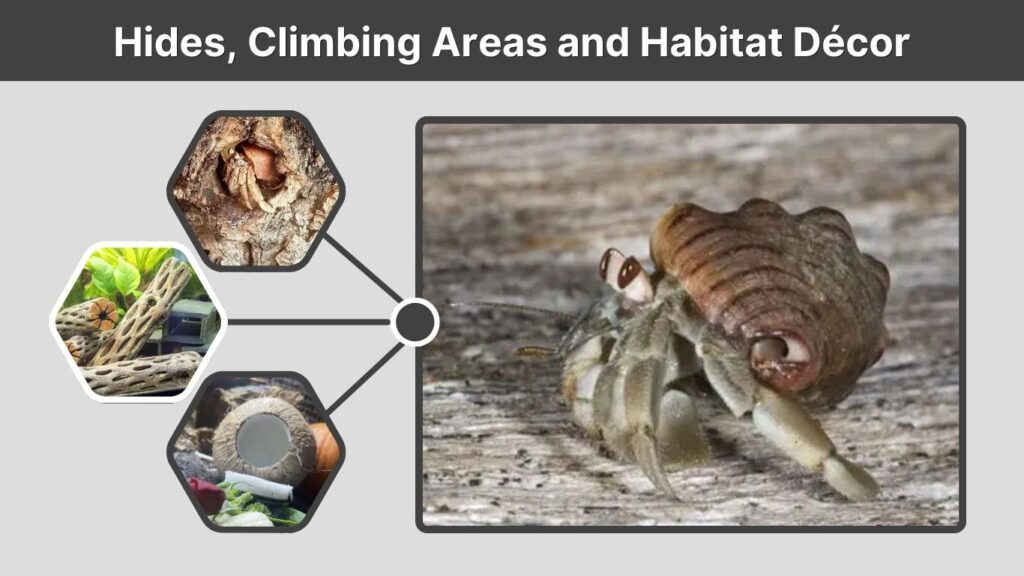
Hermit crabs naturally explore complex environments. A bare tank may cause stress and inactivity.
Safe Hiding Places
Provide several shelters so crabs can choose where to rest. Suitable options include:
- Coconut huts
- Cork bark
- Cholla wood
- Untreated driftwood
- Clay flowerpots placed safely on their sides
- Artificial caves
- Dense silk or safe plastic plants
Heavy decorations must rest securely on the tank bottom rather than loosely on top of deep substrate. This prevents them from collapsing onto buried crabs.
Climbing and Enrichment
Hermit crabs are skilled climbers. Branches, cork walls, ropes, plastic canvas, and sturdy artificial vines can expand the usable space.
Other habitat ideas include leaf litter, moss pits, seed-growing areas, foraging stations, hamster wheels, and rotating climbing structures. Avoid painted objects, exposed metal, sharp edges, and decorations treated with pesticides or chemicals.
Extra Shells
Hermit crabs change shells as they grow or when they find a better-fitting option. Shell competition can cause stress or fighting when choices are limited.
Provide several natural, unpainted shells for each crab. The openings should be similar in shape to the crab’s preferred shell and slightly larger or smaller than its current opening.
Painted shells should be avoided because paint may chip, trap the crab, or expose it to unsafe materials. Boil and cool new natural shells before placing them in the enclosure.
Hermit Crab Food in the Habitat
Land hermit crabs are opportunistic omnivores. In the wild, they eat fallen fruit, seeds, leaves, carrion, algae, insects, and other organic material.
A varied captive diet may include:
- Unsalted seafood
- Cooked egg
- Plain meat
- Dried insects
- Leafy vegetables
- Carrots and sweet potatoes
- Fresh and dried fruits
- Seeds and unsalted nuts
- Seaweed
- Calcium sources such as cuttlebone
Remove fresh food before it spoils. Avoid heavily processed foods, salty snacks, seasoning, pesticides, and foods containing unsafe preservatives.
DIY Hermit Crab Habitat Setup
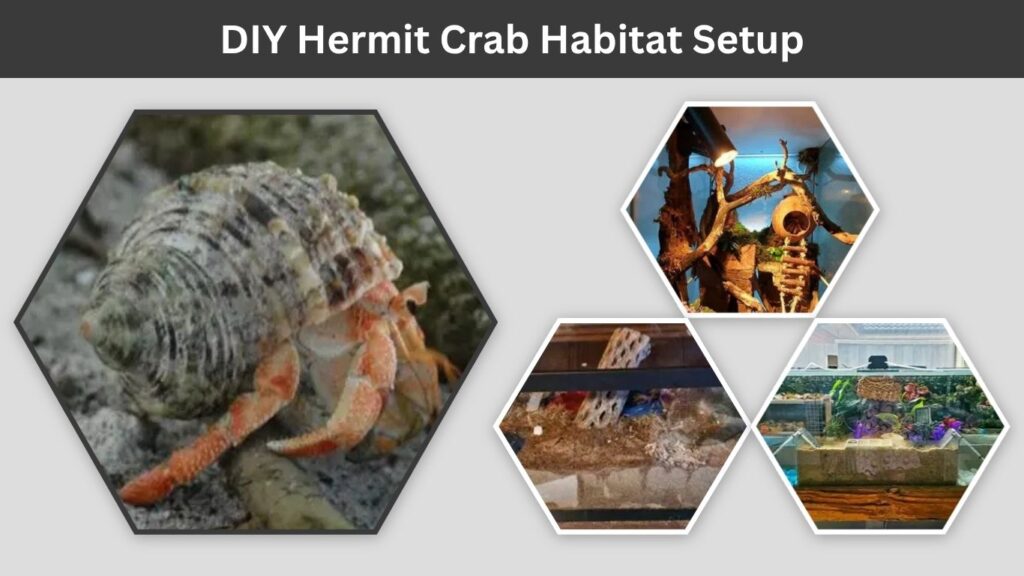
A homemade habitat can be safe and attractive when it meets the crabs’ biological needs.
Step 1: Prepare the Tank
Clean the glass enclosure with warm water. Avoid household sprays, scented cleaners, and chemical residues. Install a secure lid that retains humidity while allowing limited ventilation.
Step 2: Add Deep Substrate
Mix clean play sand and prepared coconut fiber until the material has a sandcastle-like consistency. Add enough depth for complete molting burrows.
Step 3: Install Heat and Monitoring
Attach the heater to the outside back or side wall. Place digital temperature and humidity sensors near the area where the crabs spend time.
Step 4: Add Water and Food Areas
Position freshwater and saltwater pools where they can be removed without disturbing buried crabs. Include sturdy entrance and exit ramps.
Step 5: Add Hides and Climbing Décor
Create dark shelters, elevated climbing areas, and open paths. Make sure nothing can fall or trap a crab.
Step 6: Add Shells and Enrichment
Place several clean natural shells around a shell shop area. Add leaf litter, cork bark, and other safe objects for exploration.
How to Clean a Hermit Crab Habitat
A healthy enclosure should not be completely emptied on a routine schedule because buried molting crabs must remain undisturbed.
Daily or regular maintenance includes:
- Removing spoiled food
- Washing food dishes
- Replacing dirty pool water
- Spot-cleaning visible waste
- Checking temperature and humidity
- Inspecting equipment for damage
- Removing moldy materials
A full substrate replacement is usually unnecessary unless there is flooding, contamination, a serious pest problem, or another emergency. Beneficial microorganisms often develop in a stable enclosure.
Land vs Marine Hermit Crab Habitats
Land and marine hermit crabs have completely different housing requirements.
| Requirement | Land hermit crab | Marine hermit crab |
| Main environment | Warm, humid land tank | Fully aquatic saltwater tank |
| Substrate | Deep sand and coconut fiber | Marine sand or reef substrate |
| Water | Fresh and saltwater pools | Constant saltwater immersion |
| Filtration | Pools may be filtered | Full aquarium filtration required |
| Molting | Buried in substrate | Usually molts underwater |
| Tank cycling | Helpful for large pools | Essential before adding animals |
Never place a marine hermit crab in a dry land enclosure, and never permanently submerge a land hermit crab in an aquarium.
FAQs
What should a hermit crab habitat look like?
A proper land hermit crab habitat should resemble a humid tropical shoreline. It needs deep substrate, two submersible water pools, dark hides, climbing structures, spare shells, food dishes, leaf litter, controlled heat, and consistently high humidity.
Can hermit crabs live in plastic containers?
A ventilated plastic container may be used temporarily for transportation or emergencies. It is not ideal for permanent housing because small containers lose heat and humidity quickly and rarely provide enough room for deep substrate, water pools, and enrichment.
Can hermit crabs and sea stars share a habitat?
Marine hermit crabs and sea stars may sometimes share a properly sized saltwater aquarium, but compatibility depends on their exact species, diet, adult size, and temperament. Land hermit crabs cannot live with sea stars because their habitat requirements are completely different.
Can live plants grow in a hermit crab habitat?
Some safe plants can be used, but hermit crabs may climb, uproot, or eat them. Plants must be free from pesticides and fertilizers. Many keepers use safe sprouted seeds, moss areas, leaf litter, or artificial plants instead.
What is the biggest hermit crab habitat mistake?
The most common mistake is using a tiny, dry enclosure with shallow substrate and no proper water pools. Hermit crabs need stable heat, high humidity, deep molting space, social companions, nutrition, shells, and room to explore.