A hermit crab without a shell is extremely vulnerable. Although hermit crabs regularly leave one shell to enter another, they should not remain exposed for long. Their soft abdomen can quickly become injured, dehydrated, or attacked by other crabs. A pet hermit crab walking around without its shell may be experiencing stress, illness, unsuitable tank conditions, or a shortage of acceptable replacement shells. Understanding why this happens and responding carefully can improve the crab’s chance of survival.
What Does a Hermit Crab Look Like Without a Shell?
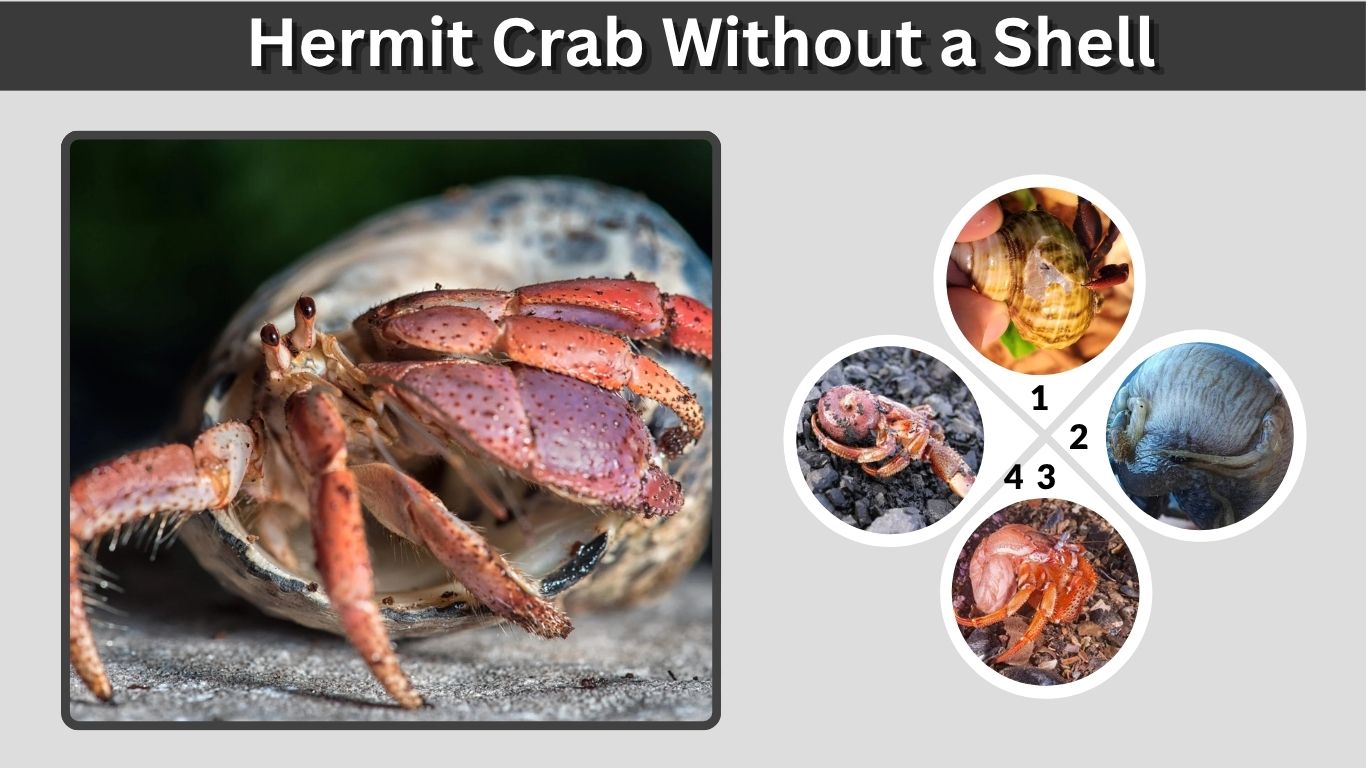
Without its familiar spiral shell, a hermit crab looks surprisingly different. The visible front half of its body is protected by a hard exoskeleton, while the rear portion is soft, curved, and delicate.
Hard Front Section
The crab’s head, claws, walking legs, and upper body are covered by a firm exoskeleton. This armored section protects the crab while it walks, eats, climbs, and defends itself.
One claw is usually larger than the other. The larger claw can help block the shell opening when the crab retreats inside.
Soft Abdomen
The abdomen is long, curled, and much softer than the front of the body. It may appear pale gray, pinkish, whitish, or slightly translucent, depending on the species and condition of the crab.
This exposed abdomen is the main reason a hermit crab cannot safely remain without a shell. It has little protection against drying, cuts, falls, heat, and attacks.
Small Gripping Appendages
Hermit crabs have small appendages on the abdomen that help them grip the inside of a shell. These body parts hold the crab securely in place, making it difficult for another animal to pull it out.
The abdomen is naturally curved to fit inside spiral snail shells.
Can a Hermit Crab Live Without a Shell?
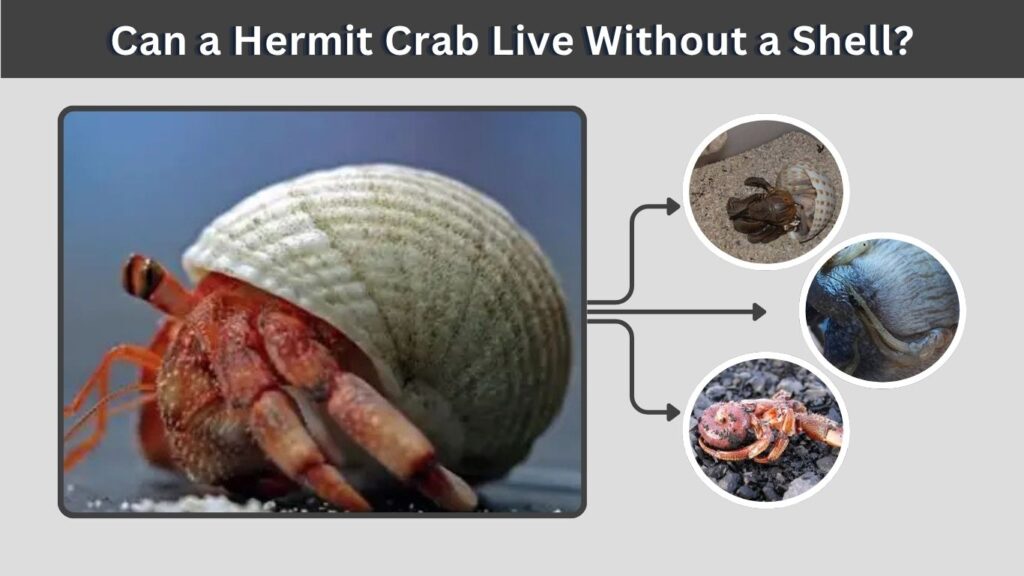
A hermit crab cannot live normally without a shell. It may survive briefly while changing shells, but remaining exposed for an extended period is dangerous.
The shell performs several essential functions:
- Protects the soft abdomen from injury
- Helps prevent moisture loss
- Shields the crab from predators
- Supports the crab’s body
- Provides a safe place for resting
- Helps protect sensitive gills
- Reduces stress from light and movement
Land hermit crabs breathe through modified gills that must remain moist. Without the protection of a shell, the crab may lose moisture rapidly, especially in a dry enclosure.
How Long Can a Hermit Crab Survive Without a Shell?
There is no exact survival time that applies to every hermit crab. Its condition depends on humidity, temperature, health, stress level, injuries, and whether it can quickly find another shell.
A healthy crab may remain exposed for a short time while inspecting or changing shells. However, a crab that stays naked for hours is facing a serious emergency.
In a dry or hot environment, dehydration can develop quickly. An injured, recently molted, or sick hermit crab may decline even faster. Rather than waiting to see how long it survives, provide suitable shells and a protected environment immediately.
Why Is My Hermit Crab Walking Around Without a Shell?
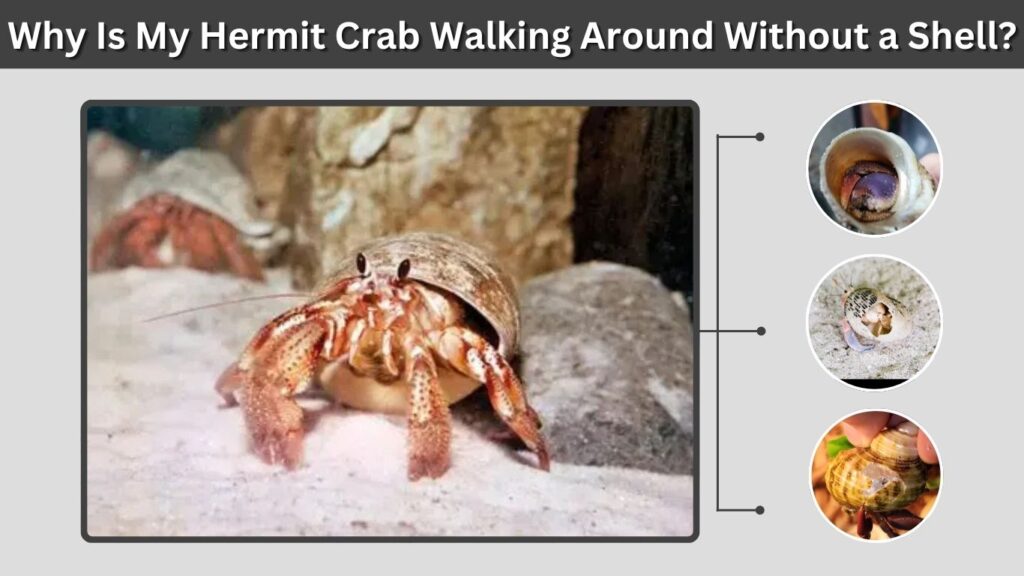
A hermit crab usually has a reason for abandoning its shell. Identifying the problem can help prevent it from happening again.
Unsuitable Temperature or Humidity
Excessive heat can make a shell uncomfortable. Low humidity can also interfere with breathing and increase dehydration.
Most commonly kept land hermit crabs need warm, humid conditions. Sudden temperature changes, direct sunlight, heating equipment placed too close to the enclosure, or a poorly ventilated heat source can cause severe stress.
No Suitable Replacement Shells
A crab may leave its current shell while searching for one that fits better. If the enclosure does not contain enough appropriate choices, it may remain exposed.
Provide several natural, unpainted shells for each crab. The openings should be similar to the crab’s current shell opening, with some slightly smaller and some slightly larger.
Different hermit crab species may prefer different opening shapes. Purple pincher hermit crabs commonly accept shells with round openings, while some other species may prefer more oval or D-shaped openings.
Shell Damage or Irritation
A cracked, dirty, rough, or damaged shell may cause a hermit crab to abandon it. Sand, insects, waste, or irritating material trapped inside the shell can also create discomfort.
Painted shells are unsafe because paint may chip, peel, or expose the crab to harmful substances.
Stress or Poor Enclosure Conditions
Frequent handling, overcrowding, bullying, incorrect substrate, strong odors, lack of hiding places, or sudden changes can stress a hermit crab.
A newly purchased crab may also leave its shell after experiencing unsuitable conditions during shipping or display.
Illness or Injury
A weak or injured hermit crab may struggle to hold its shell. Loss of gripping strength can occur because of severe stress, dehydration, physical injury, or illness.
A crab that appears motionless, smells unpleasant, loses limbs, or cannot coordinate its movements may be in critical condition.
Molting Problems
Hermit crabs normally molt while protected inside or beneath their shells. However, a stressed crab may leave its shell before, during, or after molting.
A freshly molted crab is especially vulnerable because its new exoskeleton is soft. It should not be handled or placed with active tank mates.
What to Do When a Hermit Crab Leaves Its Shell
Act calmly and avoid forcing the crab into a shell. Rough handling can damage its abdomen or gills.
Isolate the Crab Safely
Move the naked crab into a small, humid isolation container if other hermit crabs could attack it. Use a clean container with ventilation and enough room for several shells.
Handle the crab as little as possible. When movement is necessary, use a clean spoon, small cup, or similar object rather than gripping its exposed body.
Maintain Proper Warmth and Humidity
Keep the isolation area warm and humid without making it excessively hot or wet. Conditions should remain close to those of a properly maintained hermit crab habitat.
Do not place the crab directly under a powerful heat lamp. Sudden heating can worsen dehydration.
Offer Several Clean Shells
Place multiple natural shells around the crab. Select shells with openings close to the size of its previous shell.
Clean shells by rinsing them thoroughly with safe water. They can also be boiled separately, cooled completely, and offered with a small amount of safe water inside.
Position the openings toward the crab so it can inspect them easily.
Provide Privacy
Cover part of the isolation container to reduce light and movement. A stressed hermit crab may refuse shells while people are watching or repeatedly disturbing it.
Leave the crab in a quiet location and check it without excessive handling.
Offer Food and Water
Provide a small amount of nutritious food along with properly prepared fresh water and marine salt water. Use shallow dishes that do not create a drowning risk.
A severely stressed crab may not eat immediately, but water and food should remain available.
Can You Put a Hermit Crab Back in Its Shell?
You should never push, squeeze, glue, or force a hermit crab into a shell. Its soft abdomen can be torn or crushed, and forcing it into an unsuitable shell may cause additional stress.
The safest approach is to create suitable conditions and allow the crab to choose a shell by itself. Place the crab and several shells in a small, warm, humid, darkened container. Many crabs will enter a shell once they feel secure.
Are Hermit Crabs Born Without Shells?
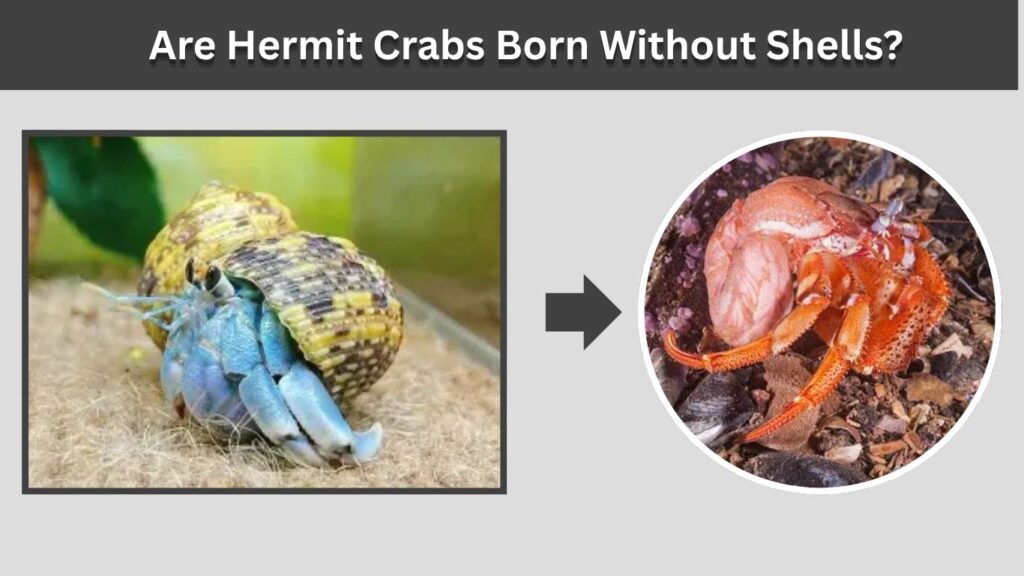
Hermit crabs hatch without the large snail shells used by adults. Their early life stages develop in water and look very different from mature crabs.
As young hermit crabs develop and transition into their crab-like form, they begin searching for tiny empty shells. They do not grow their own shells. Instead, they use discarded shells originally produced by snails and other mollusks.
As the crab grows, it must repeatedly move into larger shells.
Do Hermit Crabs Change Shells Without Molting?
Hermit crabs can change shells at any time, and shell changing is not limited to molting. A crab may switch because its current shell is too small, too heavy, damaged, dirty, or uncomfortable.
Some hermit crabs inspect many shells before choosing one. They may move into a new shell, return to the old one, and then try another. This behavior is usually normal as long as the crab does not remain exposed for a prolonged period.
Molting and shell changing are separate processes. Molting involves shedding the exoskeleton, while changing shells involves moving the soft abdomen from one empty shell to another.
How to Prevent a Hermit Crab From Going Without a Shell
Good enclosure management reduces the risk of shell abandonment.
Provide at least three to five suitable spare shells per crab. Include different sizes and preferred opening shapes. Use only natural, unpainted shells without sharp edges or cracks.
Maintain stable heat and humidity, provide deep substrate for molting, and include both fresh and marine salt water. The enclosure should also contain hiding places, climbing areas, nutritious foods, and enough space to reduce conflict.
Avoid pulling a crab from its shell. A hermit crab can grip the inside with considerable strength, and attempting to remove it may tear its abdomen apart.
FAQs
Will a Hermit Crab Die Without a Shell?
A hermit crab can die if it remains without a shell because its abdomen and gills are exposed. Dehydration, injury, stress, and attacks from other crabs become serious risks. Provide a humid isolation area and several suitable natural shells immediately.
Why Won’t My Hermit Crab Choose a New Shell?
The available shells may be the wrong size, shape, weight, or type. Poor temperature, low humidity, stress, illness, or injury may also prevent shell selection. Offer several clean shells and give the crab quiet, private conditions.
Should I Pick Up a Hermit Crab Without Its Shell?
Avoid touching the exposed abdomen. When relocation is necessary, gently guide the crab into a clean cup or lift it with a smooth spoon. Place it in a protected isolation container containing appropriate shells.
Can Another Hermit Crab Steal Its Shell?
Hermit crabs sometimes compete for desirable shells. A stronger crab may pull, shake, or attack another crab to obtain its shell. Supplying numerous correctly sized shells helps reduce competition and aggressive shell-related behavior.
Is a Hermit Crab Changing Shells Normal?
Yes. Moving quickly from one shell to another is normal behavior. The situation becomes concerning when the crab remains naked, repeatedly abandons shells, appears weak, or cannot enter a replacement shell.