
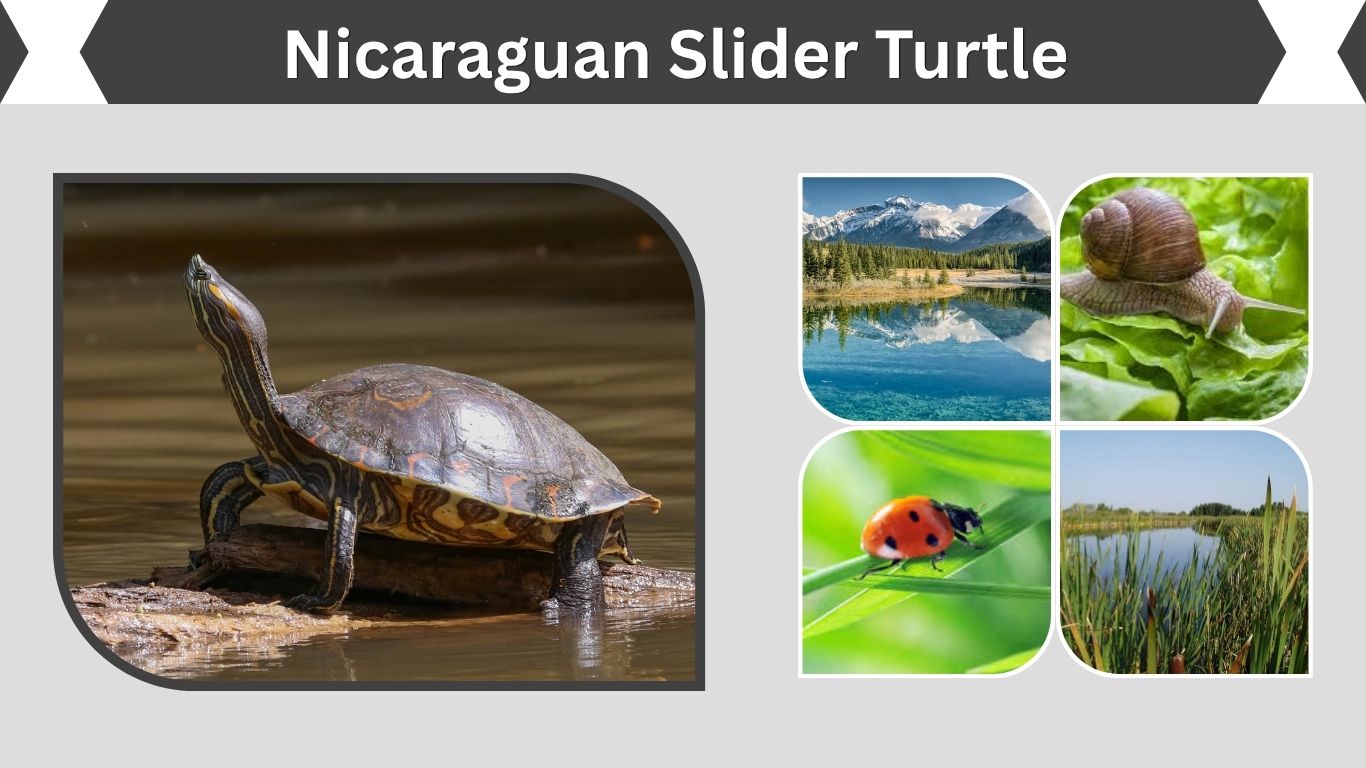
The Nicaraguan Slider is a colorful freshwater turtle found in parts of Central America, especially Nicaragua. This turtle is popular among reptile enthusiasts because of its beautiful shell patterns, active swimming behavior, and manageable care needs. Many people search for information about its size, diet, lifespan, and tank setup before keeping one as a pet. It is closely related to other slider turtles but stands out because of its tropical habitat and ornate appearance that often becomes more striking as the turtle matures.
Like most aquatic turtles, the Nicaraguan Slider needs clean water, proper lighting, and balanced nutrition to stay healthy. These turtles spend much of their time basking under heat and swimming in warm freshwater environments. Understanding their natural behavior and care requirements is important for both beginners and experienced turtle keepers.
What Is a Nicaraguan Slider Turtle?
The Nicaraguan Slider is a freshwater turtle belonging to the pond slider group. It is known for its attractive shell markings and active nature. This species is commonly found in warm tropical waterways and has become popular in the reptile trade because of its appearance and adaptability in captivity.
Scientific Classification
The Nicaraguan Slider belongs to the Emydidae turtle family and is closely related to other slider turtles found throughout the Americas. Scientists classify it as an aquatic turtle that depends heavily on freshwater habitats for feeding, basking, and breeding activities.
Physical Appearance
Nicaraguan Sliders often have olive, brown, or greenish shells with decorative yellow or orange markings. Their skin usually contains striped patterns around the neck and face. Young turtles are often brighter in color, while adults may develop darker shell tones with age.
Nicaraguan Slider vs Other Slider Turtles
Compared to common Red-Eared Sliders, Nicaraguan Sliders may display more ornate shell patterns and brighter markings. They also come from tropical Central American habitats rather than the wider North American range seen in many other slider species.
Nicaraguan Slider Natural Habitat and Distribution

Nicaraguan Sliders live in warm freshwater habitats with calm water and abundant sunlight. They are commonly found in lakes, ponds, marshes, and slow-moving rivers where aquatic plants and basking spots are available. These turtles rely on warm conditions because they are naturally adapted to tropical climates.
Native Range
- Nicaragua and nearby regions
- Freshwater lakes
- Slow-moving rivers
- Marshes and wetlands
- Warm tropical waterways
Preferred Habitat Conditions
- Warm freshwater temperatures
- Soft muddy bottoms
- Aquatic vegetation
- Basking logs and rocks
- Plenty of sunlight
Seasonal and Daily Behavior
Nicaraguan Sliders spend much of the day swimming and basking. During sunny periods, they gather on logs or rocks to warm their bodies. In cooler or rainy conditions, they may stay underwater longer and become less active.
Nicaraguan Slider Identification
Identifying a Nicaraguan Slider can sometimes be difficult because many slider turtles share similar shell shapes and markings. However, certain color patterns and body features help distinguish this species from other freshwater turtles commonly kept as pets.
Key Identification Features
- Decorative shell markings
- Yellow or orange facial stripes
- Olive or brown shell color
- Flattened streamlined shell
- Strong webbed feet for swimming
Baby Nicaraguan Slider Appearance
Baby Nicaraguan Sliders are usually brighter and more colorful than adults. Hatchlings often have clearer shell patterns and vivid striping along the face and neck. Their shells are smooth and rounded during early growth stages.
Adult Nicaraguan Slider Appearance
Adult Nicaraguan Sliders generally become darker as they mature. Females are often larger and broader than males, while males usually develop longer claws and thicker tails. Mature turtles may also show stronger shell patterns depending on genetics and habitat conditions.
Nicaraguan Slider Turtle Size
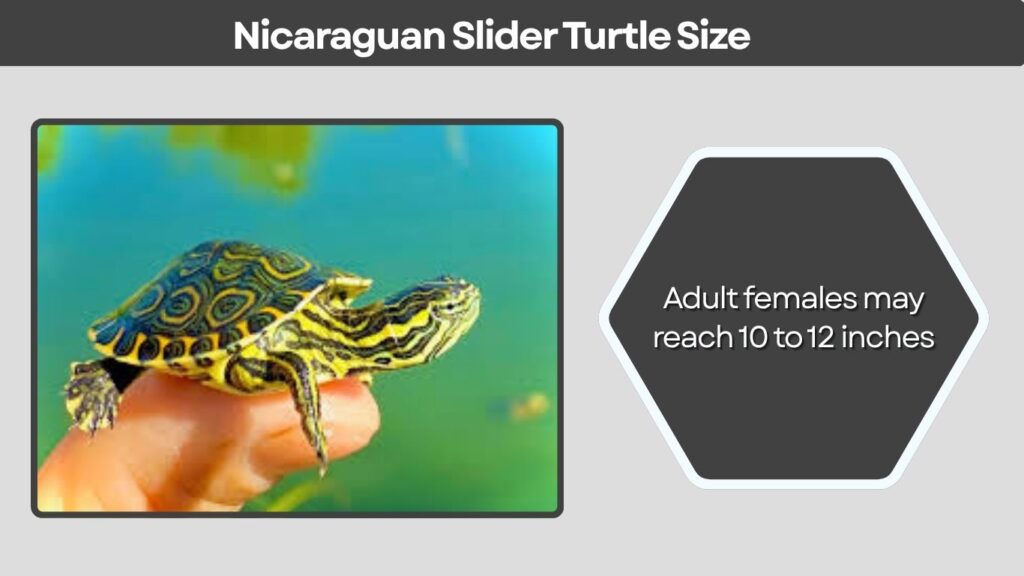
Nicaraguan Sliders are medium-sized aquatic turtles that continue growing slowly throughout much of their lives. Their final size depends on genetics, diet, water quality, and enclosure conditions. Females commonly grow larger than males and require more swimming space in captivity.
How Big Do Nicaraguan Sliders Get?
- Adult females may reach 10 to 12 inches
- Males are usually smaller
- Growth depends on nutrition
- Water quality affects development
- Proper lighting supports healthy shell growth
Baby Nicaraguan Slider Size
Baby Nicaraguan Sliders are very small after hatching and usually measure only a few inches long. During their first years, they grow quickly when provided with clean water, warm temperatures, and balanced diets rich in protein and calcium.
Full-Grown Nicaraguan Slider
A full-grown Nicaraguan Slider develops a strong shell, muscular limbs, and excellent swimming ability. Adult turtles require spacious tanks with deep water and basking platforms to support healthy movement and long-term care.
Nicaraguan Slider Diet and Feeding
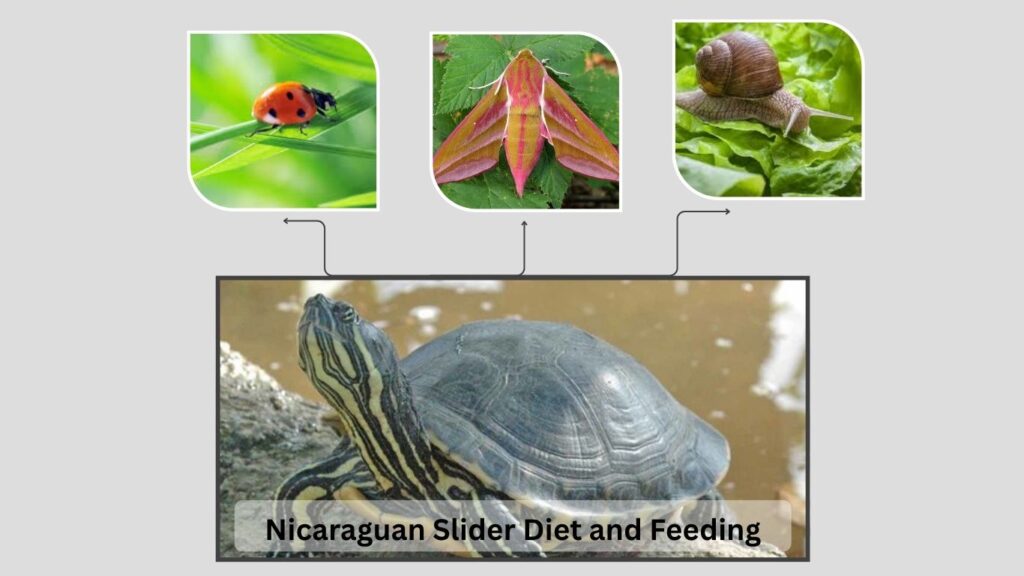
Nicaraguan Sliders are omnivorous turtles that eat both plants and small animals. In the wild, they feed on aquatic vegetation, insects, snails, and other small prey found in freshwater habitats. Captive turtles need a balanced diet with protein, vegetables, and calcium to maintain strong shells and healthy growth.
Natural Diet in the Wild
- Aquatic plants
- Insects and larvae
- Small fish
- Snails
- Tadpoles and worms
Best Foods for Pet Nicaraguan Sliders
Pet Nicaraguan Sliders should receive high-quality turtle pellets along with fresh leafy greens. Vegetables such as romaine lettuce and dandelion greens provide important nutrients. Occasional protein sources like shrimp or mealworms can also help support healthy development.
Foods to Avoid
Owners should avoid feeding processed foods, dairy products, sugary snacks, or heavily salted foods. Too much protein may also cause unhealthy shell growth. Providing a varied and balanced diet is important for long-term health.
Nicaraguan Slider Turtle Care Guide
Proper care helps Nicaraguan Sliders remain healthy and active in captivity. These turtles need clean water, strong filtration, UVB lighting, and a warm basking area. A well-maintained environment supports natural swimming and basking behaviors while reducing the risk of illness and shell problems.
Tank Setup Requirements
- Large aquarium with deep water
- Powerful filtration system
- Dry basking dock
- Smooth climbing surfaces
- Enough swimming space for adults
Heating and UVB Lighting
Nicaraguan Sliders require UVB lighting to absorb calcium and maintain healthy shells and bones. The basking area should remain warm, while the water temperature stays stable for comfortable swimming. Without proper lighting and heat, turtles may become weak or inactive.
Cleaning and Maintenance
Regular tank cleaning is essential because dirty water can quickly lead to infections and shell diseases. Partial water changes should be performed weekly, and filters should be cleaned often to maintain safe water quality.
Caring for a Baby Nicaraguan Slider
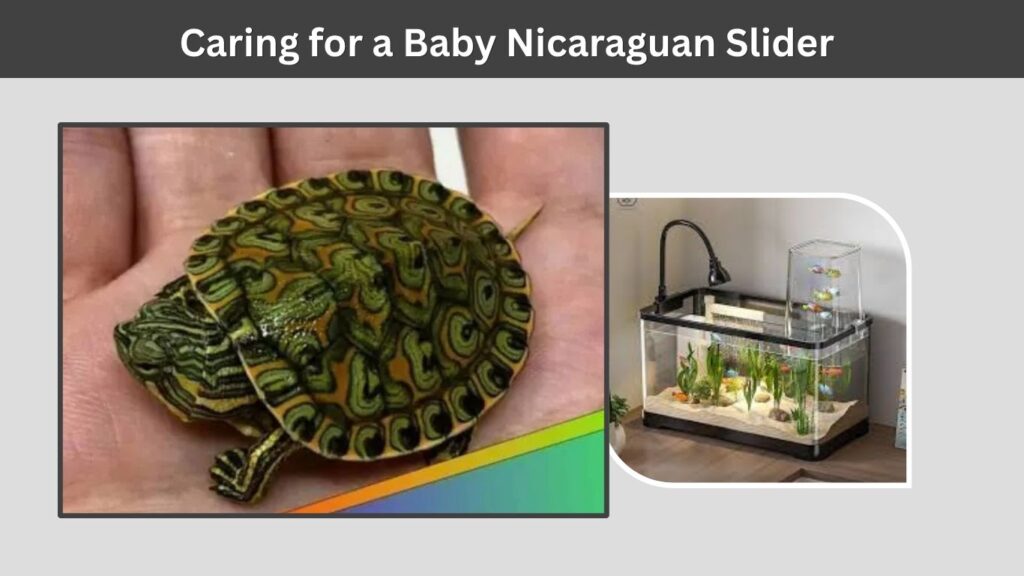
Baby Nicaraguan Sliders are more delicate than adults and need extra attention during their early growth stages. Hatchlings require warm water, proper nutrition, and safe basking areas to develop strong shells and healthy immune systems.
Housing Baby Nicaraguan Sliders
- Smaller starter aquarium
- Warm shallow water
- Gentle water filtration
- Easy basking access
- Safe hiding areas
Feeding Baby Nicaraguan Sliders
Young turtles usually eat every day because they grow rapidly. Protein-rich foods such as insects, turtle pellets, and aquatic prey support muscle and shell growth. Small amounts of leafy greens can also be introduced gradually.
Common Hatchling Problems
Baby Nicaraguan Sliders may suffer from soft shells, weak swimming, or poor appetite if care conditions are incorrect. Dirty water, low temperatures, and lack of UVB lighting are common causes of health problems in hatchlings.
Nicaraguan Slider Behavior and Lifespan
Nicaraguan Sliders are active turtles that enjoy swimming, basking, and exploring their environment. They may appear shy around humans at first but often become calmer with regular care. These turtles can live for several decades when provided with proper nutrition and habitat conditions.
Typical Behavior
Nicaraguan Sliders spend much of the day basking under heat lamps or swimming through aquatic areas. When frightened, they quickly dive underwater for protection. In captivity, many turtles become active when they recognize feeding times.
Are Nicaraguan Sliders Friendly?
Although not affectionate like mammals, Nicaraguan Sliders can become comfortable around their owners. Some tolerate gentle handling, though excessive handling may cause stress. Calm interaction and consistent care help turtles feel secure in captivity.
Nicaraguan Slider Lifespan
With proper care, Nicaraguan Sliders can live for several decades. Captive turtles often survive longer than wild turtles because they receive stable food, clean water, and protection from predators and environmental dangers.
FAQs
How big do Nicaraguan Slider turtles get?
Adult Nicaraguan Slider turtles usually grow between 8 and 12 inches long. Females are often larger than males and develop broader shells. Proper nutrition, clean water, and enough swimming space help support healthy growth and strong shell development throughout their lives.
What do Nicaraguan Slider turtles eat?
Nicaraguan Sliders are omnivores that eat both plants and animal matter. Their diet may include aquatic plants, insects, snails, fish, and turtle pellets. Pet turtles also benefit from leafy greens and calcium supplements to maintain healthy bones and shell growth.
Do Nicaraguan Sliders need UVB lighting?
Yes, UVB lighting is essential for Nicaraguan Sliders kept indoors. UVB light helps turtles produce vitamin D3, which allows proper calcium absorption. Without UVB lighting, turtles may develop weak shells, bone problems, poor growth, and reduced activity levels over time.
Are Nicaraguan Slider turtles good pets?
Nicaraguan Sliders can make good pets for owners willing to provide proper aquatic setups and long-term care. They are active, attractive turtles that can live for many years. However, they require large tanks, regular cleaning, and consistent heating and lighting systems.
How long do Nicaraguan Slider turtles live?
With proper care, Nicaraguan Slider turtles can live for several decades. Clean water, balanced nutrition, UVB lighting, and suitable temperatures all help improve lifespan. Captive turtles often live longer than wild turtles because they are protected from predators and environmental dangers.