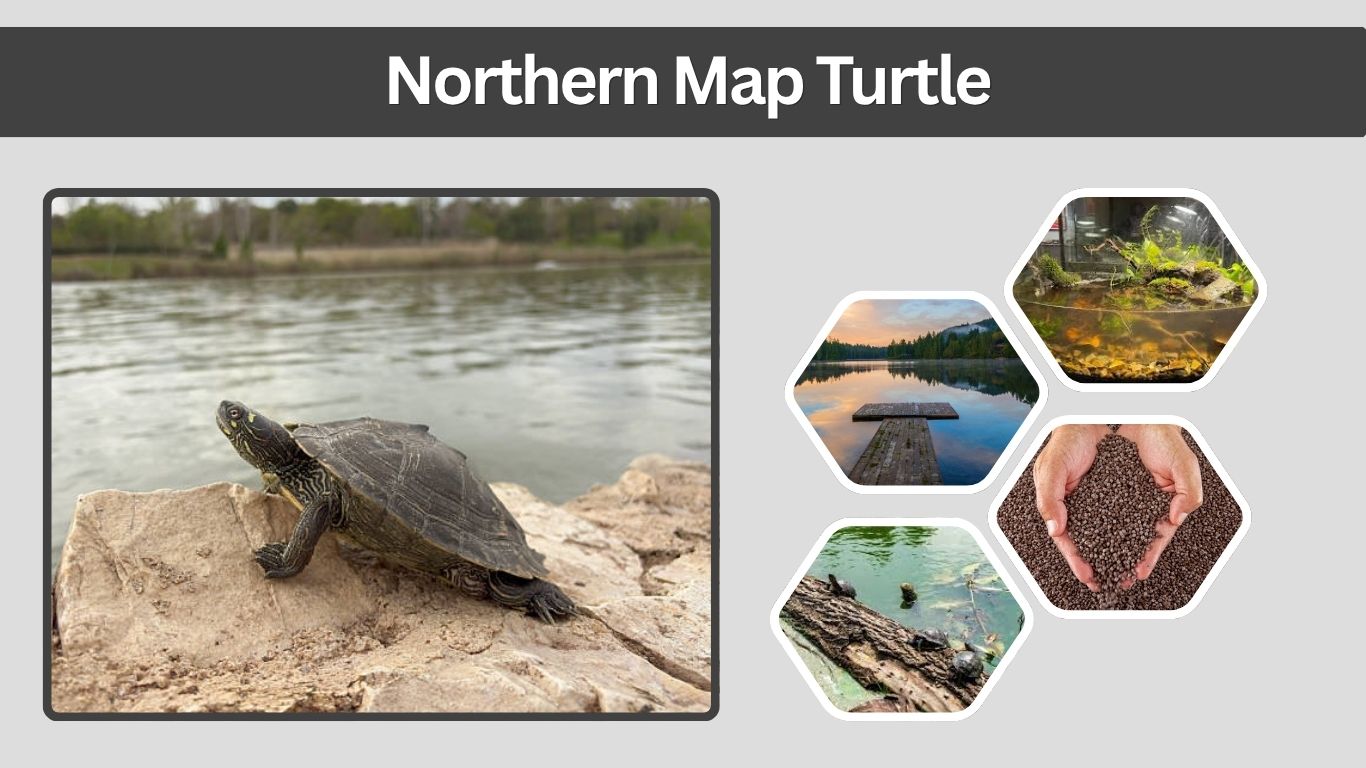
The northern map turtle is a fascinating freshwater turtle species known for the unique map-like patterns covering its shell. These turtles are excellent swimmers and are commonly found in rivers, lakes, and streams throughout parts of North America. Their attractive markings, active behavior, and strong connection to aquatic habitats make them popular among turtle enthusiasts and wildlife observers.
Northern map turtles are especially interesting because males and females differ greatly in size and feeding behavior. They spend much of their time basking on logs or rocks near the water and quickly dive into the water when disturbed. Understanding their habitat, diet, lifespan, and care needs helps explain why these turtles are so well adapted to freshwater environments.
What Is a Northern Map Turtle?
The northern map turtle is a freshwater turtle species scientifically known as Graptemys geographica. It belongs to the Emydidae family and is recognized for the contour-like markings on its shell that resemble lines on a map.
Scientific Classification
The northern map turtle is classified as:
- Scientific name: Graptemys geographica
- Family: Emydidae
- Type: Freshwater aquatic turtle
It is part of the map turtle group, which includes several species sharing similar shell patterns and aquatic lifestyles.
Northern map turtles are closely associated with clean freshwater ecosystems and are considered indicators of healthy aquatic habitats.
Why It’s Called a Map Turtle
The turtle gets its name from the detailed lines and patterns covering the shell. These markings resemble contour lines seen on geographical maps.
The shell usually contains:
- Thin yellow or tan markings
- Circular or web-like patterns
- Raised ridges along the center
These patterns become especially noticeable in younger turtles, although some markings may fade slightly with age. The shell design helps distinguish northern map turtles from many other freshwater turtle species.
Northern Map Turtle Identification
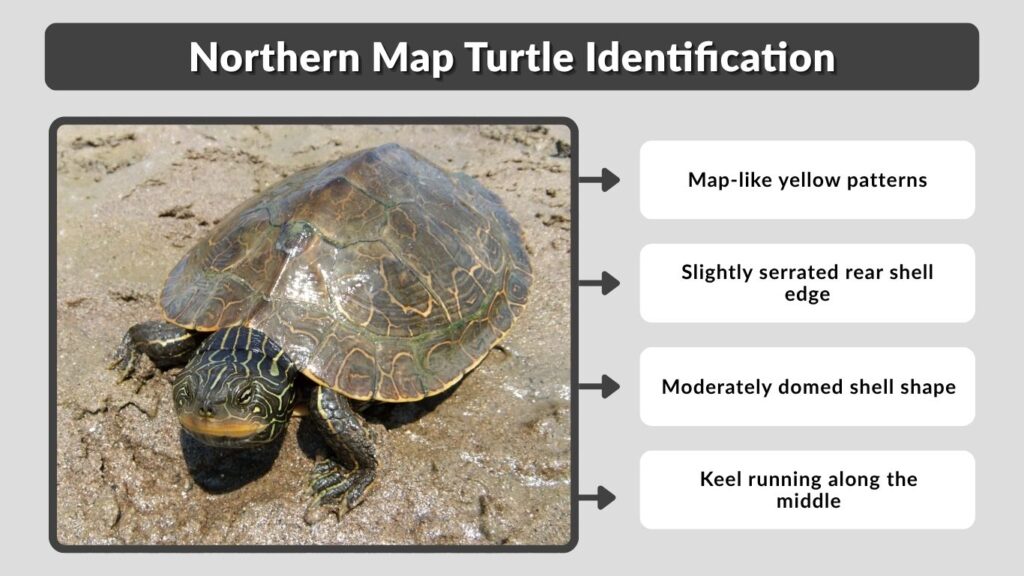
Northern map turtles have several physical features that make them relatively easy to recognize once you understand their appearance.
Shell Appearance
The shell is usually olive, brown, or dark green with lighter yellow markings spread across the surface. A slight ridge, called a keel, often runs down the center of the shell.
Important shell characteristics include:
- Map-like yellow patterns
- Slightly serrated rear shell edge
- Moderately domed shell shape
- Keel running along the middle
Younger turtles typically display brighter and more defined shell patterns compared to older adults.
Head and Skin Markings
Northern map turtles also have distinctive markings on their head and neck.
Common features include:
- Thin yellow stripes on the face
- Light-colored neck markings
- Dark skin with contrasting lines
- Webbed feet for swimming
The eyes are usually prominent, and the streamlined body shape helps them move efficiently through water.
Their webbed feet and powerful limbs make them strong swimmers capable of handling moving river currents.
Northern Map Turtle Size
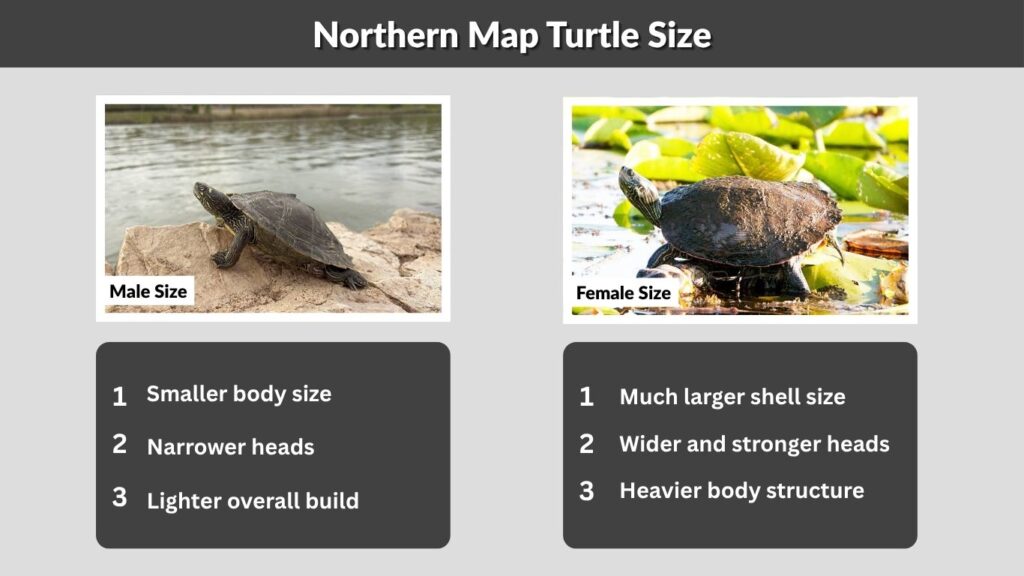
One of the most interesting aspects of northern map turtles is the dramatic size difference between males and females.
Male Size
Male northern map turtles remain much smaller than females throughout adulthood. Most adult males reach relatively modest shell lengths.
Male characteristics include:
- Smaller body size
- Narrower heads
- Longer tails relative to body size
- Lighter overall build
Because males stay smaller, they often feed on softer and smaller prey items compared to females.
Female Size
Female northern map turtles grow significantly larger than males and develop broader, more powerful jaws.
Female characteristics include:
- Much larger shell size
- Wider and stronger heads
- Heavier body structure
- Greater crushing strength for prey
Large females are able to eat hard-shelled prey such as mussels and snails that smaller males cannot easily consume.
Male vs Female Differences
Several features help distinguish male and female northern map turtles.
| Feature | Male | Female |
| Size | Smaller | Much larger |
| Head Size | Narrow | Broad and strong |
| Tail | Longer relative tail | Shorter relative tail |
| Feeding Ability | Softer prey | Hard-shelled prey |
This difference in size between sexes is one of the most dramatic among freshwater turtle species.
Northern Map Turtle Habitat
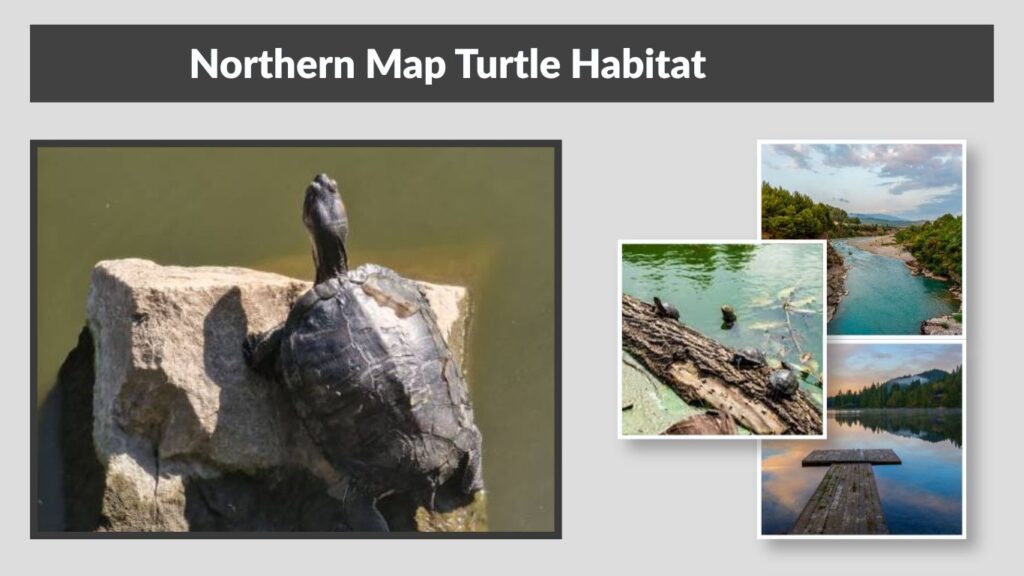
Northern map turtles prefer freshwater habitats with clean water, strong currents, and abundant basking areas.
Natural Habitat
These turtles are commonly found in:
- Rivers
- Lakes
- Streams
- Large waterways with current
They especially favor habitats with plenty of submerged logs, rocks, and shoreline basking locations.
Clean water is important because northern map turtles rely heavily on aquatic prey and spend most of their lives in the water.
Preferred Environmental Features
Several habitat conditions help northern map turtles thrive.
Important environmental features include:
- Sunny basking logs
- Deep water access
- Aquatic vegetation
- Rocky or sandy bottoms
- Areas with moderate current
Basking is especially important because turtles rely on external heat sources to regulate body temperature. They often spend hours resting in the sun before returning to the water.
Northern map turtles are naturally cautious and usually dive into the water quickly when humans or predators approach.
Northern Map Turtle Range and Distribution
The northern map turtle is widely distributed across parts of the United States and southern Canada.
- Common in the Great Lakes region
- Found throughout eastern North America
- Present in large river systems
- Often seen near clean freshwater habitats
- Most active during warmer months
They are especially common in waterways connected to the Mississippi River basin, Great Lakes drainage systems, and nearby freshwater habitats.
Seasonal activity depends heavily on temperature. During colder months, northern map turtles become less active and may overwinter underwater.
Northern Map Turtle Diet
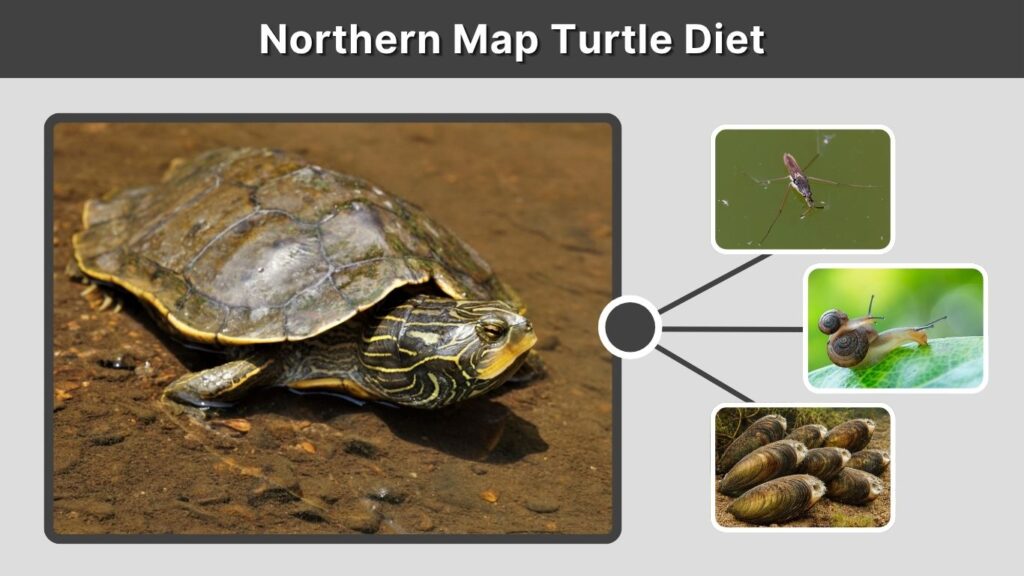
Northern map turtles are omnivorous but rely heavily on aquatic prey. Their diet changes somewhat depending on age, size, and sex.
What Northern Map Turtles Eat
Common food sources include:
- Aquatic insects
- Snails
- Mussels
- Crayfish
- Small fish
- Aquatic vegetation
Females often consume larger hard-shelled prey because of their stronger jaws, while males focus more on smaller insects and softer foods.
The turtles forage underwater and use their strong sense of sight to locate prey among rocks, plants, and river bottoms.
Diet Differences Between Males and Females
Because females grow much larger, they can crush tougher prey that males cannot handle easily.
Females commonly eat:
- Large snails
- Mussels
- Crustaceans
Males more often consume:
- Aquatic insects
- Smaller snails
- Softer prey items
This feeding difference helps reduce competition between males and females sharing the same habitat.
Northern Map Turtle Behavior
Northern map turtles are active aquatic reptiles that spend much of their time swimming, basking, and searching for food. Their behavior is strongly connected to water temperature, sunlight availability, and seasonal conditions.
Swimming Behavior
Northern map turtles are excellent swimmers and are highly adapted for life in moving water. Their streamlined bodies and webbed feet help them navigate currents efficiently.
Common swimming behaviors include:
- Strong underwater movement
- Frequent diving when threatened
- Searching river bottoms for food
- Remaining close to basking sites
Unlike some turtles that spend significant time on land, northern map turtles prefer staying near or in the water most of the time.
Basking Habits
Basking is one of the most important daily activities for northern map turtles. They often gather on logs, rocks, or partially submerged branches to absorb heat from the sun.
Basking helps turtles:
- Regulate body temperature
- Dry their shells
- Support healthy metabolism
- Maintain immune system function
Large groups may sometimes bask together in suitable locations. However, these turtles are naturally cautious and quickly dive into the water if disturbed.
Defensive Behavior
Northern map turtles are shy animals that rely heavily on escape behavior for protection.
Their main defense strategies include:
- Diving rapidly into water
- Remaining motionless underwater
- Avoiding human activity
- Using camouflage coloration
They rarely display aggression and instead depend on speed and caution to avoid predators.
Northern Map Turtle Lifespan
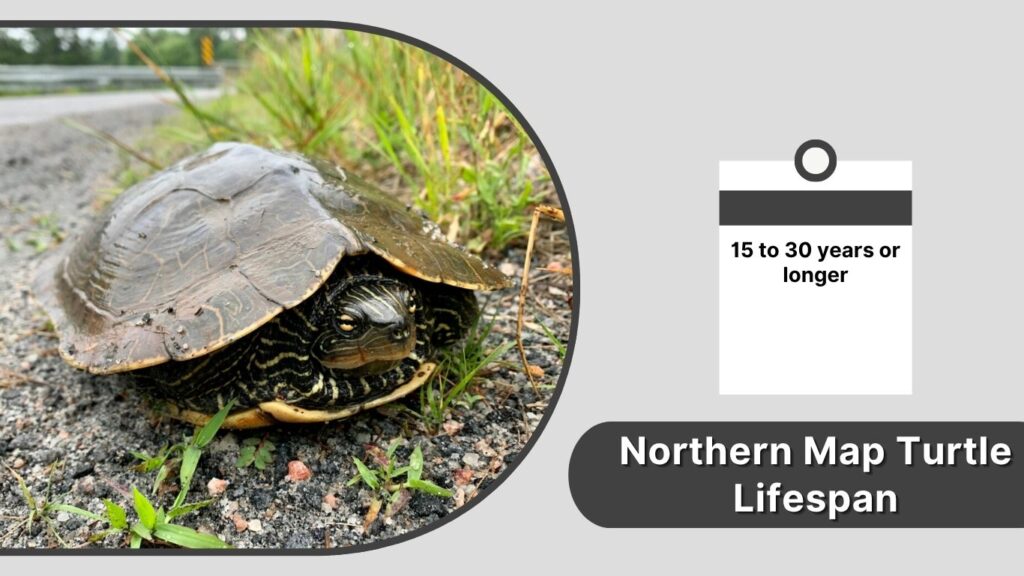
Northern map turtles can live for several decades when environmental conditions are favorable.
Lifespan in the Wild
Wild northern map turtles face several challenges that affect survival rates, including predators, habitat destruction, pollution, and changing water conditions.
Average wild lifespan may range from:
- 15 to 30 years or longer
Survival depends greatly on water quality, food availability, and protection from predators during early life stages.
Young turtles are especially vulnerable to birds, fish, and mammals before reaching adulthood.
Lifespan in Captivity
With proper care, captive northern map turtles may live even longer than wild individuals.
Important factors influencing captive lifespan include:
- Clean water conditions
- Proper diet
- UVB lighting
- Adequate tank size
- Veterinary care
Healthy captive turtles can sometimes live several decades when their environmental needs are consistently maintained.
Northern Map Turtle Care Guide
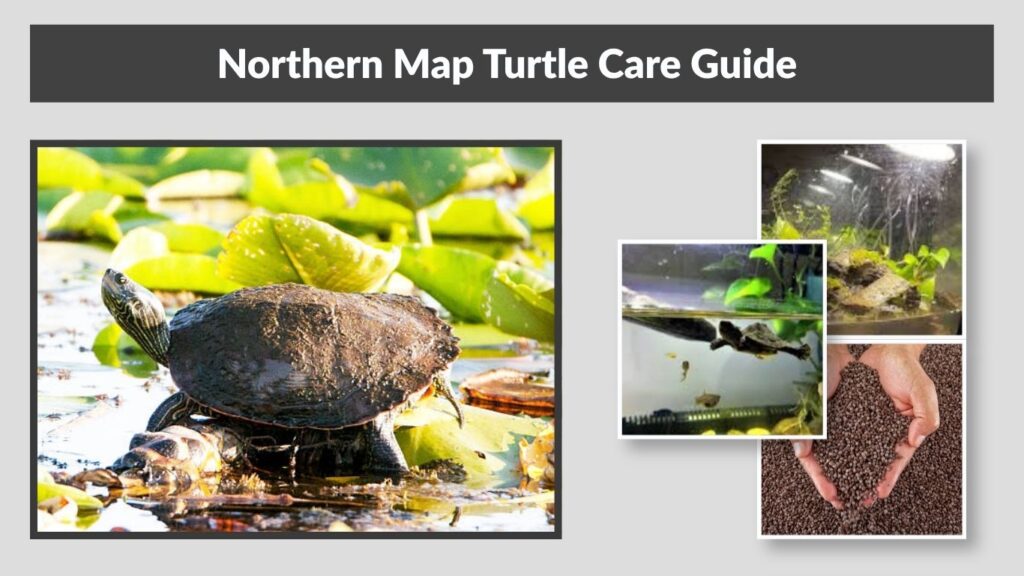
Northern map turtles require specialized aquatic setups when kept as pets. Their care needs are more advanced than many beginner turtle species because they require excellent water quality and plenty of swimming space.
Tank Setup
A proper enclosure should provide enough room for swimming, basking, and filtration.
Important tank requirements include:
- Large aquatic tank
- Deep water for swimming
- Powerful filtration system
- Stable basking platform
- Secure enclosure lid
Because northern map turtles produce a significant amount of waste, strong filtration is extremely important for maintaining clean water.
Females, due to their larger size, require considerably larger enclosures than males.
Temperature and Lighting
Correct temperature and lighting are essential for turtle health.
Northern map turtles typically need:
- UVB lighting for shell and bone health
- Warm basking area
- Stable water temperature
- Natural day and night cycle
Without proper UVB exposure, turtles may develop shell deformities or metabolic bone disease. A basking area allows them to dry completely and regulate body temperature naturally.
Feeding in Captivity
Captive northern map turtles require a balanced diet containing both protein and plant material.
Common captive foods include:
- Commercial turtle pellets
- Insects and worms
- Small fish or shrimp
- Aquatic vegetation
- Calcium supplements when needed
Overfeeding should be avoided because obesity can lead to health problems in captive turtles.
Northern Map Turtle vs False Map Turtle
Northern map turtles are commonly confused with false map turtles because both species share similar shell patterns and freshwater habitats.
| Feature | Northern Map Turtle | False Map Turtle |
| Scientific Name | Graptemys geographica | Graptemys pseudogeographica |
| Shell Pattern | Detailed contour-like markings | Simpler shell markings |
| Head Markings | Thin yellow lines | Larger facial markings |
| Habitat | Large rivers and lakes | Slower-moving waters common |
| Female Size | Generally larger | Slightly smaller |
Although the species appear similar, careful attention to shell markings and facial stripe patterns usually helps distinguish them.
Habitat preference may also differ slightly, with false map turtles often tolerating slower-moving water more easily.
Common Health Problems
Pet northern map turtles may develop health problems if care conditions are poor or environmental needs are ignored.
- Shell rot
- Respiratory infections
- Vitamin deficiencies
- Poor shell growth
- Stress-related illness
Dirty water is one of the biggest causes of health issues in captive turtles. Poor water quality can lead to infections, shell damage, and weakened immune function.
Improper lighting and nutrition may also contribute to shell deformities or metabolic disorders. Regular habitat maintenance is essential for long-term health.
Predators and Survival Threats
Northern map turtles face several threats in natural environments, especially during early life stages.
Natural Predators
Common predators include:
- Raccoons
- Large fish
- Snapping turtles
- Birds such as herons
Eggs and hatchlings are especially vulnerable because they are small and less capable of escaping predators.
Human-Related Threats
Human activity creates additional dangers for northern map turtles.
Major threats include:
- Water pollution
- Habitat destruction
- Boat strikes
- Road mortality near nesting areas
- Illegal collection for the pet trade
Pollution and habitat degradation can reduce food availability and damage important freshwater ecosystems needed for survival.
Interesting Facts About Northern Map Turtles
Northern map turtles have several fascinating traits and behaviors that make them unique among freshwater turtles.
- Females grow much larger than males
- Excellent swimmers adapted for river currents
- Named after map-like shell patterns
- Spend long periods basking in sunlight
- Prefer clean freshwater habitats
One especially interesting fact is the dramatic size difference between males and females. Adult females can be several times larger than males in both weight and shell size.
Their ability to handle strong river currents also makes them highly specialized aquatic turtles compared to more land-oriented species.
How to Help Northern Map Turtles
Conservation efforts are important for protecting northern map turtle populations and maintaining healthy freshwater ecosystems.
Conservation Tips
Helpful conservation practices include:
- Protecting wetlands and waterways
- Reducing water pollution
- Preserving natural basking areas
- Avoiding disturbance of nesting sites
Healthy rivers and lakes are critical for long-term turtle survival.
Responsible Pet Ownership
People keeping northern map turtles as pets should research their needs carefully before adoption.
Important responsibilities include:
- Providing large aquatic habitats
- Maintaining clean water quality
- Avoiding release into the wild
- Understanding long-term care requirements
Releasing captive turtles into wild habitats can harm native ecosystems and spread disease.
FAQs
What is a northern map turtle?
The northern map turtle is a freshwater turtle species known for the map-like markings on its shell and strong swimming ability.
How big do northern map turtles get?
Females grow much larger than males and can reach significantly larger shell sizes depending on habitat and diet.
What do northern map turtles eat?
They eat aquatic insects, snails, mussels, crayfish, small fish, and some aquatic vegetation.
Are northern map turtles good pets?
They can be suitable for experienced turtle keepers who can provide large aquatic setups, strong filtration, and proper lighting.
Where do northern map turtles live?
Northern map turtles live in freshwater rivers, lakes, and streams across parts of the United States and southern Canada.