
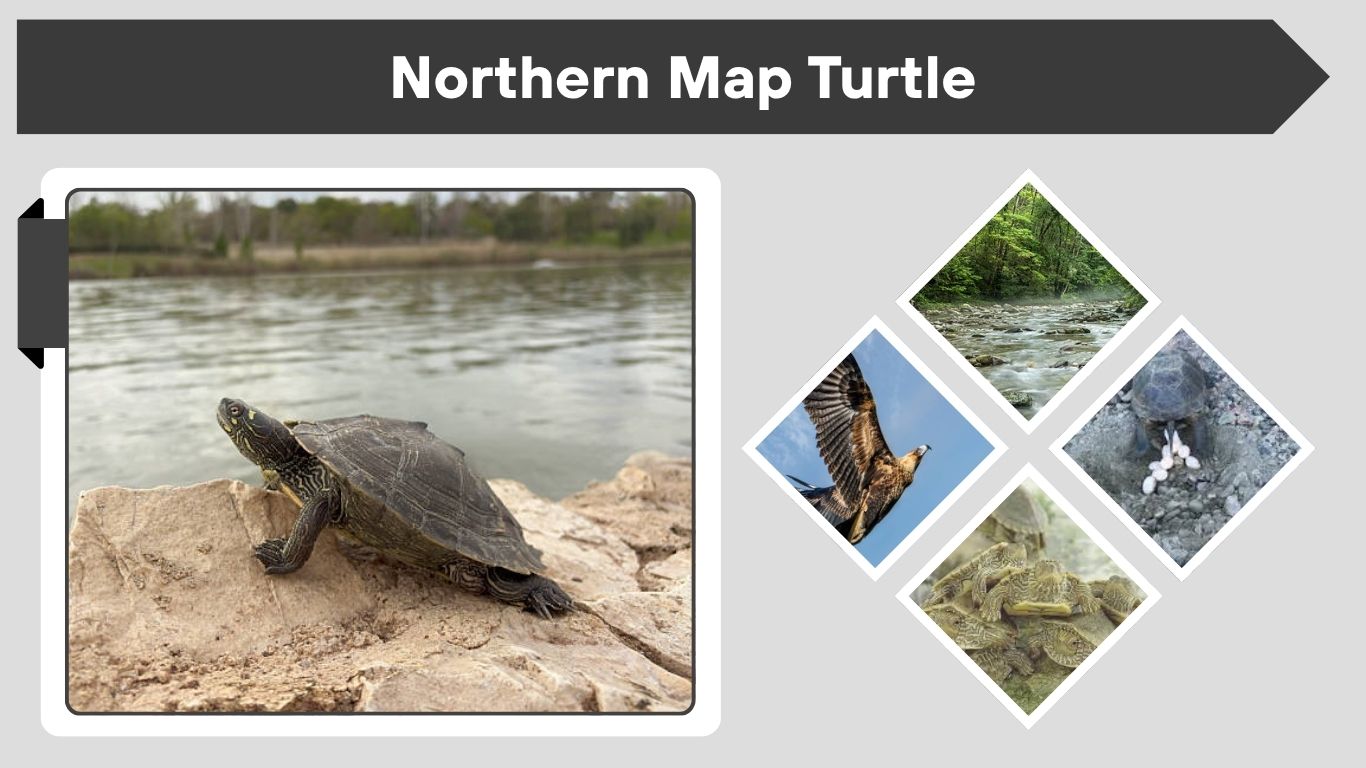
The northern map turtle is a fascinating freshwater turtle known for the intricate map-like patterns covering its shell. These unique markings inspired the turtle’s common name and help distinguish it from many other aquatic turtle species. Scientifically called Graptemys geographica, the northern map turtle is commonly found in rivers, lakes, and streams across parts of North America.
This turtle is especially admired for its strong swimming ability, basking behavior, and striking appearance. Northern map turtles play an important role in freshwater ecosystems by helping control populations of aquatic insects, snails, and other small organisms. Understanding their habitat, life cycle, lifespan, and behavior provides insight into how these turtles survive in the wild and why conservation efforts are important.
What Is a Northern Map Turtle?
The northern map turtle is a freshwater turtle species recognized for the thin yellow markings on its shell that resemble contour lines on a map. It belongs to the emydid turtle family and spends most of its life in the water.
Scientific Classification
The scientific name of the northern map turtle is Graptemys geographica. It belongs to the Emydidae family, which includes many freshwater turtle species commonly found throughout North America.
Northern map turtles are aquatic reptiles that rely heavily on rivers, lakes, ponds, and streams for survival. They are highly adapted for swimming and spend much of their time basking on logs or rocks near the water.
Because they depend on clean freshwater environments, northern map turtles are often considered indicators of healthy aquatic ecosystems.
Why It Is Called a Map Turtle
The turtle gets its name from the detailed lines and markings across its shell. These patterns resemble the contour lines seen on topographic maps.
The shell markings are usually yellow, cream, or light tan against a darker olive or brown background. The patterns become more noticeable in younger turtles and may fade slightly with age.
Another noticeable feature is the ridge, or keel, running down the center of the shell, especially in younger individuals.
Northern Map Turtle Identification
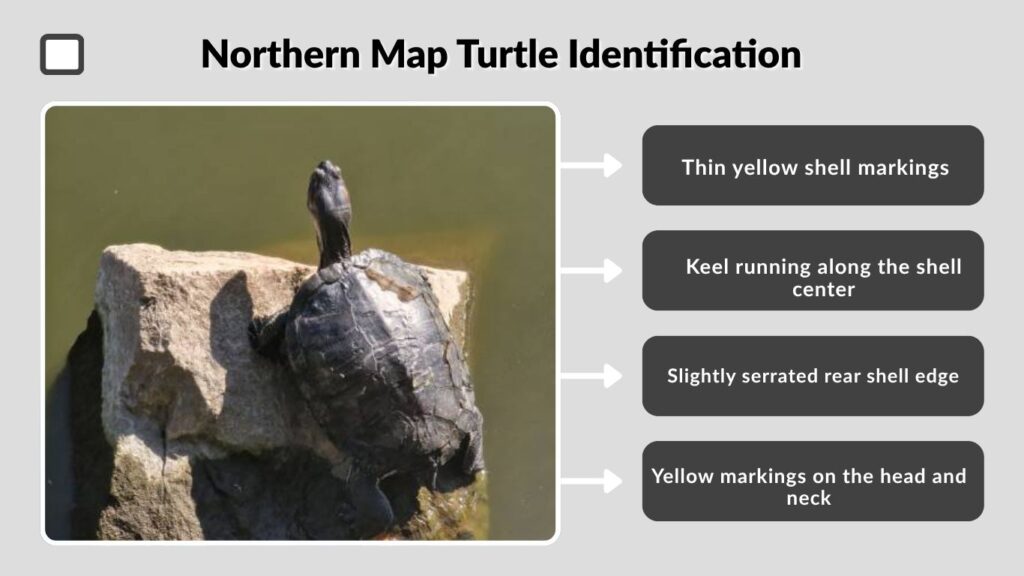
Northern map turtles have distinctive shell patterns, body coloration, and size differences between males and females. Their appearance helps separate them from many other freshwater turtles.
Physical Appearance
The shell of the northern map turtle is typically olive green, brown, or dark olive with fine yellow lines forming map-like patterns.
Key identification features include:
- Thin yellow shell markings
- Keel running along the shell center
- Slightly serrated rear shell edge
- Yellow markings on the head and neck
The skin often contains thin yellow stripes extending across the face, neck, and legs. Their webbed feet and streamlined shell shape make them strong swimmers.
Young turtles usually have brighter and more detailed markings compared to older adults.
Male vs Female Differences
One of the most interesting features of northern map turtles is the large size difference between males and females.
Females are significantly larger and heavier than males. Adult females may grow up to twice the size of adult males.
Other differences include:
- Females have broader heads
- Males have longer tails relative to body size
- Males possess longer front claws
The larger body size of females helps support egg production and nesting.
Northern Map Turtle Habitat
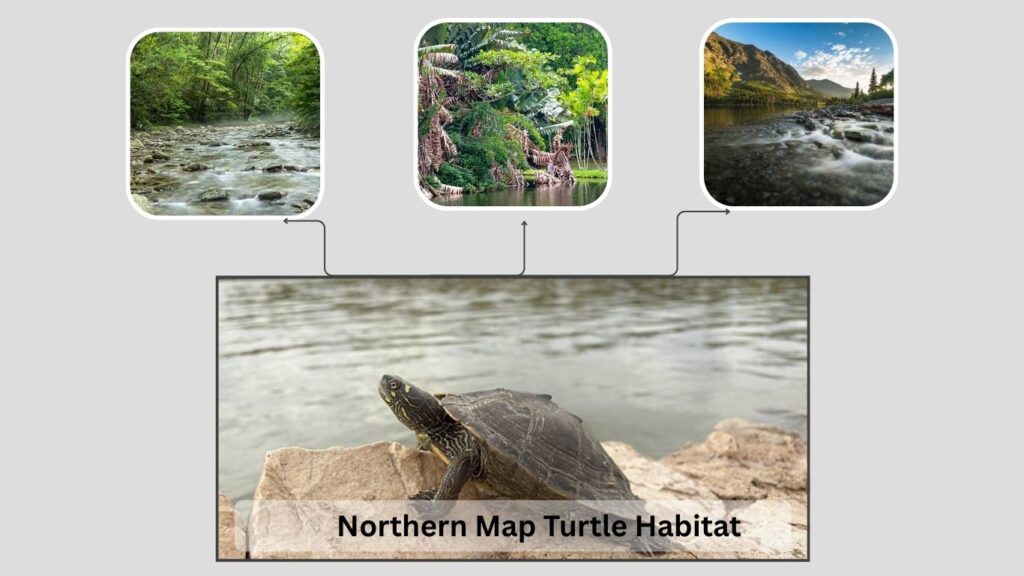
Northern map turtles prefer freshwater habitats with clean water, basking locations, and abundant aquatic food sources. They spend most of their lives near water and rarely travel far onto land except during nesting.
Natural Habitat
Northern map turtles are commonly found in:
- Rivers and streams
- Large lakes
- Ponds and backwaters
- Freshwater channels
They especially prefer habitats containing logs, rocks, or branches where they can bask in sunlight safely above the water.
Basking is extremely important because turtles rely on external heat sources to regulate body temperature.
Habitat Conditions They Prefer
Several environmental features make an area suitable for northern map turtles.
Preferred habitat conditions include:
- Slow-moving or moderate water currents
- Sunny basking areas
- Clean freshwater
- Aquatic vegetation
- Nearby nesting sites
Northern map turtles are highly sensitive to pollution and environmental disturbance. Poor water quality may reduce food availability and increase health problems.
Quiet waterways with limited disturbance generally support healthier turtle populations.
Geographic Range
Northern map turtles are found across parts of the United States and southern Canada.
Their range includes areas surrounding:
- The Great Lakes region
- Mississippi River drainage systems
- St. Lawrence River basin
- Various northeastern waterways
They are especially common in large river systems and freshwater lakes where suitable basking and nesting habitats exist. Climate and water quality strongly influence where these turtles can survive successfully.
Northern Map Turtle Life Cycle
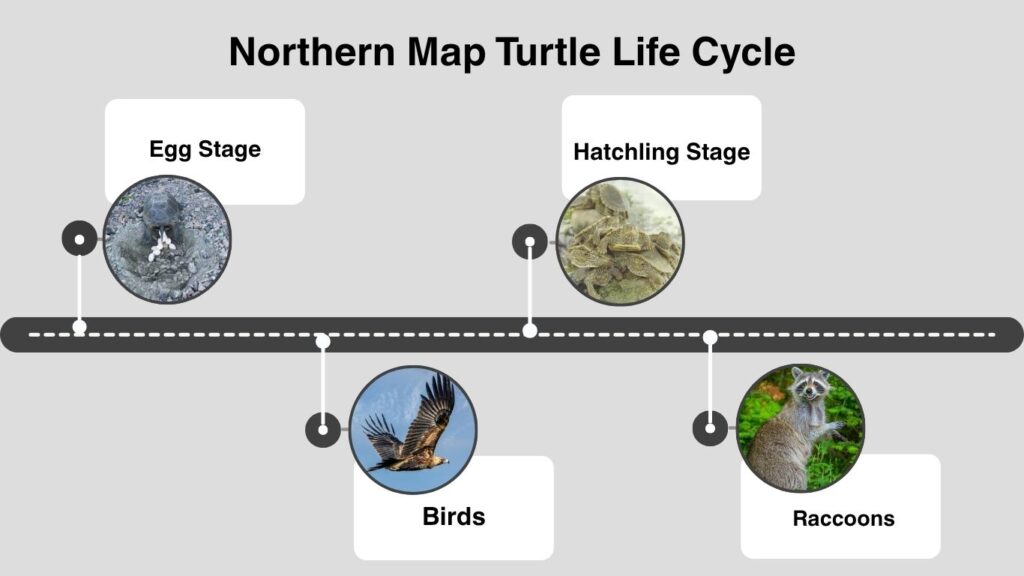
Like all turtles, the northern map turtle passes through several important life stages from egg development to adulthood.
Egg Stage
The life cycle begins when female northern map turtles lay eggs during the nesting season, usually in late spring or early summer.
Females leave the water temporarily to dig nests in sandy or soft soil near the shoreline. A female may lay multiple eggs in a single nesting event.
After laying the eggs, the female covers the nest and returns to the water without providing further parental care.
The incubation period depends heavily on temperature and environmental conditions.
Hatchling Stage
Baby northern map turtles hatch from the eggs after incubation is complete. Hatchlings are very small and vulnerable to predators during this stage.
Young turtles face many survival challenges, including threats from:
- Birds
- Fish
- Raccoons
- Larger turtles
Hatchlings instinctively move toward water shortly after emerging from the nest. Their small size and softer shells make them especially vulnerable during the first years of life.
At this stage, young turtles feed on tiny aquatic organisms and insects.
Juvenile Stage
As juveniles grow, their shells become harder and their swimming ability improves significantly.
During this stage:
- Growth rates increase rapidly
- Shell markings remain highly visible
- Diet expands to include larger prey
- Survival rates improve gradually
Juvenile turtles spend much of their time feeding and basking to support growth and shell development. The map-like shell patterns are often most vivid during this stage of life.
Adult Stage
Northern map turtles reach adulthood after several years of growth and development. Adult turtles spend most of their lives in the water, where they feed, bask, and reproduce.
Adult females become much larger than males and often dominate preferred basking areas. Mature turtles are strong swimmers and are highly adapted for life in rivers and lakes.
At this stage, northern map turtles focus primarily on:
- Feeding and maintaining energy
- Seasonal basking behavior
- Mating and reproduction
- Avoiding predators and environmental threats
Adult turtles continue growing slowly throughout much of their lives, although growth rates decrease significantly after maturity.
Northern Map Turtle Lifespan
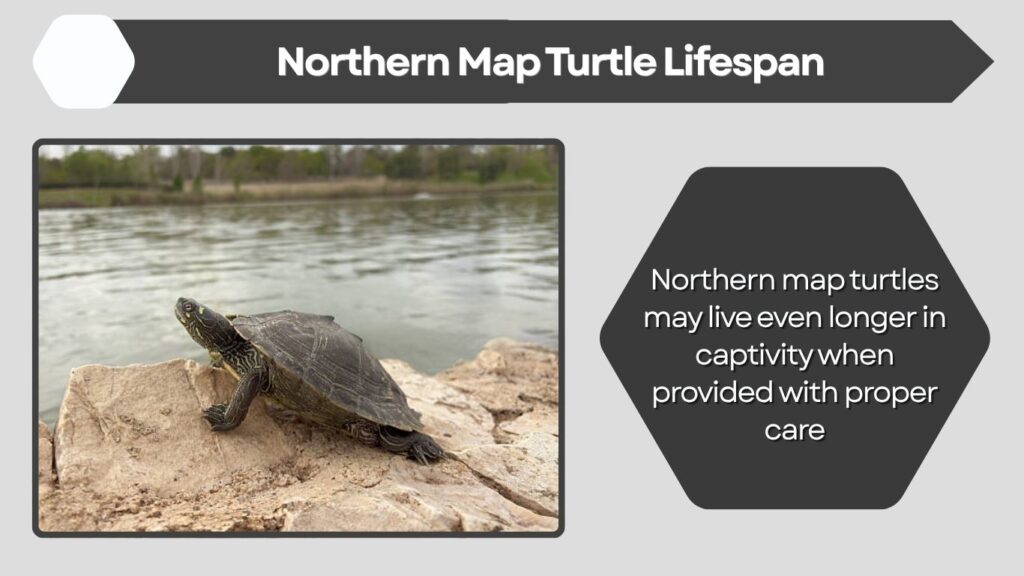
Northern map turtles are relatively long-lived reptiles, especially when environmental conditions are stable and predators are limited.
Lifespan in the Wild
In natural habitats, northern map turtles may live for several decades. Lifespan varies depending on habitat quality, predation pressure, food availability, and environmental conditions.
Wild turtles face many challenges, including:
- Predators
- Pollution
- Boat strikes
- Habitat destruction
- Harsh weather conditions
Because young turtles experience high predation rates, many hatchlings do not survive to adulthood. However, individuals that reach maturity often live much longer.
Lifespan in Captivity
Northern map turtles may live even longer in captivity when provided with proper care, clean water, appropriate diet, and veterinary attention.
Captive turtles benefit from:
- Consistent food sources
- Reduced predator exposure
- Controlled environmental conditions
- Medical care when needed
Improper captive care, however, can still shorten lifespan significantly if water quality or nutrition is poor.
Factors Affecting Lifespan
Several factors influence how long northern map turtles live.
Important lifespan factors include:
- Water quality
- Availability of food
- Predators
- Disease
- Habitat disturbance
Pollution and habitat loss are especially serious threats because northern map turtles depend heavily on clean freshwater ecosystems.
What Do Northern Map Turtles Eat?
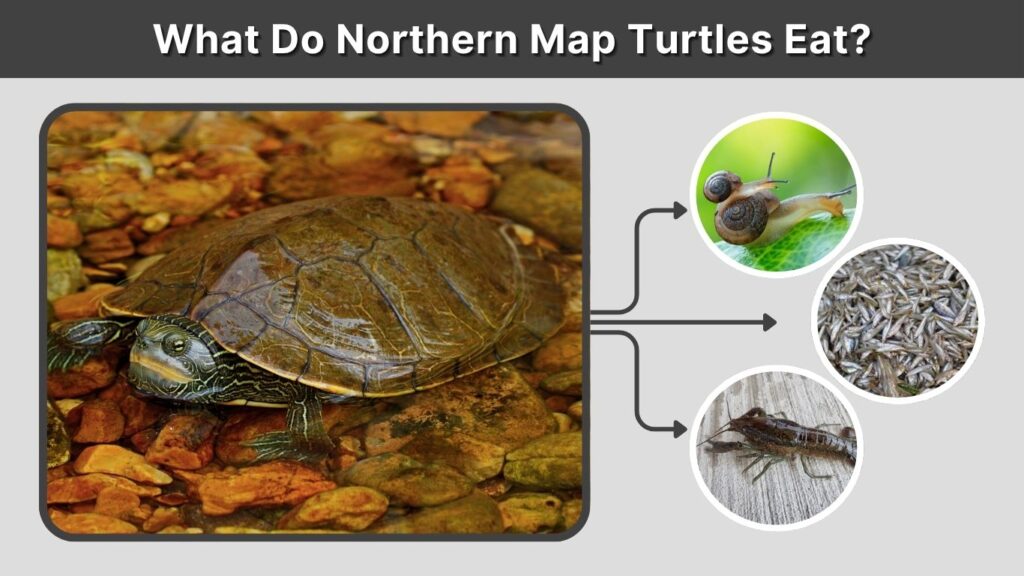
Northern map turtles are omnivores, meaning they consume both plant and animal material. Their diet changes somewhat with age and size.
- Aquatic insects
- Snails and mollusks
- Crayfish
- Small fish
- Aquatic vegetation
Females often eat more hard-shelled prey such as snails and mussels because their larger jaws are better adapted for crushing shells.
Young turtles usually consume softer prey items like insects and larvae before gradually expanding their diet as they grow. Northern map turtles play an important ecological role by helping control aquatic invertebrate populations.
Northern Map Turtle Behavior
Northern map turtles display several interesting behaviors related to basking, feeding, and seasonal activity.
Basking Behavior
Basking is one of the most recognizable northern map turtle behaviors. These turtles frequently climb onto logs, rocks, and branches to absorb sunlight.
Basking helps turtles:
- Regulate body temperature
- Dry their shells
- Support healthy metabolism
- Improve immune function
Northern map turtles are often cautious while basking. If disturbed, they quickly slide back into the water for safety. Groups of turtles may sometimes bask together in sunny locations.
Swimming and Feeding
Northern map turtles are excellent swimmers with streamlined bodies and webbed feet adapted for aquatic movement.
They spend much of their time:
- Searching for food underwater
- Moving between basking areas
- Resting near submerged structures
Their strong swimming ability allows them to navigate river currents effectively while hunting aquatic prey.
Seasonal Activity
Northern map turtles remain most active during warmer months when basking and feeding opportunities are abundant.
During colder seasons, they enter a period similar to hibernation called brumation. In winter, turtles often remain underwater in protected areas with reduced activity levels. Activity increases again in spring as temperatures warm and breeding season begins.
Northern Map Turtle Predators
Northern map turtles face threats from several natural predators throughout different stages of life.
- Raccoons
- Birds of prey
- Large fish
- Snapping turtles
- Foxes and other mammals
Eggs and hatchlings are especially vulnerable because of their small size and softer shells. Many predators raid nests before hatchlings even emerge.
Adult turtles are safer because of their harder shells and aquatic lifestyle, although large predators may still attack vulnerable individuals. Human activities also create additional threats through habitat destruction and pollution.
Northern Map Turtle vs False Map Turtle
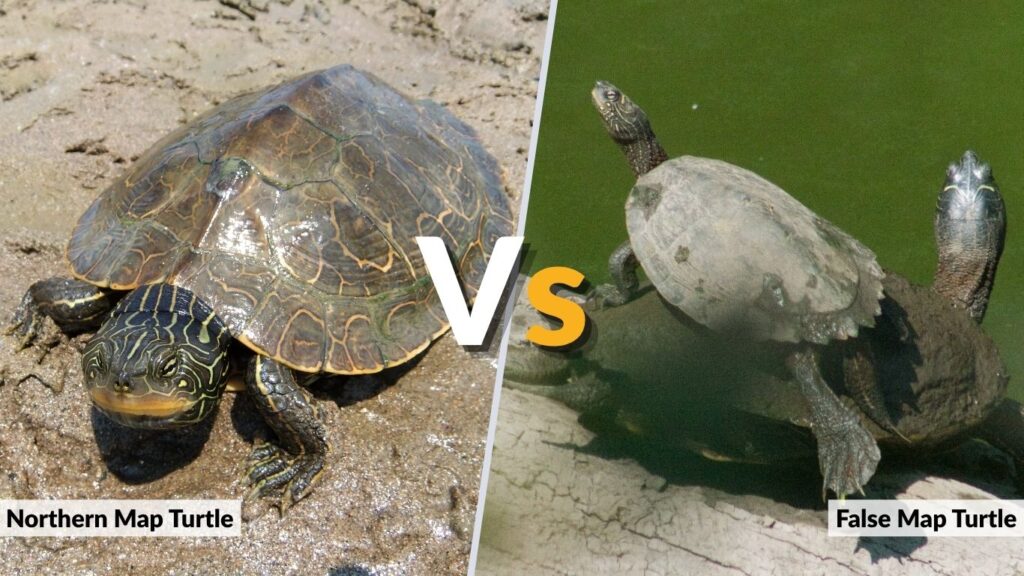
Northern map turtles are often confused with false map turtles because both species share similar shell patterns and aquatic habitats.
| Feature | Northern Map Turtle | False Map Turtle |
| Shell Markings | Thin contour-like lines | Less detailed patterns |
| Size | Females much larger | Slightly smaller overall |
| Range | Northern waterways | More southern distribution |
| Head Markings | Smaller yellow spots | Broader facial markings |
| Habitat | Rivers and lakes | Similar freshwater habitats |
Although the two species resemble one another closely, shell pattern details and geographic location often help distinguish them.
False map turtles generally have broader head markings and slightly different shell pattern structures.
Reproduction and Nesting
Breeding and nesting are critical stages in the northern map turtle life cycle.
Mating Season
Northern map turtles usually mate during spring and fall when water temperatures are moderate.
Males often pursue females in the water during courtship. After mating, females begin searching for suitable nesting areas near shorelines.
Nesting Habits
Females dig nests in sandy or soft soil where eggs can incubate safely.
Important nesting features include:
- Warm soil exposure
- Distance from flooding
- Soft digging substrate
Once the eggs are buried, the female leaves the nest. Hatchlings later emerge independently and instinctively move toward water.
Threats and Conservation Status
Northern map turtles face growing environmental threats that affect population stability in some areas.
Environmental Threats
Major threats include:
- Water pollution
- Habitat destruction
- Boat traffic injuries
- Nest disturbance
- Loss of basking sites
Pollution is particularly harmful because it affects both water quality and food availability. Boat strikes also injure turtles in heavily used waterways where basking and swimming areas overlap with recreational activity.
Conservation Efforts
Several conservation programs aim to protect northern map turtle populations and freshwater habitats.
These efforts may include:
- Habitat restoration projects
- Nest protection programs
- Wildlife regulations
- Water quality improvement efforts
Protecting wetlands and clean waterways benefits not only turtles but many other freshwater species as well.
Interesting Facts About Northern Map Turtles
Northern map turtles have several fascinating characteristics that make them unique among freshwater turtles.
- Females grow much larger than males
- Excellent swimmers in river currents
- Spend long hours basking in sunlight
- Shell markings resemble topographic maps
- Prefer clean freshwater environments
Another interesting fact is that northern map turtles are often shy around humans. They quickly dive into the water when approached while basking.
Their strong association with clean freshwater habitats also makes them useful indicators of ecosystem health.
How to Help Northern Map Turtles
People can support northern map turtle populations by protecting freshwater habitats and reducing environmental disturbance.
Helpful Conservation Actions
Several actions may help preserve turtle habitats:
- Reduce water pollution
- Protect wetlands and shorelines
- Avoid disturbing nesting areas
- Support conservation programs
Maintaining healthy aquatic ecosystems is essential for long-term turtle survival.
Responsible Wildlife Observation
When observing turtles in the wild, it is important to minimize stress and disturbance.
Responsible practices include:
- Observing from a distance
- Avoiding direct handling
- Never removing wild turtles from nature
- Respecting nesting sites
Wild turtles play important ecological roles and should remain in their natural habitats whenever possible.
FAQs
What is a northern map turtle?
The northern map turtle is a freshwater turtle species known for the map-like markings on its shell and strong swimming ability.
Where do northern map turtles live?
They live in freshwater rivers, lakes, ponds, and streams across parts of the United States and southern Canada.
How long do northern map turtles live?
Northern map turtles can live for several decades, especially in protected habitats or captivity with proper care.
What do northern map turtles eat?
Their diet includes aquatic insects, snails, crayfish, small fish, and aquatic vegetation.
Are northern map turtles endangered?
They are not fully endangered overall, but pollution, habitat destruction, and environmental disturbance threaten some local populations.