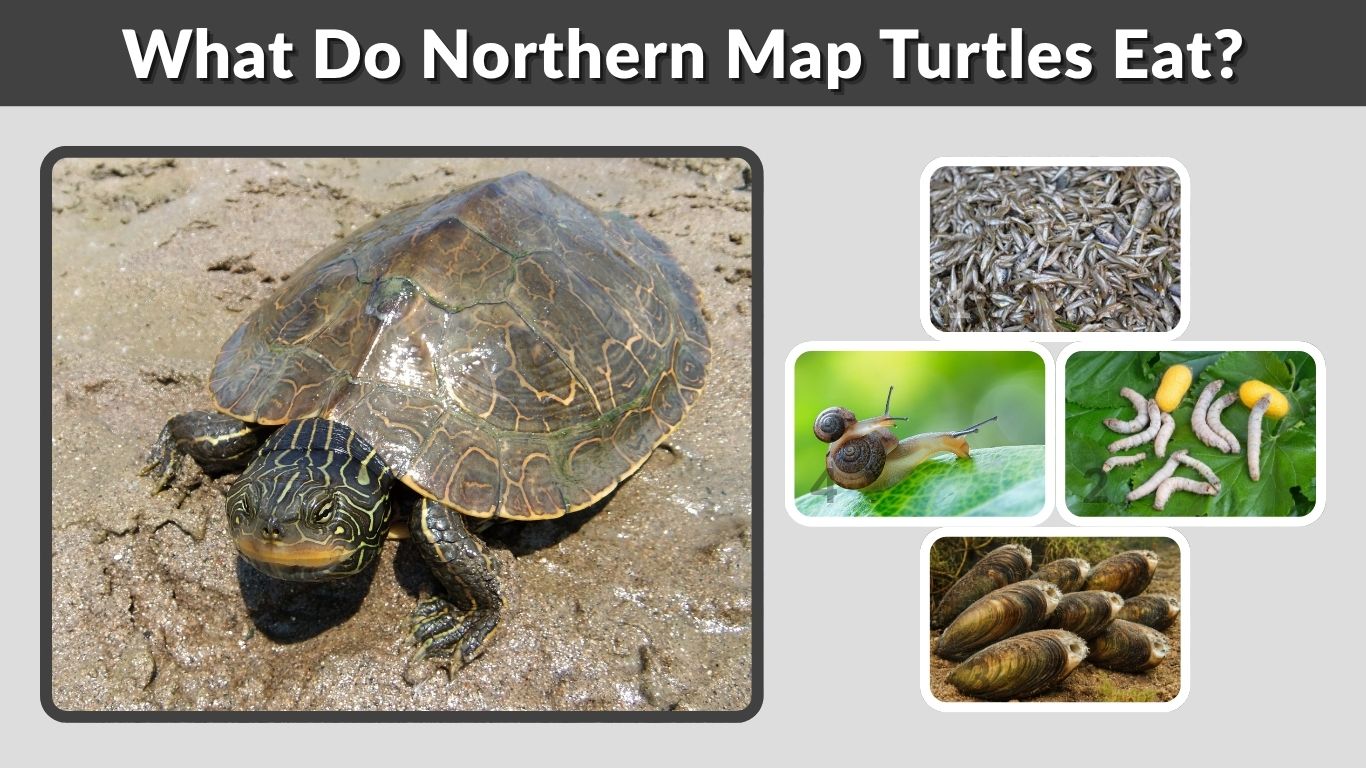
Northern map turtles are freshwater turtles known for their strong swimming ability, beautiful shell markings, and varied diet. These turtles are omnivores, meaning they eat both animal-based foods and plant matter depending on their age, size, and habitat. In the wild, northern map turtles spend much of their time searching for aquatic prey such as insects, snails, and crayfish along river and lake bottoms.
Their diet is especially interesting because males and females often eat different foods due to major size differences. Female northern map turtles develop stronger jaws that allow them to crush hard-shelled prey, while males typically focus on softer foods and smaller aquatic animals. Understanding what northern map turtles eat is important for both wildlife enthusiasts and pet owners who want to provide proper nutrition.
What Do Northern Map Turtles Eat?
Northern map turtles are omnivorous turtles that eat a wide variety of aquatic foods. Their diet changes naturally as they grow, and feeding habits may vary between wild and captive turtles.
Are Northern Map Turtles Omnivores?
Yes, northern map turtles are considered omnivores because they consume both animal and plant-based foods.
Their diet commonly includes:
- Aquatic insects
- Snails
- Mussels
- Crayfish
- Small fish
- Aquatic vegetation
Animal protein forms a major part of their diet, especially for younger turtles and females. However, plant material also contributes nutrients and variety to their feeding habits.
These turtles are opportunistic feeders and will eat whatever suitable prey is available in their freshwater environment.
How Their Diet Changes With Age
Northern map turtle feeding habits change as they grow older.
Young turtles usually eat more protein-rich foods because rapid growth requires higher levels of nutrients and energy. Hatchlings and juveniles commonly feed on insects, worms, and small aquatic animals.
As adults mature, their diet becomes more varied. Larger females especially begin eating more hard-shelled prey such as snails and mussels because their stronger jaws allow them to crush shells effectively. Adult males remain smaller and often continue eating softer prey items.
5 Common Foods Northern Map Turtles Love to Eat
Northern map turtles eat many different foods in both the wild and captivity. Their favorite foods are usually aquatic prey rich in protein and nutrients.
1. Aquatic Insects
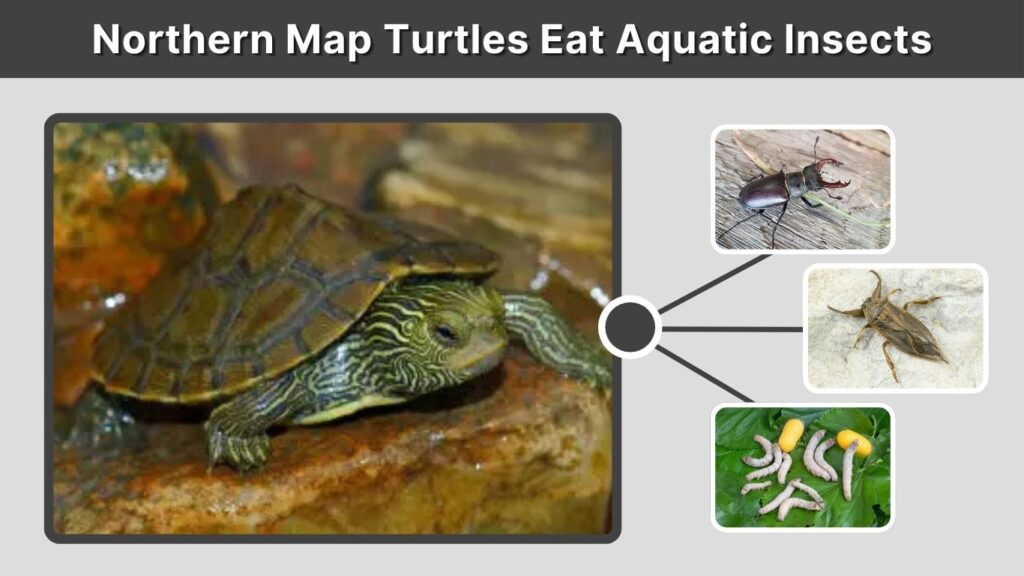
Aquatic insects are one of the most common foods eaten by northern map turtles, especially younger turtles.
Common insect prey includes:
- Beetles
- Water bugs
- Larvae
- Small aquatic insects
These insects are easy to catch underwater and provide important protein for growth and energy.
Juvenile turtles rely heavily on insects because they are small enough to handle easily.
2. Snails
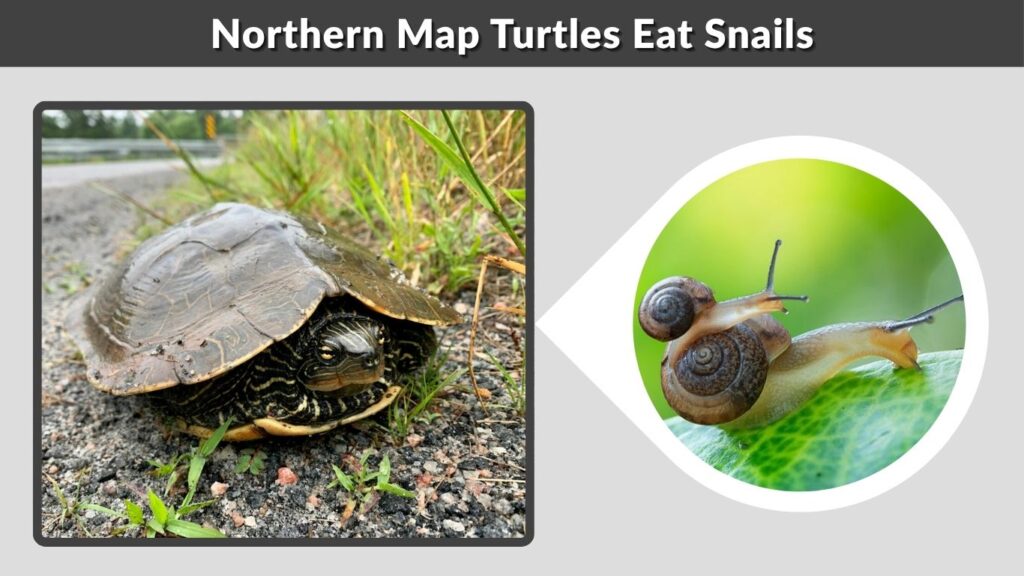
Snails are considered one of the favorite foods of northern map turtles, particularly adult females.
Snails provide:
- High protein content
- Important minerals
- Natural beak wear
Large females use their strong jaws to crush snail shells efficiently. This feeding behavior also helps keep their beaks naturally trimmed.
Snails are abundant in many freshwater habitats, making them an important natural food source.
3. Mussels
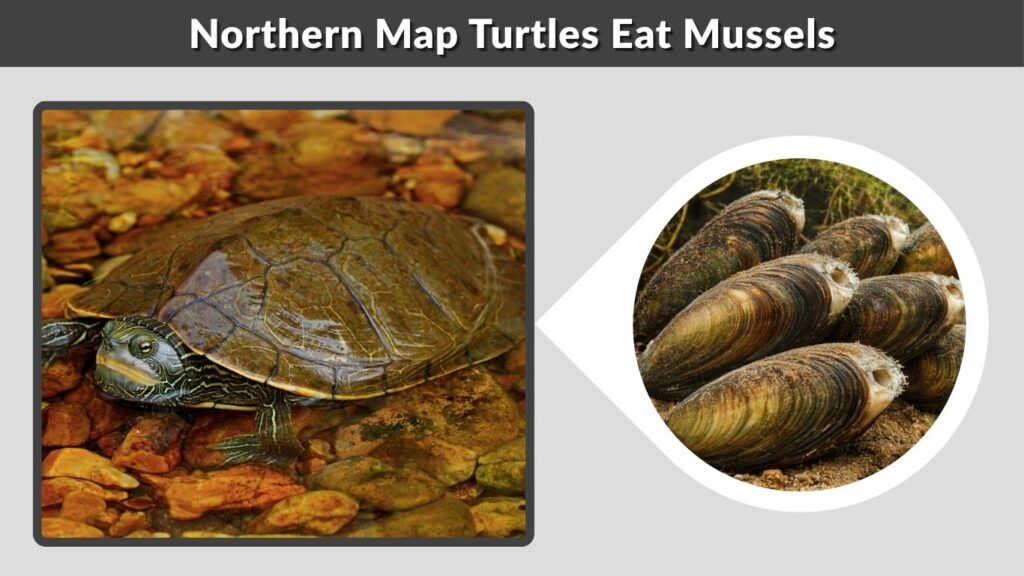
Mussels are another major food source for larger northern map turtles.
These hard-shelled prey items are especially important for females because they have enough jaw strength to break open the shells.
Mussels provide:
- Protein
- Calcium
- Nutrients for shell health
Wild northern map turtles often search river bottoms for mussels hidden in mud or sand.
4. Crayfish
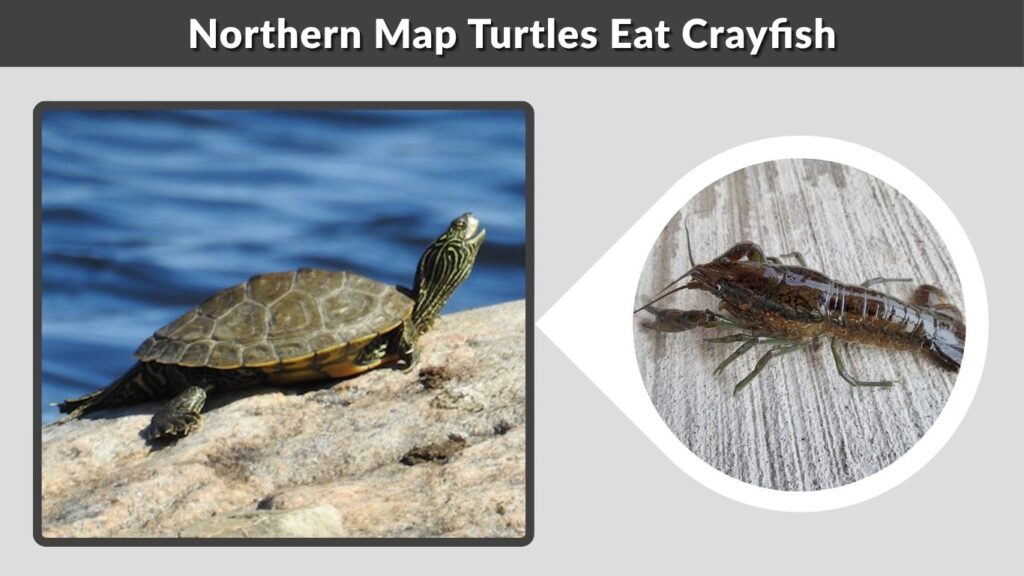
Crayfish are nutrient-rich prey commonly eaten by northern map turtles in rivers and streams.
Benefits of crayfish include:
- High protein levels
- Healthy fats
- Natural hunting stimulation
Northern map turtles actively hunt crayfish underwater and may consume both juvenile and smaller adult crayfish.
Crayfish are especially important in natural river ecosystems where turtles forage regularly.
5. Small Fish
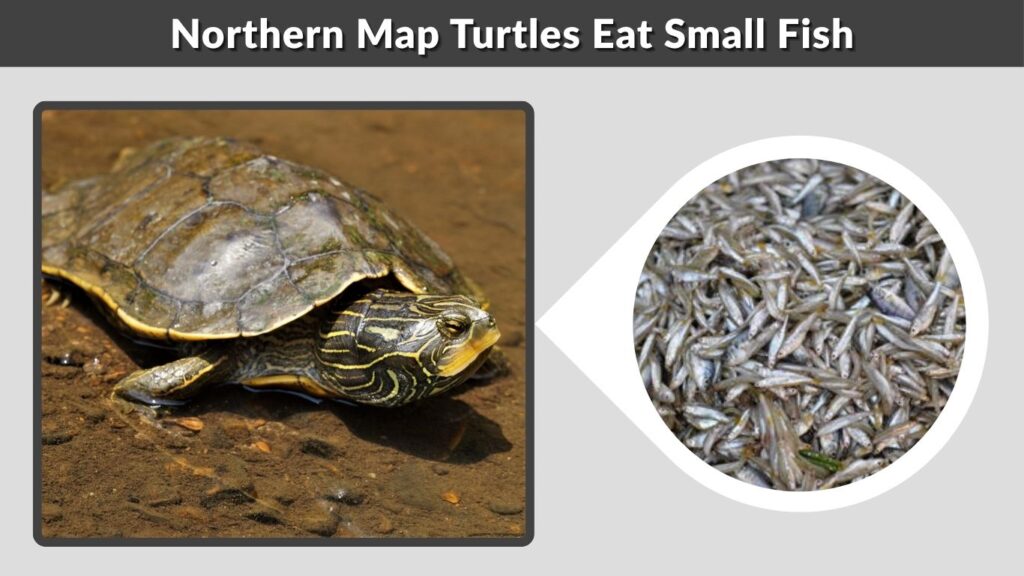
Northern map turtles occasionally eat small fish, although fish are not usually their primary food source.
They may capture:
- Injured fish
- Slow-moving fish
- Small juvenile fish
Fish provide extra protein and nutrients that support growth and overall health. Wild turtles generally catch fish opportunistically rather than actively hunting them constantly.
Northern Map Turtle Diet in the Wild
Wild northern map turtles mainly feed on prey naturally found in freshwater ecosystems such as rivers, lakes, and streams.
Common Wild Food Sources
Northern map turtles commonly eat:
- Snails
- Mussels
- Insects
- Crustaceans
- Aquatic vegetation
Food availability depends heavily on habitat quality and water conditions. Clean freshwater systems with abundant aquatic life support healthier turtle populations.
Female turtles usually consume more hard-shelled prey than males because of their larger size and stronger jaws.
How They Hunt for Food
Northern map turtles search for food primarily underwater. Their strong swimming ability helps them navigate currents while looking for prey along the bottom of rivers and lakes.
Common hunting behaviors include:
- Searching rocks and mud for prey
- Grabbing slow-moving aquatic animals
- Foraging near vegetation
They rely heavily on vision to locate food and often spend long periods exploring underwater feeding areas.
Northern Map Turtle Diet in Captivity
Captive northern map turtles require a balanced diet that closely matches their natural feeding habits. Proper nutrition is important for shell growth, energy, and long-term health.
Best Foods for Pet Northern Map Turtles
Healthy captive diets commonly include:
- Commercial turtle pellets
- Earthworms
- Shrimp
- Aquatic insects
- Leafy aquatic plants
High-quality turtle pellets are especially useful because they contain balanced vitamins and minerals designed for aquatic turtles.
Protein-rich foods should still form an important part of the diet, especially for growing juveniles and females.
Foods to Feed in Moderation
Some foods should only be offered occasionally rather than as daily staples.
These include:
- Fruits
- Fatty protein foods
- Large feeder fish
Too much fruit or fatty food may lead to nutritional imbalance or obesity in captive turtles. Variety is important because feeding only one type of food can cause vitamin deficiencies over time.
What Do Baby Northern Map Turtles Eat?
Baby northern map turtles require a protein-rich diet to support rapid growth and healthy shell development. Young turtles are more carnivorous than adults and depend heavily on small aquatic prey during the early stages of life.
Best Foods for Hatchlings
Hatchlings and juvenile turtles commonly eat:
- Bloodworms
- Small insects
- Tiny aquatic larvae
- Small turtle pellets
- Soft worms
These foods are easier for small turtles to bite and digest. Protein is especially important because young turtles grow quickly during the first years of life.
Commercial turtle pellets designed for hatchlings can also help provide balanced vitamins and minerals needed for healthy development.
Feeding Frequency for Babies
Baby northern map turtles generally need more frequent feeding than adults.
Helpful feeding guidelines include:
- Feed once daily
- Offer small portions
- Remove uneaten food afterward
- Monitor appetite and growth
Overfeeding should still be avoided because leftover food can pollute the water quickly and increase the risk of bacterial growth.
Clean water is extremely important for young turtles because poor water quality can lead to illness and shell problems.
Male vs Female Feeding Differences
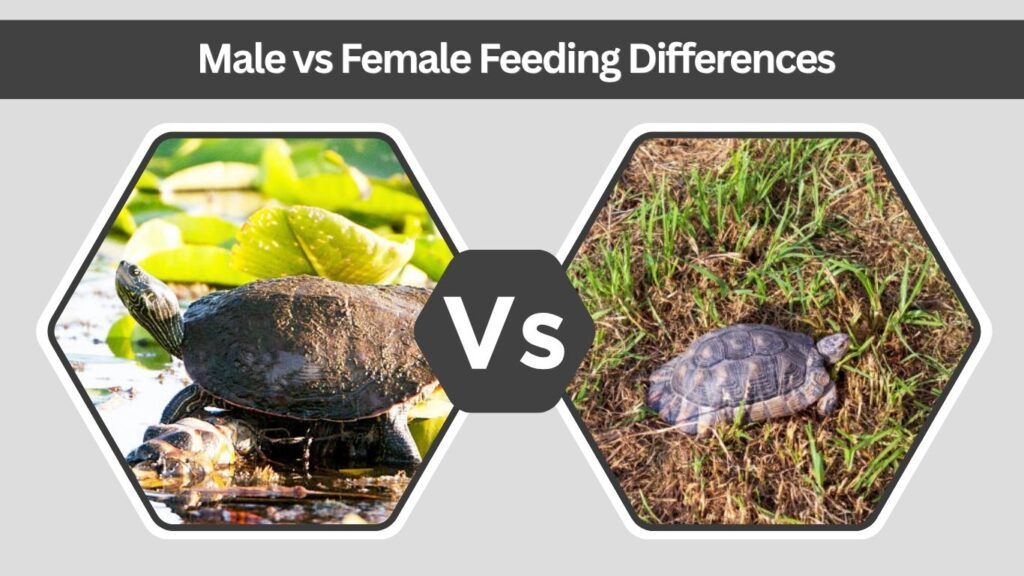
Male and female northern map turtles often eat different foods because of their major size differences.
Female Diet
Female northern map turtles grow much larger than males and develop broader, stronger jaws capable of crushing hard prey.
Common foods eaten by females include:
- Large snails
- Mussels
- Crayfish
- Hard-shelled aquatic prey
The powerful jaws of females allow them to eat prey that smaller males cannot easily handle.
This adaptation helps females access a wider variety of nutrient-rich food sources in freshwater habitats.
Male Diet
Male northern map turtles remain much smaller and usually consume softer prey items.
Male turtles commonly eat:
- Small aquatic insects
- Tiny snails
- Worms
- Soft-bodied prey
Because males cannot crush larger shells effectively, they focus on smaller and easier-to-eat foods.
This difference in feeding behavior reduces competition between males and females sharing the same environment.
Foods Northern Map Turtles Should Avoid
Some foods may harm northern map turtles or fail to provide proper nutrition. Avoiding unhealthy foods is important for long-term health and shell development.
- Processed human food
- Bread and crackers
- Dairy products
- Salty foods
- Seasoned meats
- Sugary snacks
Processed foods often contain excess salt, preservatives, and ingredients that turtles cannot digest properly.
Dairy products should also be avoided because turtles are unable to process lactose effectively.
Feeding unhealthy foods regularly may lead to obesity, vitamin deficiencies, poor shell growth, and digestive problems.
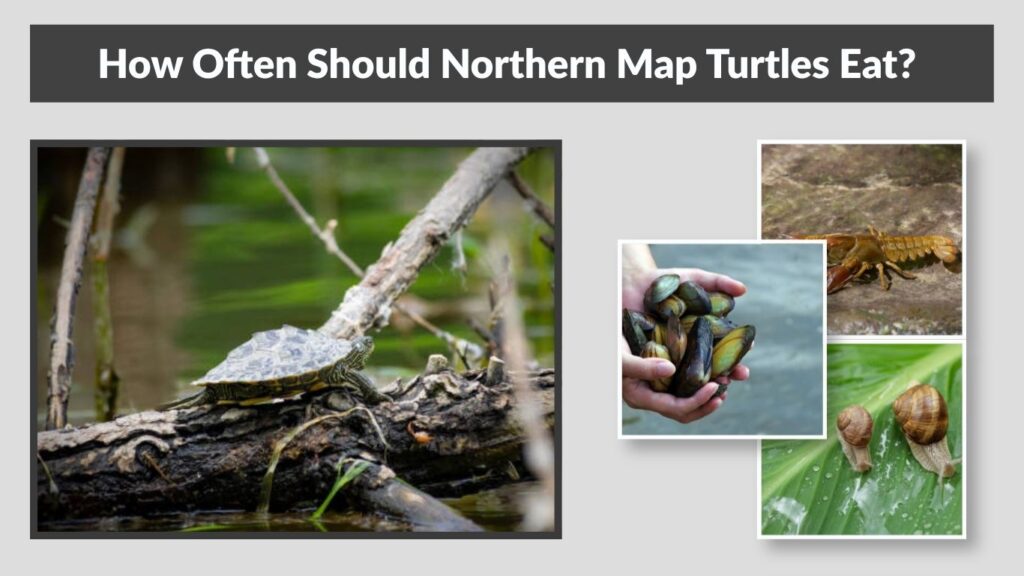
How Often Should Northern Map Turtles Eat?
Feeding frequency depends on the turtle’s age, size, and activity level. Younger turtles generally require more food than adults because they are still growing rapidly.
Feeding Juveniles
Juvenile northern map turtles usually need daily feeding.
Helpful juvenile feeding practices include:
- Daily meals
- Protein-focused diet
- Small controlled portions
Young turtles burn energy quickly and require regular nutrition to support shell and body growth.
Feeding Adults
Adult northern map turtles often eat less frequently than juveniles.
Typical adult feeding schedules include:
- Feeding every other day
- Balanced mix of protein and plant foods
- Portion control to prevent obesity
Adult turtles may become overweight if overfed in captivity, especially when activity levels are lower than in the wild.
Signs of a Healthy Northern Map Turtle Diet
A balanced diet supports healthy growth, strong shells, and normal turtle behavior.
- Smooth shell development
- Bright and alert eyes
- Healthy body weight
- Strong swimming activity
- Regular basking behavior
Turtles receiving proper nutrition usually remain active, alert, and interested in food.
Healthy shell growth is especially important because nutritional deficiencies can cause deformities or weak shell structure over time.
Common Feeding Mistakes
Improper feeding is one of the most common causes of health problems in captive northern map turtles.
- Overfeeding
- Feeding only one food type
- Too much fatty protein
- Lack of calcium sources
- Poor water quality during feeding
Overfeeding often causes obesity and excessive waste buildup in the tank. Dirty water can quickly lead to infections and shell problems.
Providing dietary variety and proper supplements helps reduce the risk of nutritional deficiencies.Calcium is especially important for maintaining healthy shell and bone growth.
Northern Map Turtle Feeding Tips
Good feeding habits improve turtle health and make long-term care easier for pet owners.
Best Feeding Practices
Several feeding strategies can help maintain proper nutrition and cleaner water conditions.
Helpful tips include:
- Remove uneaten food promptly
- Feed high-quality turtle pellets
- Provide calcium supplements if needed
- Offer varied foods regularly
Balanced diets help turtles receive a wider range of vitamins and nutrients.
Importance of Clean Water
Northern map turtles eat and live in water, so water quality strongly affects feeding health.
Clean water helps:
- Reduce bacterial growth
- Prevent shell infections
- Improve appetite and digestion
- Maintain healthier living conditions
Strong filtration systems are especially important for captive turtles because leftover food and waste quickly pollute aquatic environments.
FAQs
What is the favorite food of northern map turtles?
Snails, mussels, insects, and crayfish are among the favorite natural foods of northern map turtles.
Do northern map turtles eat plants?
Yes, they eat some aquatic plants and soft vegetation along with animal-based foods.
Can northern map turtles eat fruit?
They can eat small amounts of fruit occasionally, but fruit should not become a major part of their diet.
How often should you feed a northern map turtle?
Juveniles are usually fed daily, while adults are commonly fed every other day in captivity.
What do baby northern map turtles eat?
Baby northern map turtles mainly eat protein-rich foods such as insects, worms, bloodworms, and small aquatic prey.