
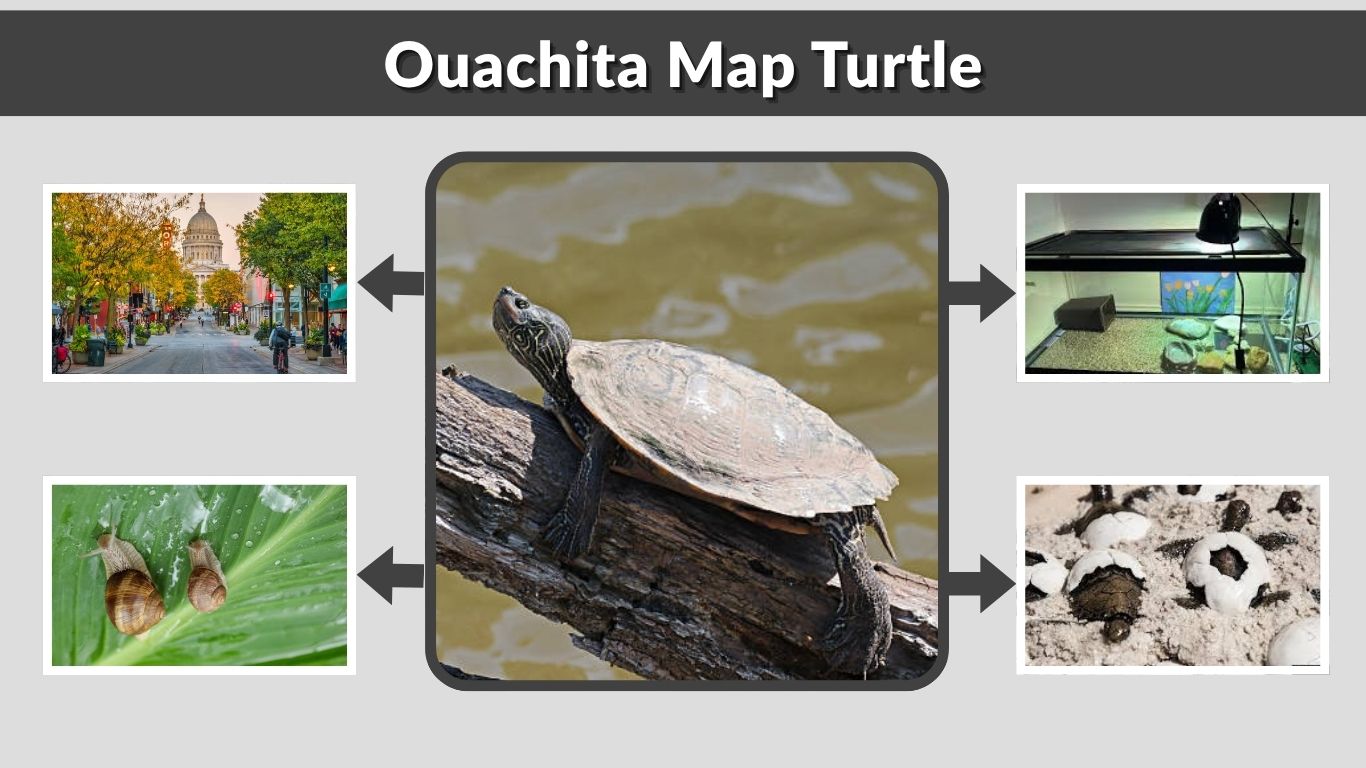
The Ouachita map turtle is a freshwater turtle species known for its striking shell markings, active behavior, and excellent swimming ability. Scientifically called Graptemys ouachitensis, this turtle naturally inhabits rivers and freshwater systems throughout parts of the United States. Many reptile enthusiasts appreciate the species because of its attractive appearance and manageable care requirements. Proper care involves maintaining clean aquatic habitats, balanced nutrition, and correct lighting conditions. Understanding the turtle’s habitat, size, diet, and behavior helps owners create healthy living environments that support long-term growth and overall well-being.
What Is an Ouachita Map Turtle?
The Ouachita map turtle is a semi-aquatic freshwater turtle recognized for the map-like markings across its shell. It belongs to the map turtle group, which is known for strong swimming skills and active basking behavior.
Scientific Classification
This species belongs to the Emydidae family and carries the scientific name Graptemys ouachitensis. It is closely related to other North American map turtles found in river systems and freshwater habitats.
Physical Appearance
Ouachita map turtles usually have olive or brown shells decorated with intricate yellow lines and patterns. Many individuals also display distinctive yellow markings around the head and eyes.
Interesting Facts About the Species
Several traits make this turtle especially interesting among aquatic reptiles.
- It is an excellent swimmer.
- The shell contains map-like patterns.
- Females grow much larger than males.
- Most individuals enjoy frequent basking.
Ouachita Map Turtle Habitat and Range
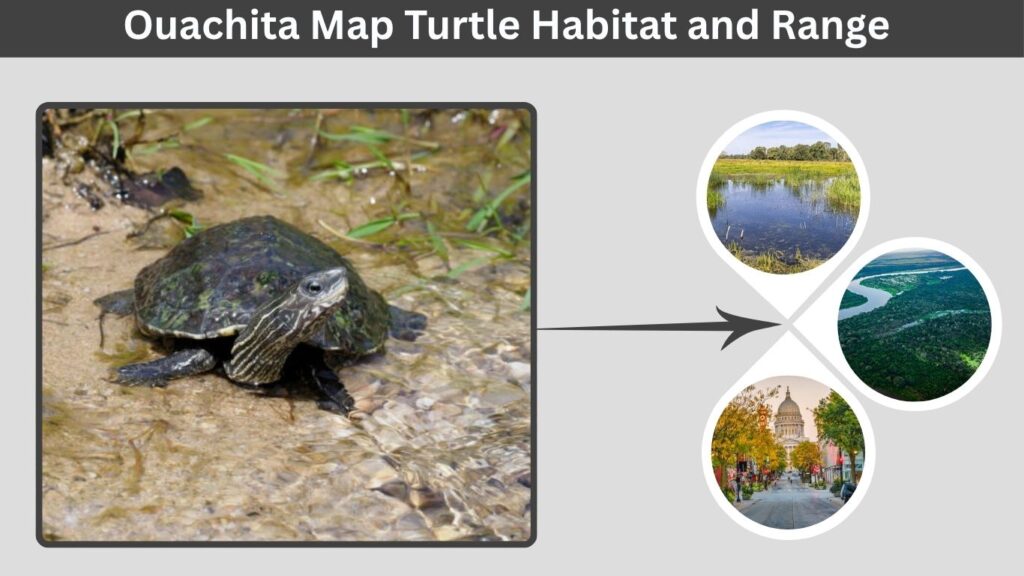
Ouachita map turtles naturally live in freshwater habitats with moving water, abundant basking areas, and underwater vegetation. Their environment plays an important role in their feeding and overall health.
Natural Habitat
Wild turtles commonly inhabit rivers, streams, lakes, and large freshwater systems with sandy or muddy bottoms. Fallen logs and rocks provide important basking locations where turtles absorb heat and UVB light from the sun.
Geographic Distribution
The species is commonly found throughout the Mississippi River drainage system and nearby waterways. Populations also exist in states such as Illinois, Tennessee, Oklahoma, Wisconsin, and Ohio.
Environmental Conditions They Need
Healthy habitats for Ouachita map turtles generally include several essential environmental features.
- Clean freshwater
- Strong filtration systems
- Warm basking areas
- UVB lighting exposure
- Spacious swimming zones
Poor water quality and limited basking opportunities may increase stress and health problems in captive turtles.
How Big Do Ouachita Map Turtles Get?
Ouachita map turtles display noticeable differences in size between males and females. Females can become significantly larger as they mature.
Average Size and Weight
Adult males usually reach shell lengths of 3.5 to 5 inches, while females may grow between 7 and 10 inches. Growth depends on diet, habitat quality, and environmental conditions.
Growth and Development
Young turtles grow steadily during their first few years of life when they receive balanced diets and proper temperatures. Hatchlings begin small but can develop rapidly in healthy aquatic setups.
Factors That Affect Growth
Several important conditions influence how large these turtles become.
- Nutritional quality
- Water conditions
- UVB lighting
- Tank size
- Overall health
Captive turtles with spacious habitats and balanced diets often achieve healthier growth than turtles kept in poor conditions.
What Do Ouachita Map Turtles Eat?
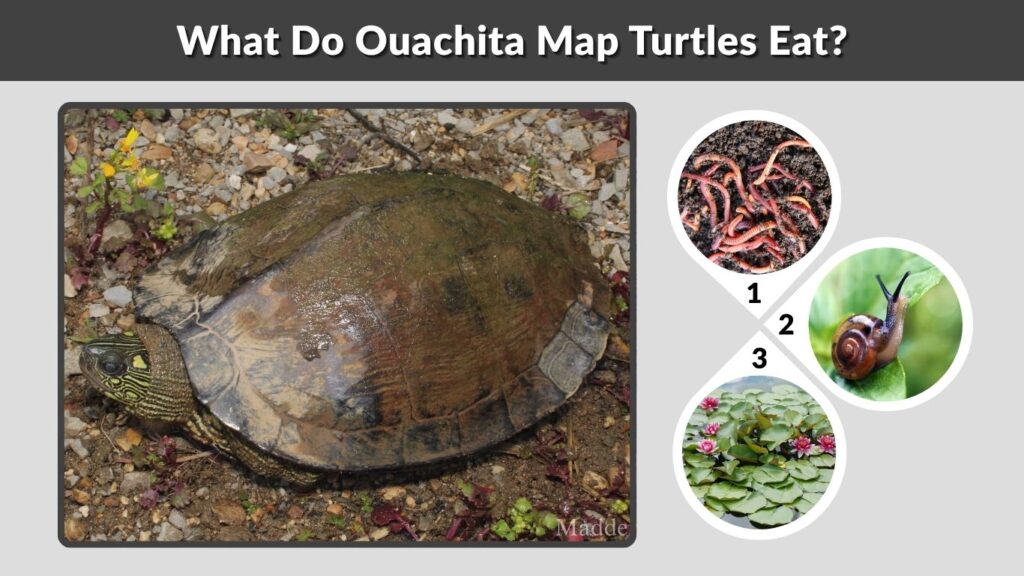
Ouachita map turtles are omnivorous reptiles that consume both animal protein and plant material. Feeding habits may vary depending on age and habitat conditions.
Ouachita Map Turtle Diet
In natural environments, these turtles feed on insects, snails, crayfish, fish, aquatic plants, and other small organisms. Younger turtles usually consume more protein than adults.
Best Foods for Ouachita Map Turtles
Captive turtles require varied diets that support healthy shell development and strong immune systems.
- Commercial turtle pellets
- Earthworms
- Crickets
- Snails
- Aquatic plants
Calcium supplementation is important because it supports shell strength and proper bone development.
Baby Ouachita Map Turtle Diet
Baby turtles require frequent feeding schedules with protein-rich foods to support rapid growth. Hatchlings also benefit from calcium-rich diets combined with UVB lighting for healthy shell formation.
Ouachita Map Turtle Care Guide
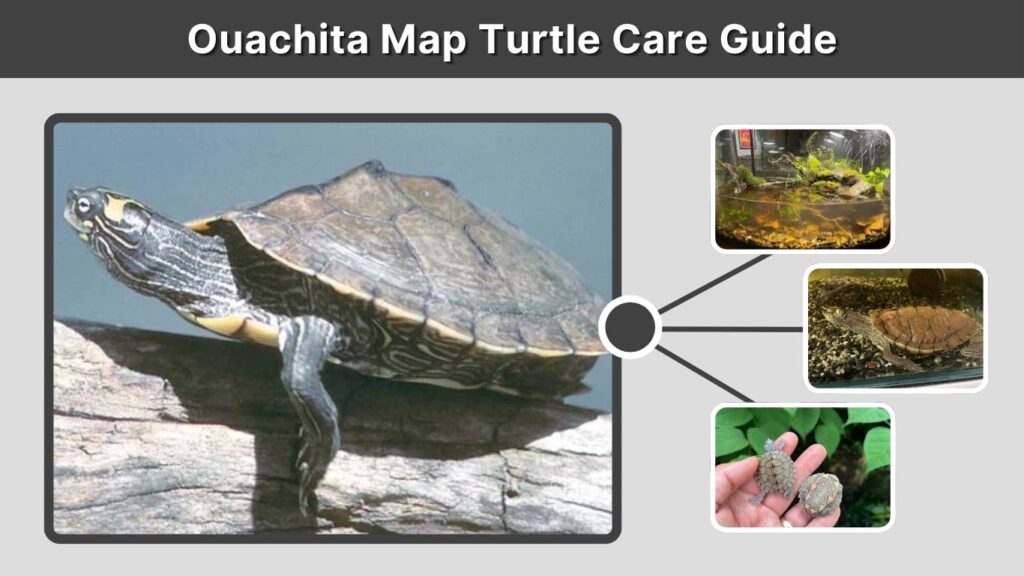
Ouachita map turtles adapt well to captivity when owners provide clean water, spacious aquatic setups, and proper lighting. Their active swimming behavior means they require larger habitats than many smaller turtle species.
Are Ouachita Map Turtles Good Pets?
Many reptile keepers consider Ouachita map turtles good pets because of their attractive appearance and active behavior. However, they are best suited for owners who can maintain proper aquatic environments and long-term care routines.
Tank and Aquarium Setup
A proper turtle aquarium should include deep water for swimming and secure basking platforms above the water surface. Strong filtration systems help maintain water cleanliness, while UVB lighting supports shell and bone health.
Water Temperature and Habitat Needs
Ouachita map turtles require stable water temperatures and warm basking areas to remain healthy. Proper lighting and water quality help prevent shell problems, respiratory infections, and nutritional deficiencies in captive turtles.
Ouachita Map Turtle Lifespan
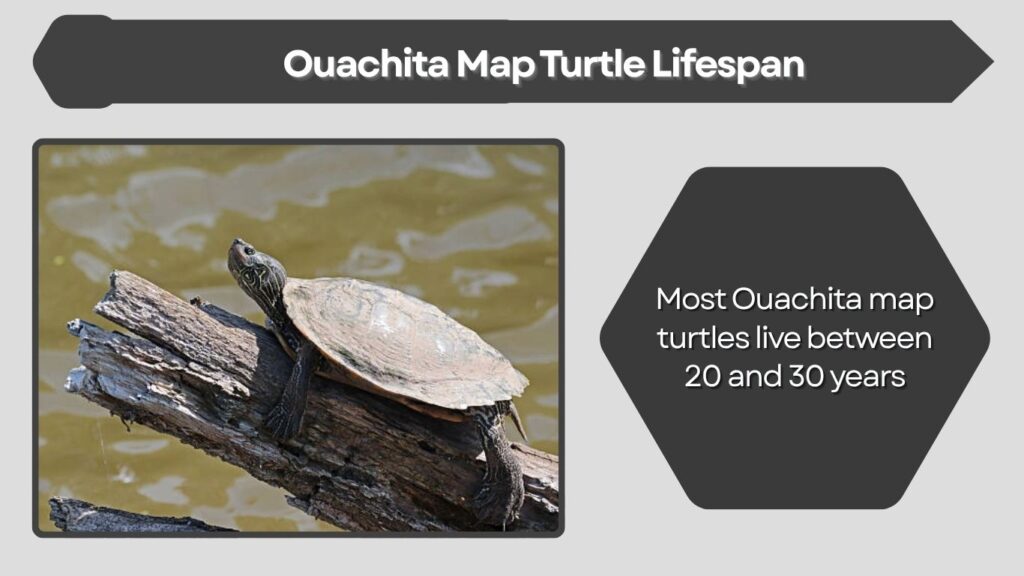
Ouachita map turtles are relatively long-lived reptiles that can survive for decades when provided with proper care and healthy environmental conditions. Clean water, balanced nutrition, and correct lighting all contribute to long-term health and survival.
How Long Do Ouachita Map Turtles Live?
Most Ouachita map turtles live between 20 and 30 years in captivity. Some individuals may live even longer when they receive consistent care, spacious habitats, and proper veterinary attention.
Factors That Affect Lifespan
Several important conditions influence longevity and overall turtle health.
- Water cleanliness
- Balanced nutrition
- UVB lighting exposure
- Proper temperatures
- Stress reduction
Poor water quality and inadequate basking areas may weaken the immune system and shorten lifespan over time.
Baby Ouachita Map Turtle Care
Baby Ouachita map turtles require additional attention because hatchlings are more sensitive to environmental changes and nutritional deficiencies than adults.
Hatchling Habitat Setup
Young turtles should live in shallow water with easy access to basking areas and warm temperatures. Small hatchlings may struggle in overly deep water without resting areas.
Feeding and Growth
Baby turtles grow quickly during their first years of life and require protein-rich foods several times each week. Proper calcium intake and UVB lighting support healthy shell growth and bone development.
Male vs Female Ouachita Map Turtle
Male and female Ouachita map turtles differ noticeably in size and physical appearance. These differences become more obvious as turtles mature.
Size Differences
Female turtles are significantly larger than males and often develop broader shells. Males remain smaller and usually have longer tails relative to body size.
Behavioral Differences
Males are often more active during breeding periods, while females spend more time basking and feeding to support egg production and growth.
Mississippi Map Turtle vs Ouachita Map Turtle
Ouachita map turtles are frequently compared to Mississippi map turtles because the species share similar habitats and shell patterns.
Key Physical Differences
Mississippi map turtles often display more noticeable markings behind the eyes, while Ouachita map turtles usually have larger head patterns and broader shells.
Habitat and Feeding Comparisons
Both species prefer freshwater rivers and lakes, but slight differences exist in habitat range and dietary preferences depending on local environmental conditions.
Common Health Problems
Ouachita map turtles may develop illnesses if their habitats are poorly maintained or if nutritional needs are ignored.
Shell Problems and Plastron Fading
Shell rot, soft shells, and fading plastron coloration are common warning signs of poor habitat conditions or nutritional deficiencies. Dirty water and lack of UVB lighting are frequent causes.
Respiratory Infections
Cold temperatures and poor water quality may cause respiratory infections. Symptoms often include wheezing, swollen eyes, mucus discharge, and lack of appetite.
Preventive Care
Owners can lower disease risks by maintaining healthy aquatic conditions.
- Keep water clean and filtered
- Provide UVB lighting daily
- Feed balanced diets
- Monitor basking temperatures
- Schedule reptile vet visits
Regular maintenance helps prevent many common turtle illnesses.
Ouachita Map Turtle Reproduction
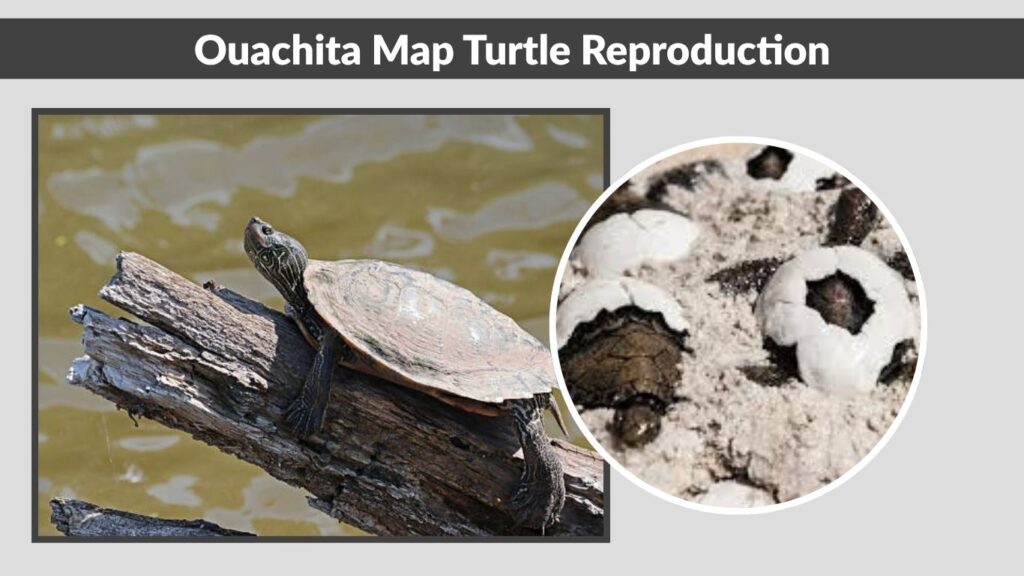
Breeding typically occurs during warmer seasons when environmental conditions become favorable. Female turtles leave the water to lay eggs in soft sandy soil near freshwater habitats.
Mating and Nesting
Males become more active during breeding season and may display courtship behavior in the water. Females search carefully for safe nesting locations before laying eggs.
Eggs and Hatchlings
After incubation, hatchlings emerge from underground nests and instinctively move toward nearby water sources. Many hatchlings face predators during this vulnerable stage.
Ouachita Map Turtle for Sale
The cost of an Ouachita map turtle depends on age, size, breeder reputation, and color variation. Rare morphs may be more expensive than standard turtles.
Buying From Reputable Breeders
Potential owners should purchase turtles from trusted breeders or licensed reptile dealers. Captive-bred turtles are generally healthier and adapt better to captivity than wild-caught specimens.
High Orange Ouachita Map Turtle
High orange variations are especially popular because of their bright coloration and unique appearance. These turtles are often more expensive because of their rarity in the reptile trade.
FAQs
What do Ouachita map turtles eat?
Ouachita map turtles eat a varied diet that includes turtle pellets, insects, snails, crayfish, fish, and aquatic plants. Younger turtles usually consume more protein, while adults may eat larger amounts of plant matter as they mature.
How big do Ouachita map turtles get?
Male Ouachita map turtles usually grow between 3.5 and 5 inches, while females can reach 7 to 10 inches in shell length. Females are significantly larger and heavier than males in most cases.
Are Ouachita map turtles good pets?
Ouachita map turtles can make good pets for reptile keepers who can provide large aquatic habitats, clean water, and proper lighting. They are active turtles that require more swimming space than many smaller turtle species.
How long do Ouachita map turtles live?
Ouachita map turtles commonly live between 20 and 30 years in captivity when they receive proper care, balanced diets, UVB lighting, and clean aquatic environments.
Do Ouachita map turtles need UVB lighting?
Yes, Ouachita map turtles require UVB lighting to maintain healthy shells and bones. UVB exposure helps them absorb calcium properly and reduces the risk of shell deformities and metabolic bone disease.