
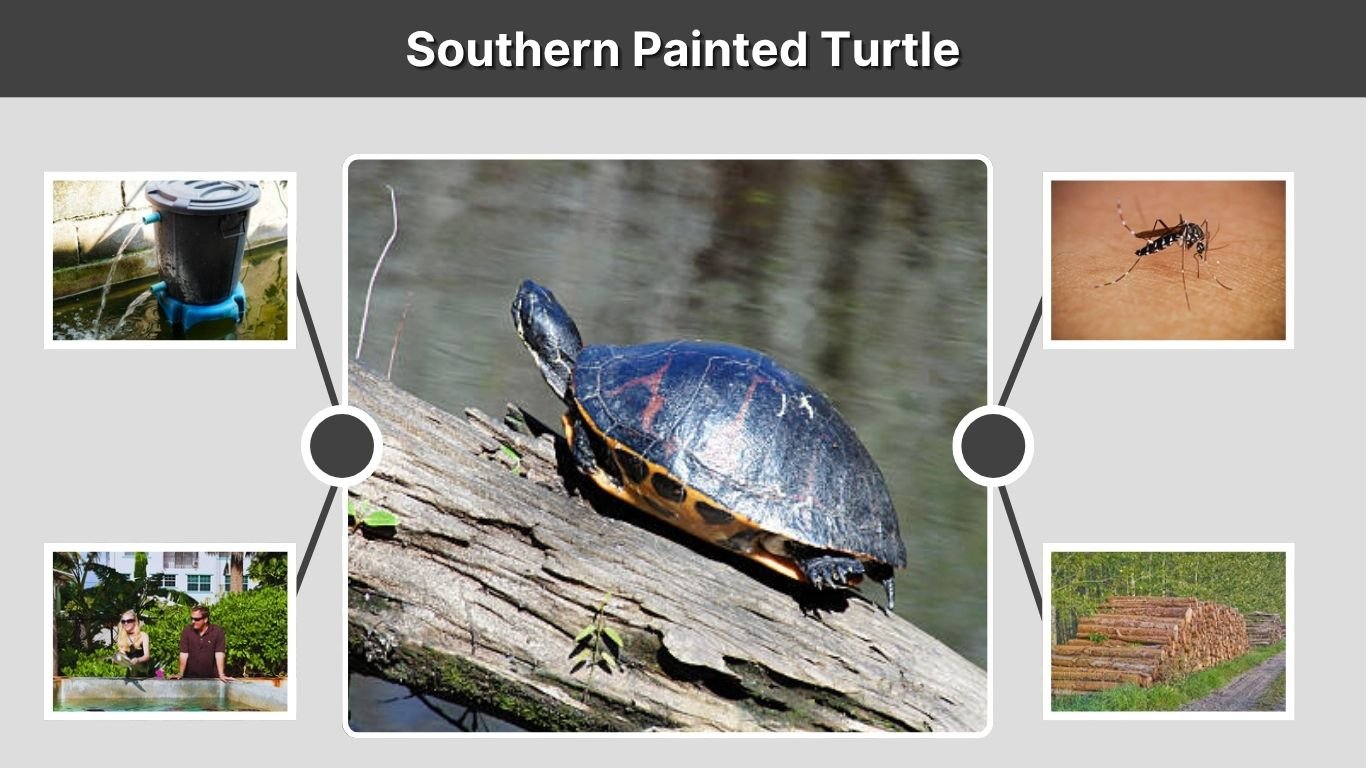
Southern painted turtles are one of the smallest and most colorful freshwater turtles, making them a popular choice for reptile enthusiasts. Native to the southern United States, they are known for their bright markings and calm temperament. These turtles thrive in aquatic environments and require proper tank setup, diet, and care to stay healthy. Whether you are a beginner or an experienced keeper, understanding their size, habitat, and behavior will help you provide the best possible environment for your turtle.
What Is a Southern Painted Turtle?
The southern painted turtle (Chrysemys picta dorsalis) is a subspecies of painted turtle recognized for its vibrant red, yellow, and black coloration. It is the smallest of all painted turtles and is commonly found in slow-moving waters such as ponds, marshes, and lakes.
These turtles are semi-aquatic, meaning they spend most of their time in water but also require land areas for basking. Their calm nature and manageable size make them a favorite among pet owners. They are active during the day and enjoy swimming, basking, and exploring their environment.
Southern Painted Turtle Size and Growth
Southern painted turtles are relatively small, which makes them easier to house compared to larger turtle species. Their growth depends on diet, habitat, and overall care.
- Adult size typically ranges from 4 to 6 inches
- Females are usually larger than males
- Hatchlings are very small, often under 1 inch
- Growth is steady over several years
A healthy turtle will grow gradually, and proper nutrition plays a key role in reaching full size. Overfeeding or poor conditions can negatively affect development.
Southern Painted Turtle Natural Habitat and Range
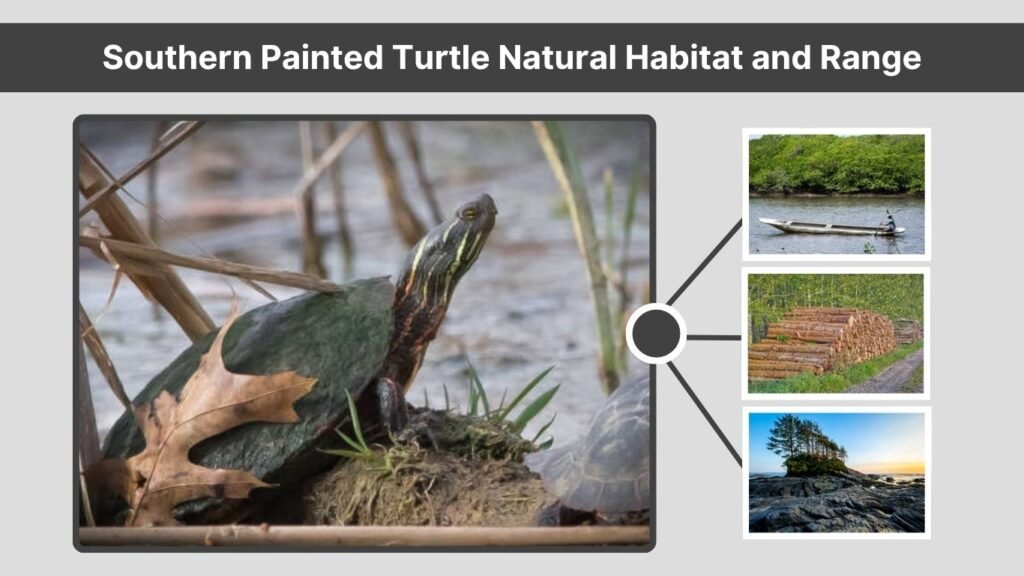
In the wild, southern painted turtles live in warm, slow-moving freshwater environments. They are commonly found in the southern regions of the United States, where the climate supports their active lifestyle.
They prefer areas with soft bottoms, aquatic plants, and easy access to basking spots like logs or rocks. Basking is an essential behavior, as it helps regulate body temperature and supports shell health. These turtles are excellent swimmers and spend most of their time in water, only leaving it to bask or rest.
Southern Painted Turtle Care Guide
Proper care is essential to keep your turtle healthy and active. Their needs revolve around maintaining a clean aquatic environment and providing access to heat and light.
Tank Setup
- Use an aquatic tank with plenty of swimming space
- Install a strong filtration system
- Provide a basking platform above water
Tank Size
- Minimum 20–40 gallons for adults
- Larger tanks are always better
- Allow enough depth for swimming
Temperature and Lighting
- Maintain water temperature between 22–26°C
- Basking area should be around 30–32°C
- Provide UVB lighting daily
Southern Painted Turtle Diet and Feeding
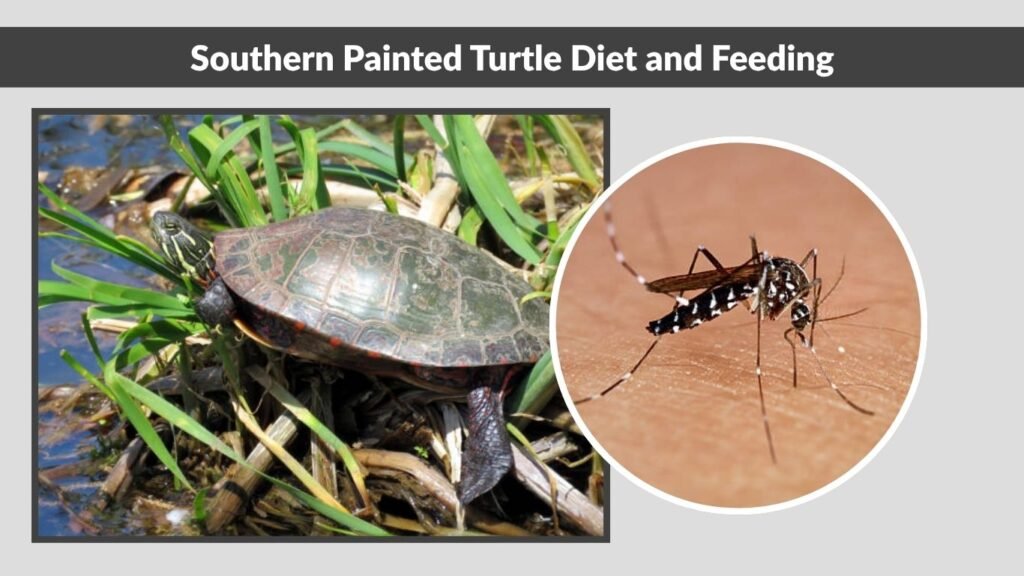
Southern painted turtles are omnivores, meaning they eat both plant and animal matter. Their diet should be balanced to support proper growth and health.
They typically eat commercial turtle pellets, insects like worms or crickets, and a variety of vegetables such as leafy greens. Occasional treats like small fish can also be offered. Hatchlings tend to eat more protein, while adults consume more plant-based foods.
Feeding frequency depends on age. Younger turtles require daily feeding, while adults can be fed every other day. Clean water is essential during feeding, as turtles often eat in water and can quickly make it dirty.
Baby Southern Painted Turtle Care
Baby southern painted turtles require extra attention because they are more delicate than adults. Their environment must be carefully controlled to support healthy growth.
Tank Setup for Babies
- Use a smaller, shallow tank
- Ensure easy access to basking area
- Keep water clean and filtered
Feeding Baby Turtles
- Feed daily with small portions
- Focus on protein-rich foods
- Introduce greens gradually
Special Care Tips
- Avoid excessive handling
- Monitor growth closely
- Maintain stable temperature and lighting
Southern Painted Turtle Behavior and Personality
Southern painted turtles are known for their calm and easygoing nature, which makes them ideal for beginner reptile keepers. They are active during the day and enjoy swimming, basking, and exploring their surroundings.
- Generally peaceful and non-aggressive
- Spend time basking under heat light
- Active swimmers in clean water
- May bite if handled roughly or threatened
Although they can recognize routine, they are not highly interactive pets and prefer minimal handling.
Do Southern Painted Turtles Hibernate?
Southern painted turtles may hibernate (more accurately called brumation) in the wild when temperatures drop. However, in captivity, this process is not always necessary.
When temperatures decrease, their metabolism slows down, and they become less active. In controlled environments with stable warmth and lighting, turtles usually remain active year-round. For pet owners, it is safer to maintain consistent conditions rather than allowing hibernation, especially for younger turtles.
Southern Painted Turtle Tank Setup (Detailed)
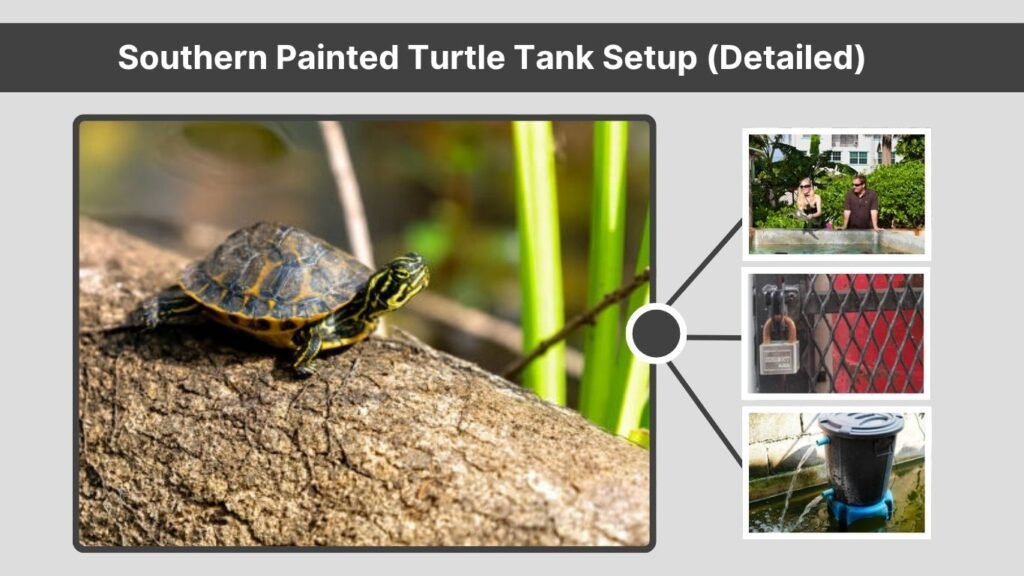
Creating a proper tank setup is essential for long-term health and comfort.
Essential Tank Features
- Deep water for swimming
- Strong filtration system
- Stable basking platform
- Secure tank lid
Decorations and Environment
- Add aquatic plants (real or artificial)
- Include rocks or driftwood
- Avoid sharp objects
- Provide hiding areas
Southern Painted Turtle Price and Buying Guide
Buying a healthy turtle from a trusted source is important for success as a pet owner.
Price Range
- Baby turtles are usually more affordable
- Adults cost more due to size and age
- Rare or high-colored turtles may be expensive
Where to Buy
- Reputable breeders
- Pet stores with good care standards
- Online reptile marketplaces
What to Check Before Buying
- Clear eyes and smooth shell
- Active and alert behavior
- No signs of injury or illness
Can You Keep a Southern Painted Turtle as a Pet?
Southern painted turtles are excellent pets for those willing to meet their care needs. They are relatively low-maintenance compared to some reptiles, but they still require proper setup and regular attention.
They need a clean aquatic tank, balanced diet, and access to heat and UVB lighting. While they are not cuddly pets, they are fascinating to observe and can live for many years when cared for properly.
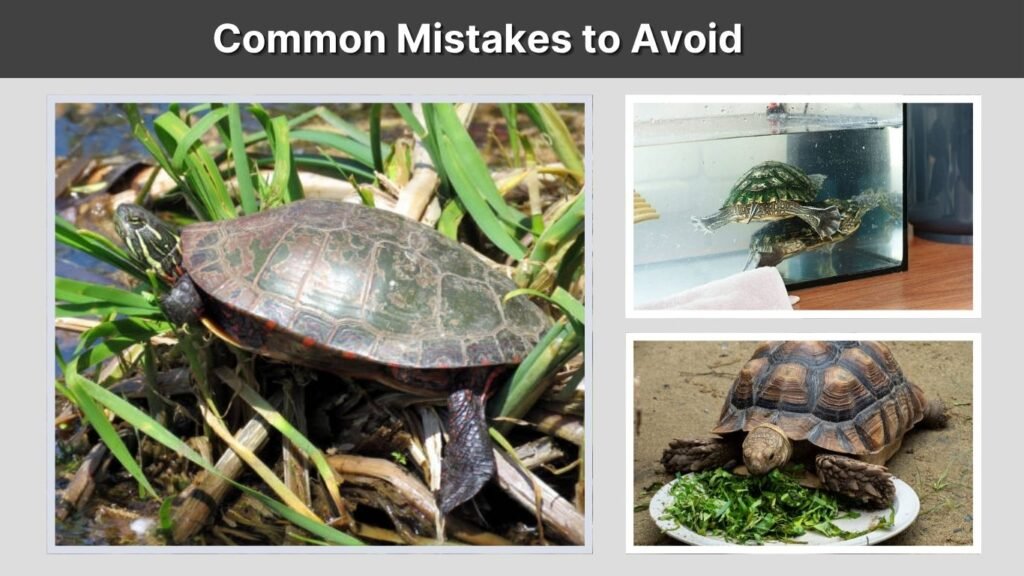
Common Mistakes to Avoid
Small Tank Size
Keeping turtles in tanks that are too small restricts movement and can lead to poor health over time.
Poor Water Quality
Dirty water can cause infections and stress. Regular cleaning and filtration are essential.
Improper Diet
Feeding only one type of food can lead to nutritional deficiencies. A varied diet is important.
Lack of UVB Lighting
Without UVB, turtles cannot properly absorb calcium, which can lead to shell problems.
FAQs
How big do southern painted turtles get?
Southern painted turtles typically grow between 4 and 6 inches in length. Females are usually slightly larger than males, and proper care plays a big role in their final size.
What do southern painted turtles eat?
They eat a mix of turtle pellets, insects, and vegetables. A balanced omnivorous diet is important, along with calcium supplementation for shell health.
Do southern painted turtles need a basking area?
Yes, they require a dry basking area with heat and UVB lighting. This helps regulate body temperature and supports healthy shell development.
How long do southern painted turtles live?
They usually live between 20 and 30 years in captivity when given proper care, making them a long-term pet commitment.
Can southern painted turtles live with fish?
They can sometimes live with fish, but smaller fish may be eaten. It’s best to choose tank mates carefully or keep them alone.