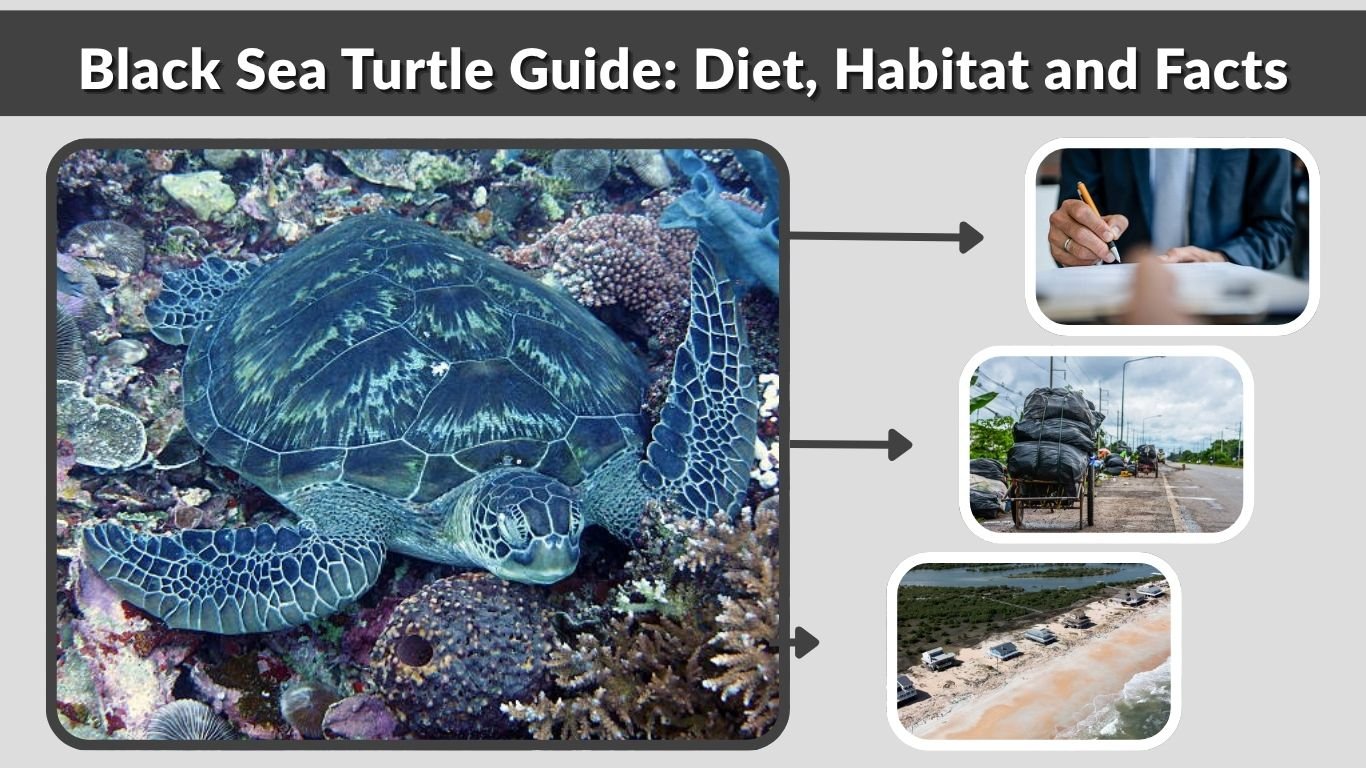
Black sea turtles are among the most fascinating marine reptiles, recognized for their darker coloration and ecological importance. Commonly associated with the Pacific Ocean, they are closely related to green sea turtles but display unique traits in appearance and behavior. These turtles also attract attention in digital media, educational visuals, and games like Dreamlight Valley. Understanding their biology, habitat, and role in the ecosystem helps highlight why they are so important and worth protecting.
Understanding the Black Sea Turtle
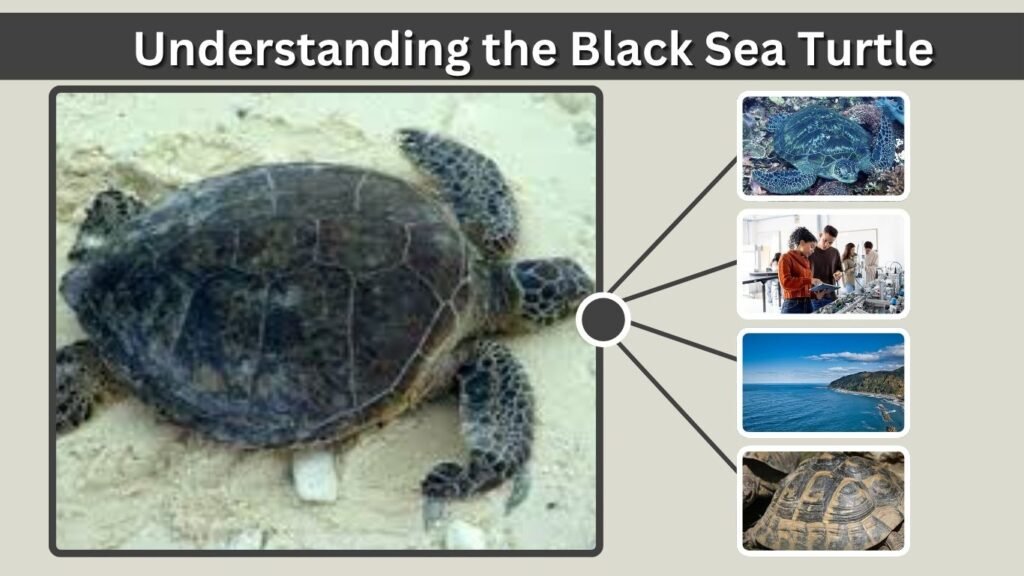
This section explains what black sea turtles are, how they are classified, and what makes them unique compared to other sea turtles.
What Is a Black Sea Turtle?
- Considered a subspecies of the green sea turtle
- Scientific name: Chelonia mydas agassizii
- Found mainly in the eastern Pacific Ocean
- Known for darker shell pigmentation compared to typical green sea turtles
Physical Characteristics
Black sea turtles are medium to large-sized marine reptiles. Adults can grow up to around 1 meter (3 feet) in shell length and weigh between 110 to 180 kilograms. Their most noticeable feature is their darker carapace, which ranges from deep brown to nearly black.
Their bodies are streamlined for swimming, with strong front flippers that allow them to travel long distances across oceans. Compared to leatherback sea turtles, they are smaller and have a harder shell instead of a flexible one.
Habitat and Distribution
- Found in tropical and subtropical waters
- Common along the coasts of Mexico, Central America, and the Galápagos Islands
- Frequently seen on black sand beaches such as Punaluʻu Beach in Hawaii
- Prefer shallow coastal areas for feeding and nesting
Black Sea Turtle Diet, Behavior, and Lifecycle
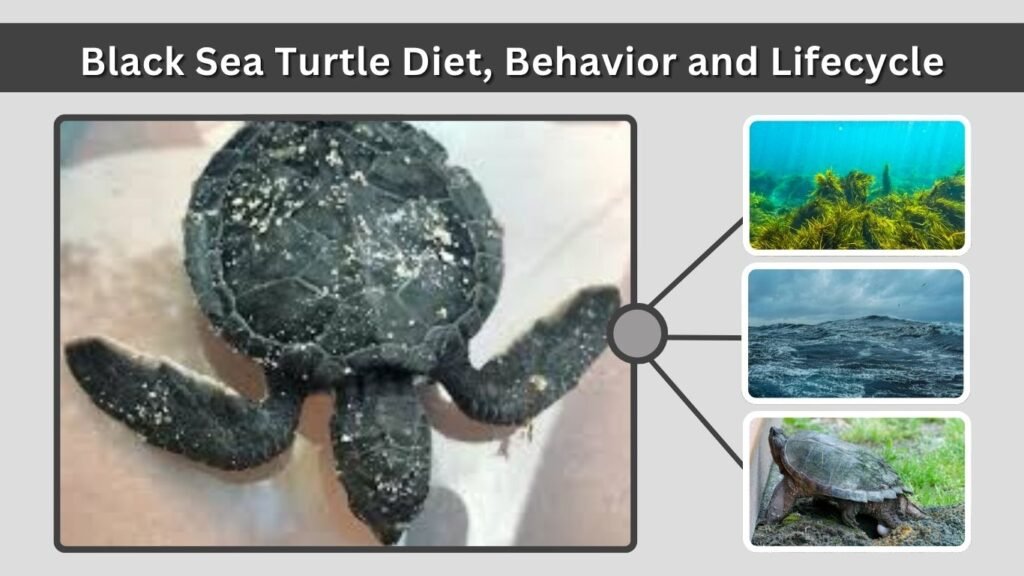
This section explores how black sea turtles live, including what they eat, how they behave, and their lifecycle stages.
What Do Black Sea Turtles Eat?
Black sea turtles are primarily herbivores as adults. Their diet mainly includes seagrass and algae, which they graze on in coastal waters. This feeding behavior plays a key role in maintaining healthy marine ecosystems, especially seagrass beds.
Young turtles, however, may have a more varied diet. Juveniles sometimes consume small invertebrates such as jellyfish and crustaceans before transitioning to a plant-based diet as they mature.
Behavior and Migration
- Known for long-distance migration between feeding and nesting sites
- Generally solitary but may gather in feeding areas
- Use ocean currents to travel efficiently
- Strong navigational ability, often returning to the same nesting beaches
Black sea turtles are highly adapted to ocean life. They spend most of their time in water, coming ashore mainly for nesting. Their migration patterns can span thousands of kilometers, showing their remarkable endurance and orientation skills.
Reproduction and Lifecycle
Reproduction begins when adult females return to nesting beaches, often the same ones where they were born. They dig nests in the sand and lay dozens of eggs at a time.
After incubation, hatchlings emerge and instinctively move toward the ocean. This stage is extremely dangerous, as many predators target them before they reach the water. Only a small percentage survive to adulthood.
Black sea turtles can live for several decades, and they take many years to reach sexual maturity. Their slow growth and late reproduction make conservation efforts especially important.
Black Sea Turtle Threats, Conservation, and Protection
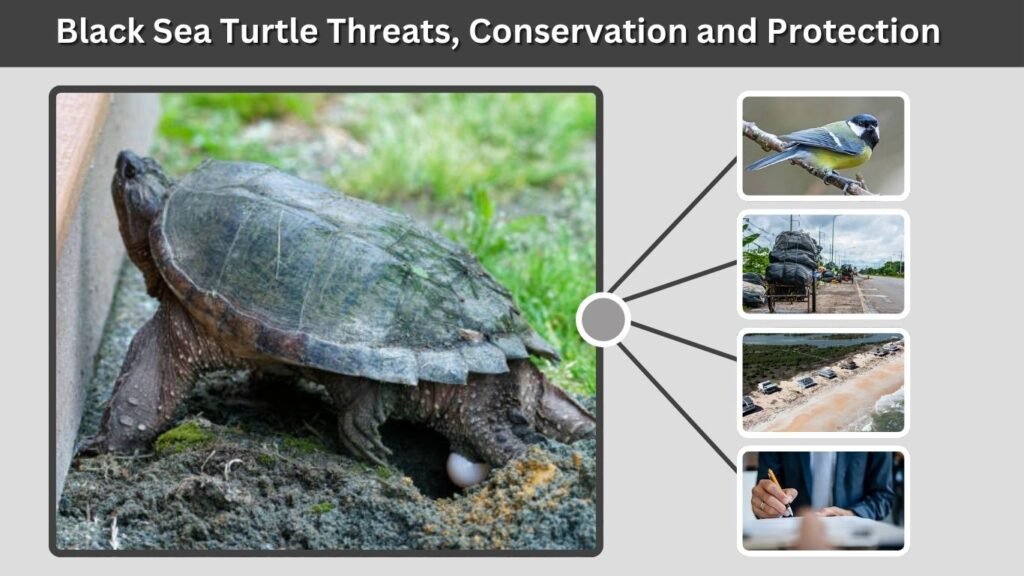
Black sea turtles face numerous threats from both natural and human-related sources. This section explains these challenges and highlights conservation efforts.
Natural and Human Threats
- Predators such as birds and large fish targeting eggs and hatchlings
- Ocean pollution, especially plastic waste ingestion
- Accidental capture in fishing nets (bycatch)
- Coastal development destroying nesting habitats
Conservation Efforts
- Establishment of protected marine areas
- Laws preventing hunting and egg collection
- Conservation programs focused on nesting beach protection
- Community awareness and eco-tourism initiatives
Why Conservation Matters
Black sea turtles play a crucial role in maintaining the balance of marine ecosystems. By feeding on seagrass, they help keep underwater vegetation healthy and productive, which supports many other marine species. Their presence also indicates a healthy ocean environment. Protecting them ensures biodiversity is preserved and marine habitats remain stable for future generations.
Black Sea Turtle in Dreamlight Valley
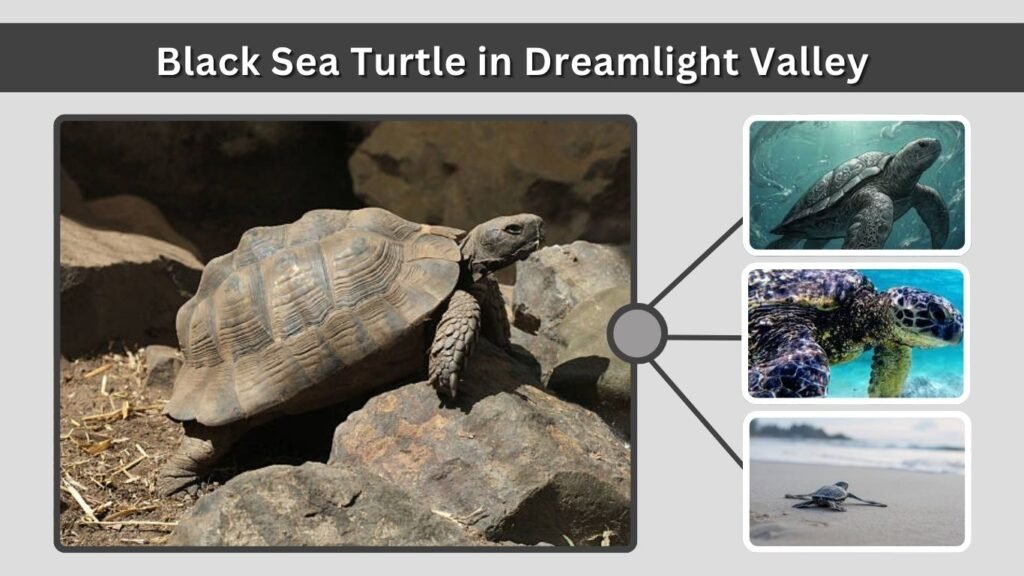
Black sea turtles are not only important in real-world ecosystems but also appear in popular games like Disney Dreamlight Valley. This section explores their in-game role, behavior, and how players can interact with them.
Black Sea Turtle in Disney Dreamlight Valley
- Stylized version inspired by real sea turtles
- Recognizable by its darker shell color
- Found in beach environments within the game
- Designed to be friendly and collectible
Schedule and Availability
- Appears on a rotating daily schedule
- Commonly found at Dazzle Beach
- Availability depends on specific in-game time windows
- Players must visit during the correct timeframe
Interaction and Gameplay Tips
In Dreamlight Valley, players can approach black sea turtles slowly to avoid scaring them away. Feeding them their preferred food helps build trust and allows players to unlock them as companions. Consistency is key, as repeated interactions improve success. Observing their movement patterns and visiting the beach regularly increases the chances of encountering them.
Visual Representation and Image Types
Black sea turtles are widely represented in visual formats, especially in black and white styles. These images are popular for both educational and creative purposes.
Black and White Sea Turtle Imagery
- Clipart designs for simple illustrations
- Silhouette styles for minimal visuals
- Realistic sketches highlighting shell texture
- High-contrast photography for artistic appeal
Common Search Variations
- “Sea turtle black and white drawing”
- “Black sea turtle pictures”
- “Sea turtle clipart black and white”
- “Sea turtle black background”
Uses of Turtle Images
- Educational worksheets and textbooks
- Blog posts and online articles
- Social media graphics
- Presentations and design projects
FAQs
What is the scientific name of the black sea turtle?
The black sea turtle is commonly identified as Chelonia mydas agassizii, a subspecies of the green sea turtle. It is mainly found in the eastern Pacific Ocean and is known for its darker shell compared to other members of the same species.
How big do black sea turtles get?
Black sea turtles can grow up to about 1 meter in shell length and weigh between 110 and 180 kilograms. Their size depends on environmental conditions, food availability, and age, with adults being significantly larger than juveniles.
Where do black sea turtles live?
They are typically found in tropical and subtropical waters along the Pacific coast. Regions such as Mexico, Central America, and Hawaii are common habitats, especially areas with seagrass beds and sandy nesting beaches.
What do black sea turtles eat?
Their diet mainly consists of seagrass and algae, making them important herbivores in marine ecosystems. Younger turtles may consume small marine organisms before shifting to a plant-based diet as they mature.
When can you find the black sea turtle in Dreamlight Valley?
In Disney Dreamlight Valley, the black sea turtle appears according to a rotating schedule. Players can usually find it on Dazzle Beach during specific times, so checking regularly and visiting at different hours improves the chances of encountering it.