
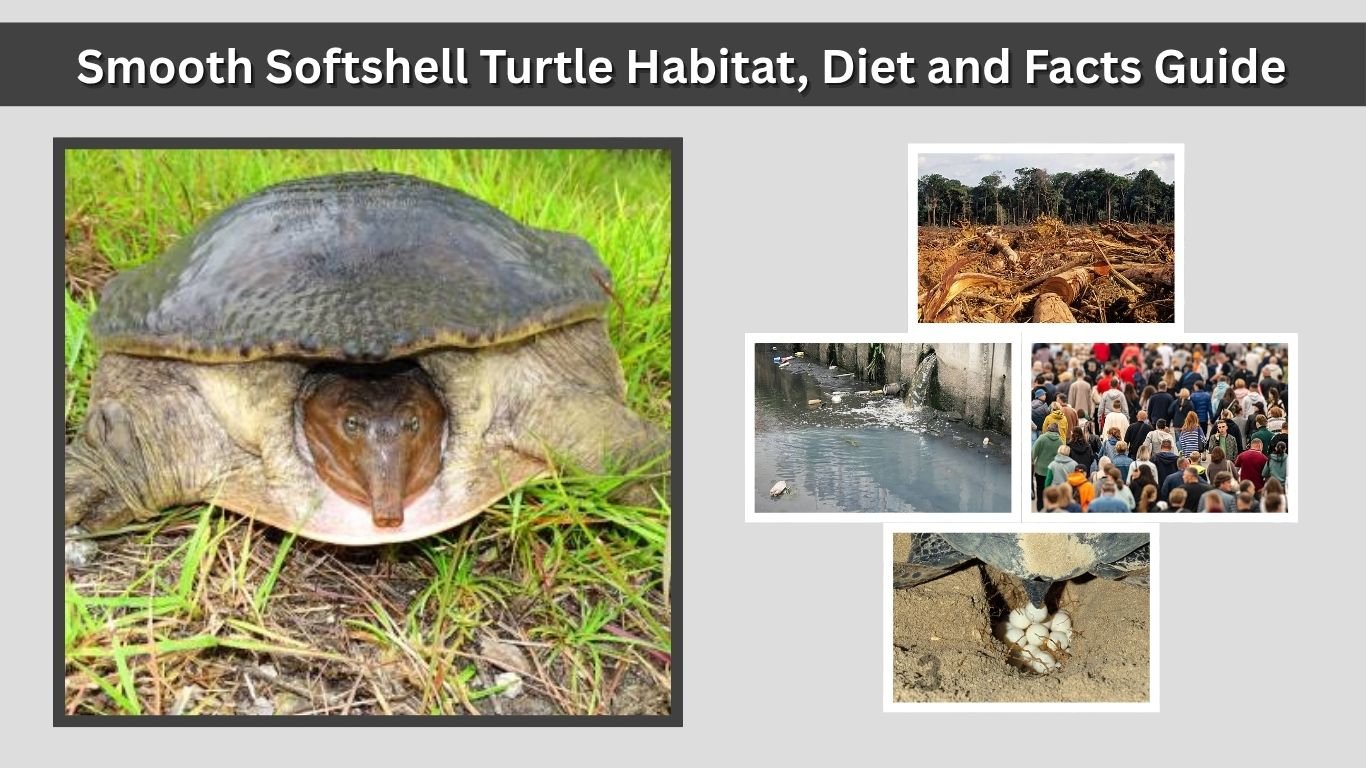
The smooth softshell turtle is a fascinating freshwater species known for its soft, leathery shell and remarkable swimming speed. Scientifically called Apalone mutica, this turtle stands out from many others due to its flat body and flexible neck. Found mostly in North America, it thrives in rivers and lakes with sandy bottoms. This guide explores its physical traits, habitat, behavior, and care basics, helping you understand why this unique turtle is so different from more common hard-shelled species.
What Is a Smooth Softshell Turtle?
The smooth softshell turtle is a fully aquatic reptile that spends most of its life in water. Unlike traditional turtles, it lacks a hard, scaly shell and instead has a smooth, rubbery covering that helps it move quickly through water.
Key Characteristics
- Flat, soft shell without spines or ridges
- Long neck with a snorkel-like nose
- Olive to brown coloration for camouflage
- Lightweight body built for speed
Midland vs Gulf Coast Subspecies
- Midland smooth softshell turtle: Found in central and northern regions, typically smaller and lighter in color
- Gulf Coast smooth softshell turtle: Located in southern areas, often slightly larger with darker tones
These subspecies share similar behaviors but differ slightly in appearance and geographic range.
Smooth vs Spiny Softshell Turtle
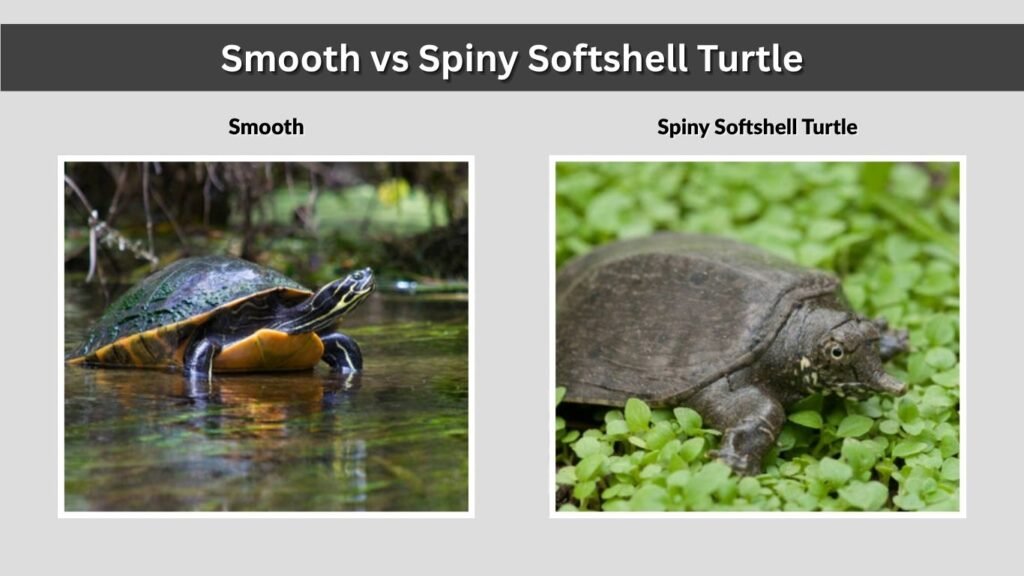
Smooth and spiny softshell turtles are often confused due to their similar body shapes and habitats. However, they have clear differences that help with identification.
Key Differences
- Shell texture: Smooth softshells have a completely smooth shell, while spiny softshells have small spines near the front edge
- Markings: Spiny species often have more distinct patterns and spots
- Temperament: Smooth softshell turtles are generally less aggressive
Which One Is More Common?
In many regions, spiny softshell turtles are more widespread. However, smooth softshell turtles dominate in certain river systems, especially where sandy substrates are abundant. Both species can sometimes share the same habitat, making identification important for researchers and enthusiasts.
Smooth Softshell Turtles Physical Characteristics and Size
The smooth softshell turtle has a unique body structure designed for aquatic life. Its flattened shell reduces water resistance, allowing it to glide efficiently. Its long neck extends quickly to catch prey, while its webbed feet provide strong propulsion.
How Big Do Smooth Softshell Turtles Get?
- Males typically grow between 5 to 10 inches
- Females can reach 14 to 20 inches
- Females are significantly larger than males
Unique Features
- Soft shell allows flexibility and speed
- Excellent camouflage blends with sandy riverbeds
- Long neck helps in both hunting and breathing
Smooth Softshell Turtles Habitat and Range
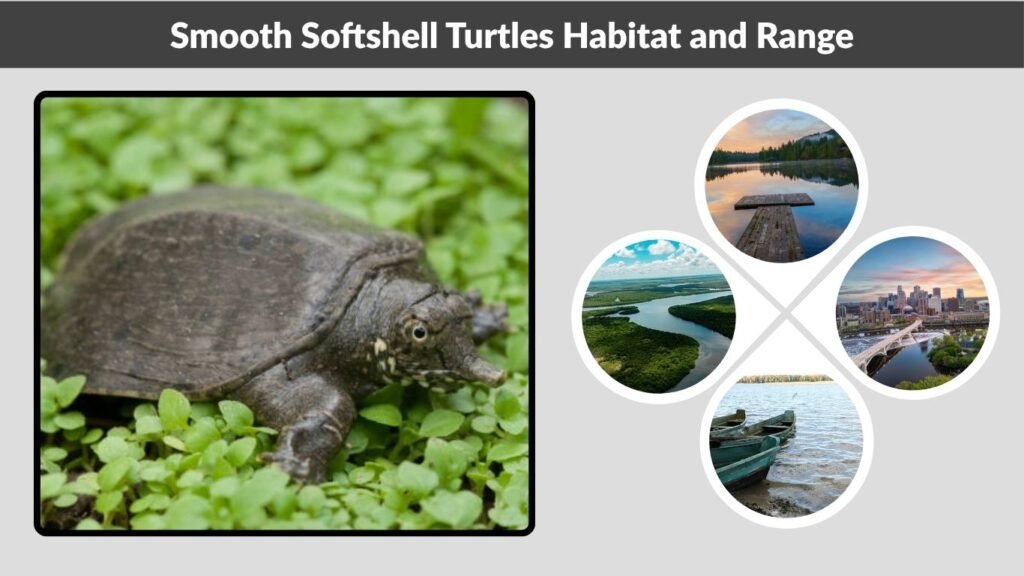
Smooth softshell turtles are primarily found in freshwater environments with clean, flowing water. They prefer rivers, streams, and lakes where the bottom is sandy or muddy, allowing them to bury themselves for protection and hunting.
Geographic Distribution
These turtles are widely distributed across parts of the United States, especially in the Midwest and southern regions. They are commonly found in states like Illinois, Minnesota, Wisconsin, and Texas, where suitable habitats exist.
Habitat Behavior
- Frequently burrow into sand to hide from predators
- Bask on riverbanks or floating objects
- Prefer areas with minimal disturbance
Their reliance on specific habitats makes them sensitive to environmental changes, particularly water pollution and habitat destruction.
Smooth Softshell Turtle Diet
Smooth softshell turtles are carnivorous and rely on quick movements to capture prey. Their diet mainly consists of aquatic animals, and they play an important role in maintaining ecological balance in freshwater systems.
What Do Smooth Softshell Turtles Eat?
- Insects and aquatic larvae
- Small fish
- Crustaceans like crayfish
Hunting Style
These turtles are ambush predators. They often bury themselves in sand with only their eyes and nose visible. When prey comes close, they strike rapidly using their long neck and strong jaws. Their speed and precision make them highly effective hunters in their natural environment.
Smooth Softshell Turtles Behavior and Lifestyle
Smooth softshell turtles are highly adapted to aquatic life and spend most of their time underwater. They are known for their speed, alertness, and ability to remain hidden from predators. Unlike many turtles, they are more active swimmers than baskers.
Daily Activity
- Active during warm daylight hours
- Frequently rest buried in sand
- Come to the surface to breathe using their long neck
Where Do Smooth Softshell Turtles Sleep?
- Sleep underwater while buried in sand
- Use their long neck to breathe without fully surfacing
- Choose shallow, calm areas for safety
Smooth Softshell Turtles Reproduction and Life Cycle
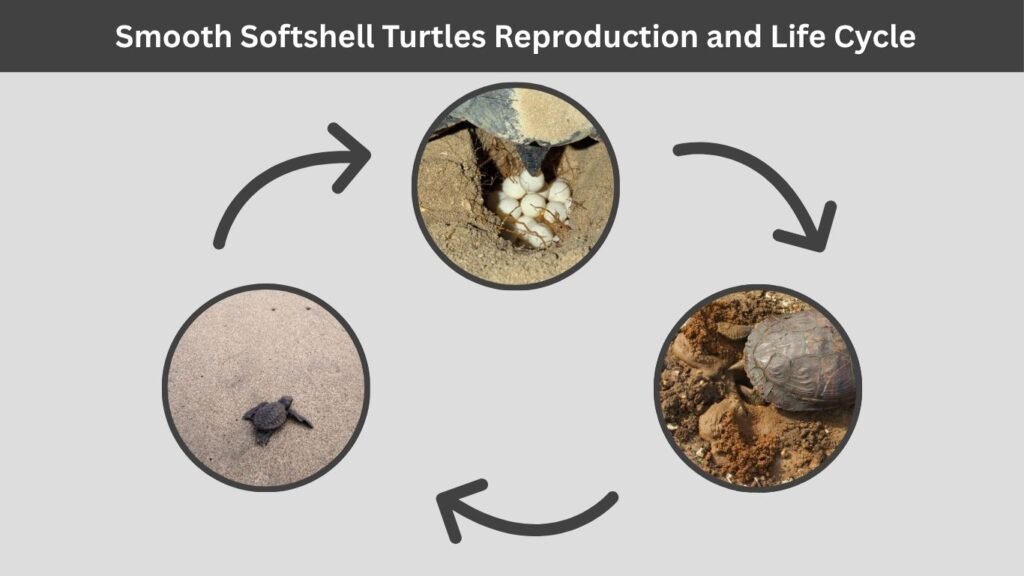
The reproduction cycle of smooth softshell turtles is closely tied to seasonal changes. Mating typically occurs in spring, followed by nesting during early summer when temperatures are ideal.
Eggs and Hatchlings
- Females lay 10 to 30 eggs in sandy banks
- Incubation lasts around 2 to 3 months
- Baby turtles emerge fully independent
Growth Stages
- Hatchlings grow quickly in the first year
- Juveniles develop stronger shells and hunting skills
- Adults reach maturity in several years depending on conditions
Smooth Softshell Turtles Lifespan and Growth
Smooth softshell turtles can live for many years, especially in stable environments. In the wild, their lifespan often ranges from 20 to 30 years, though some may live longer under ideal conditions. Growth depends on food availability, water quality, and temperature.
Do Smooth Softshell Turtles Bite?
Smooth softshell turtles are generally shy but can become defensive if handled or threatened. Their quick movements and strong jaws make them capable of delivering a painful bite.
Are They Dangerous?
- Not aggressive unless provoked
- Can bite quickly when stressed
- Best observed without handling
Conservation Status
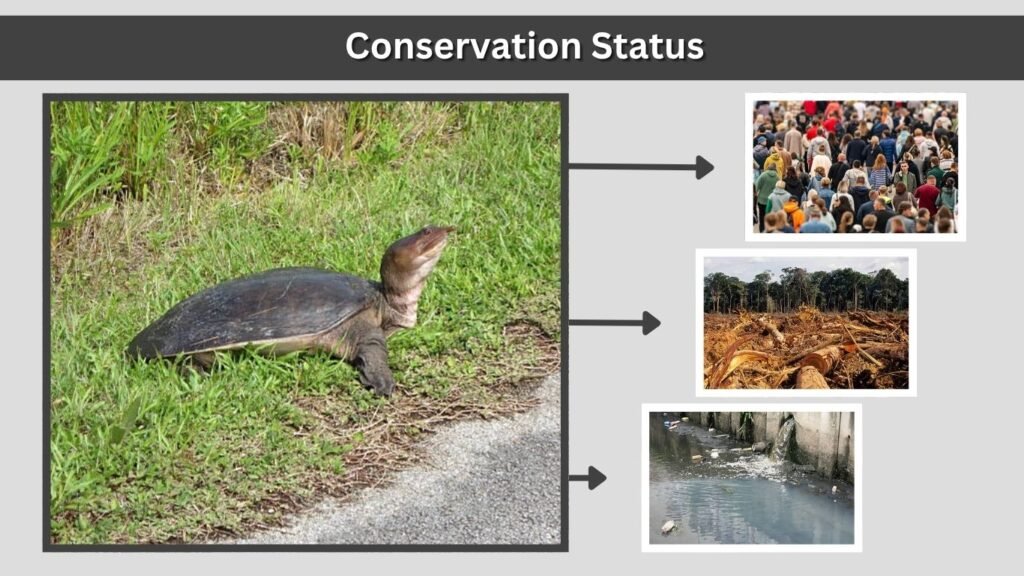
Smooth softshell turtles are not globally endangered, but some regional populations are declining. Their survival depends heavily on clean water and undisturbed habitats.
Are Smooth Softshell Turtles Endangered?
- Not endangered overall
- Protected in some states like Kansas
- Population trends vary by region
Threats
- Habitat destruction from development
- Water pollution affecting food sources
- Human disturbance near nesting areas
Smooth Softshell Turtle Care (Pet Guide)
Keeping a smooth softshell turtle as a pet can be challenging due to its specialized needs. They require clean water, ample space, and careful handling.
Basic Care Requirements
- Large tank with strong filtration
- Soft sandy substrate to prevent injury
- Warm water and proper lighting
Feeding in Captivity
- Protein-rich diet including fish and insects
- Occasional commercial turtle food
- Regular feeding schedule for healthy growth
Important Considerations
- Legal restrictions may apply
- Sensitive skin requires careful handling
- Not ideal for beginner reptile keepers
Interesting Facts About Smooth Softshell Turtles
Smooth softshell turtles have several unique traits that set them apart from other species. They can absorb oxygen through their skin, allowing them to stay underwater longer. Their flattened bodies make them incredibly fast swimmers, and their camouflage helps them blend seamlessly into sandy environments, making them efficient predators.
FAQs
What do smooth softshell turtles eat?
Smooth softshell turtles mainly eat insects, small fish, and crustaceans. Their carnivorous diet supports their active lifestyle, and they rely on ambush hunting to catch prey quickly in aquatic environments.
How big do smooth softshell turtles get?
Females can grow up to 20 inches in shell length, while males are smaller, usually between 5 and 10 inches. This size difference is one of their most noticeable physical traits.
Can I keep a smooth softshell turtle as a pet?
Yes, but they require a large aquatic setup, clean water, and a proper diet. They are not beginner-friendly pets and may be restricted in some areas due to wildlife regulations.
Do smooth softshell turtles bite?
Yes, they can bite if they feel threatened. They have strong jaws and fast reflexes, so it’s best to avoid handling them unless necessary and with proper care.
Are smooth softshell turtles endangered?
They are not considered endangered globally, but some local populations are at risk due to pollution and habitat loss. Conservation efforts are important to maintain their numbers in the wild.