
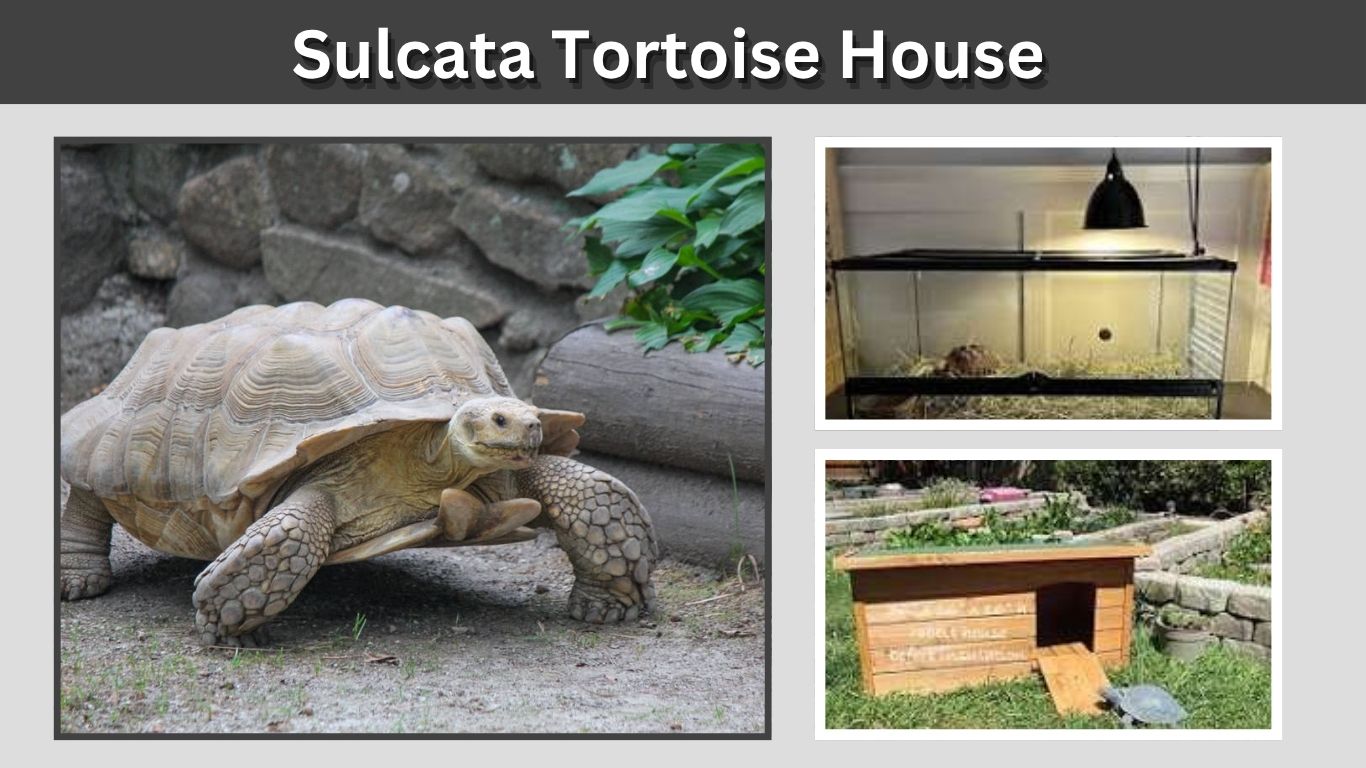
A sulcata tortoise house must be warm, secure, roomy, and built for long-term growth. Baby sulcatas can start in indoor housing, but adults usually need a large outdoor enclosure with a heated shelter. Also called the African spurred tortoise, this species grows powerful, digs well, and needs much more space than many beginners expect. This guide covers indoor housing, outdoor house ideas, winter setups, substrate, and DIY building tips.
Sulcata Tortoise Housing Requirements
A good sulcata tortoise house should provide heat, shade, dryness, security, and space to move. The setup should also let the tortoise choose between warmer and cooler areas. Zoo Med notes that sulcatas do best outdoors when temperatures do not fall below 50°F, and an adult kept indoors may need at least 80 square feet of space.
| Housing Need | Best Setup |
| Baby sulcata | Indoor tortoise table, tub, or closed chamber |
| Juvenile sulcata | Large indoor pen or safe outdoor time |
| Adult sulcata | Secure outdoor enclosure |
| Winter housing | Heated dry shelter |
| Substrate | Coconut coir, cypress mulch, soil mix, or grass |
| Safety | Strong walls, buried fencing, shade, no toxic plants |
Indoor Sulcata Tortoise Housing
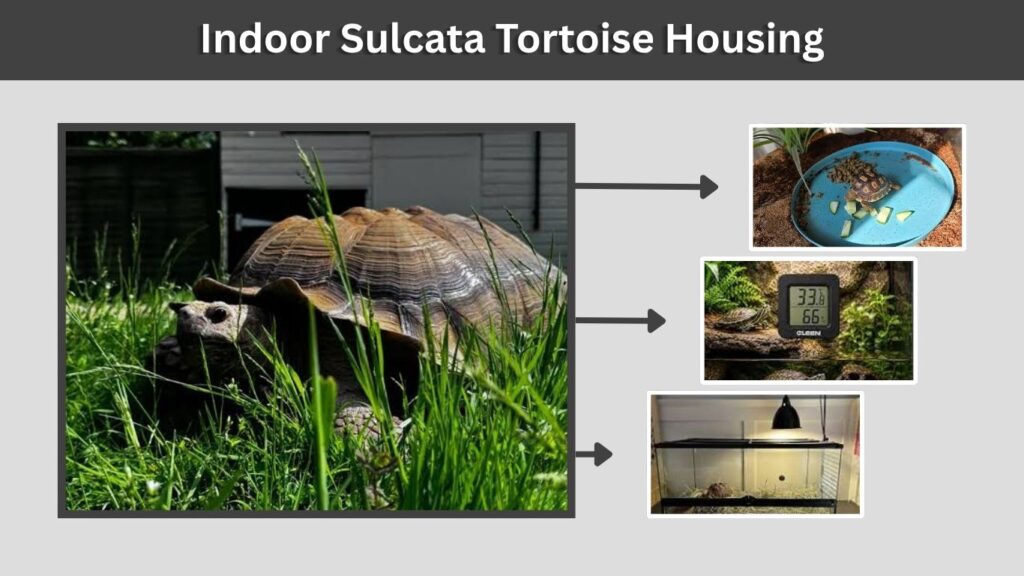
Indoor housing is most useful for babies, hatchlings, sick tortoises, and cold-weather care. A small glass tank is usually not ideal because it can trap heat unevenly and does not provide enough floor space. Better options include a large plastic tub, tortoise table, indoor pen, or custom wooden enclosure.
Baby Sulcata Tortoise House
A baby sulcata tortoise house should be warm and slightly humid, not dry and cold. Young sulcatas need stable heat, safe substrate, shallow water, UVB lighting, and hiding space. Tree of Life Exotics recommends indoor hatchling housing with a warm side around 85–90°F, a cool side at or above 70°F, and substrates such as cypress mulch or coconut husk chip while avoiding sand, gravel, pine, cedar, and aspen.
Good baby housing items include:
- UVB light
- Basking heat lamp
- Digital thermometer
- Humid hide
- Shallow water dish
- Safe soft substrate
- Low-sided food dish
- Hiding area
Can You Keep a Sulcata Tortoise in a House?
You can keep a baby or juvenile sulcata indoors for a while, but a full-grown sulcata is difficult to keep inside a normal house. Adults are large, strong, messy, and need a lot of walking space. If an adult must be indoors during winter, a heated shed, garage room, greenhouse, or dedicated tortoise room is usually better than a small enclosure.
Outdoor Sulcata Tortoise House
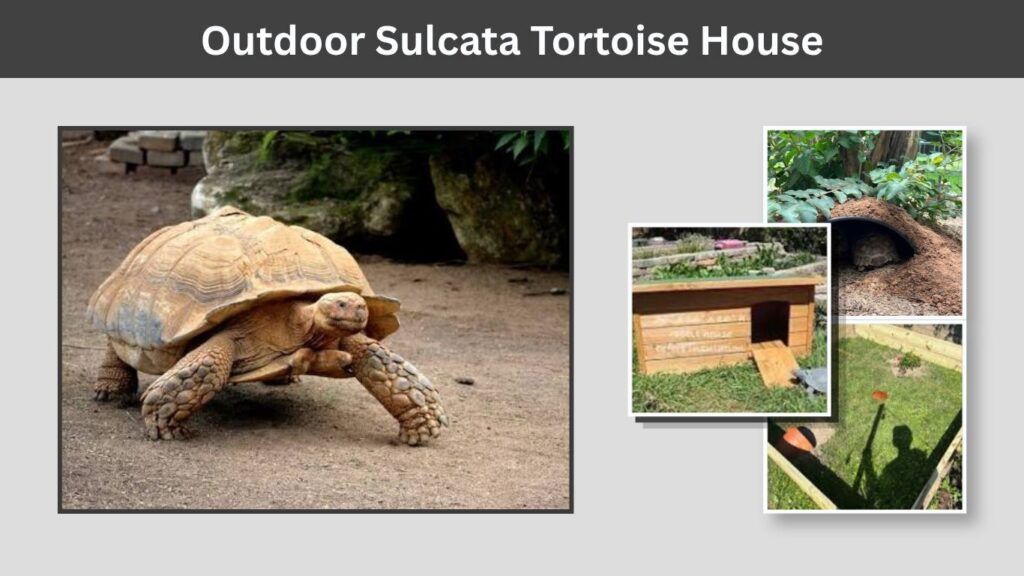
Outdoor housing is the best long-term option for most adult sulcatas in warm climates. A good outdoor sulcata tortoise house should include a secure yard, grazing area, shaded spots, a dry shelter, and protection from cold weather.
Outdoor Enclosure Ideas
An outdoor sulcata tortoise enclosure can be built with wood, concrete blocks, strong fencing, or a converted shed. The walls should be strong because sulcatas can push, dig, and scrape against weak barriers.
Useful outdoor ideas include:
- Wooden tortoise house with insulated walls
- Small shed converted into a heated hide
- Concrete block enclosure
- Greenhouse-style winter shelter
- Grass yard with buried fence barrier
- Doghouse-style hide for juveniles
- Covered feeding station
- Shaded plant area
The enclosure should have both sunny and shaded places. In hot weather, shade is just as important as heat because tortoises must cool themselves by moving to a cooler area.
How to Build a Sulcata Tortoise House
A DIY sulcata tortoise house does not need to be fancy, but it must be safe. For adults, the shelter should be large enough for the tortoise to enter, turn around, and rest comfortably. The entrance should be wide and low enough for easy access but not so open that cold wind and rain blow directly inside.
Basic DIY House Plan
A simple outdoor sulcata house can include:
- Raised wooden floor or dry ground base
- Insulated walls
- Weatherproof roof
- Wide doorway
- Ventilation near the top
- Safe heat source in winter
- Thermostat for heating equipment
- Rubber mat, soil, or hay-free dry flooring
- Easy-access door for cleaning
Avoid exposed wires, sharp screws, loose nails, treated wood that the tortoise can chew, and heat lamps placed where the tortoise can touch them.
Sulcata Tortoise Winter Housing
Winter housing is very important because sulcata tortoises are not cold-weather animals. ReptiFiles says outdoor sulcatas need a heated shelter if nighttime temperatures drop below 50°F, and the shelter can use lightless heating such as a ceramic heat emitter or radiant heat panel set around 70–75°F.
| Winter Housing Item | Why It Matters |
| Insulated shelter | Holds heat better |
| Thermostat | Prevents overheating |
| Radiant heat panel | Provides safer steady heat |
| Dry floor | Helps prevent chills and shell problems |
| Wind block | Stops cold drafts |
| Thermometer | Confirms real temperature |
Heated Sulcata Tortoise House
A heated tortoise house should be warm, dry, and controlled by a thermostat. Radiant heat panels and ceramic heat emitters are common choices because they provide heat without bright nighttime light. Heat rocks should be avoided because they can burn reptiles.
For large sulcatas, many keepers use an insulated shed, garage stall, or large wooden shelter. The goal is to create a warm retreat the tortoise can enter whenever outdoor temperatures drop.
Sulcata Tortoise Housing Substrate
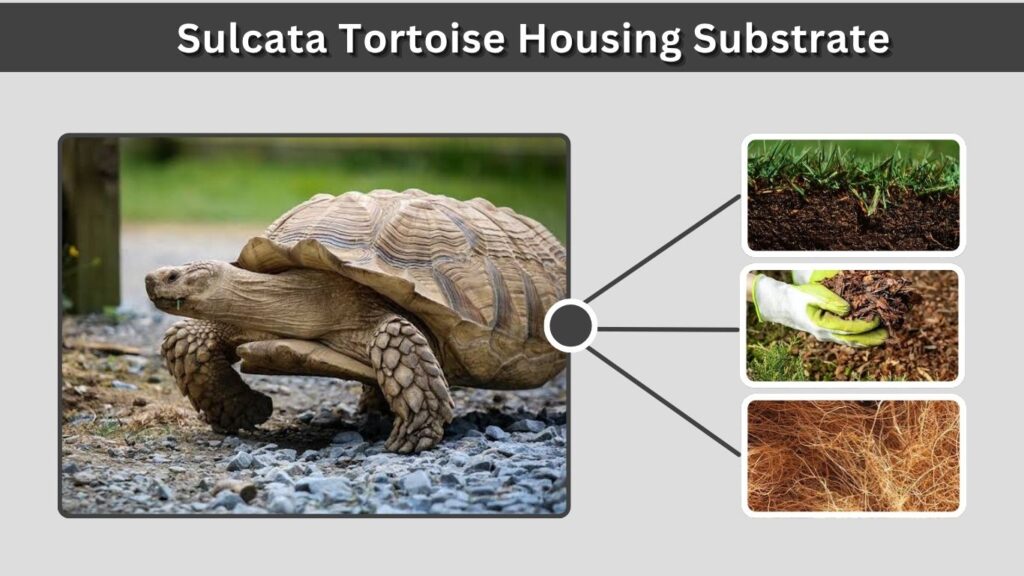
Substrate depends on the tortoise’s age and whether the setup is indoors or outdoors. Babies often do better on moisture-friendly substrates that help support humidity. Adults outdoors usually live on grass, soil, and natural ground.
Good substrate options include:
- Coconut coir
- Cypress mulch
- Organic topsoil
- Grass
- Soil and mulch mix
Avoid cedar, pine shavings, sharp gravel, dusty sand-only setups, and slippery flooring. Bad substrate can irritate the eyes, cause breathing problems, or make walking difficult.
Housing Male and Female Sulcata Tortoises
Housing male and female sulcata tortoises together can be risky. Adult males may chase, ram, or stress females. Two males can also fight. If you keep more than one sulcata, the enclosure must be very large with separate feeding areas, hiding spaces, and the ability to separate animals quickly.
For many owners, separate housing is safer than keeping sulcatas together full time.
Common Sulcata Tortoise House Mistakes
Many housing problems happen because owners plan for a baby but not for an adult. A hatchling may seem easy to house, but the adult stage requires a strong outdoor setup.
Common mistakes include:
- Using a small aquarium long term
- Keeping the enclosure too cold
- Providing no UVB indoors
- Using weak fencing outside
- Forgetting that sulcatas dig
- Leaving the shelter damp in winter
- Using unsafe heat lamps
- Keeping babies too dry
- Housing multiple adults in a small space
FAQs
What kind of house does a sulcata tortoise need?
A sulcata tortoise needs a warm, secure, spacious house with shade, shelter, and safe ground. Babies can live indoors, but adults usually need outdoor housing with a heated shelter for cold weather.
Can a sulcata tortoise live indoors?
A baby or juvenile sulcata can live indoors with proper heat, UVB, humidity, and space. A full-grown sulcata is usually too large for normal indoor housing and often needs a heated shed, garage room, or outdoor enclosure.
How big should a sulcata tortoise house be?
The house should be large enough for the tortoise to enter, turn around, and rest comfortably. The full enclosure should be much larger than the sleeping shelter because sulcatas need space to walk, graze, and dig.
What is the best outdoor house for a sulcata tortoise?
The best outdoor house is an insulated, weatherproof shelter inside a strong fenced enclosure. It should stay dry, block wind, provide shade, and include safe heat during cold weather.
Do sulcata tortoises need winter housing?
Yes. Sulcata tortoises need warm winter housing if outdoor temperatures become cold. A dry heated shelter is necessary in cool climates because sulcatas should not be left outside in cold, wet conditions.