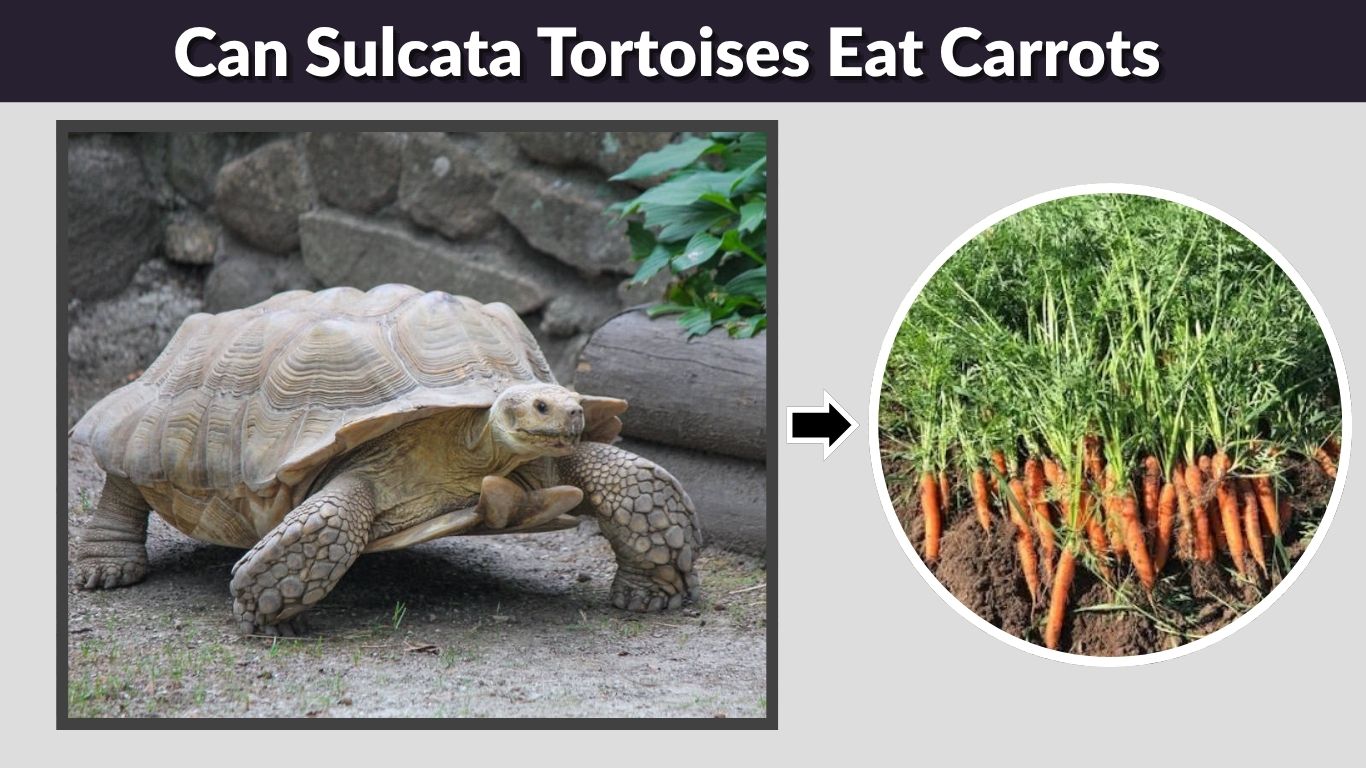
Yes, sulcata tortoises can eat carrots, but only in small amounts as an occasional treat. Carrots are not toxic, but they should never become a main food because sulcatas need a high-fiber, grass-based diet. Their daily meals should focus on grasses, hay, weeds, flowers, and leafy greens. Carrots can add variety, but too much may unbalance the diet and encourage picky eating.
Can Sulcata Tortoises Eat Carrots?
Sulcata tortoises can eat raw carrots in moderation. MedVet lists grated raw carrots among vegetables that can be included in the small vegetable portion of a sulcata diet, while also explaining that grasses and hay should make up the bulk of the diet.
Carrots are best used like a treat or diet topper, not a staple. A few thin shavings mixed with greens is better than giving a large carrot chunk. Adult sulcatas may handle small carrot pieces better than hatchlings, but even adults should mostly eat grass, hay, and safe weeds.
Why Carrots Should Be Limited
Carrots contain useful nutrients, including fiber and beta-carotene, but they are still a root vegetable and are higher in carbohydrates than ideal daily sulcata foods. The Tortoise Table says root vegetables such as carrots and parsnips are high in carbohydrates and should be limited.
Sulcatas are natural grazers. Their digestive system is built for rough, fibrous plant material. MedVet recommends pesticide- and herbicide-free grasses and hay as about 90% of the diet.
| Food Type | How Often to Feed |
| Grass and hay | Daily staple |
| Safe weeds and flowers | Regularly |
| Leafy greens | Often, as variety |
| Carrots | Occasionally |
| Fruit | Rare treat or avoid |
| Animal protein | Do not feed |
How Much Carrot Can a Sulcata Tortoise Eat?
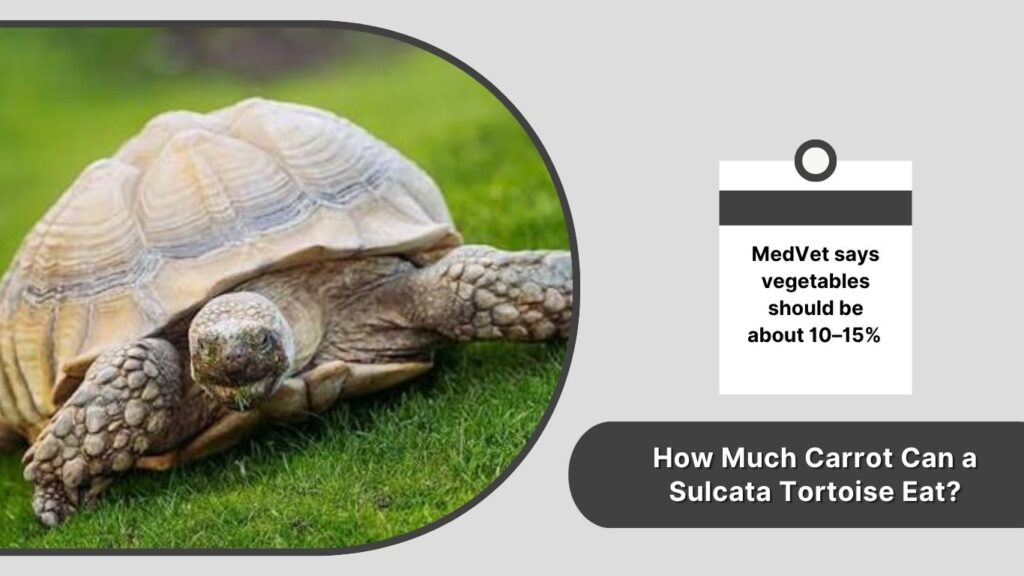
For most sulcatas, carrot should be a small occasional food. A safe serving is a few grated pieces mixed into a larger meal of grass, hay, weeds, or leafy greens. Do not offer a whole carrot as a regular meal.
Simple Feeding Rule
Use carrots as less than a small part of the vegetable portion. MedVet says vegetables should be about 10–15% of the sulcata diet, while grasses and hay should be the main portion.
Good ways to serve carrot:
- Grated raw carrot
- Thin carrot shavings
- Tiny chopped pieces
- Mixed with leafy greens
- Offered once in a while, not daily
Avoid cooked carrots with salt, oil, butter, seasoning, or canned sauces.
Can Baby Sulcata Tortoises Eat Carrots?
Baby sulcata tortoises can eat a tiny amount of carrot, but it should not be a regular baby food. Hatchlings need careful nutrition for steady growth, shell development, hydration, and bone health. The MSD Veterinary Manual notes that young tortoises should be weighed regularly so growth is not too fast or too slow, because poor growth can cause shell malformation.
For baby sulcatas, better foods include soft grasses, chopped weeds, dandelion greens, hibiscus leaves, cactus pad, and appropriate leafy greens. If you offer carrot, grate it finely and use only a very small amount.
Can Sulcata Tortoises Eat Carrot Tops?
Sulcata tortoises may eat carrot tops, but they should also be fed sparingly. The Tortoise Table lists carrot as “feed sparingly” and notes that carrot tops contain oxalic acid, potassium, and protein, so they should not be overused.
Carrot tops should be washed well, pesticide-free, and offered only as a small part of a varied diet. Do not feed carrot tops every day, especially if your tortoise already eats other high-oxalate greens.
Best Daily Foods Instead of Carrots
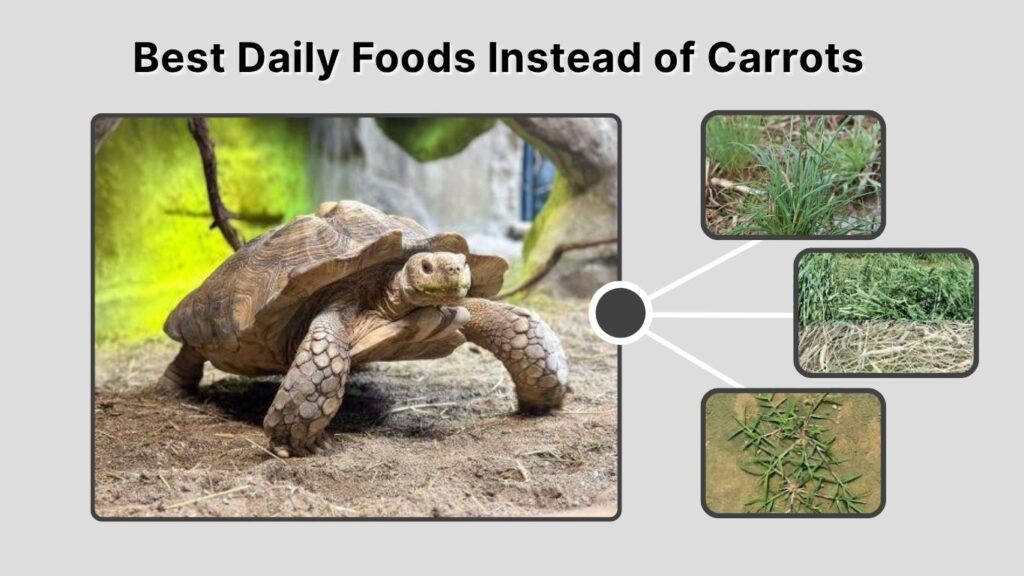
Carrots are fine for variety, but they are not the best daily food. Sulcata tortoises should eat a high-fiber, low-protein diet. The Spruce Pets, reviewed by a veterinarian, states that sulcatas need mostly grasses and hays, with edible weeds and flowers such as dandelions, clover, endive, and cactus pads.
Better Staple Foods
Good daily or regular foods include:
- Bermuda grass
- Timothy hay
- Orchard grass
- Dandelion greens
- Hibiscus leaves and flowers
- Mulberry leaves
- Cactus pads
- Clover in moderation
- Safe pesticide-free weeds
Avoid feeding too much fruit, spinach, iceberg lettuce, dog food, cat food, bread, beans, or animal protein.
Risks of Feeding Too Many Carrots
Too many carrots can make a sulcata ignore healthier foods. It may start waiting for sweet or colorful foods instead of grazing on hay and grass. A carrot-heavy diet can also reduce fiber intake, which is not good for a grazing tortoise.
Poor diet can lead to serious health problems. MedVet explains that common sulcata health issues often come from poor diet or husbandry, including calcium deficiency, metabolic bone disease, shell softening, pyramiding, and uric acid buildup from high-protein feeding.
How to Feed Carrots Safely
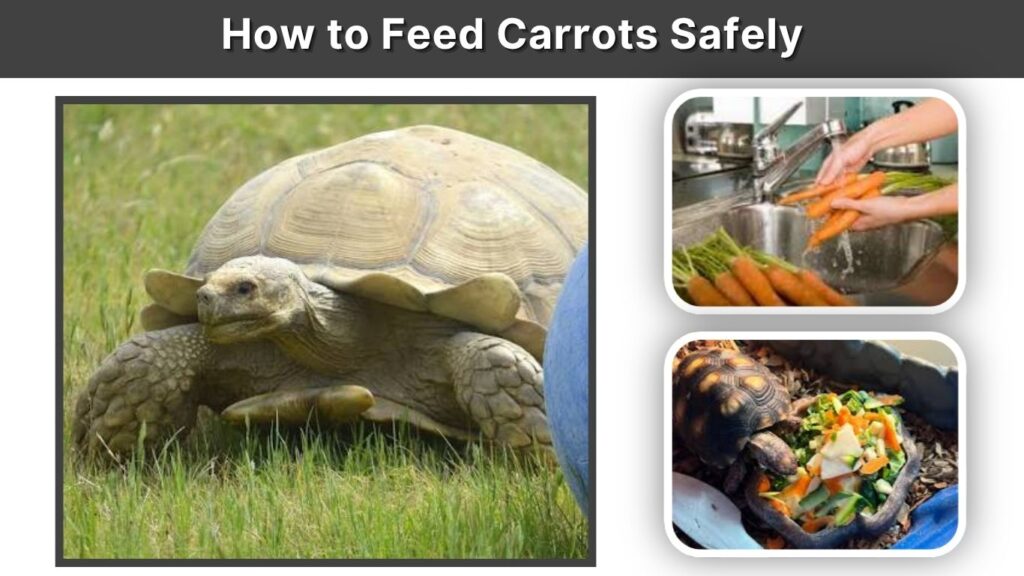
Always wash carrots before feeding. Organic carrots are best if available, but any carrot should be cleaned well to remove soil or chemical residue. Raw carrot is better than cooked carrot because it keeps texture and avoids added ingredients.
Safe Preparation Tips
- Wash thoroughly
- Peel if the carrot is not organic
- Grate or slice very thin
- Mix with greens or hay
- Remove leftovers before they spoil
- Do not add salt, oil, sugar, or seasoning
If your sulcata gets diarrhea, refuses normal food, or eats only carrots, stop offering them and return to a grass-based diet.
FAQs
Can sulcata tortoises eat carrots every day?
No. Sulcata tortoises should not eat carrots every day. Carrots should be an occasional treat, while grass and hay should make up most of the diet.
Can African sulcata tortoises eat raw carrots?
Yes. African sulcata tortoises can eat raw carrots in small amounts. Grated raw carrot is safer and easier to eat than large hard chunks.
Can baby sulcata tortoises eat carrots?
Yes, but only a tiny amount. Baby sulcatas should mainly eat soft grasses, safe weeds, and leafy greens. Carrot should not be a regular baby food.
Can sulcata tortoises eat carrot tops?
Yes, but sparingly. Carrot tops should be washed, pesticide-free, and offered only as a small part of a varied diet.
What vegetables are better than carrots for sulcatas?
Dandelion greens, endive, cactus pads, hibiscus leaves, mulberry leaves, and safe weeds are better choices. Grasses and hay should still be the main foods.