
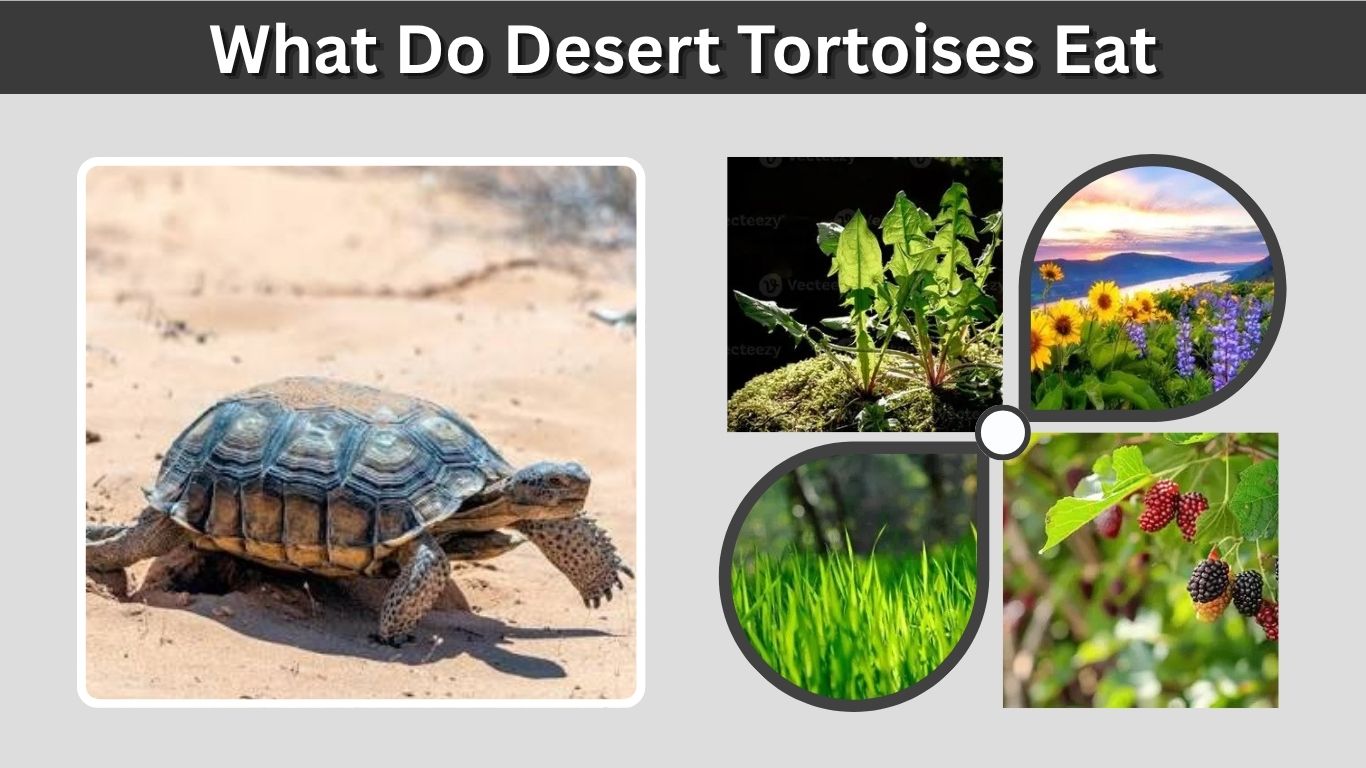
What do desert tortoises eat in the wild and in captivity? These herbivorous reptiles mainly consume grasses, leafy plants, flowers, weeds and seasonal cactus growth. A healthy captive diet should reproduce that natural variety instead of relying heavily on lettuce, fruit or commercial pellets. The following desert tortoise food list covers 12 suitable options, along with feeding guidelines, foods to avoid and special considerations for hatchlings.
Understanding the Desert Tortoise Diet
This guide concerns North American Mojave and Sonoran desert tortoises, not African sulcata tortoises or desert box turtles. Wild desert tortoises feed according to seasonal availability, emerging during favorable conditions to eat grasses, flowers, annual plants and cactus fruit. Captive tortoises should ideally graze throughout the day on several pesticide-free plants growing in their outdoor habitat. (National Park Service)
| Food group | Role in the diet | Suggested use |
| Grasses and hay | Primary high-fiber forage | Offer regularly |
| Weeds and leafy plants | Nutritional variety | Rotate several species |
| Flowers and leaves | Supplemental natural forage | Offer frequently |
| Cactus pads and fruit | Seasonal desert food | Pads regularly; fruit sparingly |
| Grocery-store greens | Backup or supplement | Do not make them the entire diet |
| Tortoise pellets | Emergency supplemental food | Soak and combine with plants |
12 Foods Desert Tortoises Can Eat
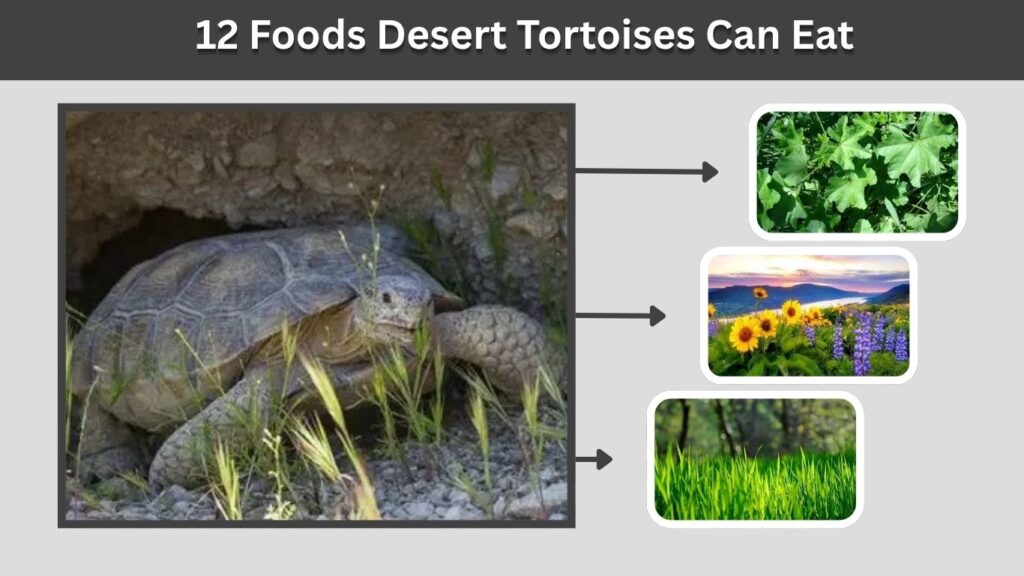
Grasses should form the foundation of the diet, while weeds, flowers, leaves and other foods create variety. Every plant should be correctly identified and free from pesticides, herbicides and chemical fertilizers.
1. Native Grasses
Native grasses are among the best foods for desert tortoises because they provide abundant fiber and encourage natural grazing. Suitable choices include curly mesquite, Arizona cottontop, deer grass, blue grama, sideoats grama and giant sacaton. Plant several grass varieties throughout the enclosure instead of offering only clipped vegetables.
2. Timothy Hay
Weed-free Timothy hay provides dry fiber when fresh vegetation is limited. Place a small amount in a clean, dry area and replace old hay regularly. Juveniles should receive the softer, finer and leafier sections because coarse stems may be difficult for smaller tortoises to eat.
3. Dandelion Greens
Dandelion leaves are a useful supplemental green for both adults and juveniles. Home-grown dandelions are preferable to plants collected beside roads or from chemically treated lawns. The flowers may also be eaten, giving the tortoise additional texture and variety.
4. Plantain
Broadleaf and narrowleaf plantain plants—not the banana-like fruit—are natural forage for desert tortoises. Their leaves can be planted inside a secure enclosure or collected from a known pesticide-free location. Plantain is listed among common food sources for captive and wild desert tortoises.
5. Globemallow
Globemallow provides edible leaves, tender growth and colorful flowers. It is particularly suitable for Sonoran and Mojave-style tortoise gardens because it serves as both natural forage and habitat vegetation. Its drought tolerance also makes it practical for dry outdoor enclosures.
6. Hibiscus Leaves and Flowers
Desert tortoises commonly enjoy hibiscus flowers and tender leaves. Use only untreated plants and rinse harvested portions before feeding. Hibiscus can be grown outside the enclosure and trimmed as needed if the tortoise repeatedly eats the plant faster than it can recover.
7. Prickly Pear Pads
Prickly pear cactus pads provide moisture and variety. Remove all large spines and tiny irritating glochids before serving, then cut the pad into manageable sections when necessary. Spineless cultivated varieties can be convenient, although even these should be inspected carefully before feeding.
8. Prickly Pear Fruit
Cactus fruit is part of the natural seasonal diet and is often eagerly eaten. However, it is sweeter than grasses and leaves, so it should be treated as an occasional seasonal food rather than a daily staple. Desert tortoises in the wild also consume cactus fruits when environmental conditions allow them to emerge and forage.
9. Grape Leaves
Fresh grape leaves can supplement grasses and weeds. Feed clean, untreated leaves rather than relying on grapes, which are much higher in sugar. A grapevine grown outside the enclosure can supply leaves while preventing the tortoise from damaging the entire plant.
10. Mulberry Leaves
Mulberry leaves are another appropriate source of leafy forage. Young, tender leaves are usually easiest to eat, especially for hatchlings and juveniles. Avoid leaves from trees sprayed for pests or growing close to heavily polluted roads.
11. Rose Petals and Nasturtiums
Untreated rose petals and nasturtium flowers can add color and dietary variety. Remove stems, thorns and chemically treated portions. Flowers should accompany grasses and leafy plants rather than replace them because the tortoise still needs substantial fibrous forage.
12. Dark Leafy Greens
When growing forage is unavailable, offer vegetables such as collard greens, mustard greens, endive, bok choy, turnip greens, beet greens and limited kale. Rotate several greens instead of repeatedly feeding one type. Grocery-store produce is generally less desirable than natural forage and should remain supplemental.
What Foods Should Desert Tortoises Avoid?
Desert tortoises are completely herbivorous and should not be fed animal protein. Their diet should also avoid foods that provide little fiber or displace healthier plants.
Do not feed:
- Meat, eggs, insects or fish
- Dog, cat or aquatic-turtle food
- Bread, rice, pasta or processed snacks
- Dairy products
- Large quantities of sugary fruit
- Iceberg lettuce as a regular food
- Avocado or unidentified plants
- Plants exposed to pesticides or herbicides
- Toxic ornamentals such as oleander
A tortoise may willingly eat an unsuitable food, so appetite should not be used as proof that something is safe. The Arizona-Sonora Desert Museum specifically advises building the diet around assorted safe plants and warns that unnecessary vitamin or mineral supplementation may be harmful.
Can Desert Tortoises Eat Pellets?
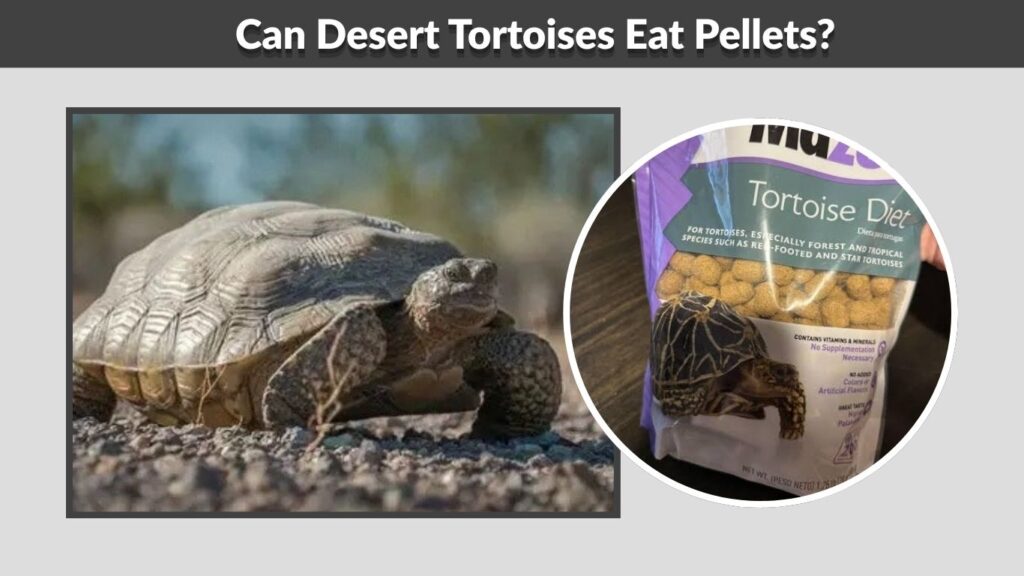
Commercial pellets formulated specifically for grazing tortoises may be used when natural vegetation is insufficient, but they should not become the complete diet. The U.S. Fish and Wildlife Service recommends softening suitable pellets with water and combining them with native foods or appropriate greens. Leftover wet pellets should be removed before they spoil or attract insects.
How to Feed a Desert Tortoise
A planted outdoor habitat allows a tortoise to graze naturally during its active season. Supplemental foods should be placed on clean tiles or glazed dishes to reduce excessive soil ingestion. Morning feeding is generally appropriate because tortoises are often active before temperatures become extreme.
Provide variety rather than a large portion of one food. Appetite naturally changes with temperature, seasonal activity and winter brumation. A tortoise that remains active but repeatedly refuses food, loses weight or develops nasal discharge, swollen eyes or weakness should be examined by a veterinarian experienced with reptiles.
What Do Baby Desert Tortoises Eat?
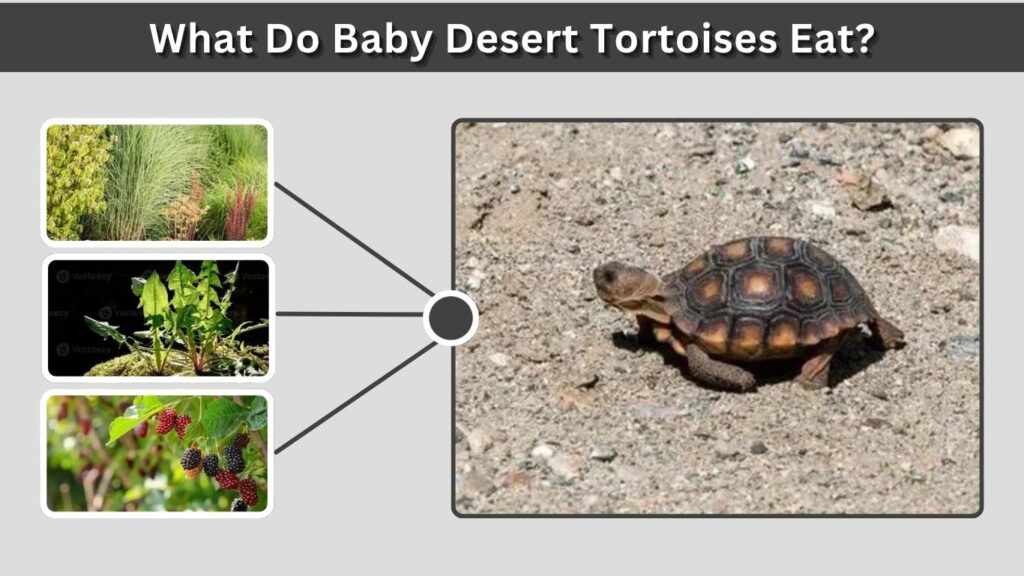
Baby desert tortoises eat the same general plant-based diet as adults, including tender grasses, young weeds, flowers and soft leaves. Their food should be finer and easier to bite. Leafy Timothy hay, young dandelion greens, mulberry leaves, hibiscus and soft native plants are suitable choices. Avoid raising a hatchling primarily on lettuce, fruit or pellets.
FAQs
What is the best food for a desert tortoise?
The best diet is a varied mixture of growing native grasses, edible weeds, leafy plants and flowers. Natural grazing provides more fiber and variety than a bowl containing one vegetable. Grocery-store greens and pellets are better used as supplements.
What is a desert tortoise’s favorite food?
Many desert tortoises eagerly eat hibiscus flowers, globemallow, dandelions and prickly pear fruit. Favorite foods are not necessarily suitable as daily staples, however. Grasses and diverse leafy forage should remain the dietary foundation.
How often should a desert tortoise eat?
An outdoor tortoise may graze throughout the day during its active season. The amount of supplemental feeding depends on how much safe vegetation grows inside the enclosure. Feeding decreases or stops when the tortoise enters normal winter brumation.
Can desert tortoises eat romaine lettuce?
Romaine may be offered as a supplemental green when better forage is limited. It should not replace grasses, weeds, hay and edible enclosure plants. Iceberg lettuce is a poorer option because it contributes little meaningful nutrition.
How long can desert tortoises go without food?
Desert tortoises naturally eat very little during brumation, drought or seasonal inactivity. However, prolonged food refusal while the animal is warm and active may indicate incorrect temperatures, dehydration, stress or illness. During active-season captive care, persistent failure to eat warrants a health assessment.