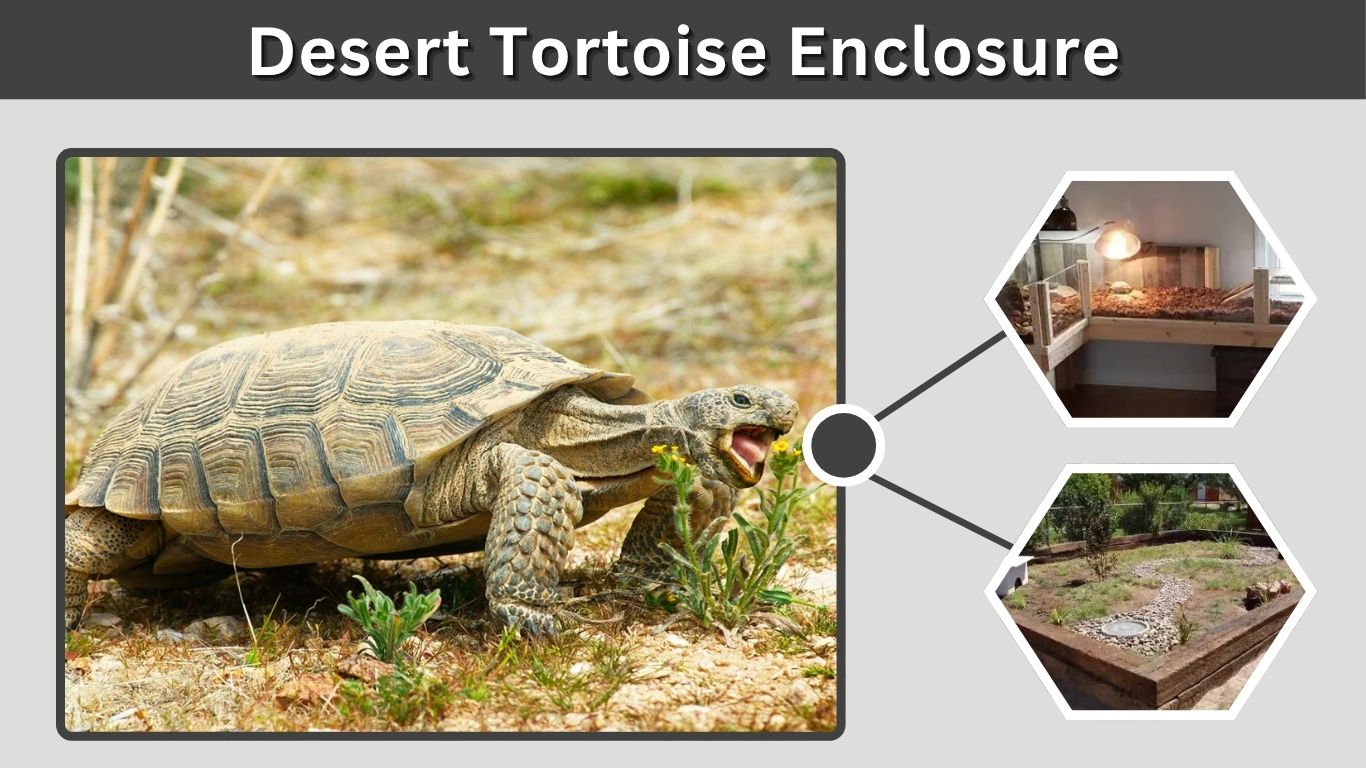
A safe desert tortoise enclosure must provide more than a fenced patch of dry ground. Desert tortoises need room to walk and graze, secure walls, natural sunlight, deep shade, edible plants and an insulated burrow that protects them from temperature extremes. Outdoor housing is generally the best long-term arrangement in a suitable climate, while indoor enclosures are mainly useful for temporary care. The following guide explains enclosure size, materials, plants, shelters and hatchling safety.
What Does a Desert Tortoise Enclosure Need?
A well-designed enclosure should imitate the important features of the tortoise’s natural habitat rather than look like an empty sandbox. It needs sunny basking areas, shaded resting areas, soil for digging, vegetation for grazing and a protected burrow.
The essential features include:
- Secure, escape-resistant perimeter walls
- Natural soil with good drainage
- Morning sun and afternoon shade
- An insulated, weatherproof burrow
- Edible grasses, weeds and flowers
- A shallow water dish
- Protection from dogs, ravens and other predators
- No access to pools, ponds, pesticides or toxic plants
Desert tortoises depend on shelters to control their body temperature. A burrow protects them from extreme summer heat, winter cold and dry weather, making it one of the most important parts of the enclosure.
Desert Tortoise Enclosure Size
The enclosure should give the tortoise enough space to exercise, explore, select different temperatures and graze naturally.
Minimum Size for an Adult
The Arizona-Sonora Desert Museum recommends at least 120 square feet for one adult desert tortoise. That is approximately equivalent to an enclosure measuring 10 by 12 feet. Larger areas are preferable when backyard space permits.
| Tortoise | Suggested enclosure approach |
| Adult | At least 120 square feet |
| Juvenile | Smaller secure pen that can be expanded |
| Hatchling | Covered predator-proof enclosure |
| Several adults | Much larger area with visual barriers and multiple shelters |
One adult male may require its own enclosure. Males can become territorial, while housing males and females together can result in unwanted breeding. Enclosure requirements may also vary by state adoption program, species and local climate.
Is an Entire Backyard Better?
A secure backyard can make an excellent desert tortoise enclosure when it is free of escape routes and hazards. However, gates, wall openings, swimming pools, dogs, garden chemicals and unsuitable plants must be addressed first.
A smaller dedicated section can be safer when the rest of the yard contains hazards. It also makes monitoring the tortoise, food plants, water and burrow easier.
How to Build a Desert Tortoise Enclosure
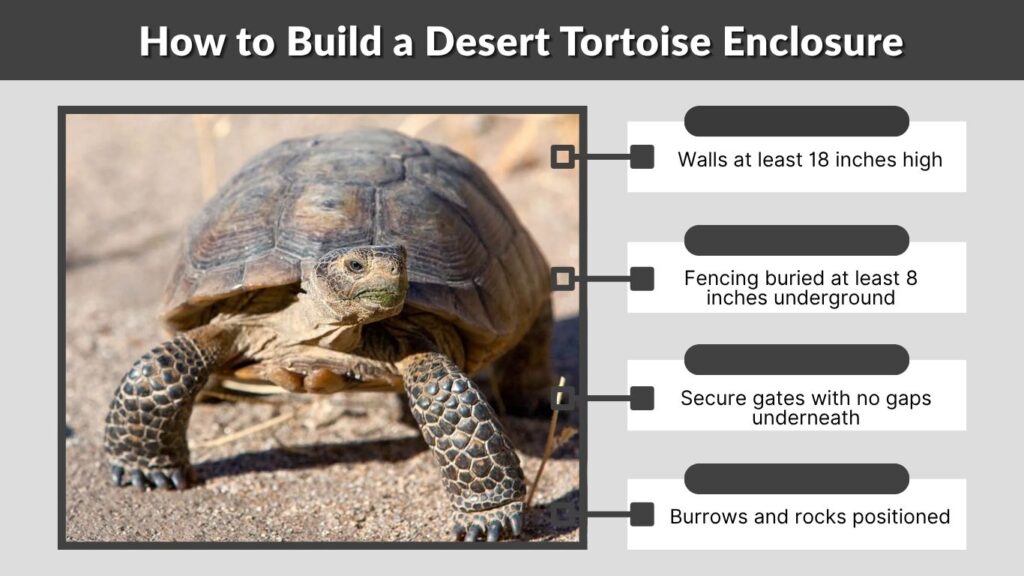
Choose a well-drained location that receives both direct sunlight and shade throughout the day. Avoid low areas where rainwater collects or where a burrow could flood.
Build Secure Perimeter Walls
Concrete blocks, solid wooden boards, metal panels and suitable fencing can be used. Solid lower walls are helpful because tortoises may repeatedly pace when they can see through a barrier.
Recommended perimeter features include:
- Walls at least 18 inches high
- Fencing buried at least 8 inches underground
- Narrow openings that cannot trap a leg or head
- An inward overhang when climbable wire is used
- Secure gates with no gaps underneath
- Burrows and rocks positioned away from the walls
Desert tortoises can climb and dig surprisingly well. The Desert Museum recommends keeping shelters and other climbable structures at least 12 inches from the enclosure boundary. Arizona Game and Fish has documented backyard barriers extending 12 inches underground to prevent escapes.
Prepare the Ground
Natural, firmly packed soil is generally better than an enclosure filled entirely with loose sand. The ground should allow walking and digging without remaining wet after irrigation or rainfall.
Create a varied surface with:
- Native soil
- Small areas of grass
- Low mounds and gentle slopes
- Flat basking areas
- Shaded planting zones
- Shallow rainwater basins away from the burrow
Do not use a deep sandbox as the whole habitat. Loose sand can be difficult to walk through and may cling to food. Gravel should also be limited because large expanses become hot and provide little opportunity for grazing.
Building a Safe Tortoise Burrow
Every outdoor desert tortoise enclosure needs a dependable burrow. It should remain dry, resist collapse and provide insulation during hot and cold weather.
Burrow Placement and Design
Position the entrance where it will receive afternoon shade. Build the burrow slightly above the surrounding ground so rain drains away rather than entering it.
A burrow can be made from concrete blocks, a large durable tube or another stable structure covered with soil. The Desert Museum recommends at least 8 inches of soil over and around a constructed burrow for insulation.
The entrance should be comfortably larger than the tortoise but not excessively wide. It must not have sharp edges, loose blocks or narrow points where the animal could become trapped.
Monitor Burrow Temperature
A burrow is not automatically safe simply because it is underground. Its position, depth and shade determine how well it performs.
During summer, the Desert Museum advises keeping the burrow interior below 90°F. A minimum-maximum thermometer can help owners detect dangerous temperatures. Inspect the burrow after heavy rainfall, soil movement or unusually hot weather.
Plants for a Desert Tortoise Enclosure
Plants make an enclosure more natural while supplying shade, cover and food. Use only correctly identified, pesticide-free species.
Safe Planting Ideas
Useful enclosure plants may include:
- Curly mesquite grass
- Blue grama
- Sideoats grama
- Deer grass
- Globemallow
- Desert willow
- Hibiscus
- Dandelion
- Plantain
- Mulberry
- Prickly pear cactus
Grasses are especially valuable because they provide high-fiber forage. Shrubs create shade and visual cover, while wildflowers offer seasonal leaves, buds and blossoms. Place a large bunch of grass near the burrow to help stabilize the soil and provide additional cover.
Avoid oleander and any unidentified ornamental plant. Do not apply herbicides, pesticides, fertilizers or snail poison within reach of the tortoise.
Outdoor Desert Tortoise Enclosure Ideas
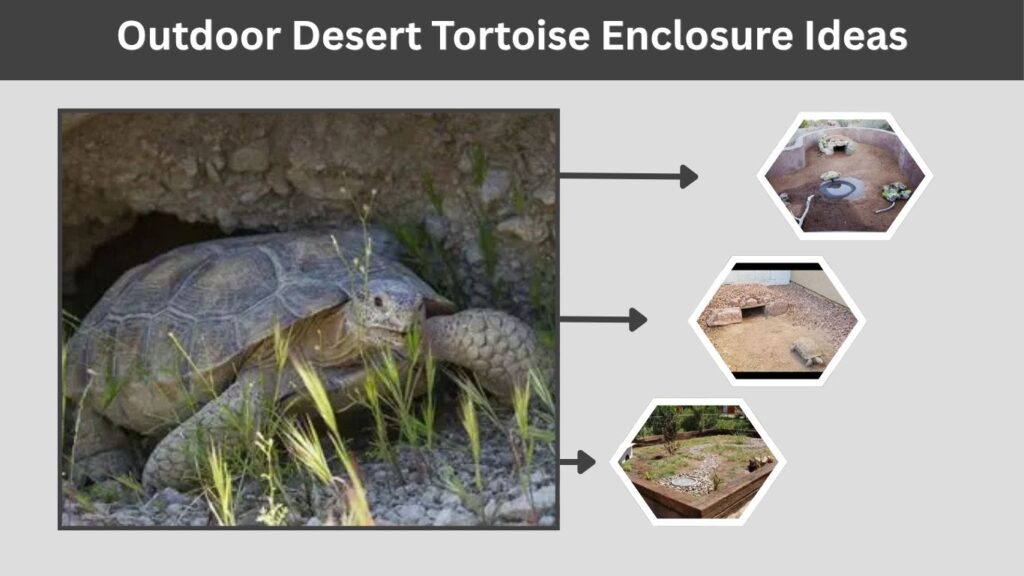
A practical design can be attractive without sacrificing safety.
Natural Grazing Garden
Divide the enclosure into small planting areas containing grasses, flowering plants and low shrubs. Leave open paths between them for walking and basking.
Raised Burrow Mound
Build an artificial burrow inside a gently sloping mound. Cover it with soil and suitable grasses, ensuring the entrance remains shaded and drainage runs away from it.
Multiple-Climate Zones
Create a sunny morning area, a shaded afternoon corner and several partial-shade locations. This allows the tortoise to move between warmer and cooler conditions without depending only on its burrow.
Rocks and logs can add visual interest, but they should be stable, free of sharp edges and positioned far enough from perimeter walls that the tortoise cannot use them to climb out.
Indoor Desert Tortoise Enclosure
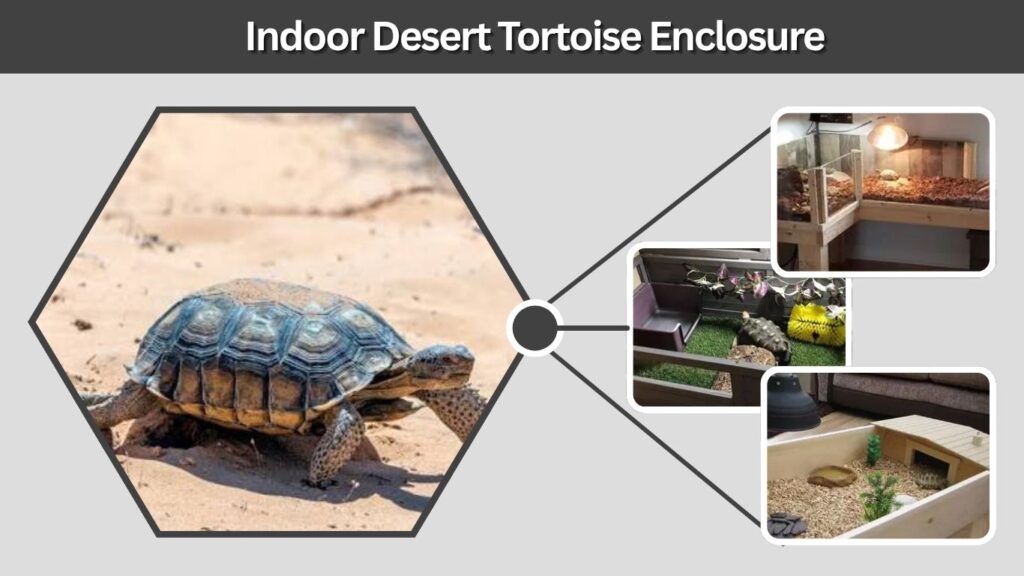
An indoor enclosure is generally unsuitable as a permanent home for a North American desert tortoise. Natural sunlight, extensive floor space, grazing plants and seasonal environmental conditions are difficult to reproduce indoors. The Arizona-Sonora Desert Museum does not generally recommend indoor maintenance and notes that artificial lighting is not a fully comparable replacement for natural sunlight.
Temporary indoor care may be necessary for veterinary recovery, emergency weather protection or a tortoise that cannot safely remain outside. Use a large open-topped tortoise table rather than a glass aquarium.
An indoor setup needs:
- Maximum available floor space
- UVB lighting designed for reptiles
- A controlled basking area
- A cooler shaded area
- Opaque sides
- Naturalistic soil substrate
- A hide box
- Careful temperature monitoring
Never place an indoor container in direct sunlight. A partially enclosed tub or aquarium can overheat rapidly.
Baby Desert Tortoise Enclosure
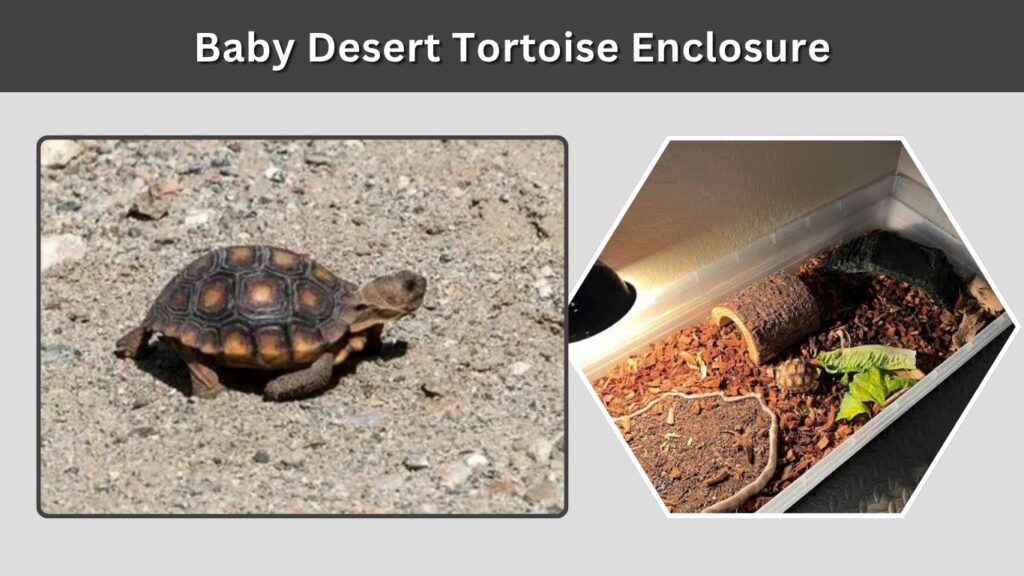
Hatchlings are vulnerable to escape, overheating and predators. Their enclosure can be smaller than an adult habitat, but it must be more thoroughly protected.
Use walls with openings no wider than approximately one inch and install a secure mesh cover to exclude ravens, rodents, cats and other animals. The pen should still provide sunlight, shade, growing plants, a small burrow and a very shallow water dish.
Check the enclosure frequently because hatchlings can hide beneath plants, dig along boundaries or become trapped in surprisingly small spaces. Expand their living area as they grow.
Common Enclosure Hazards
Remove or isolate anything that could cause drowning, poisoning, crushing, escape or predation.
Major hazards include:
- Swimming pools and decorative ponds
- Dogs with access to the enclosure
- Lawn equipment and vehicles
- Loose wire or sharp metal
- Unstable rocks and blocks
- Toxic landscaping plants
- Chemicals and pesticides
- Burrows that collect water
- Open gates and gaps beneath fences
Dogs can seriously injure tortoises by chewing their shells and limbs. Pools must be completely fenced off because desert tortoises can fall in and drown.
Legal Considerations
Desert tortoise ownership and adoption rules vary by location. Never collect a tortoise from the wild to place in a backyard enclosure. Arizona authorities state that wild collection is illegal and harmful to native populations. Captive tortoises should not be released because they may spread diseases to wild animals. Contact the relevant state wildlife agency before adopting, transferring or moving one across state lines.
FAQs
What is the minimum enclosure size for a desert tortoise?
A commonly cited minimum for one adult desert tortoise is 120 square feet, or approximately 10 by 12 feet. Larger enclosures offer more room for grazing, exercise and temperature selection. State adoption programs may have additional requirements.
Can a desert tortoise live indoors?
Indoor housing should generally be temporary rather than permanent. Desert tortoises benefit from natural sunlight, outdoor grazing, broad temperature gradients and seasonal conditions that are difficult to reproduce inside a home.
How high should desert tortoise enclosure walls be?
Perimeter walls should be at least 18 inches high and extend at least 8 inches underground. Some enclosure designs use barriers buried 12 inches deep. Wire fencing may also need an inward-facing overhang.
Does a desert tortoise enclosure need a roof?
An adult enclosure does not always require a full roof, but hatchling and juvenile pens should have secure predator-proof covers. Mesh should provide ventilation without creating gaps through which the tortoise or a predator can pass.
Can I keep a desert tortoise in a sand enclosure?
An enclosure made entirely from loose sand is not recommended. Firm natural soil with planted areas, gentle slopes and good drainage offers better footing and supports digging and vegetation. Small sandy sections may be included as part of a varied habitat.