
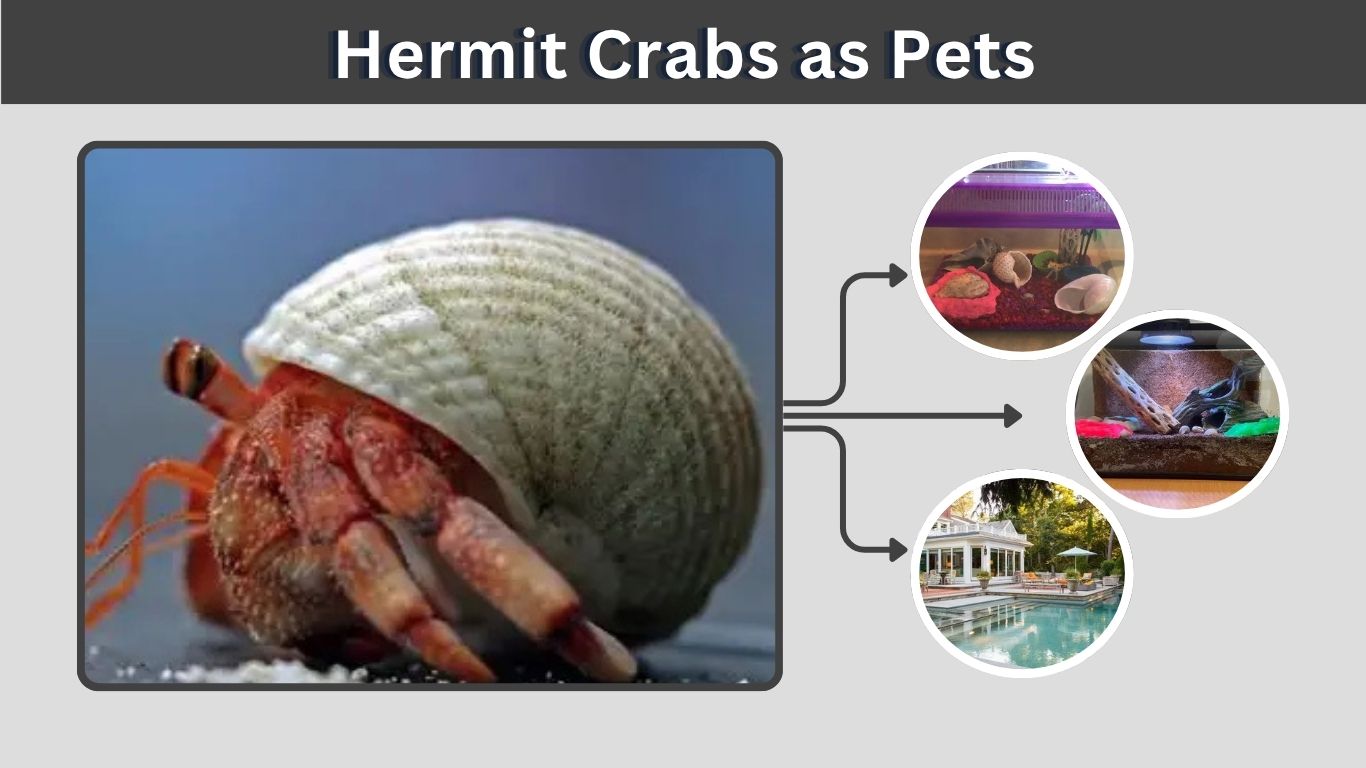
Hermit crabs are unusual, entertaining pets known for carrying borrowed shells and exploring their surroundings at night. Although they are often sold as inexpensive, low-maintenance animals, they require much more than a small plastic cage and a dish of food. A healthy pet hermit crab needs a warm, humid tank, deep substrate, fresh and saltwater, suitable shells, nutritious food and companionship. With proper care, some species can live for more than 10 years, making ownership a surprisingly long commitment.
Are Hermit Crabs Good Pets?
Hermit crabs can make good pets for people who enjoy observing animal behavior and creating natural-looking habitats. They dig, climb, forage, change shells and interact with other crabs. However, they are not ideal for anyone looking for an affectionate or frequently handled pet.
Advantages of Keeping Hermit Crabs
Hermit crabs are quiet, do not need outdoor exercise and usually produce little noticeable odor when their enclosure is properly maintained. Their climbing, shell-changing and food-searching behaviors can be fascinating to watch.
They may be suitable for apartments because their habitat occupies relatively little space compared with those of many traditional pets. They are also nocturnal, so much of their activity happens during the evening.
Are Hermit Crabs Low-Maintenance Pets?
Hermit crabs are sometimes marketed as easy pets, but maintaining the correct temperature and humidity requires daily monitoring. Their water must be treated, uneaten fresh food should be removed, and owners must provide suitable molting conditions.
They are easier to manage than some large animals, but they are not disposable starter pets. Their enclosure should be fully prepared before they arrive.
Are They Good Pets for Children?
Children may enjoy watching hermit crabs, but an adult should remain responsible for their care. Crabs can pinch when frightened or held incorrectly, and dropping one can cause serious injury.
Children should handle them only under close supervision, over a soft surface and for brief periods. A hermit crab should never be pulled from its shell or disturbed while molting.
Pet Hermit Crab Habitat Setup
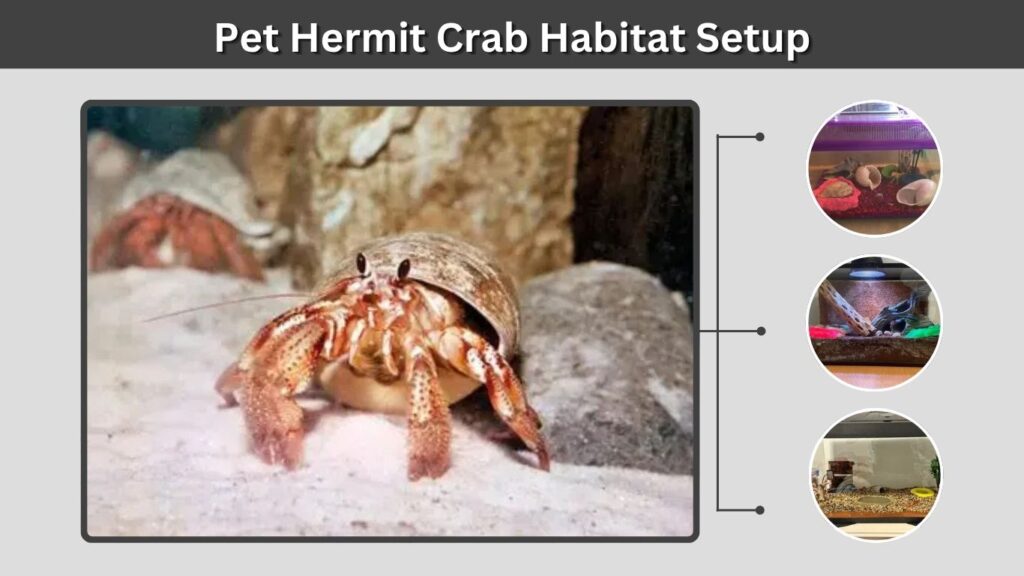
The most important part of hermit crab care is providing a habitat that reproduces the warm, humid conditions of a tropical coastal environment. Small wire cages and open plastic containers cannot reliably retain the necessary humidity.
| Habitat requirement | Recommended setup |
| Enclosure | Secure glass tank with a fitted lid |
| Tank size | At least 10 gallons for one or two small crabs |
| Temperature | Approximately 70–80°F, with a warmer area |
| Humidity | Around 70–90% |
| Substrate | Moist sand and coconut fiber |
| Water | Separate freshwater and marine saltwater dishes |
| Furnishings | Hides, climbing branches, leaf litter and spare shells |
These figures are general guidelines; larger crabs and groups require more floor space. A thermometer and hygrometer should remain inside the enclosure so conditions can be checked every day.
Choosing the Right Tank
A glass aquarium with a secure lid is generally better than a wire cage because glass retains heat and humidity. A 10-gallon tank may accommodate one or two smaller crabs, while larger groups need additional space.
Because hermit crabs are capable climbers, the lid must prevent escapes while allowing safe ventilation. Keep the tank away from direct sunlight, air conditioners and cold drafts.
Temperature and Humidity
Hermit crabs have modified gills that must remain moist for the animals to breathe properly. Low humidity can therefore become life-threatening rather than merely uncomfortable.
Maintain a warm side near 80°F and a cooler area around 70°F. Aim for approximately 70–90% humidity, depending on the species. Heating equipment should be controlled by a thermostat to prevent dangerous hot spots.
Substrate for Digging and Molting
Hermit crabs bury themselves to rest, reduce moisture loss and molt. Their substrate should therefore be deep enough for the largest crab to disappear completely beneath it.
A commonly recommended mixture combines clean sand with coconut fiber. It should hold the shape of a tunnel when pressed but should not be dripping wet. The Smithsonian provides its land hermit crabs with approximately six inches of substrate to support digging and molting behaviors.
Do Pet Hermit Crabs Need Saltwater?
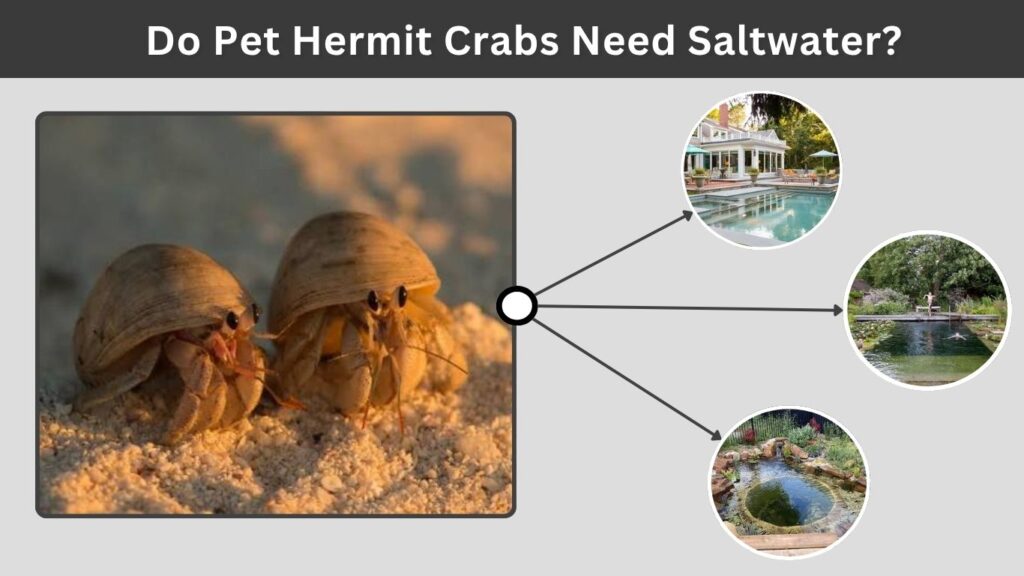
Land hermit crabs spend most of their adult lives on land, but they still require regular access to water. Their enclosure should contain two separate pools: one with freshwater and another with properly prepared marine saltwater.
Freshwater Pool
Use dechlorinated water because chlorine and chloramine can be harmful. The dish should allow the crab to enter, turn around and leave without becoming trapped.
Include a textured ramp, stones or another safe exit. Replace dirty water regularly and wash the container without leaving chemical residue.
Saltwater Pool
Prepare saltwater with a marine aquarium salt mix according to its instructions. Do not substitute ordinary table salt, which does not reproduce the mineral balance of seawater.
Land hermit crabs naturally visit seawater to maintain moisture and support normal biological functions. Both water sources should remain available so each crab can regulate its own needs.
What Do Pet Hermit Crabs Eat?
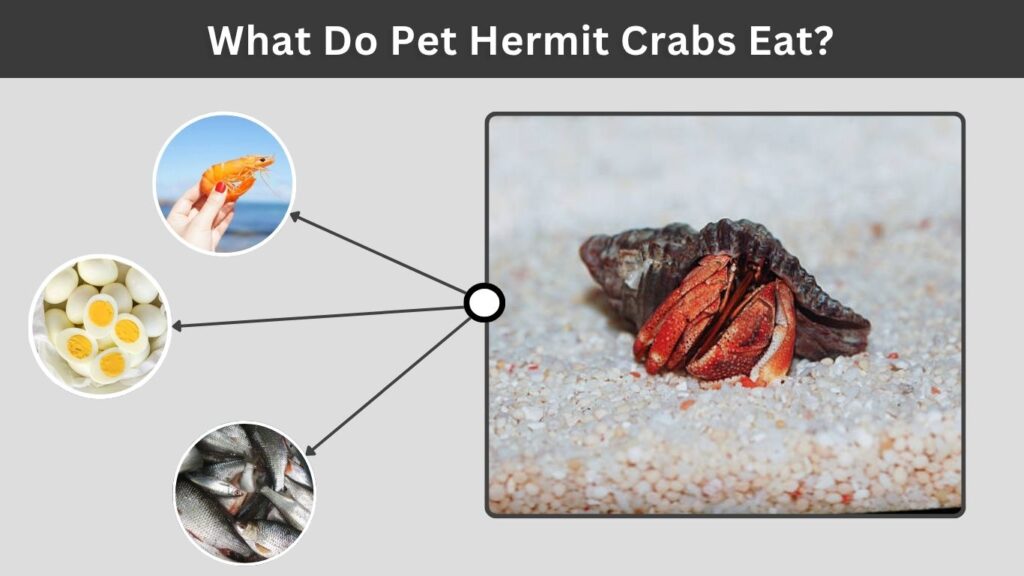
Hermit crabs are omnivorous scavengers. A varied diet is preferable to feeding only one commercial pellet because it supplies different proteins, fats, minerals and plant nutrients.
Suitable Foods
A balanced rotation may include:
- Commercial hermit crab food
- Unseasoned fish, shrimp or cooked egg
- Carrots, kale, peppers and other vegetables
- Apples, bananas, mangoes and coconut
- Unsalted nuts and seeds
- Seaweed
- Crushed cuttlebone or another safe calcium source
Offer small quantities in the evening because hermit crabs are primarily nocturnal. Remove perishable leftovers the following morning before they spoil or attract pests.
Foods to Avoid
Do not offer heavily salted, seasoned, sugary or processed human foods. Avoid anything exposed to pesticides, cleaning chemicals or toxic metals.
Food and water containers should be non-metallic and easy to disinfect. Ceramic or durable food-safe plastic dishes are generally practical choices.
Shells, Social Needs and Molting
Proper care involves more than feeding and heating. Hermit crabs depend on empty snail shells for physical protection, live naturally around other crabs and undergo vulnerable molting periods.
Provide Several Natural Shells
Offer each crab several unpainted shells in slightly different sizes and opening shapes. A crab may examine several options before choosing one.
Painted shells should be avoided because coatings may flake, alter the shell’s surface or interfere with moisture regulation. Never force a crab to change shells or attempt to remove it from its current one.
Keep Hermit Crabs Together
Despite their name, land hermit crabs are social. Some species travel in groups and gather in large colonies in the wild. Keeping compatible crabs in pairs or small groups allows more natural social behavior, provided the habitat has enough space, food and shell choices.
Never Disturb a Molting Crab
Before molting, a crab may eat more, become inactive or bury itself. It can remain underground for weeks or even longer, depending on its species and size.
Do not dig it up or replace all the substrate while it is buried. After shedding, the crab commonly eats its old exoskeleton to recover calcium and other nutrients.
How Long Do Pet Hermit Crabs Live?
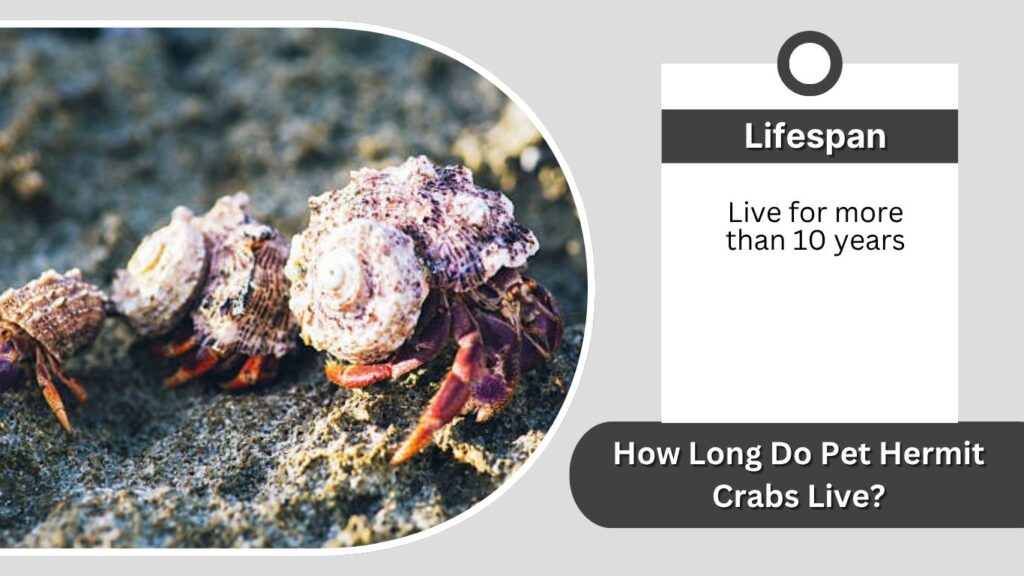
A properly cared-for pet hermit crab may live for more than 10 years, and some land hermit crabs have the potential to survive for several decades. The Smithsonian notes that certain hermit crabs may reach approximately 40 years, although many pets die much earlier because of unsuitable housing.
Lifespan varies by species, origin and husbandry. Poor humidity, shallow substrate, untreated water, incorrect temperatures and molting disturbances can greatly reduce life expectancy.
Prospective owners should also consider where their animals come from. Land hermit crabs generally do not reproduce successfully in ordinary human care, so pet-store animals are usually collected from wild populations. Owners should research sellers carefully and never release an unwanted pet into the wild.
FAQs
Can a hermit crab be kept alone?
Hermit crabs can survive alone, but land hermit crabs are social animals that normally benefit from compatible companions. Keeping at least two is generally preferable. The tank must be large enough to prevent competition and should contain multiple feeding areas, hiding places and spare shells.
Do pet hermit crabs pinch?
Hermit crabs do not bite, but they can pinch with their claws when frightened, unsupported or stressed. Pick one up only by the back of its shell and keep your fingers away from its claws. Always hold it above a soft, low surface.
How often should a pet hermit crab be fed?
Offer a small amount of food daily, preferably during the evening when the crab becomes active. Remove spoiled fresh food the next morning. Rotate protein, vegetables, fruit and calcium-rich foods rather than relying entirely on one type of commercial pellet.
Why is my hermit crab hiding?
Hiding during daylight is normal because hermit crabs are largely nocturnal. A crab may also hide because it is adjusting to a new habitat, avoiding dry conditions or preparing to molt. Never dig up a buried crab unless an exotic-animal veterinarian advises it.
Are hermit crabs easy pets for beginners?
Beginners can successfully keep hermit crabs when they prepare the habitat correctly and monitor it consistently. However, they are not effortless pets. Their survival depends on stable heat, high humidity, deep substrate, two types of water, appropriate food and protection during molting.