
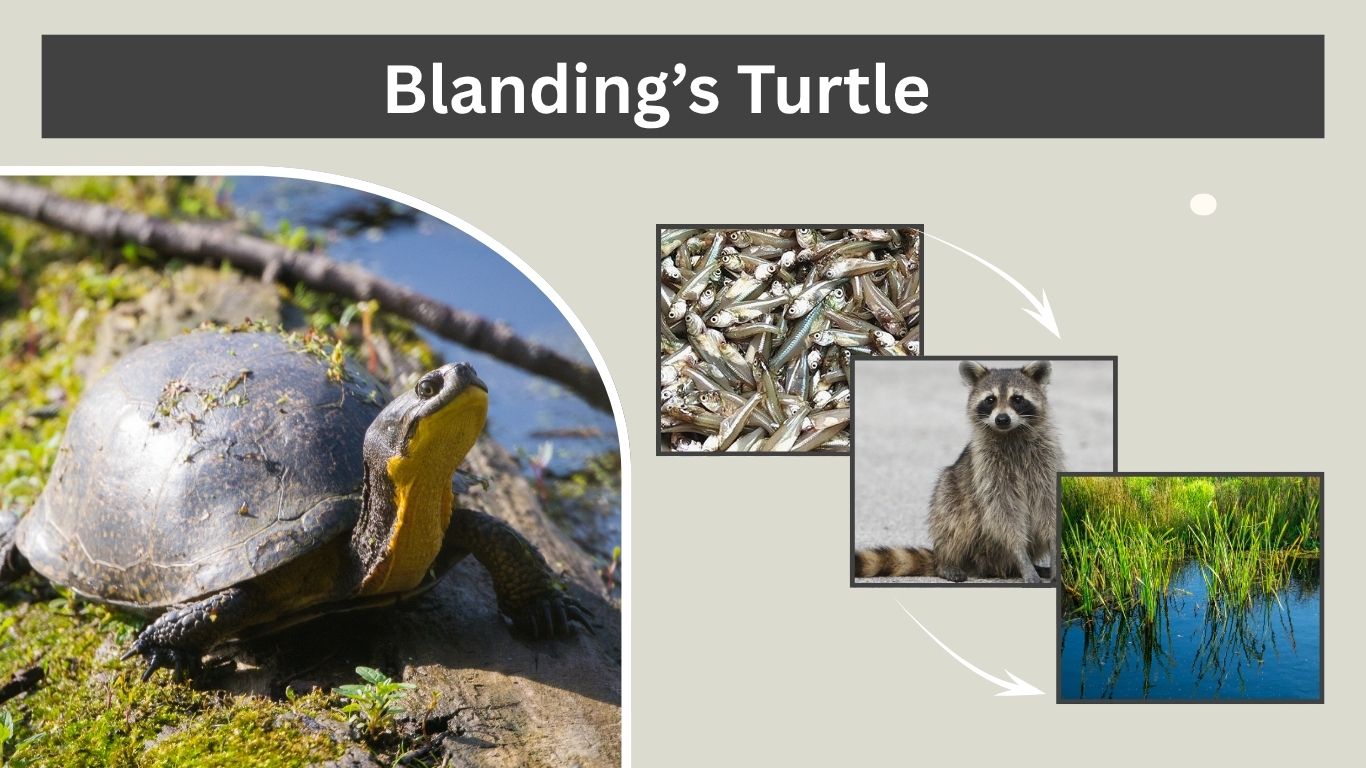
The Blanding’s turtle is a fascinating freshwater turtle recognized for its bright yellow chin and smooth domed shell. This long-lived species is found in wetlands across parts of the United States and Canada, where it spends much of its life in shallow water habitats. Because of habitat loss and other environmental threats, the turtle has become a conservation concern in many regions.
Blanding’s turtles are known for their calm behavior, slow growth, and impressive lifespan. This guide explains how to identify Blanding’s turtles, where they live, what they eat, and why conservation programs are important for protecting their future.
What Is a Blanding’s Turtle?
The Blanding’s turtle is a medium-sized freshwater turtle belonging to the species Emydoidea blandingii. It is famous for its yellow throat, spotted shell, and long lifespan. Unlike many other turtles, Blanding’s turtles mature slowly and may live for several decades in protected wetland environments.
Scientific Name and Classification
The scientific name of the Blanding’s turtle is Emydoidea blandingii. It belongs to the family Emydidae, which includes several pond and marsh turtle species found throughout North America.
Physical Description
Blanding’s turtles have several distinctive physical features that make them easy to recognize.
Common identification features include:
- Bright yellow chin and throat
- Smooth high-domed shell
- Dark shell with yellow speckles
- Long neck structure
- Strong swimming limbs
These markings help separate them from painted turtles and snapping turtles.
Blanding’s Turtle Size
Adult Blanding’s turtles usually reach shell lengths between seven and ten inches. Females are often slightly larger than males, although both sexes share similar shell coloration and body structure.
Blanding’s Turtle Identification
Identifying a Blanding’s turtle is usually easier than identifying many other freshwater turtles because of its bright yellow chin and rounded shell. Careful observation of the plastron, shell shape, and body markings can help distinguish this species from other turtles living in the same wetlands.
Shell and Plastron Features
The shell of a Blanding’s turtle is smooth and dark with small yellow spots scattered across the surface. The plastron, or underside of the shell, is yellow with darker blotches that vary from turtle to turtle.
Blanding’s Turtle Belly and Underside
The underside of the turtle is called the plastron and helps protect the body from predators. Blanding’s turtles possess a hinged plastron that allows limited shell movement for additional protection when threatened.
Male vs Female Blanding’s Turtle
| Feature | Male | Female |
| Tail Length | Longer | Shorter |
| Size | Slightly larger | Smaller |
| Plastron Shape | Slightly concave | Flat |
| Eye Color | Bright yellow | Yellow-brown |
Baby Blanding’s Turtle Identification
Young Blanding’s turtles are smaller and darker than adults. Hatchlings may have less visible yellow spotting on the shell, but their yellow throat markings are still noticeable shortly after hatching.
Blanding’s Turtle Habitat and Range
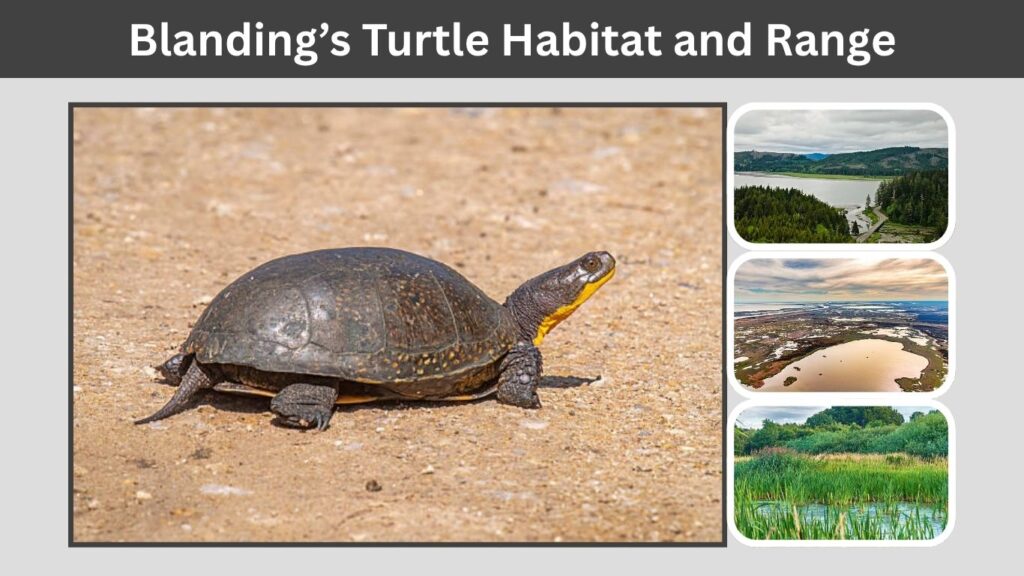
Blanding’s turtles depend heavily on healthy wetland ecosystems for survival. They prefer shallow waters with dense vegetation where food, shelter, and nesting areas are available. Wetland destruction has reduced suitable habitat in many areas, making conservation efforts increasingly important.
Natural Habitat
Blanding’s turtles are most commonly found in freshwater habitats with calm water and abundant aquatic vegetation.
Preferred habitats include:
- Marshes
- Wetlands
- Slow-moving rivers
- Shallow lakes
- Flooded meadows
These environments provide ideal feeding and nesting conditions.
Blanding’s Turtle Range Map
The species is mainly distributed around the Great Lakes region and northeastern parts of North America. Populations are scattered across both the United States and southern Canada.
States and Provinces Where They Live
Blanding’s turtles are commonly found in several states and provinces.
Important locations include:
- Michigan
- Minnesota
- Wisconsin
- Illinois
- Ontario
- Nova Scotia
Some populations are isolated and protected because of declining habitat quality.
Blanding’s Turtle Diet
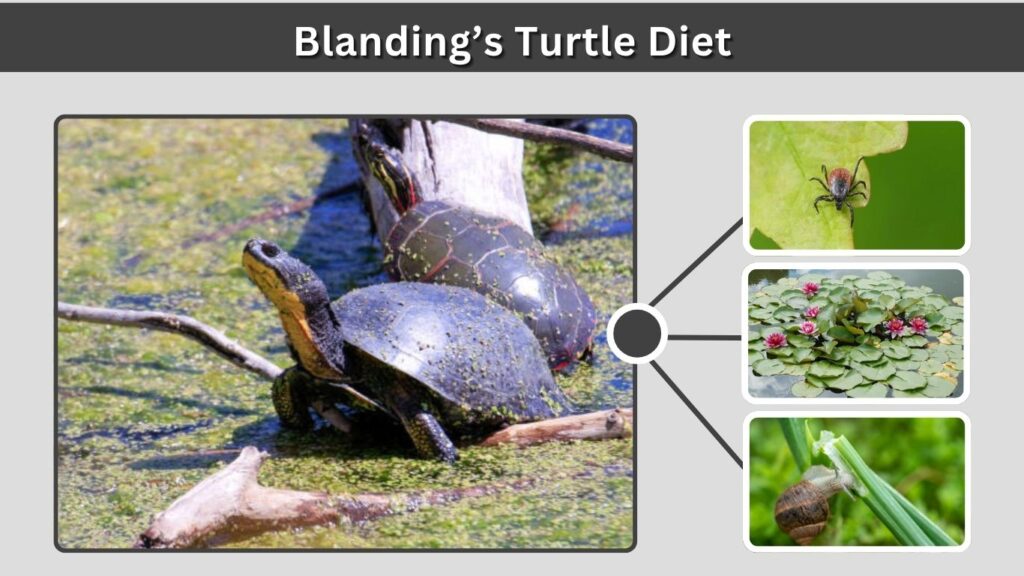
Blanding’s turtles are opportunistic feeders that consume a wide variety of aquatic prey and plant material. Their diet changes somewhat as they grow older, but animal protein remains an important food source throughout much of their lives.
What Do Blanding’s Turtles Eat?
Blanding’s turtles eat many aquatic animals commonly found in marshes and wetlands.
Their diet commonly includes:
- Insects
- Snails
- Crayfish
- Small fish
- Aquatic plants
They hunt slowly and often search for food along muddy bottoms or shallow vegetation.
Juvenile vs Adult Diet
Young turtles usually consume more protein-rich foods to support rapid growth. Adult turtles may add more plant material and aquatic vegetation to their diet as they mature.
Hunting and Feeding Behavior
Blanding’s turtles are patient hunters that move slowly through shallow water while searching for prey. They use strong jaws to capture insects, snails, and other small aquatic animals hidden among wetland plants.
Blanding’s Turtle Lifecycle
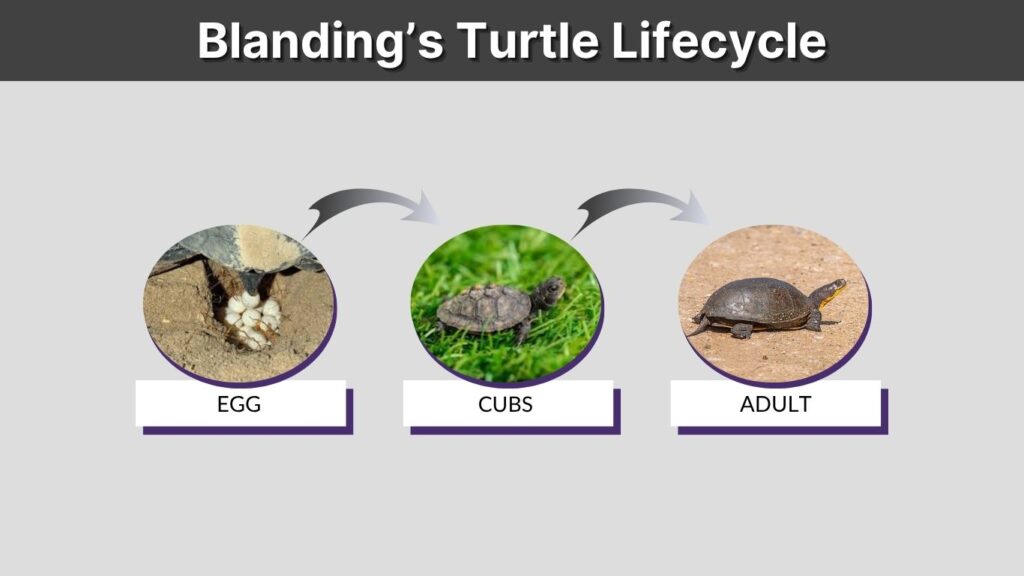
Blanding’s turtles grow slowly and may take many years to reach adulthood. Their long lifespan and delayed breeding age make population recovery difficult when habitat loss or nest destruction occurs. Understanding their lifecycle is important for conservation efforts focused on protecting both adults and hatchlings.
Egg Laying and Nesting
Female Blanding’s turtles leave wetlands during the nesting season to lay eggs in sandy or soft soil areas. Nesting often occurs during late spring or early summer, usually at night when temperatures are cooler and predators are less active.
Blanding’s Turtle Eggs and Incubation
Blanding’s turtle eggs are small, oval-shaped, and buried carefully inside underground nests. The incubation period depends heavily on temperature and weather conditions during the summer months.
Hatchlings and Early Survival
Young hatchlings face many dangers immediately after emerging from the nest.
Common hatchling threats include:
- Raccoons
- Foxes
- Snakes
- Birds
- Habitat flooding
Only a small number of hatchlings survive long enough to reach adulthood in the wild.
Lifespan and Longevity
Blanding’s turtles are known for their impressive lifespan. Many individuals live for 70 years or more, and some turtles may survive close to 100 years under ideal conditions. Their slow maturity means adults are extremely important for maintaining healthy populations.
Why Is the Blanding’s Turtle Endangered?
Blanding’s turtles are considered threatened or endangered in many parts of their range because of habitat destruction, road mortality, and nest predation. Their slow reproduction rate makes it difficult for populations to recover quickly after losses occur.
Habitat Loss
Wetland drainage and urban development have destroyed many of the shallow marshes and nesting areas required by Blanding’s turtles. Roads and agricultural expansion also divide populations into isolated groups.
Predators and Nest Threats
Many predators target turtle nests and hatchlings before they can safely reach water.
Common predators include:
- Raccoons
- Skunks
- Foxes
- Coyotes
- Large birds
Nest destruction significantly reduces hatchling survival rates.
Human-Related Threats
Vehicle strikes are one of the biggest dangers for adult turtles during nesting migrations. Illegal collection for the pet trade and pollution also contribute to population decline in some regions.
Conservation Status
Blanding’s turtles receive legal protection in many states and provinces because of declining populations. Conservation organizations continue monitoring turtle numbers and protecting important wetland habitats.
Blanding’s Turtle Conservation Efforts
Scientists, wildlife agencies, and conservation groups are working together to protect Blanding’s turtles and their habitats. Long-term recovery efforts focus on preserving wetlands, reducing road mortality, and increasing public awareness about endangered turtle populations.
Wetland Protection Projects
Habitat restoration projects help rebuild wetlands damaged by development or pollution. Protected nesting sites also improve hatchling survival in areas with heavy predator pressure.
Population Monitoring
Researchers monitor Blanding’s turtle populations using tracking devices, nesting surveys, and long-term studies. These programs help scientists understand migration patterns, survival rates, and habitat needs.
Public Awareness Campaigns
Community conservation programs encourage people to help protect turtles and wetland habitats.
Popular conservation efforts include:
- Adopt-a-turtle programs
- Educational wildlife events
- Wetland cleanup projects
- Turtle crossing signs
- Volunteer monitoring groups
Public participation is important for protecting endangered turtle populations.
Blanding’s Turtle vs Painted Turtle
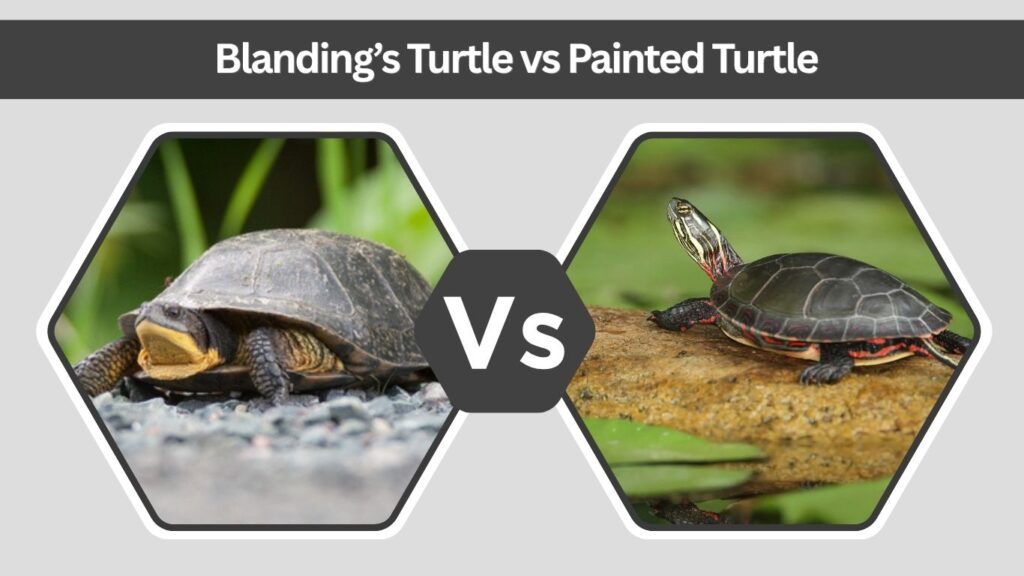
Blanding’s turtles are sometimes confused with painted turtles because both species live in freshwater wetlands. However, several physical and behavioral differences help separate these turtles when viewed closely in the wild.
Appearance Differences
Blanding’s turtles have high-domed shells and bright yellow chins, while painted turtles usually display flatter shells with red and orange markings along the edges.
Habitat Comparison
Painted turtles often tolerate a wider range of aquatic habitats, including ponds and urban waterways. Blanding’s turtles generally prefer cleaner wetlands with abundant vegetation and quieter environments.
Behavior and Diet Differences
| Feature | Blanding’s Turtle | Painted Turtle |
| Chin Color | Bright yellow | Dark |
| Shell Shape | High-domed | Flatter |
| Conservation Status | Threatened | Common |
| Lifespan | Very long | Moderate |
FAQs
Why are Blanding’s turtles endangered?
Blanding’s turtles are endangered mainly because of habitat loss, wetland destruction, road mortality, and nest predation. Their slow reproduction rate and late maturity also make population recovery difficult when adult turtles are lost.
What do Blanding’s turtles eat?
Blanding’s turtles eat insects, snails, crayfish, small fish, worms, and aquatic plants. They are opportunistic feeders that hunt slowly in shallow wetlands and marshes.
How long do Blanding’s turtles live?
Blanding’s turtles are long-lived reptiles that can survive for 70 to 100 years in suitable environments. Some individuals may live even longer under protected conditions.
Where do Blanding’s turtles live?
Blanding’s turtles live in wetlands, marshes, shallow lakes, and slow-moving rivers across parts of the United States and Canada, especially around the Great Lakes region.
Do Blanding’s turtles bite?
Blanding’s turtles can bite if they feel threatened or handled improperly. However, they are generally calm turtles and usually try to avoid confrontation whenever possible.