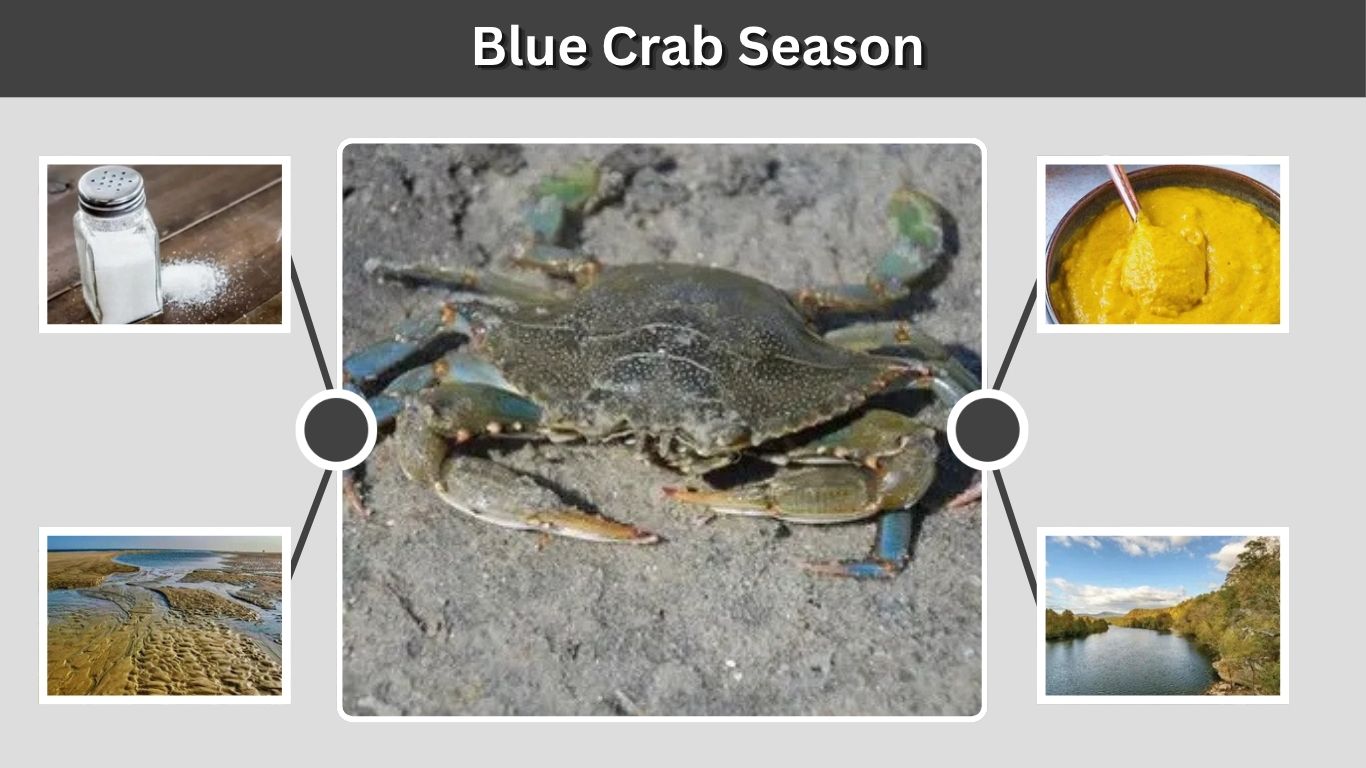
Blue crab season varies by location, water temperature, weather, and local harvesting regulations. Although blue crabs may be available throughout much of the year in warm southern waters, they become less active during cold weather in northern states. For most coastal areas, late spring through early fall provides the best combination of active crabs, larger catches, and fresh local availability. This guide explains when blue crabs are in season, the best months by state, harvesting rules, molting periods, and popular ways to season and enjoy them.
When Is Blue Crab Season?
Blue crabs live along the Atlantic and Gulf coasts, from northern coastal waters to Florida and Texas. Their activity changes significantly with water temperature.
In many states, the general blue crab season runs from spring through fall. However, this does not mean every location follows the same legal harvesting dates. A state may allow crabbing year-round while temporarily restricting certain traps, areas, sizes, or types of crabs.
General Blue Crab Season
The most productive period is usually:
- Early season: April to May
- Peak season: June to September
- Late season: October to November
- Slow season: December to March
Crabs begin emerging from deeper water or winter dormancy as coastal waters warm. Their feeding, movement, mating, and molting activity increases through spring and summer.
What Is the Best Month for Blue Crabs?
August and September are often considered the best months for catching and eating blue crabs in the Mid-Atlantic region. By late summer, many crabs have had time to grow, and warm water keeps them actively feeding.
In Florida, Louisiana, and Texas, excellent catches may begin earlier and continue later because the water remains warm for longer. Spring and fall can be especially productive along the Gulf Coast.
Blue Crab Season by State
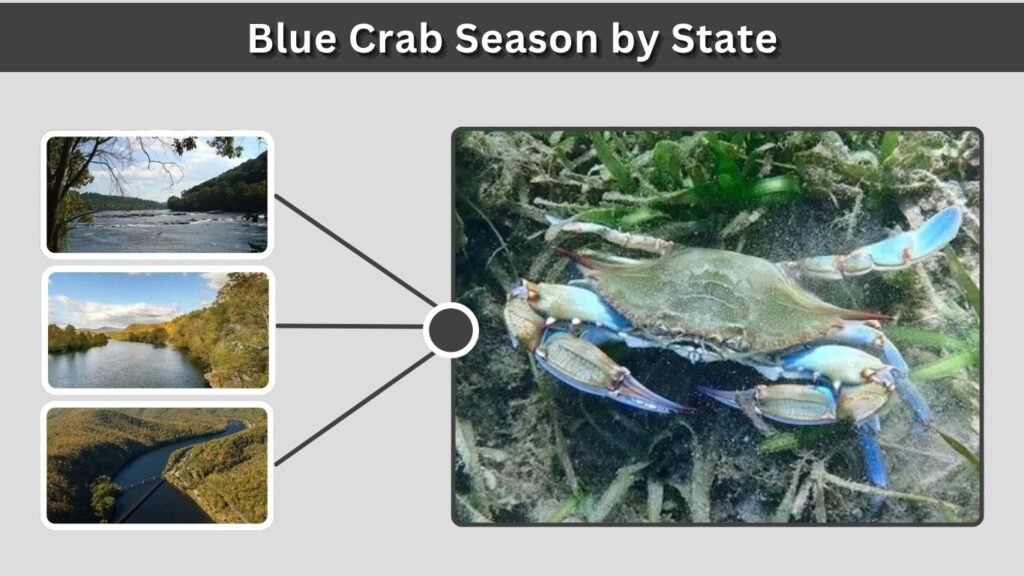
The following dates describe common periods of availability and productive crabbing. Legal seasons, temporary closures, bag limits, and gear restrictions may change, so recreational crabbers should always confirm the latest state rules before setting traps.
| State | Typical Productive Months | Important Considerations |
|---|---|---|
| Maryland | May–October | Recreational season generally runs April 1–December 15 |
| Virginia | April–November | Certain sanctuary areas close during parts of spring and summer |
| Florida | Year-round | Regional blue crab trap closures occur on selected dates |
| Louisiana | March–November | Spring and fall are often highly productive |
| Texas | March–November | Temporary annual crab-trap cleanup closure may apply |
| North Carolina | April–November | Short winter or early-spring closures vary by area |
| South Carolina | March–November | Size, bag, license, and trap limits apply |
| Georgia | March–November | Warm coastal creeks may hold crabs for much of the year |
| New Jersey | May–October | Crab-pot and trotline seasons have fixed dates |
| Connecticut | June–October | Activity falls sharply when the water cools |
Maryland Blue Crab Season
Maryland is famous for Chesapeake Bay blue crabs. Its recreational crab season generally runs from April 1 through December 15, although allowed catch, gear, size, time, and sex can vary during the season.
Crabbing normally improves during May and June as the bay warms. July through October is often the best period for finding heavy hard-shell crabs. September and October may produce particularly meaty crabs because they feed heavily before cold weather.
The commercial hard-crab season in Chesapeake Bay waters runs from April through November under separate rules. Recreational crabbers should not assume that commercial and recreational regulations are identical.
Florida Blue Crab Season
Blue crabs can be caught throughout the year in Florida, but their abundance and activity vary by region. Spring through fall generally offers favorable conditions, while winter can remain productive in southern Florida.
The state establishes short regional closures for standard blue crab traps so abandoned gear can be removed. In even-numbered years, including 2026, closures affect specified Atlantic Coast regions on different dates. Other legal gear, including certain dip nets and fold-up traps, may still be used during those closures. Florida Fish and Wildlife Conservation Commission
These rules apply to aquatic blue crabs and should not be confused with Florida’s blue land crab season.
Louisiana and Texas Blue Crab Season
Louisiana’s warm estuaries support blue crabs during much of the year. Spring and early summer can produce strong catches, followed by another favorable period in fall. Availability can change with rainfall, salinity, storms, and local water conditions.
Texas also provides a long crabbing season. Spring through fall is normally the easiest time to find active crabs. Texas regulations valid through August 31, 2026, prohibit placing, fishing, or leaving crab traps in coastal waters from February 20 through March 1 for the annual abandoned-trap removal program. Texas Parks and Wildlife
Texas blue crabs generally must measure at least five inches across the widest part of the shell, and egg-bearing sponge crabs cannot be kept.
North and South Carolina Blue Crab Season
Blue crabs remain active for much of the year in the Carolinas, but catches usually improve from spring through late fall.
In 2026, North Carolina prohibits possession during January north of the Highway 58 bridge and from March 1 through March 15 south of that bridge. Recreational crabs generally must measure at least five inches, with a limit of 50 per person and no more than 100 per vessel per day. Immature females cannot be possessed.
South Carolina commonly produces good catches from March through November. Current recreational rules establish a limit of one bushel per person per day or two bushels per boat. Crabs under five inches and females carrying eggs must be released.
Virginia and New Jersey Blue Crab Season
Virginia’s productive period usually extends from late spring into fall. However, several blue crab sanctuary areas prohibit recreational crabbing during specified portions of spring and summer. These protected areas help conserve spawning females and maintain the Chesapeake Bay population.
Farther north, New Jersey crabbing normally peaks from June through September. For 2026, the crab-pot and trotline season runs from April 6 through December 4 in Delaware Bay and its tributaries and from March 15 through November 30 in other waters. The recreational limit is one bushel.
What Affects Blue Crab Availability?
A legal season may be open even when catching crabs is difficult. Environmental conditions determine where crabs gather and how actively they feed.
Water Temperature
Blue crabs are most active in warm water. As temperatures rise in spring, they leave deep channels and move into shallow bays, marshes, creeks, and estuaries.
When water becomes cold, northern blue crabs often bury themselves in bottom sediment or move into deeper water. This makes winter crabbing much less productive even where harvesting remains legal.
Salinity and Rainfall
Blue crabs tolerate fresh, brackish, and salty water, but males and females may prefer different parts of an estuary. Heavy rainfall reduces salinity and can shift crab locations. Drought may allow saltier water to move farther inland.
After major weather changes, crabbers may need to move traps between tidal creeks, river mouths, marsh edges, and deeper channels.
Tides and Weather
Moving water helps carry the scent of bait and encourages crabs to feed. Many crabbers prefer an incoming tide or the periods surrounding a tide change.
Extended heat, cold fronts, strong winds, tropical storms, and unusually heavy rain can temporarily reduce catches. Calm mornings are often easier and safer for checking pots or using handlines.
Blue Crab Molting Season
Blue crabs must shed their hard outer shell to grow. This process is called molting, and it creates the soft-shell crabs valued by restaurants and seafood buyers.
Molting activity generally increases from late spring through early fall. In Chesapeake Bay, the first major shedding period often begins in May, followed by additional peaks during summer.
Hard Crabs, Peelers, and Soft Crabs
A hard crab has a fully hardened shell. A peeler is preparing to molt and may show visible signs along the edge of its swimming fin. Immediately after shedding, it becomes a soft-shell crab.
The new shell starts hardening quickly, sometimes within hours. For that reason, commercial shedding operations monitor peelers closely and remove newly molted crabs from the water before the shell becomes firm.
Is Molting Season the Best Time to Eat Blue Crabs?
Molting season is ideal for soft-shell crab lovers because the entire cleaned crab can be cooked and eaten. However, a recently molted crab may contain less meat than a heavy hard-shell crab.
People seeking full, firm crabmeat often prefer late-summer or early-fall hard crabs. Soft-shell crab enthusiasts may favor May through September, depending on local molting cycles.
How to Catch Blue Crabs During the Season
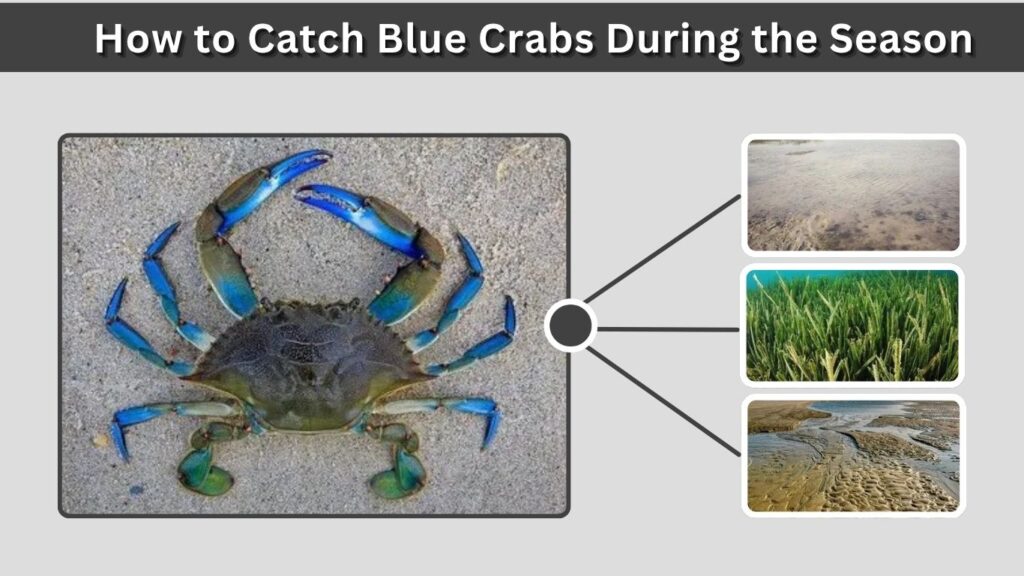
Blue crabs can be caught using handlines, dip nets, collapsible traps, trotlines, or crab pots. The permitted methods depend on state regulations and whether the harvest is recreational or commercial.
Best Places to Find Blue Crabs
Look for crabs around:
- Tidal creeks and marsh edges
- Piers, docks, and bridges
- Seagrass beds
- Muddy or sandy bottoms
- Brackish rivers and estuaries
- Oyster reefs and protected coves
Chicken necks, fish scraps, oily baitfish, and eel are commonly used as bait. Secure the bait well so a crab cannot quickly pull it away.
Check Every Crab Before Keeping It
Measure the shell from point to point across its widest section. Release any undersized crab immediately and handle it carefully.
Learn how to distinguish males, immature females, mature females, and egg-bearing sponge crabs. Releasing females—especially those carrying eggs—supports future generations and may also be legally required.
Best Seasoning for Blue Crabs
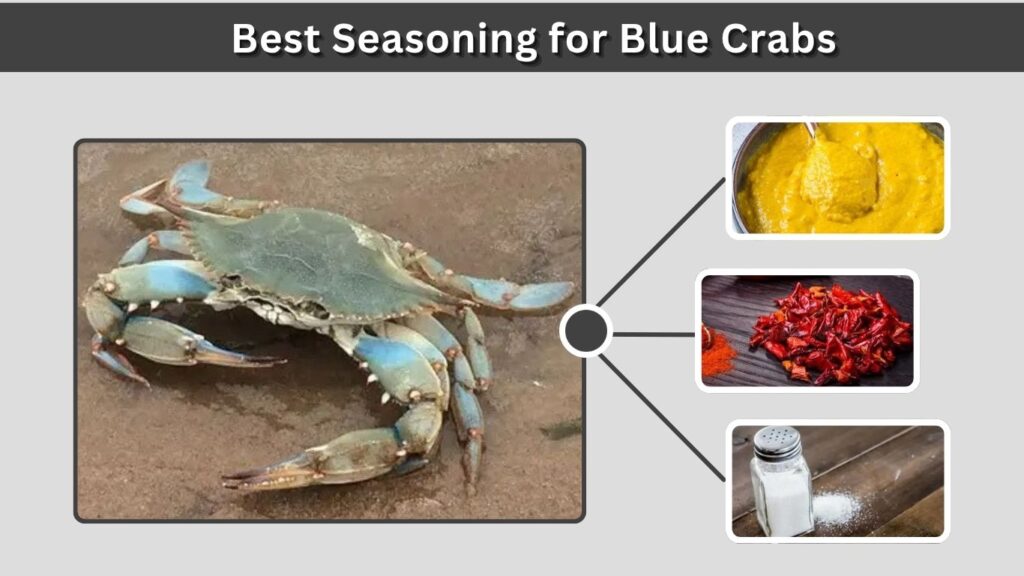
Steamed blue crabs are often coated with a bold blend of salt, paprika, celery salt, mustard, black pepper, red pepper, and other spices.
Maryland Seasoning Preference
Old Bay is the seasoning most closely associated with Maryland blue crabs. Many crab houses use Old Bay alone or mix it with additional coarse salt and proprietary spices.
J.O. Crab Seasoning is another popular Chesapeake-style choice, particularly among restaurants and traditional crab houses. It has a coarse texture that adheres well to steamed shells.
Blue Crab Boil Seasoning
Along the Gulf Coast, blue crabs are frequently boiled with seasoning rather than steamed. A typical crab boil may contain:
- Cayenne pepper
- Paprika
- Garlic
- Bay leaves
- Mustard seed
- Black pepper
- Lemon
- Salt
Corn, potatoes, sausage, and onions can be cooked in the same seasoned water. The longer cooked crabs rest in the liquid, the more intense their flavor becomes.
FAQs
Are blue crabs in season year-round?
Blue crabs may be harvested during most or all of the year in some southern states, but their activity and availability change seasonally. Northern populations become difficult to catch in winter. Regional closures, trap restrictions, and conservation rules can also temporarily prevent harvesting.
When does blue crab season start?
The productive season commonly starts between March and May. It begins earlier along the Gulf Coast and in Florida because water warms sooner. In Maryland, New Jersey, and other northern areas, reliable catches usually begin later in spring.
When does blue crab season end?
Peak availability usually ends between October and December as coastal water cools. Southern areas may continue producing blue crabs throughout winter, while northern crabs become inactive, move into deeper water, or bury themselves in bottom sediment.
What is the best season for Maryland blue crabs?
Summer through early fall is generally the best period. July, August, September, and October often provide abundant, heavy hard-shell crabs. Soft-shell crab availability commonly begins in May and continues through summer as water temperatures support repeated molting.
Is an Alaskan blue crab the same species?
No. The Atlantic blue crab, Callinectes sapidus, inhabits Atlantic and Gulf coastal waters. Seafood described as an Alaskan blue crab usually refers to the blue king crab, a different cold-water species with a separate fishery, habitat, appearance, and regulated season.