
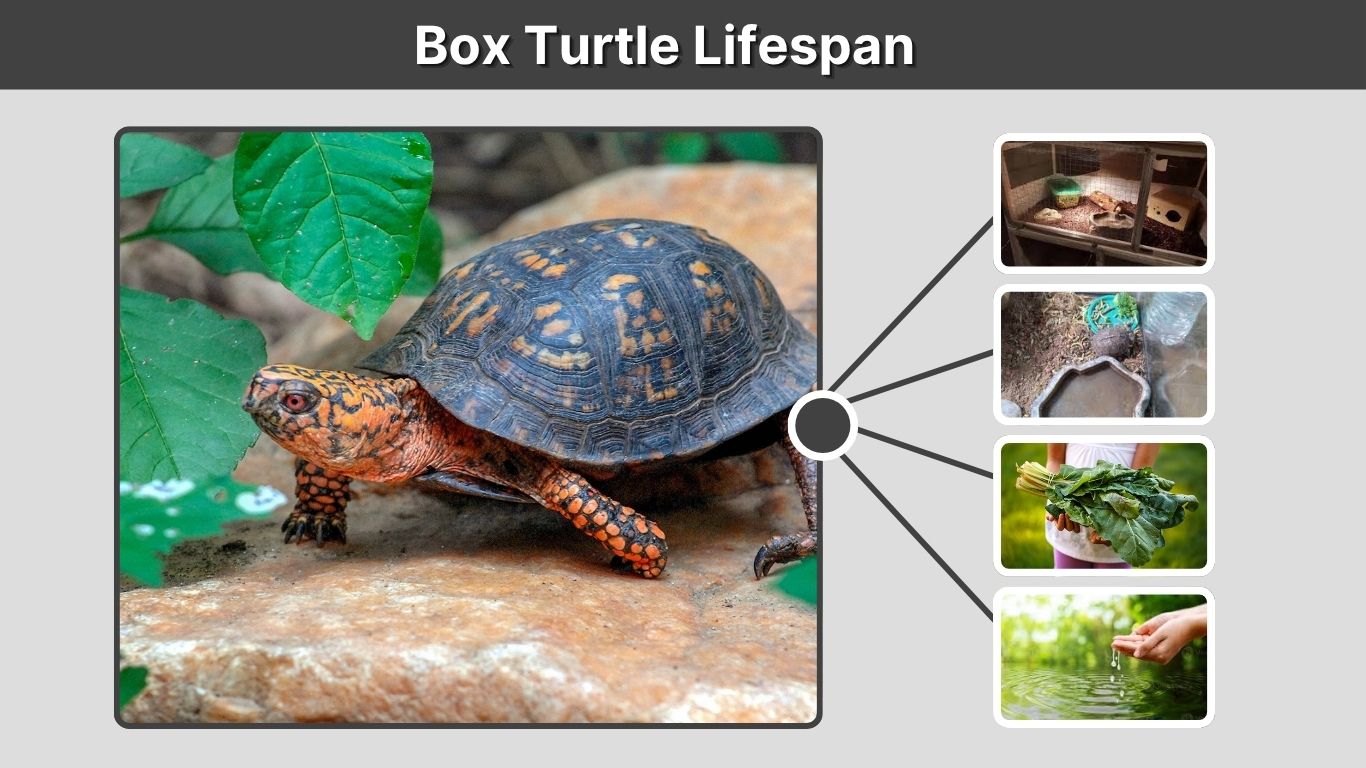
Box turtles are famous for their long lives, with some individuals surviving for several decades in both the wild and captivity. Their lifespan depends on species, habitat quality, diet, and overall care. Many pet owners are surprised to learn that a healthy box turtle can become a lifelong companion. Understanding how long different box turtle species live also helps owners provide better care and create safer environments for these slow-moving reptiles.
Some box turtles live much longer in captivity because they are protected from predators, disease, and harsh weather. However, wild turtles often face many dangers that reduce their average lifespan.
What Is the Average Lifespan of a Box Turtle?
Box turtles are among the longest-living reptiles in North America and Asia. Depending on the species and care conditions, many can live between 30 and 60 years. Some even survive beyond 80 years. Wild turtles usually have shorter lives because of predators, road accidents, and habitat destruction, while captive turtles often enjoy safer living conditions and better nutrition.
Average Lifespan in the Wild
Wild box turtles commonly live between 20 and 50 years. Their survival depends heavily on environmental conditions and natural threats. Young turtles are especially vulnerable to predators such as raccoons, birds, and snakes. Adult turtles have stronger shells, but they still face dangers from vehicles, pollution, and habitat loss.
Many wild turtles also struggle during extreme weather. Long droughts, flooding, and cold winters can weaken their health over time. Despite these challenges, some wild box turtles still manage to survive for many decades.
Average Lifespan in Captivity
Pet box turtles often live longer than wild turtles because owners provide regular food, clean water, and protection from predators. A healthy captive box turtle may live 40 to 60 years or more when cared for properly.
Captive turtles also benefit from veterinary care and controlled temperatures. Proper lighting and nutrition reduce the risk of shell problems and infections. However, poor enclosure conditions or an improper diet can shorten their lifespan significantly.
Oldest Recorded Box Turtles
Some box turtles have reached extremely old ages. Reports suggest that a few individuals lived beyond 100 years, although verified records are rare. Their slow metabolism and protective shells contribute to their impressive longevity.
Because turtles age slowly, older individuals may still appear healthy and active. Scientists continue studying turtle longevity to understand why these reptiles live much longer than many other animals.
Lifespan of Popular Box Turtle Species
Different box turtle species have slightly different lifespans. Climate, habitat, and genetics all influence how long each species survives. Some North American species commonly live longer than tropical Asian species, especially when given proper care in captivity.
Eastern Box Turtle Lifespan
The eastern box turtle is one of the best-known species in North America. Many eastern box turtles live between 40 and 60 years, while some exceed 80 years under ideal conditions.
Factors That Affect Eastern Box Turtle Lifespan
- Access to clean water and nutritious food
- Safe woodland habitats
- Proper humidity levels
- Reduced exposure to roads and predators
- Regular veterinary care in captivity
Eastern Box Turtle Lifespan in Captivity
Captive eastern box turtles usually live longer than wild ones. Owners who provide UVB lighting, healthy diets, and spacious enclosures often help these turtles thrive for decades.
Three-Toed Box Turtle Lifespan
Three-toed box turtles are known for their calm behavior and smooth shells. Their average lifespan ranges from 30 to 50 years, though some individuals may live longer in captivity.
Common Lifespan Challenges
- Respiratory infections
- Poor humidity control
- Lack of calcium in the diet
- Stress from small enclosures
Captive Care and Longevity
Proper heating and moisture are essential for this species. Three-toed box turtles prefer humid environments and can become unhealthy if kept too dry. A balanced diet with vegetables, insects, and calcium supplements helps increase lifespan.
Ornate Box Turtle Lifespan
Ornate box turtles usually live between 30 and 50 years. These turtles are adapted to grasslands and dry habitats, making them slightly different from woodland species.
How Habitat Influences Lifespan
- Dry, open grasslands support healthy shell growth
- Extreme cold may reduce survival rates
- Safe nesting areas improve reproduction success
Ornate Box Turtle Lifespan in Captivity
Captive ornate box turtles can live long lives when owners provide warm temperatures and proper lighting. They are sensitive to stress, so quiet environments and spacious enclosures are important.
Box Turtle Lifespan in Captivity vs Wild
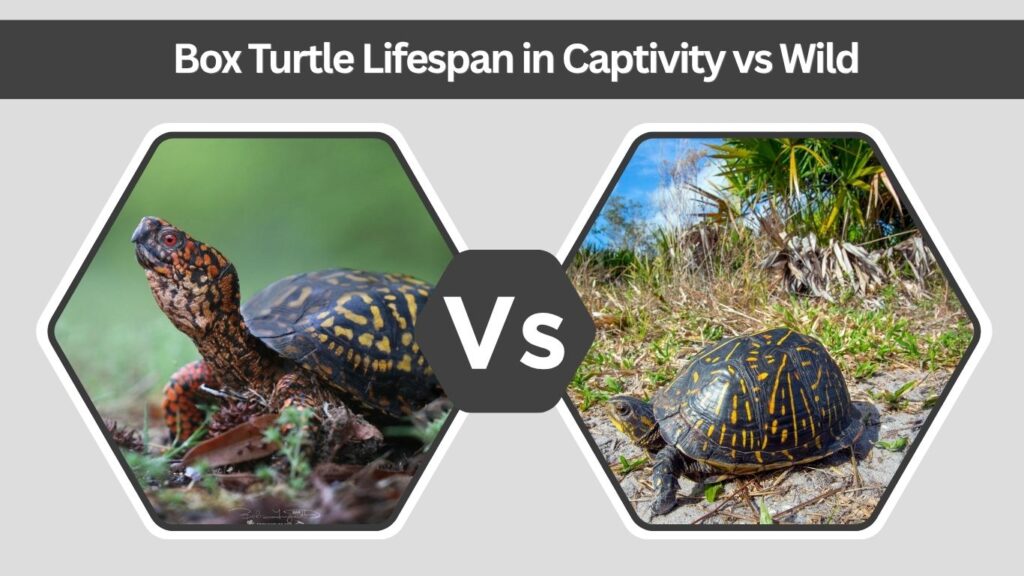
The lifespan difference between wild and captive box turtles can be significant. Captive turtles often avoid many natural dangers and receive regular nutrition. Wild turtles, however, must constantly search for food and avoid predators.
Why Captive Box Turtles Live Longer
Several factors help captive turtles survive longer than wild turtles.
Important Benefits of Captivity
- Consistent food supply
- Protection from predators
- Access to veterinary treatment
- Controlled temperature and humidity
- Reduced risk of injury
Risks Faced by Wild Box Turtles
Wild turtles encounter many dangers throughout their lives. Habitat destruction is one of the biggest threats because roads and urban development reduce safe living spaces. Many turtles are also injured while crossing roads during breeding or nesting seasons.
Pollution and pesticides can affect turtle health as well. In some areas, illegal pet collection has reduced wild populations, making conservation efforts even more important.
Factors That Affect Box Turtle Lifespan
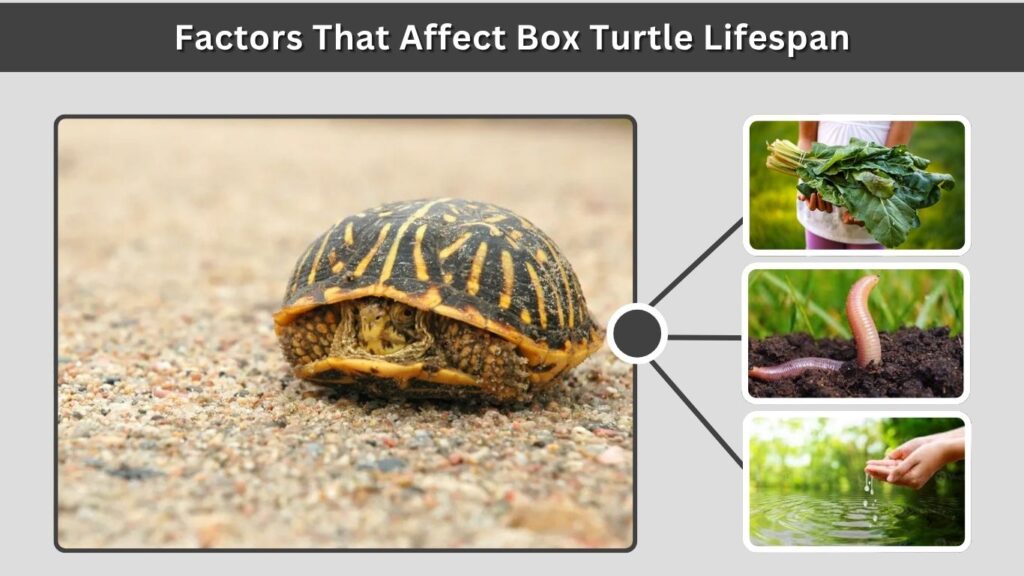
Many factors influence how long a box turtle lives. Proper nutrition, habitat quality, and stress levels all play major roles in turtle health. Even small mistakes in care can shorten a turtle’s lifespan over time. Wild turtles face environmental dangers daily, while pet turtles depend entirely on their owners for proper living conditions.
Diet and Nutrition
A balanced diet is one of the most important parts of long-term turtle health. Box turtles are omnivores, meaning they eat both plant and animal matter.
Foods That Support a Longer Lifespan
- Leafy greens and vegetables
- Earthworms and insects
- Fruits in small amounts
- Calcium-rich foods
- Fresh clean water daily
Foods to Avoid
- Processed human food
- Excess dairy products
- Salty or sugary snacks
- Toxic plants and mushrooms
Poor nutrition may lead to weak shells, vitamin deficiencies, and organ problems that reduce lifespan.
Habitat Quality
Box turtles need safe and comfortable environments to remain healthy. Incorrect temperatures or dry conditions can create serious health problems.
Important Habitat Features
- Proper UVB lighting
- Warm basking areas
- Humid hiding spaces
- Clean substrate
- Large enclosures for movement
Outdoor habitats often provide more natural enrichment, but indoor enclosures can also work well when properly designed.
Veterinary Care
Regular health checks help detect illnesses before they become severe. Many turtles hide symptoms until diseases are advanced, making preventive care extremely valuable.
Respiratory infections, shell rot, parasites, and eye problems are common health issues in captive turtles. Quick treatment often improves survival and quality of life.
Stress and Handling
Stress can weaken a turtle’s immune system and shorten its lifespan. Box turtles generally prefer quiet environments with minimal disturbance.
Common Sources of Stress
- Excessive handling
- Loud noises
- Small enclosures
- Poor temperatures
- Frequent habitat changes
Reducing stress helps turtles remain active and healthy for many years.
How to Help a Pet Box Turtle Live Longer
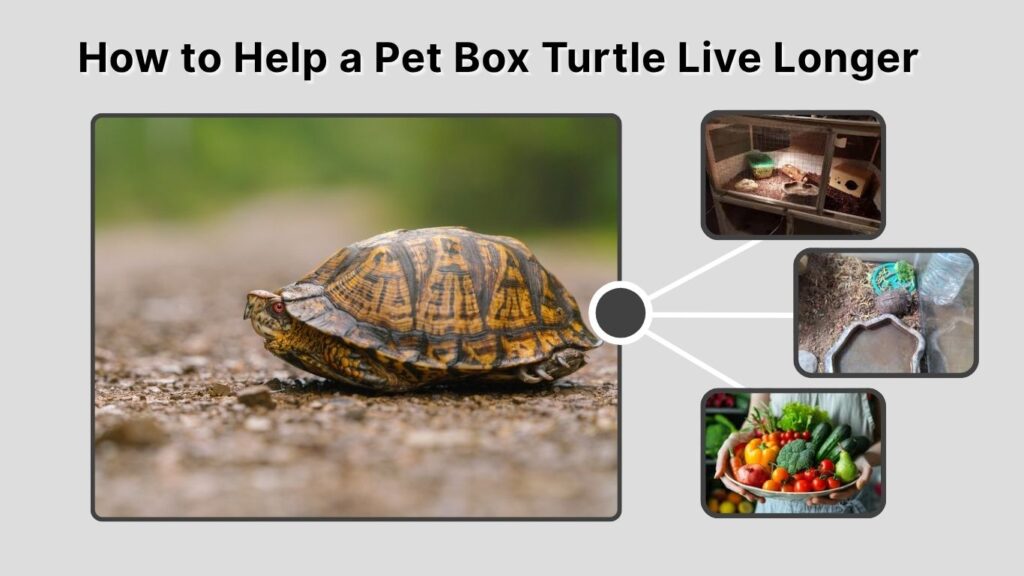
Good care habits greatly improve a turtle’s chances of living a long life. Owners who create proper habitats and provide balanced diets often keep their turtles healthy for decades.
Best Feeding Practices
Feeding a variety of foods ensures turtles receive important vitamins and minerals.
Healthy Feeding Tips
- Offer mixed vegetables regularly
- Include insects for protein
- Dust food with calcium supplements
- Avoid overfeeding fruit
- Remove spoiled food quickly
Young turtles generally require more protein, while adults often eat more plant material.
Proper Enclosure Setup
The enclosure should closely match the turtle’s natural environment. Proper lighting and temperature control are especially important for shell and bone health.
Important Enclosure Essentials
- UVB lighting for calcium absorption
- Moist hiding areas
- Clean water dish for soaking
- Safe substrate for digging
- Secure enclosure walls
A poorly designed enclosure may lead to stress, dehydration, and illness.
Seasonal Care Tips
Some box turtles naturally slow down during colder months. Owners should understand seasonal behavior changes and monitor turtles carefully during winter.
Winter Care Recommendations
- Maintain stable temperatures indoors
- Monitor humidity levels
- Reduce stress during cooler months
- Watch for signs of illness
- Consult a reptile veterinarian if needed
Not all captive turtles should hibernate, especially unhealthy individuals.
Signs of Aging in Box Turtles
As box turtles grow older, they may develop noticeable physical and behavioral changes. Aging turtles often become less active but can still live comfortably with proper care.
Physical Signs of Old Age
Older turtles may show shell wear, faded coloration, and slower movement. Their nails and beaks may also appear more worn after decades of activity.
Some elderly turtles develop cloudy eyes or rough shell textures. These changes are common in aging reptiles and do not always indicate illness.
Behavioral Changes
Senior turtles often spend more time resting and may eat smaller meals. Reduced activity is normal with age, although sudden lethargy should still be checked by a veterinarian.
Older turtles may also become less interested in exploring their environment compared to younger individuals.
Senior Turtle Care Tips
Aging turtles benefit from extra comfort and easier access to food and water.
Helpful Care Adjustments
- Provide softer foods
- Keep water dishes shallow
- Reduce climbing obstacles
- Maintain warm temperatures
- Schedule regular health exams
These small changes can improve quality of life for elderly turtles.
Common Myths About Box Turtle Lifespan
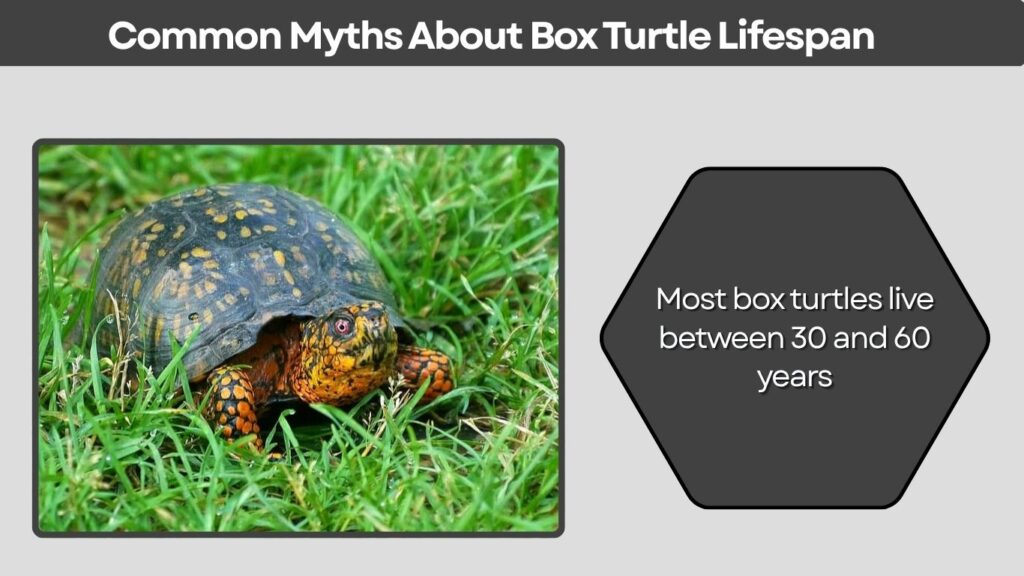
Many myths surround box turtle longevity. While these reptiles are long-lived, some popular claims are exaggerated or inaccurate.
“All Box Turtles Live Over 100 Years”
Although a few turtles may reach exceptional ages, most box turtles live between 30 and 60 years. Reaching 100 years is uncommon and depends heavily on genetics and care quality.
“Small Turtles Have Short Lives”
Despite their relatively small size, box turtles often outlive many larger pets. Their slow metabolism contributes to their long lifespan.
“Wild Turtles Are Healthier Than Pets”
Wild turtles experience constant environmental stress and danger. Captive turtles usually live longer when owners provide proper nutrition and habitat conditions.
FAQs
How long does a box turtle live in captivity?
Most captive box turtles live between 40 and 60 years with proper care. Some may survive even longer when provided with healthy diets, UVB lighting, and regular veterinary attention.
What is the lifespan of an eastern box turtle?
Eastern box turtles commonly live 40 to 60 years, although some individuals may exceed 80 years in ideal conditions.
Do box turtles live longer in captivity or the wild?
Box turtles generally live longer in captivity because they receive steady food, protection from predators, and medical care.
Which box turtle species lives the longest?
Eastern box turtles are among the longest-living species and may survive for several decades under proper conditions.
Can a pet box turtle live for 100 years?
While rare, a few box turtles may approach 100 years of age. Most pet box turtles, however, live between 40 and 60 years.