
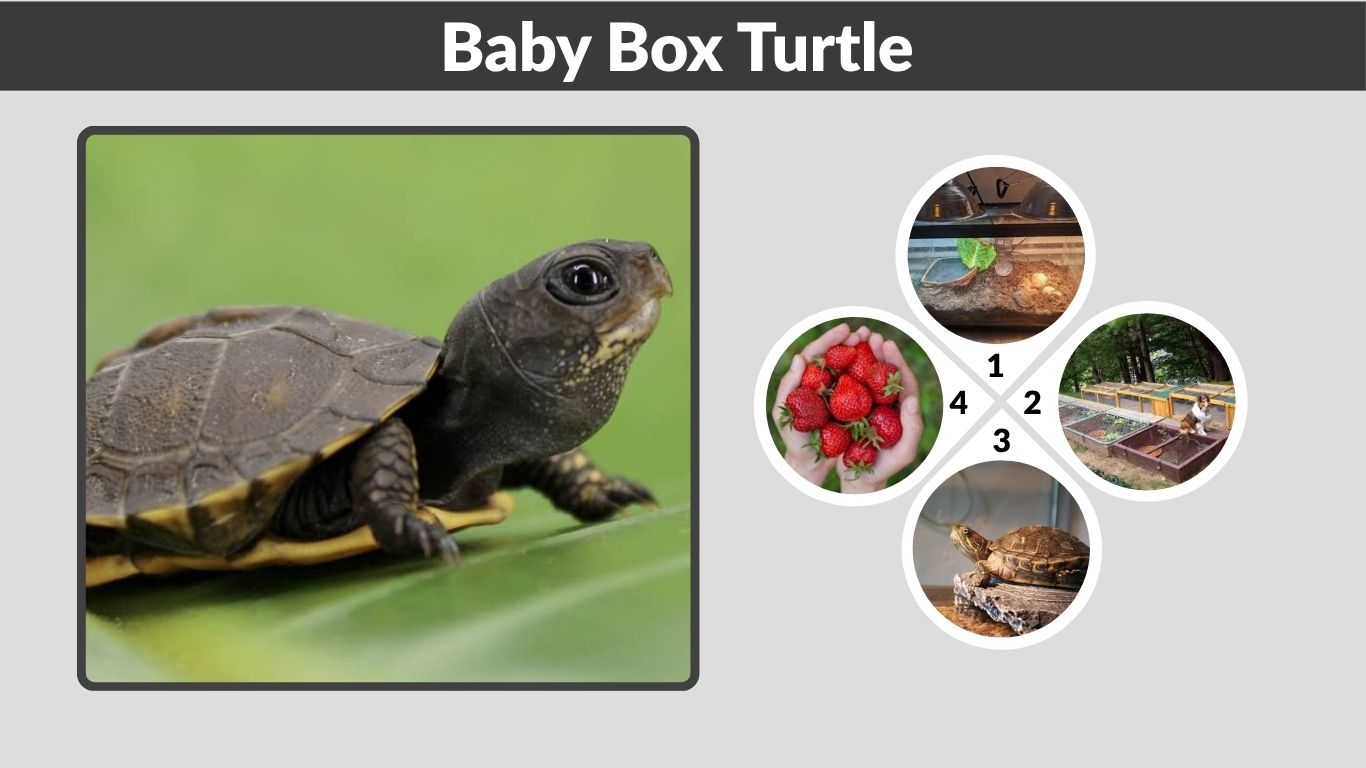
Baby box turtles are tiny reptiles that need careful attention during their first years of life. Many new owners search for information about baby box turtle habitats, food, shell growth, and enclosure setups because hatchlings are more delicate than adult turtles. A healthy baby turtle requires proper heat, humidity, safe bedding, and a balanced diet to grow correctly.
This guide explains how to care for baby eastern box turtles, ornate box turtles, Florida box turtles, and three-toed box turtles. You will also learn about feeding schedules, habitat setups, common behaviors, and important beginner care tips.
What Is a Baby Box Turtle?
Baby box turtles are hatchlings from the Terrapene turtle group. These turtles are known for their rounded shells, colorful patterns, and hinged plastron that helps protect them from predators. Hatchlings are very small and spend most of their time hiding under leaves, soil, or moss to stay safe and moist.
Common Types of Baby Box Turtles
Several species are popular as pets or found in the wild.
- Eastern box turtle
- Three-toed box turtle
- Ornate box turtle
- Florida box turtle
- Asian box turtle
Each species has slightly different shell markings and habitat preferences.
Baby Box Turtle Size
Most hatchlings are tiny when they first emerge from eggs.
Typical hatchling size includes:
- Length of 1 to 2 inches
- Weight between 10 and 25 grams
- Soft or flexible shell edges
Young turtles grow slowly during their first few years.
Baby Box Turtle Identification
Baby box turtles can often be identified by:
- Dark brown or black shells
- Yellow or orange shell markings
- Small rounded bodies
- Short claws
- Hinged lower shell
Some hatchlings look darker than adults because their colors become brighter with age.
Baby Box Turtle Habitat Setup
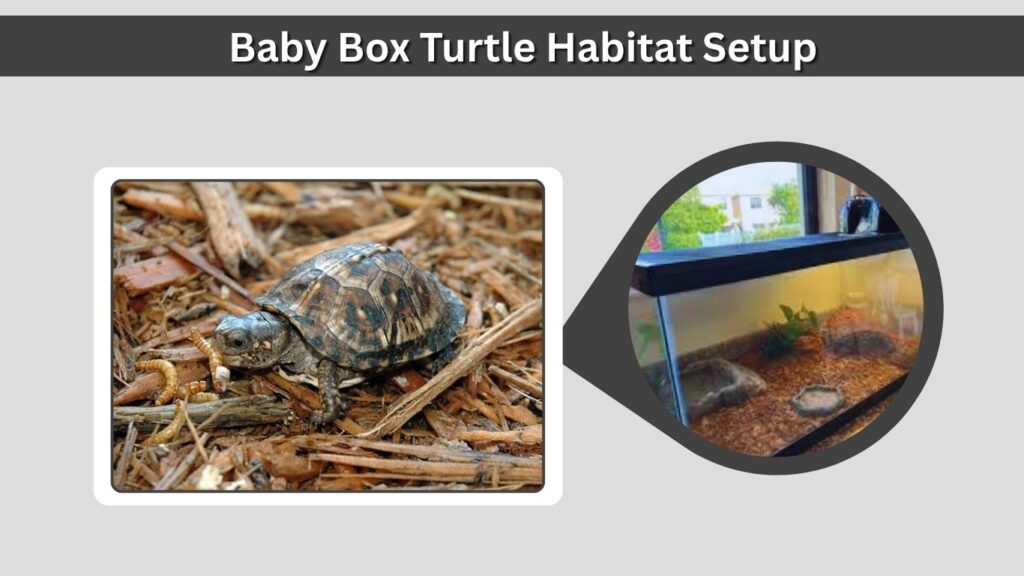
A proper habitat is one of the most important parts of caring for a hatchling. Baby box turtles need warmth, moisture, hiding spots, and clean surroundings to stay healthy. Incorrect habitat conditions can quickly lead to dehydration, shell problems, or stress-related illnesses.
Best Enclosure for Baby Box Turtles
Indoor enclosures work best for young hatchlings because conditions are easier to control.
Popular enclosure choices include:
- Plastic tubs
- Glass terrariums
- Wooden turtle tables
- Reptile enclosures with secure lids
A 20-gallon enclosure is usually enough for one baby turtle.
Baby Box Turtle Bedding
The substrate should stay slightly damp while allowing burrowing behavior.
Safe bedding options include:
- Coconut fiber
- Organic topsoil
- Cypress mulch
- Sphagnum moss
- Leaf litter
Avoid dry sand, gravel, or cedar bedding because they can harm hatchlings.
Temperature and Lighting Needs
Baby box turtles require heat and UVB lighting for healthy shell growth.
Recommended setup:
| Habitat Area | Temperature |
| Basking spot | 85–90°F |
| Cool side | 72–78°F |
| Nighttime | 68–72°F |
UVB lighting helps hatchlings process calcium and develop strong shells.
Baby Box Turtle Diet and Feeding
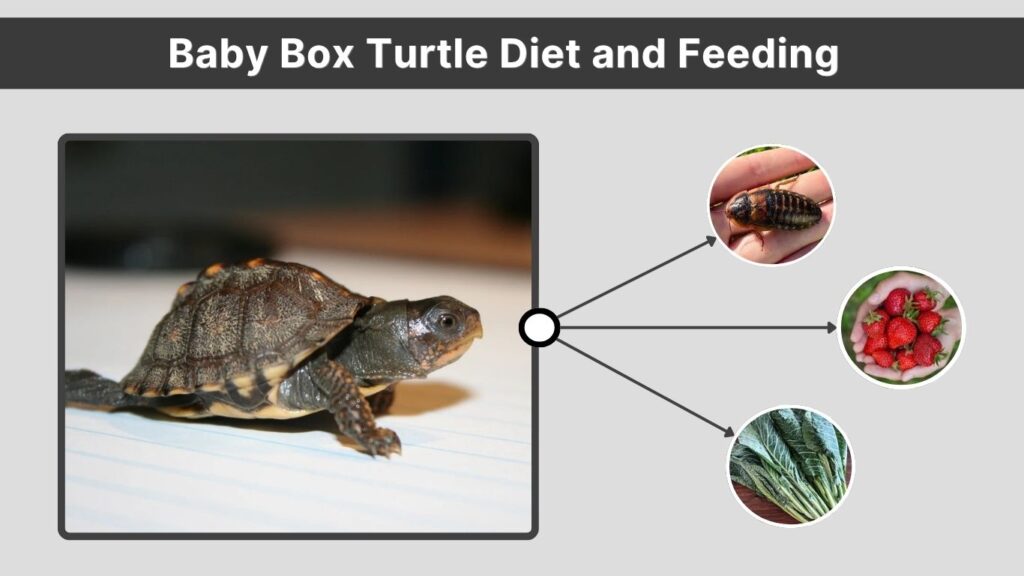
Young box turtles are omnivores and need protein-rich foods during early growth. Hatchlings usually eat insects, worms, fruits, and soft greens. A varied diet improves shell health, energy levels, and overall growth.
What Do Baby Box Turtles Eat?
Healthy foods for hatchlings include:
- Earthworms
- Mealworms
- Crickets
- Dubia roaches
- Strawberries
- Blueberries
- Mushrooms
- Dandelion greens
- Collard greens
Food should be chopped into small pieces for easy eating.
Feeding Schedule
Baby box turtles generally eat every day because they are growing rapidly. Fresh water should always be available in a shallow dish. Uneaten food should be removed quickly to prevent bacteria and mold from spreading inside the enclosure.
Foods to Avoid
Some foods are unhealthy or dangerous for hatchlings.
Do not feed:
- Processed food
- Dairy products
- Salty snacks
- Iceberg lettuce
- Sugary candy
- Toxic plants
Improper foods can cause digestive issues and poor shell development.
Baby Box Turtle Behavior and Growth
Baby box turtles behave differently from adults because they are naturally shy and defensive. Hatchlings spend much of their time hiding or burrowing to avoid predators and retain moisture. New owners often worry when turtles stay hidden for long periods, but this behavior is usually normal.
Burrowing Behavior
Burrowing helps hatchlings:
- Stay cool
- Retain moisture
- Feel secure
- Sleep safely
A deep, soft substrate allows natural digging behavior.
Shell Growth
Healthy shell growth should appear smooth and firm over time. Slight softness in newly hatched turtles is normal, but shells should gradually harden with proper calcium intake and UVB exposure.
Hatching and Egg Tooth
Baby box turtles hatch using a tiny structure called an egg tooth. This temporary point helps break through the shell and disappears naturally after hatching.
Common Baby Box Turtle Health Problems
Young hatchlings are sensitive to poor living conditions and incorrect diets. Many health issues develop because of low humidity, weak UVB lighting, dirty enclosures, or dehydration. Owners should monitor hatchlings carefully because baby turtles can become sick faster than adults.
Shell Rot
Shell rot is one of the most common problems in baby box turtles. It often develops in dirty or overly wet habitats with poor ventilation.
Signs of shell rot include:
- Soft shell patches
- White or yellow spots
- Bad odor
- Cracked shell areas
- Flaking shell surfaces
Keeping the enclosure clean and maintaining proper humidity helps prevent shell infections.
Eyes Closed or Swollen
Baby box turtles sometimes develop swollen or closed eyes because of poor care conditions. Vitamin A deficiency, dehydration, or dirty water are common causes. Hatchlings with eye problems may stop eating and become weak.
Fresh water, balanced nutrition, and proper lighting often improve mild cases quickly. Serious infections should be checked by a reptile veterinarian.
Constipation and Digestive Problems
Constipation may occur when hatchlings become dehydrated or eat incorrect foods. A baby turtle with digestive problems may avoid food or stop passing waste normally.
Warm shallow-water soaks can sometimes help stimulate bowel movements and improve hydration levels naturally.
Indoor vs Outdoor Baby Box Turtle Housing
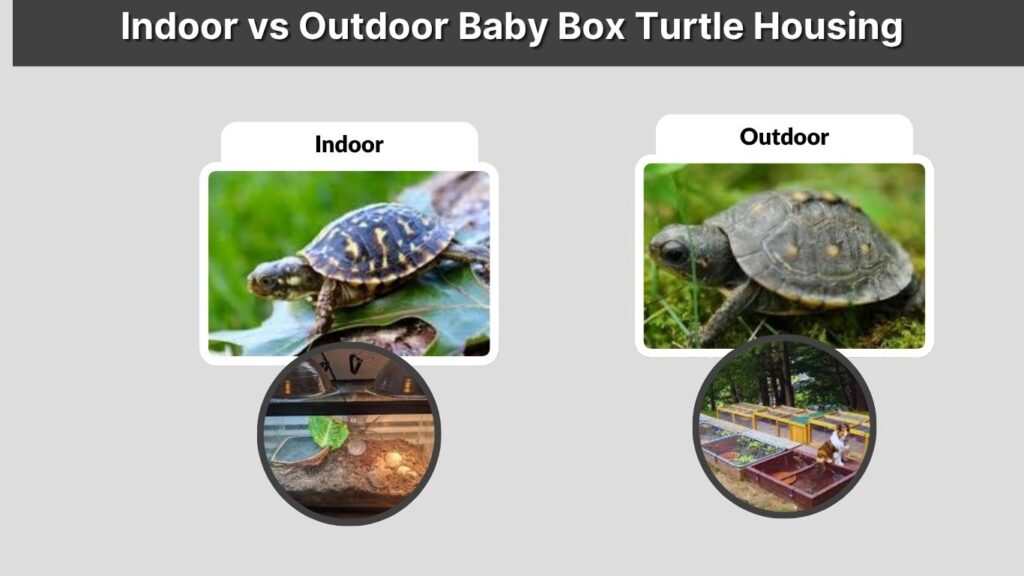
Both indoor and outdoor habitats can work for baby box turtles, but hatchlings are usually safer indoors during their first year. Indoor setups provide better control over temperature, humidity, and predators while allowing owners to monitor feeding and growth more closely.
Indoor Habitat Benefits
Indoor enclosures provide several important advantages for hatchlings.
Benefits include:
- Stable temperatures
- Better humidity control
- Easier cleaning
- Safer environment
- Protection from predators
Many keepers successfully raise hatchlings indoors before moving them to outdoor pens later.
Outdoor Habitat Benefits
Outdoor setups can provide natural sunlight and larger living spaces. Natural UV exposure often improves shell growth and activity levels.
However, outdoor enclosures must be secure because baby turtles are vulnerable to:
- Birds
- Rats
- Cats
- Raccoons
- Snakes
Shaded hiding areas and moist soil are also important in outdoor habitats.
Safe Hiding Places
Baby box turtles naturally hide for safety and comfort. A good enclosure should include several hiding spots where hatchlings can rest during the day.
Common hiding materials include cork bark, moss caves, leaf piles, and small wooden shelters.
Baby Box Turtle Facts
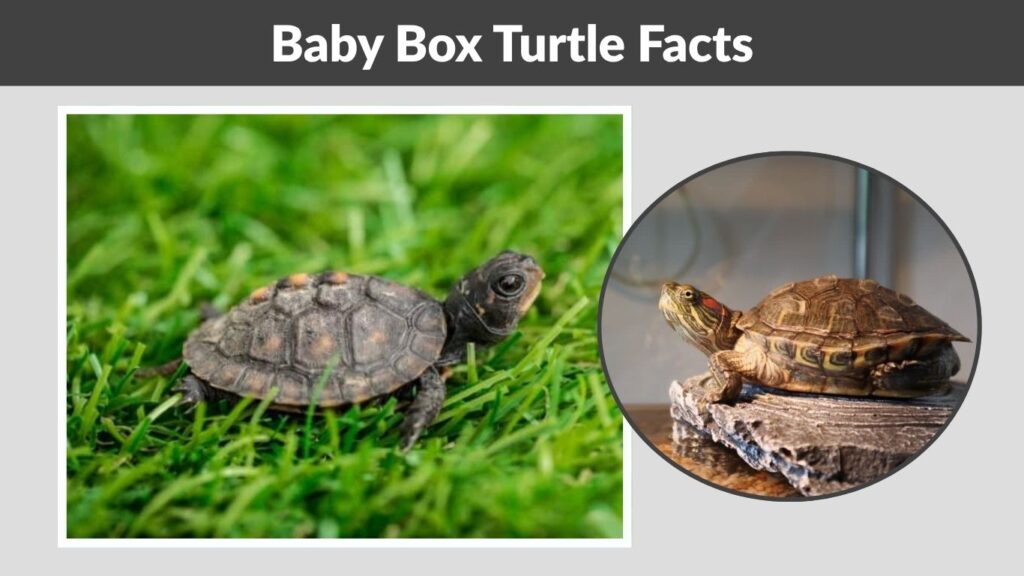
Baby box turtles are fascinating reptiles with many unique survival traits. Hatchlings spend most of their early lives hidden beneath leaves or soil in forests and grassy habitats. Their secretive behavior helps protect them from predators while their shells continue to harden.
Interesting Facts About Baby Box Turtles
- Hatchlings are born with softer shells than adults.
- Baby box turtles can burrow surprisingly well.
- Some species become more colorful with age.
- Young turtles often hide most of the day.
- Box turtles may live for several decades with proper care.
How Long Do Baby Box Turtles Live?
With proper care, many box turtles can live 30 to 50 years or longer. Some individuals even survive for over 100 years in captivity. Healthy diets, clean habitats, and proper lighting are major factors that influence lifespan.
Can Baby Box Turtles Be Good Pets?
Baby box turtles can make interesting pets for experienced reptile keepers. However, they require daily care, humidity management, special lighting, and long-term commitment. Hatchlings are delicate and need more attention than many beginner pet owners expect.
FAQs
How often should a baby box turtle eat?
Most baby box turtles should eat once every day. Hatchlings need protein-rich foods and calcium supplements regularly to support healthy shell growth and development.
Why does my baby box turtle keep burrowing?
Burrowing is completely natural behavior. Hatchlings burrow to stay moist, regulate body temperature, sleep safely, and feel protected from danger.
What is the best substrate for baby box turtles?
Coconut fiber, organic soil, cypress mulch, and sphagnum moss are excellent substrate choices because they hold moisture and allow safe burrowing.
Can baby box turtles live together?
Some hatchlings can live together in large enclosures, but overcrowding may cause stress or competition. Multiple hiding spots and feeding areas are important.
Do baby box turtles need UVB lighting?
Yes, UVB lighting is essential for healthy shell and bone growth. Without UVB exposure, hatchlings may develop soft shells and serious health problems.