
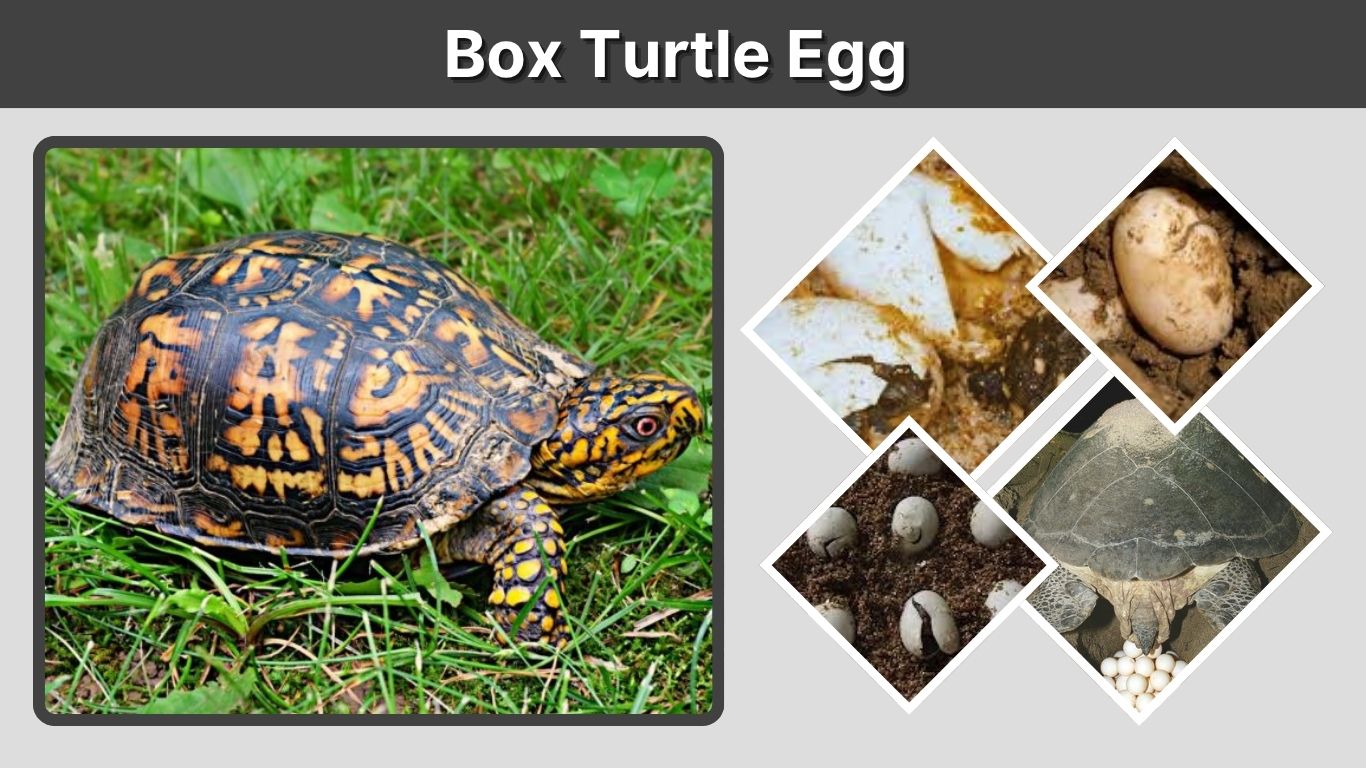
Box turtle eggs are soft-shelled reptile eggs that require warmth, humidity, and protection to hatch successfully. Many people search for information about incubation time, nesting behavior, and caring for turtle eggs after discovering them in gardens, mulch piles, or outdoor habitats. Proper handling is important because reptile eggs are sensitive to movement and environmental changes.
This guide explains how box turtles lay eggs, how long eggs take to hatch, proper incubation methods, and ways to protect nests from predators. It also covers eastern, ornate, Florida, and three-toed box turtle eggs.
What Are Box Turtle Eggs?
Box turtle eggs are small, oval reptile eggs laid underground during warm weather. Female turtles usually bury their eggs in loose soil or mulch to protect them from predators and drying out. The eggs absorb moisture from the surrounding environment and slowly develop over several weeks before hatching.
What Do Box Turtle Eggs Look Like?
Most box turtle eggs have a simple appearance.
Common features include:
- White or cream coloring
- Oval or round shape
- Soft flexible shell
- Slightly leathery texture
- Smooth outer surface
Fresh eggs usually look bright white and healthy.
How Big Are Box Turtle Eggs?
The size of box turtle eggs varies slightly between species.
Typical egg sizes include:
| Species | Average Egg Size |
| Eastern box turtle | 1 to 1.5 inches |
| Three-toed box turtle | Around 1 inch |
| Florida box turtle | 1 to 1.4 inches |
| Ornate box turtle | Slightly smaller |
Hatchlings are usually only a few inches long after emerging.
Are Box Turtle Eggs Soft or Hard?
Unlike bird eggs, box turtle eggs are soft and flexible instead of hard and brittle. The shell allows moisture and oxygen to pass through during development. Healthy eggs should feel firm but slightly leathery when carefully handled.
Box Turtle Laying Eggs
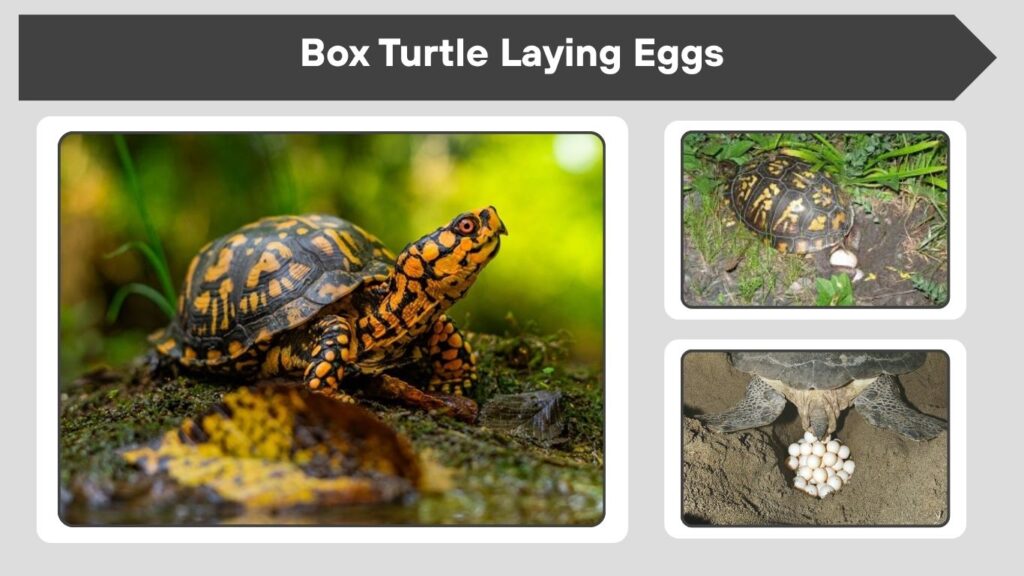
Female box turtles carefully choose nesting areas before laying eggs. Most turtles search for warm, loose soil that receives sunlight and stays slightly moist. Gardens, mulch piles, sandy soil, and grassy yards are common nesting places.
When Do Box Turtles Lay Eggs?
Most box turtles lay eggs during:
- Late spring
- Early summer
- Warm rainy periods
- Sunny afternoons or evenings
The nesting season often depends on local climate conditions.
Where Do Box Turtles Lay Eggs?
Common nesting locations include:
- Garden beds
- Sandy soil
- Mulch piles
- Forest edges
- Lawns and fields
Females dig shallow nests using their rear legs before laying eggs.
Signs a Box Turtle Is Laying Eggs
A female turtle preparing to lay eggs may show unusual behavior. She may walk slowly around an area, dig several test holes, or become restless for hours before choosing a nesting site. Once the nest is complete, she deposits the eggs and carefully covers them with soil to hide them from predators.
How Many Eggs Does a Box Turtle Lay?
The number of eggs depends on the turtle species, age, and overall health. Some females lay only a few eggs while others produce larger clutches during the nesting season.
Average Number of Eggs
Most box turtles lay:
- 3 to 8 eggs per clutch
- Occasionally up to 11 eggs
- Smaller clutches in young females
- Larger clutches in mature adults
Eastern box turtles commonly lay between 4 and 7 eggs.
How Many Times Can They Lay Eggs?
Some female box turtles can produce more than one clutch during a single season if conditions are favorable. Warm temperatures and healthy body condition often increase egg production.
Why Are Some Eggs Unfertilized?
Unfertilized eggs may happen because of:
- Lack of mating
- Poor health
- Stress
- Age-related fertility problems
Infertile eggs usually fail to develop properly and may discolor over time.
Box Turtle Egg Incubation
Incubation is one of the most important stages of turtle development. Box turtle eggs need stable warmth, moisture, and ventilation to hatch successfully. Incorrect temperatures or humidity levels can stop embryo growth or damage developing hatchlings.
How Long Do Box Turtle Eggs Take to Hatch?
Most box turtle eggs hatch within 60 to 90 days, although incubation time varies depending on species and temperature. Warmer conditions often speed up development while cooler temperatures may delay hatching for several weeks.
Ideal Incubation Temperatures
Healthy incubation temperatures usually range between 78°F and 84°F. Stable temperatures are important because sudden changes may harm developing embryos or reduce hatch rates.
Humidity Requirements
Proper humidity helps prevent eggs from drying out during incubation.
Important humidity tips include:
- Keep substrate slightly moist
- Avoid standing water
- Use ventilated containers
- Monitor moisture regularly
Dry conditions can cause dented or collapsed eggs.
How to Incubate Box Turtle Eggs
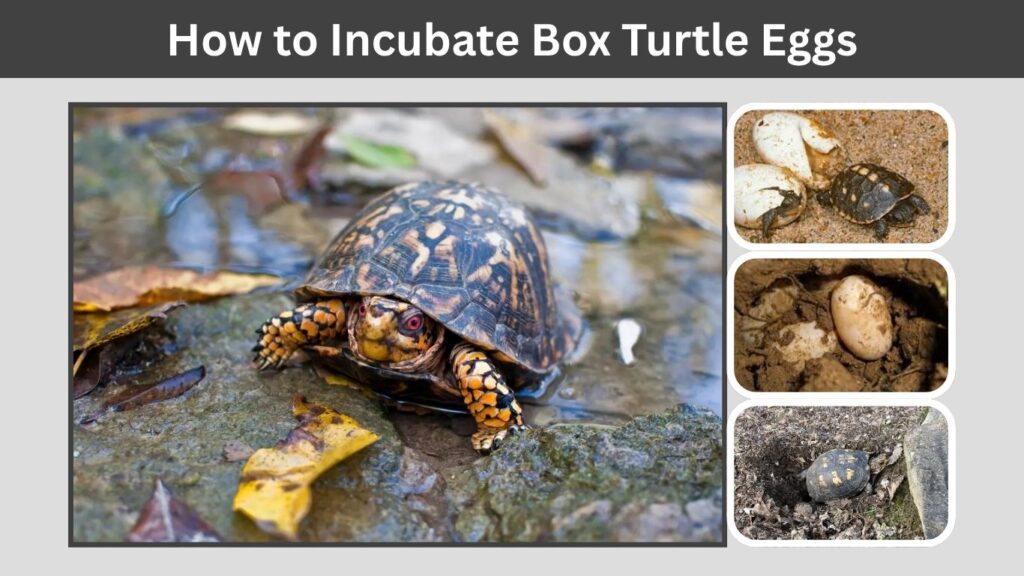
Proper incubation gives turtle embryos the best chance of surviving and hatching successfully. Eggs should be handled gently because turning or rotating them may damage the developing embryo inside. Many keepers use reptile incubators, but some people also hatch eggs using simple homemade setups.
How to Move Box Turtle Eggs Safely
If eggs must be moved, careful handling is extremely important.
Safe handling steps include:
- Mark the top of each egg
- Never rotate the eggs
- Lift eggs gently
- Place eggs in soft substrate
- Keep incubation temperatures stable
Even slight rotation may stop embryo development.
Best Substrates for Incubation
Several materials work well for incubating box turtle eggs.
Popular incubation substrates include:
| Substrate | Benefits |
| Vermiculite | Holds moisture well |
| Perlite | Good airflow |
| Moss mixtures | Natural humidity |
| Soil blends | Mimics outdoor nests |
The substrate should stay damp but never soaked.
How to Hatch Box Turtle Eggs Without an Incubator
Some people hatch eggs using homemade containers placed in warm indoor locations. While this method can work, temperature control is usually less stable than professional incubators. Outdoor incubation may also expose eggs to predators, flooding, or overheating.
Box Turtle Eggs Hatching
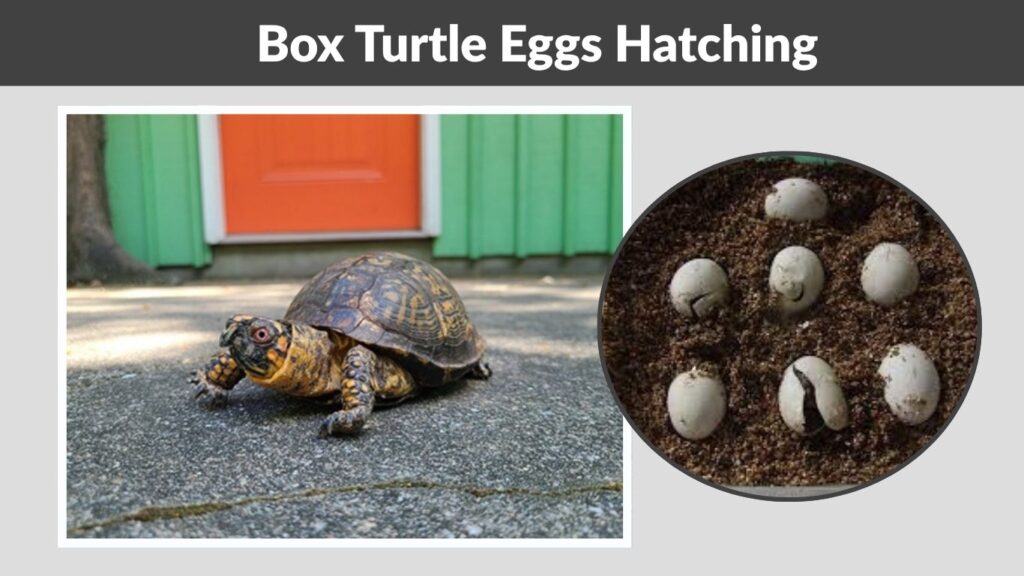
Hatching is an exciting stage where baby turtles finally emerge from their eggs. Hatchlings use a temporary structure called an egg tooth to break through the shell. This process may take several hours or even days.
Signs Box Turtle Eggs Are About to Hatch
Eggs nearing hatching often show noticeable changes.
Common hatching signs include:
- Slight denting
- Tiny cracks
- Increased movement
- Softer shell texture
- Small holes in the shell
These changes usually appear shortly before hatchlings emerge.
What Happens During Hatching?
After cracking the shell, hatchlings slowly push themselves out using small movements. Many baby turtles still carry part of their yolk sac during this stage. Hatchlings should not be rushed because absorbing the yolk completely is important for survival.
What to Do After Eggs Hatch
New hatchlings should be moved into a clean, humid enclosure with shallow water and soft substrate. Young turtles often rest for a day or two before becoming active and searching for food.
Protecting Box Turtle Eggs in Your Yard
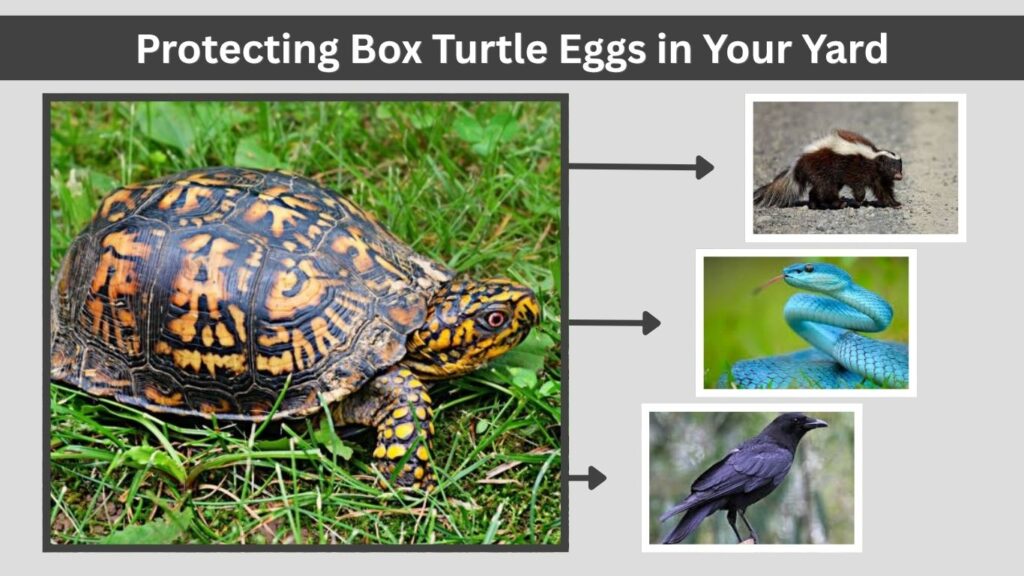
Many people discover turtle nests in gardens, lawns, or mulch beds during summer. Protecting these nests helps increase hatchling survival because wild eggs face many natural dangers from predators and weather conditions.
What Eats Box Turtle Eggs?
Several animals commonly destroy turtle nests.
Common predators include:
- Raccoons
- Skunks
- Snakes
- Crows
- Rats
- Foxes
Predators often locate nests by smell shortly after eggs are laid.
How to Protect Turtle Nests
Simple protective barriers can improve hatch rates in outdoor nests. Wire mesh covers placed over the nest area help keep predators away while still allowing sunlight and rain to reach the eggs.
Avoid digging near the nest or using heavy lawn equipment around nesting areas.
Can You Move Wild Box Turtle Eggs?
Wild turtle eggs should only be moved if absolutely necessary because improper movement can kill developing embryos. If relocation is unavoidable, eggs must remain in the same position they were originally found.
Common Problems With Box Turtle Eggs
Eggs sometimes fail to hatch because of infertility, mold, incorrect humidity, or unstable temperatures. Careful monitoring during incubation helps identify problems before the eggs become damaged beyond recovery.
Dented Box Turtle Eggs
Dented eggs usually happen because the environment is too dry. Increasing humidity often helps healthy eggs recover their normal appearance over time.
Black or Moldy Eggs
Black discoloration or fuzzy mold may indicate dead or infected eggs. Bad eggs should usually be removed to prevent contamination from spreading to healthy eggs nearby.
Why Some Eggs Never Hatch
Several factors may stop development inside the egg, including poor temperatures, lack of fertility, excess moisture, or accidental egg rotation during handling. Stable incubation conditions greatly improve hatch success rates.
FAQs
How long do box turtle eggs take to hatch?
Most box turtle eggs hatch within 60 to 90 days. Incubation time depends on species, humidity, and temperature. Warmer temperatures usually speed up development while cooler conditions may delay hatching.
What do box turtle eggs look like?
Box turtle eggs are usually white or cream-colored with soft, leathery shells. They are oval-shaped and slightly flexible, unlike the hard shells of bird eggs.
Can you move box turtle eggs safely?
Yes, but eggs must be handled very carefully. Always keep the eggs in the same position and avoid rotating them because movement can damage the developing embryo.
How many eggs does a box turtle lay?
Most female box turtles lay between 3 and 8 eggs in one clutch. Larger and healthier females may occasionally lay more eggs during the nesting season.
What should I do if I find box turtle eggs in my yard?
If possible, leave the eggs undisturbed and protect the nest from predators using wire mesh or barriers. Avoid digging near the nest or moving the eggs unless necessary for safety reasons.