

Many turtle owners wonder whether their box turtle is male or female. Gender identification becomes easier as turtles mature because adults develop noticeable differences in eye color, tail shape, shell structure, and body size. Species like eastern, ornate, Florida, and three-toed box turtles all show slightly different male and female characteristics.
This guide explains the most reliable ways to identify male and female box turtles. You will also learn about species differences, common mistakes, and why baby turtles are harder to sex accurately.
How to Tell if a Box Turtle Is Male or Female
Adult box turtles usually have several visible differences that help identify gender. Tail size, eye color, plastron shape, and body proportions are among the most reliable features. In young turtles, these differences may not fully develop until maturity.
Tail Differences
The tail is one of the easiest ways to identify gender.
Male box turtles usually have:
- Longer tails
- Thicker tails
- Tail base farther from the shell
- Larger cloacal opening
Female turtles normally have shorter and thinner tails.
Eye Color Differences
Many species show eye color differences between males and females.
Common eye color traits include:
| Gender | Common Eye Color |
| Male | Red or orange |
| Female | Brown or yellow |
However, eye color alone is not always accurate because some females may also develop reddish eyes.
Plastron Shape
The plastron is the lower part of the shell. Adult male turtles usually develop a slightly concave plastron that helps during mating. Females generally have a flat or less curved plastron.
Body Size Differences
Females are often slightly larger and wider than males because they need extra body space for carrying eggs. Males may appear more colorful in some species.
Male vs Female Eastern Box Turtle

Eastern box turtles are one of the easiest species to sex because adult males and females often show very clear physical differences. Eye color, tail shape, and shell structure usually become noticeable once the turtle reaches maturity.
Male Eastern Box Turtle Features
Adult male eastern box turtles commonly have:
- Bright red or orange eyes
- Thick long tails
- Concave plastrons
- More vivid shell colors
Males may also appear more active during breeding season.
Female Eastern Box Turtle Features
Female eastern box turtles usually display:
- Brown or yellow eyes
- Shorter tails
- Flat plastrons
- Wider body shape
Females are often calmer and less territorial than males.
Eastern Box Turtle Gender Comparison
| Feature | Male | Female |
| Eye color | Red/orange | Brown/yellow |
| Tail | Long/thick | Short/thin |
| Plastron | Concave | Flat |
| Body shape | Narrower | Wider |
Three-Toed Box Turtle Male or Female
Three-toed box turtles share many similarities with eastern box turtles, but some differences can be harder to notice. Mature adults usually develop the clearest gender traits after several years of growth.
Male Three-Toed Box Turtle Traits
Male three-toed box turtles often have:
- Brighter eyes
- Larger tails
- Curved plastrons
- Stronger shell coloration
Female Three-Toed Box Turtle Traits
Female three-toed box turtles commonly show:
- Duller eye color
- Flat plastrons
- Smaller tails
- Wider body proportions
Common Identification Mistakes
Many turtle owners misidentify juveniles because young turtles often resemble females before adult features fully develop. Tail shape and shell structure usually become more reliable with age.
Ornate and Florida Box Turtle Gender Differences
Ornate and Florida box turtles can also be sexed using tail size, eye color, and shell shape. While the differences are similar to eastern box turtles, coloration patterns may vary more between individuals.
Male Ornate Box Turtle Characteristics
Common male features include:
- Bright shell patterns
- Long thick tail
- Red or orange eyes
- Slightly curved plastron
Female Ornate Box Turtle Characteristics
Females usually have:
- Shorter tails
- Flatter plastrons
- Less colorful markings
- Broader shell shape
Florida Box Turtle Differences
Florida box turtles follow many of the same gender traits as other box turtle species. Mature males usually develop brighter eye colors and thicker tails compared to females.
Can You Tell if a Baby Box Turtle Is Male or Female?
Identifying the gender of a baby box turtle is extremely difficult because hatchlings have not fully developed adult characteristics yet. Most young turtles look very similar during their early years, and important features like tail size and plastron shape may not become visible until maturity.
Why Baby Box Turtles Are Hard to Identify
Several factors make hatchlings difficult to sex accurately.
Common reasons include:
- Small undeveloped tails
- Similar shell shape
- Weak color differences
- Immature body structure
- Limited growth patterns
Many juvenile turtles are mistakenly identified as females because their adult male traits have not appeared yet.
When Do Gender Traits Develop?
Most box turtles begin showing clearer gender differences after several years of growth. Adult features become easier to identify once the turtle approaches breeding age and reaches a larger size.
Are There Early Signs?
Some keepers attempt to predict gender using small tail differences or growth patterns, but these signs are often unreliable. Waiting until adulthood provides the most accurate identification.
Behavioral Differences Between Male and Female Box Turtles
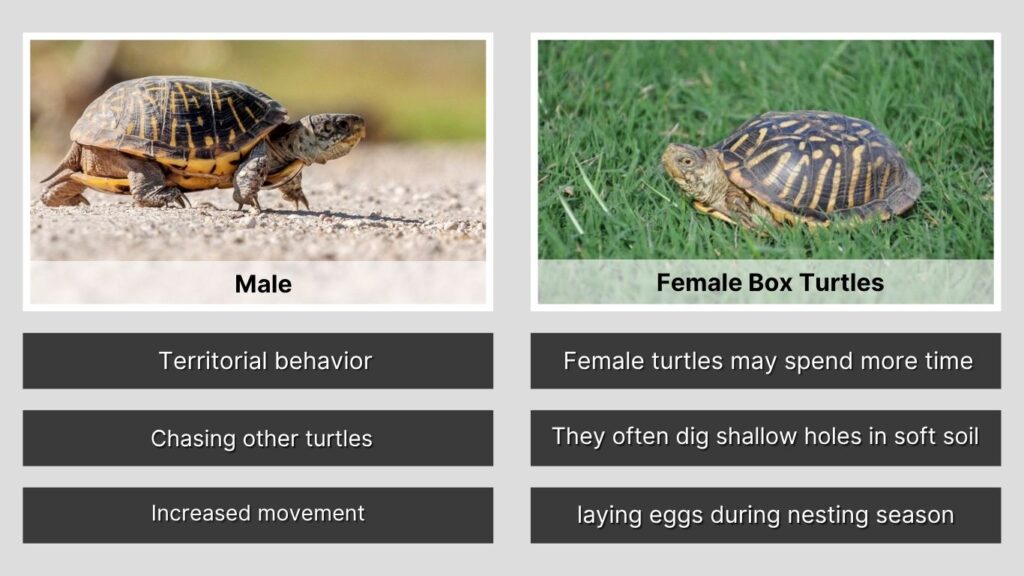
Behavior sometimes helps owners identify turtle gender, especially during breeding season. Adult males are often more active and territorial, while females usually display nesting behavior during warmer months.
Male Box Turtle Behavior
Male box turtles commonly show:
- Territorial behavior
- Chasing other turtles
- Increased movement
- Courtship displays
- Head bobbing
Breeding activity often becomes stronger during spring and summer.
Female Box Turtle Behavior
Female turtles may spend more time searching for nesting areas when carrying eggs. They often dig shallow holes in soft soil before laying eggs during nesting season.
Seasonal Activity Differences
Male turtles may roam more frequently while searching for mates, especially after rain or during warm weather. Females become more active when preparing to lay eggs.
Common Mistakes When Sexing Box Turtles

Many turtle owners accidentally misidentify their turtles because they focus on only one feature. Accurate identification usually requires examining several characteristics together rather than relying on a single trait.
Depending Only on Eye Color
Although red eyes are common in males, eye color alone is not completely reliable. Some females may also develop reddish or orange eye tones.
Misidentifying Young Turtles
Juveniles are often mistaken for females because young males have not fully developed long tails or concave plastrons yet.
Ignoring Multiple Features
The best way to identify gender is by comparing several traits at once.
Important features include:
- Tail thickness
- Tail length
- Eye color
- Plastron shape
- Body proportions
Using multiple features improves accuracy greatly.
Interesting Facts About Male and Female Box Turtles
Male and female box turtles have several unique biological differences that help them survive and reproduce successfully. Many of these differences become stronger as turtles age and mature.
Unique Gender Facts
- Female box turtles can store sperm for long periods.
- Males are often more colorful than females.
- Temperature may influence hatchling gender.
- Females usually live longer reproductive lives.
- Adult males may become more territorial with age.
Differences Across Species
Different species such as woodland, ornate, desert, and Florida box turtles may show slight variations in eye color, shell markings, and body shape. However, tail size and plastron shape remain among the most reliable identification features across most species.
FAQs
How can you tell if a box turtle is male or female?
Adult males usually have longer tails, red or orange eyes, and concave plastrons. Females often have shorter tails, brown eyes, and flatter shell bottoms.
Do male box turtles always have red eyes?
Many males have red or orange eyes, especially eastern box turtles, but eye color alone is not completely reliable because some females may also show reddish tones.
Are female box turtles bigger than males?
Yes, females are often slightly larger and wider because they need extra body space for carrying eggs during breeding season.
Can you tell the gender of a baby box turtle?
Sexing baby box turtles is very difficult because adult features have not fully developed yet. Most hatchlings cannot be accurately identified until they mature.
Do male and female box turtles behave differently?
Yes, males are usually more territorial and active during breeding season, while females often show nesting and egg-laying behaviors.