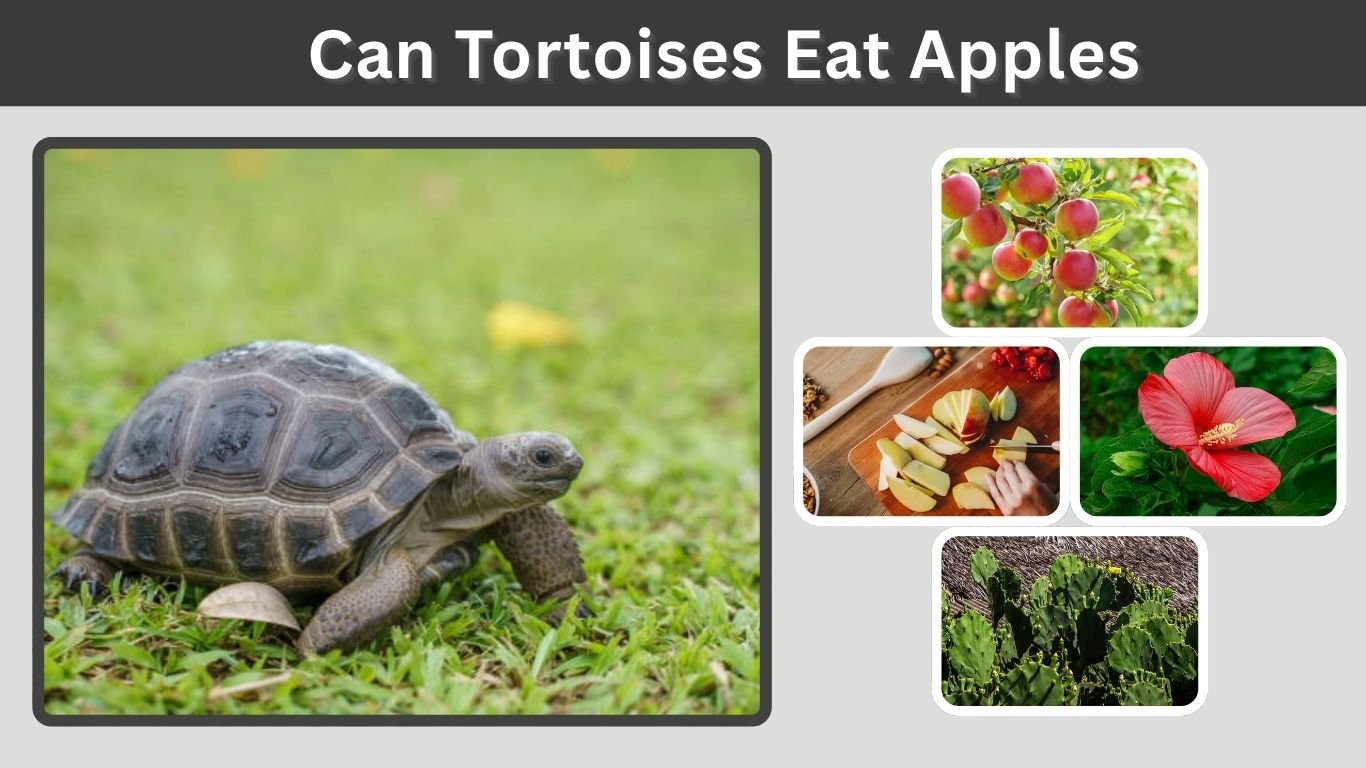
Tortoises are herbivores with very specific dietary needs, which makes choosing the right foods essential for their health. Apples are a common fruit that many owners consider feeding, but are they actually suitable? The short answer is yes—tortoises can eat apples, but only in moderation. While apples are not toxic, they contain high sugar and low calcium levels, which can lead to problems if fed too often. This guide explains the safety, nutritional value, and proper way to feed apples to different tortoise species.
Are Apples Safe for Tortoises?
Apples are generally safe for tortoises when fresh, ripe, and properly prepared. However, they are not a natural staple in most tortoise diets. In the wild, many tortoise species consume fibrous plants, grasses, and weeds rather than sweet fruits. Because of this, apples should only be treated as an occasional snack rather than a regular food source.
Why Apples Should Be Limited
- High sugar content can disrupt gut health
- Low calcium does not support shell growth
- Excess fruit may cause digestive imbalance
- Not aligned with natural diet for most species
Nutritional Value of Apples for Tortoises
Understanding what apples provide nutritionally helps explain why moderation is important. Although apples contain some beneficial compounds, they lack the key nutrients tortoises require for long-term health.
What Apples Contain
- High natural sugar levels
- Moderate water content
- Small amounts of fiber
- Low calcium and minimal protein
Why This Matters
Tortoises depend on high-fiber, calcium-rich foods to maintain proper digestion and strong shells. Apples, while safe in small amounts, do not meet these needs. Feeding too much fruit can gradually lead to poor diet balance and health complications over time.
Can Different Tortoise Species Eat Apples?
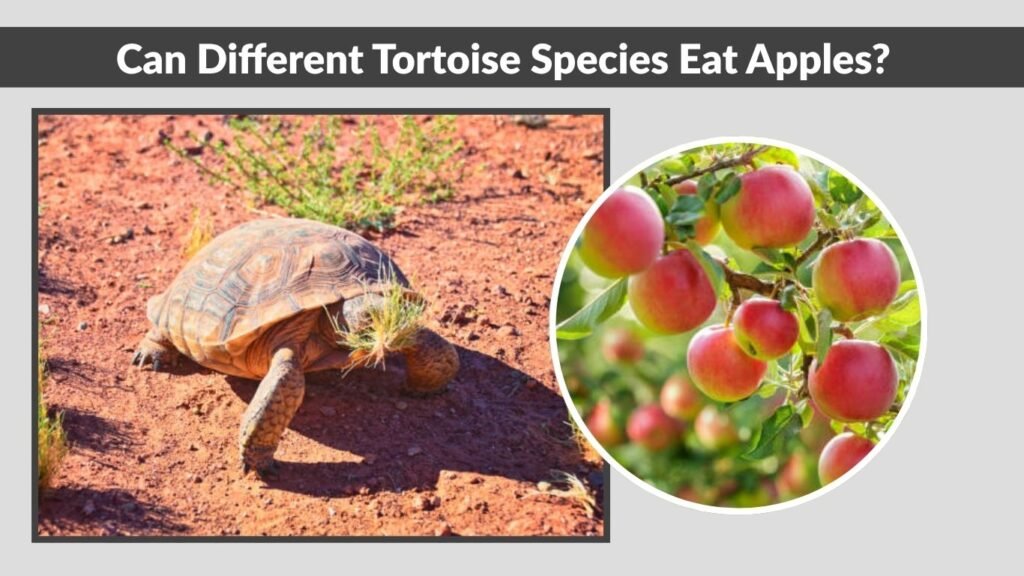
Different tortoise species have unique dietary needs based on their natural habitats and feeding behaviors. While apples are generally safe in small amounts, how often they should be offered varies widely. Grassland and desert species rely heavily on fibrous plants and should consume fruit very rarely. In contrast, tropical species are more accustomed to fruit in their natural diet and can tolerate apples slightly better. The table below summarizes how apples fit into each species’ diet.
| Tortoise Species | Can They Eat Apples? | Frequency | Notes |
| Sulcata (African Spurred) | Yes | Very rarely | Needs high-fiber grass diet |
| Russian (Horsfield) | Yes | Occasionally | Prefers weeds and leafy greens |
| Desert Tortoise | Yes | Rarely | Fruit not common in natural diet |
| Gopher Tortoise | Yes | Rarely | Wild diet is mostly grasses |
| Red-Footed Tortoise | Yes | Occasionally | More tolerant of fruits |
| Yellow-Footed Tortoise | Yes | Occasionally | Can handle small fruit portions |
| Hermann’s Tortoise | Yes | Rarely | Mostly herbivorous diet |
| Greek (Spur-Thighed) | Yes | Rarely | Needs fiber-rich plants |
| Leopard Tortoise | Yes | Very rarely | Grass-based diet is essential |
| Marginated Tortoise | Yes | Rarely | Focus on leafy greens and weeds |
Can Tortoises Eat Different Parts of Apples?
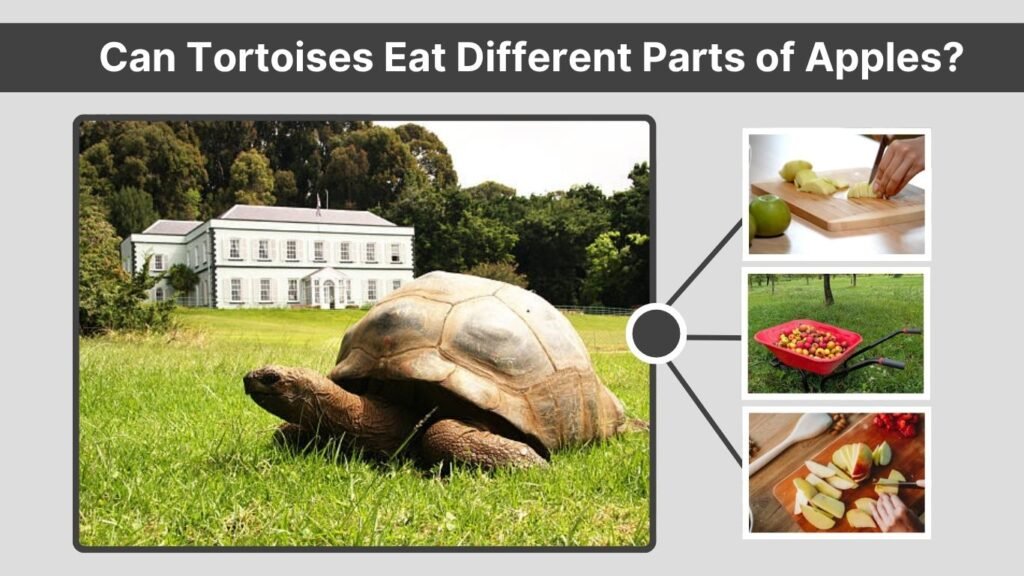
Not all parts of an apple are equally safe. While the fruit itself can be fed in small amounts, other parts require caution or should be avoided entirely.
Safe Parts of Apples
- Fresh apple flesh in small pieces
- Washed apple skin (if pesticide-free)
- Thin slices for easy eating
Parts to Avoid
- Apple seeds due to harmful compounds
- Large chunks that may be hard to digest
- Unwashed skins with pesticide residue
Can Tortoises Eat Apple Tree Leaves?
Unlike the fruit, apple tree leaves are not recommended for tortoises. They do not provide meaningful nutritional value and may contain compounds that are not suitable for regular consumption. In natural environments, tortoises typically avoid such leaves and instead focus on safe, fibrous plants.
If a tortoise accidentally eats a small amount, it may not cause immediate harm, but intentionally feeding apple leaves should be avoided. It is always safer to stick to well-known, tortoise-friendly greens that support digestion and overall health.
How Often Can Tortoises Eat Apples?
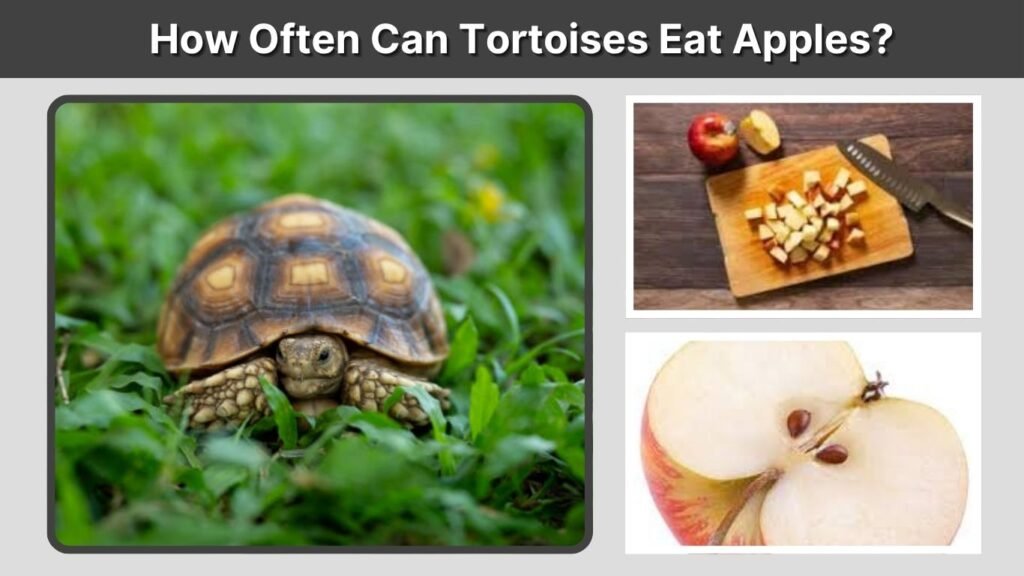
Feeding apples correctly is essential to avoid health issues. Even though tortoises may enjoy the sweet taste, apples should never become a regular part of their diet. Their digestive systems are designed for fibrous plants, not sugary fruits.
Recommended Feeding Frequency
- Offer apples once every 2–4 weeks
- Keep portions small (a few bite-sized pieces)
- Mix with leafy greens rather than feeding alone
- Avoid frequent or consecutive feeding
Portion and Preparation Tips
- Cut into thin slices or small cubes
- Remove all seeds before feeding
- Wash thoroughly to remove pesticides
- Serve fresh, not processed or cooked
Benefits vs Risks of Feeding Apples
Apples can provide some short-term benefits, but they also come with important risks. Understanding both helps you make better feeding decisions.
Possible Benefits
- Adds variety to the diet
- Provides hydration
- Can stimulate appetite in picky tortoises
Potential Risks
- High sugar may upset digestion
- Low calcium can affect shell health
- Overfeeding may lead to long-term imbalance
- Excess fruit can reduce fiber intake
Best Foods Instead of Apples
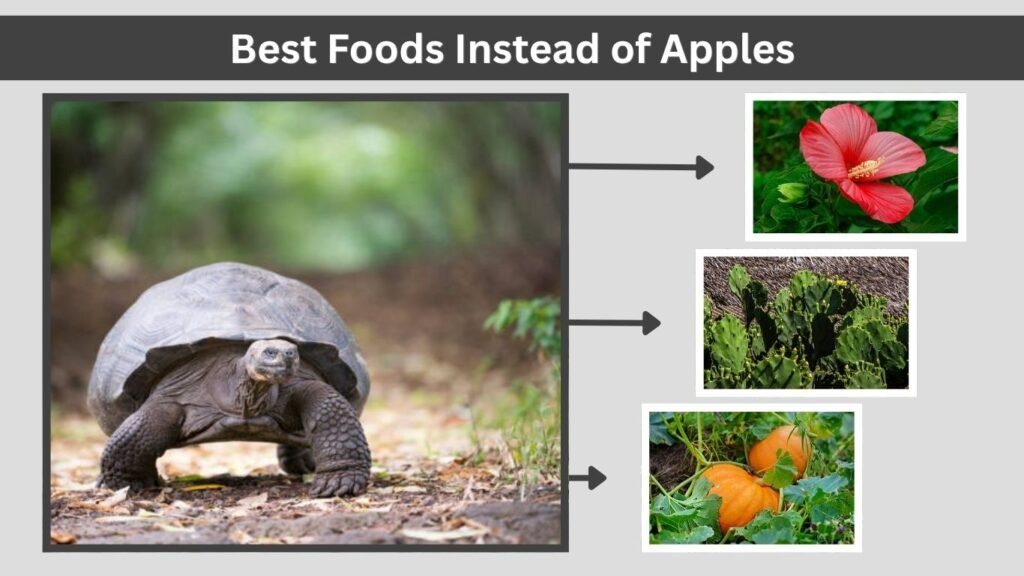
While apples are safe in moderation, tortoises thrive on foods that are rich in fiber and calcium. These alternatives are much better suited to their natural diet and support long-term health.
Healthy Alternatives to Focus On
- Dandelion greens and flowers
- Collard and mustard greens
- Hibiscus leaves and flowers
- Squash and pumpkin
- Cactus pads (ideal for desert species)
Why These Foods Are Better
These foods closely match what tortoises eat in the wild. They help maintain proper digestion, promote strong shell development, and provide essential nutrients without the risks associated with sugary fruits like apples.
Signs Your Tortoise Should Avoid Apples
Not all tortoises respond the same way to certain foods. Some may tolerate apples well, while others may show signs of discomfort. After feeding apples, it is important to monitor your tortoise closely.
If you notice loose stool, reduced appetite, or unusual behavior, it may indicate that apples are not suitable for your tortoise. Over time, an improper diet can also lead to issues like soft shell development or lethargy. In such cases, apples should be removed from the diet, and feeding should return to fiber-rich greens and natural plants.
FAQs
Can tortoises eat apples every day?
No, apples should not be fed daily. Their high sugar content can disrupt digestion and lead to nutritional imbalance. They are best offered occasionally as a treat rather than a staple food.
Can tortoises eat apple skin?
Yes, apple skin is generally safe if it is thoroughly washed. However, removing the skin can reduce the risk of pesticide exposure, especially if the apple is not organic.
Can tortoises eat apple seeds?
No, apple seeds should always be removed before feeding. They contain compounds that can be harmful if consumed, even in small amounts over time.
Are apples good for tortoises?
Apples are not particularly beneficial for tortoises. While safe in small amounts, they do not provide the essential nutrients needed for a healthy, balanced diet.
Can baby tortoises eat apples?
It is not recommended to feed apples to baby tortoises. Young tortoises require a high-fiber, calcium-rich diet to support proper growth and shell development.