
River terrapins are large aquatic turtles found mainly in Southeast Asia and parts of South Asia. These rare reptiles live in rivers, estuaries, mangrove forests, and coastal wetlands where they play an important role in maintaining healthy ecosystems. Several species, including the northern river terrapin and painted river terrapin, are now critically endangered due to habitat destruction and illegal hunting. Learning about river terrapin habitat, diet, conservation, and breeding helps people understand why these unique turtles need stronger protection in the wild before their populations disappear completely.
What Is a River Terrapin?
River terrapins are large semi-aquatic turtles belonging to the genus Batagur. They are known for living in rivers and estuarine environments where freshwater mixes with coastal water. Many river terrapin species are critically endangered because of habitat destruction and egg harvesting. These turtles are famous for their strong swimming ability, large shells, and seasonal color changes seen in breeding males during reproduction periods.
River Terrapin Meaning
The term “river terrapin” refers to turtles that spend most of their lives in river systems, estuaries, and nearby wetlands. Unlike many pond turtles, river terrapins are adapted to moving water and coastal habitats. They are excellent swimmers and travel long distances between feeding and nesting areas.
Types of River Terrapins
Several species are grouped under the river terrapin category. Some are extremely rare and protected under wildlife conservation laws.
- Northern river terrapin
- Southern river terrapin
- Painted river terrapin
- Royal river terrapin
- Four-toed river terrapin
Scientific Classification
River terrapins belong to the Geoemydidae family, which includes many Asian freshwater and river turtles. Their scientific names vary depending on species, but most belong to the Batagur genus. The northern river terrapin is scientifically known as Batagur baska, while the painted river terrapin is called Batagur borneoensis.
River Terrapin Appearance and Identification
River terrapins are among the largest river turtles in Asia. They have smooth shells, strong flippers, and streamlined bodies designed for swimming in rivers and estuaries. Their appearance often changes during breeding season, especially in males that develop bright markings around the head and neck. Females are generally larger and darker in color, while juveniles have smaller shells and softer body patterns.
River Terrapin Size and Weight
River terrapins can grow quite large compared to many common freshwater turtles. Adult females are usually bigger than males and may weigh over 20 kilograms in some species.
- Shell length: 50 to 60 cm
- Weight: 15 to 25 kg
- Females grow larger than males
- Hatchlings are only a few centimeters long
Shell Colors and Markings
Most river terrapins have dark olive, brown, or gray shells that help them blend into muddy river habitats. Breeding males often display brighter colors during mating season.
- Olive or dark brown shell
- Pale yellow underside
- White facial stripes
- Reddish breeding markings
- Smooth and flattened shell shape
Male and Female Differences
Male river terrapins become more colorful during breeding season, while females remain darker and larger. Males also tend to have longer tails and more noticeable head markings used during courtship displays.
River Terrapin Habitat and Distribution
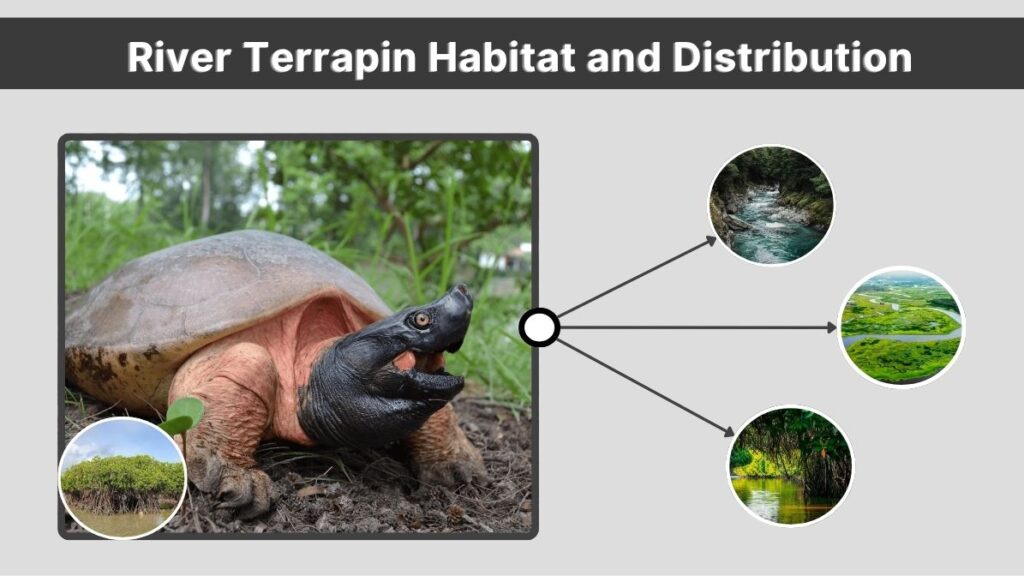
River terrapins live in tropical and subtropical waterways where calm rivers connect to coastal environments. Healthy wetlands and mangrove forests are essential for their survival because these areas provide food, shelter, and nesting beaches. Many natural habitats have disappeared due to pollution, urban development, and sand mining, forcing wild populations into smaller isolated areas that make long-term survival more difficult.
Natural Habitat
River terrapins prefer aquatic habitats with slow-moving water and easy access to sandy nesting sites along riverbanks.
- Rivers
- Estuaries
- Mangrove forests
- Coastal wetlands
- Sandy nesting beaches
Countries Where River Terrapins Are Found
River terrapins are mainly distributed across South and Southeast Asia. Their populations have declined heavily in many regions over the past several decades.
- India
- Bangladesh
- Malaysia
- Indonesia
- Thailand
- Cambodia
River Terrapins in the Sundarbans
The Sundarbans is one of the most important habitats for river terrapins because it contains large mangrove forests and river systems. Northern river terrapins once thrived in this region, but habitat loss and hunting have caused severe population declines.
Conservation programs in the Sundarbans now focus on protecting nesting beaches, reducing illegal egg collection, and raising hatchlings in protected breeding centers before releasing them into the wild.
River Terrapin Diet and Feeding Habits
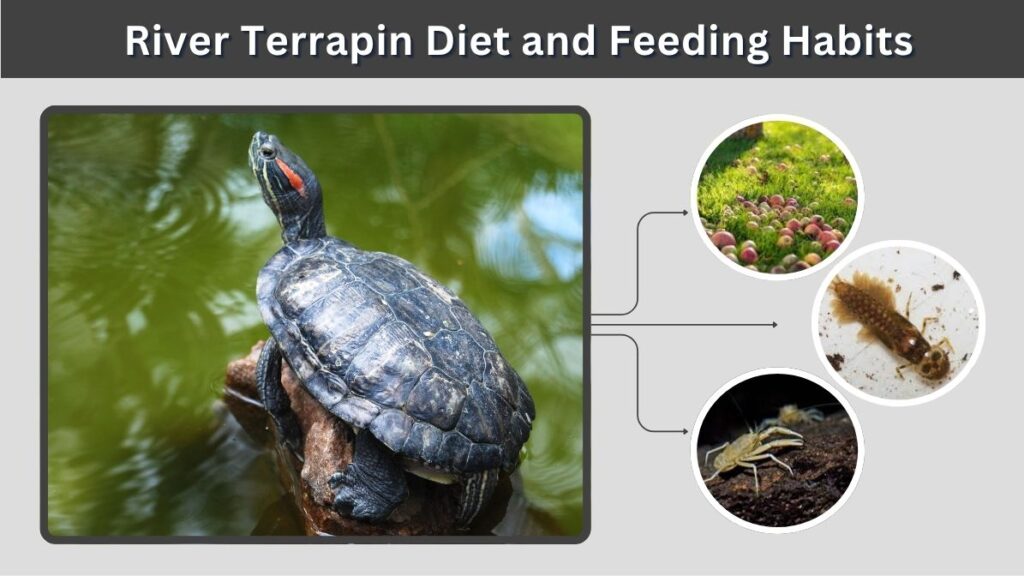
River terrapins are mostly herbivorous turtles, although younger individuals may eat more protein-rich foods while growing. Their diet depends on habitat, age, and seasonal food availability. In the wild, they feed on aquatic plants, fruits, and vegetation found along riverbanks and mangrove forests. Proper nutrition is extremely important for shell growth, energy, and reproductive health in both wild and captive river terrapins.
What Do River Terrapins Eat?
Wild river terrapins spend much of their time searching for food in shallow water and flooded vegetation areas. Their strong jaws help them consume plant material and soft aquatic foods.
- Aquatic plants
- Mangrove fruits
- Leaves and grasses
- Seeds and fallen fruit
- Small aquatic insects
- Crustaceans occasionally
Northern River Terrapin Diet
Northern river terrapins mainly consume plant-based foods as adults. They often feed on river vegetation, fruits, and aquatic leaves found near mangrove ecosystems. Juveniles may eat insects and small aquatic animals for additional protein needed during early growth stages.
Feeding River Terrapins in Captivity
Captive river terrapins require a balanced diet that closely matches their natural feeding habits. Poor nutrition can lead to shell deformities and weakened immune systems.
- Commercial turtle pellets
- Leafy greens
- Aquatic plants
- Fresh vegetables
- Calcium supplements
- Clean freshwater access
Painted River Terrapin Facts
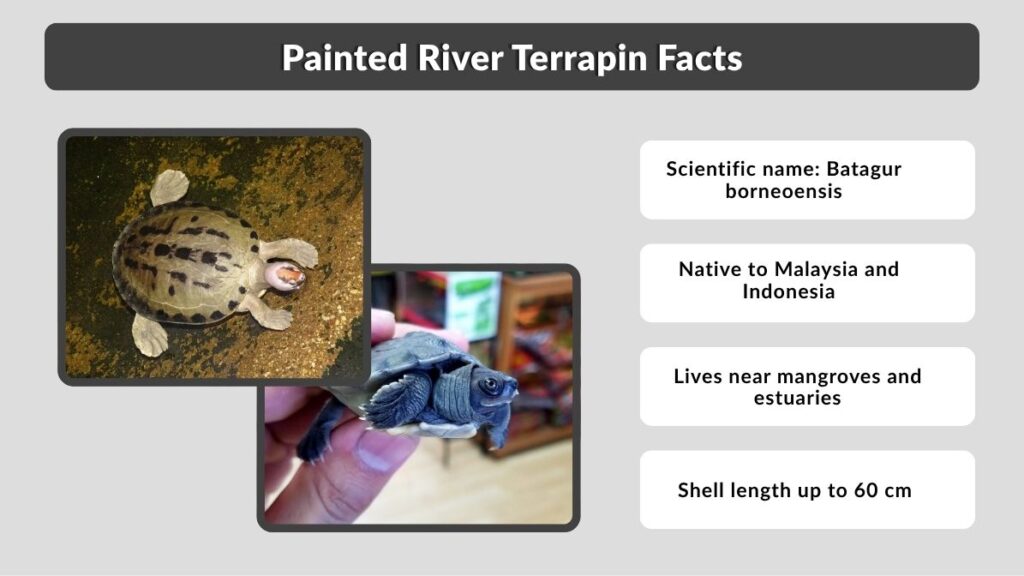
The painted river terrapin is one of the rarest river turtles in the world. Scientifically known as Batagur borneoensis, this species is famous for the bright breeding colors seen in males during mating season. Painted river terrapins are mainly found in Malaysia, Indonesia, and nearby regions where they depend on healthy mangrove forests and coastal rivers for survival.
Malaysian Painted River Terrapin
The Malaysian painted river terrapin is a critically endangered turtle species native to Southeast Asia. It lives in rivers connected to estuaries and coastal wetlands where nesting beaches are available.
- Scientific name: Batagur borneoensis
- Native to Malaysia and Indonesia
- Lives near mangroves and estuaries
- Protected by conservation laws
Painted River Terrapin Size and Weight
Painted river terrapins can grow quite large and heavy compared to many freshwater turtles. Adult females are usually larger than males.
- Shell length up to 60 cm
- Weight around 20 to 25 kg
- Females grow larger
- Lifespan may exceed several decades
Why Painted River Terrapins Are Endangered
Painted river terrapins face serious threats from human activities throughout their natural range. Habitat destruction remains one of the biggest dangers to the species.
Illegal egg collection removes future generations before hatchlings can emerge. Pollution damages river ecosystems and affects food availability, while fishing nets accidentally trap and drown turtles. Coastal construction and sand mining also destroy important nesting beaches used during reproduction.
Northern River Terrapin Conservation

The northern river terrapin is considered one of the world’s rarest turtles and is listed as Critically Endangered by the IUCN. Wild populations have declined dramatically due to hunting, pollution, and habitat destruction. Conservation groups and wildlife authorities are now working together to protect the species through breeding programs, habitat restoration, and nest protection projects in several countries.
Northern River Terrapin IUCN Status
The northern river terrapin has experienced severe population declines across its natural range. Today, only small populations remain in protected areas.
- IUCN status: Critically Endangered
- Protected under wildlife laws
- Extremely low wild population
- Focus of conservation breeding projects
Major Threats to Northern River Terrapins
Human activities continue to threaten the survival of northern river terrapins in many regions.
- Habitat destruction
- River pollution
- Sand mining
- Illegal hunting
- Egg collection
- Fishing net entanglement
Conservation Programs
Several conservation organizations now operate breeding and head-start programs to increase river terrapin populations. Hatchlings are raised in protected facilities before being released into safer habitats.
These programs also educate local communities about turtle protection and encourage stronger enforcement against illegal wildlife trade. Habitat restoration projects in mangrove forests and river systems are helping improve nesting and feeding conditions for remaining populations.
FAQs
What is a river terrapin?
A river terrapin is a large aquatic turtle that lives mainly in rivers, estuaries, mangrove forests, and coastal wetlands. Most river terrapins belong to the Batagur genus and are found in South and Southeast Asia. Many species are critically endangered because of habitat destruction and illegal hunting.
Why are river terrapins endangered?
River terrapins are endangered due to habitat loss, pollution, illegal egg collection, hunting, and accidental capture in fishing nets. Coastal development and sand mining also destroy important nesting beaches. These threats have caused severe population declines in many countries where river terrapins once thrived naturally.
What do river terrapins eat?
River terrapins mainly eat aquatic plants, leaves, mangrove fruits, seeds, and other vegetation found near rivers and wetlands. Juveniles may also consume insects and small aquatic animals for protein. Captive terrapins are often fed turtle pellets, leafy greens, vegetables, and calcium supplements.
Where are river terrapins found?
River terrapins are found in countries across South and Southeast Asia, including India, Bangladesh, Malaysia, Indonesia, Thailand, and Cambodia. They prefer habitats such as estuaries, mangrove swamps, slow-moving rivers, and coastal wetlands with sandy nesting beaches nearby.
Can river terrapins be kept as pets?
River terrapins are difficult to keep as pets because they require large aquatic enclosures, strong filtration systems, UVB lighting, and specialized care. Many species are legally protected due to their endangered status, so ownership may be restricted in several countries.