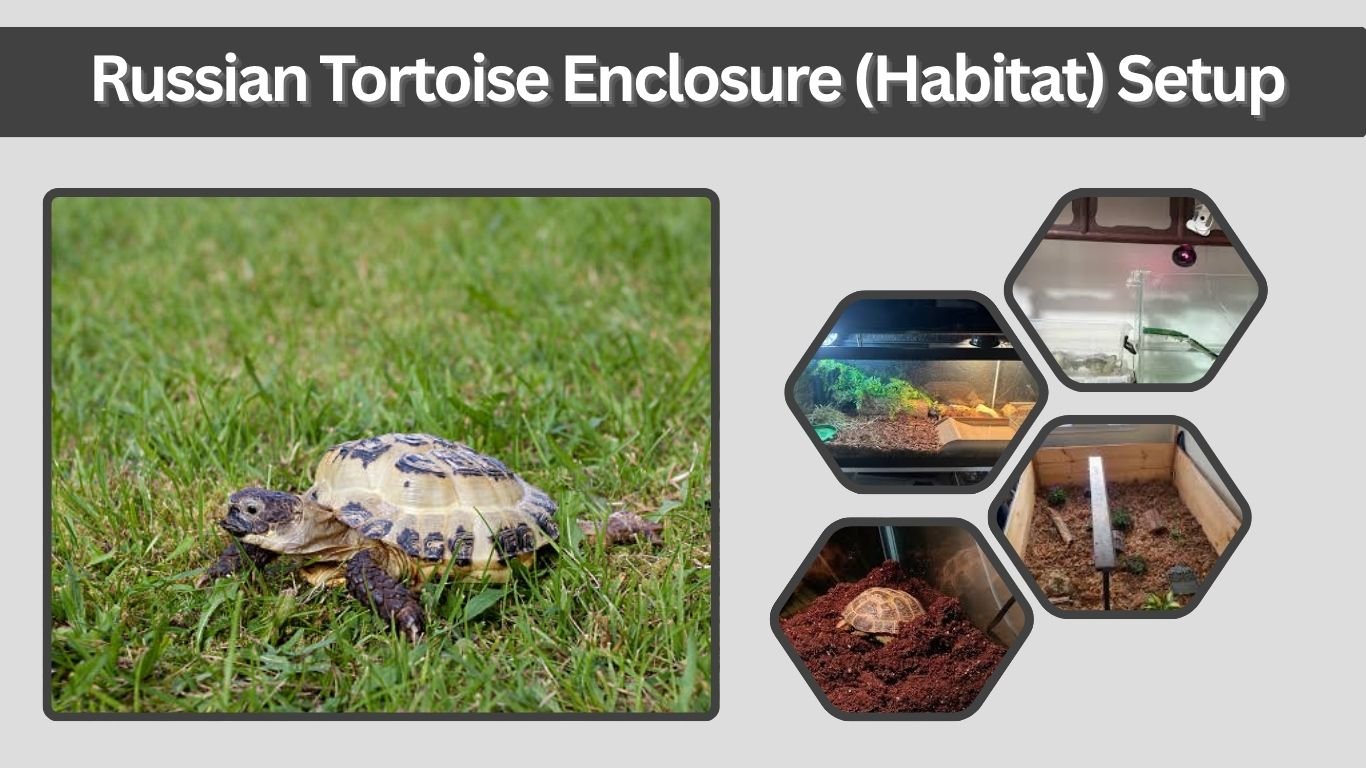
Creating the right enclosure is one of the most important parts of caring for a Russian tortoise. A well-designed habitat not only keeps your tortoise comfortable but also supports its health, behavior, and long-term survival.
Russian tortoises come from dry, open environments, so their enclosure must reflect those natural conditions as closely as possible. In this guide, you’ll learn how to set up the perfect enclosure, including indoor and outdoor options, essential components, and environmental requirements.
Why Proper Enclosure Setup Matters
A proper enclosure is more than just a place to keep your tortoise—it directly affects its physical health and daily behavior. Poor setup can lead to stress, illness, and even long-term damage.
Mimicking Natural Habitat
Russian tortoises are native to arid regions with dry soil and plenty of sunlight. Replicating these conditions helps them feel secure and behave naturally.
An enclosure that includes proper substrate, space, and lighting allows your tortoise to dig, bask, and explore just like it would in the wild.
Preventing Health Issues
An incorrect setup can lead to serious problems such as shell deformities, respiratory infections, and digestive issues.
For example, lack of UVB lighting can prevent proper calcium absorption, while poor temperature control can weaken the immune system.
Supporting Natural Behavior
Tortoises need space to move, dig, and hide. Without these opportunities, they may become stressed or inactive.
Providing a stimulating environment encourages natural behaviors, which is essential for both physical and mental well-being.
Indoor vs Outdoor Enclosure Setup
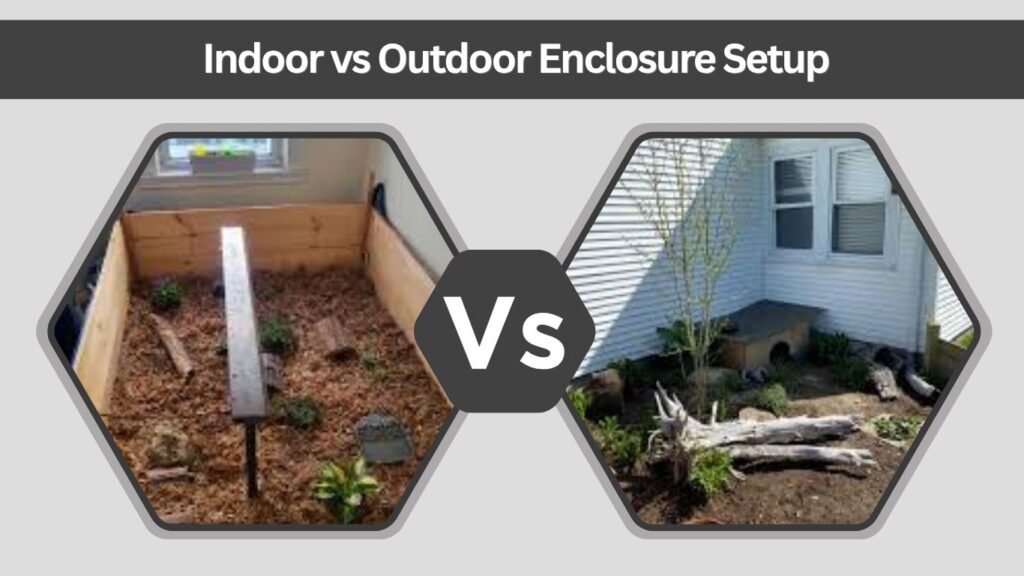
Choosing between an indoor or outdoor enclosure depends on your climate, available space, and lifestyle. Both options can work well if set up correctly.
Indoor Enclosure Setup
- Ideal for colder climates or areas with extreme weather
- Easier to control temperature, lighting, and humidity
- Requires UVB lighting and heat sources
Indoor enclosures are often built using tortoise tables or large containers. They allow you to maintain consistent conditions, which is especially important in regions where outdoor temperatures fluctuate.
Outdoor Enclosure Setup
- Provides natural sunlight, which is beneficial for health
- Offers more space for movement and exploration
- Requires secure fencing to prevent escape and protect from predators
Outdoor enclosures are ideal in warm climates. Natural sunlight provides the best UVB exposure, but safety and weather protection must be carefully managed.
Which Option Is Best?
The best option depends on your environment. If you live in a warm region, an outdoor enclosure can be ideal. However, many owners use a combination of both—outdoor time during the day and indoor housing when conditions are not suitable.
Essential Components of a Russian Tortoise Enclosure
Every enclosure must include certain elements to ensure your tortoise’s comfort and health. These components work together to create a balanced and natural environment.
Enclosure Size and Space
- Minimum recommended size is 4 x 2 feet, but larger is always better
- More space allows for natural movement and exercise
- Overcrowded enclosures can lead to stress and inactivity
Russian tortoises are active animals that enjoy exploring. Providing enough space is essential for maintaining their physical health.
Substrate (Flooring Material)
- Use natural materials like soil, coconut fiber, or a soil-sand mix
- Substrate should allow digging and burrowing
- Avoid materials like gravel or wood chips that can be harmful
The substrate plays a key role in comfort and natural behavior. It should be soft enough for digging but firm enough to support movement.
Hiding Spots and Enrichment
- Provide shelters or hides for security
- Add rocks, logs, or plants for stimulation
- Ensure items are stable and safe
Hiding spots help reduce stress by giving your tortoise a place to retreat. Enrichment items encourage exploration and keep your tortoise active.
Temperature and Lighting Requirements
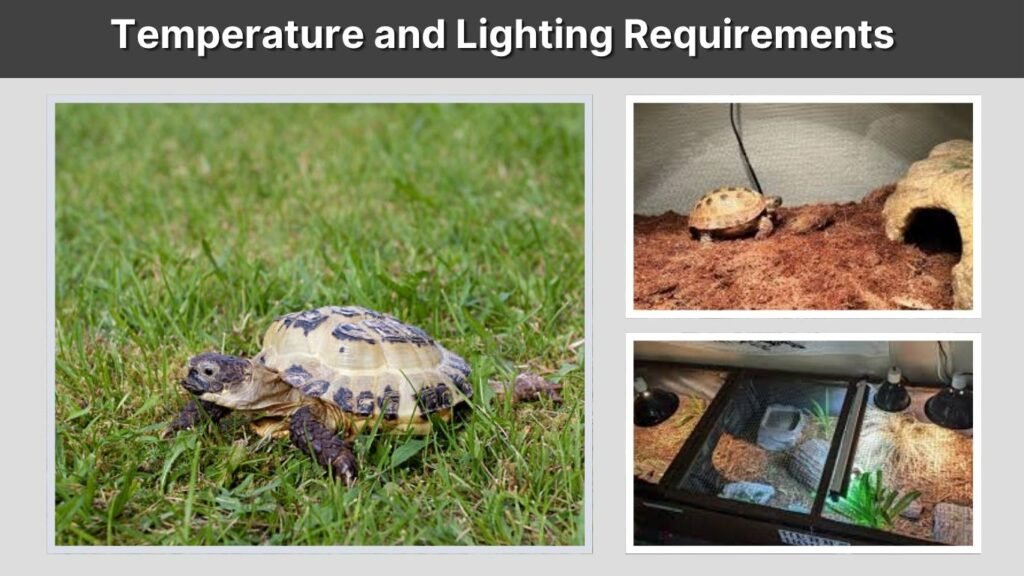
Maintaining the correct temperature and lighting is crucial for a Russian tortoise’s health. These factors directly affect digestion, metabolism, and overall well-being.
Basking Area Setup
Russian tortoises require a basking spot where they can warm their bodies. The temperature in this area should be around 90–95°F (32–35°C).
This warm zone helps with digestion and allows your tortoise to regulate its body temperature.
Ambient Temperature Zones
In addition to a basking area, the enclosure should have a cooler side with temperatures around 70–75°F (21–24°C).
Creating a temperature gradient allows your tortoise to move between warm and cool areas as needed, which is essential for natural thermoregulation.
UVB Lighting Importance
UVB lighting is essential for calcium absorption and healthy shell development. Without it, tortoises can develop serious health problems such as soft shells and bone deformities.
Indoor enclosures must include a UVB lamp that runs for 10–12 hours per day. Even in outdoor setups, ensuring access to natural sunlight is critical.
Ideal Enclosure Setup Chart (Quick Guide)
A quick reference can help you ensure all essential elements are properly set.
| Element | Ideal Setup |
| Enclosure Size | Minimum 4×2 feet (larger is better) |
| Basking Temperature | 90–95°F (32–35°C) |
| Cool Side Temperature | 70–75°F (21–24°C) |
| UVB Lighting | 10–12 hours daily |
| Substrate | Soil + sand mix or coconut fiber |
| Humidity | Low to moderate |
Substrate, Humidity, and Water Setup
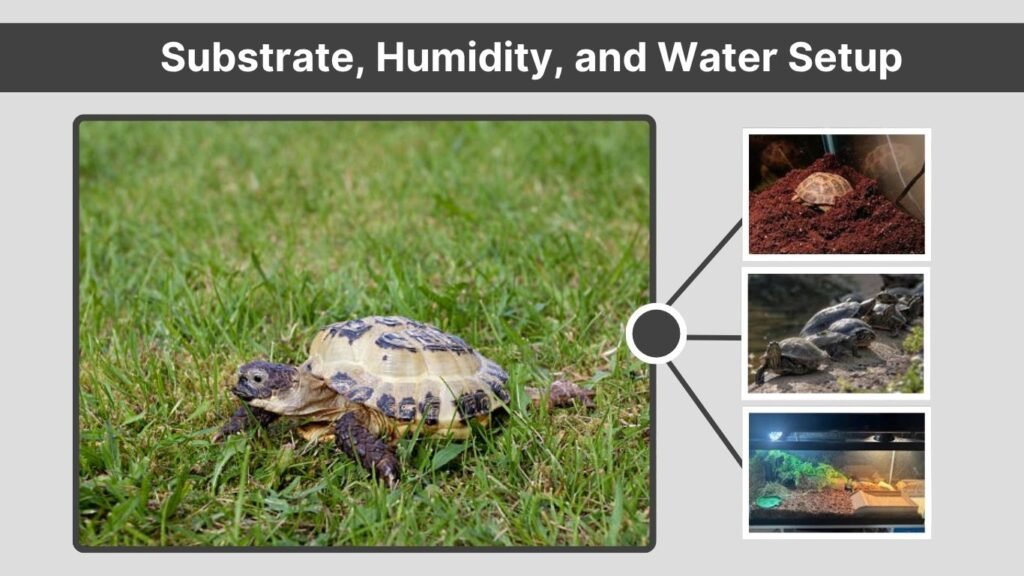
The ground conditions inside the enclosure play a major role in your tortoise’s comfort and health. Proper substrate, humidity, and hydration help prevent common issues and support natural behavior.
Best Substrate Options
- A mix of topsoil and sand is one of the best choices
- Coconut fiber is also a safe and natural option
- Substrate should be deep enough for digging
Avoid using materials like pure sand, gravel, or wood chips, as they can cause injuries or digestive problems if accidentally ingested.
Humidity Levels
Russian tortoises require low to moderate humidity, similar to their natural dry habitat. Too much moisture can lead to shell rot or respiratory issues.
Maintaining the right balance is important—while the environment should not be overly damp, it should not be completely dry either, especially for younger tortoises.
Water Dish and Soaking
A shallow water dish should always be available for drinking. It must be easy to access and cleaned regularly.
In addition, soaking your tortoise in shallow water 1–2 times per week helps with hydration and supports healthy digestion.
Common Enclosure Setup Mistakes to Avoid
Even small mistakes in enclosure setup can lead to serious health problems. Being aware of these common errors can help you avoid them.
Using the Wrong Substrate
Some owners use substrates that are unsafe or uncomfortable. Materials like gravel or overly dusty bedding can harm your tortoise.
Always choose natural, soft substrates that allow digging and mimic their natural environment.
Lack of UVB Lighting
Skipping UVB lighting is one of the most harmful mistakes. Without it, your tortoise cannot properly absorb calcium, leading to weak bones and shell deformities.
A proper UVB light source is essential, especially for indoor setups.
Poor Temperature Control
Incorrect temperatures can cause stress, poor digestion, and illness.
If the enclosure is too cold, your tortoise may become inactive and stop eating. If it’s too hot, it can lead to dehydration and overheating. Maintaining a proper temperature gradient is key.
How to Maintain and Clean the Enclosure
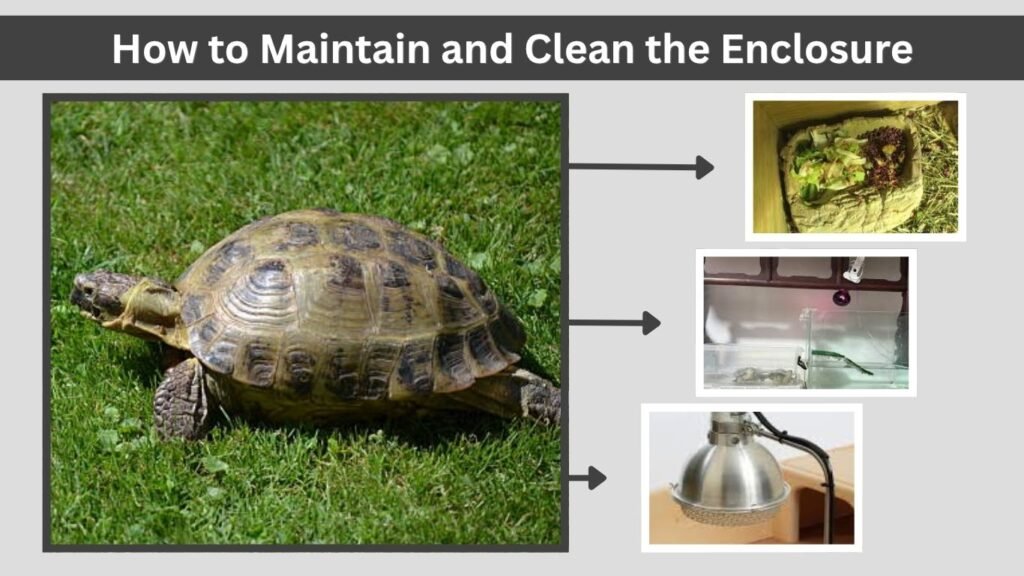
Keeping the enclosure clean is just as important as setting it up correctly. Regular maintenance ensures a healthy environment for your tortoise.
Daily Cleaning Tasks
- Remove uneaten food to prevent spoilage
- Clean waste from the substrate
- Check water dish and refill with fresh water
Daily cleaning helps prevent bacteria buildup and keeps the enclosure hygienic.
Weekly Maintenance
- Stir and refresh substrate to maintain cleanliness
- Wipe down surfaces and decorations
- Check lighting and heating equipment
This routine helps maintain a stable and safe environment.
Long-Term Upkeep
- Replace substrate completely every few weeks or as needed
- Inspect enclosure for wear or damage
- Ensure all equipment is functioning properly
Consistent long-term care prevents issues before they become serious problems.
FAQs
How big should a Russian tortoise enclosure be?
A Russian tortoise enclosure should be at least 4 x 2 feet, but larger is always better. More space allows for natural movement and reduces stress. Outdoor enclosures can be even bigger to provide additional enrichment.
Can I keep a Russian tortoise in a glass tank?
Glass tanks are not ideal because they limit airflow and can cause confusion due to reflections. Tortoise tables or open enclosures are better options as they provide proper ventilation and a more natural environment.
Do Russian tortoises need a heat lamp at night?
In most cases, a heat lamp is not needed at night if temperatures remain above 65°F (18°C). If temperatures drop too low, a ceramic heat emitter can be used to provide warmth without light.
What is the best substrate for a Russian tortoise?
A mixture of topsoil and sand or coconut fiber is considered the best substrate. These materials are safe, allow digging, and help mimic the tortoise’s natural habitat.