
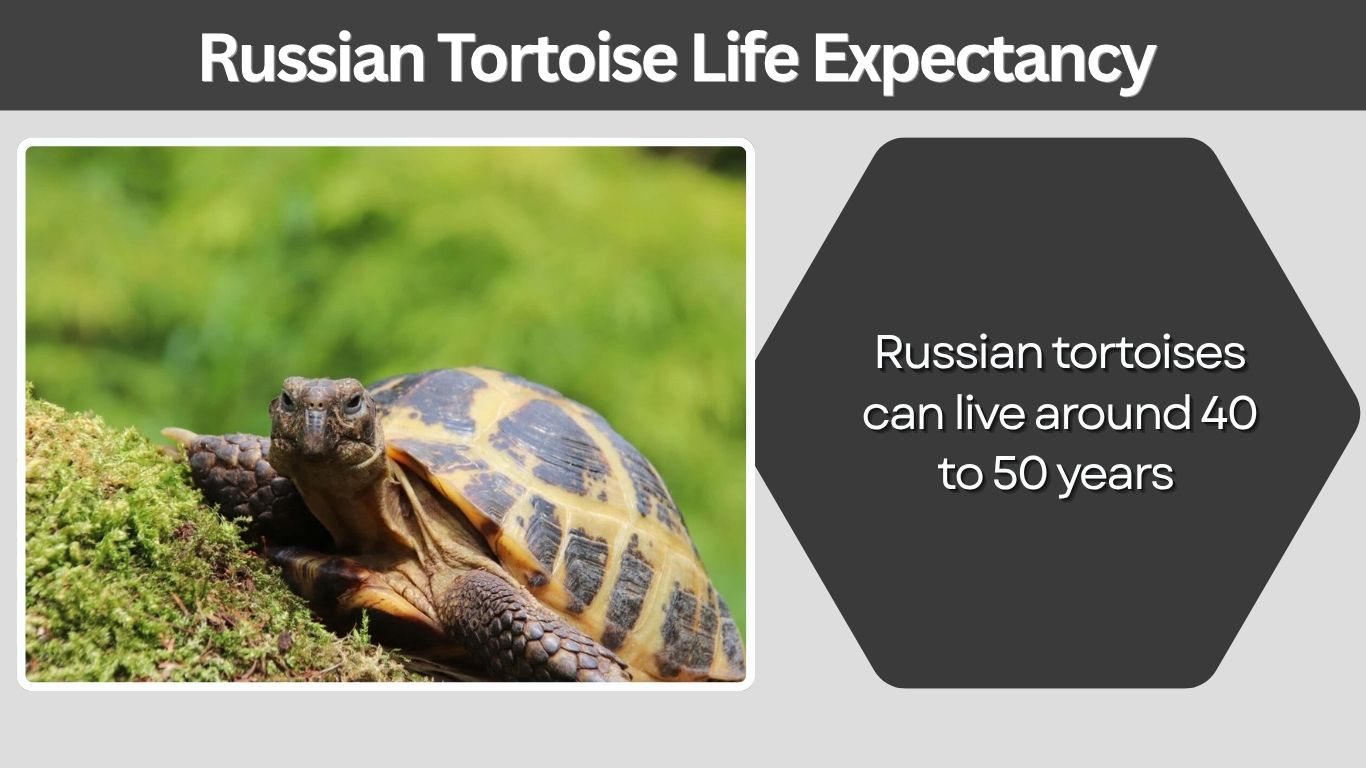
Russian tortoises are known for their long lives, hardy nature, and active personalities. A healthy Russian tortoise can live for several decades, which makes this species a long-term commitment rather than a short-term pet. With proper diet, housing, lighting, hydration, and veterinary care, many Russian tortoises can live around 40 to 50 years in captivity, and some may live even longer.
How Long Do Russian Tortoises Live?
The average Russian tortoise life expectancy is usually around 40 to 50 years in captivity with good care. Some well-kept individuals may reach 60 years or more, especially when they receive excellent nutrition, proper UVB lighting, safe housing, and early treatment for health problems.
Russian tortoises are also called Horsfield’s tortoises, Afghan tortoises, Central Asian tortoises, four-toed tortoises, and steppe tortoises. Their scientific name is Testudo horsfieldii. They are small compared with many other tortoise species, but their lifespan is still very long.
In simple terms, a Russian tortoise can be a lifelong pet. Anyone thinking about getting one should plan for decades of care.
Russian Tortoise Lifespan in Captivity vs the Wild
Russian tortoises often live longer in captivity than in the wild when they are cared for correctly. In the wild, they face predators, harsh weather, food shortages, parasites, injury, and disease. These dangers can shorten their lifespan, especially for hatchlings and young tortoises.
In captivity, a Russian tortoise can avoid many of these threats. However, captivity only improves lifespan when the setup is suitable. Poor heating, weak UVB, bad diet, dehydration, small enclosures, and lack of veterinary care can shorten a tortoise’s life dramatically.
| Environment | Typical Life Expectancy | Main Lifespan Factors |
|---|---|---|
| Wild | Often shorter and more variable | Predators, climate, food scarcity, disease |
| Average captivity | Around 40 to 50 years | Diet, enclosure, lighting, hydration |
| Excellent captivity | 50 years or more | Preventive care, correct husbandry, stable routine |
A captive tortoise is not automatically healthier than a wild one. The owner’s care routine makes the biggest difference.
Why Russian Tortoises Live So Long
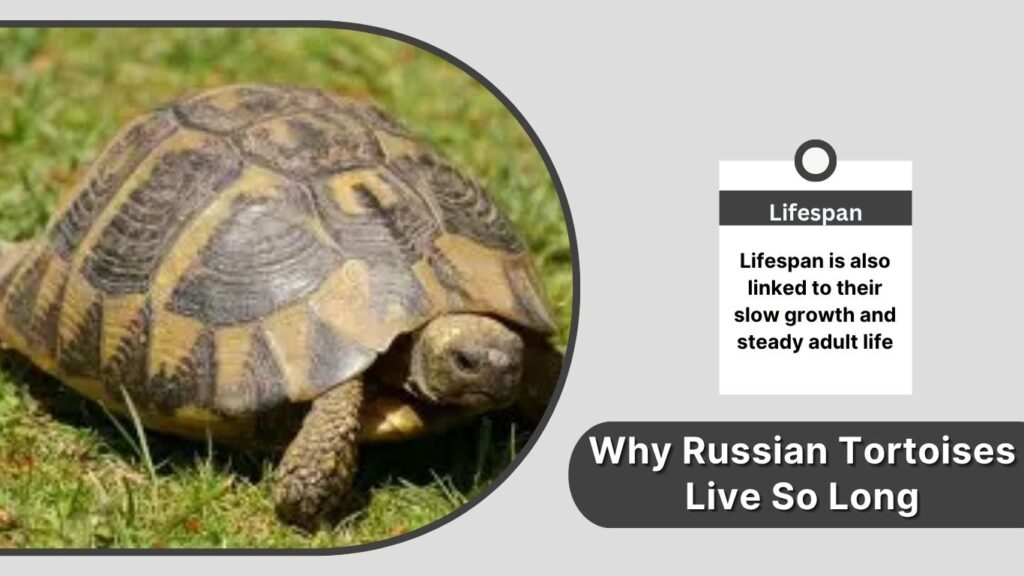
Russian tortoises are naturally built for survival. They come from dry, harsh environments where food and water may not always be available. Their slow metabolism, protective shell, and ability to conserve energy help them survive tough conditions.
Their long lifespan is also linked to their slow growth and steady adult life. Unlike many small pets that age quickly, tortoises mature slowly and can remain active for many years. However, this slow lifestyle also means health problems may develop gradually and go unnoticed until they become serious.
That is why long life depends on consistent care, not just the tortoise’s natural toughness.
Main Factors That Affect Russian Tortoise Life Expectancy
A Russian tortoise’s lifespan depends on several connected factors. No single care habit guarantees a long life, but the right routine greatly improves the chances of healthy aging.
Diet Quality
Diet is one of the most important parts of Russian tortoise care. These tortoises need a high-fiber, low-sugar diet based mainly on weeds, flowers, and leafy greens. They are not fruit-loving tortoises and should not eat large amounts of sweet foods.
Good food choices include dandelion greens, plantain weed, mallow, hibiscus leaves, mulberry leaves, grape leaves, endive, escarole, and safe edible flowers. Outdoor weeds should only be used if they are correctly identified and free from pesticides, herbicides, and pollution.
Poor diet can lead to obesity, digestive problems, shell deformities, vitamin imbalance, and metabolic bone disease. Over time, these issues can shorten life expectancy.
UVB Lighting and Calcium
Russian tortoises need UVB light to process calcium properly. Without enough UVB, they may develop metabolic bone disease, which weakens bones and shell structure. This condition is serious and can become life-threatening if ignored.
Outdoor sunlight is excellent when the enclosure is safe and temperatures are suitable. Indoor tortoises need a proper reptile UVB lamp, and the bulb must be replaced according to manufacturer instructions because UVB output weakens over time.
Calcium is also important. Many keepers provide a cuttlebone or calcium supplement, especially for growing tortoises and egg-laying females.
Temperature and Heating
Temperature affects digestion, activity, immunity, and overall health. If a Russian tortoise is kept too cold, it may become sluggish, stop eating, or develop respiratory problems. If kept too hot without shade or escape areas, it can overheat.
A healthy enclosure should include a warm basking area and cooler zones so the tortoise can regulate its body temperature. This temperature gradient allows the tortoise to move between warm and cooler spots as needed.
Poor temperature control is one of the common reasons captive reptiles become sick.
Enclosure Size and Exercise
Russian tortoises are small, but they are active and need space. They like to walk, dig, explore, and forage. A cramped enclosure can cause stress, boredom, weak muscles, and poor overall health.
An outdoor enclosure is often best when climate and safety allow. It should have secure walls, protection from predators, shade, dry areas, and safe plants. Russian tortoises are skilled diggers, so fencing may need to extend below ground.
Indoor enclosures should be much larger than a small glass tank. More floor space helps the tortoise stay active and maintain better physical condition.
Common Health Problems That Can Shorten Lifespan
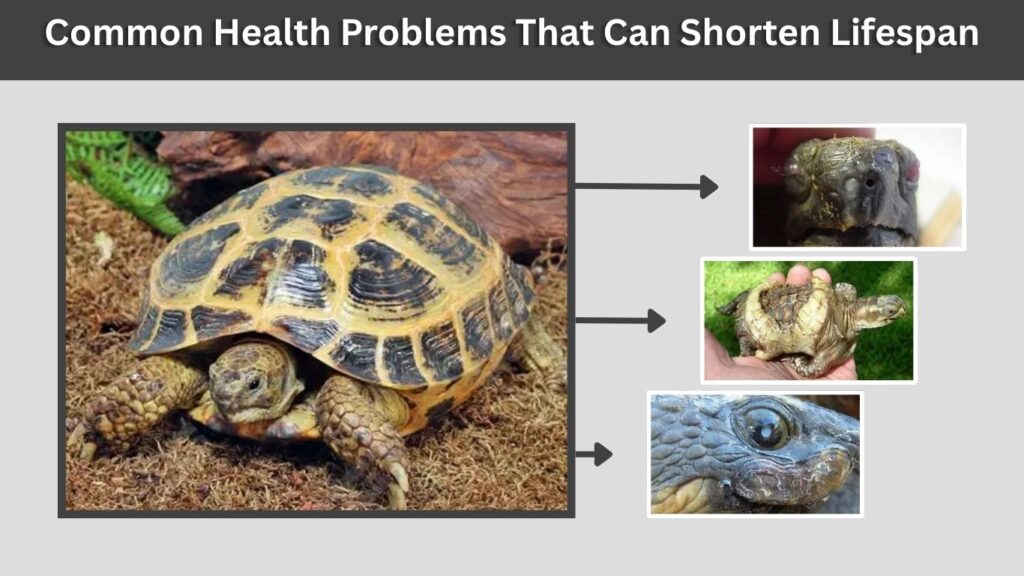
Russian tortoises are hardy, but they can still develop health problems. Many of these problems are linked to improper care.
Common issues include:
- Respiratory infections
- Metabolic bone disease
- Shell pyramiding
- Parasites
- Dehydration
- Overgrown beak or nails
- Eye swelling
- Digestive problems
- Obesity
- Injuries from unsafe enclosures
Early treatment matters. A tortoise may hide signs of illness, so owners should pay attention to small changes in appetite, movement, breathing, stool, eyes, and shell condition.
Signs of a Healthy Russian Tortoise
A healthy Russian tortoise is usually alert, active, and interested in food. It should walk steadily, have clear eyes, and show normal digging or exploring behavior.
Healthy signs include:
- Firm, smooth shell growth
- Clear eyes and nose
- Strong appetite
- Regular movement
- Normal stool
- Steady weight
- Active basking behavior
- Strong legs and good posture
A tortoise that is constantly hiding, refusing food, wheezing, producing runny discharge, or losing weight may need veterinary attention.
How to Help a Russian Tortoise Live Longer
The best way to support a long lifespan is to create a stable care routine. Russian tortoises do not need fancy treatment, but they do need correct basics every day.
Focus on these habits:
- Feed a varied, high-fiber diet.
- Avoid fruit-heavy or protein-heavy diets.
- Provide strong UVB lighting or safe outdoor sun.
- Keep proper temperatures.
- Offer fresh water regularly.
- Use a spacious enclosure.
- Allow digging and natural movement.
- Keep the enclosure clean and dry.
- Monitor weight and appetite.
- Visit a reptile veterinarian when needed.
Small improvements can make a big difference over many years. Because Russian tortoises live so long, consistent care is more important than occasional perfect care.
Does Hibernation Affect Russian Tortoise Lifespan?
Russian tortoises may naturally brumate, which is a reptile form of winter dormancy. In the wild, brumation helps them survive seasonal cold and food shortages. In captivity, some owners choose to brumate their tortoises, while others keep them active through controlled indoor heating and lighting.
Brumation should not be attempted casually. A sick, underweight, dehydrated, or young tortoise may be at risk during brumation. Temperature, timing, hydration, and pre-brumation health checks matter.
Brumation may be natural for the species, but it is not automatically necessary for every pet. If an owner is unsure, it is safer to speak with an experienced reptile veterinarian before allowing brumation.
How Old Is My Russian Tortoise?
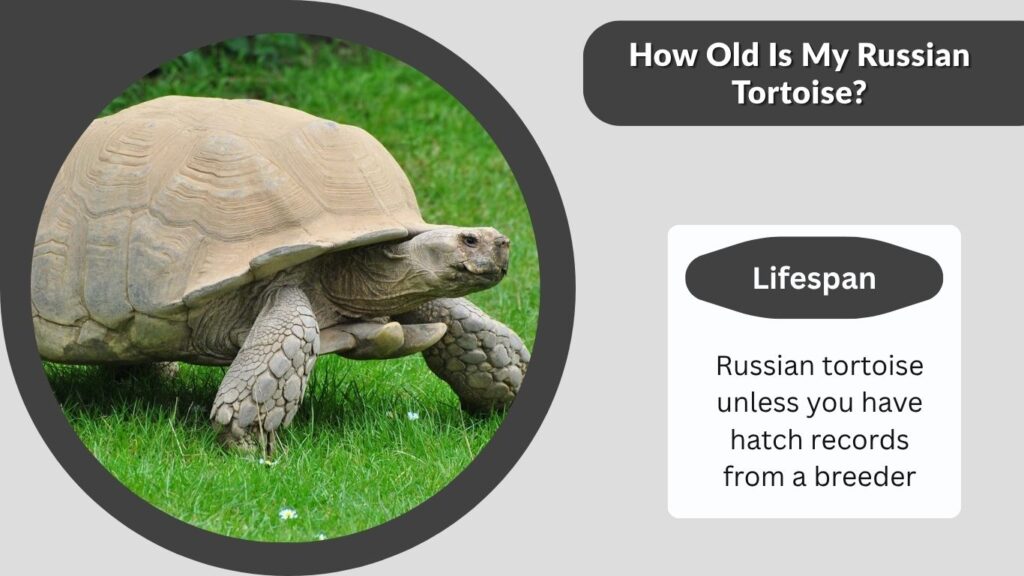
It can be difficult to know the exact age of a Russian tortoise unless you have hatch records from a breeder. Size is not always reliable because growth depends on diet, lighting, sex, genetics, and previous care. Shell rings are also not a precise age marker.
Many Russian tortoises sold as pets are already several years old, and some wild-caught individuals may be much older than sellers claim. Instead of focusing only on age, owners should focus on current health, weight, shell condition, and care quality.
A tortoise with unknown age can still live many more years with proper care.
Planning for a Long-Lived Pet
A Russian tortoise is not like a hamster, fish, or short-lived beginner pet. It may live longer than many dogs, cats, and other household animals. This means owners should think about long-term care before bringing one home.
Consider who will care for the tortoise if you move, travel, become unable to keep it, or need to pass care to someone else. A Russian tortoise may still need care decades from now.
This long lifespan is one of the species’ most special qualities, but it is also a serious responsibility.
FAQs
What is the average Russian tortoise life expectancy?
The average Russian tortoise life expectancy is around 40 to 50 years in captivity with proper care. Some individuals may live beyond 50 years when their diet, enclosure, UVB lighting, temperature, and health care are excellent. Poor care can shorten their lifespan significantly.
Can Russian tortoises live 60 years?
Yes, some Russian tortoises may live 60 years or more, although not every tortoise reaches that age. Long life depends on genetics, early care, diet, lighting, hydration, enclosure quality, and veterinary support. A well-kept tortoise has a much better chance of reaching old age.
Do Russian tortoises live longer in captivity?
Russian tortoises can live longer in captivity when they receive proper care and protection from predators, extreme weather, and food shortages. However, poor captive care can be dangerous. Bad diet, weak UVB lighting, cold temperatures, and small enclosures may reduce lifespan.
What shortens a Russian tortoise’s lifespan?
Common lifespan-shortening problems include poor diet, lack of UVB, calcium deficiency, incorrect temperatures, dehydration, obesity, parasites, respiratory infections, and unsafe enclosures. Many serious health issues develop slowly, so owners should monitor appetite, weight, movement, shell growth, and behavior regularly.
How can I help my Russian tortoise live longer?
Provide a spacious enclosure, proper heat, strong UVB lighting, fresh water, and a varied diet of safe weeds, flowers, and leafy greens. Avoid sugary foods, excess fruit, and protein-rich foods. Regular observation and reptile veterinary care also help detect problems early.